Help is available 24/7 through the Clermont County Crisis Hotline at 528-SAVE (7283). The Hotline is staffed by trained and licensed mental health providers who can assist with connection to needed services. There is also a crisis text line that can be accessed 24/7. Text the keyword “4hope” to 741 741.
Ongoing stress due to the pandemic has contributed to increased calls to the Clermont County 528-SAVE Crisis Hotline over the past several months. The Clermont County Crisis Hotline has seen a 21-percent increase in the number of calls in the fiscal year that ended June 30, 2020, as compared to the previous 12 months. The hotline has also seen an increase in the number of suicidal/crisis calls.
“The long-term impact of the COVID-19 pandemic is starting to take its toll,” said Lee Ann Watson, associate director, Clermont County Mental Health & Recovery Board. “This has been a challenging time for nearly everyone, especially those with possible underlying behavioral health concerns.”
Clermont County has the second-highest suicide rate in Southwest Ohio and is 13th in the state per 100,000 for suicide deaths. Fortunately, there has not been an increase in suicide deaths in 2020. People appear to be reaching out for help more than in previous years. But there is still a reason for concern. While the suicide deaths have decreased in 2020, one death by suicide is too many.
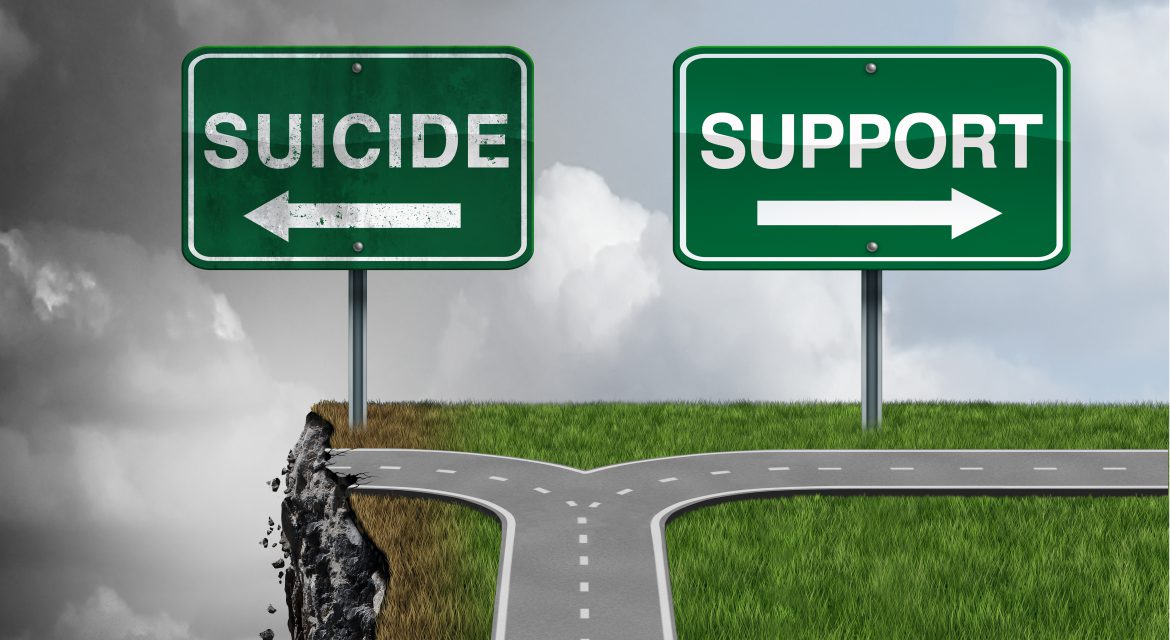
Watson asks people to recognize warning signs and know how to reach out for help. It is important to know the warning signs and the resources to seek help because likely people who are depressed and at risk for suicide are not often motivated to seek help. Losses such as the end of a relationship, death of a loved one, or loss of employment, all of which are situations that can be occurring during COVID-19, can increase the risk for depression.
Common Warning Signs of Acute Suicide Risk
The following are not always communicated directly or outwardly:
- Threatening to hurt or kill him or herself, or talking of wanting to hurt or kill him/herself; and or,
- Looking for ways to kill him/herself by seeking access to firearms, available pills, or other means; and/or,
- Talking or writing about death, dying or suicide, when these actions are out of the ordinary.
Additional Warning Signs:
- Increased substance (alcohol or drug) use
- No reason for living; no sense of purpose in life
- Anxiety, agitation, unable to sleep or sleeping all of the time
- Feeling trapped – like there’s no way out
- Hopelessness
- Withdrawal from friends, family, and society
- Rage, uncontrolled anger, seeking revenge
- Acting reckless or engaging in risky activities, seemingly without thinking
- Dramatic mood changes
- Giving away prized possessions or seeking long-term care for pets
(Source: American Association of Suicidology)
Help is available 24/7 through the Clermont County Crisis Hotline at 528-SAVE (7283). The Hotline is staffed by trained and licensed mental health providers who can assist with connection to needed services. There is also a crisis text line that can be accessed 24/7. Text the keyword “4hope” to 741 741.
High-risk groups: Men, those 65 and older
Middle-aged men and individuals over the age of 65 comprise high-risk groups in Clermont County, similar to national trends. Men have always had a higher rate of suicide death than females, but the number of males dying from suicide has significantly increased. During 2019, 37-percent of the suicide deaths were men between the ages of 40-59. This is a 100-percent increase in the number of deaths in 2019 of this age group compared to 2018. In 2020, 88 percent of the suicide deaths were men. Of those, 23 percent were aged 40-49, and 26 percent were aged 60-69.
While it is often difficult for men to reach out for help, it is important for men to remember that now more than ever “it is ok not to be ok” and that feeling overwhelmed is not a sign of weakness. Seeking help is a sign of strength. Mental health professionals are available to assist with the specific needs and concerns of men. Further, a 2019 study published in the Journal of Mental Health found that receiving support from a trusted and respected friend can be an effective suicide prevention strategy for men. Forming connections with other people who are going through the same thing can also be helpful.
The Clermont County Suicide Prevention Coalition is working to decrease suicide in our County through increasing knowledge of warning signs, and availability of treatment. If you are interested in joining the Coalition, please contact Lee Ann Watson at (513) 732-5400.
Number of overdose deaths decline; meth use increases
With regard to unintentional fatal overdose deaths, Clermont County has seen a decrease in deaths over the past three years.
The decrease in deaths can be partially attributed to the widespread distribution of Naloxone to county residents. While the overdose deaths have decreased, nonfatal overdoses are still occurring in Clermont County, albeit less than in previous years.
Regarding non-fatal overdoses, the County was ranked 16th in the state in 2019 for the number of Naloxone administrations (387 doses; Ohio EMS, 2019). This ranking is based on the number of administrations, not by population. For the first three quarters in 2020, Clermont is ranked 17th in the state for the number of Naloxone administrations (315; Ohio EMS, 2020). The number of administrations is underreported since not all the EMS departments in Clermont County report the use of Naloxone, and the figures do not include the Naloxone utilized by law enforcement.
Clermont County saw a surge in nonfatal overdoses in the summer months of 2020, but the overdoses have now decreased to lower than in the previous year. There continue to be “hot spots” in Clermont County where overdoses are occurring: Union Township; New Richmond and Felicity.
The use of stimulants, particularly methamphetamine, has substantially increased in Clermont County. The degree of complexity related to stimulant misuse has impacted the county. A large portion of the homicides in 2019 was related to stimulant misuse. Individuals on meth can have extreme paranoia and often aggressive behavior, and difficult to engage in treatment.
The CCMHRB’s substance use disorder treatment provider has seen an increase in treatment admissions for stimulant misuse in the last year (14 percent), and the local hospital also reports an increase in the rate of admissions to the Emergency Department (ED) and the behavioral health unit due to meth misuse.
Individuals who are brought into the ED under the influence of meth most often have to be admitted to the behavioral health unit. Those stays are often long since it is taking several days for the individual to clear.
Clermont County Children’s Protective Services has also reported a substantial increase in the number of children in custody due to stimulant use disorders. In 2019, more than 30 percent of the cases were related to methamphetamine. The number of cases has increased in 2020 as reported by CPS.
Stimulant misuse differs greatly from opioid misuse. Due to the nature of the drug, individuals actively using stimulants are often not able to engage in discussions related to treatment, and therefore outreach to attempt to engage them in treatment is not successful as it has been for individuals using opioids. Further, many individuals with a stimulant use disorder do not believe they have an addiction, and therefore do not voluntarily enroll in treatment. The CCMHRB’s contract substance use disorder treatment provider reports that in 2019, 21 percent of clients identified stimulants as their primary drug of choice, while 34 percent identified opioids as their primary drug of choice.