David Miller is the Publisher of Loveland Magazine
Loveland, Ohio – The Loveland City School District recently hired Bradley Neavin to serve as Superintendent. Neavin’s contract runs from February 10 until the Board hires a permanent superintendent, or until July 3.
Neavin’s first official day begins on Wednesday, however, he sat for an interview this morning from the Board office via Zoom so we could introduce him to the community and ask a few questions about his role in the District in the coming months.
The Steubenville native chatted with me about the Steelers/Browns/Bengals, and the Ohio University Marching 110. We also talked about the funding in Governor DeWine’s proposed K-12 education budget, the Ohio Legislature’s attempt to fix school funding, and DeWine’s goal of re-opening Ohio’s schools on March 1. And, more…
Under Ohio’s vaccine plan, older adults can receive the vaccine according to the following schedule.
January 18 – Ohioans 80 years of age and older January 25 – ages 75 and older and those with severe congenital or developmental disabilities February 1 – ages 70 and older February 8 – ages 65 and older.
Clermont County has several vaccine providers in the county where you can make an appointment.
Meijer pharmacy to register, text COVID to 75049 or visit https://clinic.meijer.com/ or call the pharmacy directly for assistance registering Miami Township Meijer – 513-576-5510 Eastgate Meijer – 513-943-5710
Mercy Health – Clermont Hospital call 1-866-624-0366 to schedule an appointment
Clermont County Public Health to get on the waiting list and be contacted when an appointment is available, visit: https://ccphohio.org/covid-19-vaccine-info/ For assistance signing up for the waiting list or questions about COVID-19, call the Clermont County COVID-19 hotline at 513-735-8500.
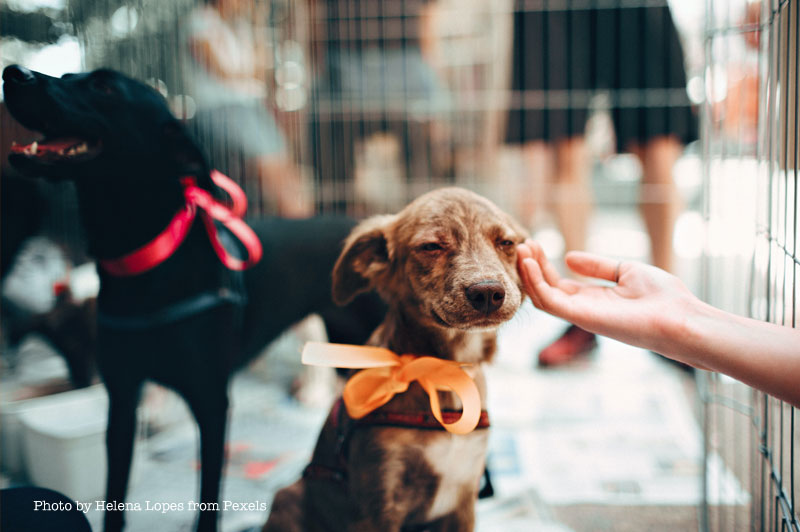
Batavia, Ohio – Caleb Peterson has been appointed Dog Warden by the Board of County Commissioners. Peterson pledged to operate the Clermont County Animal Shelter as a no-kill facility, according to a release by the County.
Caleb Peterson
Commissioner David Painter said, “Clermont County has a unique need to ensure that we do everything that we can to save the lives of animals unless it is absolutely medically non-viable, or because of temperamental disposition the dogs can’t be retrained, and after an attempt has been made to be able to rehome these animals.”
Peterson said, “A 90-percent save rate would qualify as a no-kill shelter and that is absolutely the goal and how we intend to move forward.”
Peterson served as Senior Animal Services Officer for the city of Memphis, Tenn., for more than two years before relocating to the area with his wife, doing a residency at Cincinnati Children’s Hospital Medical Center. He supervised 15 other officers while investigating allegations of cruelty, neglect and abandonment.
He holds a Bachelor of Arts in Religious Studies from the University of Tennessee.
Loveland, Ohio – Clermont County residents who are 80 years of age and older can get the COVID-19 vaccine beginning Jan. 18 under the next phase of Ohio’s vaccine distribution plan.
Below is the press release just issued by Clermont County Public Health:
Ohio will be distributing 100,000 doses of vaccine statewide beginning Jan. 18. Clermont County vaccine providers will receive 1,900 of those doses. Clermont County Public Health will get 100 doses. The remaining 1800 doses will go to:
HealthSource of Ohio
Kroger pharmacies (nine locations)
Meijer pharmacies (two locations)
Mercy Health
“We are encouraged to begin protecting our most vulnerable population,” said Health Commissioner Julianne Nesbit. “But, we are urging everyone to show patience as the supply is limited. With only 1900 doses designated for our county next week, we know it will take time until everyone that wants the vaccine can get it.”
How do you get vaccinated if you’re eligible?
Clermont County Public Health – Visit https://bit.ly/CVD19Vax to be added to the waiting list. Residents without internet can call 513-735-8500.
HealthSource of Ohio – Register (beginning Jan. 16) online at www.healthsourceofohio.org or call 513-732-5081.
Kroger pharmacies – Beginning Jan. 16 visit www.kroger.com/ohiocovidvaccine or call the Kroger COVID helpline at 866-211-5320.
Meijer pharmacies – To register, text COVID to the number 75049 andreceive a link to register. Online registration is also available at https://clinic.meijer.com/. Individuals without internet access or texting capabilities can call the pharmacy.
Eastgate 513-943-5710
Miami Township 513-576-5510
Due to the high demand and limited supply of the vaccine and COVID-19 safety protocols, appointments will be required at each location.
Clermont County Public Health has information including a waiting list survey available on its website at http://bit.ly/CVD19Vax. If you or a loved one qualifies, you can fill out the survey, and Public Health will send you more information on how or where to go to get vaccinated. Since Jan. 11, more than 6,000 people have filled out the survey to be added to the waiting list.
“We’re here to support our public health partners however we can,” said Clermont County Emergency Management Agency Director Pam Haverkos. “We are launching a COVID-19 vaccine hotline to assist residents and caregivers who may have limited access to web-based resources. We want to ensure all residents have information on how and where to get registered for the vaccine.”
The COVID-19 vaccine hotline can be reached at 513-735-8500 and is available from 8:30 a.m. – 4:30 p.m. Monday – Friday. The hotline will not be operational on Monday, Jan. 18 due to the Martin Luther King Jr. holiday.
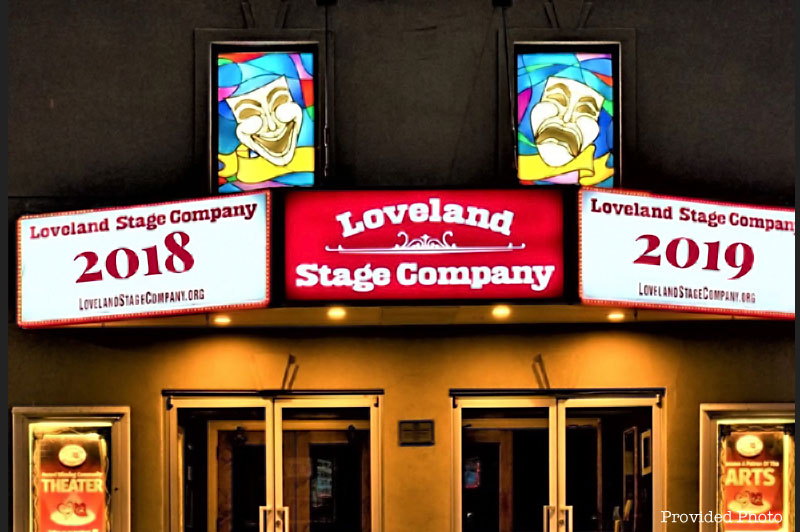
Loveland, Ohio – Each year the Loveland Stage Company recognizes a graduating high school student with its Creative Arts Scholarship.
The Loveland Stage Company is offering a scholarship again this year in the amount of $1000. In order to qualify for the scholarship, the graduating student must reside in the Loveland City School District, attend Loveland High School, or be an offspring of a Loveland Stage Company member. This scholarship is intended to be used toward college or university tuition, room and board, or books.
The Loveland Stage Company wishes to encourage and support young local talent. Therefore, prospective applicants must be planning to further their education in the Creative Arts. Qualifying areas of study include, but are not limited to: art, music, theater, photography, film, dance, and majors that support these studies. Students are asked to submit examples of their talent in their chosen field and a high school transcript demonstrating the ability to succeed academically as part of the application process.
Applications are available on the Loveland Stage Company website and are due no later than Sunday March 14.
Loveland, Ohio – Julie Dunn the administrative assistant in the board of education office asked Loveland Magazine to share this information to the broader community.
The Board of Education is seeking input from staff, families and the community on their “commitments for the 2021-2022 school year”.
Dunn asks that you please review the current LCSD Board Commitments (below) and provide feedback through answering the questions. The survey will remain open until Wednesday, January 20 at 9 AM.
Loveland, Ohio – If you have tested positive for COVID-19 and are a resident of Clermont County, the health district would like to get more information from you.
Clermont County Public Health says that this helps their nurses identify disease trends, discover outbreaks of cases, and identify close contacts that need to be quarantined.
If you want to help, you should only fill out the survey if you have recently tested positive for COVID-19.
Once this survey is completed, they will call or email you with any questions. They will also send you a letter stating you have been placed in isolation by public health if we have not already sent you one.
The health department says the information in this survey is confidential and for public health use only.
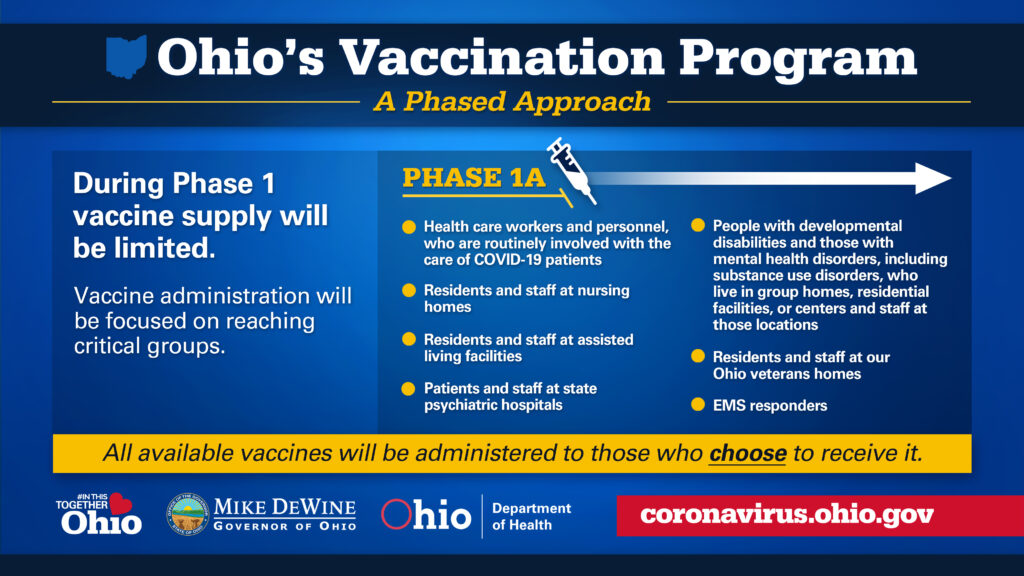
Loveland, Ohio – As more vaccine is produced more groups of people will be prioritized. However, it may be the middle of 2021 before the vaccine will be widely available to the Clermont County community.
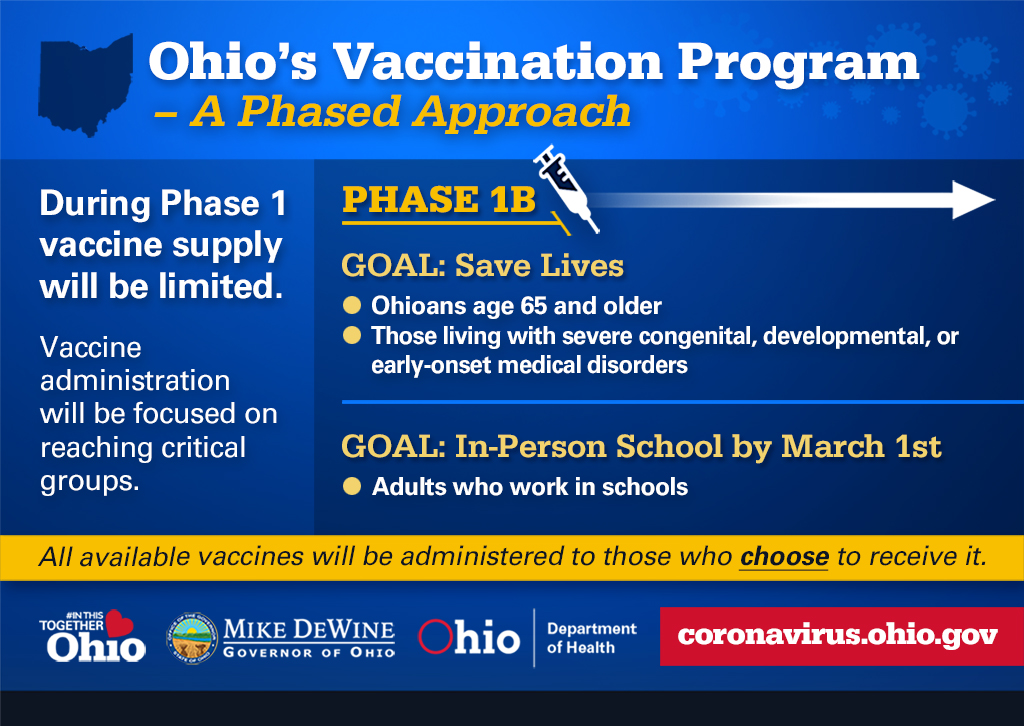
Beginning the week of January 18, Ohio will be vaccinating people who fall into phase 1B. That includes:
• Ohioans 65 and older • Those with severe congenital or developmental disorders • Employees of K-12 schools that wish to remain or return to in-person learning
Because the vaccine is still very limited in supply, Ohio will take a tiered approach to vaccinate group 1B. Ohio will follow this timeline for vaccinating group 1B.
Week of January 18 – Ohioans 80 years of age and older
Week of January 25 – Ohioans 75 years of age and older
Week of February 1 – Ohioans 70 years of age and older; K-12 school employees
Week of February 8 – Ohioans 65 years of age and older
If you or a loved one falls into group 1B and is eligible to be vaccinated, get on the:
Completing this survey will put you on the waiting list. A public health staff member will contact you to schedule an appointment or provide additional information about your vaccination options.
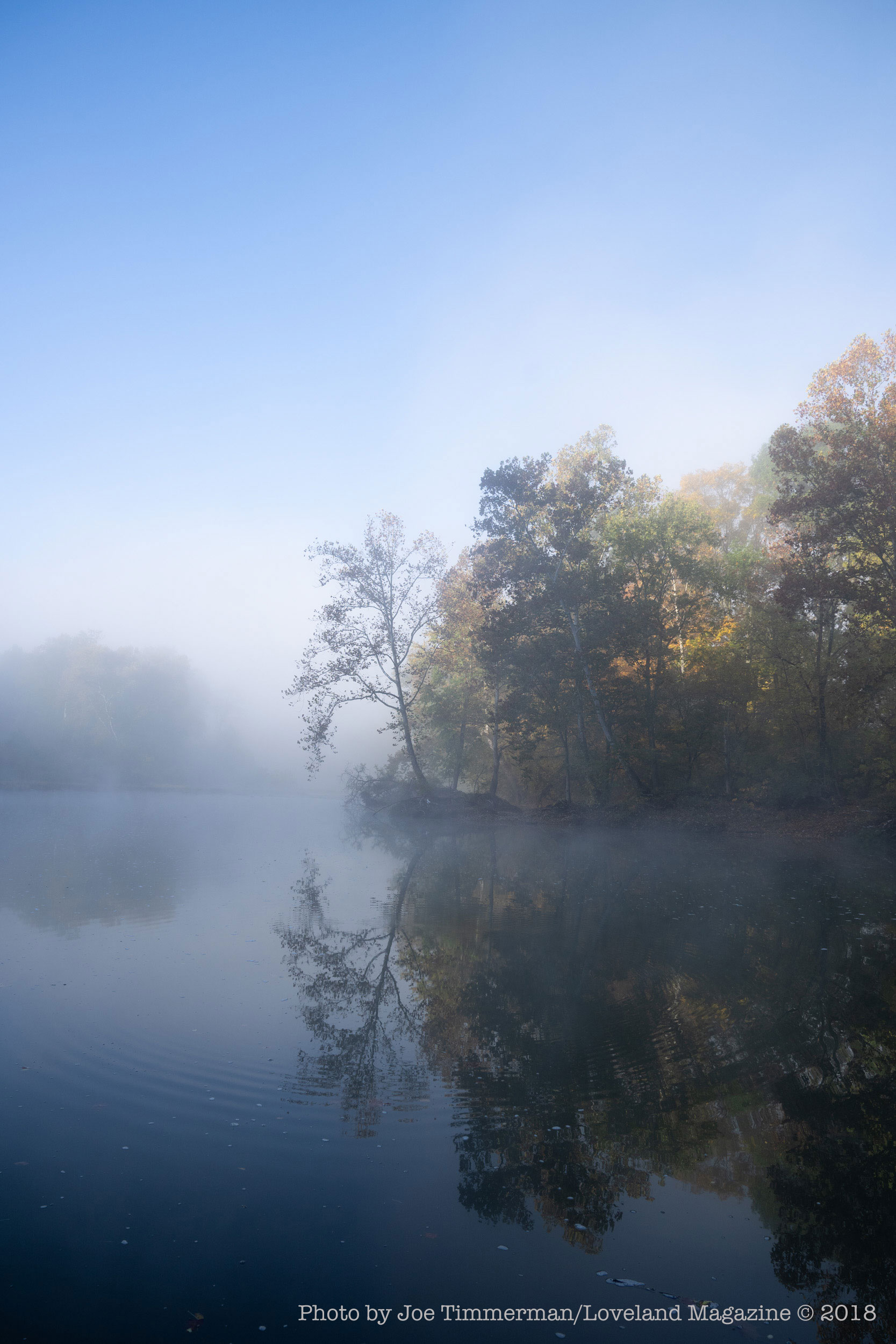
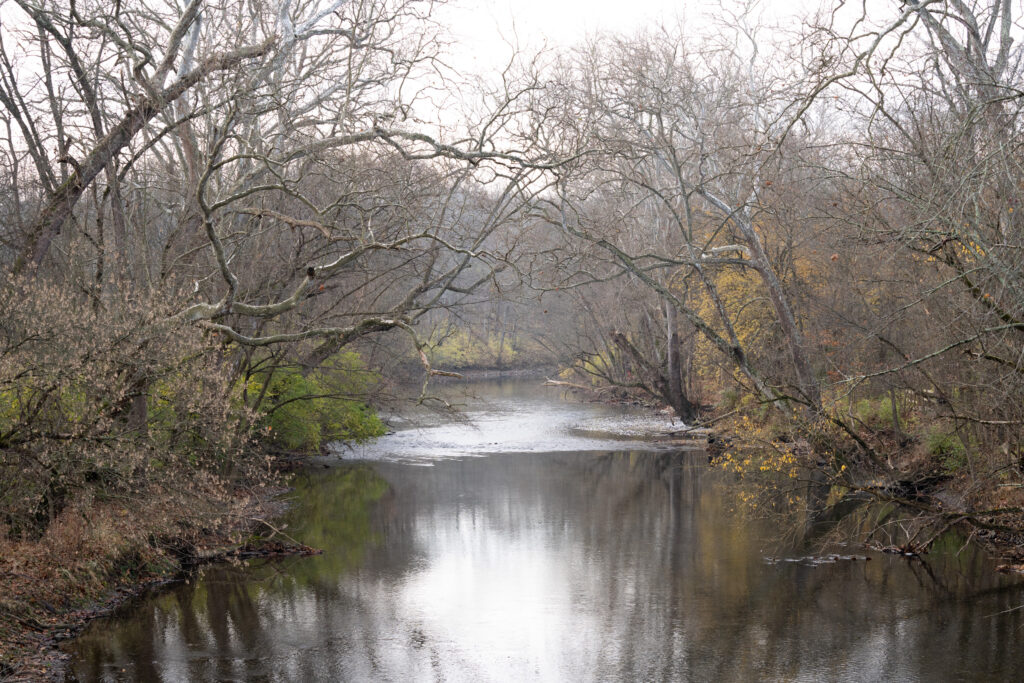
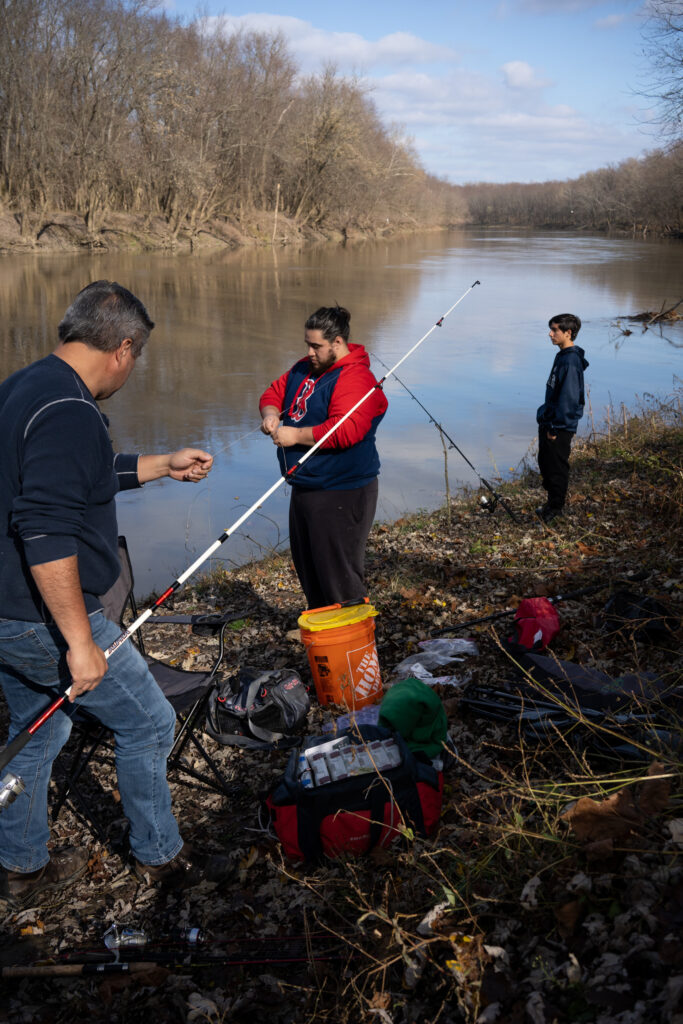
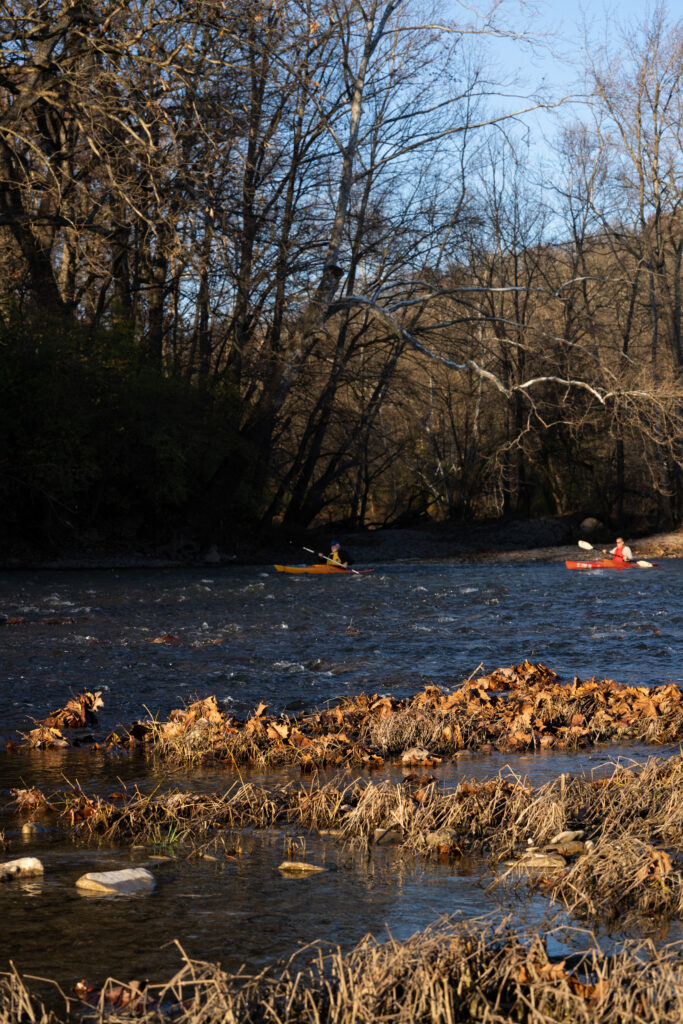
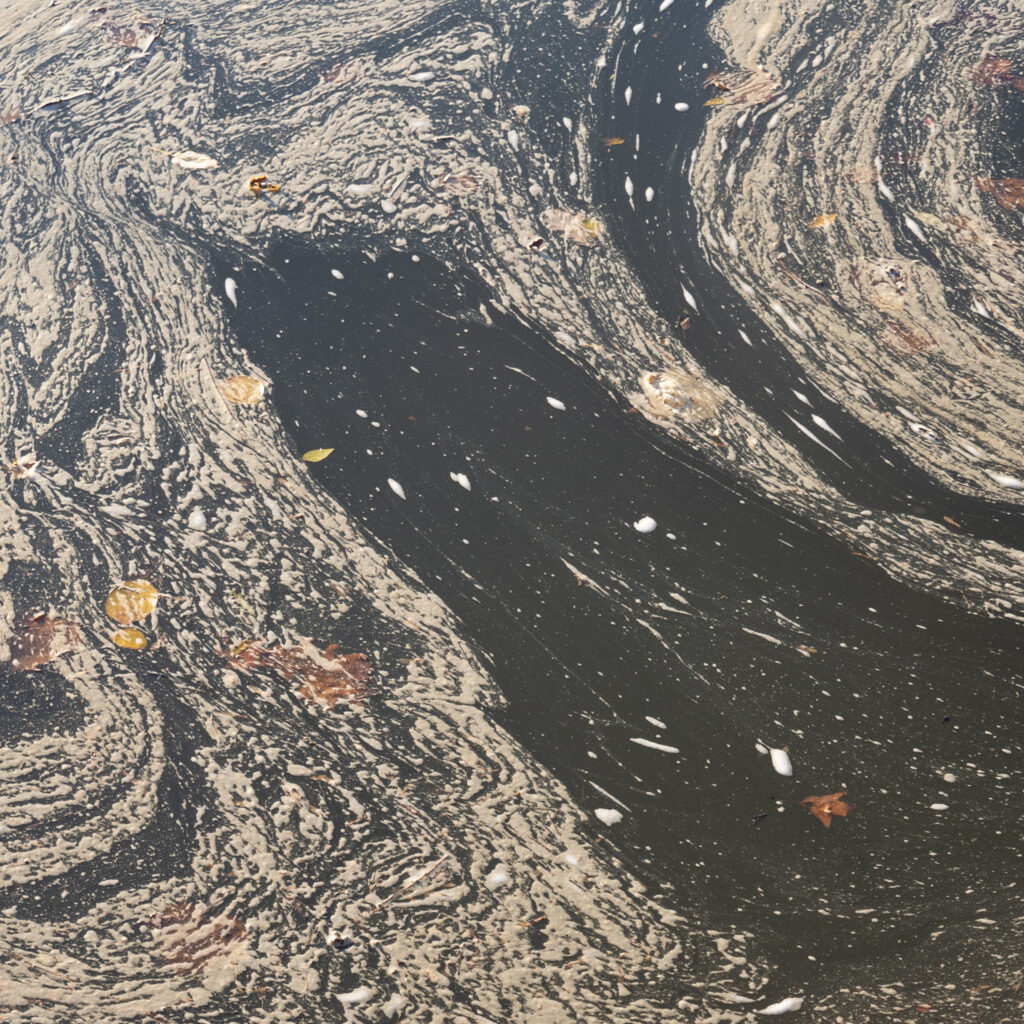
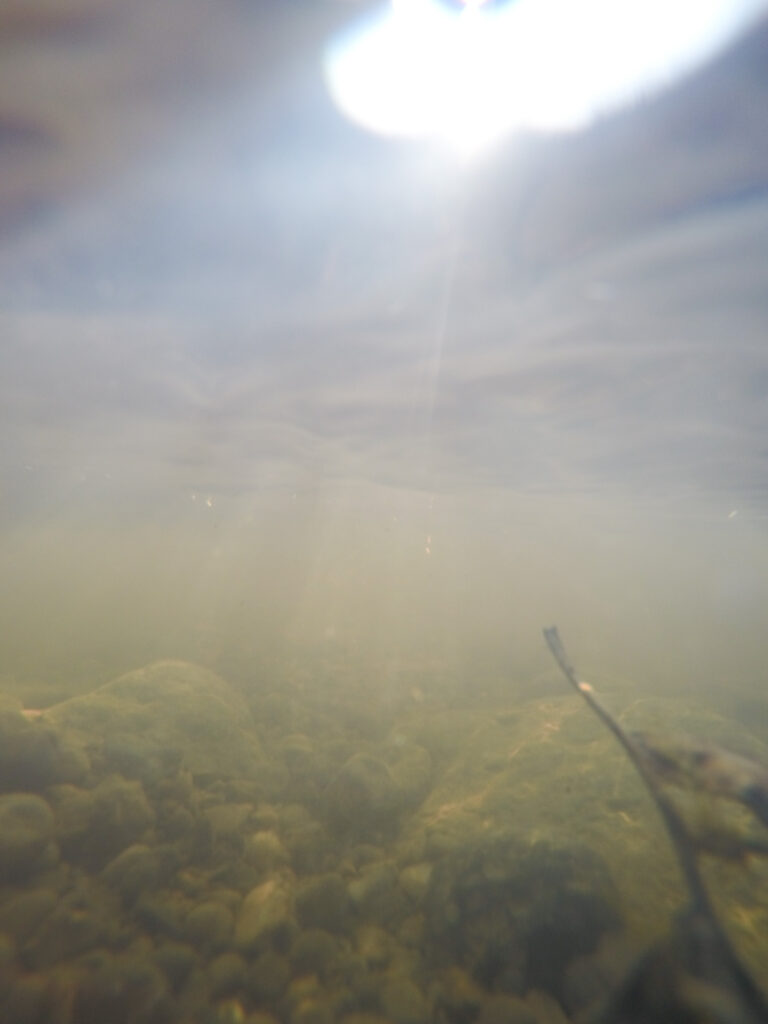
Few leaves are still falling off trees and down the ever-running water of the National Wild and Scenic Little Miami River, where they float through five counties and 111 miles of southwest Ohio, into the Ohio River and toward the Mississippi before eventually finding their way into the Gulf of Mexico. Today, these 111 miles of Little Miami River are the cleanest that they have been in the last 40 years, and as the world may seem largely disconnected due to the coronavirus pandemic, a connection between people over time is helping to create the river’s lasting sustainability.
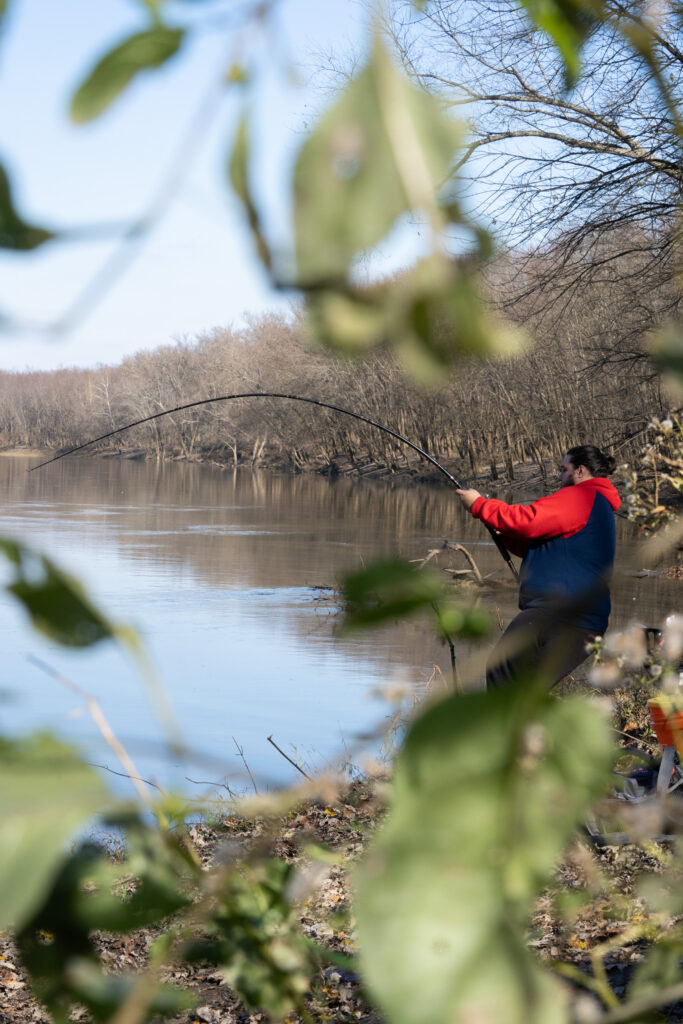
Since the end of the last Ice Age before this land was known as America, humans have lived along the Little Miami River and enjoyed the resources it provides — drinking the water alongside its banks while hunting for fish within, using the clay to build pottery or structures, and floating on the surface in kayaks or canoes like the leaves still do today. In that time, the river has seen many seasons of change, from shifts in human culture alongside its banks through community development to biological diversities in its rich, natural environment, according to the Little Miami Ecology and History report.
When the Little Miami was designated as Ohio’s first State Scenic River and included in the National Wild and Scenic River System in 1973, according to the Ohio Department of Natural Resources, locals had already been active in its conservation and return to sustainability for more than half a decade. The Little Miami Conservancy (LMC), a non-profit organization fueled by passion for the protection of the river, led the effort in Washington to recognize the importance of protecting the Little Miami River as not only a local hidden gem, but as a national treasure.
The lower section of the river runs right through the heart of Loveland, Ohio, where LMC and its current executive director, Eric Partee, is based. Partee’s passion roots from the original director of the conservancy, Glenn Thompson, who in 1967 embodied the idea that their effort isn’t about one single person, but rather about everyone coming together to save the river.
“Someday, a corridor of green will stretch from one end of the river to the other. Individuals and families will enjoy peace and quiet and restoration of spirit that comes with clean water, birds, and trees,” a quote from Glenn Thompson that Partee believes the conservancy has lived up to.
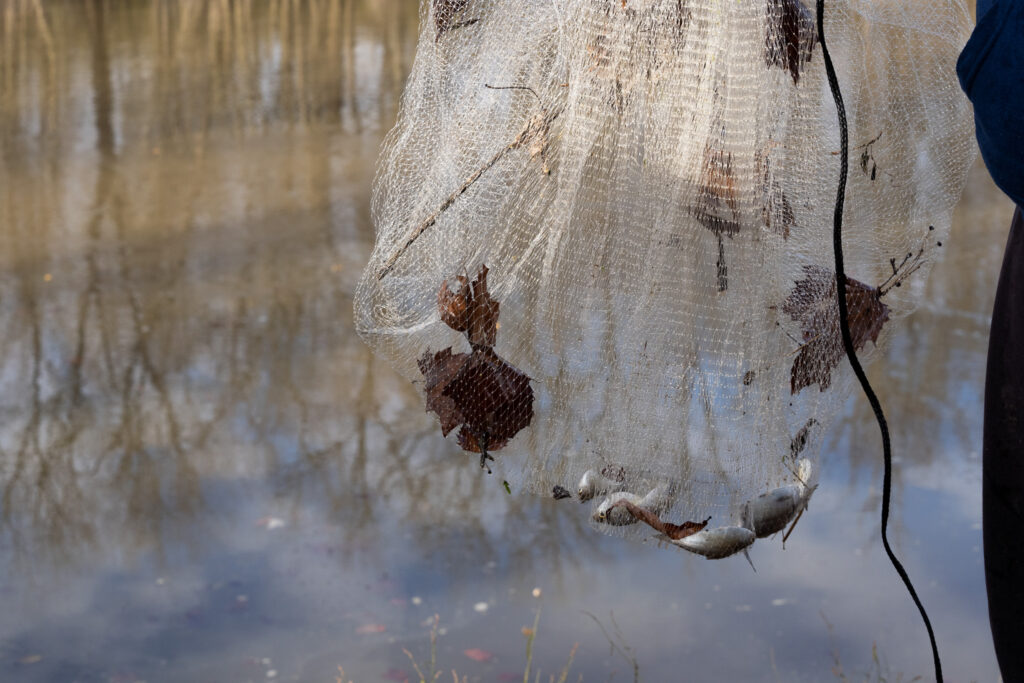
Since its origin, the conservancy has worked with agencies like the Ohio Environmental Protection Agency (OEPA), who records the condition of the Little Miami River every 10 years by sampling fish life. In the 1980s, only 4% of the Little Miami River was in full attainment of water quality health, but in recent years, the chart has flipped, and as of 2007, the river is at 96% attainment of health, according to OEPA research.
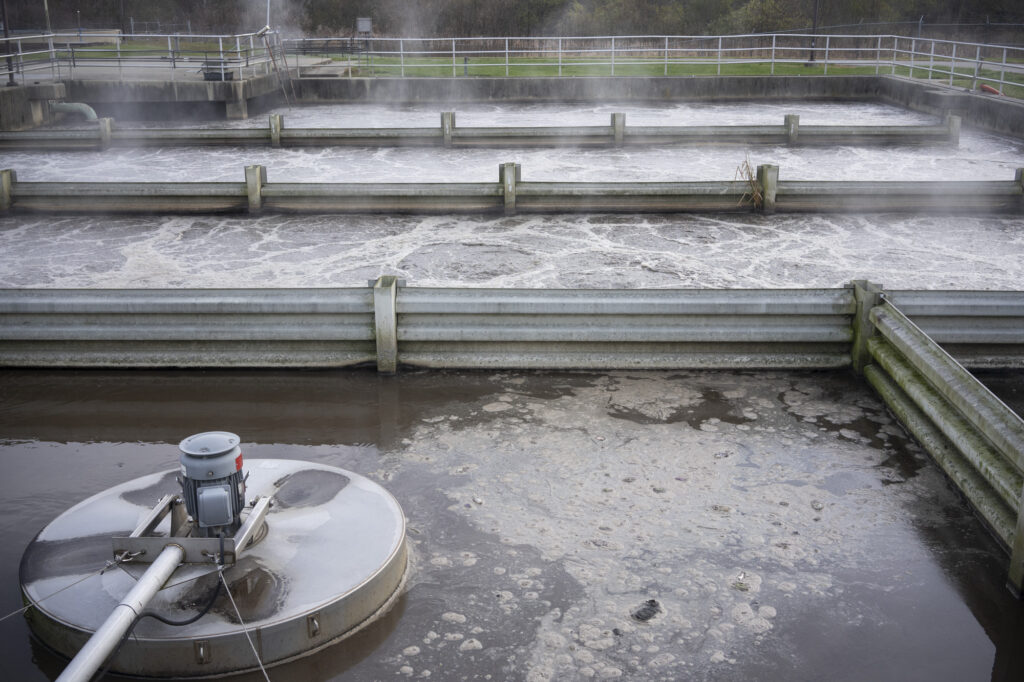
“As early as the turn of the century, this river was very well polluted. (There were) a lot of deformed fish, it was not anything close to exceptional,” Partee said in an interview. “It took a lot of discussion, a little bit of arm twisting, and some local funding to fund improvements to the sewage treatment plants to ratchet down on phosphorus, which was the main culprit … when we got the treatment plants to ratchet down on that, biology basically turned around on a dime —from terrible to exceptional.”
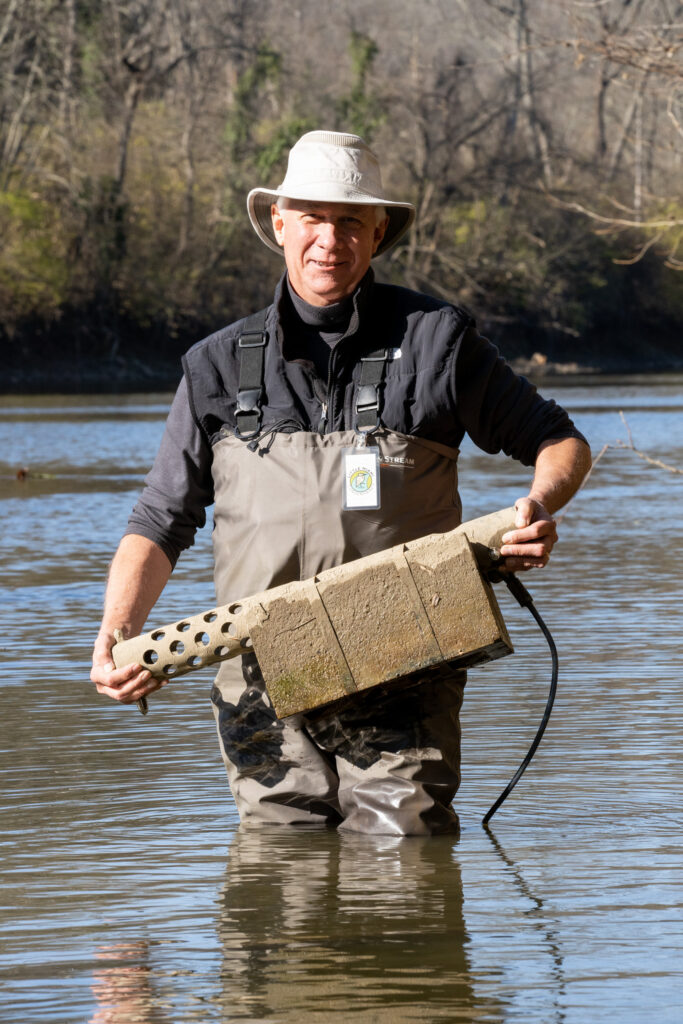
To make sure the river stays healthy, LMC introduced a set of equipment called YSI Water Quality Sondes, which monitor dissolved oxygen in nine locations throughout the length of the entire Little Miami, according to Partee. Each system monitors oxygen every 15 minutes, allowing for constant awareness of river health to prevent a reversion of quality. The conservancy also takes prides in their work on forest restoration through buying riverfront properties, planting trees, removing invasive species, and working collectively to clean up trash in the effort to grow closer to the initial goal of a corridor of green along the riverbank.
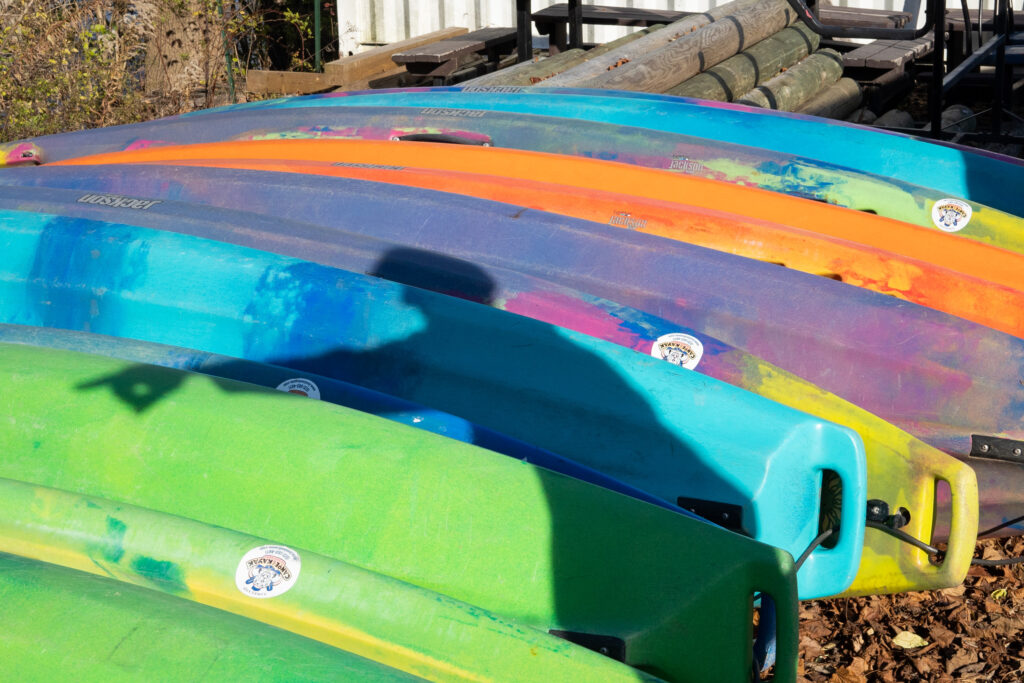
A short walk from the doors of the conservancy is the Loveland Canoe and Kayak Livery, owned by Mark and Robyn Bersani, which is just one of the many businesses along the Little Miami River that rely on its health as their main resource for income. The Bersanis work closely with the conservancy each year by offering and volunteering for cleanups as well as generous donations. This year, along with two other liveries including Rivers Edge and Scenic River, their combined donation to the Little Miami Conservancy’s effort was $56,000, according to Bersani.
“We’re involved from a grassroots portion, to actually helping with cleanups, to keeping an eye on the river, as well as donating and continuing to fund the good work that they do,” Bersani said in an interview. “It comes down to the people that live along the river, people that visit the river, the people in the community, if the river is going to stay clean. This river is very natural, it looks like it did 300 years ago … it is vital that the citizens all realize they have a role in this.”
Up the road at Loveland High School, Amy Aspenwall, an AP environmental science teacher teaches teenagers the importance of environmental awareness through hands-on experiences in places like the Little Miami River.
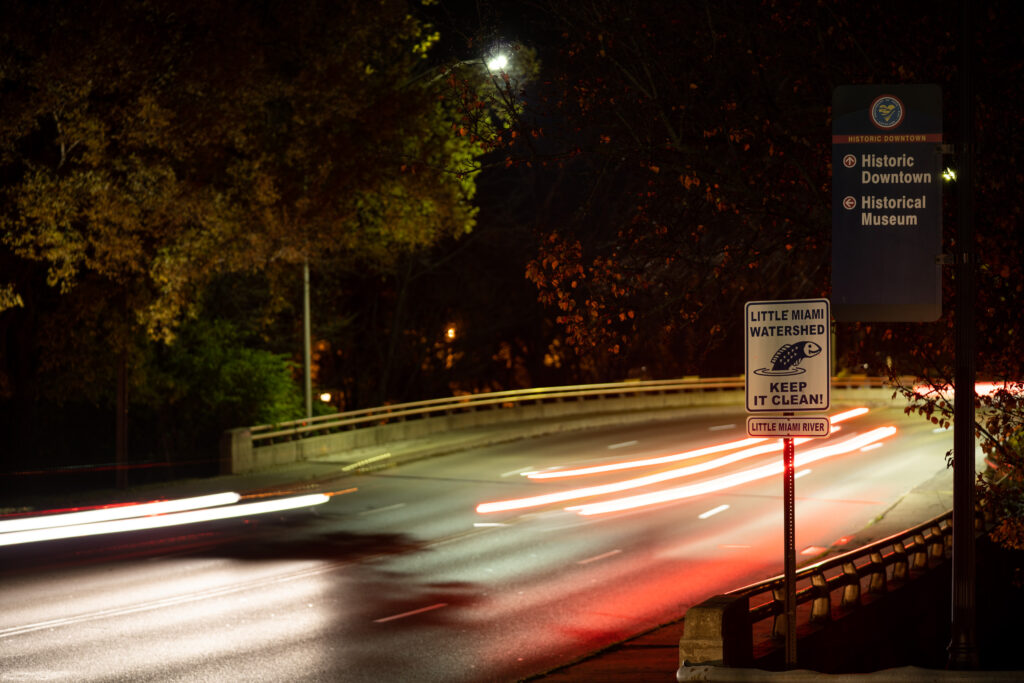
Perhaps half of the students attending Loveland High School cross over the Little Miami State and National Scenic Little Miami on their way to school each morning.
In an interview over Zoom, Aspenwall talked about the importance of students getting out into nature to actually see how humans fit in the environment, because “if you don’t see it, it’s really not your problem,” Aspenwall said. From understanding food waste to the water drinking system to sewer treatment facilities, her goal is to allow students the opportunity to realize a sense of civic responsibility.
“It’s important for students to start to think of themselves as a bigger picture rather than just someone following teacher instructions,” Aspenwall said. “I want them to start thinking on their own and realize how powerful they are as a consumer.”
Michelle Waller, an environmental specialist in the Division of Surface Water at OEPA, discussed the difficulties the river has faced through poor nutrients entering the river due to excess phosphorus from treatment plants and still faces through agricultural runoff from farms, in an interview over Zoom.
Waller said that placing phosphorus limits on the main stem’s water treatment plants in recent years proved to show major improvements in river nutrients after the OEPA performed sampling, but other negative sources are out of their reach. “We do not have authority over agriculture the way we do with what we call point sources, the treatment plants,” Waller said. “We try to work with local Soil and Water Conservation Districts, they try to get the word out about good farming practices … but there is no real regulatory authority which is a really big problem.”
The majority of land along the Little Miami River is agricultural, unlike other major rivers in Ohio that have industry running alongside their waters. And just like the branches of community that have come together to help preserve the river, many tributary streams and creeks branch out from the Little Miami, though those tributaries can be overlooked.
As most organizations, including the OEPA and LMC, focus their efforts on upholding the exceptional quality of the main stem of the Little Miami River, there is still work to be done in the tributaries. Partee talked about how there just isn’t enough time for LMC to visit every tributary and talk to every landowner. However, near Beaver Creek in Greene County, there is an organization called the Beaver Creek Wetlands Association, which has adopted that very issue. “I think that’s probably the best future for the watershed, to have local citizens dealing with multiple tributaries and try to restore or protect it,” said Partee.
Between the shared relationships of the Little Miami Conservancy, OEPA, local government officials, developers, landowners, non-profits, teachers, and local business owners, a community has come together and worked toward the common effort to make a positive, sustainable change in the health of the river.
The timelessness of the Little Miami River will carry on as long as its water continues to run. And as it always has been, it’s still up to the people alongside the riverbank to make sure that the water runs clean for generations to come. As the late author Nelson Henderson said, and Eric Partee paraphrased when we talked together, “The true meaning of life is to plant trees, under whose shade you do not expect to sit.”
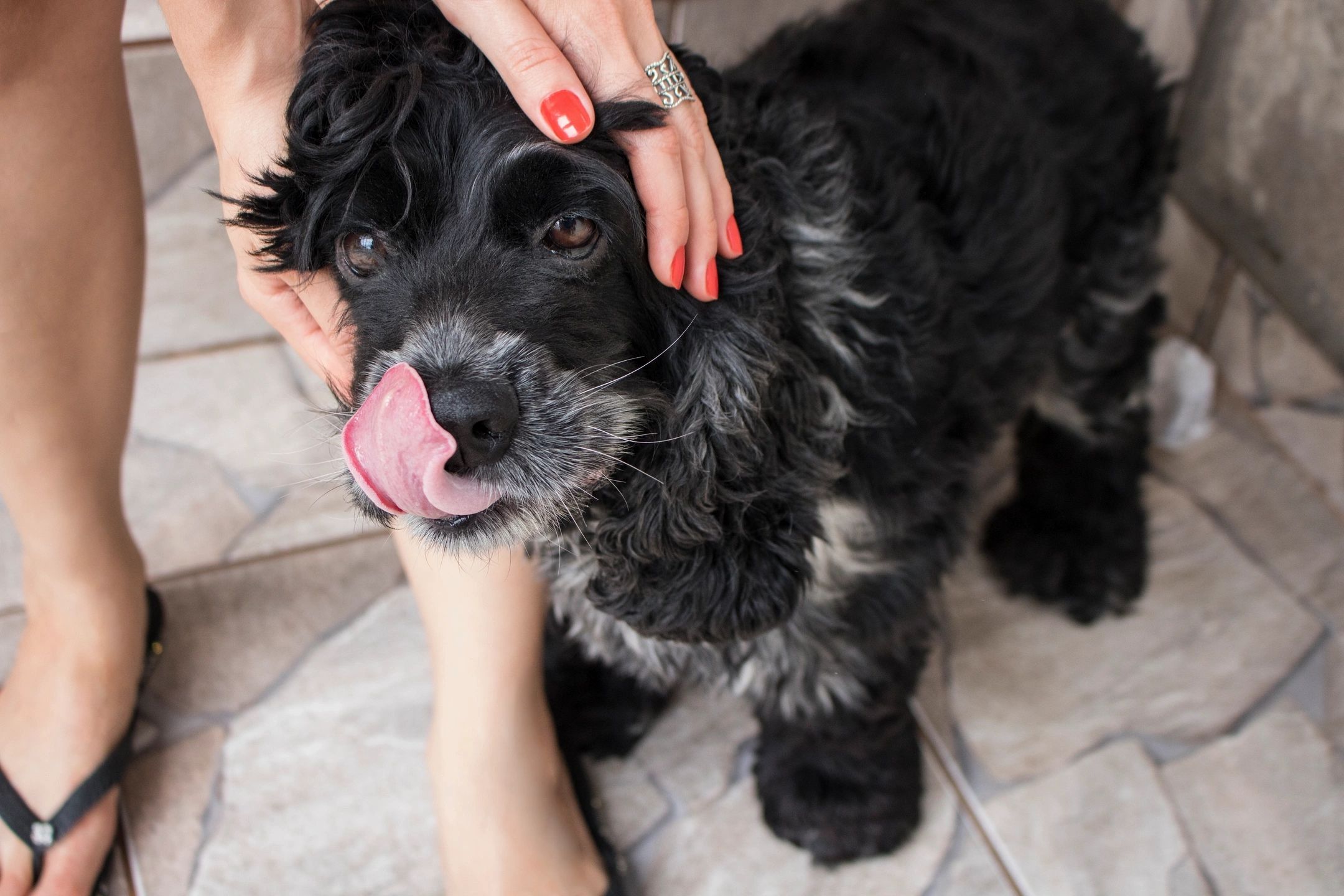
Clermont County Auditor Linda L. Fraley announced recently that 2021 dog and kennel licenses are on sale. The license fee is $16 per dog and $80 per kennel license.
The last day to purchase a license without a penalty is Jan. 31, 2021.
You may purchase or renew your dog license online by going to the Clermont County Auditor website at www.clermontauditor.org and selecting Dog License Information.
Kennel licenses cannot be purchased online; they are available only through the Auditor’s Office.
Dog licenses are also available at various locations throughout the county.
Visit the Auditor’s website for more information on where you can purchase dog licenses or contact the Auditor’s Office at 513.732.7150 or dogtags@clermontcountyohio.gov.
Auditor: The first and second-floor offices at 101 E. Main St., Batavia, are accessible to the public by appointment only. Appointments may be requested by calling 513-732-7150. Staff will continue all daily operations during normal business hours, 8 a.m.-4:30 p.m. Although appointments are available, the office encourages individuals to continue to utilize electronic resources found on www.clermontauditor.org or secure dropbox/mail slot located at the front and rear door of the Administration building.


![[VIDEO] Interview with Loveland’s new Superintendent of Schools](https://lovelandmagazine.com/wp-content/uploads/2021/02/neavin-3.jpg)