Tag: clermont county

  • Why did 77 Ohio prisoners die of COVID-19, but just 10 in Pennsylvania?

    Why did 77 Ohio prisoners die of COVID-19, but just 10 in Pennsylvania?

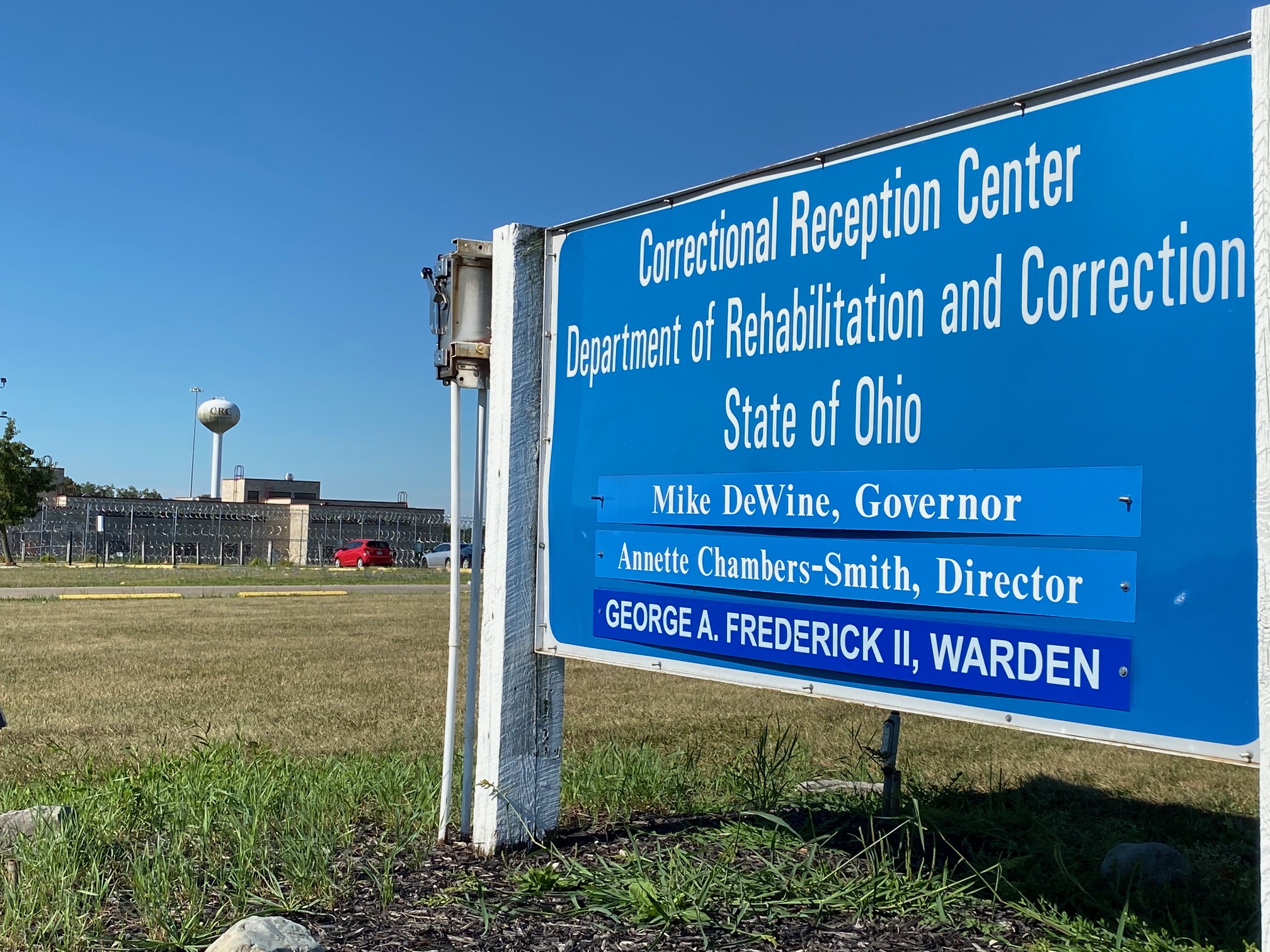
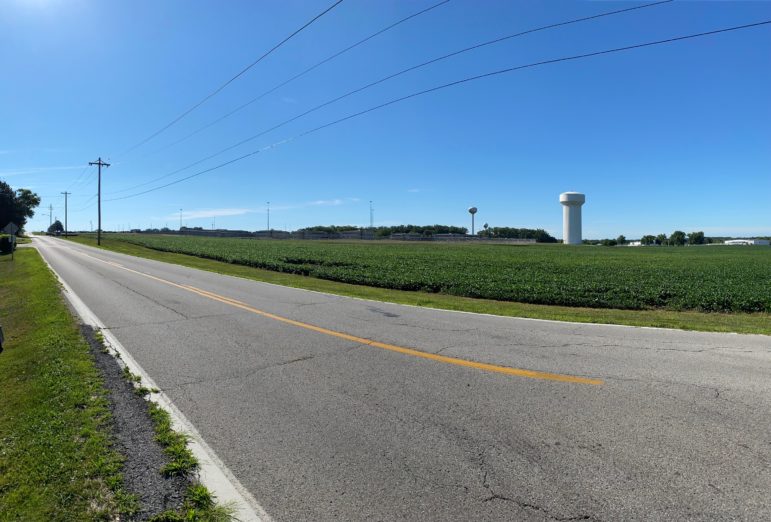
    Outside Pickaway Correctional Institution. (Photo Credit Eye on Ohio)

    Ohio’s prisons have incubated two of the four largest COVID outbreaks in the nation

    A look at how overcrowding and poor design contributed to two of the worst national outbreaks

    This article was provided by Eye on Ohio, the nonprofit, nonpartisan Ohio Center for Journalism. Please join their free mailing list as this helps us provide more public service reporting.


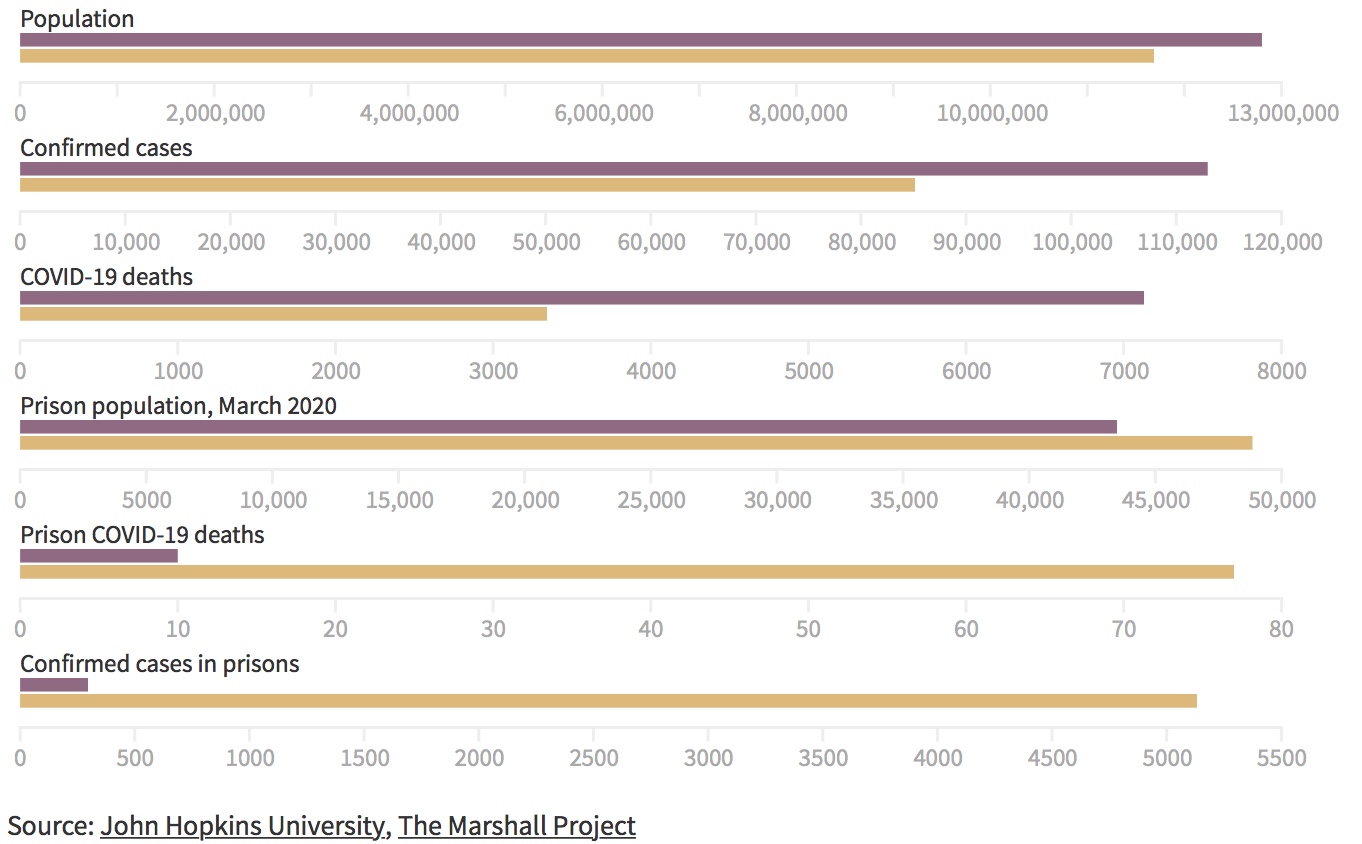
    For the first two months after the COVID-19 pandemic hit the U.S., Ohio’s response set an example. Thanks to an early shutdown order, the state’s per-capita deaths from the virus as of late April were less than half of those in neighboring Pennsylvania, a state with similar demographics.

    But inside the two states’ prison systems, it was a different story.

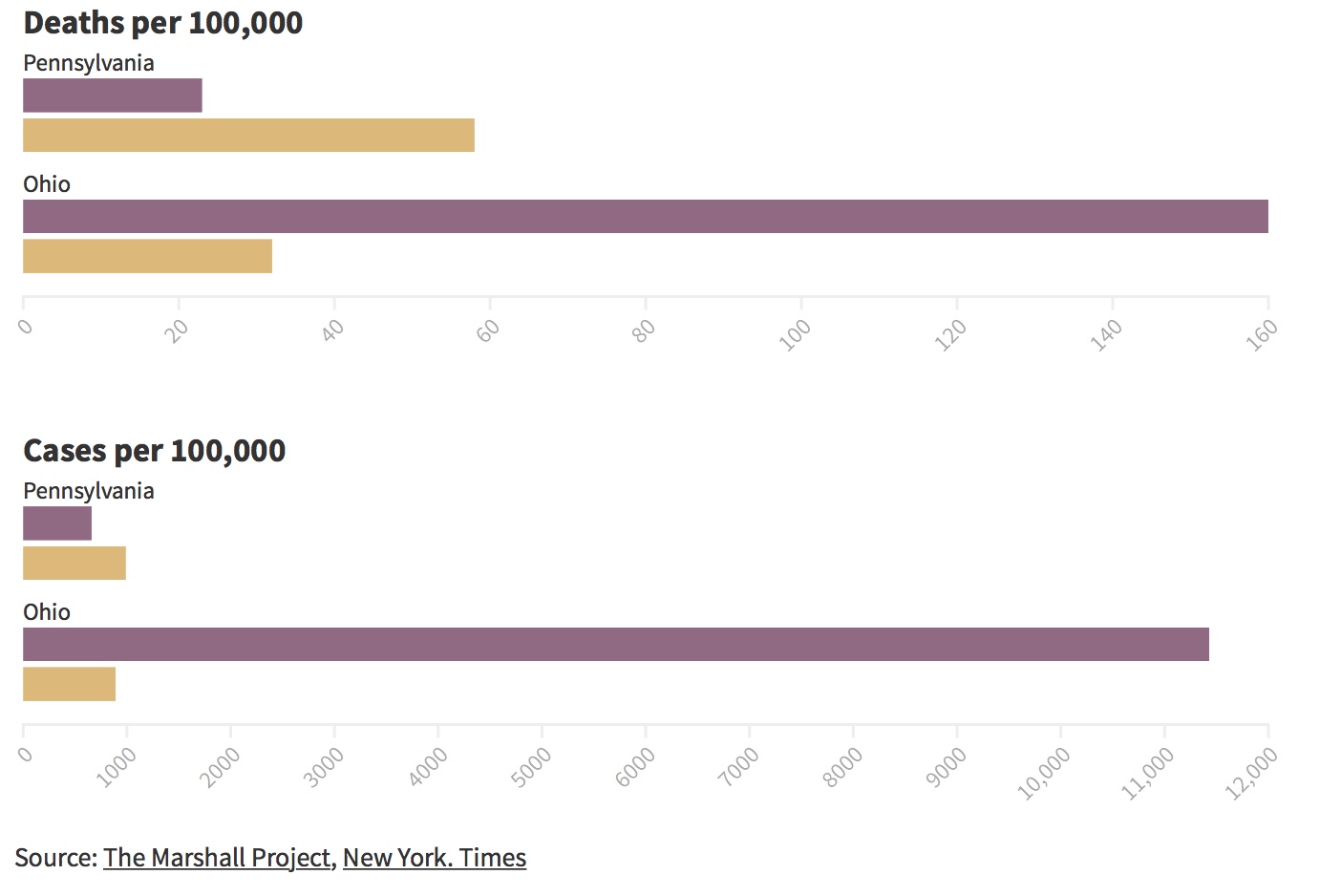
    By late April , the death rate from COVID-19 in Ohio prisons was 22 per 100,000, a rate more than 4 ½ times the overall Ohio rate and nearly twice the national rate.

    Made with Flourish

    As of August 14, there have been 77 inmate deaths known to be caused by COVID-19, and another 10 suspected— a rate of 160 deaths per 100,000 people. Ohio’s prisons have incubated two of the four largest COVID outbreaks in the nation.

    In Pennsylvania’s prison system, which houses about 44,000 inmates at 25 facilities, the death rate was comparatively low— 10 incarcerated people have died as of mid August, for a death rate of 23 per 100,000 people, despite the virus showing up in each state just a few days apart. In fact, a Pennsylvania inmate is less than half as likely to die of COVID-19 as a free Pennsylvanian.

    Made with Flourish

    Why have Ohio’s prisons failed so thoroughly to control the spread of COVID-19 when Pennsylvania fared far better?

    No state has had a model approach for controlling the virus in prisons. All have made missteps that put inmates’ and staff members’ lives at risk, according to prisoners and prisoner advocates. Prison outbreaks have also spread into the communities outside their walls. But, whether through foresight or luck, factors in some states have kept the virus from running rampant as it has in Ohio prisons. As the country faces new waves of cases, corrections departments may be able to learn from what helped or harmed some states during the first stage of the pandemic.

    While advocates for incarcerated people in Pennsylvania caution against holding that state’s experience as a model for how to respond to the pandemic, they agree that the answer may lie both in how crowded the prisons are, and how inmates are housed.

    Crowded prisons spread disease

    Controlling an outbreak of infectious disease in a prison is never easy. As with other communal living facilities such as nursing homes, once a respiratory illness enters, close quarters gives a virus ample opportunity to spread.

    Overcrowding only makes the situation worse.

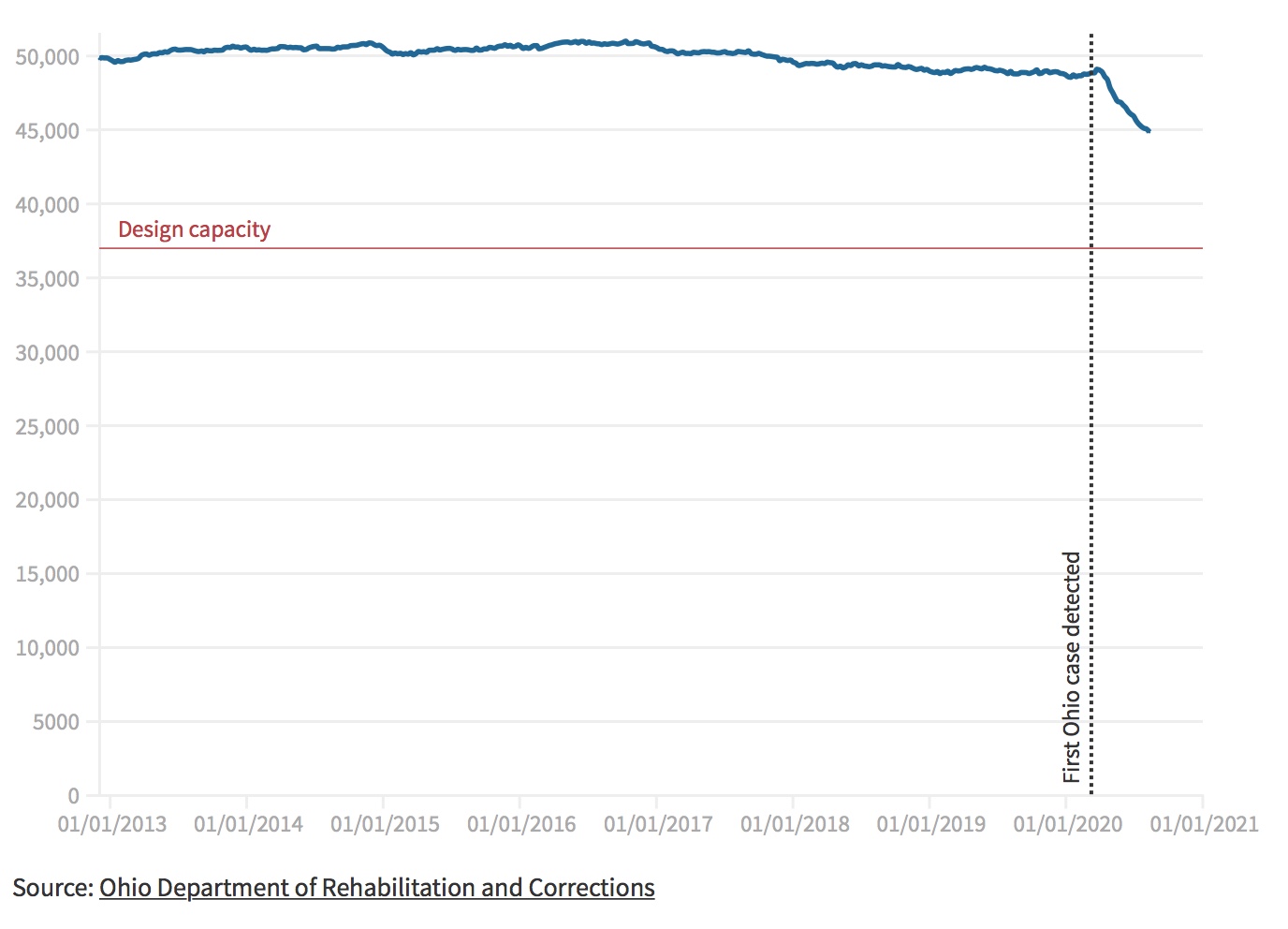
    In Ohio, where the prisons were 32% above capacity in February, the virus spread rapidly.
    Made with Flourish

    In Pennsylvania’s prisons, at 95% of capacity in February,  there were outbreaks in several prisons, but far fewer deaths.

    That state’s biggest outbreak to date—183 infections and five deaths among inmates— happened at its oldest prison facility, the 131-year-old State Correctional Institution (SCI) Huntingdon in central Pennsylvania.

    “SCI Huntingdon dates from the late 1800’s and has cells with open bars, and four-story housing units with open air shafts to all of the cells,” said Claire Shubik-Richards, executive director of the Pennsylvania Prison Society, a non-profit inmate advocacy organization. “So when the virus came in it spread like wildfire.”

    In other, newer Pennsylvania prisons with significant outbreaks, such as SCI Phoenix, the virus proved easier to control. Only 49 inmates at Phoenix, which opened about 2 years ago, have tested positive, and four have died, despite being located in hotspot Montgomery county, just north of Philadelphia.

    “The thing about that facility was that the outbreak went up and then went down pretty quickly because it’s a facility where isolating people is pretty easy,” Shubik-Richards said, because it has more single and double-occupancy cells than open dorm units.

    In Ohio’s more crowded prison system, the virus was first detected in a staff member in the 66-year-old Marion Correctional Institution on March 29. Less than a month later, nearly 4,000 inmates across the state had tested positive for the virus; 10 were dead, as was one staff member.

    Now, the death count is approaching 80. Ohio’s prison system is home to two of the four largest COVID-19 outbreaks in the nation, with 2,440 cases at Marion Correctional Institution in rural central Ohio, and 1,792 at Pickaway Correctional Institution outside Columbus.

    Pickaway, built in the 1920s as a mental hospital and converted to a prison in 1984, was designed to hold 1,328 people. As the pandemic began in Mid-March, it held 2,047– 54 percent over capacity.

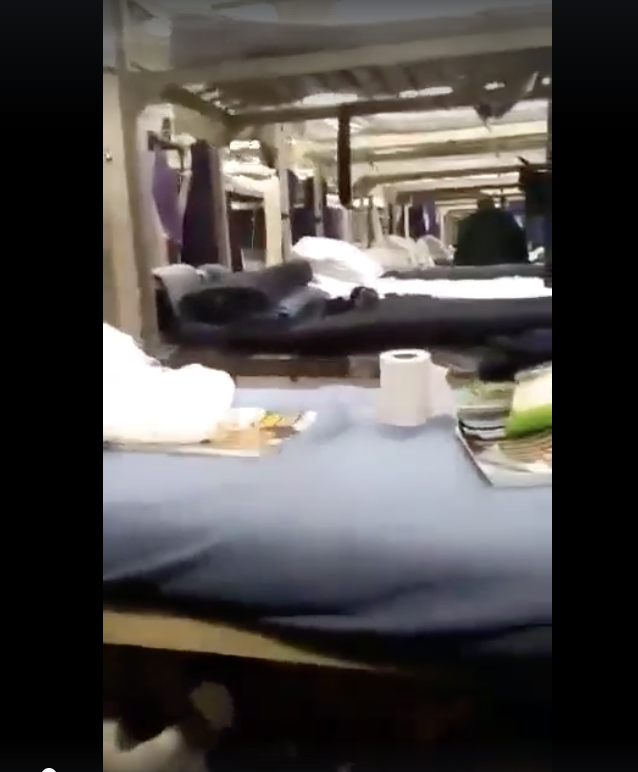
    In one cell phone video that purportedly shows the inside of Pickaway, seemingly endless racks of double-bunked beds are visible, with no barriers and little space between.

    “Everybody’s stacked on top of each other, man,” says the person wielding the camera. “Ain’t no social distancing in here….They’re playing with our lives, man.”
    Picture of Ohio dorms

    Virus runs amok in dorms

    Pickaway was designed to have 87% of its beds in open double-bunk dorms, described in a 2015 state prison renovation plan as “barrack-style” (sic), where beds were typically three feet apart. When prisons are overcrowded, staff often squeeze even more beds into the dorms than they were designed to hold, said Meghan Novisky, a Cleveland State University professor who studies how prisons impact health.

    In the 2015 master plan, state officials acknowledged that the prison’s dorm-style housing was a problem, not because of disease, but because it elevated prisoners’ stress, setting the stage for unrest.

    “A critical need is to improve the dormitory living conditions and reduce the very high levels of crowding,” the report said. “The [Strategic Capital Master Plan] recommends the phased conversion of all dormitory living units to a cubicle-type configuration where inmates will have a higher degree of personal space and privacy.”
    Outside Pickaway Correctional Institution. (Photo Credit Eye on Ohio)

    Ohio Department of Rehabilitation and Correction (DRC) spokesperson JoEllen Smith said that some of the plan’s recommendations for Pickaway have been implemented. The Orient Correctional Institution, a prison adjoining Pickaway that hasn’t been used since 2001, was demolished, as was Pickaway’s dilapidated E block of dorms. But construction of a new unit with over a thousand beds is on hold due to the pandemic.

    Around March 29, leadership at Marion – designed to hold 73% of its inmates in dorms – declared that prisoners in dorms would sleep arranged head-to-foot. That way their faces would be more than three feet apart, according to an email between the prison’s medical services director and the Marion County public health department, obtained by the Documenting COVID-19project at The Brown Institute for Media Innovation.

    According to daily statistics released from Ohio DRC, on April 21, more than 28,000 of the state’s 48,396 inmates were either “isolated” or “quarantined.” But in overcrowded prisons where most inmates lived in dorms, both happened in groups, according to numerous inmates.

    Daily coronavirus reports from DRC noted that “isolation” meant keeping infected inmates away from those who weren’t sick, while “quarantine” meant “limiting the movements” of someone who may have been exposed to the virus. Guidance issued by the DRC early in the pandemic said it was preferable to quarantine inmates in the infirmary, but if not enough cells were available, they could be “quarantined” in “an area large enough to hold beds and equipment for a minimum of 50 patients.”

    Marion was designed to hold 450 inmates in cells. On April 16, 2,417 inmates there were listed as “in quarantine.”

    The close quarters of dorm-style housing is a problem in other Ohio prisons, too, inmates reported.

    Javalen Wolfe, an inmate incarcerated in dormitory-style housing at Belmont Correctional Institution in southeastern Ohio, said that every time a flu or a cold enters the prison, there’s no stopping it.

    “This is how it works because we live so close together. If one person gets sick, everybody gets sick,” he said. “We are literally two feet, maybe two and a half feet between the next person, and there’s no divider, no wall.”

    At least nine Belmont inmates had died of COVID-19 as of Aug. 10. Belmont was designed to have 1,855 beds, over 90% of which would be in dorms. As of March 17, near the beginning of the outbreak in Ohio, 2,719 inmates were crammed into the prison— 146% of the population it was meant to hold.

    Of the 77 confirmed COVID-19 deaths in Ohio prisons as of mid-July, 67 of them were in prisons that were designed to hold at least half their inmates in dorms. Of the deaths in prisons made up mostly of cells, 10 were in Franklin Medical Center, a small prison dedicated to caring for the system’s most seriously ill inmates.

    The worst Pennsylvania outbreaks were at two prisons where inmates were housed almost exclusively in cells – Huntingdon and Phoenix. But the system overall houses just 19% of its inmates in dorms. Roughly 60% of Ohio’s inmates live in dorms, according to Department of Rehabilitation and Corrections Director Annette Chambers-Smith. Each dorm can hold anywhere from 40 to 300 inmates.

    And even Pennsylvania’s worst prison outbreaks paled in comparison to Ohio’s. At Huntingdon, the prison with the most deaths, 359 coronavirus cases were confirmed, out of 1,835 inmates. Phoenix housed 2,825 inmates as of late July, 89 of whom tested positive for COVID-19 at some point.

    Since mass testing wasn’t conducted at any of the Pennsylvania prisons, the death toll is probably a more faithful indicator of the spread of the disease. The inmate death rate at Huntingdon was 272 COVID-19 deaths per 100,000 people. At Pickaway, it was 1,709, and at Franklin Medical Center, it was over 2,000.

    Made with Flourish

    In an interview with Eye on Ohio, DRC Director Annette Chambers-Smith acknowledged that the open bays make it difficult to control the virus. She said they have attempted to mitigate dorm crowding by spreading inmates out in other areas that aren’t normally used for housing, such as gymnasiums and classrooms.

    ”They literally installed lavatories and facilities in a building so that it could be used overnight to house people,” she said.

    And administrators are experimenting with makeshift barriers between dormitory beds at most of its prisons to reduce transmission.

    Reducing overcrowding– release of prisoners

    Pennsylvania started the pandemic in a relatively good position in terms of space after years of modest, gradual population reduction. They freed up more space after the pandemic hit by giving 3,500 people sentence reprieves and shutting down the county court system.

    Made with Flourish

    Several other states have taken steps to free up space in their prisons since the pandemic began, with 15 reducing their prison populations 10% or more between March and June, according to data from The Marshall Project.

    Made with Flourish

    Connecticut has taken the most drastic measures, cutting its inmate population by more than 22%, from 12,364 on March 8, the day the virus was first detected in a Connecticut prison, to 9,604 on August 12. Six inmates have died so far in the Connecticut system, which houses only 12,000 inmates thanks to a decade-long pre-pandemic decarceration effort that reduced the population from about 20,000 in 2008.

    Made with Flourish

    Compared to the state’s prison population in March, its per-capita death rate has been less than half that of Ohio’s prisons.

    That’s despite the fact that, according to prisoner advocate groups in Connecticut, the state made many of the same missteps as Ohio in their attempts to quarantine and isolate inmates.

    Melvin Medina, public policy and advocacy director for the ACLU of Connecticut, said that the CDC has recommended isolating people with laboratory-confirmed COVID-19 together and quarantining close contacts together as a group due to limited space in prisons, but did not indicate how large these groups can or should be.

    “Our DOC took that to say that in dorm-style settings if there was one sick person in a dorm of 100 people, that meant that whole block was quarantined together,” he said. “They locked sick and healthy people in together and let the virus run its course. In hindsight, I’m deeply thankful that our death count was really low. We could have had a disaster, and we got very lucky.”

    Advocates like Novisky say releasing inmates is the best way to protect them from COVID-19, since any group housing makes it hard to control the spread of disease. Even in places where prison populations have dropped by double-digit percentages, advocates say it’s not enough.

    “They need to release those that are medically vulnerable,” based on the CDC’s criteria, not just those who are close to the end of their sentences or incarcerated for non-violent offenses, said Nyssa Taylor, criminal justice policy counsel for the American Civil Liberties Union of Pennsylvania. The state is home to about 4,000 older adults serving life sentences, she said, one of the highest such populations in the country.

    “I don’t think we should be politicizing who to release,” she said. “I think it’s really important to look at how to save lives, not just ‘release all the non-violent.”’

    Meanwhile, Ohio’s prison population fell by about 5.2% between March and June. By August 11, it had fallen 9%.

    “I think part of the problem that they’re running into is we really haven’t taken advantage of options to reduce our population size,” said Novisky.

    On April 15, Ohio Gov. Mike DeWine announced he was invoking an overcrowding statute to release some prisoners early. Inmates who were within 90 days of their planned release date could be eligible for early release, but only if they met a list of criteria. That excluded people convicted of most types of violent crime, who had served more than one sentence, who had previously been denied judicial release, or who had committed a serious infraction while in prison.

    “It basically eliminated everyone,” Novisky said.

    Chambers-Smith said the department has taken multiple steps to reduce the population, including reviewing cases of elderly inmates or those with health conditions that make them especially vulnerable to COVID-19. The list of crimes that disqualify inmates for early release under Ohio’s emergency overcrowding law, she noted, is set by the Ohio legislature. The law would have to be amended to loosen those criteria.

    “There are more serious crimes where you wouldn’t want to think about people getting out before they’re ready,” she said. “There’s a balancing act here between keeping the public safe and keeping the people in prisons safe.”

    Of the 77 Ohio inmates who have died of COVID-19, 34 —  more than half—  were in prison for sex offenses. Another 18 had been convicted of murder. The average sentences for rape or murder are more than 20 years. Many of the men killed by the coronavirus had grown old in prison.

    But most Ohio inmates are serving time for lesser crimes. Only about 12% of Ohio’s inmates were convicted of murder, and 16% were sex offenders. Meanwhile, 15% of Ohio’s inmates were in prison for drug offenses, with 10% serving time for burglary.

    But almost a third of Ohio’s inmates released in 2014 ended up back in prison within three years, according to the most recent recidivism study published by the state. All of those prisoners would have been disqualified by DeWine’s exemptions. And with the prisons packed full of repeat offenders, even low-level ones, it would have been difficult to keep older, more vulnerable inmates serving long sentences for more serious crimes isolated.

    A spokesperson clarified that it was a joint decision of the governor’s office and the DRC to disqualify repeat offenders, not a stipulation of the emergency overcrowding law.

    The day of his announcement, DeWine said he had found 105 people who were eligible for early release, though he noted that more would be considered as they came within 90 days of the end of their sentence.

    Since then, the number of inmates has declined slightly, but more due to court shutdowns meaning fewer people sentenced than the slow trickle of early releases. As of August 11, Ohio’s prison population was still nearly 8,000 people over capacity.

    Putting the community at risk

    Ohio’s prison pandemics also put those outside of prison walls at risk.

    As prisons were cut off from visitors, it may have created the false impression that diseases that spread in prisons would stay in prisons. But the Marion outbreak demonstrated otherwise. County health officials and residents voiced concerns in emails that both staff and inmates who finished their sentences were capable of spreading the virus across multiple counties.

    In one email obtained by the Documenting COVID-19 project, Traci Kinsler, the Marion County health commissioner, noted that the Marion prison was not isolating inmates before releasing them. Marion released at least one inmate who was known to be infected with COVID-19. He moved to Ashland County.

    Marion staff members who contracted COVID-19 lived in at least 20 different counties, according to one message. Two were from out of state.

    Chambers-Smith said the department initially offered staff members the option of staying at the facility where they worked to avoid infecting their families. When that offer had few takers, they contracted with hotels to give prison workers a place to sleep, or at least shower before they went home.

    Inmates are tested before their release dates, she said, and those who were selected for early release have their release dates pushed back if they test positive until they are considered recovered— officially defined by the department as 14 days past the onset of symptoms, and 72 hours symptom-free. If they reach their regularly scheduled release date, the department has no authority to keep them incarcerated, but will release COVID-positive people with a quarantine order. She said the department collaborates with health departments and religious organizations to give them a place to liveand supplies so they can self-isolate.

    Kinsler told Eye on Ohio that the Marion prison outbreak flooded the Marion Public Health Department with cases all at once, and at first officials in various departments struggled with contact tracing. They were able to contact most of the infected people who were released, though, and alerted the county health departments where they settled.
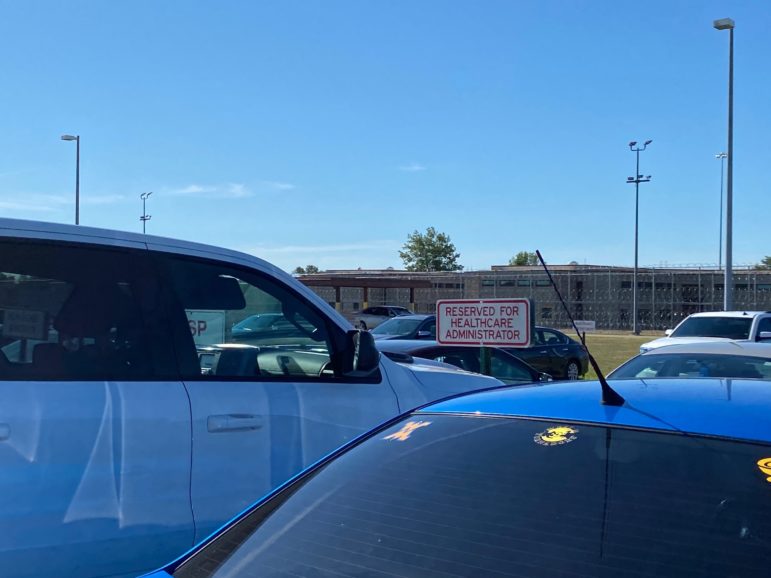
    Parking Spot for the Healthcare Administrator at Pickaway Correctional Institution. (Photo Credit Eye on Ohio)

    Ultimately, most of the 2,532 people known to be connected to the outbreak at Marion Correctional were either inmates or staff. But the virus made its way to an additional 58 people outside the prison, including family members, health care workers and food workers.

    And there could be other cases where health workers simply forgot to label the infection as related to the Marion prison outbreak in the database.

    Chambers-Smith said the danger works both ways.

    ”If there’s COVID out in the community, there’s COVID in the prisons,” she said.


    This story is sponsored by the Northeast Ohio Solutions Journalism Collaborative, composed of 16-plus Greater Cleveland news outlets including Eye on Ohio, which covers the whole state.

  • Local counselor Tonya Schaeffer: How you can help prevent suicide 

    Local counselor Tonya Schaeffer: How you can help prevent suicide 

    Tonya Schaeffer, M.Ed, LPCC-S is a co-owner of Hope Restored Counseling Services, LLC in the West Loveland Historic District at 600 West Loveland Avenue. She can be reached at 513-683-HOPE (4673)

    by Tonya Schaeffer

    According to National Institute of Mental Health, suicide is a major public health problem and a leading cause of death in the United States. The effects of suicide go beyond the person who acts to take his or her life – it can have a lasting effect on family, friends and communities.

    Are Suicide Rates Increasing?

    The American College Health Association (ACHA) states that the suicide rate among young adults, ages 15-24, has tripled since the 1950’s.  On average, there are 129 suicides per day in the U.S. More males die from suicide than females (approximately four male deaths by suicide for each female death by suicide). However, females attempt suicide three times more often than males. 

    Some risk factors for suicide include: previous attempts; depression and other mental health disorders; family history of a mental health or substance disorder; family history of suicide; drug and alcohol abuse; family history of violence, including physical or sexual abuse; impulsivity and or poor self control; hopelessness; medical illness; firearms in the home; and being exposed to others’ suicidal behavior, such as a family member, peer or media figure.

    There are many other factors that could lead to suicide, too. Even among people who have risk factors for suicide, most do not attempt it. It remains difficult to predict who will act on suicidal thoughts.

    The following behaviors may be a sign that someone is thinking about suicide: talking about wanting to die or wanting to kill themselves, sharing feelings of hopelessness, or feeling empty or numb. Other behaviors include planning or looking for a way to kill themselves, such as searching online for ideas, stocking up on pills or newly acquiring potentially lethal items (firearms or ropes). In addition, talking about being a burden to others, giving away important possessions, displaying extreme mood swings, or suddenly changing from very sad to very calm or happy are telltale signs.  

    Often in my office, a parent might be confused about how serious they should take their child talking about suicide. They might think their child is just seeking attention. However, suicidal thoughts or actions are a huge red flag that the person is in distress and an alert they need help. Any warning sign or symptom of suicide should not be ignored. Threatening to die by suicide is not a typical response to stress and should not be taken lightly.  

    Addressing Some Common Myths of Suicide

    If I talk about suicide, then it might put the idea in their head.

    This is not true! Several studies examining this concern have demonstrated that asking people if they are having suicidal thoughts or behaviors does not induce or increase such thoughts or experiences. Asking someone directly, “Are you thinking of killing yourself,” can be the best way to identify someone at risk for suicide. Another myth is people believing that talking to the person directly can’t make a difference to them. Talking to the person can help tremendously – it opens up a line of communication. Ignoring or minimizing a person’s feelings, thoughts or actions surrounding suicide is not advisable.  

    Most of the time a family member or friend are the first people to notice the warning signs of suicide. If someone tells you they are going to kill themselves, do not leave them alone, and do not promise anyone you will keep their suicidal thoughts a secret. It is important to have a plan in place to make sure the individual is as safe as possible. But, you should seek professional help as soon as possible.  

    As a mental health professional, suicide is a major concern and we are quite often assessing for it. The amount of request for services related to suicide has increased dramatically over the years.

    If you have someone in your life who you believe is suicidal, don’t wait to reach out for help.  This is not something to take lightly. In fact, if they are displaying risk factors and have a plan, take them to a local emergency room to be assessed. All too often people are seeing warning signs and reach out to us for services, and due to demand we can’t accommodate them in their time of need.   

    Resources

    If you know someone in crisis, you can also call the toll-free NATIONAL SUICIDE PREVENTION LIFELINE at 1-800-273-TALK (8255), 24 hours a day, 7 days a week. The service is available to everyone. The deaf and hard of hearing can contact the LIFELINE via TTY at 1-800-799-4889. All calls are confidential.

    Contact social media outlets directly if you are concerned about a friend’s social media updates, or dial 911 in an emergency.

    The Crisis Text Line is another resource available 24 hours a day, 7 days a week. Text “HOME” to 741741.

    Tonya Schaeffer, M.Ed, LPCC-S is a co-owner of Hope Restored Counseling Services, LLC in the West Loveland Historic District at 600 West Loveland Avenue. She can be reached at 513-683-HOPE (4673)
  • Additional info about Loveland School District’s reopening progress

    Additional info about Loveland School District’s reopening progress

    Students return on Monday, August 31

    Loveland, Ohio – School District staff was back in the buildings this week to prepare for students who will return on Monday, August 31.

    Staff received health and safety training from the district nurses and had the option of several virtual learning sessions. Staff joined sessions such as Building Community in a Remote Environment and Creating Videos That Teach Not Tell as part of their required professional learning.

    Thirty additional learning sessions, facilitated by Loveland teachers, were offered for staff members. Additional learning options will be offered next week.

    The health services team has been working all summer developing the health and safety protocols for the 2020-2021 school year. In the video below, Loveland’s District Nurse Judy Leamy covers the new health protocols in place for this school year.

    The District has also posted health protocols on the School website at the following link: 2020 COVID Health Services

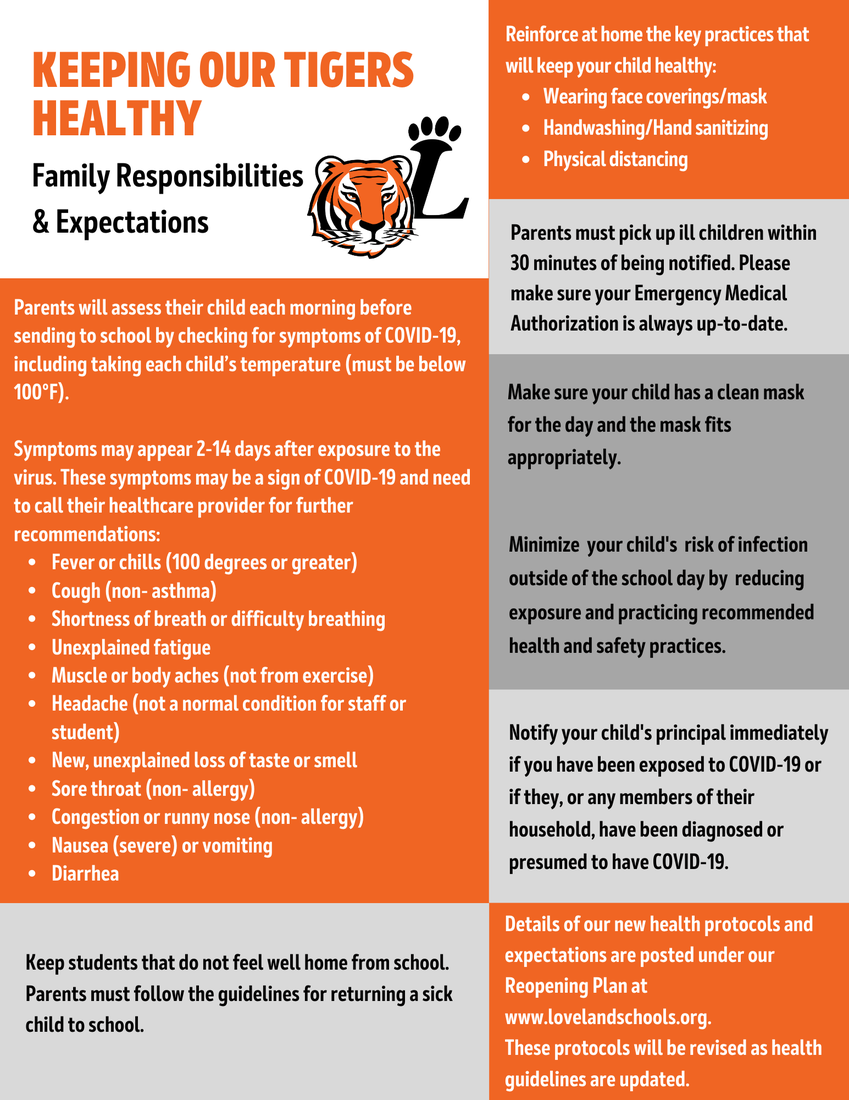
    The Health Services Reopening Plan covers such topics as:

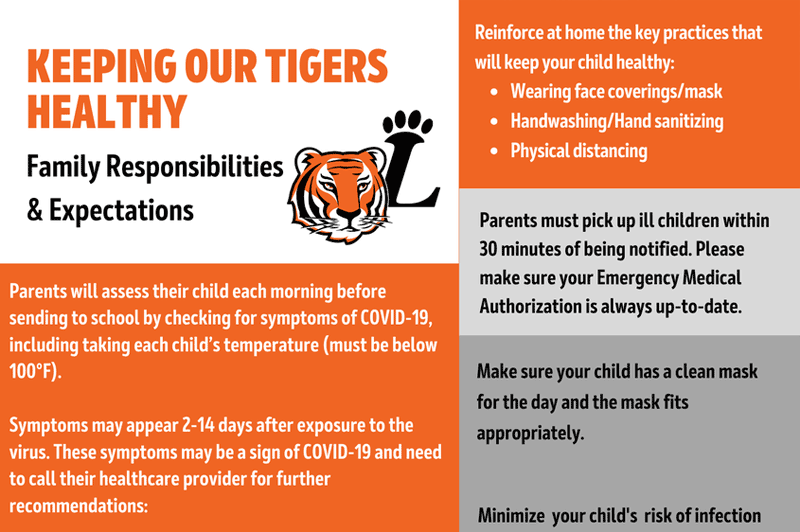
    Faculty/Staff/Student/Family Responsibilities and Expectations

    • Preventive Measures

    • Face Masks

    • Assessing for possible COVID-19

    • When to seek emergency medical attention

    • Quarantine Rules

    • High risk/ vulnerable students

    Children’s Hospital: Return to School and COVID-19

    Here is the LINK to the District Reopening Plan.
  • [12 positive cases] COVID-19 Oxford Campus Dashboard now available

    [12 positive cases] COVID-19 Oxford Campus Dashboard now available

    Oxford, Ohio – Miami University President Gregory Crawford said in an announcement Friday, “This week we have all been witnessing a troubling spread of COVID-19 on university campuses across the nation, and we will continue to monitor developments as many more schools begin to reopen next week so we can learn from their challenges and decisions.”

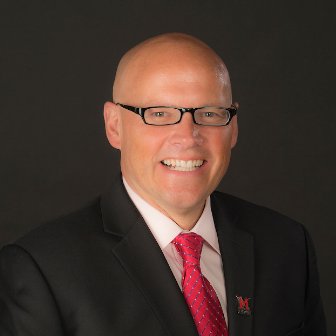
    Miami University President Gregory Crawford (Photo Miami University)

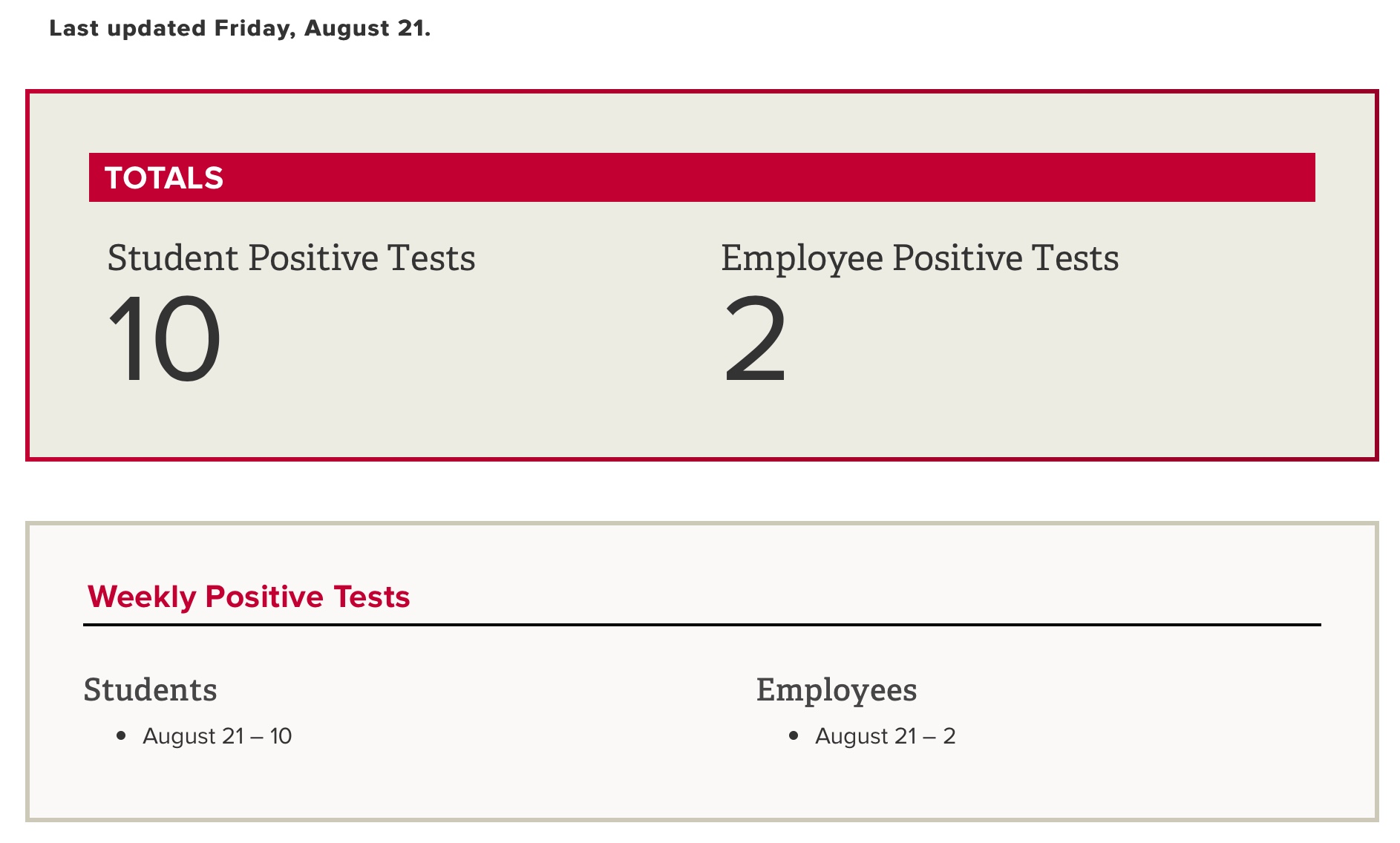
    Along with the statement Crawford reported that on the Oxford campus, since the start of classes, they have had 10 positive COVID-19 tests among students and 2 among employees.

    Miami has now created a dashboard to track positive results from tests conducted at the Employee Health Center and Student Health Service managed by TriHealth.

    The announcement also introduced a symptom tracking app, Campus Clear (available for download from the app store on a mobile device), which must be completed daily if coming to campus. An illness/absence reporting system is also in place to help track potential outbreaks in the Oxford community.

    Buildings on all campuses have reopened. Miami has begun to phase-in on-campus operations, and in the coming weeks students will be returning in stages.

    Fall classes began on Monday, August 17, mostly remote, with graduate students and some programs in person.

    Classrooms are organized to maintain six-foot physical distancing, and cleaning materials are available to clean desks and common spaces before and after each use.

    Students who will be living off campus are encouraged to stay home, if they can, until face-to-face courses start on Monday, September 21. All students are expected to follow health and safety protocols, “like those in our residence halls, in their off-campus living arrangements.”

    All returning students must sign the Healthy Together Community Pledge, committing to take responsibility for their health and others’ through recommended precautions to help prevent the spread of COVID-19 on campus and in the community. The pledge focuses on preventative measures such as social distancing, face coverings, cleaning practices, handwashing and sanitation, daily symptom assessment, limiting indoor or outdoor gatherings to fewer than 10 people, and not attending or hosting any gathering where physical distancing is not possible. It also asks students to pledge to participate in testing, contact tracing, and quarantine or isolation if they or their close contacts become ill with COVID-19.

    The phased-in strategy will culminate with the students residing on campus moving into the residence halls during the week of September 14. Face-to-face and hybrid offerings will begin on campus on Monday, September 21.

  • Reopening begins for Ohio’s colleges: Here’s how it looks

    Reopening begins for Ohio’s colleges: Here’s how it looks

    Susan Tebben

    By Susan Tebben – The Ohio Capital Journal

    Some of Ohio’s colleges and universities have begun moving students in, but the navigation of a school year amid a pandemic is still a balancing act.

    For Miami University, classes began this week, with all undergraduate courses online or remote. The plan is to keep it that way until at least Sept. 21, according to the plan posted to the school’s website. 

    “When we began planning last spring, we had hoped that the COVID-19 pandemic would be in significant decline before classes were scheduled to begin,” Miami president Greg Crawford told students. “Instead, cases are rising in many states. With 40% of our Oxford students coming from outside Ohio, we’ve been monitoring the situation closely.”

    Those that are on campus are required to wear masks, and as students come back, they can be reported to the Office of Community Standards if they repeatedly refuse to comply with an instructor’s direction to use a mask or face covering.

    Mask requirements are the norm among Ohio’s public colleges and universities, as are 14-day quarantines for students coming from states considered COVID-19 hotspots. 

    Also the norm this school year are phased reopenings, like those at The Ohio State University, Ohio University, Kent State University, Shawnee State University, Cleveland State University, and the University of Cincinnati.

    The first move-in dates for UC, Aug. 14 and 15 were considered “drop-off only,” meaning students could bring their stuff to campus, but then had to return home until the 16th. 

    Another regular part of public colleges’ and universities’ schedules is a return to at least some form of in-person class instruction that ends after Thanksgiving break. The last two weeks, including final exams, will be taken remotely at OSU, Central State University, UC, KSU and Wright State University, among others.

    Kent State and the University of Toledo have eliminated their fall break to allow students to receive a full semester despite adjusted opening dates.

    Toledo said they adjusted their Fall semester “based on the possibility of having a second wave of COVID-19 in late fall,” taking into account CDC data on the pandemic and state recommendations for higher education.

    Bowling Green State University went so far as to cancel their Winter 2021 session and provide a $1,500 credit for the first 2,000 students who cancelled their housing assignment before the school year began this week. 

    “It is important you understand that we are HIGHLY encouraging you not to live on campus this fall,” information on the university’s COVID-19 plan page stated.

    BGSU started their staggered move-in this week for those that had no other option than to take up residence, and are set to begin classes on Aug. 31. Students there will also be online only beginning Nov. 30. 

    OU phased in their reopening by allowing certain graduates and undergraduates “in a carefully selected set of academic programs” to begin their time on campus. Most students will begin remotely on Aug. 24, but students like third-year students in the College of Health Sciences and Professions’ nursing program and juniors and seniors in the Army Reserve Officer Training Corps (ROTC) are eligible to participate in the university’s first phase of schooling. 

    Universities throughout the state sticking with in-person instruction have instituted class-size reductions, along with “hybrid-remote” forms of teaching. Central State spelled out a “cohort attendance” model in its reopening plan, which would break large classes into groups, with the cohorts attending classes on alternating days. This model goes along with a 50% reduction in class sizes, something Wright State anticipates as part of its plan as well.

    “At this time, the university conservatively estimates that one-third of classes will have in-person components while the majority of in-person classes will also deliver all content remotely to provide flexibility to students who are unable or do not feel comfortable returning to campus,” said Wright State president Susan Edwards in a letter to the university community.

    Many of Ohio’s public higher education institutions have also created pledges for students connected to prevention of coronavirus, and in some cases can spur disciplinary action if not signed. 

    Testing and contact tracing for COVID-19 are a regular part of all public school plans, though the ways in which the testing is done vary from school to school

    The spring semester plan is still to be determined for most schools. The University of Akron plans to continue hybrid online and in-person instruction into the spring, but others are still watching the success of their fall semesters to plan for the future.

    “Decisions are forthcoming,” stated the UC reopening plan.


    Susan Tebben

    Susan Tebben is an award-winning journalist with a decade of experience covering Ohio news, including courts and crime, Appalachian social issues, government, education, diversity and culture. She has worked for The Newark Advocate, The Glasgow Daily Times, The Athens Messenger, and WOUB Public Media. She has also had work featured on National Public Radio.
  • 32 unit condo project sent back to P&Z

    32 unit condo project sent back to P&Z


    New public hearing set for September 1

    Loveland, Ohio – “ We’re approaching a traffic nightmare,” resident Courtney Hauck told City Council during open forum at their meeting on August 11. Hauk lives in a restored, historic Victorian home on State Route 48 (North Second Street) in North Loveland across the street from where Zika Homes hopes to build 28 condos.

    Hauck then proceeded to outline sections of the zoning code that he believes should prohibit the development. He believes that the Planning and Zoning Commission “erred” when they recommended rezoning the land from medium density to multifamily use.

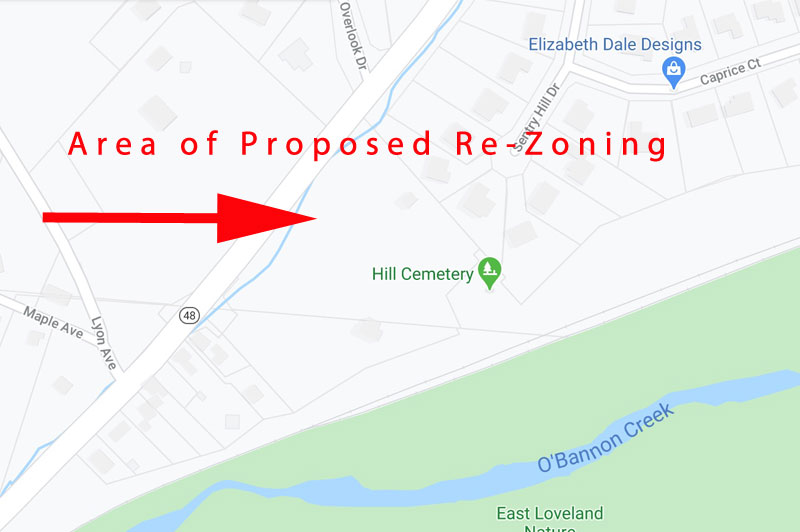
    An application has been submitted on behalf of Joe Farruggia with Zicka Homes to re-zone property off North Second Street (St. Rt. 48) south of the Sentry Hill subdivision with the potential use to build a 28-unit condominium development. The area consists of approximately 5.529 acres of undeveloped land.

    cccc

    After a public hearing, the Planning and Zoning Commission, on July 21, with a 3 to 2 split-vote sent the proposal to City Council for a final decision. Assistant City Manager Tom Smith in recommending the zone change at the time, told the Commission, “It is the opinion of City staff that the proposed rezone would be consistent with the recommendations of the Downtown Strategic Plan, surrounding land uses, and poses very little significance in the disparity between the two zones in question. Therefore, City staff dos not believe that the integrity of the code, surrounding land uses, nor their density requirements will be jeopardized with regards to the applicant’s request for rezone.”

    Hauck also told City Council that a home in the adjacent Sentry Hills subdivision recently sold for $880,000 and suggested that Zika should build high-end single-family housing that would further enhance the neighboring home values – instead of lowering them. He said that Zika was given a variance in 2017 for single family homes on the property, “But apparently decided they could not make enough money so came back with a far more profitable plan.” Hauck also expressed concern that access to the cemetery on the property promised by Zicka is not adequate because it would be too narrow for burials to take place there.

    A few minutes later during the August 11 Council meeting City Manager Dave Kennedy recommended that the request be removed from the Council agenda and recommended a motion to send the application back to the Planning and Zoning Commission so they can obtain additional information as to how the project would meet the requirements of the code.

    Kennedy said the project was not “fully vetted” from a zoning code standpoint by the Commission and he thought it best that it go back and be reevaluated. Kennedy said that he shared some of the same concerns regarding complying with the requirements of the code that Hauck expressed a few moments before.

    Both Hauck and Kennedy cited Section 1115.06 of the code and the requirements Zicka must meet before the land can be re-zoned for more intense land use.

    Section 1115.06: STANDARDS FOR ZONING MAP AMENDMENTS

       (a)    Recommendations made only by the Planning and Zoning Commission shall be considered for map amendments. All recommendations by the Planning and Zoning Commission for zoning map amendments shall be consistent with the City’s adopted plans, goals, and policies and with the intent of this Zoning Code.

    A.   Prior to making a recommendation on a proposed rezoning, the Planning and Zoning Commission shall make a finding to determine if the following conditions exist.  No rezoning of land shall be approved prior to specific documents finding at least one of the following:

             1.   There has been a change in demand for land which alters the information upon which the zoning map is based. A study indicates that there has been an increase in the demand for land in the requested zoning district.  The study shall provide a rational basis for indicating why a change in the zoning map is warranted.

             2.   Proposed uses cannot be accommodated by sites already zoned in the City due to lack of transportation or utilities or other development constraints, or the market to be served by the proposed use cannot be effectively served by the location of the existing zoning district.

             3.   There is an error in the Code text or zoning map as enacted.

             4.   The City of Loveland’s current Comprehensive Master Plan specifies a different land use for the subject property other than that which is specified on the current zoning map.

    City Council voted unanimously to send the condo proposal and re-zoning to multi-family use back to the Commission.

    There, the process starts over again with a Public Hearing on September 1 at 7 PM at City Hall.

    Concerns about increased traffic on St. Rt. 48 and gridlock going into Historic Downtown are the most often cited problem immediate neighbors have expressed about changing the land use to multi-family.

    Hauck ended by saying he didn’t think the Zika proposal was the best project in the world and he would like to see the area remain single-family zoning.

    Previous stories about the condo proposal:


    You can watch video of residents speaking against the re-zoning during the July 21 public hearing at the Planning and Zoning Commission and watch the developer defend his proposal.

    https://www.youtube.com/embed/UHAN-3CDklc
    https://www.youtube.com/embed/vrktFHCkOCE
    https://www.youtube.com/embed/rGVxq0Mf608
    https://www.youtube.com/embed/uoYi5ZM7B20
  • The Ducky Derby – Splash and Dash – for charity in Loveland river on October 11

    The Ducky Derby – Splash and Dash – for charity in Loveland river on October 11

    The event will be livestreamed on Facebook so that you can cheer on your ducks as they race!

    Loveland, Ohio – You can pick among charities to support and have a chance to win $750 if you enter the The Ducky Derby – Splash and Dash!

    Hundreds of running events in the Tri-State have been cancelled in 2020 due to Covid-19. We all miss these events, especially the many charities that are supported through your participation.

    The Ducky Derby – Splash and Dash is here to help fill the void!

    The Ducky Derby is not like other virtual races, in this event a rubber ducky will be racing in your place and it will be a fully chip timed event! There will be up to 10,000 ducks racing down the Little Miami River.  

    The first three ducks to cross the finish line will win cash prizes ($750, $500, $250) 


    The fastest duck(s) in each category will be awarded prizes.

    Choose your favorite animal (category) to race in your place: 

    Panda Duck – Bear Duck – Elephant Duck – Giraffe Duck – Tiger Duck – Leopard Duck – Duck Duck
    The Ducky Derby will take place on October 11, at 9 AM

    The ducks will be released into The Little Miami River in Loveland to begin the event. They will then race approximately ½ mile down the river. The ducks will go through a check point and a finish line. At the check point and finish line the “owner” of the duck will receive a text message of their current race time.  

    The Ducky Derby will be livestreamed on Facebook so that you can cheer on your ducks as they race! 

    Please note that this is a live event, but due to health department restrictions, spectators are encouraged to watch only online. All awards and shirts will be mailed to participants following the event.

    Together we can support our favorite charities and maybe get a little “DUCKY” in the process!  

    To register go to:  www.TheDuckyDerby.com

    When signing up be certain that you choose your favorite charity from the drop down menu.

    The Charities

    Animal Friends Humane Society

    HealthSource of Ohio Foundation

    The March of Dimes

    Epilepsy Alliance Ohio

    Young Life

    Oak Hills Youth Athletics

    The Leukemia & Lymphoma Society

    Loveland Legacy Foundation

    Life Food Pantry

    The Matt Haverkamp Foundation

    Ross Athletic Dept/Miles for Matthew

    The HealthCare Connection

    Running With Wings

    Ohio Innocence Project

    Heritage Village Museum and Educational Center

    Arthritis Foundation Inc.

    USO of Central and Southern Ohio

    Their Voice of Greater Cincinnati

    The Dragonfly Foundation

    Aubrey Rose foundation

    Butler/Warren County Toys for Tots

    Fayette County Toys for Tots

    US Marine Toys for Tots of Clermont/Brown/Adams/Clinton Counties

  • City exploring options for new downtown fire station

    City exploring options for new downtown fire station

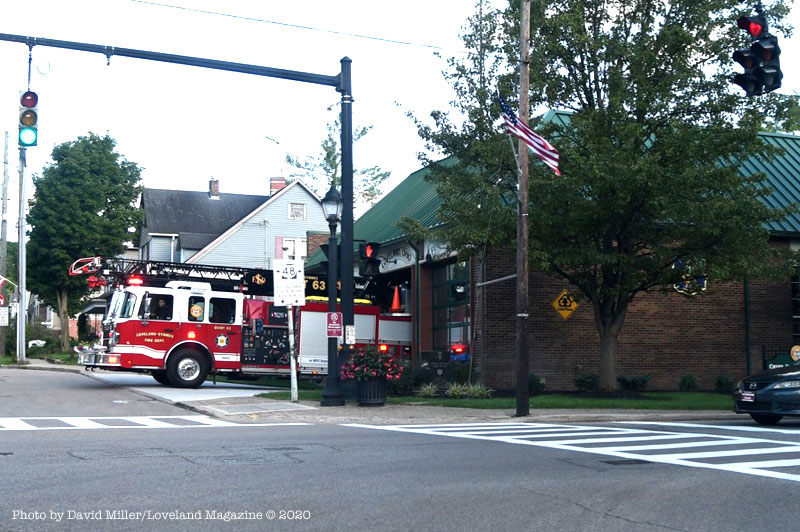
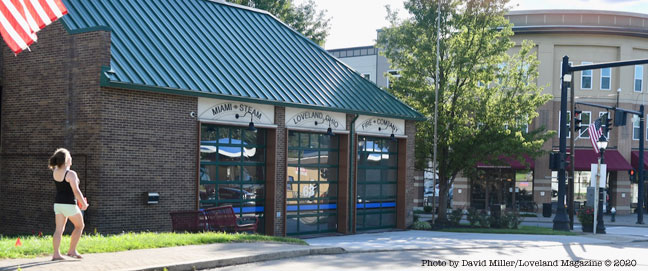
    Loveland, Ohio – The City and the Loveland Symmes Fire Department are exploring options for re-locating Fire Station 63 currently located in Historic Downtown on Second Street. It houses an engine company, a ladder company, and a medic unit. Station 63 is also home to Loveland’s original horse drawn steamer.

    Fire Station 63 in Historic Downtown

    The focus group will meet on Monday August 24 to review a “Fire Station 63 Relocation Report” prepared by MSA Design. You can review the report HERE. The report was paid for from “Fire Funds” at a cost of $12,000.

    The report recommends locating a new Station 63 at 227 East Loveland Avenue.

    Two other locations were studied, one at the corner of Oakland Road and Founders Drive, and the other on a street that may or may not be built connecting Oakland Road to O’Bannonville Road. Both of these alternate locations would have been on a portion of property if the Loveland City School District had purchased land from Grailville for new school buildings. The report says that since the exact locations that might be available for the construction of a new station at Gralville are unknown at this time, neither of these alternate options were studied in great detail.

    In the executive summary of their report MSA says in part”

    “The Department has been working out of a facility in downtown Loveland for many years. Over time, the suitability of this location has been compromised by increased traffic near the station. Additionally, a great deal of redevelopment has been going on in downtown Loveland, making the current station site a potential economic development opportunity. The construction of a new station would also allow the Department to adjust the size and layout to better serve their needs now and into the future.”

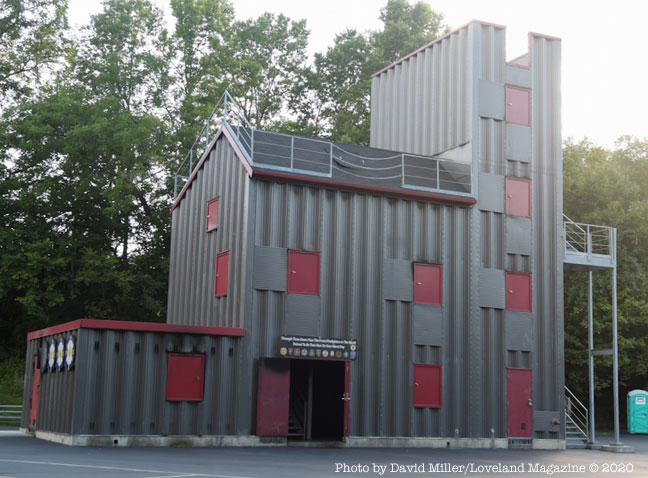
    The site proposed for a new facility is east of its current location, at 227 East Loveland Avenue. The site consists of two parcels, one of which is already owned by the Loveland Firefighters Association, while the other is owned by City taxpayers. The Firefighters Association’s parcel houses an existing meeting hall (Fraternal Order of Moose Lodge) while the City resident’s parcel houses the Fire Department’s fire training tower, a public works facility and parking with access to outdoor recreational facilities including the East Loveland Nature Preserve.

    The Fraternal Order of Moose Lodge on East Loveland Avenue where a new fire station might be built.

    MSA’s report says that a new Station 63 could be constructed on the East Loveland Avenue site for between 5 and 5.8 million dollars ($300 – $350 per s.f.) in today’s dollars. MSA notes the fact that these numbers are given in 2020 dollars and that should be considered when budgeting for a future project.

    City Manager Dave Kennedy told Loveland Magazine today that if a new station is built it will be paid for using the City’s Fire Fund. He anticipates that the City will sell bonds, and he does not anticipate a tax increase to pay off the bonds.

    Members of the Fire Station 63 Relocation Focus Group are, Kathleen Eldredge, Allison Ellis, and Larry Flynn. Also in the group is LSFD Captain Bruce Hawk, representing the fire department, Councilmen Andy Bateman and Ted Phelps representing City Council, and City Manager Dave Kennedy representing City staff.

    A fire training tower is already located on property where a replacement for Fire Station 63 might be built.

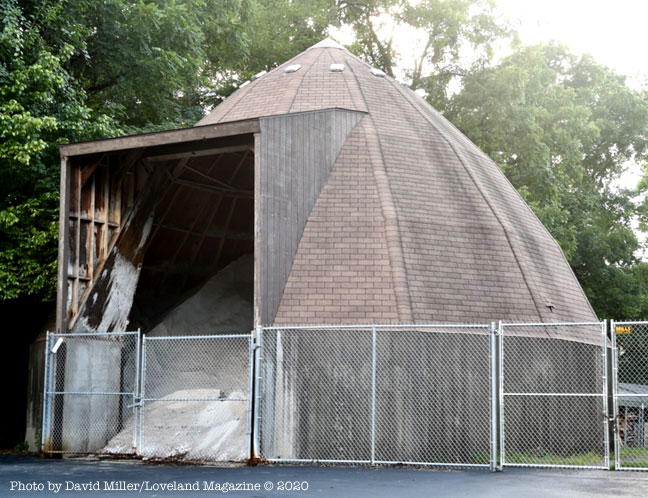
    Kennedy said, “The Firefighter Association owns (part of) the land, They have indicated that if the City desires to build a fire station on that site they would donate the property to the city as they did the property to build the salt dome, the fire tower, and the nature trail parking lot. In the end the City of Loveland would own all of the land and all improvements provided the committee recommends and the City choses that site.”

    The City stores road salt on property where a replacement for Fire Station 63 might be built.

    The current fire station sits on part of the land from the old City Hall and fire station that was destroyed in a fire in the early 1970’s and is owned by the City of Loveland

    Kennedy said about the current fire station, “Returning the property to commercial use could be a possibility or council could choose another public use. At the end of the day the highest best use for the city with all factors considered would be presented to council.” He added that the proceeds of any sale of the current station and property, “would go back to the fund that was utilized to construct the Fire Station which was the fire fund.”

    Kennedy added, “The current fire station is nearly 50 years old and was built to accommodate our volunteer fire department at that time. The Fire Station was built after the city hall and fire station was destroyed by fire in the early 1970’s. Operating out of the fire station is challenging for today’s modern fire service with on duty career firefighters. The station doesn’t provide quick access to apparatus and is challenging to respond from because of location and size of the front apron. Fire apparatus barley fits into the facility and is often damaged due to the size of the garage doors. The station doesn’t have safety and health features that are necessary for the hazards facing firefighters today.”

    The City Manager was asked, however did not offer an estimate of when a recommendation might be forwarded to City Council or an estimate of when construction might start if they do.

  • Act 3 of the Importance of being Earnest

    Act 3 of the Importance of being Earnest

    Loveland, Ohio – Act 3 of The Importance of Being Earnest recorded live at the Loveland Stage Company by LSC Radio in beautiful Historic Downtown Loveland, Ohio is now ready for your viewing pleasure.

    If you want to watch Act 1 & 2 first:

    Watch Act 2 of The Importance of Being Earnest by the…

    cc

    ccc

    Watch Act 3 of The Importance of Being Earnest by the…

    Cast

    Adrianna Boris – Jack
    You may have seen Adrianna on the LSC stage as Philia in “A Funny Thing Happened on the Way to the Forum,” or around town as Rizzo in “Grease” at Mariemont and Footlighters.  Other favorite roles have included Julia in “The Wedding Singer,” Cecily in “The Importance of Being Earnest,” and the Witch in “Into the Woods”. Thanks to Micheal and the whole team at LSC for bringing us together for this project!
    Carissa Griffith-Sloan – Foley Artist
    Carissa is no stranger to the LSC stage. She has appeared onstage in a number of LSC productions including The Drowsy Chaperone (u/s Drowsy), White Christmas (Martha), Young Frankenstein (Frau Blucher), and many others. Another favorite role was Grempkin in Peter and the Starcatcher at Footlighters.  Carissa would like to thank her husband, John, for always being her favorite scene partner, and everyone involved with putting this production together.
    David Taylor – Composer, Piano
    David is a keyboard player who enjoys the challenge of creating great sounds and performing.  He has performed for many community theatre companies and high school drama productions in the Cincinnati and Northern Kentucky areas including several CMT productions.  Favorite shows he has performed in and created the sounds for include The Producers, Young Frankenstein, The Toxic Avenger, Seussical the Musical, Big Fish, and Shrek.  By day, David is a Financial Analyst for Coesia managing the forecasts and budgets for all of the North America, Mexico, and South America regions.
    Jacqlyn Schott – Algernon
    There’s magic in the number three and Jacqlyn couldn’t be more elated to return to Loveland’s stage for the third time as a part of such a fun trio! Three of her favorite past credits include Spider (James and the Giant Peach), Caroline Bramble (Enchanted April), and directing Ordinary Days. This fall, Jacqlyn will be reprising the role of director for Little Shop of Horrors and hopes you’re already planning on return visits to LSC so “you too can be a star!” As always, she thanks her loved ones for their never-ending support.
    Jill Gornet – Lane/Merriman
    Jill is excited to be co-producing Gypsy, which is one of her favorite musicals. She was co-producer for Bugsy Malone, Jr., Don’t Drink the Water and A Funny Thing Happened on the Way to the Forum. Jill won an Orchid as the producer of The Drowsy Chaperone. She was last seen on-stage at LSC in Memphis (Clara/ensemble), White Christmas (quintet/ensemble), Will Rogers Follies (quartet) and Fiddler on the Roof (Rifke/ensemble). Retired from USPS, she sings with Sharonville Chorus at retirement/assisted living homes. Jill would like to thank her family and friends for their love and support.
    John Sloan – Gwendolen
    John is back once more at Loveland Stage Company.  He has appeared in too many LSC shows to list them all, but favorites include: Young Frankenstein (Igor), Oklahoma! (Jud Fry), Thoroughly Modern Millie (Ching-Ho), and The Producers.  He last appeared in The Drowsy Chaperone (Gangster #1) which was directed by his lovely wife, Carissa, and has directed the recent LSC productions of A Funny Thing Happened on the Way to the Forum and Don’t Drink the Water.  Thanks to Micheal for this opportunity.  Enjoy the show and thank you for supporting the arts!
    Joshua Marcus – Miss Prism
    This is Joshua’s first performance with Loveland Radio, but has previously been seen on stage in, The Drowsy Chaperone (George) and Cole, An Entertainment (Performer). He is excited to be a part of another amazing Loveland production. Joshua would like to thank his wife, Leah, and his children, Hanna and Samuel, for their love, support.
    Melinda Murray-Hubbard – Chausible
    Melinda is glad to be back once again with LSC after performances in Cole, An Entertainment and The Drowsy Chaperone. She has also recently been seen as Sponge in Bart’s Bards’ James and the Giant Peach, and was a costume assistant for the LSC production of Bugsy Malone, Jr. Dr. Hubbard is always up for something new, and this show fits the bill! She thanks her incredible family for supporting her and the amazing folks at LSC for this opportunity. Ya’ gotta get a gimmick!
    Thomas Cavano – Lady Bracknell
    Tom has been involved with community theater in the Cincinnati area for over 30 years. He first performed with LSC in 2008 (The King and I). Since then, he has performed in numerous LSC productions, directed three award-winning shows (Spelling Bee, The Producers, and Young Frankenstein), co-produced many shows, the most recent being Memphis, and has taken an active role in off stage work including set construction, design, decor and stage crew.
    Vincent Eldridge – Cecily
    Vincent has thoroughly enjoyed being a part of this genderswapped version of The Importance of Being Earnest. He has been seen on stage as Gangster #2 in The Drowsy Chaperone at LSC, as part of the Octet in Sweeney Todd with Queen City Productions, as was in the Gender Bender last October with Mason Community Players. When he’s not on stage, he enjoys learning the art of lighting and was the lighting designer for The Little Mermaid and Sorry, Wrong Number/The Hitch-Hiker. Outside of theatre he spends his free time painting and trying his best at woodworking. He’d like to give a shout out to the rest of the cast, the crew, and the director for making this a wonderfully fun experience!

    Crew

    Bob Kessler – Tech Director
    Bob works as both a Director of Photography in the regional video community, and as an artist at Kessler Studios, a Loveland-based stained glass and mosaic firm. Bob has served as the Lighting Chair for the Loveland Stage Company since 2013, and has volunteered as Lighting Director on many plays at LSC: Cole: An Entertainment, Memphis, 9 to 5, Jekyll & Hyde, Fiddler On The Roof, I Remember Mama, Oklahoma!, and The Producers.
    Charlie Rader – Camera Operator
    Dave Bauer – Audio Director
    The webmaster of LSC’s award-winning website, Dave brings a lifetime of passion for all things music, sound and photography.  By day, Dave works in schools in Southwest Ohio maintaining computer systems and making sure teachers have the technology they need.  By nights and weekends, Dave is the owner of Technology Concierge Services and is the sound designer for two local bands.  This is Dave’s first involvement in an LSC production.
    Greg Smith – Lighting Design
    An Orchid award-winning Lighting Designer, Set Designer and Producer, Greg always enjoys doing lighting design for a musical at LSC.  The opportunities for creativity are endless when working with such a talented cast and crew.
    Micheal Harris-Kiser – Director
    Micheal is a multiple award-winning director, actor, and set designer. Studying acting at The American Academy of Dramatic Arts, Micheal has pursued his passion for theatre in various fields. He is co-founder of Stage and Steel in Pittsburgh, PA. He has performed with many groups throughout the city. His set designs have graced many a stage. He serves as secretary for the LSC board, as well as secretary for The Greater Cincinnati ACT board. He is extremely happy to bring this great musical to you.
    Nancy Hartman-Downing – Camera Operator
    Nancy has been Owner/President of Cleveland Specialties Company since 1986, which designs and manufactures paperboard and plastic packaging products for the food and dairy industry. Her experience is in administration, sales, accounting and computer technology. She holds a B.A. in Business Administration from Baldwin-Wallace College. She currently serves as President for Loveland Woman’s Club. Nancy has been involved with LSC since 2006 doing fundraising, photography, publicity, ticket sales, program ad sales, as well as serving on the Board of Directors as Treasurer. She enjoys working with such a talented group and looks forward to continuing her involvement into the future.

    The Covid-19 pandemic has hit all of us very hard. Among those most impacted have been the people of the entertainment industry – actors and actresses, musicians, performing artists of all types. Also affected, those behind the scenes, riggers and stagehands, lighting and sound designers, makeup and costume designers, carpenters, electricians and all those who make the art of live performance possible.

    Their desire to “get back at it” is fierce. They love doing what they do.

    Everyone involved in Loveland Stage Company counts ourselves among those mentioned above. And while our “day gig” may or may not have been as seriously impacted, our desire to “get back at it” is strong.

    Out of the lemons of the Covid-19 pandemic, Loveland Stage Company proudly brings you LSC Radio! While we can’t be on stage performing live for you right now, we can bring performances that hearken back to the “good old days” of radio broadcasts. In addition, we’ll have video cameras rolling so you can see our “broadcast” as it happened. We can continue to maintain social distancing and other best practices required these days and still perform for you!

    Loveland Stage Company will bring you a new production in both audio only and video with audio approximately once a month. But we’re not doling it all out at once! Oh, no. Each Act of our production will be released once weekly (we anticipate on Friday) for your weekend viewing/listening pleasure! All productions will be listed below and accessible from here or the main menu above (under LSC Radio).

  • Clermont authorities report increase in meth, cocaine and LSD after spring slowdown

    Clermont authorities report increase in meth, cocaine and LSD after spring slowdown

    Lt. Nick DeRose noted that the county also has experienced a rise in cocaine traffic – almost all laced with fentanyl – and LSD in recent weeks.

    Batavia, Ohio – Clermont County law enforcement and treatment specialists are noticing an uptick in methamphetamine (or meth) after a slowdown during the spring shutdown of the economy.

    The Clermont County Opiate Task Force touched base on drug and alcohol trends in the era of COVID-19 in an Aug. 13 meeting.

    For Help 24/7 Call: 528-SAVE (7283)

    Sheriff’s Office Lt. Nick DeRose, commander of the Clermont County Narcotics Task Force, said both volume and prices of meth have increased substantially in July and August. He noted that the county also has experienced a rise in cocaine traffic – almost all laced with fentanyl – and LSD in recent weeks.

    Fentanyl is a powerful synthetic opioid analgesic that is similar to morphine but is 50 to 100 times more potent. Lysergic acid diethylamide (LSD), also known colloquially as acid, is a hallucinogenic drug. Effects typically include altered thoughts, feelings, and awareness of one’s surroundings. Many users see or hear things that do not exist. Dilated pupils, increased blood pressure, and increased body temperature are typical, according to a news release issued by the County.

    “COVID slowed things down, but come June there was a major increase – mainly a mixture of meth with fentanyl,” said Lt. Matt Green of the Union Township Police Department. “Some are doing meth and cocaine and not knowing they’ve been laced with fentanyl.”

    The department has handled 40 overdoses in the past two months, Green said.

    The report also noted that people who use meth experience a roller coaster of emotions, members of the task force reported. Many meth users are fidgety with nervous energy. They often experience psychosis, with symptoms including delusions, hallucinations, talking incoherently, and agitation. The person with the condition usually isn’t aware of his or her behavior.

    Dr. Shawn Ryan of BrightView said meth causes the body to produce an amount of brain hormones “off the chart.” He added that it’s difficult to normalize the hormones as part of a treatment plan.

    Jamie Lutson of Clermont County Municipal Court Probation said she had noticed a big increase in females addicted to meth. “Some say they are using the drug to stay awake so they can work and take care of their children.”

    Lutson added that alcoholic relapses occurred more frequently as treatment programs “came to a screeching halt.”

    Lee Ann Watson, associate director of the Clermont County Mental Health & Recovery Board and co-chair of the Opiate Task Force, said the group will use the input to help target efforts to address the situation.