Loveland, Ohio – It’s time for yet another new episode of the Queen City Sports Podcast! On this week’s episode, Chris and Mark fight through the summer doldrums and discuss what happened with the Reds’ two All-Stars, Elly De La Cruz and Hunter Greene. They also look forward to the Reds’ second half and which players are under pressure to perform, and which need to improve. They also reminisce about the glory days of Corey Dillon and how happy they are to see him as part of the Bengals Ring of Honor. To finish it up they hit on the outlook for the 2024 Bearcats on defense. And click here to read the tweet the guys referenced on all of Corey Dillon’s career accomplishments.
All this and more on The Queen City Sports Podcast, have a listen and don’t forget to leave your comments and feedback!
_______________________
Hey readers… have an opinion about sports? How about a topic you’d like to see written about in Loveland Magazine or a thought about one of our articles?
Just need to vent and get out your frustration about the Reds, Bengals, or any other sports issues?
Christopher Ball is a longtime Loveland resident and an attorney. He graduated from Loveland High School in 2003 and was a member of the football team before going on to become a coach’s assistant at DePauw University in Greencastle, Indiana. He has been following and rooting for the Reds and Bengals since the early 1990s and has been through the many ups and downs that fandom has wrought over the years.
Loveland, Ohio – Welcome to another week of the Queen City Sports Podcast! On this week’s episode, Chris and Mark discuss another up and down few weeks for the Cincinnati Reds, and the impact that Rece Hinds could have on the team as it gears up for the stretch run in the second half of the season. They also talk Bearcats basketball and the impact that Day Day Thomas and Jizzle James will have in the backcourt next season. The Big 12 media ranked the Bearcats 14 out of 16 in the conference next year and we get Mark’s reaction on whether they got it right. Finally, the guys speak about Joe Burrow’s recent comments about expanding the NFL season to 18 games.
All this and more on The Queen City Sports Podcast, have a listen and don’t forget to leave your comments and feedback!
_______________________
Hey readers… have an opinion about sports? How about a topic you’d like to see written about in Loveland Magazine or a thought about one of our articles?
Just need to vent and get out your frustration about the Reds, Bengals, or any other sports issues?
Christopher Ball is a longtime Loveland resident and an attorney. He graduated from Loveland High School in 2003 and was a member of the football team before going on to become a coach’s assistant at DePauw University in Greencastle, Indiana. He has been following and rooting for the Reds and Bengals since the early 1990s and has been through the many ups and downs that fandom has wrought over the years.
Loveland, Ohio – In this week’s podcast episode, we talk more about the Reds and what factors are preventing them from consistently playing as well as they did on Thursday night, beating the rival St. Louis Cardinals 11-4. We also discuss the Cavaliers’ signing of head coach Kenny Atkinson and the challenges he faces in getting the team ready for the 2024-2025 season. We also break down the impact of the Cavaliers’ first round draft pick Jaylon Tyson and discuss what the Lakers’ will do now that they’ve drafted Bronny James, LeBron James’ son.
All this and more on The Queen City Sports Podcast, take a listen and don’t forget to leave your comments and feedback!
For further reference, the article discussed in the podcast regarding the evolution of pitching in major league baseball can be accessed by clicking here. You can see the post laying out all of the injuries that the Atlanta Braves have suffered, and overcome, by clicking here.
_______________________
Hey readers… have an opinion about sports? How about a topic you’d like to see written about in Loveland Magazine or a thought about one of our articles?
Just need to vent and get out your frustration about the Reds, Bengals, or any other sports issues?
Christopher Ball is a longtime Loveland resident and an attorney. He graduated from Loveland High School in 2003 and was a member of the football team before going on to become a coach’s assistant at DePauw University in Greencastle, Indiana. He has been following and rooting for the Reds and Bengals since the early 1990s and has been through the many ups and downs that fandom has wrought over the years.
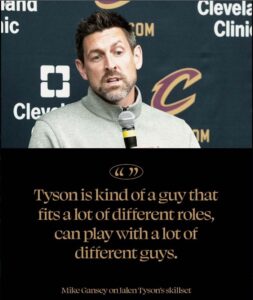
Loveland, Ohio – With the 20th overall pick in the NBA Draft on Wednesday night, the Cleveland Cavaliers selected Jaylon Tyson, a small forward out of California. He is 6-6, 218 pounds and averaged 19.6 points per game, 6.8 rebounds, 3.5 assists, and 1.2 steals last year for the Golden Bears. He’s known for his athleticism and the ability to create his own shot, two things that are going to be absolutely key in new coach’s Kenny Atkinson’s offense, discussed more below.
The Cavaliers have lacked a true scorer and shot creator at the small forward position recently. Issac Okoro has improved but not necessarily taken the next step to make him a true threat offensively, though he defends at an elite level. Tyson, on the other hand, already has a very polished offensive game at the collegiate level he shoots the ball well, with splits of .465/.360/.796 across the board. In the future he and Okoro could pack a good change up playing off of one another situationally until we see more from Jaylon on the defensive end.
At 6-6 there have been some concerns expressed about his size as an offense first small forward, but he does have a 6-8 wingspan. And the hope is that offensively he can use his athleticism to create enough space to counter any potential size advantage for the man guarding him.
Below are some of the draft grades that sportswriters have given the pick:
As you can see, the grades include quite a range, but those from writers who regularly cover the Cavaliers tend to be more optimistic about what Jaylon Tyson can bring to the team in the coming years. Some have dubbed the pick a “reach” for Cleveland but you could understand why the team might believe that a player like Jaylon is a good fit for their team at pick 20, given the boxes he could end up checking at the small forward position. And his play in college isn’t necessarily indicative of how he would translate to the NBA game. That’s much different than what he’ll be asked to do with the Cavaliers.
As Danny Cunningham breaks down for the Locked On Cavs Podcast, Tyson was basically Cal’s entire offense and was asked to handle the ball, create his own shot, and be the primary weapon on offense. And The Golden Bears didn’t exactly have the type of team to allow him to boost his level of play, as they finished 13-19 with Tyson being the team’s leading scorer by more than 5 points per game.
It’s also been reported that Cleveland has reached a 5-year agreement with Kenny Atkinson, former Golden State Warriors assistant coach, to be their next head coach. Atkinson has head coaching experience, most recently with the Brooklyn Nets where he took over a 20-win team and tuned them around into a playoff birth just two seasons later. Granted, his tenure for the Nets didn’t end on the best of terms, but managing that team with disgruntled superstars Kyrie Irving and Kevin Durant could not have been an easy task.
The expectation is that Atkinson will bring a faster-paced motion offense to the Cavaliers that could really open up the scoring opportunities for players like Donovan Mitchell and Darius Garland (if he’s not traded). His Nets teams ran fast and took their share of shots from behind the arc, something a team comprised of smaller guards who have the ability to be deadly from distance could execute with deadly precision. During his time in Brooklyn, he helped guide and develop young players like D’Angelo Russell and Spencer Dinwiddie, not to mention current Cavaliers Caris LeVert and Jarrett Allen. And the hope is that he can continue that development with the Cavs own developing players like Garland, Evan Mobley and Isaac Okoro.
Atkinson does face a test going forward, especially in addressing how Cleveland’s roster is constructed. The Cavaliers are a team with plenty of questions including the status of Donovan Mitchell’s extension and his interplay with whomever he pairs with at the other guard position, whether it be Darius Garland or someone else. The positional overlap among the Cavs’ big men Jarrett Allen and Evan Mobley, is another wrinkle to parse out for next season. And then putting the complimentary pieces in the right place to implement a high tempo offense.
While previous head coach JB Bickerstaff deserves a great deal of credit for his ability to rebuild the Cavaliers, there were reports that he’d lost the locker room, and at times the Cavaliers offense looked mired in molasses. And so it will be very exciting to see Kenny Atkinson’s ability to get the team under control and refocus them on competing in an Eastern Conference that has suddenly become very top heavy. The NBA Champion Boston Celtics obviously showed how dominant they could be, but the New York Knicks made massive moves this week, trading for Mikal Bridges and signing OG Anunoby.
Kenny Atkinson is a welcome addition to the Cavaliers but it looks like he will have precious little time to catch his breath before this team once again plunges headlong into another quest for a deeper playoff run in 2024-2025.
———————-
Hey readers… have an opinion about sports? How about a topic you’d like to see written about in Loveland Magazine or a thought about one of our articles?
Just need to vent and get out your frustration about the Reds, Bengals, or any other sports issues?
Christopher Ball is a longtime Loveland resident and an attorney. He graduated from Loveland High School in 2003 and was a member of the football team before going on to become a coach’s assistant at DePauw University in Greencastle, Indiana. He has been following and rooting for the Reds and Bengals since the early 1990s and has been through the many ups and downs that fandom has wrought over the years.
Cincinnati/Cleveland/Columbus, Ohio – When the cannabis industry was deemed essential business by the State of Ohio, civic organization Cannabis Can! immediately felt a responsibility to help fellow Ohioans. Its mission that Cannabis Can! Strengthen Communities! and Fight Hunger! called organizers into action in March as COVID-19 shutdowns began to increase food insecurity nationwide.
Cannabis Can! worked with Freestore Foodbank, Greater Cleveland Food Bank, and Mid-Ohio Foodbank for its 2019 Holiday Canned Food Drive, which collected half a ton of nonperishable goods. In conjunction with its food bank partners in Cincinnati, Cleveland, and Columbus, they established branded landing pages for the 2020 Virtual Food Drive. Through these web pages, a text-to-give campaign and Facebook, Cannabis Can! supporters have been making secure, tax-deductible gifts directly to food banks for immediate use.
Forty-one mainstream and cannabis industry businesses, nonprofits, organizations, and influencers became Partners in the Cannabis Can! campaign to raise funds for Ohio food banks. Partners promote the Virtual Food Drive and offer incentives to donors; in turn, they receive promotion benefits from Cannabis Can!. A diverse group of Partners formed that includes businesses and organizations not directly related to the cannabis industry.
The Drive itself started on April 20 and the call went out to “Celebrate 4/20 by showing that the cannabis community cares about fighting hunger.” Organizers set a fundraising goal of $3,000.00, equivalent to 12,000 meals or $27,000 worth of groceries, by June 30.
They not only met that goal, they surpassed it. Cannabis Can! Director, Lorien Hill-Purcell, announced $3,745.55 has been given directly to the Columbus area Mid-Ohio Foodbank, Greater Cleveland Food Bank, and Freestore Foodbank in Cincinnati collectively. Sixty donations, ranging from $5 to $525, make up the total. “Our Partners and Supporters include individuals and organizations who invested time, energy, and resources to reduce the stigma around cannabis by fighting hunger and strengthening Ohio communities,” says Hill-Purcell.
The $3,745.55 raised will help Ohio food banks acquire and distribute up to $33,709.95 worth of groceries, equivalent to 14,982 meals for our neighbors in need. However, the Drive does not stop because the goal was achieved. Donation pages will be active throughout the remainder of 2020 and links to them are available on the Cannabis Can! website, cannabiscanohio.org. Organizers’ new Virtual Food Drive target is $5,000 by January 1, 2021.
Cannabis Can! 2020 Virtual Food Drive Partners include:
AdvoCare Clinic
Canna.ED
Cannabis Safety First
Cincinnati Botanical Depot
Cincinnati Medical Marijuana Meetup
Cincy Mom Buds
Cleveland School of Cannabis
Columbus Botanical Depot
Compassionate Alternatives
Cresco Labs
Ediybles
Galenas
Green Harvest Health
Green Ideas and Wellness
Have A Heart Cincy
Health and Wellness Online, LLC
Hunger-fighting Masks
Key to Life Garden
KT Scooter Rentals
Leaf Medic
Luminous Life Wellness Center, LLC
Medical Marijuana Patient Care, LLC
MedicateOH
Midwest CannaWomen
Murray Road Strong
My Drops of Sanity
Ohio CBD Guy
Ohio Medical Marijuana Physicians Association
Ohio Rights Group
OhioCannabis.com
ORG Education Fund
Rise Dispensaries of Ohio
Terrasana Cannabis Co.
Tha Presidential Suite
The Nature Factory
The Ohio Cannabis and Hemp Chamber of Commerce
The Relaxation Place Inc.
Traxler Printing
Tulip Tree CBD
Vireo Health, LLC
This article provided to Loveland Magazine was edited by David Miller and is by by Eye on Ohio, the nonprofit, nonpartisan Ohio Center for Journalism. Please join their free mailing list as this helps us provide more public service reporting.
In early March, just as Ohioans were learning about the first cases of novel coronavirus in the state, Anna Bondar’s grandfather fell at his Cleveland home.
Luckily, the 92-year old, who lives with dementia, wasn’t injured badly.
The tight-knit family started to discuss the possibility of a nursing home, though they had serious reservations.
Their tough choice was made even more difficult by mounting fears about the coronavirus. In nearly four months, COVID-19 has infected more than 31,191 people statewide and has proven particularly deadly for residents of long-term care facilities in Ohio.
Seventy percent of the reported deaths in Ohio due to COVID-19 complications have been in long-term care facilities, which is among the highest in the country.
Nationally the portion of COVID-19-related deaths in long-term care facilities has hovered just over 40%, though the amount of testing done in nursing homes varies significantly by state.
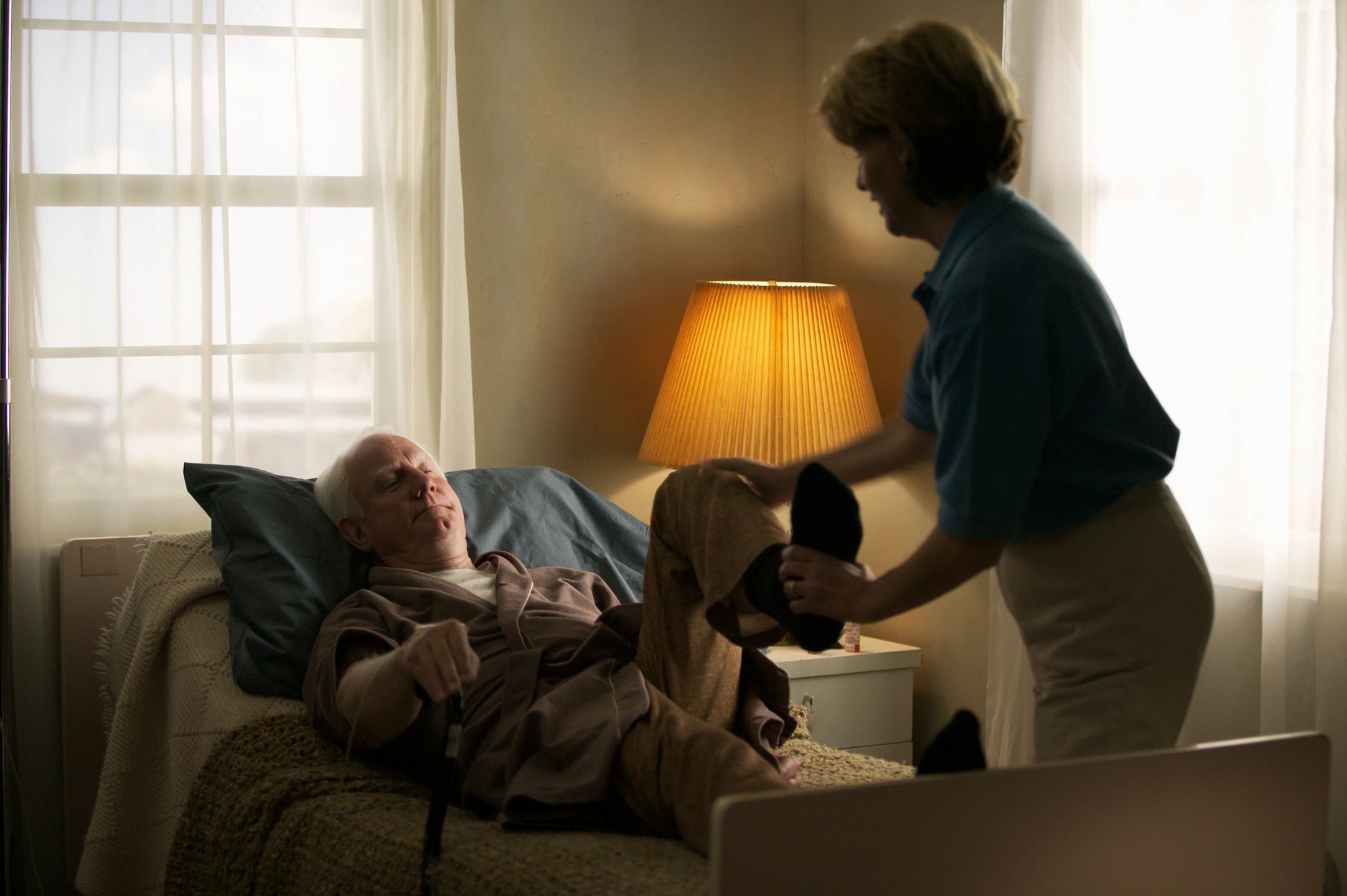
Every day, families like Bondar’s are making what can feel like an impossible choice – whether to send a loved one to a nursing home where they will receive around-the-clock specialized care but face a greater risk of contracting COVID-19, or to care for that person at home where risk of transmission is lower but providing care can be more challenging.
Even before the pandemic, sorting through the myriad of quality ratings and measures was daunting enough. Then, COVID-19 deaths started to soar.
Now, families and seniors agonize over what could be life or death choice using confusing numbers on infection “hotspots” and without the ability to visit nursing homes to observe how the staff cares for residents – which is the number one recommendation of most advocates.
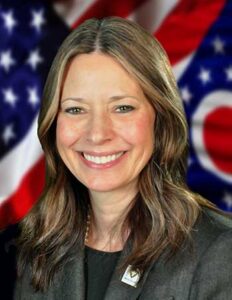
Dr. Amy Acton, director of the Department of Health
State officials, including Dr. Amy Acton, the former director of the Department of Health, have emphasized that “congregate” settings like nursing homes are at highest risk of infection. Staff, who often travel between facilities, need to be in close contact with residents to provide care. And residents, who are primarily older and have multiple medical conditions, are more susceptible to COVID-19-related complications.
“All of this makes it high risk. At the same time, it’s really necessary for many patients to be there,” said Dr. Steven Schwartz, a geriatric physician at the Cleveland Clinic who travels to nursing homes as part of the Clinic’s Center for Connected Care.
Ohio National Guardmembers will begin testing all staff members and any residents who likely were exposed to COVID-19 in the state’s nursing homes, Gov. Mike DeWine announced May 27. What are being called Congregate Care Unified Response Teams will focus on facilities where confirmed or assumed positive cases are reported in hopes of reducing the number of COVID-19 cases and deaths in Ohio’s nursing homes, which as of May 27 was 5,324 resident cases and more than 1,442 deaths.
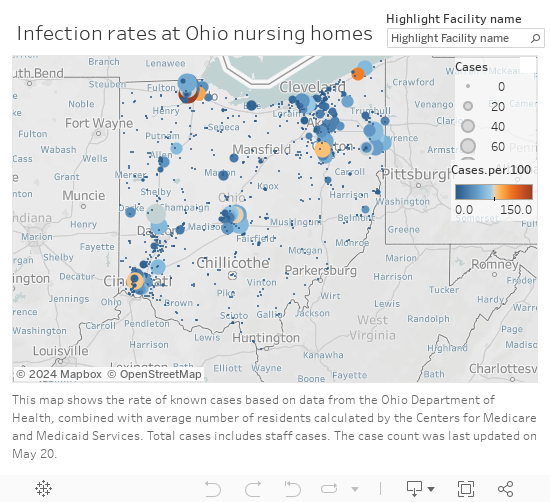
Infection rates in Ohio Nursing Homes
Making an educated decision
Last month, state officials began to release the numbers of reported infections and deaths in long-term care facilities, which include nursing homes, rehabilitation centers, and assisted living centers.
But it’s unclear how much the numbers – which are reported weekly and are also tracked cumulatively – matter for families currently trying to choose a facility.
The state, on its coronavirus website, says the infection and death numbers shouldn’t replace a thoughtful conversation with a nursing facility about infection control practices and that “residents and family members should understand that the presence of COVID-19 at a facility is [in] no way an indicator of a facility that isn’t following proper procedures.”
Yet many in the health care industry say infection information should be considered, along with other factors, when deciding which site to choose.
“If you see a nursing home with a large outbreak, that’s something to worry about. If you see a nursing home with a small outbreak, I’m not sure it means anything but bad luck.”
“If you see a nursing home with a large outbreak, that’s something to worry about. If you see a nursing home with a small outbreak, I’m not sure it means anything but bad luck,” said Dr. James Campbell, department chair of geriatric medicine at MetroHealth.
The infection information provided by the state can be useful, for instance, if a family is choosing between two similar facilities, said Nate Cyrill, a Long Term Care Ombudsman for Cuyahoga, Geauga, Lake, Lorain and Medina counties.
Since information on the virus changes rapidly, most families still rely on the quality measures that were available before COVID-19, including existing state and federal online guides Cyril said.
One of the commonly-used ranking systems, maintained by the Centers for Medicare and Medicaid Services, assigns ratings – from 1 to 5 “stars” – to facilities based on performance on quality measures, staffing and inspections.
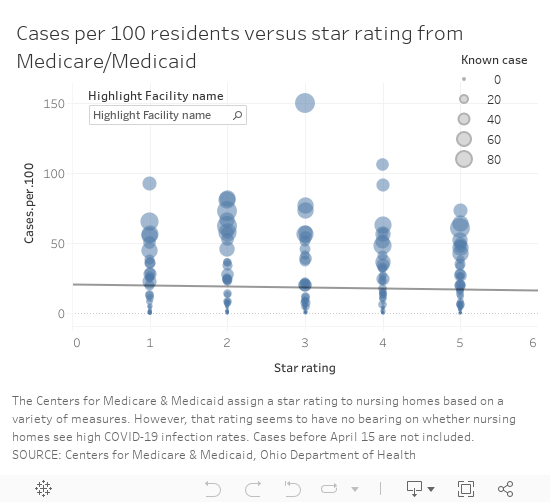
The number of “stars” Ohio’s nursing homes received, however, does not appear to have a correlation to the number of infections reported to the state, based on a comparison of the publicly available information. The analysis did not include assisted living facilities.
Cases vs. Star rating
“You want to look for a nursing home that’s four of five stars preferably but even that doesn’t tell you the whole story,” Steven Schwartz said.
There are numerous 1-star rated facilities that have reported few infections, like Whetstone Gardens and Care Center in Columbus, which has reported 9 cases or 8 per 100 residents.
Salem North Healthcare Center
Salem North Healthcare Center in northern Columbiana County had 51 patients test positive for the virus as of May 20, as well as five staff, according to the state. It is rated a 5-star facility, the highest rating from CMS.
It’s one of four 5-star facilities with an infection rate over 50 casesper 100 residents, based on Medicare’s calculation of each facility’s average number of residents. (The rate does not include infections among staff because the number of staff in each facility was not available.)
Since April, the focus on high numbers of reported infections, often referred to as clusters, in long-term care facilities has intensified. In some cases, those numbers are a reflection of the level of testing, said Fred Stratmann, general counsel and chief compliance officer for CommuniCare Health Services. It doesn’t mean all of the residents with a positive test had symptoms of COVID-19. The state infection numbers also don’t show the residents who have recovered from the virus, he said.
CommuniCare, which operates close to 90 health care facilities in seven states has been proactive about testing, Stratmann said. When COVID-19 cases started to appear at the North Salem facility, the company enlisted the state’s “strike team” to proactively test all of the residents. It has since re-tested all of the residents who were initially negative and purchased 3,000 testing kits to supplement what the state could provide.
“We wanted to be certain of the extent of COVID in this center in order to be able to properly treat it and to fight back against it,” Stratmann said. The facility does that by isolating any COVID-19-postive patients in a separate unit with its own dedicated staff and by admitting new residents to an observation unit for 14 days to make sure they have no symptoms of infection, he said.
Restrictions on visits make choices harder
The most effective way to scout out a facility typically is to visit it, preferably unannounced, said Dr. James Campbell, department chair of geriatric medicine at MetroHealth. However, because visitors aren’t permitted in nursing homes right now, the next best thing is to ask detailed questions about care, any COVID-19 cases and infection control measures, he said.
Campbell also suggested turning to hospital staff, who work with nursing homes regularly, for advice. Social workers can place five people in a week, while most individuals face that decision, at most, only a few times in their lives, he said.
Cyrill said his agency can also provide information that can’t be found online for families trying to choose between facilities.
Cyrill said his agency can also provide information that can’t be found online for families trying to choose between facilities.
The agency, along with other similar independent agencies across the state, investigates complaints in long-term care, skilled nursing, group homes and rehabilitation facilities and can share what are called “verified complaints” that aren’t otherwise available publicly.
Most of the complaints investigated in relation to COVID-19, Cyrill said, have been related to visitation or the ability of families to get information on a loved one’s condition.
It’s been harder, though, for Cyrill and his colleagues to investigate complaints with COVID-19 restrictions in place.
It’s been harder, though, for Cyrill and his colleagues to investigate complaints with COVID-19 restrictions in place.
Under normal circumstances, an ombudsperson would go to the facility and talk to patients and could do so without announcing the visit in advance. Since visits are restricted for infection control reasons, they have to work through staff to speak to residents or to ask questions, which isn’t optimal. And they aren’t able to make direct observations.
“It makes our job much more challenging,” Cyrill said.
At the North Salem facility, which has had about a dozen new residents admitted or transfered from other facilities, the staff has given “virtual tours” over the phone to family members or prospective residents who were in the hospital, Stratmann said. The company also invested in technology that won’t replace face-to-face visits but enables more family contact and the ability and for staff to help keep residents’ spirits up by making videos of activities, like dancing and singing, to keep them connected with the local community.
In addition, Stratmann said they walk families through the infection control procedures and share techniques they have implemented to improve health outcomes for patients with COVID-19 including, when appropriate:
Treating residents with anticoagulant medications to reduce the risk of blood clots and strokes, which has been a factor in some COVID-19-related fatalities.
Practicing “proning” or positioning residents, while awake, flat on their belly and chest to reduce the buildup of fluid in lung tissue and reduce the risk of Acute Respiratory Distress Syndrome, which has been associated with many COVID-19 fatalities.
The idea of putting their beloved grandfather in a nursing home was gut-wrenching
Choosing home
For Bondar’s family, the idea of putting their beloved grandfather in a nursing home was gut-wrenching, especially as visitation was curtailed to limit the virus’ spread. He speaks Russian, his native language, and would not have been able to communicate well with the staff caring for him.
“It felt like admitting him [to a facility] would be like saying goodbye,” Bondar said. “Like leaving him to die.”
Bondar’s family ultimately decided to care for her grandfather at home, in his Mayfield Heights senior highrise, where they could limit his exposure to the virus.
Before his fall, an aide visited for about eight hours a week. After the Ohio’s “stay at home” order was put in place March 23, Bondar and her mother were able to work from home and pitch in with care.
The advice of the Clinic’s Steven Schwartz led them to a hospice program, which helped the family find additional aides, including one who speaks Russian, as well as a hospital bed for safer sleeping and a wheelchair.
The home care route isn’t the easiest but Bondar said the family feels like they have more contact and control over the quality of care.
The home care route isn’t the easiest but Bondar said the family feels like they have more contact and control over the quality of care.
“We’ll do this as long as we can manage it,” Bondar said.
Anecdotally, it is a choice more families are making: the decision to use home care or even pull family members out of nursing homes out of fear or because they miss them and can’t visit, Steven Schwartz said.
“Sometimes it’s appropriate. But sometimes, even given everything, it may be safer to have your family member there to get stronger and get the necessary care,” said Steven Schwartz. “I would really try to balance the benefit of going to a nursing home versus the risk.”
Patients with dementia or Alzehimer’s may be unsafe going back home.
Patients with dementia or Alzehimer’s may be unsafe going back home, he said, and families may need to decide if a nursing home really is the safer place.
One of the first orders Ohio put in place to prevent the spread of COVID-19 was to halt in-person visitation in more than 900 nursing and long-term care facilities. The state is not yet ready to lift those restrictions and resume visits in those settings, Gov. Mike DeWine said, but on June 8 will start allowing outdoor visits at assisted living facilities care centers for individuals with disabilities.
“We are not to nursing homes yet and I know that causes anguish for a lot of people who are watching this but we’re trying to do this so that we don’t increase the COVID inside the nursing homes or the assisted living or the immediate care facilities,” DeWine said during a May 28 briefing.
Decisions made harder
Figuring out what kind of care might be best for a patient has become more challenging, too.
Previously, nurses and social workers would visit clients in their homes to assess how they functioned – whether they could independently bathe, cook and grocery shop, said Theresa Foster, a nurse and licensed social worker at Western Reserve Area Office on Aging.
They relied on conversations with clients and family and also observations of the environment in the home and possible risks, said Foster, who runs the agency’s resource center.
Those assessments were used to determine whether a person could safely remain at home with community support or whether they needed facility-level care and what resources, whether subsidized or private, existed to pay for the services.
Now, those assessments are done by phone and can be done successfully, but it is more difficult, Foster said.
At UH’s hospitals, medical staff use a scoring system to determine the best place for a patient being discharged, said Dr. Sean Cannone, UH’s medical director for population health.
Patients are assessed on their ability to perform daily tasks and on their cognitive abilities.
“We’re trying as much as we can to get patients home if at all possible,” he said. The goal is to provide patients with resources so they can receive care in whichever setting they prefer.
The goal is to provide patients with resources so they can receive care in whichever setting they prefer.
“We want to respond to what people really want for their own care,” Cannone said.
The shift started before COVID-19 cases surfaced but has accelerated as more families worry about potential exposure to the virus in congregate living situations.
As technology has advanced, the capabilities of what can be done in a patient’s home has also increased. In March, UH introduced a new patient management system, Massimo SafetyNet, for remote monitoring.
When patients are released from the emergency room or from a COVID-19 floor, providers now put a bluetooth sensor on their wrist — it looks like an Apple Watch — that streams data about a patient’s vitals to a central monitoring center, said Jonathan Sague, UH’s vice president of clinical operations. That way, providers can make sure a patient is safe at home.
Douglas Beach is the chief executive officer at Western Reserve Area Office on Aging
Douglas Beach, chief executive officer at Western Reserve Area Office on Aging, has had firsthand experience weighing care decisions amid COVID-19 worries. His mother is rehabilitating in a nursing home after a six-week hospital stay related to a heart condition.
Not being able to visit her in the hospital or the facility has been hard, Beach said. He and his brother, who is a doctor, had to make all of the arrangements by phone, including figuring the best way to transport her that would have the lowest risk of exposure to the virus.
“Home and community-based services is what I do,” Beach said. Part of his mission is to advocate for the setting that allows for any person, whether they are older adults or live with a disability, to be as independent as possible .
But for his mother, a nursing facility was the right choice because she needed 24-hour care that her family could not provide at home.
Beach said nursing homes have had to deal with an unprecedented set of circumstances: a new virus, initial unknowns about transmission and populations at extremely high risk for complications.
Nursing homes will continue to play a vital role and will remain the best option for people who need more care than can be safely provided at home, Beach said.
For the more than 9,500 clients his agency serves in Cuyahoga, Geauga, Lake, Lorain and Medina counties, delivering care at home, with health aides, nurses and community and family supports, has proven a low risk. As of mid-May only 35 clients had tested positive for the virus, he said. That is roughly 0.3% of clients, though not all clients are tested.
Managing COVID-19
Cuyahoga County nursing homes have been paired with one of the area’s three largest hospital systems during the pandemic, Campbell said. The hospitals help the facilities both prepare for and respond to COVID-19 cases.
“The goal is when you have one patient in a nursing home with COVID is to make sure you don’t end up with 30 patients with COVID,” Campbell said.
UH developed what is being called a playbook for local nursing homes. The playbook gives facilities a plan for how to respond if there’s a COVID-19 outbreak on-site, said Sague, who works as a firefighter and medic on the weekends.
“It can be pretty startling and pretty alarming if they’re not ready for it,” Sague said.
The playbook gives guidelines on screening, triaging, determining exposure, testing and isolating those who test positive, as well as how to get personal protective equipment, increase staffing and to eventually reopen safely, Sague said.
Once a case is identified at a facility, what is known as an intercept team is dispatched — either virtually or in person — to help a nursing home handle it, he said.
Patrick Schwartz, director of strategic communications for LeadingAge Ohio, a long-term care trade association, said access to testing and safety equipment has been a consistent problem for Ohio’s nursing homes.
But in the past month or so, the state has made “a definite shift” and started prioritizing testing at nursing homes, which is helping, he said.
Patrick Schwartz said he hoped the expanded testing would enable facilities to test their entire population— of residents and staff — so they can better limit the spread of the virus.
Throughout Ohio, populations that have received mass testing — health care workers, first responders, those incarcerated and those in nursing homes — have had higher numbers of positive cases. Many people with COVID-19 are asymptomatic, so it is unknown if they have the virus until they are tested.
“Since this pandemic first reared its head, it was clear to long-term care providers that the front lines would be in long-term care,” Patrick Schwartz said. The populations at those congregate living facilities, many of whom are older and have multiple medical conditions, are among the most vulnerable for complications from COVID-19, he said.
In Cuyahoga County, and elsewhere, local health departments have deployed limited testing resources to nursing homes quickly in hopes of limiting spread in and between facilities and given guidance to homes about how to isolate patients and trace exposures between facilities to limit the spread of infection.
Cuyahoga County Health Commissioner Terry Allan said nursing homes try to guard against outbreaks but have varying degrees of resources. The assistance from the National Guard will allow more residents and staff at facilities in Northeast Ohio to be tested, he said.
Support for this project was provided by the Center for Community Solutions.
Questions to ask:
How can family members stay in touch with residents while visiting is restricted?
Does staff facilitate video visits? Is window visiting allowed?
How often will the facility provide updates on a resident’s condition?
How much COVID-19 testing is being done? Is the facility proactively testing patients or only those with symptoms?
Are private rooms available?
Do staffing ratios allow for residents to be taken outside?
Are residents currently restricted to rooms?
Are separate units and staffs used for COVID-19-positive patients and COVID-19-negative patients?
How does the facility work to limit COVID-19 complications?
Willie Lutz is a former Loveland resident, a graduate of Loveland High School, and former sportswriter for Loveland Magazine
by Willie Lutz
Those who endured the 12-minute run from the Bengals, who looked lifeless in Miami, down 23 points on a day many at home hoped to be the final loss on one of the worst seasons of the last decade in Cincinnati, despite eight losses being within one possession.
After a 35-38 overtime loss at Hard Rock Stadium in Miami, the Cincinnati Bengals secured the first overall pick in the 2020 draft, a pick that should bring a new franchise centerpiece, Joe Burrow. LSU’s Heisman-winning quarterback won the nation’s collective hearts with a dazzling senior season, finishing with 4,715 passing yards, 48 touchdowns, completed 77.9% of passes, and averaged 10.7 yards per attempt. With only 6 interceptions and without a loss on his Tigers’ resume, he represents the nation’s top seed in the College Football Playoff as the nation’s best player.
If the jungle kittens don’t win next Sunday…
If the jungle kittens don’t win next Sunday against Cleveland, they’ll have the worst record of any Bengals team ever, though a win would tie the team with the Jon Kitna-led 2002 team who finished 2-14. That finish put Cincinnati in place to draft Heisman winner Carson Palmer with the top pick in the 2003 NFL Draft.
Certainly, a narrative exists in which the Andy Dalton-led Cincinnati Bengals crush the messy Cleveland Browns in a fitting end to the 2019 season. It’ll likely be Dalton’s last game in a striped helmet and the Browns are about to wrap up one of the most embarrassing seasons of NFL football in recent memory. As we learned on Sunday against the Dolphins, Dalton is here to win; he passed for 396 yards, 4 touchdowns, 0 interceptions, and completed 33-of-56 passes, nearly leading the team to the biggest comeback victory in team history.
It’ll likely be Dalton’s last game in a striped helmet and the Browns are about to wrap up one of the most embarrassing seasons of NFL football in recent memory.
Dalton will want to impress the potentially red-hot quarterback market, as many teams seem ready to move a different direction with their passers. Teams like the Chicago Bears, Carolina Panthers, Jacksonville Jaguars, New England Patriots, and Tampa Bay Buccaneers are among teams that may make a change at QB in the coming months. Potentially, Dalton could head to one of those teams in a favorable trade for the Bengals, as a move could net the team a second or third-round pick if Andy continues to impress against the Browns.
For Cincinnati, loss to Miami made a few things pretty clear; Joe Burrow is obviously the pick at the top of the draft and that this team needs to add more good players to the roster this offseason.
There is obviously bound to be plenty of pressure from a central Ohio-minded fanbase to go with Burrow’s teammate and practice opponent at Ohio State in DE Chase Young. There probably won’t be as much pressure to draft QB Tua Tagovailoa from Alabama, as the 21-year-old quarterback will enter the league with a cumbersome injury resume.
It’s amazing to hear so many college-aged people rave not about the player, but about the human being.
Having graduated from Ohio State in 2019 and thus meeting a handful of people who are friends or former classmates with Burrow, it’s amazing to hear so many college-aged people rave not about the player, but about the human being. What some knew before but many learned during his incredibly touching Heisman speech, Joe Burrow has the heart of a leader and the poise of a title fighter, essentially the intangibles you’d dream of in a franchise quarterback.
Before the season, I think like many people, I thought Dwyane Haskins had a higher upside and was probably a better player than Joe Burrow; it’s impossible for me to feel that way after everything I’ve seen from the senior passer’s closing season at LSU.
Burrow does everything you’d hope from a young quarterback all before NFL refinement.
Navigating the pocket like a pro and keeping his eyes on a level plane while reading the defense, Burrow does everything you’d hope from a young quarterback all before NFL refinement. In Cincinnati, he’ll have the chance to work with Zac Taylor and Brian Callahan, two coaches with backgrounds as quarterback coaches from their earlier days in the NFL (of course both are under 40, so those earlier days aren’t exactly ancient).
“New Dey” promise
When Cincinnati comes to the blatant conclusion that they’ll take Burrow at the top of the draft and set this franchise on a brand-new trajectory, it’ll finally deliver on the “New Dey” promise that became apart of the team’s marketing pitch following Zac Taylor’s hire. As many know by now, Burrow is an Ohio kid and a willing leader; he’s more personable than Palmer ever was and doesn’t bring any baggage to a lockerroom currently loaded with likable personalities.
If this team drifts from Joe Burrow, they’re making a mistake that the 6’3” passer will certainly find a way to make them regret in years down the road.
If this team drifts from Joe Burrow, they’re making a mistake that the 6’3” passer will certainly find a way to make them regret in years down the road. Sure, Ohio State when got lucky when Justin Fields decided to join the Buckeyes via transfer, filling the gap left by the Burrow departure in 2018, but even they might feel the brunt of that move if they advance to the National Championship game. In the NFL, Burrow will have the chance to make the Bengals pay once every four years, at the most minimal rate.
The pick seems obvious to this sports-watcher, draft Joe Burrow and call it a day; it’ll give your team one of the best chances in its history to construct a contending roster. However, like many others, I think this is all just preaching to a Bengals-based choir, one including Duke Tobin, Troy, and Katie Blackburn.
Loveland Graduate Drew Plitt was at Loveland High School on Wednesday to watch the Womens basketball game and his sister Marie help defeat Turpin.
Cleveland, Ohio– Ball State Sophomore quarterback Drew Plitt came away with the Ray Louthen Award. This award, which honors the memory of the former Ball State head football coach (1962-67) and school’s athletics director (1970-81), is bestowed upon the team’s most improved player(s).
Plitt was thrust into the team’s starting quarterback role in late October after an injury sidelined Riley Neal for the rest of the season. Plitt, a native of Loveland, Ohio, threw for a career-high 340 yards and a touchdown at Toledo on Oct. 31. He then led the Cardinals to an exciting 42-41 overtime win over Western Michigan on Nov. 13. Plitt was named MAC West Offensive Player of the Week after that win thanks to tossing three touchdown passes and completing 80.8 percent (21-of-26) of his pass attempts versus WMU.



 Christopher Ball is a longtime Loveland resident and an attorney. He graduated from Loveland High School in 2003 and was a member of the football team before going on to become a coach’s assistant at DePauw University in Greencastle, Indiana. He has been following and rooting for the Reds and Bengals since the early 1990s and has been through the many ups and downs that fandom has wrought over the years.
 by Chris Ball
 It’s also been reported that Cleveland
  Atkinson does face a test going forward, especially in addressing how Cleveland’s roster is constructed. The Cavaliers are a team with plenty of questions including the status of Donovan Mitchell’s extension and his interplay with whomever he pairs with at the other guard position, whether it be Darius Garland or someone else. The positional overlap among the Cavs’ big men Jarrett Allen and Evan Mobley, is another wrinkle to parse out for next season. And then putting the complimentary pieces in the right place to implement a high tempo offense.



 Those assessments were used to determine whether a person could safely remain at home with community support or whether they needed facility-level care and what resources, whether subsidized or private, existed to pay for the services.