

Tag: colleges and universities

  • With school vaccine mandates banned, lawmaker wants mask requirements outlawed, too

    With school vaccine mandates banned, lawmaker wants mask requirements outlawed, too

    State Sen. Andrew Brenner, R-Powell. (Photo from Ohio Senate website)

    By Tyler Buchanan and Ohio Capital Journal

    State Sen. Andrew Brenner, R-Powell. Photo from Ohio Senate website.

    Ohio schools will soon be barred from mandating that students be vaccinated against COVID-19. A Republican state lawmaker wants to also prohibit schools from mandating students and others wear face masks.
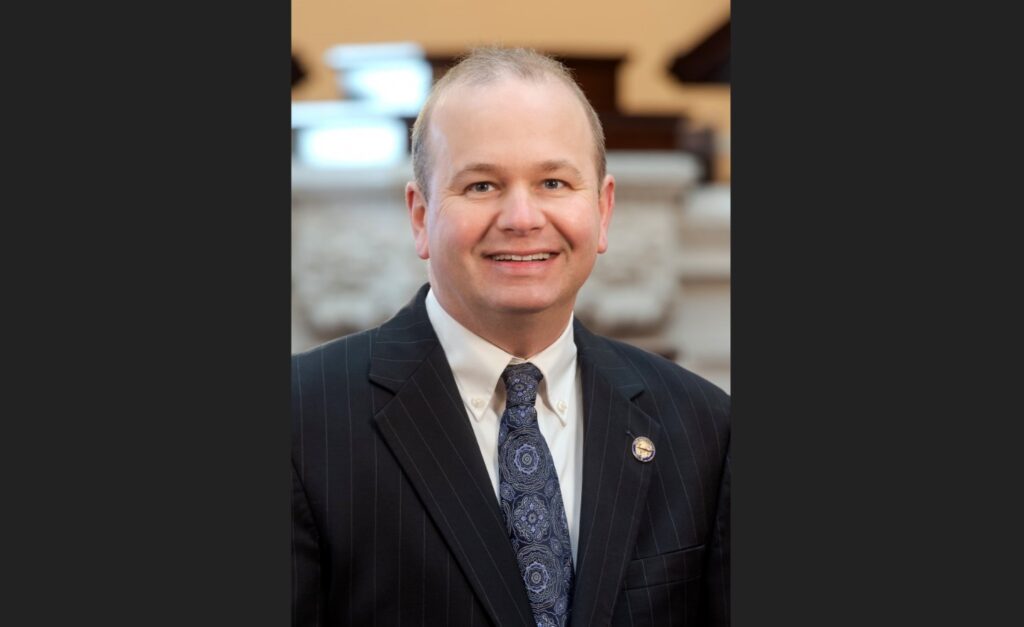
    State Sen. Andrew Brenner, R-Powell. (Photo from Ohio Senate website)

    Senate Bill 209, introduced by state Sen. Andrew Brenner, R-Powell, is unlikely to impact school districts’ decisions for the fall, as lawmakers are on break until after most schools return to class. But the bill reflects continued attempts from those in the Ohio General Assembly to block public mitigation efforts of a virus that has killed more than 20,000 Ohioans to date.

    SB 209 would prohibit the state school board, the Ohio Department of Education or individual school districts’ boards of education from requiring anyone to wear facial coverings in a public education setting.

    K-12 schools and universities would not be able to require masks for students, teachers, staff members or visitors. Masks would not be required for in-class learning, any school athletic event or other school function.

    “An individual may choose to wear a facial covering but shall not be required to do so,” the bill states.

    Such mandates could still come from outside the education system, as SB 209 notes that health departments retain the authority to take “action to prevent the spread of a communicable or contagious disease.”

    A separate provision in SB 209 deals with mask mandates imposed by private businesses. The businesses would be able to require masks, but “shall post notice of the requirement in a conspicuous place.” The notice must “state that an exemption to the requirement exists for individuals that have a documented medical condition that contraindicates the wearing of a facial covering.”

    Brenner helped to enact the recent law barring public schools from issuing vaccine mandates — a law that does not go into effect until mid-October.

    Shortly before lawmakers recessed for the summer, Brenner added the amendment to an unrelated bill involving education for children with parents in the military.

    The Republican supermajorities, which have been critical of public mandates throughout the duration of the pandemic, swiftly approved that bill.

    Gov. Mike DeWine had pledged to veto any bill that would “discourage vaccination,” but nevertheless quietly signed it into law last week

    Ohio Gov. Mike DeWine is seen at a coronavirus press conference in 2020. He had pledged to veto bills that discouraged vaccination. Photo courtesy The Ohio Channel.

    A year ago, when Ohio districts weighed a return to in-person instruction for the 2020-2021 school year, Brenner argued such decisions should be made at a local level, not by the state government.

    “Why would you not trust your local school boards and superintendents who know their schools districts the best, taking information from state and local health departments to be able to determine whether or not their local school districts should be open?” Brenner asked in June 2020.

    The legislature has since taken away local decision-making regarding school vaccine mandates, and under Brenner’s SB 209, the same would be true for mask requirements.


  • DeWine, state leaders announce $430M in coronavirus relief

    DeWine, state leaders announce $430M in coronavirus relief

    Marty Schladen

    Marty Schladen has been a reporter for decades, working in Indiana, Texas and other places before returning to his native Ohio to work at The Columbus Dispatch in 2017. He’s won state and national journalism awards for investigations into utility regulation, public corruption, the environment, prescription drug spending and other matters.

    Ohio Gov. Mike DeWine and the state’s legislative leaders on Friday announced how they’d allocate almost half of what the state has left in federal coronavirus-relief dollars.

    The state has about $1 billion unexpended from its share of the $2.2 trillion CARES Act that Congress passed in March. At least until the feds change the rules, the funds have to be spent by Dec. 31.

    Social-service groups that deal with issues of homelessness and hunger have been clamoring for months for a share of the money, as have business groups and others. So it’s been up to DeWine and the legislature to decide what to do with the money while Congress appears stymied over further coronavirus relief.

    “We tried to look at what the needs were and what had already been put out,” DeWine said during a remote press conference. “We don’t know whether Congress will pass another bill or not.”

    The state is holding about half of the funds for coronavirus testing and contact tracing and other needs while it awaits a possible second round of relief — which may or may not include assistance to state and local governments.

    The expenditures announced Friday include:

    • $50 million for mortgage and rental assistance to families making 200% or less of the federal poverty level 
    • $125 million for businesses with up to 25 employees
    • $37.5 million for restaurants and bars
    • $100 million for colleges and universities to do testing, contact tracing and provide mental-health services
    • $62 million for rural and critical-access hospitals
    • $25 million for non-profits providing services such a food banks, homeless shelters and other social services
    • $20 million for the arts

    A good deal more of the money was focused on businesses than on assisting individuals who are suffering most. But several in Friday’s press conference said they hope by helping small businesses keep their doors open, people will be able to get or keep jobs.

    “We know some businesses are barely making it,” Lt. Gov. Jon Husted said of that portion of the package. “This is focused on them.”

    For their part, some leaders of social-service organizations said they were grateful for the help they will receive.

    “We’re pleased that Gov. DeWine finally deployed federal coronavirus relief funds to help people avoid getting evicted during this pandemic,” Bill Faith, executive director of the Coalition on Housing and Homelessness in Ohio, said in a written statement. “And we appreciate (Ohio) Controlling Board members’ support, especially Sen. (Matt) Dolan (R-Chagrin Falls) and Sen. (Jay) Hottinger (R-Newark) who took a personal interest in keeping struggling Ohioans safely in their homes. We look forward to seeing details on how the program will be implemented. Given the Dec. 31 deadline to use these funds, we would welcome the governor’s assistance in advocating for Congress to provide additional rental assistance into 2021.”

    The Ohio Poverty Law Center also released a statement praising state leaders for their action. But it warned that it won’t be enough.

    “As Ohioans continue to experience job and income loss due to the pandemic, additional federal and state resources will be needed to prevent evictions and keep Ohioans safe, especially as we get closer to the expiration of the Centers for Disease Control and Prevention’s eviction moratorium,” it said. “We hope housing assistance will be among the highest priorities for resources in the coming weeks and months.”

  • Reopening begins for Ohio’s colleges: Here’s how it looks

    Reopening begins for Ohio’s colleges: Here’s how it looks

    Susan Tebben

    By Susan Tebben – The Ohio Capital Journal

    Some of Ohio’s colleges and universities have begun moving students in, but the navigation of a school year amid a pandemic is still a balancing act.

    For Miami University, classes began this week, with all undergraduate courses online or remote. The plan is to keep it that way until at least Sept. 21, according to the plan posted to the school’s website. 

    “When we began planning last spring, we had hoped that the COVID-19 pandemic would be in significant decline before classes were scheduled to begin,” Miami president Greg Crawford told students. “Instead, cases are rising in many states. With 40% of our Oxford students coming from outside Ohio, we’ve been monitoring the situation closely.”

    Those that are on campus are required to wear masks, and as students come back, they can be reported to the Office of Community Standards if they repeatedly refuse to comply with an instructor’s direction to use a mask or face covering.

    Mask requirements are the norm among Ohio’s public colleges and universities, as are 14-day quarantines for students coming from states considered COVID-19 hotspots. 

    Also the norm this school year are phased reopenings, like those at The Ohio State University, Ohio University, Kent State University, Shawnee State University, Cleveland State University, and the University of Cincinnati.

    The first move-in dates for UC, Aug. 14 and 15 were considered “drop-off only,” meaning students could bring their stuff to campus, but then had to return home until the 16th. 

    Another regular part of public colleges’ and universities’ schedules is a return to at least some form of in-person class instruction that ends after Thanksgiving break. The last two weeks, including final exams, will be taken remotely at OSU, Central State University, UC, KSU and Wright State University, among others.

    Kent State and the University of Toledo have eliminated their fall break to allow students to receive a full semester despite adjusted opening dates.

    Toledo said they adjusted their Fall semester “based on the possibility of having a second wave of COVID-19 in late fall,” taking into account CDC data on the pandemic and state recommendations for higher education.

    Bowling Green State University went so far as to cancel their Winter 2021 session and provide a $1,500 credit for the first 2,000 students who cancelled their housing assignment before the school year began this week. 

    “It is important you understand that we are HIGHLY encouraging you not to live on campus this fall,” information on the university’s COVID-19 plan page stated.

    BGSU started their staggered move-in this week for those that had no other option than to take up residence, and are set to begin classes on Aug. 31. Students there will also be online only beginning Nov. 30. 

    OU phased in their reopening by allowing certain graduates and undergraduates “in a carefully selected set of academic programs” to begin their time on campus. Most students will begin remotely on Aug. 24, but students like third-year students in the College of Health Sciences and Professions’ nursing program and juniors and seniors in the Army Reserve Officer Training Corps (ROTC) are eligible to participate in the university’s first phase of schooling. 

    Universities throughout the state sticking with in-person instruction have instituted class-size reductions, along with “hybrid-remote” forms of teaching. Central State spelled out a “cohort attendance” model in its reopening plan, which would break large classes into groups, with the cohorts attending classes on alternating days. This model goes along with a 50% reduction in class sizes, something Wright State anticipates as part of its plan as well.

    “At this time, the university conservatively estimates that one-third of classes will have in-person components while the majority of in-person classes will also deliver all content remotely to provide flexibility to students who are unable or do not feel comfortable returning to campus,” said Wright State president Susan Edwards in a letter to the university community.

    Many of Ohio’s public higher education institutions have also created pledges for students connected to prevention of coronavirus, and in some cases can spur disciplinary action if not signed. 

    Testing and contact tracing for COVID-19 are a regular part of all public school plans, though the ways in which the testing is done vary from school to school

    The spring semester plan is still to be determined for most schools. The University of Akron plans to continue hybrid online and in-person instruction into the spring, but others are still watching the success of their fall semesters to plan for the future.

    “Decisions are forthcoming,” stated the UC reopening plan.


    Susan Tebben

    Susan Tebben is an award-winning journalist with a decade of experience covering Ohio news, including courts and crime, Appalachian social issues, government, education, diversity and culture. She has worked for The Newark Advocate, The Glasgow Daily Times, The Athens Messenger, and WOUB Public Media. She has also had work featured on National Public Radio.