Tag: communities of color

  • Black voters in Ohio will be impacted by Issue 1. How? Depends on who you ask.

    Black voters in Ohio will be impacted by Issue 1. How? Depends on who you ask.

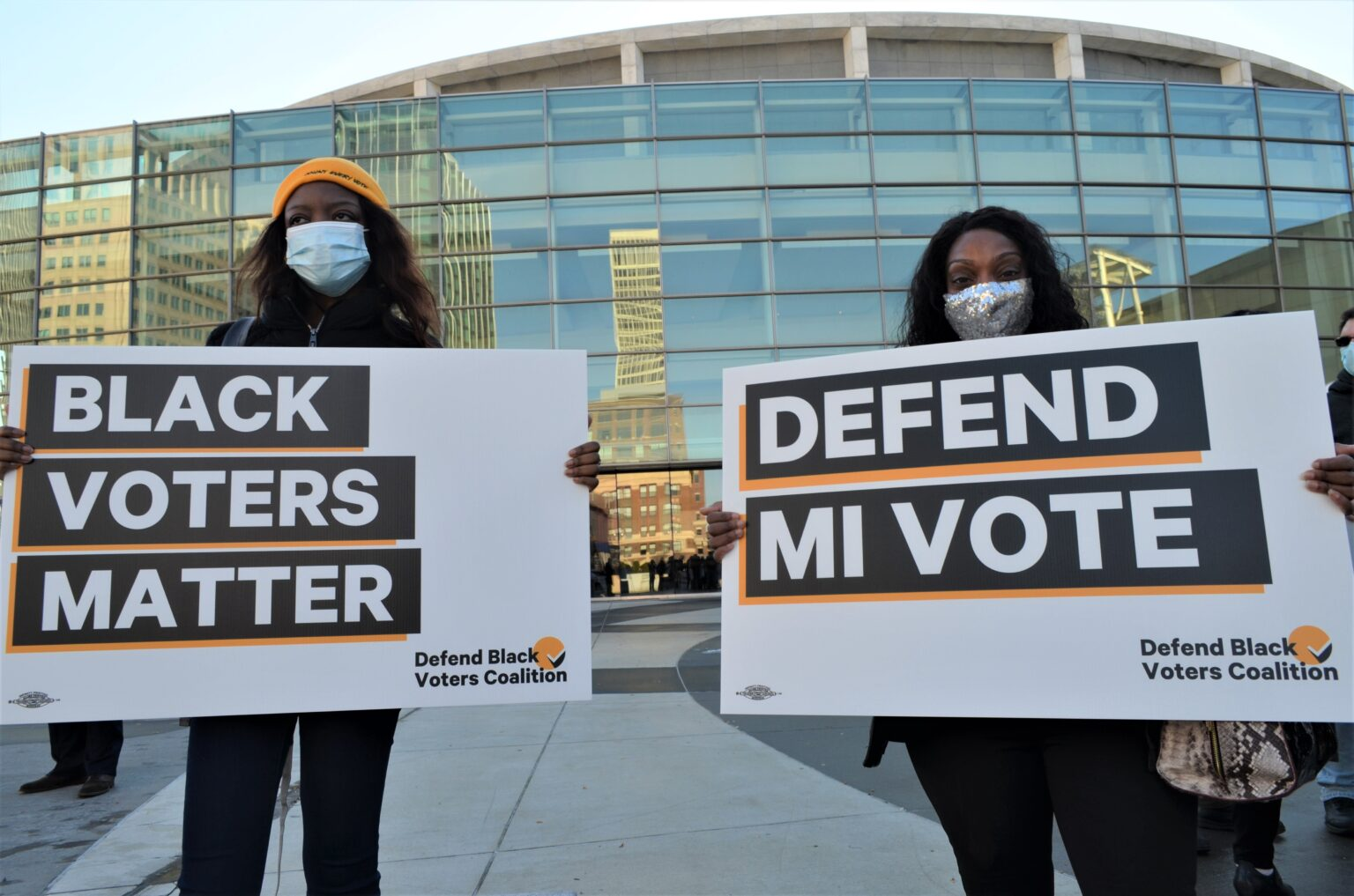
    Photo by Ken Coleman, States Newsroom.

    By:  Ohio Capital Journal

    Opponents of Ohio’s Issue 1 redistricting reform claim it would be bad for communities of color. Supporters of the proposal to replace politicians with a citizens commission point to the ways the current maps crack and pack Black voters.

    The Issue 1 proposal would replace the current Ohio Redistricting Commission made up of seven elected officials with a 15-member commission made up of citizens.

    The current commission includes the Ohio governor, auditor, and secretary of state, along with four lawmakers — one from each party in each chamber of the legislature. The 15-member citizens commission being proposed would be made up of five Republicans, five Democrats, and five independents, selected by a bipartisan panel of former judges.

    Voting yes on Issue 1 would create the 15-member Ohio Citizens Redistricting Commission. Voting no on Issue 1 would keep the current Ohio Redistricting Commission.

    Arguments for and against the ballot initiative have been targeted at communities of color, with both sides saying minority representation will be affected by the results of Issue 1.

    In a press conference at the Ohio Statehouse, state Sen. Michele Reynolds, R-Canal Winchester, brought former legislator John Barnes and two other Ohioans to urge voters to reject the ballot measure, claiming the changes “could fragment cohesive minority voting blocks, diluting our political influence.”


    “I am deeply concerned about the disastrous effects that Issue 1 will have on the Black state legislative and congressional districts in Ohio,” said Reynolds, who is one of five Black members of the 33-member Ohio Senate, and the only Republican.

    One of the Democratic members, state Sen. Catherine D. Ingram, who is also vice president of the Ohio Legislative Black Caucus, responded to Reynold’s press conference by saying Issue 1 “would ensure fair maps are drawn and expand opportunities for greater representation across our state, beyond the areas that have historically confined us.”

    “For generations, Black Americans have faced disenfranchisement, and gerrymandering adds an additional barrier to our adequate representation,” Ingram said in a statement.

    Issue 1 would create a 15-person citizens redistricting commission to replace the current commission. After a vetting process by a bipartisan panel of judges, the selected citizen commissioners would be required to hold public hearings and conduct the drawing of Statehouse and congressional maps in a transparent process, and create maps that receive a majority vote of the commission.

    Drawing the maps would require adherence to federal laws like the Voting Rights Act and the statewide partisan preferences of the voters of Ohio.

    The current process

    In 2021 and 2022, Republican partisans on the commission produced five Ohio Statehouse maps and two U.S. Congressional district maps that were struck down as unconstitutionally gerrymandered by a bipartisan majority on the Ohio Supreme Court.

    In 2023, the commission unanimously passed Statehouse maps with bipartisan support, although Democrats said they only supported them because redistricting reform was on the way and if they had voted no on them then the Republicans on the commission would have produced even more gerrymandered maps.

    Despite the fact that the congressional map was never revised to correct the errors found by the state’s highest court, it is the map being used for the 2024 election.

    A recent League of Women Voters of Ohio analysis of the current congressional map found that in Massillon, what’s considered a “large politically cohesive African American population” was split between the 6th and 13th Congressional districts.

    “Rather than keeping this clear community of interest united in one congressional district, mapmakers sliced Massillon into two pieces, specifically cutting off areas with large concentrations of minority voters from each other,” according to research analysis done by University of Cincinnati professor David Niven.

    Niven called the one-third of Stark County voters put in the 6th district “castaway voters,” citing research that said being a “castaway” voter “inhibits political information flows, mobilization and ultimately, representation.”

    “The political consequences of landing on the other side of those lines are powerful,” Niven wrote.

    The boundary-drawing of certain current congressional districts are “inexplicable” and “drawn in service of confusion not representation,” according to Niven’s research.

    The 1st district, for example, borders the 8th district in a “textbook gerrymandering maneuver — dividing a neighborhood and town and causing confusion on who lives in which district, serving no legitimate purpose,” Niven wrote.

    “Here’s a congressional district where people on the southern end of the district live in the shadow of Ohio’s third largest city with all its urban needs and opportunities, and people on the northern end have a local government that advertises when someone loses their mittens in the park,” Niven stated.

    Cracking and packing

    Voting rights advocates tend to agree with this assessment, saying the splitting of communities means less visibility, and less visibility means a lack of attention from people who purport to represent them.

    “What we’ve seen with supermajorities is communities are left out of conversations,” said Deidra Reese, director of voter engagement for the Ohio Organizing Collaborative and supporter of Issue 1. “Those issues that are coming from communities that have a smaller presence in those bodies just don’t get to have those issues elevated.”

    Important issues in communities of color, like in other communities, can include things like health care, economic issues, gun law reform and hunger. Without competitive districts that create the need for representatives and senators to engage with constituents of all kinds, Reese said legislation won’t match what is needed.

    “When you shut the door on people when you pass policies … it’s a disservice and what happens is African Americans just don’t get representation,” Reese said.

    Infant and maternal mortality rates were noted as a big concern for Black communities, which see disproportionate rates compared to their white counterparts.

    The LWV analysis showed some congressional districts combine those two vastly different mortality rates, like the 9th, 12th and 2nd districts. The 9th district holds Lucas County, with one of the highest rates of infant mortality and Wood County, one of the lowest. The 12th district includes the high rates in Holmes County, and the low rates in Guernsey County. Ohio’s 2nd district has Lawrence County’s high infant mortality rates and Scioto County’s low rates.

    “Again, this data begs an essential question,” the LWV study ponders, “How could any elected leader craft policy solutions for their constituencies, when the needs within their sprawling, contorted districts are so far apart?”

    Kayla Griffin, president of the Cleveland branch of the NAACP, said the fact that the district maps are still unfair despite previous legislative redistricting reforms in 2015 and 2018 leaves questions about how closely the process was even followed by the elected officials on the Ohio Redistricting Commission.

    “I think that becomes a serious problem that erodes the trust and the democracy that we have,” Griffin said.

    An even bigger problem that Griffin and other advocates are dealing with is the concern from many Black voters that their vote doesn’t hold weight under the current maps, and therefore won’t make much different in the November general election.

    Those talking to voters are trying to focus on the wins, most notably the rejection of a constitutional amendment to make it harder to amend the state’s founding document, and the approval of a ballot initiative that enshrined reproductive rights into that same constitution.

    “That is how our vote counts, that is how our voices are heard.” Griffin said. “I’m letting folks know that we can do this again.”

    YOU MAKE OUR WORK POSSIBLE.

    __________________
    Susan Tebben
    Susan Tebben

    Susan Tebben is an award-winning journalist with a decade of experience covering Ohio news, including courts and crime, Appalachian social issues, government, education, diversity and culture. She has worked for The Newark Advocate, The Glasgow (KY) Daily Times, The Athens Messenger, and WOUB Public Media. She has also had work featured on National Public Radio.

    Ohio Capital Journal is part of States Newsroom, the nation’s largest state-focused nonprofit news organization.

    MORE FROM AUTHOR

  • House passes bill creating new criminal charges for protesters

    House passes bill creating new criminal charges for protesters

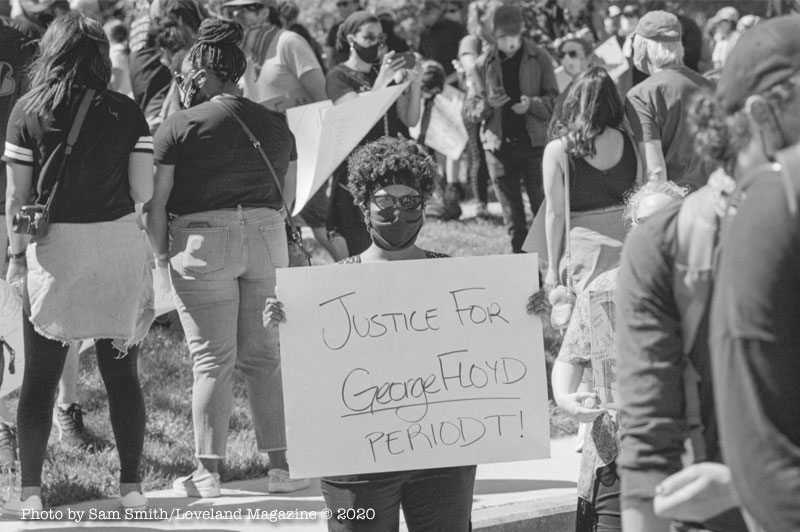
    Photo by Sam Smith for Loveland Magazine of racial justice rally in Inwood Park, Cincinnati – Sunday, March 31st, 2020

    By Jake Zuckerman and Ohio Capital Journal

    Ohio House Republicans passed legislation Friday that would expand the definition of “obstruction of justice” broadly enough to capture protest activity, according to social justice activists and civil rights advocates who testified against the bill. 

    The legislation would qualify failing to follow a “lawful order from a law enforcement officer” as the obstruction of justice.

    It also prohibits a person from interfering with or obstructing a police officer at work with “reckless disregard” as to whether the action diverts or obstructs the officer’s attention. This includes entering or placing an object somewhere that’s large enough that the officer cannot reach a person outside the area.

    Republicans said the legislation establishes basic protections for officers after a year of increasing violence and tumultuous social justice protests.

    Democrats said the legislation is unhelpful and divisive. Rep. Jeff Crossman, D-Parma, said it “fans the flame of culture wars and is yet another dog whistle about race.”

    Crossman offered an amendment to exempt anyone from charges who uses or threatens to use force against an officer if they’re “acting in good faith” to prevent death or serious bodily injury. The amendment failed on party lines. 

    Additionally, the legislation would prohibit a person from throwing any object or substance at an officer “with intent to distract.”

    The bill largely addresses conduct that’s already illegal under Ohio law, according to analysis from the Legislative Service Commission. It provides prosecutors more charges they can impose on alleged violators.

    The expanded obstruction of justice charges would be second-degree misdemeanors, or fifth-degree felonies if they cause physical harm to a person. Second-degree misdemeanorconvictions can yield sentences up to 90 days. Fifth-degreefelonies yield sentences between six and 12 months.

    After a Minneapolis police officer murdered George Floyd, an unarmed black man suspected of using a fake $20 bill, on camera last summer, massive racial justice protests formed around the country. Activists criticized racial profiling and the excessive use of force from officers unto people of color.

    Some of the initial protests descended into violence and looting. However, researchers reviewed 2,400 demonstrations nationwide between May and August 2020 and found fewer than 220 (about 7%) turned violent.  

    Regardless, Republican-controlled legislatures around the U.S. have introduced and passed different proposals to expand on or build new charges that can be filed against protesters. A more extreme proposal in Ohio sought to expand citizens’ rights to shoot in perceived self-defense during a “riot” — a loosely defined term in Ohio law.

    “This bill is not an anti-peaceful protest bill,” said Rep. Shane Wilkin, R-Lynchburg, one of the lead sponsors. “The key word is peaceful.”

    The version of the bill advanced by the House Criminal Justice Committee on Thursday is significantly narrower than what was introduced. “Taunt[ing]”an officer would have qualified as the obstruction of justice under the original bill draft.

    Republican Reps. Jeff LaRe of Violet Twp. and Wilkin sponsored the proposal. In their written testimony to the committee, they denied any intent to infringe upon individuals’ rights to free speech and assembly. They said it’s about protecting law enforcement officers.

    “Peaceful protests have turned violent when bad actors who are not involved in a police matter begin to taunt, harass, and overall interfere with law enforcement officers performing their duties,” they wrote.

    Racial justice groups, public defenders, the ACLU, religious organizations focused on social justice and the libertarian Americans for Prosperity spoke out against the bill.

    “The language in this bill will prevent innocent bystanders from exercising their Sixth Amendment rights per the U.S. Constitution,” said Tom Roberts, president of the NAACP Ohio Conference.

    “With the excessive force issues among our law enforcement here in Ohio and across the country, the timing of this bill is inappropriate and insensitive to many communities of color.”

    Advocacy groups representing police and prosecutors testified in support of the bill. Preble County Sheriff Mike Simpson, representing the Buckeye State Sheriffs’ Association, claimed some people seized on the unrest last summer as “an avenue to promote violence.”

    House Bill 22, he said, would outlaw “diversionary tactics” from those seeking to distract, disrupt and impede law enforcement.

    Analysts with the Legislative Service Commission, which conducts policy research for lawmakers, found the legislation will increase the number of offenders being sentenced to prison and may lengthen some terms. This could increase annual prison costs by between $3,000 and $4,000 per offender.

    Thomas Quinlan — who formerly served as Columbus chief of police, including during the protests last summer — testified in support of the bill on similar lines.  

    In May, U.S. District Judge Algenon Marbley issued a blistering, 88-page opinion prohibiting Columbus police from using tear gas, pepper spray, batons and rubber bullets against nonviolent protesters. He found officers used force “indiscriminately” and without provocation.

    “This case is the sad tale of police officers, clothed with the awesome power of the state, run amok,” he wrote.

    Just seven proponents testified in support of the bill, compared to more than 100 who opposed it, as noted by Ohio Legislative Black Caucus President Rep. Thomas West, D-Canton, in a statement after the vote.

    He said the bill “further sows the seeds of fear” by attempting to criminalize the right to protest.

    “This bill, not to mention similar legislation pending before this body, takes Ohio in the opposite direction of progress,” he said. “HB 22 will not promote the safety and security of our officers and of individuals exercising their First Amendment rights. It will only create more tension and potential for conflict.”

    The bill now goes to the Senate for consideration.

  • Honoring Black history and fighting for the future of education in Ohio

    Honoring Black history and fighting for the future of education in Ohio

    A Guest Column by Melissa Cropper and Ohio Capital Journal

    On Feb. 1, as Black History Month began in Ohio’s classrooms and virtual classrooms, Gov. Mike DeWine unveiled his proposed budget for the next two years, which continues the education funding policies that systematically underfund public schools that educate Black students and even shift some of that funding away toward unaccountable, for-profit private schools. 

    Black History Month is an important time for our nation’s educators to focus their curriculum around the contributions that African Americans have made in government, industry, art, science, literature, and every field of human endeavor. However, we do a disservice to our students if we don’t also teach about the harder, more painful history of slavery, segregation, disenfranchisement, and racist violence, and if we do not weave it into our everyday curriculum as deeply as it is woven into the fabric of our country.

    Even then, we are not telling the full story if we teach about these topics as relics of the past, as dark chapters of our country’s past that have ended. Racist structures in our society didn’t cease to exist when the Thirteenth, Fourteenth and Fifteenth Amendments were ratified following the Civil War, or after Brown vs. the Board of Education desegregated schools, or after the 1964 Civil Rights Act, or even after Barack Obama’s historic election. 

    Each of those events has been an important step along the way, but as we are reminded all too often, the vestiges of white supremacy live on in our current institutions. We see it in the over-policing and incarceration of Black, brown, and immigrant communities, we see it in our city neighborhoods that were shaped by redlining, and we see it in Ohio’s school funding system. 

    When we teach Black history, educators can make the connections about how the racial injustices of the past have turned into the systemic racial disparities of the present, and how we can demolish the underpinnings of injustice. There is no better place to start than with our broken school funding policies which underfund and segregate schools with large populations of Black students.

    In Ohio, we underfund schools in Black communities with a school funding formula that was found unconstitutional by the Ohio Supreme Court more than 20 years ago because it relied so heavily on local property taxes that it denied an equitable and adequate education to students in low-income areas. 

    We segregate schools in Black communities with voucher and charter policies that divert students and drain funding from local public schools. Often cloaked in the language of racial justice, vouchers and charter schools have the opposite effect when put into practice. The NAACP has often opposed these policies because they “divert much needed funding for public education to private or charter schools, thereby further dismantling the viability of the public education system and limiting the number of children who would be afforded the opportunity of an adequate and effective education.”

    This vicious cycle of underfunding schools in communities of color, and then punishing them for not being able to meet their students’ needs by underfunding them further, must end. We must stop pitting parents and communities against one another, and instead renew our commitment for high quality public schools for all Ohio students. 

    Last year, the Ohio House passed the Fair School Funding Plan with an overwhelming bipartisan majority, yet the Senate refused to take the issue up. The Plan would have put Ohio on a six-year path toward equitable funding of public schools in Ohio, and would have immediately ended punitive and harmful deductions for vouchers and charter schools from local public school funds. 

    This would ensure that public school districts receive money only for the students who are enrolled to attend but without the added penalty of deducting money due to students opting for private or charter schools. These changes would strengthen schools in Ohio’s cities and in our rural areas, giving students from all backgrounds increased opportunities. Despite the Fair School Funding Plan receiving an 84-8 vote in the House, the Ohio Senate allowed the bill to die without even receiving a vote. 

    DeWine had the opportunity to take the hard work and bipartisan agreement for this new school funding formula and insert it as a framework into his budget proposal. Instead, his proposal continues the status quo which is actively undermining our ability to provide an equitable education.  

    As educators, we can not teach Black History without also being activists in our own realm, fighting for an education system that gives every child, no matter their race or where they live, equal access to a high quality, free public education.