by Deborah Jordan
When I first heard that over 100 acres of Grailville were going to be a suburban housing development, I felt sick at heart. For a women’s organization committed to a vision of, among other things, spiritual search, social transformation, and ecological sustainability, this seemed like a travesty, a sacrilege. Now that Drees wants to increase the number of houses on site, there’s a chance to re-examine what’s possible. How can the history and vision of this place be honored, and the Grail choose another option?
Why do I care? Let me count the ways. I lived at Grailville in 1986 while I worked for the conference center and provided hospitality for the amazing gatherings that occurred; I’ve also attended many a program there and even led a few over the years. It was the location of the first Community Supported Agriculture (CSA) that my family joined, helping to grow the produce we shared every week over the growing season. During the time I spent at Grailville, I felt nurtured in my own search and dream to live a spiritually and ecologically sustainable life. It was the best place for retreat and reflection, work and play, creating and planning. It was an oasis and a beacon both.
Many can speak about the negative infrastructure impact of this proposed housing development on the surrounding community. Many can speak about the rich 75-plus-year cultural history of Grailville. But who will speak for nature? Does the land at Grailville mean more than mere property to be sold to the highest bidder?
What will happen to all the plants and animals that inhabit that space? What about the rich soil that was built over the years of organic growing, pastured livestock, and woodland growth? How can any of this be replaced?
And how can humans ignore their need for such places, and act like these places will always be there? Even though we are dependent on and part of the natural world, we are a society that is often placeless. We lack roots; we forget history; we bulldoze land. Yet we desperately need our connection with the natural world to feel whole, to be healthy. What happens to the Earth happens to us. We need more places like Grailville, not fewer.
Many of us are carrying pieces of Grailville’s vision elsewhere. My journey has taken me to the westside of Cincinnati where I strive to live an ecologically and spiritually balanced life. Still, I hope there is a more creative next chapter for the 100-plus acres that can carry Grailville’s vision forward. This many years later, I have gratitude for Grailville, for all I experienced and learned there. I want to know that her sacred ground is honored and will be there for future generations. That’s my Earth Day prayer.
Deborah Jordan lives in an eco neighborhood in East Price Hill where she’s about to release the 15th annual Central Ohio River Valley (CORV) Local Food Guide, connecting growers and eaters. Read the 2021 Local Food Guide.
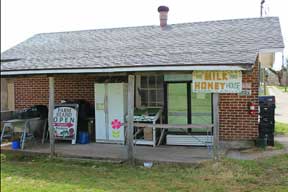 Is 180 lbs too much for you? Then consider buying your produce at our retail store at the Grailville Milk and Honey House. We will have fresh organic produce in stock every day during the growing season in our store.
 Earth-Shares CSA also has a booth at the Loveland Farmers Market.
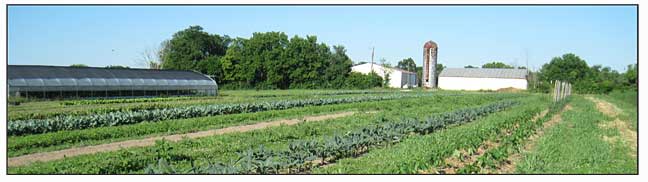
  Our members enjoy fresh seasonal produce, all grown on our farm in Loveland; our land is Certified Organic by the USDA and the Ohio Ecological Food and Farm Association (OEFFA). In 2016, each member received over 180 pounds of vegetables over the course of the growing season, which runs approximately 22 weeks. The harvest varies by week, and each year is different, depending on many variables including weather conditions, pest activity, crop rotation, and planting patterns.