
by David Miller
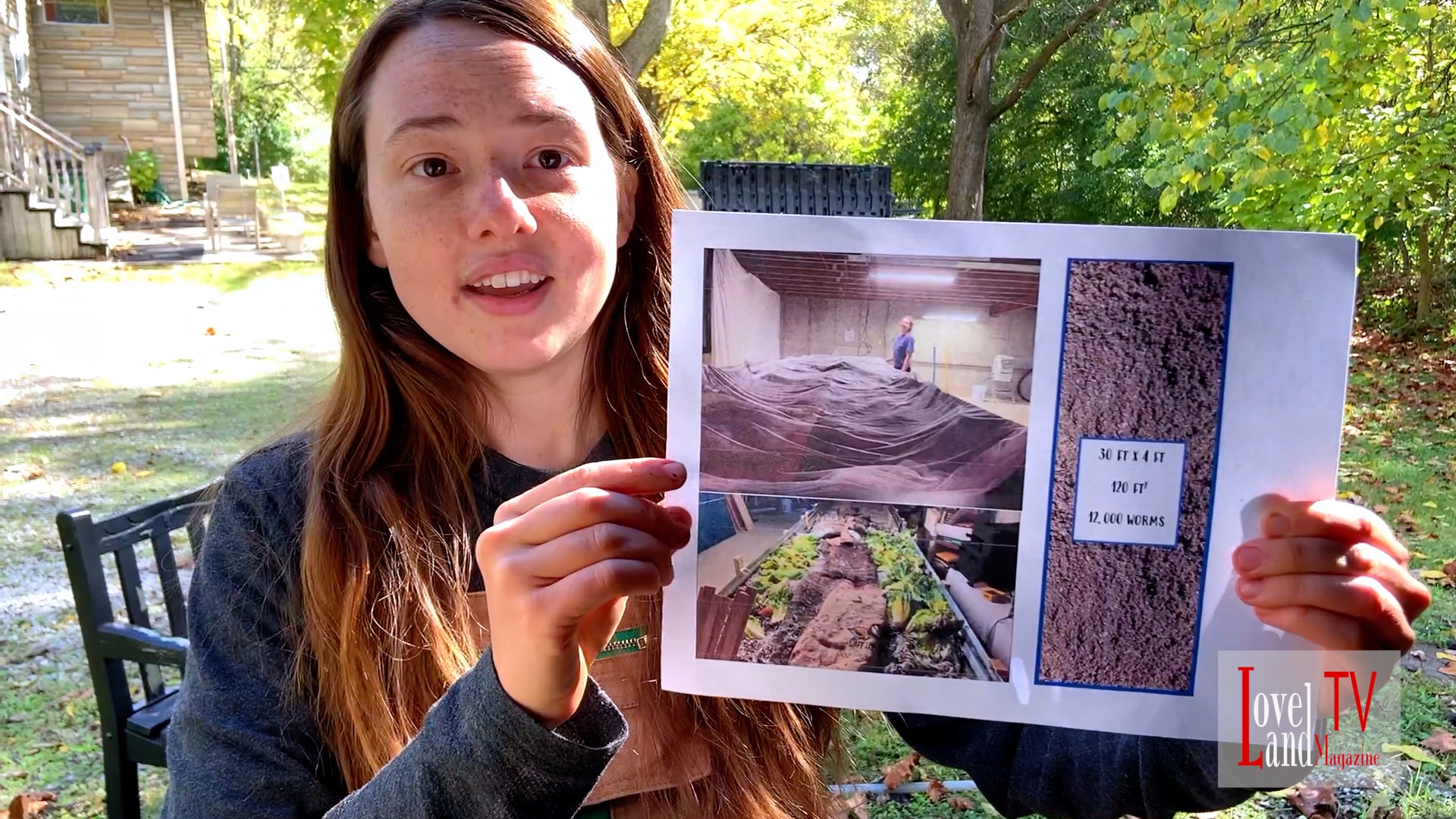
Loveland, Ohio – Katie Jacobs’ worm worker factory produces an everyday practical product. She describes herself as a native-Lovelander, is currently a resident of Loveland, and graduated from Loveland High School in 2016. You can hear more about her education and agricultural science background in the interview I did with her.
To set the location, our office is the old Simpson Farmhouse which used to be part of the 40-acre Simpson Farm that is our back yard, a dedicated Conservation District in the heart of the West Loveland Historic District.
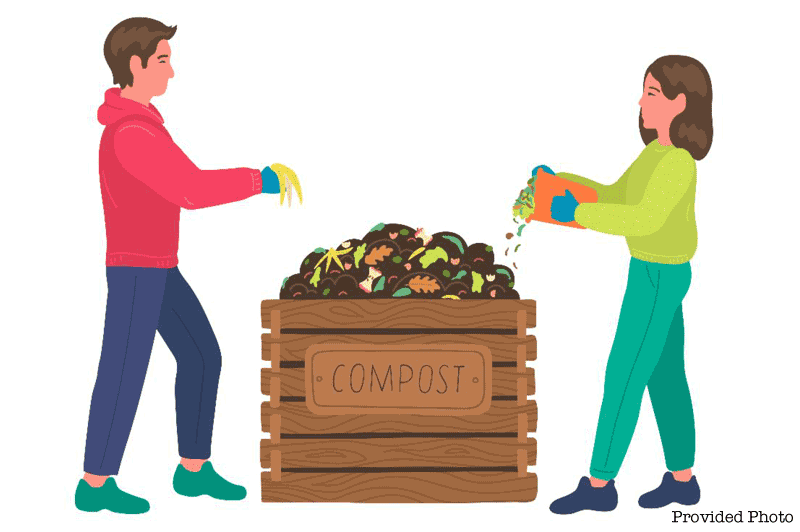
Katie does a specific type of composting called Vermicomposting and although she is doing it on a somewhat large scale, many people compost in their back yard. Some people compost like we do here at the Farm, putting our kitchen waste in a backyard, tumbling bin, a semi-enclosed bed, or just a dedicated pile (traditional thermophilic). Compost bins are handy for breaking down grass clippings, weeds, or other yard waste such as Fall leaves. We use our compost once nature breaks down the waste to make our own potting soil or amend the soil of flower beds. Our tumbling bin here at the Farm was a gift and it makes it easy to turn in new waste and rotate it all to keep the natural breakdown process ongoing.
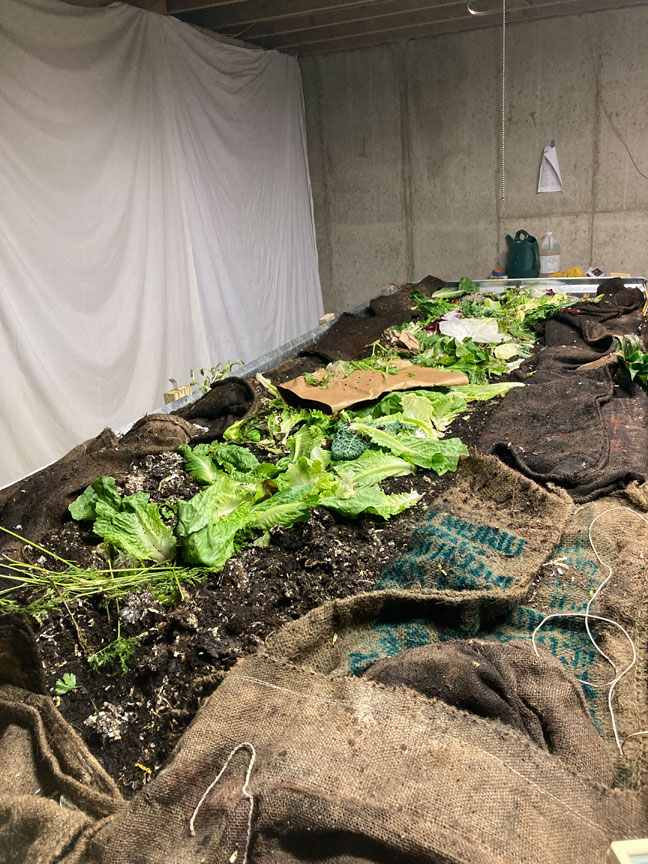
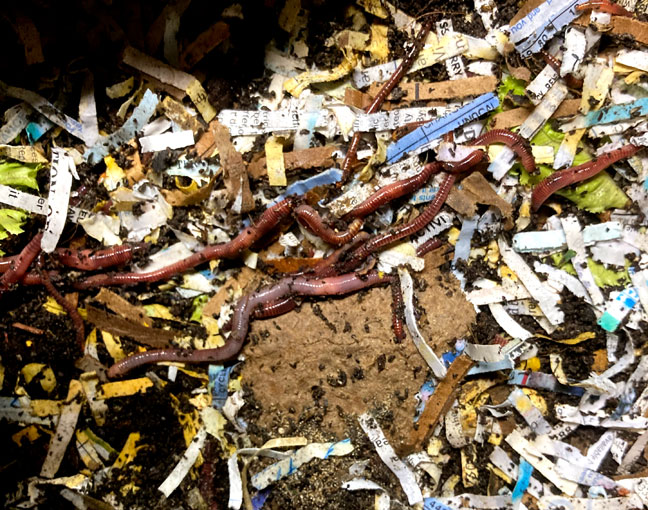
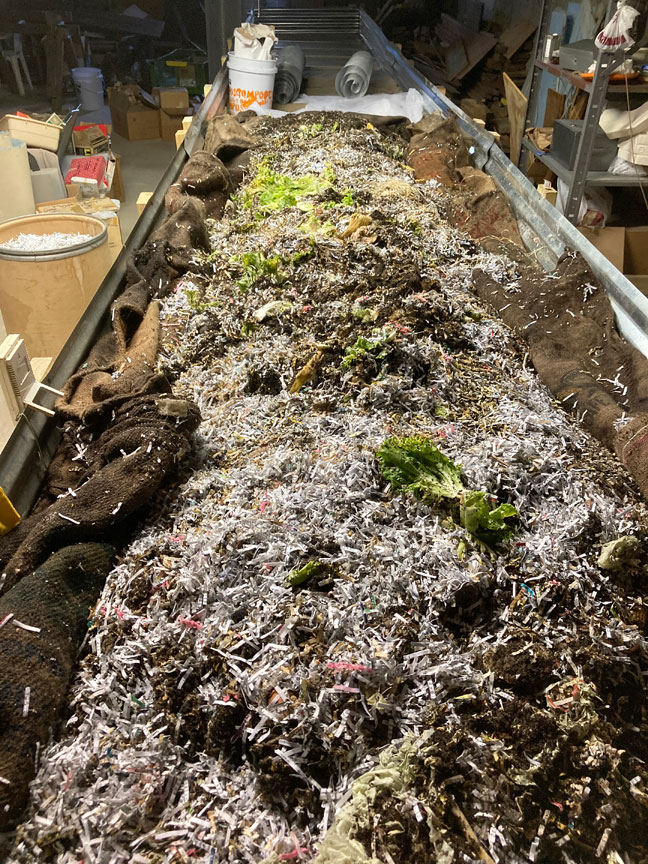
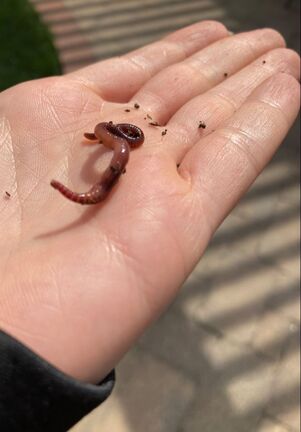
Katie collects compost from local residents and businesses for her indoor worm bin. In this interview, she shows the type of material she collects and the worms that are her “employees” that do the 24/7 work at no pay. Not worker ants – worker worms! Her European nightcrawlers work “night and day” to produce the worm castings, this small business owner sells.
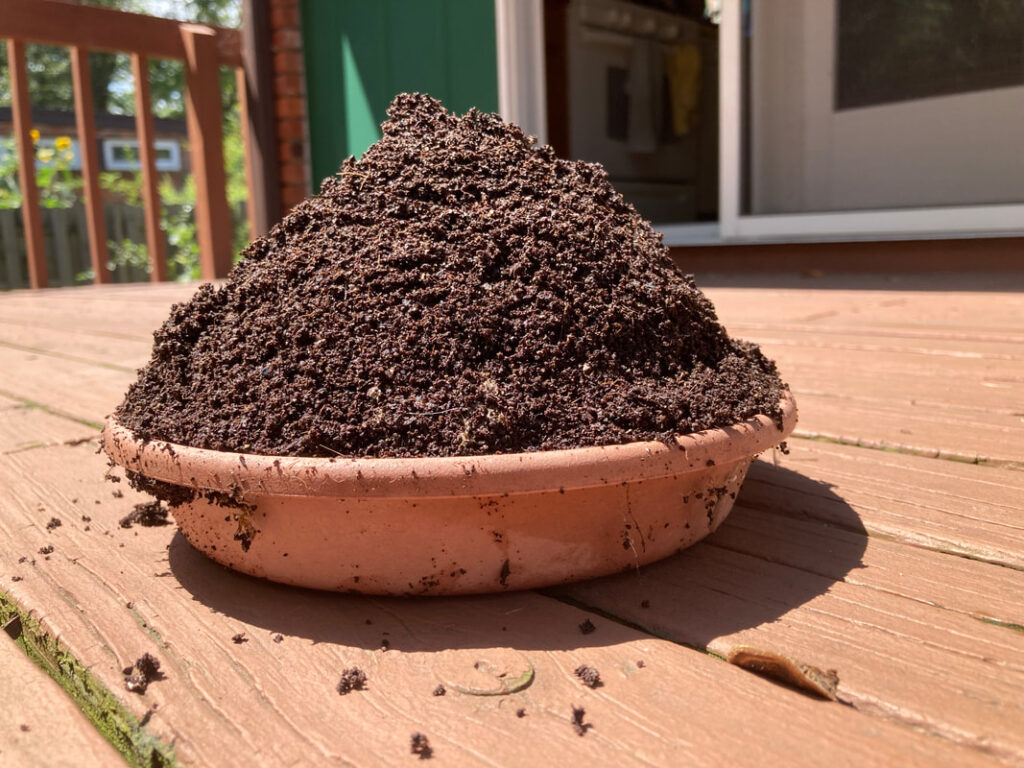
She left a gift of castings here at the Farm so we could give our houseplants a hearty breakfast of micro-nutrients, humic acid, and microbial life. They will benefit from the plant-growth hormones, including auxins and gibberellins as well.
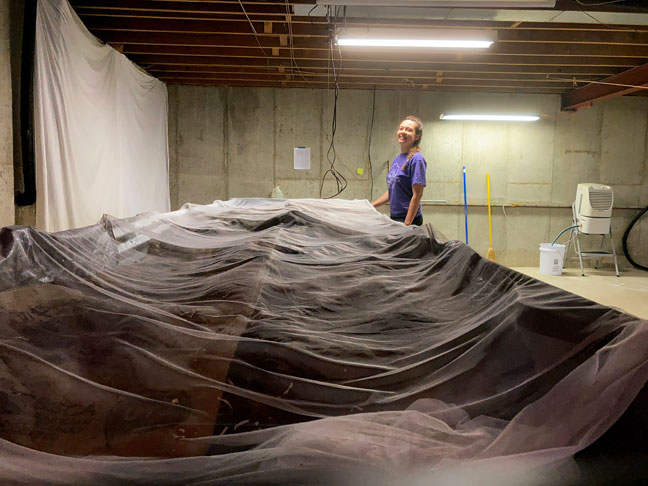
Katie said, “My business was luckily funded when I received a grant from the Hamilton County Wast Reduction and Innovation program.” Her worm-casting factory is located in her grandparent’s basement. Worm-castings produce no odor. “There are no synthetic chemicals involved so It’s a great product for people who are looking for a way to garden more sustainably to take care of their soil and plants.”
Katie takes you through the steps to compost at home – from kitchen and office to your garden. She’s got your do’s and don’t’s covered.
Katie introduced me to a new term she uses, “Guerilla Composting” and she says she often does it as well. It’s when food waste, such as an apple core or stale bread is just tossed into the back yard to feed the birds, rabbits, groundhogs, or deer which we have an abundance of coming in from our “back 40”.
Worm castings are the excrement (or poop) the worms produce after ingesting organic matter. They are also referred to as “vermicast,” “vermicompost,” and “black gold.”
Back2TheDirt aims to reduce food waste that ends up in a landfill and creates high-quality worm castings that benefit plant and soil health.
Katie and Back2TheDirt can be reached via email or 513-212-6955 to inquire about becoming a customer.
Are you interested in Katie’s PRODUCTS or COMPOSTING SERVICES?
Back2TheDirt offers free 2-week trial, drop-off, and business memberships.
Katie says there are benefits for plants
We all want our plants to grow big and luscious. Worm castings are one soil additive that can help you achieve this goal. Packed full of microbes and essential nutrients, worm castings can give your plants a big advantage. Here’s how they help:
• Provide nutrients including nitrates, potassium, phosphorous, calcium, and magnesium
• Contain plant-growth hormones, including auxins and gibberellins
• Contain humic and fulvic acid which make insoluble minerals plant-available
• Increase root growth and plant biomass
• Speed up germination of seeds and increase seedling growth
• Reduce transplant shock
• Reduce pests, including aphids, cucumber beetles, white caterpillars, two-spotted spider mites, tobacco hornworms, and fruit borers
• Suppress plant diseases including Pythium, Verticillium, Phomopsis, and Rhizoctonia
• Decreases the amount of parasitic nematodes by attracting beneficial arthropods and fungi
Katie says there are benefits for soil
Soil it seems has entered the mainstream–discussed for its impact on the environment’s health, its ability to sequester CO₂, and its importance in promoting food security. Growers know that healthy plants and tasty fruits and vegetables begin with healthy soil. Here’s how worm castings can contribute to your soil profile:
• Add organic matter
• Increase soil porosity and aeration
• Reduce the bulk density of heavy soils
• Decrease water loss and nutrient leaching
• Form stable aggregates that help reduce erosion
• Increase cation exchange capacity, which increases the availability of calcium, magnesium and potassium
• Buffer soil pH
• Add beneficial soil microbes