
Tag: confidence

  • Splashing In – Welcome!

    Splashing In – Welcome!

    by Fran Hendrick

    Professional clinical counselor, parenting columnist, and instructor Fran Hendrick has provided coaching and counseling for hundreds of women and girls for twenty-five years. Clients appreciate Fran’s calm, empathic style, her practical strategies and solid advice, and her playful spirit. In addition to her therapy practice at Wildflower House in Loveland, Fran provides consultation, through private video chat and by phone, for moms participating in her online course “Helping Confidence Bloom: The Step-by-Step Approach to Raising Confident Girls”.

    “I don’t want my daughter to struggle with confidence and anxiety issues. I want to learn what I can do to help her become strong and confident – and really have fun with her life.”

    This is the concern – and the heartfelt wish — that many of my clients share with me. 

    Join Fran’s Raising Confident Girls Facebook Group – especially for moms.

    What I find both fascinating and empowering is that your daughter’s trust and confidence are not built by big actions and grand gestures; they’re actually built in the small moments of everyday life. Moments like when she’s late for school – or puts down her iPad to help her little brother with his spelling; says she hates what you’re having for dinner – or does her first headstand. 

    Believe it or not, these are the moments where what you say and do can make all the difference in building her confidence – or unintentionally eroding it. (And – by the way – what we generally think of as praise is likely to backfire completely!)

    It’s easy to miss the opportunity in these moments, not because you don’t want to be there for her but because you aren’t fully aware of what she needs from you. It’s easy to get discouraged and even feel powerless to help your daughter become less anxious and more assertive; or to help her persist at a hard task instead of feeling stupid and quitting in a storm of frustration. What you need is a lens that allows you to see things you couldn’t see before – along with the insight, tools, and a clear framework to know what to do or say. 

    And it’s so important! Confidence is not only a goal in its own right. Beyond that, a strong sense of self-confidence and self-worth provides lifelong protection against depression.

    I’m not one to step up to a microphone without major provocation. But the statistics on depression and self-harm in girls and women today in this country demand it.

    I’m not one to step up to a microphone without major provocation. But the statistics on depression and self-harm in girls and women today in this country demand it. According to the National Institute of Mental Health, a whopping 17.3% of girls ages 12-17 have experienced a major depressive episode1, along with 8.2% of adult women2.  It has even been estimated that girls’ self-esteem, their greatest protection against depression, peaks (yes, peaks) before they are ten years old!

    What makes this all the more unacceptable is that it is largely preventable! We have the knowledge to raise girls to feel whole, adequate, and joyful so they experience the world confidently and in bright colors. The knowledge exists to protect our girls from depression, from lifelong battles against feeling not good enough, from desperation – in short, to prevent rivers of tears and needless pain.

    They can joyfully become exactly who they’re meant to be.

    But for parents to actually be able to implement that knowledge in the small moments that make up everyday life with children requires a clear approach, intentional action — and a strong dose of self-reflection, because it can be scary. With that investment, our girls can be spared the lifetime of depression and anxiety that so many women experience. They can joyfully become exactly who they’re meant to be.

    They kick upwards, their arms reach for the sky, they seem to fairly prance, all with their own dance steps, their own vivid colors, their own lively style.

    On my desk at Wildflower House, I have a colorful drawing, spontaneously crayoned by a spectacular six-year-old girl. In it, twelve children jubilantly dance two-by-two in all directions across the fluorescent green paper. They kick upwards, their arms reach for the sky, they seem to fairly prance, all with their own dance steps, their own vivid colors, their own lively style. 

    That is how our girls should feel! I believe our daughters simply must be given that opportunity. Parents need a clear approach to evade those awful statistics and, in their place, to create something wonderful.

    I invite you to be part of improving the odds for today’s little girls, especially the ones within your own reach.

    “So let’s fix it together.”

    Why? Because each little girl has the potential to bloom uniquely. Because it is a sacred responsibility to learn to nurture, to discover that. And because there should be, there must be no lost voices. Each individual human being is entitled to self-expression.  Without it, our sparks dim and become buried out of our reach, hopelessness gains ground, despair sets in.  Human beings should not be locked away inside themselves. Ever.

    So let’s fix it together. 

    You really can build your daughter’s confidence right there in the midst of simple everyday conversations. I’ve designed this new column to show you how.

    I hope you’ll join me!

    Located at 111 N. Wall Street in Downtown Loveland, Wildflower House, Fran’s cozy personal development studio for coaching, counseling, and classes provides a space for women and girls to confidently become exactly who they’re meant to be. 

  • How smart phones can erode your daughter’s self-confidence and thwart independence (and why you might be having a hard time intervening)

    How smart phones can erode your daughter’s self-confidence and thwart independence (and why you might be having a hard time intervening)

    by Fran Hendrick, PCC

    Soooo much fun!

    I’ve just downloaded the Best Wallpaper Ever. This free app turns my sleek and shiny smartphone into a miniature aquarium, complete with on/off bubble aerator, ten underwater scenes to choose from, and a selection of tropical fish that allows me to click not only which ones I want, but how many of each. It’s eye candy, especially on my extra-large screen; I’m pretty sure it’s better than the real thing. A beautiful, stress-relieving undersea scene, with me at all times – and, unlike our old clunky aquarium, doesn’t even need to be cleaned.

    Also “with me at all times,” are google search, an infinite store of apps to shop, and, most powerful, all of my friends are reachable with just a tap or a text. Kindle, Nook, Netflix – this is by far the best toy I have ever had. I could become addicted.

    Maybe you can feel the possibility of addiction, too. It definitely happens to kids, and the age that it happens keeps dropping.

    Providing the support your daughter needs requires you to feel all right – good, even – about setting limits and, at times, saying no.

    It’s obvious that I love my smartphone. And my laptop, my tablet, my Kindle, and yes, Facebook. They provide access to a wealth of knowledge and entertainment, a way of connecting with friends whom I might otherwise lose track of — and they play an important part in my safety. The problem is that we’ve swung so far in the direction of “Why not, what harm could it do?” — the habit of saying “yes” to pleas for today’s electronic gadgets – that we have lost track of what these gifts can take away.

    How smart phones can erode self-confidence and thwart independence (and why you might be having a hard time intervening)Everyone’s got one. How can it hurt?

    As much as smart phones and tablets give, they also, without doubt, take away. Used excessively, they can compromise self-reliance, responsibility, participation in activities that grow strength and character, face-to-face relationships, confidence, and, not least, sleep.

    Not so long ago, when kids headed off to school in the morning, they were on their own in their “workplace”. There might have been a pay phone or two, and in a pinch the office would allow a phone call, but other than that, children had the responsibility to manage independently. Without a doubt, at times that was too harsh and isolating. But we’ve now moved to the opposite end of the continuum, and it’s also damaging. If homework is forgotten – or the required equipment for an after-school activity is still on the bedroom floor– just text mom. In a moment of angst, quickly text a friend. Kids – and adults, too – stand to become dependent on being constantly connected to a source of back-up and reassurance. The result: kids lose the the chance to learn that they are whole on their own. They lose the opportunity to develop clear boundaries of responsibility  — yours vs. hers — and the sense of competence and confidence that result when those boundaries take hold. Even independent, responsible teens are at risk, because they’re more likely to take on responsibility for the well-being of one or more peers by feeling ethically obligated to be present “24/7” for their friends who are having a hard time – and that hurts both.

    Join me for a Facebook Livestream on this this topic!

    Got questions? 

    I’ve been looking at a different back-to-school concerns each week for the past three weeks. Please join me at www.facebook.com/franhendrick for a Facebook Live Stream on Fridays (8/3-8/24) at 11:00 AM Eastern Time.

    Post your questions about that week’s back-to-school issue in the comment section of the live stream post — or private message me on Facebook. I love helping you work out these answers.

    See you there!

    But it doesn’t end there.

    Designed to addict

    Smart phones provide nonstop access to a sometimes malicious grapevine. It’s not at all unusual for girls to be texting a friend to critique a text conversation that is occurring simultaneously with another friend. It’s as if the mail carrier now comes every five seconds instead of once a day. Without a doubt, the intermittent reinforcement of finding a new messages is addicting — so are the truly cool visual and auditory notifications. If you doubt that, just watch people, adults and teens alike, checking their phones and sneaking in a text response right in the middle of absolutely any other activity. There is no doubt that this raises stress and anxiety — and a sometimes obsessive fear of missing out (FOMO). How many teens are having a hard time stepping away from all of this breaking news in order to get a full night’s sleep?

    The reality is that smart phones are deliberately, calculatedly designed to addict. This is like leaving kids 24 hours a day in a candy shop with an ever-changing, overwhelmingly tantalizing selection. At every turn, there’s a new colorful, delicious concoction packaged so attractively as to be irresistible. It’s unrealistic to expect kids to manage this level of enticement without adult support.

    Start with your own fears

    But your own fears can get in the way of providing that needed support. What if your daughter’s friends are allowed to do things she’s not? What if everyone else has the latest gadget and your daughter feels left out? What if she can’t reach out to you when she wants to? What if she’s devastated by a cutting remark and she really, really needs to connect with her best friend right now? What if she’s excluded from the weekend social agenda because she doesn’t respond instantly to a text?

    Put your goal into words

    Providing the support your daughter needs requires you to feel all right – good, even – about setting limits and, at times, saying no. It takes your own gut level realization that over-dependence on electronic devices is harmful. When you feel that, limiting the harm is natural. Technology should enhance your daughter’s life without impeding her growth.

    Cell Phone Safe Use Resource Sheet

    Getting her electronics usage back on track and keeping your daughter safe online doesn’t have to feel like boot camp to your daughter. I’ve created a Cell Phone Resource Page for you (you can download below) to help you put together a simple, but powerful, agreement.  In it, I’ll show you some of the ways to help your girls enjoy that amazing candy store without staying up all night or becoming dependent. It takes a dash of structure combined with a large measure empathy and accurate understanding. As one mom so aptly observed, possibly because she had experienced this in her own childhood, “Structure without empathy results in an absence of joy.” So, instead of talking solely about “laying down the law,” begin a constructive conversation with your daughter that you can continue over time.


    About Fran Hendrick, P.C.C.

    Professional clinical counselor, parenting columnist, and teacher Fran Hendrick has provided coaching and counseling for hundreds of women and girls for twenty-five years. She is a member of the International Association for Psychoanalytic Self Psychology. In addition to her therapy practice, Fran provides consultation online and by phone for moms participating in the Joyful Rebels process.

    Fran divides her time among working with clients, kayaking with her husband, and scampering up jungle gyms with her granddaughters. Clients appreciate Fran’s calm, empathic style, her practical strategies and solid advice, and her playful spirit.

    Wildflower House, Fran’s cozy personal development studio in charming, historic Loveland, Ohio provides a space for women and girls to become exactly who they’re meant to be.

    Located in downtown Loveland Ohio at 111 N. Wall Street, Wildflower House is a cozy studio to support your personal development, a place to bloom.


    The Step-by-Step Approach to Raising Confident Girls

    An interactive, online course — coming in September!

    Connect with Fran: www.franhendrick.com and www.facebook.com/franhendrick


  • Your daughter’s cell phone — Designed to Addict (and what you can do about it)

    Your daughter’s cell phone — Designed to Addict (and what you can do about it)

    If your daughter’s reaching (or has reached) the age when you feel it’s time she had a phone, you know you’re entering into a challenge.

    by Fran Hendrick, PCC

    Getting a cell phone warrants a celebration, right? Of course! But like any rite of passage, there is both responsibility and risk attached to it. Having a phone in her possession raises a number of very real health and safety issues because cell phone use is implicated in anxiety, stress, depression, cyberbullying, addiction, and emotional dependency (that’s right, cell phones can erode confidence!) — for starters. Like driving later on, handing your daughter her first phone merits some planning.

    Join me Friday for a Facebook Livestream on this this topic!

    Got questions? 

    I’ve been looking at a different back-to-school concerns each week for the past three weeks. Please join me at www.facebook.com/franhendrick for a Facebook Live Stream on Fridays (8/3-8/24) at 11:00 AM Eastern Time.

    Post your questions about that week’s back-to-school issue in the comment section of the live stream post — or private message me on Facebook. I love helping you work out these answers.

    See you there!

    I’ve got three things for you on this topic:

    1. The Cell Phone Safe Use Resource Sheet

    I’ve put this together to help you create an informed plan — and yes, I really do think it’s that important. The research is coming in and it’s disturbing. But along with the research, we’ve now got more strategies and guidelines to help having a phone be a constructive experience for kids.

    In this Resource Sheet, I cover:

    • Links to information you need to educate yourself in order to plan for your daughter.
    • Links to information on Parental Controls — super important.
    • How your own fears can get in the way of taking steps to protect your daughter.
    • How to structure a conversation with your daughter on this delicate topic.
    • How to respond to her feelings about implementing some structure around cell phone use.

    2. From the Blog Archives

    This issue of emotional dependency cuts right to the heart of what so many moms want for their daughters — and that’s confidence. In the post below, I’ve explained how cell phones can erode confidence. It’s not a small thing.

    How smart phones can erode self-confidence and thwart independence (and why you might be having a hard time intervening)

    3. This Week’s Facebook Live

    I’ll be talking about this topic and other questions, as well, Friday August 24 at 11:00 AM Eastern Time in a Facebook Live. You can join this event on my Facebook Page. (By the way —  previous topics are also there for you to view. Just click the Video tab and you’ll see them.)

    Looking forward to connecting with you!


    About Fran Hendrick, PCC

    Professional clinical counselor, parenting columnist, and teacher Fran Hendrick has provided coaching and counseling for hundreds of women and girls for twenty-five years. She is a member of the International Association for Psychoanalytic Self Psychology. In addition to her therapy practice, Fran provides consultation online and by phone for moms participating in her Helping Confidence Bloom classes and upcoming ecourse.

    Fran divides her time among working with clients, kayaking with her husband, and scampering up jungle gyms with her granddaughters. Clients appreciate Fran’s calm, empathic style, her practical strategies and solid advice, and her playful spirit. Wildflower House, Fran’s cozy personal development studio in charming, historic Loveland, Ohio provides a space for women and girls to grow the confidence to become exactly who they’re meant to be.

    Contact Fran or call 513 677-9800.

    Quick Links

    What is Wildflower House?

    Find the bundle that fits your style


    Located in downtown Loveland Ohio at 111 N. Wall Street, Wildflower House is a place to bloom.



  • Inspiring others to be THANKFUL for all of life’s blessings

    Inspiring others to be THANKFUL for all of life’s blessings

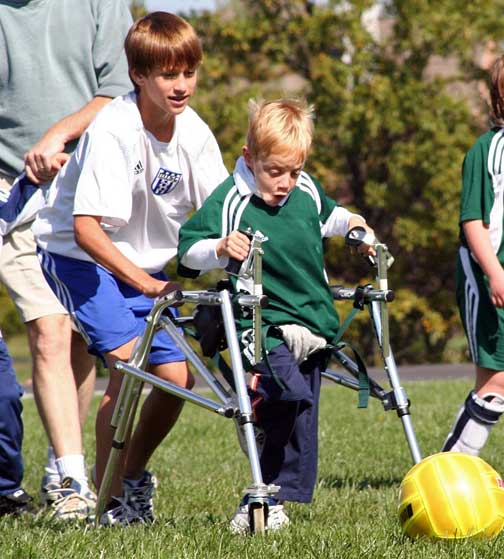
    Cam Louder and Anders Michelson when they were very young buddies

    Two old friends find strength to achieve life’s dreams

    through each other and their disabilities

    Unbreakable Friendship…

    by David Miller,
     

    Loveland and Milford, Ohio – It all began 15 years ago in Mitchell Farm’s subdivision on a small cul-de-sac street with 20 kids. Directly across the street were seven more children. Altogether there were 27 kids running around the neighborhood every single day going house to house. It was a magical time and what formed were friendships beyond your imagination. Especially for two young men named Anders Michelson and Cam Louder. The age gap didn’t make much of a difference. They were glued at the hips from the beginning. They found each other humorous, but the real attraction was soccer. 

    Anders went to most of Cam’s soccer games. He rolled him everywhere in his walker in order for Cam to make goals.

    What Cam and Anders didn’t understand during early childhood was that both would be significantly impacted playing sports because of their disabilities. Cam was born with cerebral palsy and as he aged his disability became progressively more difficult. At the age of 9, Anders was diagnosed with Type 1 Juvenile Diabetes. Cam recalls being very alarmed by the ambulances at Ander’s house when he would go into diabetic shock and the possibility of dying. On the other hand, Anders has agonized over Cam’s 17 surgeries and has been with him every step of the way throughout his journey.

    “Anders and his family have always been a blessing in our lives and Anders and Cam have been a blessing to each other,” said Karen Louder, Cam’s Mother. Anders would steal Cam most evenings and take him to all the Milford soccer games. Karen remembers Anders coming to most of Cam’s Top Soccer games. He rolled him everywhere in his walker in order for Cam to make goals. “I was simply amazed by Ander’s energy and dedication to soccer. He was struggling with Diabetes and he still didn’t give up on himself or Cam” Anders has been an avid soccer player since the age of 3. Anders always dreamed of being a professional soccer player, unfortunately, his diabetes drastically interfered with his lifelong goal.
    “Anders has been there for me every step of the way through my journey and I’m always going to be there for him,” said Cam Louder. “Anders and I push each to do the best we can and we feed off each other’s challenges.”

    Persevering Through His Disability

    Anders Michelson

    Disabilities have a way of affecting a person’s development, confidence, and attitude at different times of their lives. At the onset of Ander’s disease, he weighed only 60 pounds. In one week due to high blood sugar levels and ketones, he lost over 25% of his body weight and dropped to a frail 42 pounds at the age of 9. High blood sugar had a direct impact on Ander’s energy level and physical capabilities and playing on the Milford A team was difficult. Unfortunately, the following season he was cut, but that did not stop him from chasing his dream. He continued to play a year up in age on the B team for 3 years and worked even harder. At the age of 13, he moved back up to the Milford A team. Although small in stature Anders had incredible speed and over the next few years he worked on his technical skills for dribbling and finishing the ball. He became a better soccer player, but size was still a roadblock as he was approaching high school. His teammates were growing at a much faster rate. Most kids were weighing 150 lbs and 5.6 feet tall on average. Anders was under 5 feet tall and weighed under 100 pounds. He couldn’t even lift the bench bar as a freshman in high school which was only 45 pounds. Anders had no alternative, but to play on the Milford JV team for 2 years. However, in his junior year of high school, he made it to Milford’s Varsity Soccer Team. His entire high school career was dedicated to working hard in soccer and academics.

    Anders achieved 1st Team All-City and was awarded MVP of the 1st team All-City Game, Eagle Award, District Champions 2008 and 2011 and 2nd in Conference in 2009 and 2010

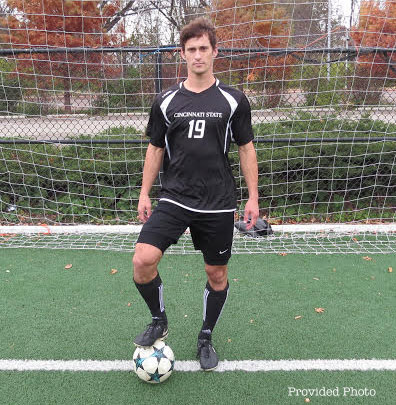
    While playing with the Milford Soccer team he achieved 1st Team All-City and was awarded MVP of the 1st team All-City Game, Eagle Award, District Champions 2008 and 2011 and 2nd in Conference in 2009 and 2010. Anders was contacted by several colleges while playing Varsity, but he didn’t have the full confidence to go for his soccer dreams. His disease was still in the forefront and he wondered about the longevity of an athletic career and how diabetes was currently affecting his ability, weight, and size. 

    In college, he started playing pick up soccer and noticed his abilities increased. He actually grew more into his body than ever expected and this is when his regret of choosing not to play soccer sank in.

    Over the years, Anders gained encouragement from his older brother Peter and he was able to consistently work out and gain muscle mass while attending Miami  University. In college, he started playing pick up soccer and noticed his abilities increased. He actually grew more into his body than ever expected and this is when his regret of choosing not to play soccer sank in. Yet, his disease still had a grip on him and his diabetes was actually spinning out of control. His Doctor gave him the bad news of sustaining over time an A1C of over 10 (measure of average blood glucose over the past two to three months) which meant Ander’s diabetes was poorly controlled and will eventually lead to major complications, such as heart attack, stroke, blindness or eye damage, foot infections or amputation, or kidney damage possibly leading to chronic dialysis or even sudden death. Doctors warned him if he didn’t control his diabetes that his life expectancy wasn’t predicted to go beyond 10 years.  

    He’d wake in the middle of the night thinking about his fate of dying young and not playing soccer. That’s when his epiphany began.

    After college Anders worked as a finance broker and continued battling the terrible progression of diabetes. After receiving the news about his A1C tests he had constant nightmares. He’d wake in the middle of the night thinking about his fate of dying young and not playing soccer. That’s when his epiphany began.

    Soccer was the answer

    With the full support of his family, Anders quit his job and began conditioning his body. Part of his conditioning plan was enrolling at Cincinnati State and playing college soccer. For the last year, he has been committed to grueling workouts which include a weekly routine of running 18 miles a week, 30 miles of bike resistance training, 6 hours of weights, 2 hours of abdominal work and 12 hours a week of soccer practice and games.

    Anders and I push each to do the best we can and we feed off each other’s challenges.

    He also trains and works out with his old buddy, Cam 6 hours a week at Five Seasons Sports Club. Anders goal is to increase Cam’s upper body strength for independence and to get Cam strong enough to walk with a Kaye Walker and out of his wheelchair. Cam said, “Anders and I push each to do the best we can and we feed off each other’s challenges.”

    As if this wasn’t physically demanding enough, Anders also has a physical job working for his family business, AquaMarine Pools and Spas part-time. 

    What’s Next…

    Looking back when entering college Anders was 5’10 145 lbs, now he comfortably sits at 6’1’’ 176 lbs. Doctors told Anders that if he could obtain A1C below a 7 his energy levels would triple. He thought it was impossible. Today Anders has achieved an A1C of 7.2 and feels the positive effects physically and mentally.

    My goal is to prove that your disability is not an inhibitor, it can be a motivator, differentiator.

    Perseverance has a way of paying off and now Anders will face one of his biggest challenges thus far; he has applied to the United Soccer League and is awaiting an invitation to try out for FC Cincinnati. He is refusing to allow diabetes to define him and is determined to chase down his lifelong dream of playing competitive soccer. Anders wants to become a role model for all people with disabilities. He said, “My goal is to prove that your disability is not an inhibitor, it can be a motivator, differentiator and improve your stamina and mental strength. I am beyond pumped up to prove my ability to FC Cincinnati.”

    Wishing him luck, Cam added, “I’m thankful for Ander’s lifetime friendship.”


    Follow along on Anders journey to FC tryouts on Instagram anders_michelson@instagram.com