Tag: congressional redistricting

  • Federal court won’t intervene in Ohio’s congressional districts

    Federal court won’t intervene in Ohio’s congressional districts

    Decision matches ruling to wait out resolution on legislation redistricting

    BY: SUSAN TEBBEN – Ohio Capital Journal

    A federal three-judge panel still waiting on an Ohio legislative redistricting plan said Tuesday it won’t jump into congressional redistricting right now either.

    Chief Judge Algenon Marbley and judges Amul Thapar and Benjamin Beaton, representing the U.S. District Court’s Southern District of Ohio said a request by two Youngstown voters to wipe out the congressional maps “exceeds the scope of their intervention.”

    “The court did not contemplate sweeping congressional redistricting, which is a wholly distinct process, into this lawsuit,” the judges wrote in a decision filed Tuesday.

    The voters, represented by attorney Percy Squire, wanted the most recent congressional maps to be removed, arguing GOP mapmakers did not include racial data when drawing district lines, thus discriminating against marginalized Ohioans. Their arguments were added by the judges to another lawsuit filed by GOP voters. That lawsuit specifically addressed legislative districts, and asked that a legislative map rejected by the Ohio Supreme Court be used in the May 3 primary.

    The congressional map, which was passed by the GOP-controlled Ohio Redistricting Commission last month, hasn’t been rejected by the Supreme Court, unlike previous versions of the map. The state’s highest court rejected a challenge to the maps, with justices saying a new lawsuit would need to be filed to bring jurisdiction of the maps back to the court. Those new lawsuits came in quickly after the court’s ruling, but since then, the ACLU chose to challenge the map for the 2024 election rather than 2022, effectively opening the door for the maps to be used in this year’s election.

    Congressional races were included on ballots for the May primary, for which absentee and early voting has already started.

    The federal judges said claims to change congressional redistricting plans “would not have passed this court’s intervention analysis” in the first place, despite the fact that both plans came through the Ohio Redistricting Commission.

    “Though both varieties of redistricting involve the commission, they are separate tasks utilizing independent standards and resulting in different district boundaries for General Assembly members versus Congressmembers,” the three-judge panel ruled.

    The best course of action for the Youngstown residents was to file a new lawsuit in the Northern District court (the federal court closest to Youngstown) and start the process over again, the judges wrote.

    That said, the judges allowed the residents to stay in the lawsuit still being decided by the federal court, “for the purposes originally identified: addressing their constitutional challenge to the remedy or remedies sought with respect to the General Assembly redistricting.”

    The federal court has given the state until April 20 to resolve legislative plan issues, which includes hearing a decision from the supreme court on the newest legislative maps, which only are slightly different from the third map rejected by the Supreme Court.

    Also open-ended at this point is the possibility of a contempt hearing for members of the redistricting commission, for which the Supreme Court asked for reasoning as to why the members shouldn’t be held in violation of orders from that court. The GOP redistricting members have said contempt wouldn’t be appropriate because they passed a map before the deadline.

  • GOP redistricting attorneys ask court to make decision on congressional map after 2022 election

    GOP redistricting attorneys ask court to make decision on congressional map after 2022 election

    Ohio Senate President Matt Huffman and Ohio House Speaker Bob Cupp, both Lima Republicans. Official photos.

    BY: SUSAN TEBBEN – Ohio Capital Journal


    Legislative leaders and the state’s chief elections officer dug their heels in on continuing on with the May primary election, even as Ohio groups seek invalidation of the latest congressional redistricting map.

    Secretary of State Frank LaRose, Senate President Matt Huffman and House Speaker Bob Cupp have responded to requests by the League of Women Voters and a group of Ohio citizens represented by the National Redistricting Action Fund that the Ohio Supreme Court invalidated the newest congressional district map.

    Huffman and Cupp submitted their response together, starting by saying the Ohio Redistricting Commission “does not exist to simply rubberstamp redistricting plans favored by (court challengers).”

    “It is entitled to exercise reasonable discretion in balancing the highly complex factors that go into congressional redistricting,” attorneys for Cupp and Huffman wrote.

    While also arguing that the congressional map passed at the beginning of March is constitutional, Cupp and Huffman’s attorneys took the stance that the commission is the only authority in map-making in the state.

    The LWV and NRAF had differing opinions on next steps if the court invalidated the map, with the NRAF asking the court to take over, but the LWV saying the map should be sent back to the courts for very specific revisions.

    The legislative leaders argued that the Ohio Redistricting Commission is a “creature of the Ohio Constitution,” but with duties provided to it “independent of any other branch of government in Ohio.”

    “It is the commission and the general assembly who solely possess the legislative authority to create legislative and congressional districts,” attorneys wrote.

    It’s not fair, nor is it in line with the law, to compare the commission-adopted map to other maps that may have been submitted to the commission, but were never brought up for a vote or formally considered, Cupp and Huffman state in their court filing.

    In their objections to the map, challengers had offered up maps from Stanford and Harvard political science professors as models for a replacement map.

    Republican leaders flatly disagreed with the idea.

    “It is now plainer than ever that it is dangerous and disingenuous to base Ohio constitutional law and the voting rights of millions of citizens on this untested and contradictory evidence conceived of by paid-for-hire mathematicians and social scientists,” Cupp and Huffman argued.

    LaRose echoed the comments made in Cupp and Huffman’s filings that the map is constitutional and “needs no revision.”

    But if the court rejected the map, LaRose said, it does not have the power to “unilaterally implement its own congressional district plan.”

    “Again, Secretary LaRose will administer the 2022 congressional primary and general elections in accordance with a constitutional congressional district plan,” attorneys for LaRose wrote.

    In this vein, Cupp and Huffman’s attorneys asked that the court “defer any action” on the congressional map until after the 2022 election.

    They blamed the new state redistricting process, along with “significant logistical challenges” and even the U.S. Census delays brought on by the COVID-19 pandemic for exacerbating an “already challenging scenario” and leading to the adoption of the new congressional plan only days before the candidate filing period for the May 3 primary.

    The Ohio Supreme Court is considering court challenges for not only the congressional map, but also the legislative maps. The ORC adopted the maps one week after the court-ordered February 17 deadline, risking contempt charges.

  • Confidence wanes in legislature’s ability to pass new congressional map

    Confidence wanes in legislature’s ability to pass new congressional map

    BY: SUSAN TEBBEN – Ohio Capital Journal

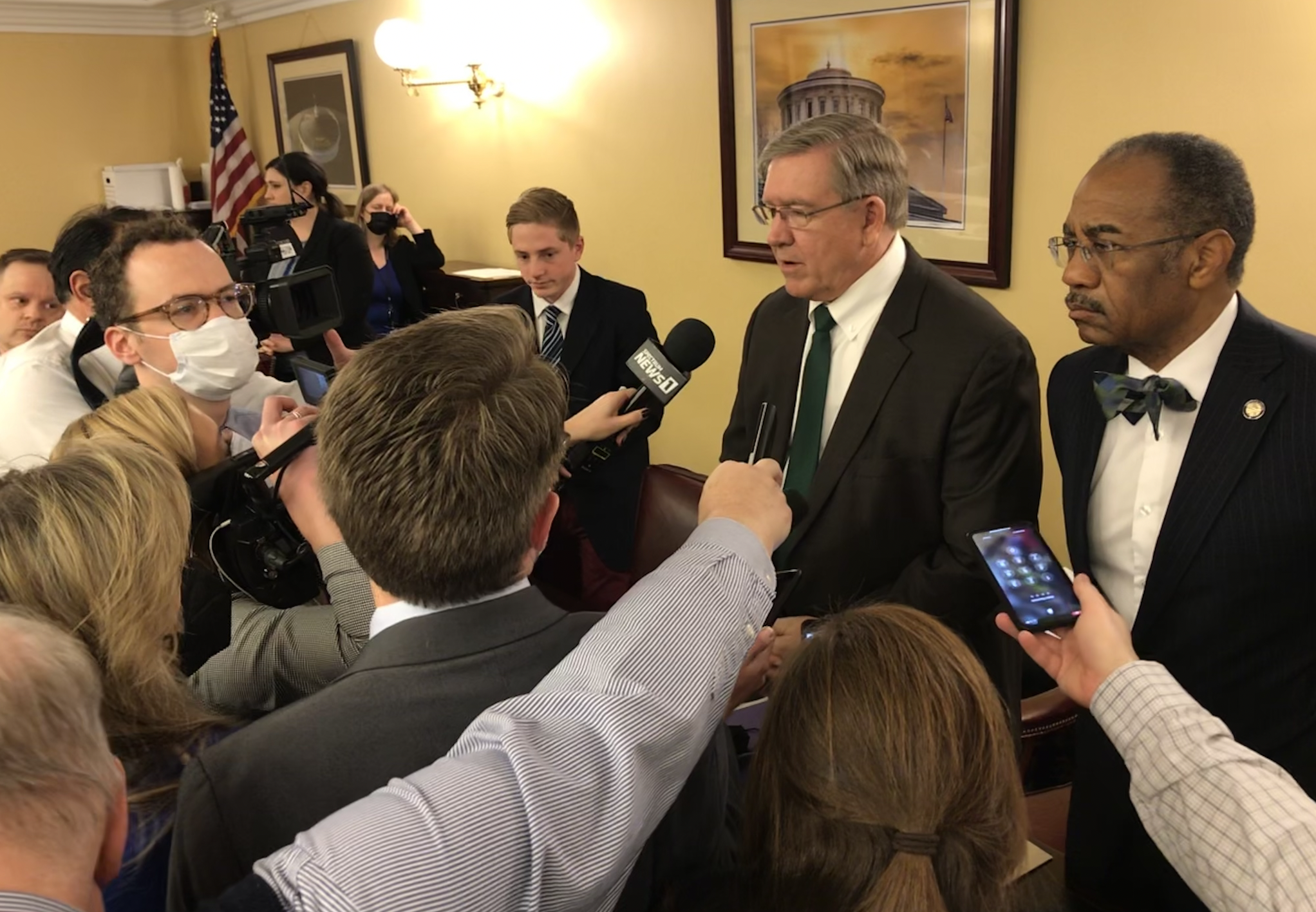
    House Speaker Bob Cupp, center right, and state Sen. Vernon Sykes, far right, co-chairs of the Ohio Redistricting Commission, speak to media after a January meeting to restart the legislative redistricting process. The process is set to start again next week. (Photo: Susan Tebben, OCJ)

    The tide seems to be turning on congressional redistricting, with legislative leaders saying the process lacks needed support in the General Assembly, and will likely head back to the Ohio Redistricting Commission.

    A day after legislative maps were sent back to the ORC for a third time, a co-chair of that commission says the congressional map is headed that way as well.

    House Speaker Bob Cupp told media at the Statehouse on Tuesday that a two-thirds vote would not be possible in the legislature, which is necessary to be able to pass a congressional map in the General Assembly.

    Because of that lack of support, a redistricting plan could not include an emergency clause, which would be needed for the plan to take effect immediately. The legislature was on the clock to pass a revised plan by Feb. 13 (Super Bowl Sunday), and for that plan to become effective in time for the May primary.

    Bills typically take effect 90 days after the governor’s signature, which would conflict with the primary deadlines.

    A spokesperson for Senate President Matt Huffman said because a commission vote doesn’t need an emergency clause, “it makes sense for the congressional map to go to the commission” if a two-thirds vote isn’t possible.

    House Democrats said the GOP made agreement difficult, having never shared a Republican proposal with the other party.

    “Democrats cannot support a map that we have not seen,” Maya Majikas, deputy communications director for the House Democratic Caucus, told the OCJ.

    Yesterday, House Minority Leader Allison Russo spelled out her expectations for the congressional redraw, which included work by the General Assembly.

    “There is a clear path to producing a fair, constitutional map that allows for the equal representation that all Ohio voters deserve. Now, it is the duty of this General Assembly to uphold our Constitutional responsibility and deliver a fair map,” Russo said in a statement.

    Democrats in both chambers spent Tuesday pushing their proposal for congressional districts, releasing a map with a GOP majority 8-7 split. One district covering Cuyahoga County is considered Dem-leaning, according to the caucus numbers, but only gives Dems a 50.9% to 49% advantage.

    Should the legislature continue to hold until the Feb. 13 deadline, the Ohio Redistricting Commission will have 30 days to come up with a congressional plan to replace the one rejected by the court.

    This deadline comes alongside a Feb. 17 deadline for the commission to submit a third version of the legislative district plan to the Ohio Secretary of State’s office, and submit it back to the court for review.

    In their Monday decision striking down the newest version of the legislative maps, the Ohio Supreme Court said they maintain jurisdiction over the maps. They also addressed the timeline for the May primary and 2022 elections in their decision.

    Republican members of the redistricting commission had asked the court to decide the case by Feb. 11 or to hold their decision until after the 2022 general election, using the now-rejected plan until that time.

    In their 4-3 decision, the majority justices on the court said the General Assembly “has the authority to ease the pressure that the commission’s failure to adopt a constitutional redistricting plan has placed on the secretary of state and on county boards of elections by moving the primary election, should that action become necessary.”

    Secretary of State Frank LaRose’s office confirmed that it is solely on the legislature to decide when an election conducted, though the secretary of state can advise them on “cascading events” that would be impacted by changing an election, according to spokesperson Rob Nichols.

    There is precedent for moving an election day, as LaRose did during the COVID-19 pandemic.

    In the ORC response to objections to the legislative maps, the commission laid out the impact the redistricting maelstrom may have on the 2022 election season.

    “Ohio’s expansive early voting framework amounts to an election season that begins with early in-person and absentee voting 29 days before the primary,” they wrote in court documents.

    That date would be April 5 this year, meaning before that date county boards of election need to print and prepare ballots under Uniformed and Overseas Citizen Absentee Voting Act (UOCAVA), for which federal law requires boards to begin mailing the ballots at least 45 days before the primary.

    Those ballots need to be sent by March 19 this year.

    “Though the General Assembly can, and has, temporarily amended Ohio law to move some of Ohio’s election deadlines for the primary election, the federal UOCAVA deadline is set by federal statute (and) it cannot be moved by the General Assembly or the Secretary,” the ORC wrote.

    Without districts to determine the voting precincts for those uniformed and overseas citizens, the ballots can’t be sent.

    Still, LaRose has only asked the General Assembly for the authority to shift some administrative deadlines having to do with the primary, not to move the election entirely.

    “His job right now is to administer an election on May 3,” Nichols told the OCJ.

    LaRose is also a member of the Ohio Redistricting Commission, so he’ll be multi-tasking as the redistricting process continues.

  • What’s next for congressional redistricting

    What’s next for congressional redistricting

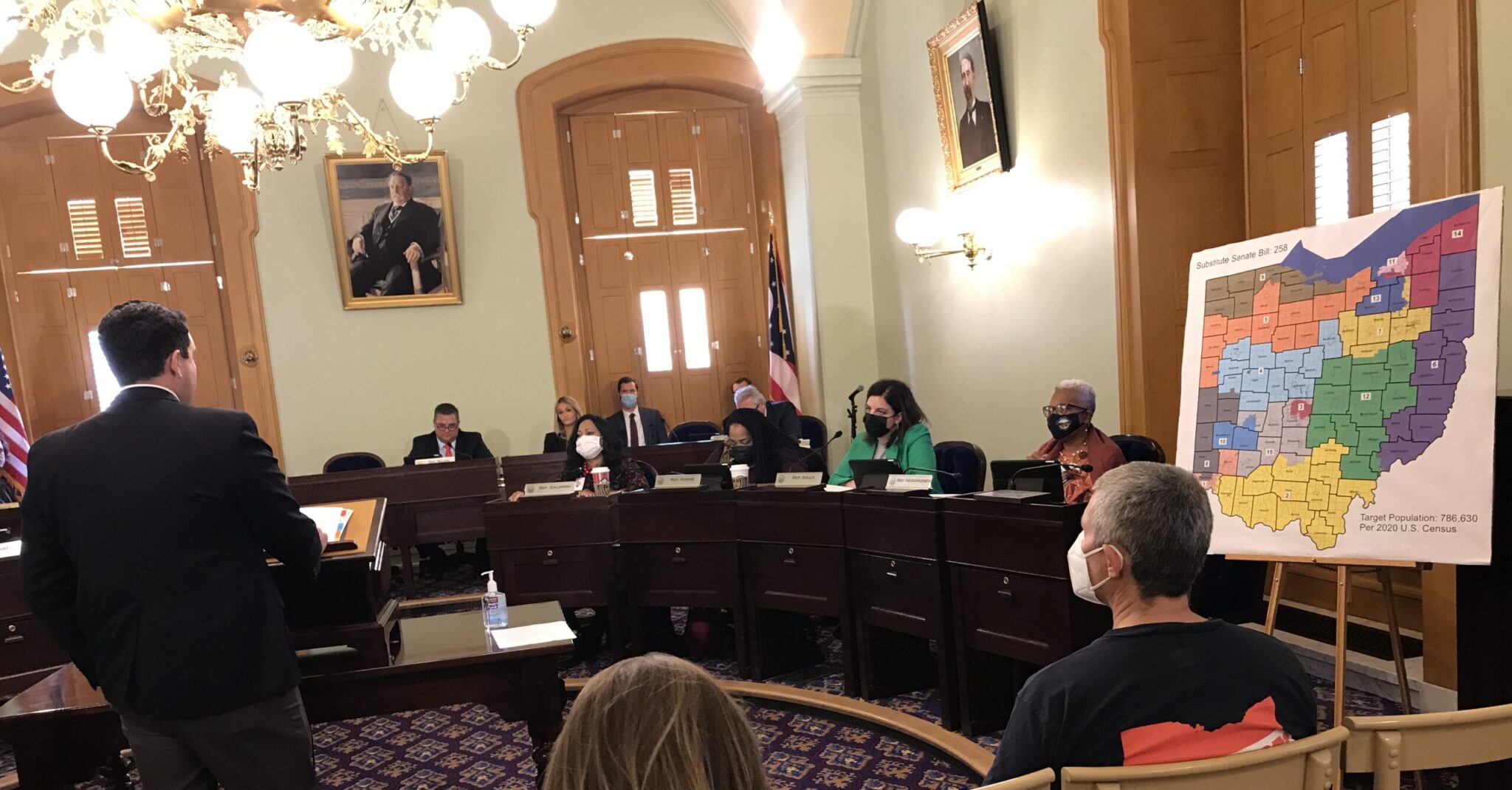
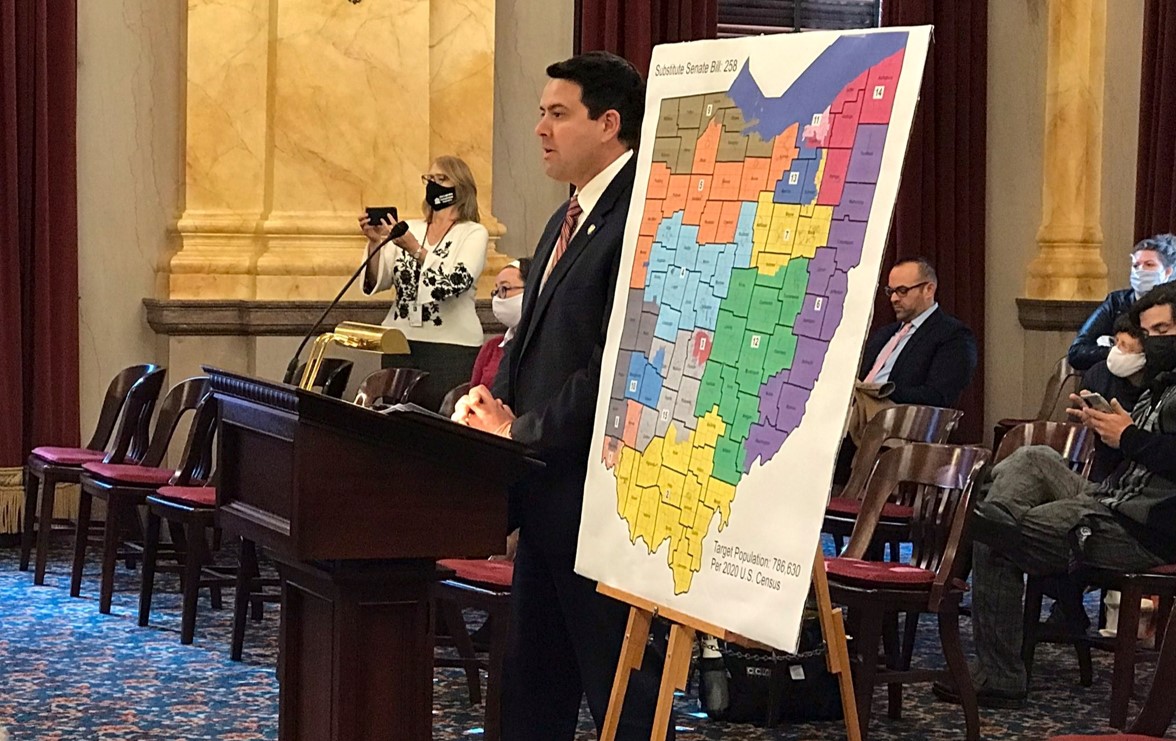
    State Sen. Rob McColley, R-Napoleon, presents congressional redistricting maps to the House Government Oversight Committee on November 17. (Photo: Susan Tebben, OCJ)

    BY: SUSAN TEBBEN –  Ohio Capital Journal

    This week the process begins again of trying to draw congressional districting lines in Ohio.

    The Ohio Supreme Court started its year sending the state legislature back to the drawing board on congressional redistricting, after rejecting the map passed in November by the GOP supermajority.

    With a one-week timeline for the legislature to come up with a plan, committees are convening with that specific purpose.

    Starting Tuesday morning in the Ohio House’s Government Oversight Committee, representatives will hear about House Bill 479, a bill led by state Rep. Scott Oelslager, R-North Canton, which is up for a possible substitution, meaning it could include the new House proposal for congressional districts.

    That bill was the vehicle for the House’s proposal last time around, but it was overtaken by the GOP’s Senate Bill 258, which was quickly adopted by the legislature as the official redistricting plan.

    The same day the House considers its own redistricting effort, the Senate General Government Budget Committee will be looking at Senate Bill 286, state Sen. Rob McColley’s bill for congressional redistricting.

    McColley, R-Napoleon, was the lead on SB 258, the map that would eventually be rejected as unconstitutional by the state’s high court.

    The senate committee accepted testimony on the bill for its first hearing on Tuesday, and a possible vote is indicated for Wednesday’s meeting of the General Government Committee. No testimony or vote is indicated for the House Bill, and the committee is not set to meet again this week.

    If either of the bills pass through committee, it would move on for a full House and/or Senate vote. Both chambers are scheduled to have sessions on Wednesday, with the House set to meet at 1 p.m. and the Senate to meet at 1:30 p.m.

    The House has an “if-needed” session on the calendar for 1 p.m. on Thursday, which could mean the Senate will pass a redistricting plan on Wednesday and send it to the House for agreement on Thursday.

    The legislature has until Feb. 13 to pass a plan. In order for the plan to take effect for 10 years, bipartisan support is needed, which would have to include 33% of Democrats in both the House and Senate. If the legislature can’t get bipartisan support, the map would be in place for four years, pending supreme court approval.

    A new plan from the legislature would have to have an emergency clause attached to it in order to take effect before the May 30 primary. Typically, without an emergency clause, a bill passed by the General Assembly goes into effect 90 days after the governor signs it.

    If the legislature doesn’t bring a plan to a vote by the deadline, the process heads back to the Ohio Redistricting Commission, who would have another 30 days to come up with a plan.

    The ORC just finished revising legislative maps, which were once again invalidated in a Monday ruling by the supreme court.

    The 4-3 decision by the court found the revised maps had similar violations as the original maps, with the court still finding issues with the revised maps in terms of partisan favoritism.

    The ORC now has until February 17 to revise the legislative maps for a third time.

  • Congressional redistricting hits the Ohio Supreme Court

    Congressional redistricting hits the Ohio Supreme Court

    BY: SUSAN TEBBENOhio Capital Journal

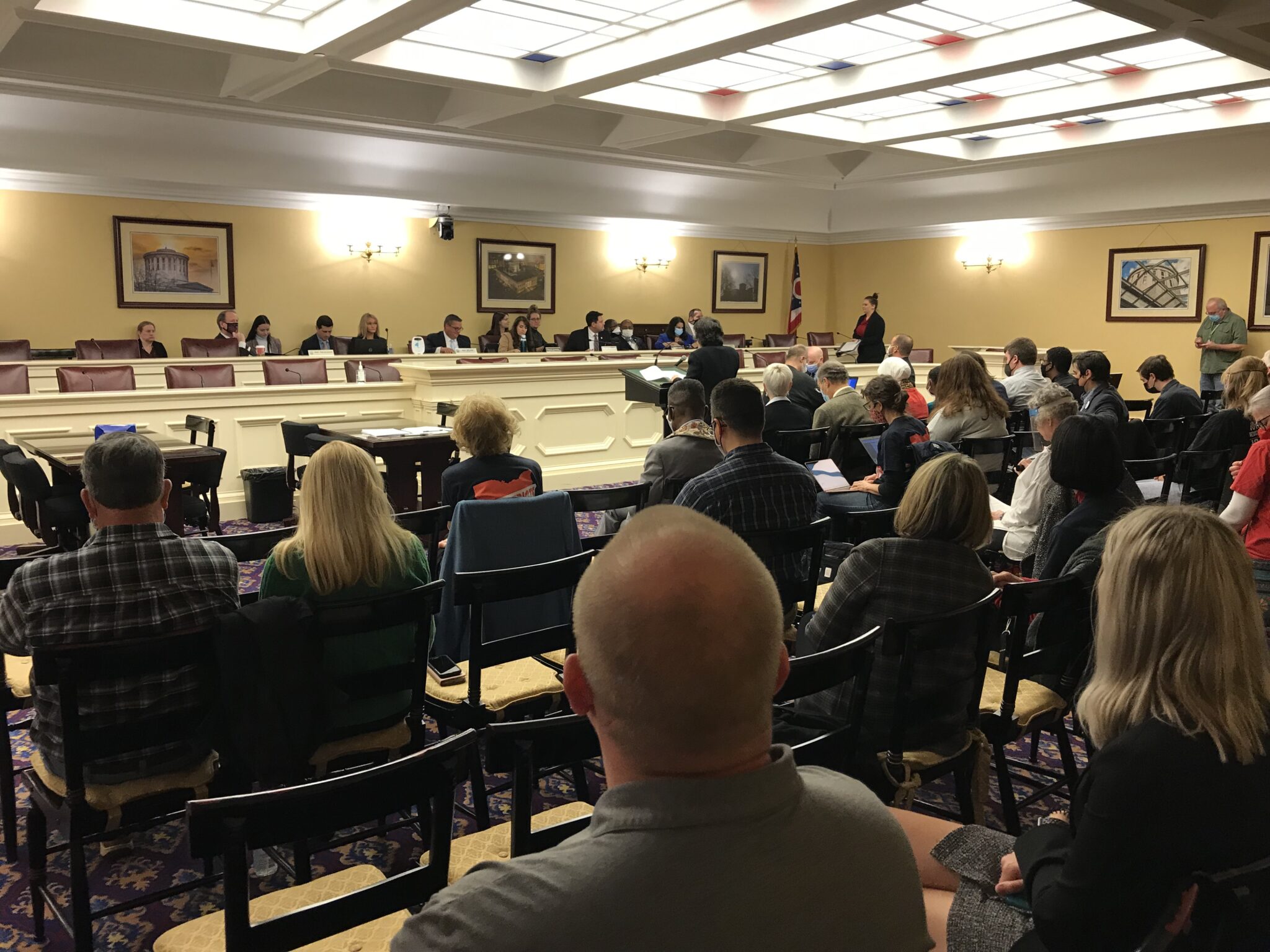
    The case of congressional redistricting was heard by the Ohio Supreme Court on Tuesday, where arguments about reforms put in place by voters and the data used by the General Assembly to draw maps framed consideration of districts going forward.

    Ben Stafford, an attorney representing the National Redistricting Action Fund’s challenge of the congressional maps approved in November, said the case centers on compliance with the constitutional reforms that revised the redistricting process, particularly the GOP majority’s use of partisanship in creating its map.

    “This case is about how the General Assembly has thumbed its nose at these reforms and enacted a plan that palpably violates Article 19’s new anti-gerrymandering protections,” Stafford told the court.

    Stafford said the 2021 enacted map has “extraordinary partisan skew,” with Republicans favored in 12 of 15 districts, amounting to 80% of congressional seats in the state. Using voting results as a starting point for analysis, as Stafford said should have been done, would have leveled out the district lean at 54% Republican, 46% Democrat, according to results of statewide races over the past decades.

    “A plan where one party is favored to win 80% of the seats when it only wins 53 or 54% of that vote clearly favors that party,” Stafford said.

    However, the attorney for the legislative leaders, Senate President Matt Huffman and House Speaker Bob Cupp, Phillip Strach, called the 2021 plan “the most constitutionally compliant of all plans before the General Assembly” because other plans presented “split more counties and other jurisdictions than the enacted plan.”

    But Republican legislators who worked on drawing the maps also saw the redistricting process as a foregone conclusion, destined for a legal battle, according to Strach.

    The attorney for Cupp and Huffman argued that based on the “political geography” of Ohio, the General Assembly could have drawn maps using no election or partisanship data whatsoever, and it still would have come up with a Republican majority, leading to accusations of GOP secrecy and scheming.

    “And so, what the General Assembly decided this time was ‘look, we’re going to be sued no matter what, and so we’re going to make sure that we draw competitive districts,” Strach told the justices.

    Strach was asked to address an expert witness for the map challengers in the case, a political scientist who ran the Ohio map through a redistricting program 5,000 times and never came up with the amount of Republican lean as the map approved by the state legislature.

    The simulations were “deeply flawed,” Strach told the state’s high court, and dependent upon human intervention.

    “At the end of the day, the computers draw what a human being tells it to draw, and so if you don’t tell the computer to use criteria that match what the General Assembly actually used, then what it will spit out is really just garbage,” Strach said. “It really is meaningless for any legal analysis.”

    The idea of what data would be proper to use in redistricting was the subject of lengthy discussion during oral arguments on Tuesday, but the main conclusion attorneys on both sides came to was no database was better than another.

    “Nobody agrees on what data to use,” Strach said. “It’s hard to use congressional districts data because it’s always changing. It’s easier to use statewide data.”

    Challengers debated databases and which specific data to use, such as federal election results versus statewide results, but said the biggest problem with the 2021 plan was how map-drawers used the data they used.

    Stafford said map creators for the GOP, namely Senate staffer Ray DiRossi and House mapmaker Blake Springhetti, had much more data than they let on publicly, but didn’t use it all in presenting the new map proposal.

    “What was disclosed publicly was this cherry-picked measure, a measure designed to make the plan look more competitive than it actually was,” Stafford said.

    Regardless of the measure or metric used, however, Stafford said the bias in the 2021 plan “remains the same.”

    Supreme Court justices also jumped in on the debate of which data to use in forming congressional districts, with Justice Sharon Kennedy seemingly agreeing that the federal results made sense in drawing congressional districts.

    “If you look at Ohio’s elections, and you look at your own datasets, more people turn out in Ohio to vote in federal elections than in statewide elections, by and large,” Kennedy said.

    Justice Patrick DeWine spoke to the argument by map challengers who said the legislature erred in skipping the 2014 election results rather than using all election results for the last 10 years. DeWine said because the 2014 election was an election “unlike any other we’ve had in Ohio,” specifically the landslide victory by former governor John Kasich over Democratic challenger Ed Fitzgerald, it might not be prudent to include that data.

    “I’m not sure which data set is best, I’m not sure the court could pick that, but it doesn’t seem immediately obvious to me that including several statewide elections in a year that was … probably the farthest from the norm we’ve had in Ohio in the last couple decades would make the data a lot better,” DeWine said.

    Other justices explored the idea that reforms of the redistricting should have been the guideposts for mapmakers over database manipulation.

    Chief Justice Maureen O’Connor posed the idea that the “intervening factor” in deciding how to draw maps was “the vote of the people.”

    Strach argued that the previous map passed in 2011 and highly criticized for a lack of public accountability “was never overruled,” and O’Connor jumped in.

    “Didn’t the people overrule it? Maybe not overrule it in front of us or another court, but the people in their vote overruled what had been done up to that point, did they not?”

    Justice Jennifer Brunner touched on minority representation in redistricting, asking whether keeping to the constitution in terms of splits and keeping counties whole overrode the requirement to protect minority voting rights, specifically in Hamilton County.

    Strach argued that under the 14th Amendment if the General Assembly had considered race, it would have violated “racial gerrymandering” prohibitions unless there was a “sufficient reason” to redraw districts, including a minimum of 50% Black population required to combine a district.

    “There’s been no showing in this case, no allegation by anyone even in the legislative process that such a district could have been drawn, and so using race in Hamilton County would have violated federal law in this case, and that’s why it wasn’t done,” Strach said.

    Just as it did in the legislative redistricting case, the court pondered the next steps if the map was rejected as violations of the constitution.

    When Strach said being found in violation of the constitution would be “the end of the story” for congressional maps, O’Connor countered that by saying “it could go back to the drawing board,” something Strach said “could go on for quite a bit” or be taken over by federal courts.


  • Senate passes congressional map that continues GOP stronghold over state

    Senate passes congressional map that continues GOP stronghold over state

    State Sen. Rob McColley, R-Napoleon. Photo by Susan Tebben, OCJ.

    BY: SUSAN TEBBEN – Ohio Capital Journal

    Ohio Senate Republicans rushed through a congressional redistricting map Tuesday introduced to the public less than 24 hours before.

    It was passed out of committee 5-2 along partisan lines before being passed by the whole chamber later in the day 24-7, also along partisan lines.

     The GOP congressional map passed through the state Senate on Tuesday afternoon. (Right-click to open new tab and enlarge)

    The passage came on the same day a committee who had been considering a different map as part of Senate Bill 258, substituted the map that state Sen. Rob McColley, sponsor of the bill, said was spearheaded by Senate President Matt Huffman, along with House Speaker Bob Cupp.

    An analysis of the map on Dave’s Redistricting App shows seven Republican districts, two Democratic districts and six districts listed as competitive for being within a 54-46 margin. Five in six of the “competitive” districts lean Republican, and the one that leans Democratic, Ohio’s 13th district, does so by 0.88%.

    Senate President Matt Huffman said negotiations had been going on since the census data came out, but that in terms of congressional redistricting, Dems and the GOP were “at loggerheads.”

    Huffman accused Democrats of gerrymandering, saying their demand was for a map that had six Dem districts and six Republican ones, which he didn’t think was “within the spirit of the reforms.”

    “I think we all pretty much knew where we were at,” Huffman said on Tuesday.

    Minority Leader Sen. Kenny Yuko, D-Richmond Heights, had previously said on the Senate floor that he had hoped for better.

    “I was hoping for a little more compromise. I was hoping there would be a little more conversation,” Yuko said.

    State Sen. Cecil Thomas, D-Avondale, said in an argument against the maps on the Senate floor that it was obvious that the 13-2 maps were gerrymandered in favor of the GOP, and even the Democratically leaning Hamilton County was drawn in favor of Republicans in terms of the next election.

    “This supposed competitive district leans Republican by more than 3 points…making it an automatic uphill battle for the Democrat,” Thomas said.

    The constitution’s “plain language” was the most important part of determining district lines, as McColley argued on the floor of the Senate. Huffman said there were things they had to interpret, such as the shapes of districts, but issues not explicitly stated in the redistricting rules had to take a back seat.

    “In the end, the constitution comes first, and those aspirational things come second,” Huffman said.

    Thomas and other Democrats criticized the lack of racial data used in determining the maps, just as supporters of Democratic maps had said GOP maps unfairly split communities, particularly communities of color. Huffman doubled down on the fact that Republicans didn’t use racial data, saying it’s illegal for them to do so unless “there is appropriate evidence presented which requires that.”

    He said the maps were drawn with race in mind as a divisive factor.

    “(Thomas) is wrong that we simply tried to draw lines having to do with race in this case,” Huffman said.

    In Senate Local Government and Elections Committee Tuesday morning, McColley defended the map, Huffman and Cupp by saying he supports it as drafted.

    “(Cupp and Huffman) have done an awful lot of due diligence and have done an awful lot of discussions on this map, so anything that I’m going to do is going to be deferring to them,” McColley said.

    McColley also seemed to suggest that Ohio could be a swing state in saying district lines shouldn’t be the “end all, be all arbiter” for determining political power and the results of future elections.

    “You can look in the legislature, you can look in Congress, you can look other places and realize that in many cases, the shifting sands of politics and the issues of the day ultimately are what decide elections, it’s not just simply because you are a 50.1 (percent lean) or a 49.9,” McColley said. “Given a period of time, these seats could switch back and forth potentially over the course of a decade.”

    The map was universally panned by anti-gerrymandering groups like All On the Line and the League of Women Voters and Ohioans who have spoke up in committee hearings since the beginning of the process.

    Many complaints, as in previous map hearings, rested on procedure, with testimonies that were put in ahead of the 24-hour advance submission rule being tossed out by their authors, because they pointed to a map that was no longer on the table.

    Fair Districts Ohio member Trevor Martin said the abbreviated timeline of last night didn’t allow for a comprehensive review of the maps, only an “eyeball test” of the district lines and shapes.

    “We have no idea what we’re looking at, what we’re looking at is a mess,” Martin told the Senate committee. “It’s like you don’t hear us, and it’s infuriating.”

    Jen Miller, executive director of the League of Women Voters of Ohio, asked in vain for more hearings because without shape files to look at, zooming on a PDF was their only option, and not the ideal way.

    Katy Shanahan, of the Ohio chapter of All On the Line responded for several testifiers when state Sen. Jerry Cirino, R-Kirtland, said the anger and accusations of cheating by the Senate GOP expressed by advocates was “a unique method of persuasion on the part of those who are opposing this bill.”

    “So, you’re right, a lot of what you’re hearing today is exasperation, it’s frustration and it’s righteous anger that we have to stand here and beg you to care enough about our democracy to do the right thing and deliver on your campaign promises to give us a fair map and a fair redistricting process,” Shanahan said.

  • 2021 Brings Reforms to Ohio Redistricting Process

    2021 Brings Reforms to Ohio Redistricting Process

    by Mary Schuermann Kuhlman, Public News Service – OH

    Columbus, Ohio – Ohio’s 134th General Assembly opens today, and a key task for 2021 is congressional redistricting.

    Voters approved a constitutional amendment in 2018 that creates a multi-step, transparent process for drawing congressional districts. New maps are made every 10 years.

    Catherine Turcer, executive director for Common Cause Ohio, said the reforms were badly needed to prevent lines from being manipulated to favor one party.

    “Map-making in the past was like the wild, wild West,” Turcer asserted. “They created a district that looks like a duck. The beak is in Lorain County, which is on Lake Erie, and the tailfeathers are on the Indiana border. So, there’s these really unusually-shaped districts.”

    State legislative maps will also be redrawn under a new process this year.

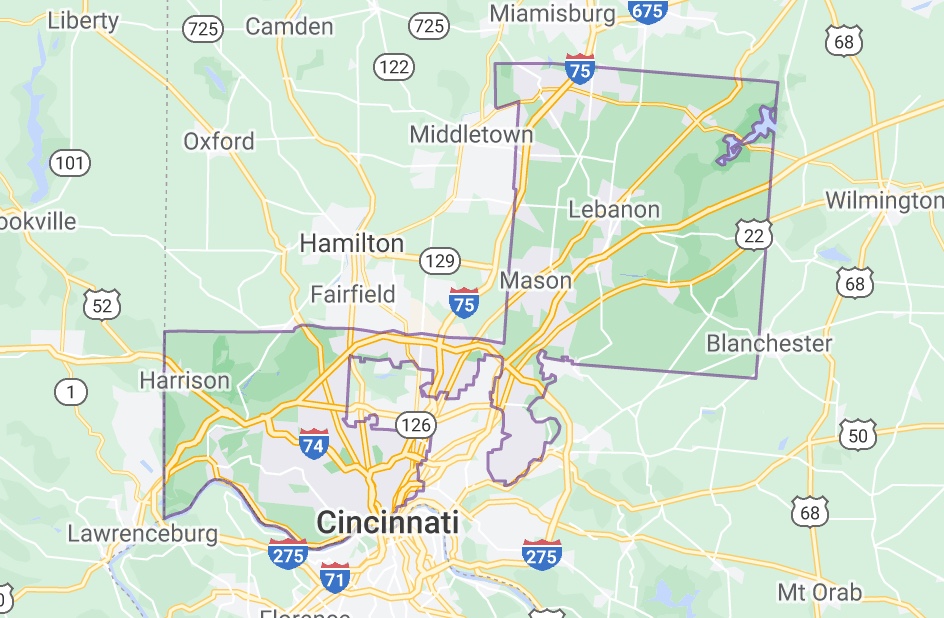
    Ohio 1st U.S. Congressional District Map (Chabot)

    Voters in 2015 approved creating the Ohio Redistricting Commission, a bipartisan group focused on creating maps that keep communities together and also increasing transparency. 

    Turcer explained the map-making process will be somewhat delayed, since the U.S. Census Bureau missed a Dec. 31 deadline to turn in the apportionment numbers used to determine congressional seats.

    “We don’t have all the information that we would normally have,” Turcer maintained. “As we begin this process, we need to be patient, because we really want the census to do a good job. You want those numbers to be right, so that there’s fair representation across the country.”

    Turcer contended gerrymandering has been a powerful political tool since 1812. And while the new rules encourage good behavior, she noted there are no guarantees. 

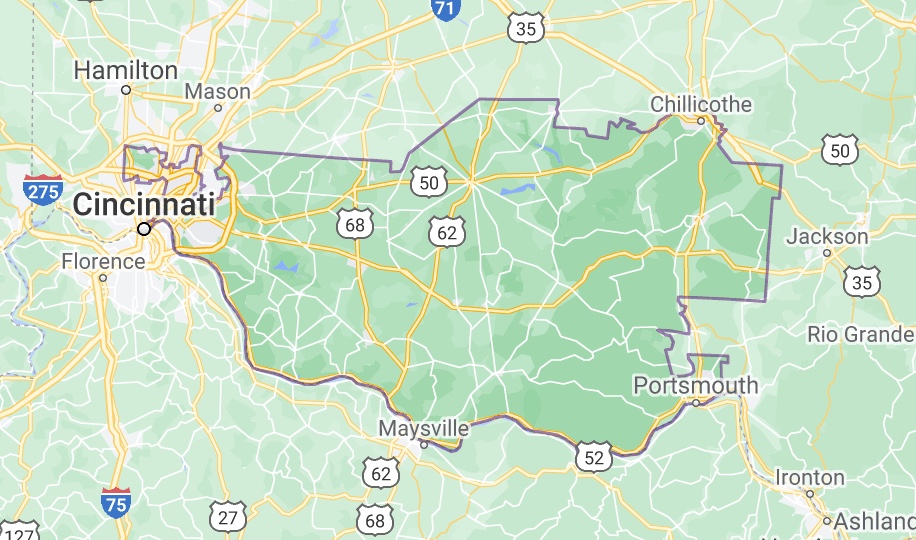
    Ohio 2nd U.S. Congressional District Map (Wenstrup)

    “We will need to watchdog the process and be as engaged as possible,” Turcer confirmed. “Because it’s much easier to do damage if people are not paying attention.”

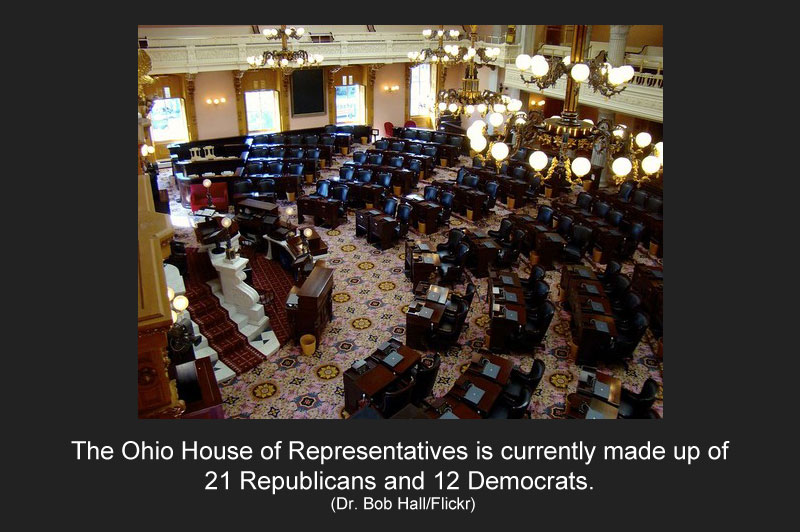
    Ohio is expected to lose one of its 16 congressional seats, 12 of which are currently held by Republicans. And at present, the 33 state legislative districts are held by 21 Republicans and 12 Democrats. 

    This story was produced in association with Media in the Public Interest and funded in part by the George Gund Foundation.