Tag: conspiracy theories

  • Ohio’s leaders blocked (some) foreign money from issue campaigns. Advocates call it a dog-whistle

    Ohio’s leaders blocked (some) foreign money from issue campaigns. Advocates call it a dog-whistle

    Ohio Capital Journal

    Ohio’s Republican leadership last month refused to put Joe Biden on the presidential ballot unless the legislature adopted another measure that they claimed would protect against foreign money playing a role in the process by which citizens can initiate laws.

    But while some surely were concerned about malign foreigners improperly influencing state policy, some of them seemed to be playing on the same trumped-up fear of foreigners that they do in other contexts.

    When earlier problems arose with putting presidential candidates of both parties on the ballot, the legislature passed a “clean” bill fixing the problem as a routine matter.

    Moreover, with this latest law, Ohio lawmakers did nothing to bring transparency to dark money, which is flooding the state and can come from any source. It can be from foreigners, organized crime or interested parties — all unbeknownst to the electorate whose laws are being impacted. Such dark money played an indispensable role in the largest bribery scandal in Ohio — a scandal in which many of those same Ohio leaders played a part.

    In addition, critics said the move was really intended to make it more difficult for citizens to impose popular measures that the state’s gerrymandered supermajority opposes, such as protecting abortion rights and ending gerrymandering. As part of that, they said, it gives the state attorney general — who since 2011 has been a Republican — greatly enhanced powers to harass citizen-led attempts to change the law.

    Xenophobia

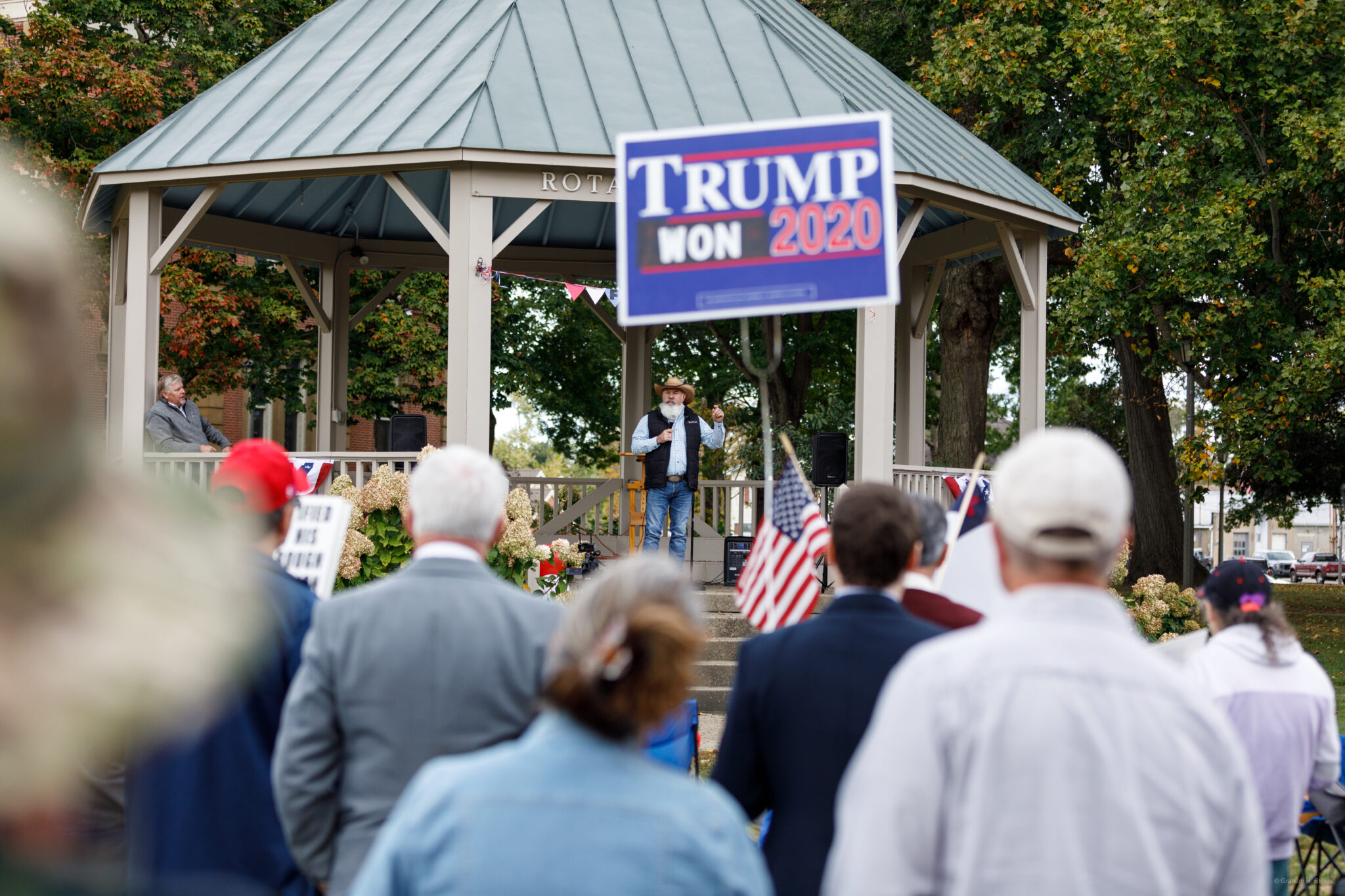
    Advocates for immigrants and others say that in pushing their “ban” on foreign money, some Republican leaders are playing on the anti-foreigner, anti-immigrant paranoia that Donald Trump has relentlessly whipped up since announcing his candidacy to be president in 2015.

    The new legislation not only bans contributions from foreign nationals, it also bans them from lawful permanent residents, or “green card” holders. That’s despite the fact that federal law allows such people to make contributions, and Bill Seitz, an attorney and a Republican member of the Ohio House, warned his colleagues that the prohibition could sink the entire measure in court.

    To an immigrant advocate, the dog whistle was easily audible.

    “They know what they’re doing, the people who are sponsoring these amendments,” said Lynn Tramonte, director of the Ohio Immigrant Alliance. “They’re making this about people who were born in other countries and adding on new categories of immigrants to be banned from donating money. The legislator who introduced that amendment knows that that makes it open to legal challenge. That was very clear. Both sides — Republicans and Democrats — expect that law to be challenged in court. So it was clearly not about the policy. It was about getting those headlines.”

    Some of the amendment’s staunchest supporters haven’t been shy about using such tactics.

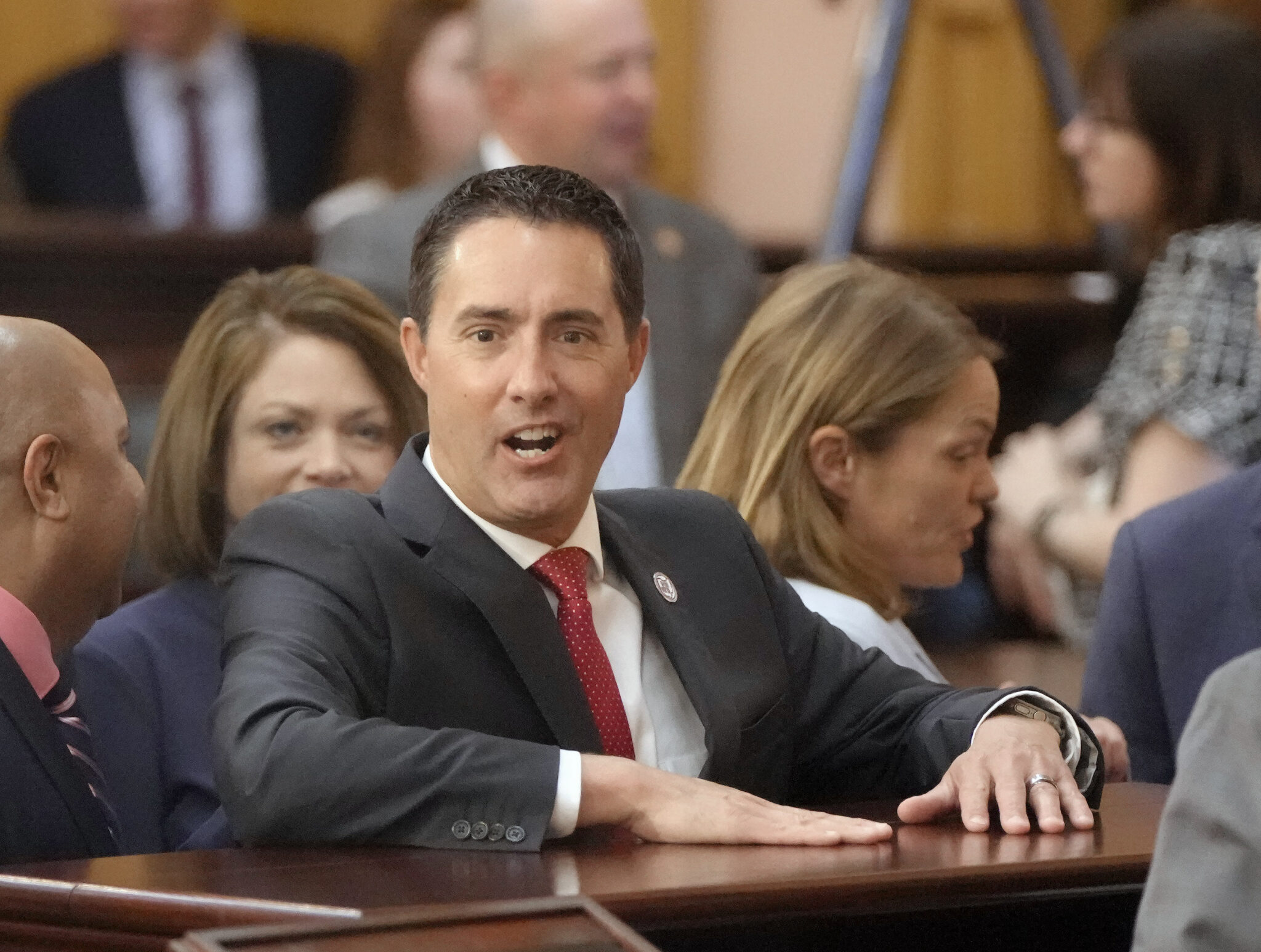
    Secretary of State Frank LaRose was the first to flag the fact that the Democratic National Convention was too late to get Biden on the ballot under Ohio law. But instead of calling for a clean bill that would only fix that as the legislature had done in the past, LaRose had other demands.

    “Ohioans deserve confidence in the integrity of our elections, knowing that they aren’t being bought by foreign bullies or billionaires,” LaRose said in a May press release. “I hope the House does the right thing and takes action soon to close this loophole before it’s exploited again.”

    Other motives

    LaRose was referring to a Swiss billionaire who had made big contributions to the Tides Foundation, a U.S. group that helped finance Ohio voter efforts last year.

    One trounced an August attempt by LaRose and his allies to make it nearly impossible for citizens to initiate amendments to the Ohio Constitution. Then, in November, voters passed an amendment protecting abortion rights by a 14-point margin. LaRose had earlier told an audience of partisans that the August effort was 100% about stopping the abortion-rights measure in November.

    It’s not the only time LaRose, the state’s top elections official, has pressed a fear of foreigners into the service of what appear to be ulterior motives.

    For example, he’s conducted frequent voter purges, supposedly in the service of election integrity. Last year, he tried to make a splash by announcing that he had referred 641 cases of possible voter fraud to authorities.

    Sounds like a lot, but that’s only 0.0044% of the total votes cast. And when the Capital Journal did a follow-up investigation, less than 3% of those resulted in charges.

    In other words, just 0.000132% of the total number of votes cast since LaRose took office in 2019 might end in convictions. Yet LaRose last month announced yet another voter purge, claiming the threat of foreigners casting illegal ballots was why it was needed.

    “Ohioans overwhelmingly passed an amendment to our state Constitution which makes it clear that only U.S. citizens can vote in our elections,” LaRose said in a May 14 press release. “It is my duty under the law to uphold the Constitution, and the legislature has explicitly tasked me with ensuring that only eligible citizens can register and vote.”

    Spreading fear

    Elizabeth Neumann was deputy chief of staff of the U.S. Department of Homeland Security during the Trump administration.

    During a virtual press conference sponsored by the National Immigration Forum last week, she described how the “great replacement theory” — the idea that there’s a plot to replace white people, especially in positions of power — has led to numerous racist massacres. She said that whipping up fears of illegal voting is a softer version of the same theory that shooters invoked as they massacred people in Christchurch, New Zealand, a Walmart in El Paso, a Pittsburgh synagogue, and a Buffalo grocery store.

    “There’s a lot of conversation about how migrants are actually voting and this goes into that softer great-replacement theory and we anticipate that will continue to be a challenge this election year,” said Neumann, who is now chief strategy officer for Moonshot, which works to end online harms such as violent extremism and child trafficking.

    Tramonte, of the immigrant alliance, said the real aim of claims of illegal voting and purges and prosecutions is to scare marginal populations away from the polls. She said she helped conduct a focus group before last November’s election.

    “I heard from people who were citizens who said they were afraid to vote because they were afraid of being attacked,” she said. “They had a plan to go early in the morning and make sure they could get their vote cast because they wanted to make sure their voices were heard, but they were afraid.”

    In addition to not effectively addressing the problem of mystery money in our politics and making it harder and more frightening to participate in the process, there could be a darker consequence of the rhetoric around the bill Republicans demanded in exchange for putting a sitting president on the Ohio ballot.

    In an interview, Moonshot analyst Yuri Neves said that political leaders are invoking conspiracy theories when they insinuate that green card holders have a diabolical agenda or that masses of undocumented immigrants are voting illegally.

    “It suggests some coordinated plan by nefarious actors,” he said. “Depending on who you talk to, it’s globalists, Jews, etc. When we say it’s a conspiracy theory, it’s not just demographic changes happening as there always are. It’s that it’s some malevolent actors behind it. And that’s where it gets quite dangerous.”


    Marty Schladen
    MARTY SCHLADEN

    Marty Schladen has been a reporter for decades, working in Indiana, Texas and other places before returning to his native Ohio to work at The Columbus Dispatch in 2017. He’s won state and national journalism awards for investigations into utility regulation, public corruption, the environment, prescription drug spending and other matters.

    Ohio Capital Journal is part of States Newsroom, the nation’s largest state-focused nonprofit news organization.

    MORE FROM AUTHOR


  • COVID-denial, election-denial not far apart, OSU researchers found

    COVID-denial, election-denial not far apart, OSU researchers found

    BY: SUSAN TEBBEN – Ohio Capital Journal

    You’ve probably heard of “gateway” drugs, but a group of researchers at Ohio State University say there’s such a thing as a “gateway conspiracy.”

    A duo of surveys done by psychology researchers and supported by the National Science Foundation seek to bolster the field of “conspiracy theory research,” which an announcement of the study said “to date has tended to look for traits that predict the tendency to believe in conspiracy theories at a given point in time.”

    The “gateway conspiracy” that OSU researchers tested in the surveys “argues that conspiracy theory beliefs prompted by a single event lead to increases in conspiratorial thinking over time.”

    One survey asked 501 people questions “assessing their beliefs in COVID-19 conspiracy theories, political ideology” and their affinity for the theories in June 2020.

    About 100 of the participants came back in December of the same year and were asked “statements gauging their level of conspiratorial thinking,” including their believe in the false idea that there had been extensive voter fraud in the 2020 presidential election.

    Results from the surveys show those that believed false theories about the pandemic were “more likely to later report they believed that the 2020 presidential election had been stolen from Donald Trump through widespread voter fraud, which is also not true.”

    A possible trigger for these beliefs? A sense of distrust, according to OSU psychology professor Russell Fazio, senior author of the survey study.

    “It’s speculative, but it appears that once people adopt one conspiracy belief, it promotes distrust in institutions more generally — it could be government, science, the media, whatever,” Fazio said in announcing the study.

    COVID-19 was ripe for conspiracy because individuals felt a lack of control, according to Fazio’s fellow study author, Javier Granados Samayoa.

    “With COVID-19, there was this large event that people could not control, so how could they make sense of it? One way is by adhering to conspiracy theories.”

    The study also found that the high likelihood of rabbit-hole-opening theories causing negative outcomes for believers and those around the believers spotlights the importance of tamping down COVID-19 conspiracies.

    “Not only do COVID-19 conspiracy theories threaten lives and economies in the present, they may also create problems down the road by leading to heightened conspiracist ideation,” the study stated. “Policymakers would be wise to consult the research that has tested strategies by which belief in conspiracy theories can be blunted.”

    Those policymakers could include conspiracy theorists, if the November election ends up a certain way. From U.S. Congress, all the way down the general election ballot, there are candidates who questioned the validity of the 2020 election and claimed voter fraud.

    One such candidate, Terpsehore “Tore” Maras, independent candidate for secretary of state, asked the Ohio Supreme Court to change the rules when it comes to election observers and allow her to choose her own observers, against the legal mandate that four other candidates also petition for more poll watchers.

    That case has yet to be decided.

  • ‘Look beyond our age:’ Three Democratic teenagers run for Ohio House

    ‘Look beyond our age:’ Three Democratic teenagers run for Ohio House

    Sam Cao, 17, at left, seen with Sam Lawrence, 19, at right. The two teenaged Sams are running as Democrats for seats in the Ohio House. Source: Sam Lawrence.

    BY: JAKE ZUCKERMAN Ohio Capital Journal 

    Sam Cao worked out a plan with his principal and superintendent. They had to figure out how Cao could potentially balance constituent work in the Ohio House of Representatives with classwork at Mason High School.

    At Miami University, Sam Lawrence mulled a similar plan for his upcoming sophomore year. Ohio University’s Rhyan Goodman is likely doing the same for his junior year.

    The three Democrats would be quite young for elected office. Cao is 17 but turns 18 before Election Day, which allows him to run; Lawrence is 19; Goodman was 19 when he announced his run in February.

    If elected, they could shape state policy on everything from Ohio’s $74 billion biennial budget, civil and criminal justice, women’s rights, gun policy and countless others. All three are running in districts where Republicans have recently won with commanding margins, leaving them with uphill paths to office.

    They can serve in wars and vote. They can’t lawfully buy a drink. And they don’t think their age should preclude them from public office.

    “The one thing I’d like to point out is it’s not no experience; it’s different experience,” Lawrence said.

    “I would like to ask every one of our legislators if they were attending school while all these terrible school shootings are happening. They were not in school when we had these high-powered assault weapons that could mow down tens of children at a time. Those people don’t have those life experiences.”

    Some current incumbents started their terms just a few years older. Sen. Niraj Antani, R-Miamisburg, started in the House in 2018 at 23 years old. Rep. Jena Powell, R-Arcanum, first won in 2018 at 24. Rep. Thomas Hall, R-Madison Twp., won office in 2020 at 25. Rep. Bride Rose Sweeney, D-Cleveland, won in 2018 at 26.

    Several (older) Democrats asked about the youthful insurgents rebuffed concerns of a lack of life or work experience from the candidates. They also rejected the trend as any signs of a party unable to attract more established candidates. Instead, they characterized it as a reflection of members of a new generation who are aghast at increasingly extreme legislation coming from the Statehouse and inspired enough to seek to affect change on their own.

    “They’re going to be limited based on their life experiences, but at the same time, there is something romantic about it,” said Dennis Willard, a Democratic political consultant.

    “In a sane world, this might seem insane. But were not living in a sane world with the Ohio Legislature. I know who I’d vote for.”

    There’s some historical precedent too. U.S. Sen. Sherrod Brown, the dean of Ohio’s struggling Democratic Party, won his first state House race at 21 in 1974. In 2000, 18-year-old Derrick Seaver won a seat as a Democrat (he switched parties a few years later).

    In an interview, Seaver, now 40 and the director of the San Jose Chamber of Commerce, expressed ambivalence about teenagers running for office. Youth has its perks — young people can be listeners and learners who bring new perspectives to older and pastier general assemblies. Plus, the media attention they attract can make the difference in tough races.

    However, they’re less situated to understand the nuances or interconnectedness of public policy, he said. Plus, if they lose an election, they don’t have a college degree or developed work experience to fall back on.

    “I will say that since that time, and I don’t want this to come across as discouraging, but certainly I feel that maybe I should have waited until I was older,” he said.

    Sam Cao

    Ohio’s new 56th House District contains swaths of Warren County including the cities of Lebanon and Mason. More than 62% of its voters are Republican, according to Dave’s Redistricting App.

    The incumbent, Rep. Paul Zeltwanger, was among the first Republicans to openly embrace conspiracy theories surrounding COVID-19 and later joined in a quixotic and failed gambit to impeach Gov. Mike DeWine. Constitutional term limits preclude him from seeking reelection.

    Cao grew frustrated when COVID-19 grew so prevalent in the county that his high school closed its doors when it ran out of healthy substitute teachers. He tried to contact Zeltwanger, to no avail. Then he tried to contact the Democrat running for the seat, only to learn no such person exists. He credits his AP Government teacher with encouraging him to take a shot for himself.

    To prepare, he’s looking to history. For one, there are his role models — Brown, the U.S. Senator; Robert Kennedy, the liberal icon and former U.S. Attorney General; and William Proxmire, another U.S. Senator who famously replaced the demagogic Sen. Joe McCarthy and declared his predecessor a “disgrace to Wisconsin, to the Senate, and to America.”

    Cao has also been seeking guidance from the last four Democrats who tried and failed to win the seat.

    “You know what you’re entering, kid?” he said, relaying their advice.

    “We call this the arena for a reason. You’re a minnow. And sharks come in. These legislators at the Statehouse, they’re not playing with you. They could eat you up.”

    His path to the general election ballot is no guarantee — he’s facing Joy Bennett, a freelance writer, in the looming Aug. 2 primary.

    In an interview, he boiled his policy goals down to three items. For one, he wants to vote against abortion restrictions and gun rights expansions, which are likely to come in the GOP-dominated legislature. For two, he wants to improve the state’s infrastructure — one example being a lack of roads leading to his own high school, the largest in the state, causing regular traffic jams. Third, he wants to support legislation introduced by Sen. Tina Maharath (another young and Asian-American Democratic lawmaker) to develop curriculum teaching Asian-American history in school classrooms.

    “Look beyond our age,” Cao said. “I know our age is like, the wow factor or the pizazz factor about who we are as candidates, but I want you to look at the policies. I want you to look at what values we stand for.”

     Sam Lawrence, at left, and Sam Cao at right. Source: Sam Lawrence.

    Sam Lawrence

    In Hamilton County, Lawrence is running against Rep. Sara Carruthers, a two-term incumbent Republican. It’s a similarly tough district for Democrats — more than 60% of its voters are registered Republicans, according to Dave’s Redistricting App.

    His goals in office include protecting abortion access for women, legalizing and taxing marijuana for recreational use, bringing intrastate train access to Ohio, and expanding clean energy generation like wind and solar in Ohio.

    He said a House full of only 19-year-olds would likely destroy the state. But having a few of them around has its value — who better to represent the interests of young Ohioans? Who better to understand the realities of seeking student loans in an inflationary economy? Or evaluating recently passed legislation that allows teachers to carry arms in Ohio, which he called “incredibly unpopular” among young people.

    He considers former presidential candidate and current U.S. Secretary of Transportation Pete Buttigieg a role model. He has knocked on doors for House Minority Leader Allison Russo, D-Columbus, and volunteered for Congressman Tim Ryan’s U.S. Senate Campaign as well.

    “Something everyone should know about us: We are taking this extremely seriously,” he said. “There is a reason that this Democratic process is in place. There is a reason that, by law, you are allowed to run at my age. There is a reason that people have won at my age. I think we should test that theory.”

    Rhyan Goodman

    Of the three teenagers, Goodman has the best shot at winning as far as the raw demographics go. His Athens County district splits 52-45 for Republicans.

    He’ll face Rep. Jay Edwards, R-Nelsonville, a successful fundraiser and former member of House leadership seeking his fourth term in office. Edwards has won in a landslide every election since 2016.

    Goodman doesn’t have any campaign website that could be located. He did not respond to calls or text messages seeking an interview.

    According to The Athens News, he registered to run in February at 19 years old using his college dormitory as his residence.

    His nascent political career has already met scandal. In April, he resigned from Ohio University’s student senate before facing an impeachment trial. According to The New Political, a student publication, Goodman was accused of coordinating an effort to remove former Treasurer Simar Kalkat from her position. He allegedly encouraged student senators to accuse Kalkat of intimidation.

  • Report calls on medical boards to go after COVID “disinformation doctors;” Ohio’s has not

    Report calls on medical boards to go after COVID “disinformation doctors;” Ohio’s has not

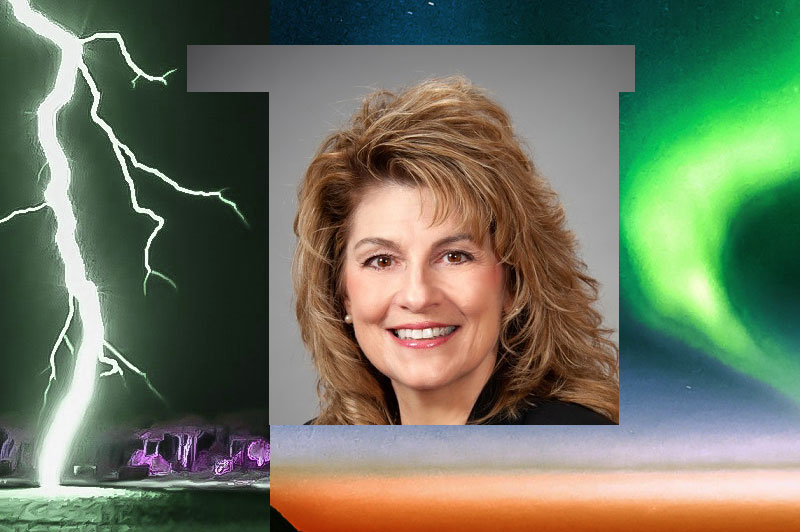
    Dr. Sherri Tenpenny testifies before the Ohio House Health Committee on June 8, 2021. During her presentation, she said vaccines are magnetizing to their recipients and “interface” with 5G cell towers. (Photo source: The Ohio Channel)

    BY: JAKE ZUCKERMANOhio Capital Journal

    In June, Sherri Tenpenny, a state-licensed doctor of osteopathic medicine and notorious COVID-19 disinformer, baselessly claimed in a televised, government meeting that COVID-19 vaccines “magnetize” recipients and “interface” with cell towers.

    The comment wasn’t an aberration from Tenpenny, who has in the past described vaccines as a tool of “depopulation.” The Ohio State Medical Board, an agency tasked with overseeing discipline and complaints of state physicians, still renewed her license in September as part what it called an “automatic” process of handling renewals.

    Her renewal points to a bigger problem at the intersection of politics, mass media and public health: a loud, super minority of physicians has found ways to monetize lies about COVID-19 and vaccines that prevent it, and state medical boards are ill equipped to handle the problem, according to a report released earlier this month by the de Beaumont Foundation.

    “During this ongoing public health emergency that has claimed more than 5 million lives globally, a small minority of physicians have exploited the credibility that comes with their medical licenses to disseminate disinformation to the public,” the report states. “Their lies, distortions, and baseless conspiracy theories have caused unnecessary suffering and death that are prolonging the pandemic.”

    “Their lies, distortions, and baseless conspiracy theories have caused unnecessary suffering and death that are prolonging the pandemic.”

    de Beaumont Foundation

    Only about 21% of state medical boards have taken any disciplinary action against a licensee for disseminating false or misleading health information, according to a survey conducted by the Federation of State Medical Boards. About 2 in 3 boards said they’ve noticed an increase in complaints on the issue.

    Ohio’s medical board’s stated mission is to “protect and enhance the health and safety of the public through effective medical regulation.” Spokeswoman Jerica Stewart said state law allows the board to discipline doctors for making a “false, fraudulent, deceptive, or misleading statement in relation to the practice of medicine and surgery.” However, there’s a high standard of proof to meet. Tenpenny’s license, Stewart said, was automatically renewed, part of an automated process to keep up with the 92,000 licensees in Ohio. Tenpenny did not respond to an email.

    “Ohio law prohibits the Medical Board from sharing details about received complaints and investigations even if a licensee chooses to publicly comment on their interactions with the board,” she said. “I’d also like to reiterate, a recent renewal does not prevent the board from taking future disciplinary action and does not mean that there isn’t an open investigation.”

    The de Beaumont report criticizes boards that have “rubber stamped renewals for doctors who are in clear violation of medical standards, which allows them to do more harm with no questions asked.”

    Medical boards have structural problems stopping them from disciplining disinformers, per the report. Their work is shrouded in secrecy, the problem is somewhat new and fast-evolving, and investigations are time consuming.

    Several physicians identified in the report have spread untruths throughout the pandemic about COVID-19 all while being “able to point to their medical license for credibility.” For instance, California physician Simone Gold said in a CNN interview that vaccines are “disease-causing.” Indiana physician Dan Stock, speaking at a school board meeting, attributed a COVID-19 outbreak to vaccines. North Carolina physician Rashid Buttar claimed on CNN that the vaccine has killed more people than COVID-19.

    These claims fly in the face of real-world evidence showing vaccines are incredibly powerful protectors against serious health outcomes from COVID-19 like hospitalization or death. Likewise, researchers have found there’s no increase in mortality in vaccine recipients, and that recipients had lower rates of non-COVID-19 mortality after adjusting for age and other characteristics.

    The de Beaumont Foundation, a public health advocacy group, commissioned polling on the issue from Morning Consult. Of 2,200 adult respondents, about 9 in 10 said physicians don’t have the right to “intentionally spread misinformation or false health information.” About 8 in 10 said they should be disciplined for doing so.

  • She says vaccines make you magnetized. This lawmaker invited her testimony

    She says vaccines make you magnetized. This lawmaker invited her testimony

    Republican Rep. Jennifer Gross of West Chester

    By Jake Zuckerman and Ohio Capital Journal

    Columbus, Ohio – After a discredited doctor’s conspiracy theories involving COVID-19 vaccines, magnetics and 5G towers made a mockery of the Ohio House of Representatives, the Health chairman blamed the sponsor of anti-vaccination legislation for inviting the doctor to testify before the committee.

    House Health Committee Chairman Scott Lipps, R-Franklin, said in an interview that fellow Republican Rep. Jennifer Gross of West Chester personally requested that Cleveland area physician Dr. Sherri Tenpenny testify in support of Gross’ bill, the “Vaccine Choice and Anti-Discrimination Act.”

    Lipps said he warned against Tenpenny, but Gross “vehemently” overrode his objections.

    Tenpenny is a prominent anti-vaccination advocate who was deemed “unreliable” by a special master in federal court, who forbade her testimony as an expert witness in an alleged vaccine injury case. 

    Gross also personally invited Fremont attorney Tom Renz to testify at the hearing. A federal judge similarly blasted as “incomprehensible” a federal lawsuit Renz filed alleging “tyranny” from Ohio’s government regarding the pandemic.

    Lipps said Gross and Stephanie Stock, president of anti-vaccination advocacy group Ohio Advocates for Medical Freedom, were adamant.

    “We did not include Tom Renz or Sherri Tenpenny on our agenda,” he said. “They protested, called me personally, and said they wanted Renz and Tenpenny.”

    Renz and Tenpenny both testified in support of Gross’ House Bill 248, which would prohibit colleges, insurers, hospitals, nursing homes, employers and others from requiring, incentivizing or asking about vaccination — all vaccines, not just for COVID-19. Public health experts have said in previous interviews the legislation would suppress Ohio’s vaccination rates against a number of diseases and increase the likelihood of outbreaks of infectious disease.

    The bill drew huge public interest, prompting the committee to allow only certain, invited witnesses to testify.

    Tenpenny, one of the few invited witnesses, unleashed a torrent of inaccurate and bizarre claims about purported dangers of the vaccine. She alleged that vaccinated people become “magnetized,” as evidenced by pictures on the internet of them with forks and spoons sticking to their persons.

    “There has been people who have long suspected there was some sort of an interface, yet to be defined, an interface between what’s being injected in these shots, and all of the 5G towers,” Tenpenny said.

    See footage of Tenpenny’s comments to the committee here

    The comments, which are not accurate, would soon drag the Ohio House through lampooning national media coverage and ridicule from late night comics like John Oliver and Stephen Colbert.

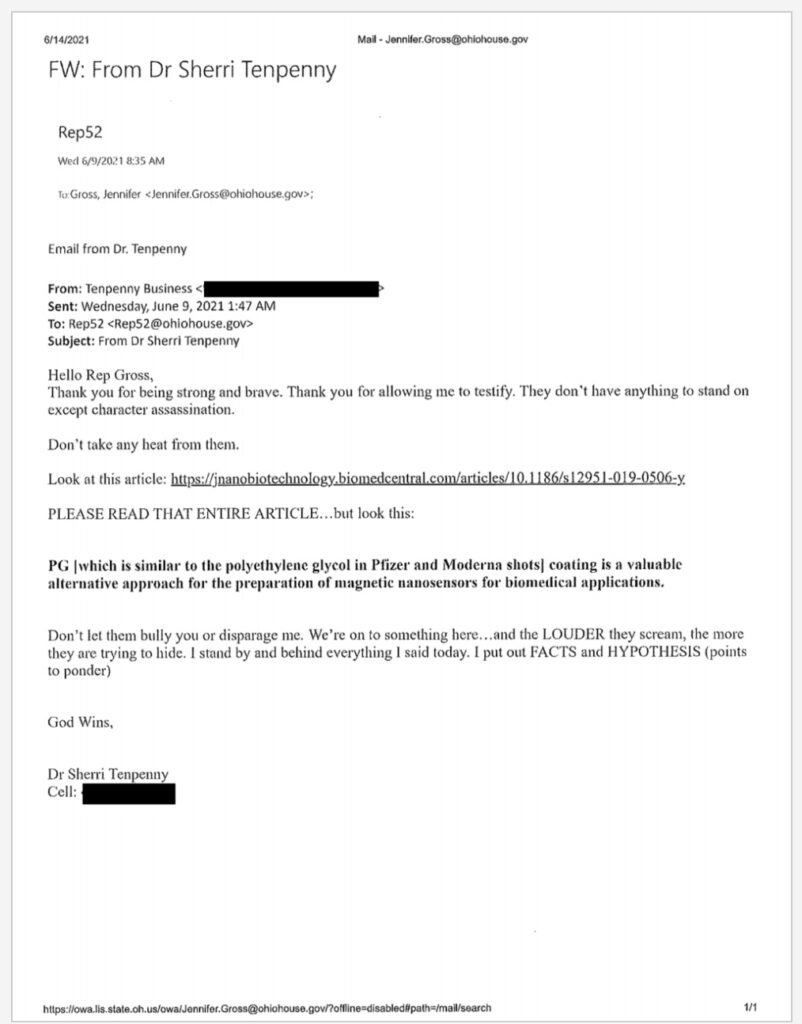
    At 1:47 a.m. the day after Tenpenny’s comments, the doctor emailed Gross to thank the lawmaker for being “strong and brave” and allowing her to testify, according to an email obtained in a public records request.

    In the email, Tenpenny sent a largely unrelated article from the Journal of Nanobiotechnology examining the biochemical functionality of magnetic particles as nanosensors, which are used in cancer diagnosis and treatment. Tenpenny seemed to claim it as proof of her comments regarding COVID-19 vaccines.

    “Don’t let them bully you or disparage me,” she wrote. “We’re on to something here… and the LOUDER they scream, the more they are trying to hide. I stand by everything I said today. I put out FACTS and HYPOTHESIS (points to ponder).

    God Wins,

    Dr. Sherri Tenpenny.”

    The day after the testimony, with the comments going viral online, Gross came to Lipps’ office and said she needed help with “damage control,” according to Lipps’ remarks in an interview. 

    Gross declined to confirm or deny Lipps’ account or answer emailed questions. She said she’s busy and considers the questions “old news.” However, she claimed Lipps praised Renz’s testimony and alleged he thought Tenpenny “sounds great.”

    Ohio House Health Chairman Scott Lipps. Source: Ohio General Assembly.

    Lipps denied saying this.

    “I would expect nothing different from Rep. Gross,” he said in a text message to the Capital Journal. “I have quickly learned she [accepts] no responsibility for her actions or decisions and is quick to blame anyone and everyone. Also, the first agenda we [put] out for proponent testimony had NO Renz and NO Tenpenny. Rep. Gross vehemently objected.”

    When the House Health Committee met a week after the comments went viral, Lipps defended the practice of bringing in witnesses like Tenpenny, even if doing so made people “uncomfortable.” He emphasized the importance of hearing from those one disagrees with.

    “Please step outside your own little world and understand that people are not all the same, and they don’t all believe the same,” he said. “You are not always right.”

    Ohio Advocates for Medical Freedom helped draft Gross’ HB 248 legislation and has paid for a spread of radio ads to gin up support for the bill, according to disclosures with the Federal Communications Commission.

    Stock — president of the group, which researchers found to be the fourth-largest purchaser nationwide of anti-vaccination ads on Facebook — declined to answer questions for this report.

    So who is Sherri Tenpenny?

    Most Ohioans had probably never heard of Tenpenny before video of her June 8 testimony went viral.

    In anti-vaccination corners of the internet, however, she’s something of a celebrity doctor. 

    She is close with Alex Jones, a conspiracy theorist and media figure who is facing libel lawsuits after claiming the Sandy Hook school shooting that left 20 young children and six adults dead at a Connecticut school was a “giant hoax.” The two have been friends for 20 years, they both said in a recent interview on Jones’ show.

    On a recent episode of her podcast, Tenpenny interviewed pillow magnate Mike Lindell, who is among the loudest backers of former President Donald Trump’s lie that the 2020 election was rigged. Lindell and his company are also facing libel suits related to these claims

    While Tenpenny has repeated similar claims of election fraud, her primary focus is vaccines and wrongfully depicting them as dangerous. 

    “Vaccines are now, and people, listen to this closely, always have been a method of mass destruction, a method of depopulation,” she claimed earlier in 2021.

    Tenpenny’s anti-vaccine activism has generated multiple related revenue streams for her. She hosted a “boot camp” this year for $623, training people to convince others to refrain from vaccination. In May, she hosted a live streaming training event to explain the “20 mechanisms of injury from the shots” — platinum package tickets went for $199. Her 2008 book, “Saying No to Vaccines: A Resource Guide for all Ages,” isavailable on Amazon for $877.95, one of several similar titles she has authored.

    Despite this work, Tenpenny does not follow acceptable scientific methodology, her testimony is “unreliable” and she is “unqualified” to address vaccine injury, according to Special Master Richard Abell, appointed by the U.S. Court of Federal Claims.

    Abell made these remarks in a 2010 ruling that blocked Tenpenny’s testimony on behalf of a man who alleged a hepatitis B vaccination gave him Guillain-Barre syndrome, a rare side effect of vaccination.

    The legal standard, he wrote, calls on judges to presume admissibility of testimony of an expert witness. However, he found her methodology “so divergent from the scientific method as to be nonsensical and confusing,” prompting his ruling.

    “Her ideas on vaccine injury have not been exposed to any critical analysis of those in the relevant field, let alone peer-reviewed medical journals,” he said. “There is no way to ascertain whether Dr. Tenpenny’s opinion is credibly accepted by those who would know; there are only the patent defects in her report that militate for the opposite.”

    Tenpenny did not respond to repeated phone calls.

    Tom Renz speaks to the House State and Local government Committee Feb. 17. Source: Ohio Channel.

    Who is Tom Renz?

    After Tenpenny wrapped up her testimony on June 8, Fremont attorney Tom Renz addressed the committee.

    Renz obtained his law license shortly before the pandemic began and his legal career has since wrapped around it. (He says he previously clerked for an Indian Supreme Court justice but doesn’t remember when.)

    He is currently representing clients in COVID-19 related lawsuits against:

    The lawsuits are sprawling, some stretching over 100 pages, and are rife with claims that the COVID-19 death count is “inflated,” that asymptomatic spread of disease is a “fallacy,” that masks don’t work and a deluge of other inaccurate and often debunked claims.

    No cases have yet received any significant rulings. U.S. District Judge James Carr described the first lawsuit against DeWine as “a jumble of alleged facts, conclusory and speculative assertions, personal and third-party allegations, opinions, and articles of dubious provenance and admissibility.”

    Renz withdrew the lawsuit and has since filed a similar case that awaits a ruling. Ohio Stands Up, a citizens group that acts as plaintiffs in the cases, created a crowdsourced legal fund to pay Renz and his partner, Robert Gargasz. The fund has raised nearly $140,000 since it launched around September 2020.

    Earlier this year, Renz testified before a separate committee regarding a pandemic-related bill. YouTube ultimately removed footage of the hearing from its site for violating its COVID-19 misinformation policy

    Renz didn’t respond to an email.

    Ohio Stands Up recently posted on Facebook a flier for an August fundraiser: “An Evening With Dr. Sherri Tenpenny and Attorney Thomas Renz.” Tickets cost $75. 

  • Portman says Biden “likely” next president, says Trump’s behavior has been good for democracy

    Portman says Biden “likely” next president, says Trump’s behavior has been good for democracy

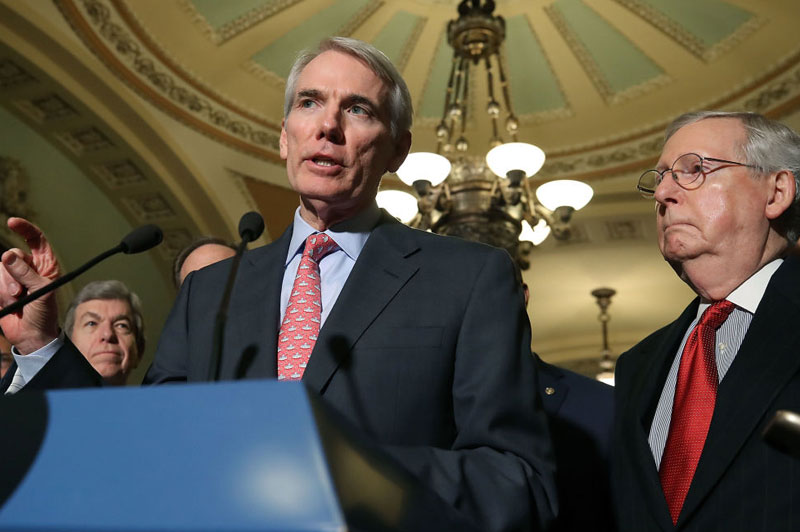
    Ohio U.S. Sen. Rob Portman with Senate Majority Leader Mitch McConnell. Photo by Mark Wilson/Getty Images.

    By Marty Schladen – The Ohio Capital Journal

    Under growing national pressure, U.S. Sen. Rob Portman on Monday conceded that former Vice President Joe Biden is “likely” to be the next president of the United States. 

    But Portman’s office continued to ignore questions about President Donald Trump’s attempts to get Republican-controlled legislatures to throw out votes and reverse the results of the Nov. 3 election, and he suggested that Trump’s spurious legal challenges have actually been good for democracy.

    “Donald Trump is our president until Jan. 20, 2021, but in the likely event that Joe Biden becomes our next president, it is in the national interest that the transition is seamless and that America is ready on day one of a new administration for the challenges we face,” Portman wrote in an op-ed published by the Cincinnati Enquirer.

    Ohio’s junior senator, who is up for reelection in 2022, did not criticize Trump’s legal strategy or his subsequent behavior. 

    Trump and his team have spouted a raft of unsupported conspiracy theories while racking up loss after loss in the courts. According to a New York Times analysis, those theories often have one feature in common: They seek to overturn votes in cities with large Black populations. In other words, at the core of the strategy is disenfranchising Black voters.

    “‘Democrat-led city’ — that’s code for Black,” the Times analysis quoted Rev. William J. Barber II, president of Repairers of the Breach, as saying. “They’re coupling ‘city’ and ‘fraud,’ and those two words have been used throughout the years. This is an old playbook being used in the modern time, and people should be aware of that.”

    Rather than criticize Trump’s legal strategy, Portman’s op-ed praised it

    “The Trump campaign has taken steps to insist that only lawful votes were counted in key states, including filing numerous lawsuits,” it said, explaining that most of those lawsuits have now been resolved. Then it adds, “There were instances of fraud and irregularities in this election, as there have been in every election. It is good that those have been exposed and any fraud or other wrongdoing should be prosecuted to the fullest extent of the law, but there is no evidence as of now of any widespread fraud or irregularities that would change the result in any state.”

    Portman and many other Senate Republicans have come under withering fire for their silence as Trump’s attempts to escape electoral defeat have become increasingly desperate.

    Long before the election, Trump repeatedly refused to say he’d abide by the results if he lost. But most prominent Republicans refused to criticize him.

    On Nov. 5, as Trump’s loss appeared increasingly likely and as he ramped up efforts to throw out votes cast against him, historian Michael Beschloss tweeted that history would be watching how people in power reacted.

    On Thursday, Trump’s legal team held a surreal press conference that was heavy on conspiracy theories but light on evidence. At the same time that Trump’s lawyers were alleging a plot involving a long-dead Venezuelan strongman, Trump was pressuring Michigan lawmakers to throw out votes in heavily Black Detroit.

    Former Republican presidential nominee Mitt Romney obviously had had enough.

    Through the weekend, as observers worried that Trump was breaking down vital norms and profoundly undermining faith in American democracy, Portman’s staff ignored a request for comment on Romney’s tweet.

    Then on Sunday night, legendary reporter Carl Bernstein called Portman out by name, saying he and other GOP senators privately espoused disdain for Trump but avoided crossing him in public — presumably out of fear of getting crosswise with Trump’s base.

    “We have a president of the United States for the first time in our history sabotaging his country,” Bernstein said in a Friday appearance on CNN. “Will these Republicans continue to allow this for another day? Because every day it appears more and more that our system cannot handle, was not designed… to handle an aberrant, mad king.” 

    Bernstein added that he believed the country is in more danger now than it was at the end of the presidency of Richard Nixon, which Bernstein helped to end with his coverage of the Watergate scandal.

    As part of a series of tweets, Bernstein said, “The 21 GOP Senators who have privately expressed their disdain for Trump are: Portman, Alexander, Sasse, Blunt, Collins, Murkowski, Cornyn, Thune, Romney, Braun, Young, Tim Scott, Rick Scott, Rubio, Grassley, Burr, Toomey, McSally, Moran, Roberts, Shelby.”

    Then he added, “With few exceptions, their craven public silence has helped enable Trump’s most grievous conduct—including undermining and discrediting the U.S. electoral system.

    On Monday morning, as Portman was publishing his op-ed, his office ignored questions about Bernstein’s criticism as well.

    And rather than criticizing Trump’s false claims of voter fraud, Portman claimed that the president’s recent behavior has been good for American democracy.

    “Based on polling, a substantial majority of the nearly 74 million Americans who supported President Trump question the legitimacy of the election,” the op-ed said. “I believe going through a fair and transparent process to ensure the election was properly decided is important for our democracy and to help heal our polarized country.”


    Marty Schladen

    Marty Schladen has been a reporter for decades, working in Indiana, Texas and other places before returning to his native Ohio to work at The Columbus Dispatch in 2017. He’s won state and national journalism awards for investigations into utility regulation, public corruption, the environment, prescription drug spending and other matters.