Tag: constitutional amendment

  • Ohio property tax repeal campaign preparing to collect signatures

    Ohio property tax repeal campaign preparing to collect signatures

    Ballot petition signature collection. Photo by WEWS.

    By:  Ohio Capital Journal

    In a short meeting, the Ohio Ballot Board signed off on a proposed constitutional amendment abolishing property taxes in the state. The only question before the board was whether the proposal contains one or multiple amendments.

    Supporters contend lawmakers have been unwilling or unable to make significant enough changes as property taxes climb. But critics warn eliminating that revenue stream could cripple important services like schools and first responders.

    Campaign reaction

    GET THE MORNING HEADLINES.


    The day after the ballot board meeting, Beth Blackmarr described her mood as ‘busy.’

    “Busy, busy, busy,” she said, “I mean, here we go — we’ve got to hit the ground running.”

    Blackmarr is part of the organization Citizens for Property Tax Reform which is leading the repeal campaign. With the ballot board’s decision, the group is now able to start gathering signatures to appear on the ballot.

    To go before voters, they’ll need 10% of the electoral turnout from the last governor’s race (just shy of 415,000). Additionally, in 44 of Ohio’s counties, they’ll need signatures from at least 5% of the governor’s race turnout. In practice, campaigns turn in hundreds of thousands more signatures than necessary to make up for any rejections.

    Blackmarr said they want to start collecting “as soon as humanly possible,” and work could begin as early as next week. Asked whether they’d work with paid circulators, she just laughed.

    “Many of us are youthful at heart, but senior citizens that are just really working out of our pockets,” she said. “There’s no big money backing this at all. It’s all volunteer.”

    The merits

    Blackmarr argued Ohio’s current property tax system is broken. She points to other states like New Jersey and Texas that have far more generous initiatives to keep seniors, vets and the disabled in their homes.

    “You can’t have senior citizens who have paid for their homes — fully paid for — having to move out because they can’t afford property tax,” she insisted.

    Blackmarr contends those kinds of protections are low-hanging fruit. Lawmakers have had continual warnings and “ample opportunity” to act. Instead, she argued, they’ve dithered with changes at the margins.

    “I suspect it’s because they built a wobbly tower of property tax law over these decades,” she said, “and they’re afraid to pull one of the blocks out, because they’re afraid the whole thing’s gonna come tumbling down.”

    That ‘tumbling down’ is exactly the concern many critics voice about the plan. The most recent annual report from the Ohio Department of Taxation puts 2023 property tax collections at about $18.5 billion. That’s an enormous amount of funding to just disappear. It’s roughly double the amount reported for state income taxes, and a billion more than Ohio’s sales and use tax.

    Spread evenly, it would cost every single Ohioan more than $1,500 to make up that gap in funding.

    Blackmarr argued repeal will just force lawmakers “to come up with an alternative.” But that’s a big ask — particularly for Republicans allergic to tax increases.

    Still she’s right about dramatic increases in property taxes. The same Department of Taxation report shows assessed values climbing almost 40% in five years while tax collections have risen more than 21%.

    Legislature’s role

    In a statement following the ballot board decision, House minority leader Allison Russo said the proposal “clearly demonstrates frustration by Ohioans on this issue” and blamed lawmakers for failing to act.

    “However, this particular initiative concerns me because while it eliminates the property tax, it doesn’t explain how we’ll replace the funds that support police, fire departments, public education, and other critical services,” she said.

    Russo argued Democrats have signed on to bipartisan legislation providing direct relief but Republican leaders haven’t prioritized those bills.

    Blackmarr acknowledged that as their campaign gains steam, pressure will grow on lawmakers to pass legislation or propose their own ballot measure to undercut their efforts.

    “At the end of the day it goes to the voters,” she said.  “They have to make the decision for themselves.”

    And if lawmakers’ intervention means voters have to choose between competing visions, that’s just fine with Blackmarr.

    “Wouldn’t that be nice, you know?” she said.

    Follow Ohio Capital Journal Reporter Nick Evans on X or on Bluesky.


    Nick Evans
    Nick Evans

    Nick Evans has spent the past seven years reporting for NPR member stations in Florida and Ohio. He got his start in Tallahassee, covering issues like redistricting, same sex marriage and medical marijuana. Since arriving in Columbus in 2018, he has covered everything from city council to football. His work on Ohio politics and local policing have been featured numerous times on NPR.

    Ohio Capital Journal is part of States Newsroom, the nation’s largest state-focused nonprofit news organization.

    MORE FROM AUTHOR

  • Jane Gonzales and Patty Lawrence return and talk about the “new” Issue 1

    Jane Gonzales and Patty Lawrence return and talk about the “new” Issue 1


    “Right to Make Reproductive Decisions Including Abortion”

    by David Miller

    Loveland, Ohio – Jane Gonzales from Loveland and Patty Lawrence from Miami Township returned to the LOVELAND MAGAZINE TV studio last week to talk about current politics and the activities they have been engaged in in recent months in the community.

    They discussed and answered questions about Ohio Issue 1 which will be on the General Election ballot on November 7. Yes, they talked about Issue 1 when they were last in the studio, and that Republican-led measure was soundly defeated.

    This November, Issue 1, which was a citizen-led effort, will ask voters to amend the Ohio Constitution to enshrine a woman’s “Right to Make Reproductive Decisions Including Abortion”.

    In this interview, Gonzales and Lawrence tell viewers what their reaction was when the attempt to make it harder to circulate initiative petitions and would have raised the bar for citizen-led amendments to a 60% threshold failed in the special election in August. Both women campaigned against the change simultaneously while collecting signatures to have the right to make reproductive decisions including abortion on the Fall ballot. They opposed the August Issue 1. They are encouraging a “YES” vote on the citizen-led amendment.

    In this new interview, they discuss what the current Issue 1 will and won’t do and why they are encouraging voters to vote “YES” on the constitutional amendment.

    ____________________

    The amendment as it would be in the Ohio Constitution

    [pdf-embedder url=”https://lovelandmagazine.com/wp-content/uploads/2023/10/The-Right-to-Reproductive-Freedom-with-Protections-for-Health-and-Safety.pdf”]

    ________________

    ISSUE 1 BASICS (Leauge of Women Voters of Ohio)

    WHAT IS ISSUE 1 ABOUT?

    • Issue 1 relates to reproductive health care. Also known as “The Right to Reproductive Freedom with Protections for Health and Safety”, it would amend the Ohio Constitution, if passed by voters in November. 


    WHAT DOES IT MEAN TO VOTE YES ON ISSUE 1?

    • A “yes” vote supports amending the Ohio Constitution to restore the right to an abortion, as well as other reproductive health care such as fertility or miscarriage treatment : 

      • establish a state constitutional right to “make and carry out one’s own reproductive decisions,”including decisions about abortion, contraception, fertility treatment, miscarriage care, and continuing pregnancy; 

      • prohibit the state of Ohio from interfering with this constitutional right, except when the state demonstrates “that it is using the least restrictive means to advance the individual’s health in accordance with widely accepted and evidence-based standards of care;” 

      • allow the state to restrict abortion after fetal viability, defined as “the point in a pregnancy when, in the professional judgment of the pregnant patient’s treating physician, the fetus has a significant likelihood of survival outside the uterus with reasonable measures;” and 

      • prohibit the state of Ohio from banning abortion when, in the professional judgment of a physician, an abortion “is necessary to protect the pregnant patient’s life or health.” 


    WHAT DOES IT MEAN TO VOTE NO ON ISSUE 1? 

    • A “no” vote opposes amending the Ohio Constitution to establish the constitutional right to “make and carry out one’s own reproductive decisions.” This would allow the state to continue to create legislation relating to abortion and other reproductive health actions.


    WHAT HAPPENS IF ISSUE 1 PASSES? 

    • Abortion would go back to being legal up until viability of the fetus — as it had been for nearly half a century since Roe v. Wade.  Access to miscarriage care, to contraception, and to fertility treatments, as well as the right to remain pregnant, would also be protected under this amendment. Under this amendment, the state would be allowed to restrict abortion beyond viability, with exceptions made when a physician deems abortion necessary for the life or health of the pregnant patient.

    ​WHAT HAPPENS IF ISSUE 1 DOES NOT PASS?

    • Laws around abortion and other reproductive health care would continue to be made by state government. 

    • Right now, Ohio has a ban on abortion after the 6th week of pregnancy in place, but this ban has been temporarily blocked by a judge. The judgment blocking the ban has been challenged by the Ohio Attorney General on behalf of the state of Ohio, and is under review with the Ohio Supreme Court. If the Court rules in the state’s favor, the 6 week abortion ban will resume, making abortion after 6 weeks of pregnancy illegal. This includes pregnancies resulting from rape or incest. 


    WHO IS LEADING THE CAMPAIGN TO PASS ISSUE 1? 

    • An organization named OURR – Ohioans United for Reproductive Rights– is heading Issue 1. According to their website, this is a coalition of statewide organizations that includes ACLU of Ohio, Abortion Fund of Ohio, Ohio Physicians for Reproductive Rights, New Voices for Reproductive Justice, Ohio Women’s Alliance, Planned Parenthood Advocates of Ohio, Preterm-Cleveland, Pro-Choice Ohio, and URGE. 


    WHO IS LEADING THE CAMPAIGN OPPOSING ISSUE 1? 

    • An organization named Protect Women Ohio is heading the opposition against Issue 1. According to their website, this is a coalition of people and organizations; no names are identified. 


    WHO ARE SOME SUPPORTERS OF ISSUE 1? 

    • American Association of Obstetricians and Gynecologists (ACOG), Ohio Section

    • National Association of Social Workers 

    • Society for Maternal-Fetal Medicine


    WHO ARE SOME OPPONENTS OF ISSUE 1?

    • Center for Christian Virtue 

    • Ohio Catholic Conference 

    • Ohio Right to Life 

    ABORTION IN OHIO 

    WHAT IS THE CURRENT LEGAL STATUS OF ABORTION IN OHIO? 

    • On June 24, 2023, immediately after the Dobbs ruling, a federal judge lifted an injunction that had been placed on a law that made abortion after 6 weeks illegal in Ohio, including for pregnancies resulting from rape or incest. That law had originally been passed in 2019 but blocked in court because it was unconstitutional according to Roe v. Wade; after Dobbs, the law was no longer unconstitutional. 

    • On September 14, 2023, a different judge blocked the 6 week ban, restoring abortion rights to Ohioans temporarily. Ohio Attorney General Dave Yost, representing the state, has challenged this ruling, and the Ohio Supreme Court is set to hear arguments later this month. If the Court rules in favor of the state, who brought the suit, abortion will again be banned after 6 weeks. 


    WOULD THE AMENDMENT AFFECT ANYTHING OTHER THAN ABORTION?

    • Yes. 

    • In addition to guaranteeing the right to abortion, the amendment would also protect the right to other reproductive health actions such as access to contraception, fertility treatment, and miscarriage care, as well as the right to continue a pregnancy. 

    ISSUE 1: FACTS vs. MISINFORMATION 

    CAN A PREGNANCY BE TERMINATED AT ANY TIME DURING A PREGNANCY? 

    • The amendment maintains the standard set by the 1973 Supreme Court decision Roe v. Wade, which prohibits abortion after viability (which most doctors say is around 24 weeks), except in cases when the patient’s life or physical health would be endangered by maintaining the pregnancy. In those instances, determined by the patient’s physician, abortion would be a protected option.

    • Historically, abortion after viability is very, very rare, with 93.1% of abortions happening before 13 weeks gestation in 2020, and less than 1% over 21 weeks gestation. (CDC). Typically, abortion during this period only happen when there are severe fetal anomalies and/or the patient’s life or physical health is in danger. 


    HOW WOULD THIS AMENDMENT AFFECT PARENTAL RIGHTS? 

    • It wouldn’t. There is nothing in the amendment that changes Ohio laws around parental consent. 

    • Ohio law requires minors under the age of 18 to get consent from at least one parent when seeking an abortion. Minors who believe they are unable to tell a parent must get a court order from a judge through a process called judicial bypass. There is nothing in the amendment that would change this. 

    HOW WOULD THIS AMENDMENT AFFECT GENDER-AFFIRMING CARE? 

    • It doesn’t. There is nothing in the amendment that has anything to do with gender-affirming care.

    ______________________

    Ohio’s county boards of elections have begun distributing ballots to active duty military and overseas voters, officially opening the November 7 general election.


    OCTOBER 31st:  DEADLINE TO REQUEST YOUR MAIL-IN BALLOT


    _______________________


  • Gerrymandered Ohio Statehouse gives voters no recourse through initiated statute, only constitution

    Gerrymandered Ohio Statehouse gives voters no recourse through initiated statute, only constitution

    OPINION

    Citizens could work tirelessly to pass an initiated statute and the rigged Ohio legislature could then simply overturn it

    by David DeWitt – Ohio Capital Journal

    In order to understand the bad faith of the Republican arguments for attacking Ohio voters and asking us to enshrine 41% minority rule over our Ohio Constitution, voters need to understand the power dynamics at play when it comes to initiated statutes versus amendments to the Ohio Constitution.

    In Ohio, citizens have two options for proposing changes through a ballot initiative: They can offer a statute, which changes law under Ohio Revised Code, or a constitutional amendment, which amends the Ohio Constitution.

    Time and again we hear gerrymandered Ohio Republican lawmakers making some variation on their argument that the constitution is our “foundational document” and that if voters want a change, they should attempt an initiated statute to change the law, instead of adding an amendment to the Ohio Constitution.

    Here’s what they want citizens to forget: Ohio law offers no protection for a newly passed statute. Lawmakers can immediately repeal or modify whatever changes voters approve.

    This means that well-meaning citizens of Ohio could raise money, spend countless hours gathering signatures, put in enormous volunteer time, talk to their friends and neighbors, knock on doors, and generally work themselves to the bone to get a statute initiative on the ballot and passed, and then our unconstitutionally gerrymandered supermajority Republican legislature could repeal it the next day.

    Some states have provisions to protect from this situation. If a citizen-initiated statute passes, the General Assembly is not allowed to just overturn it, sometimes for a given number of years, or they must reach an extremely high bar to do so. Ohio does not have this. That is a huge difference.

    The fact that there is no such protection for citizen-initiated statutes in Ohio, combined with the fact that our Statehouse is unconstitutionally gerrymandered for unrepresentative Republican supermajorities in both chambers, means that it would be foolish for any citizen group working on an issue that our misrepresentative legislature refuses to address to spend all that time and effort passing a statute just to be kicked in the teeth by that same misrepresentative legislature.

    Over the years as a newspaper reporter in Athens, I would ask people bringing, for instance, initiatives for the legalization of medicinal cannabis, why they were going for a constitutional amendment and not a statute. The answer was always the same: Because the Statehouse would just override it. Why spend all that time and money on something that they will just override?

    When you understand this, you understand why groups bring amendments instead of statutes. This also reveals the wildly condescending deceit of these Ohio Republicans attacking 175 years of Ohio majority voter authority over our constitution.

    Presumably, they understand these dynamics, too. And yet, they shriek and wail about all these groups they say are trying to write law into the constitution instead of just bringing statutes.

    The simplest, easiest way to incentivize groups to put forward citizen-initiated statutes instead of amendments would be for them to create some kind of protection for those statutes from being overturned by the legislature.

    Instead of this type of moderate, reasonable change that would alleviate the concerns Ohio Republicans claim that they have, they are going for Ohio voters’ throats.

    We all know — and they have made clear in private and in public — that their effort is really aimed to stop an abortion rights amendment slated for the November ballot, and to stop voters from any effort toward further anti-gerrymandering reform.

    That gerrymandering piece of the puzzle is also what makes their arguments so offensively disingenuous.

    Ohio Republicans would not have had the votes to bring this $20 million, Aug. 8 special election if they hadn’t ignored the Ohio Constitution by forcing Ohioans in 2022 to vote under district maps declared unconstitutional by a bipartisan Ohio Supreme Court five times.

    In doing so, they flagrantly violated the will of Ohio voters who passed anti-gerrymandering reform for Statehouse districts in 2015 with more than 71% of the vote.

    Them now claiming the mantle of “protecting the Ohio Constitution” is ridiculous on its face. They have shown repeatedly they don’t give a damn about the integrity of the Ohio Constitution. They have flagrantly violated the Ohio Constitution, the rule of law, the orders of the Ohio Supreme Court, and the will of Ohio voters, with staggering contempt.

    This is Lucy asking Charlie Brown to try to kick the football just one more time. I can only conclude they are either themselves just not very smart, or they’re so deeply cynical that they think Ohioans are profoundly stupid. Probably a mixture of both, depending on the lawmaker.

    Even if you wanted to have a good faith discussion on citizen initiatives and the Ohio Constitution, you would have to meet a couple premises off the bat: You would have to have a legitimate and representative legislature that isn’t gerrymandered, and you would have to have some sort of enforceable protection for citizen-initiated statutes. Ohio has neither.

    Are some things such as marijuana or casino laws better off in Ohio Revised Code? Probably. But Ohio Republicans rigging the game at every step of the process has rendered that discussion moot. Constitutional amendments are the only effective tool of direct power Ohio citizens have left.

    Other issues such as civil and human rights stand wholly appropriate to the Ohio Constitution, firmly out of the manipulative reach of corrupt, unscrupulous lawmakers.

    So that remains the primary question for Ohio voters: Should a 41% minority, alongside a rigged, extremist legislature acting on behalf of radical special interests, have authority over our most fundamental human and civil rights? Voters ought to think wisely.

    _______________________________

    David DeWitt
    DAVID DEWITT

    OCJ Editor-in-Chief and Columnist David DeWitt has been covering government, politics, and policy in Ohio since 2007, including education, health care, crime and courts, poverty, state and local government, business, labor, energy, environment, and social issues. He has worked for the National Journal, The New York Observer, The Athens NEWS, and Plunderbund.com. He holds a bachelor’s degree from Ohio University’s E.W. Scripps School of Journalism and is a board member of the E.W. Scripps Society of Alumni and Friends. He can be found on Twitter @DC_DeWitt

    MORE FROM AUTHOR

  • In GOP flip, August special election will return

    In GOP flip, August special election will return

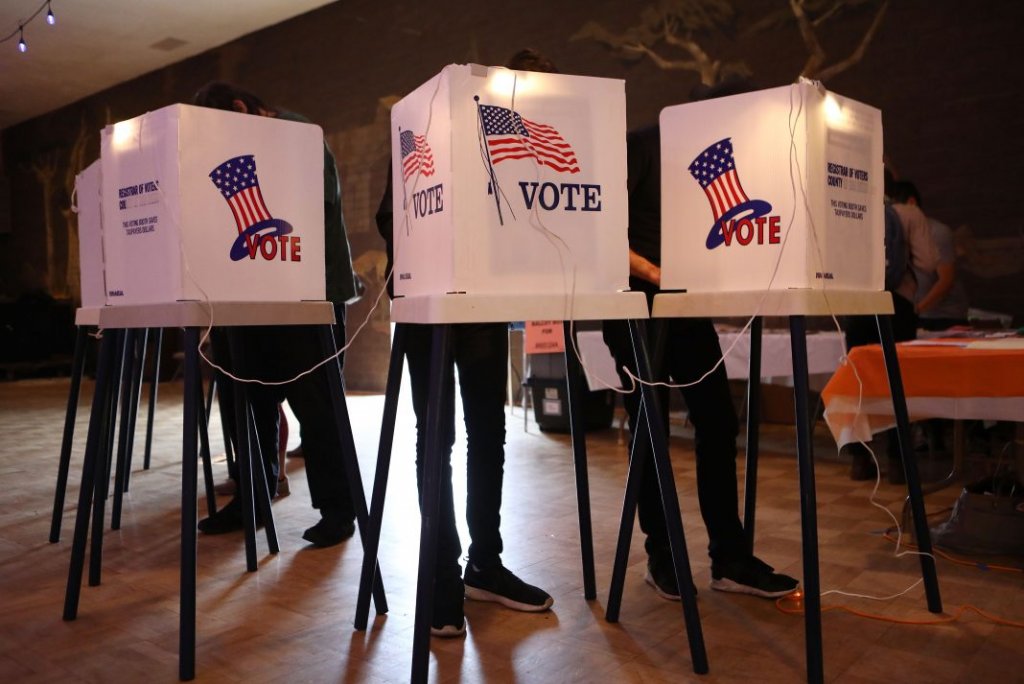
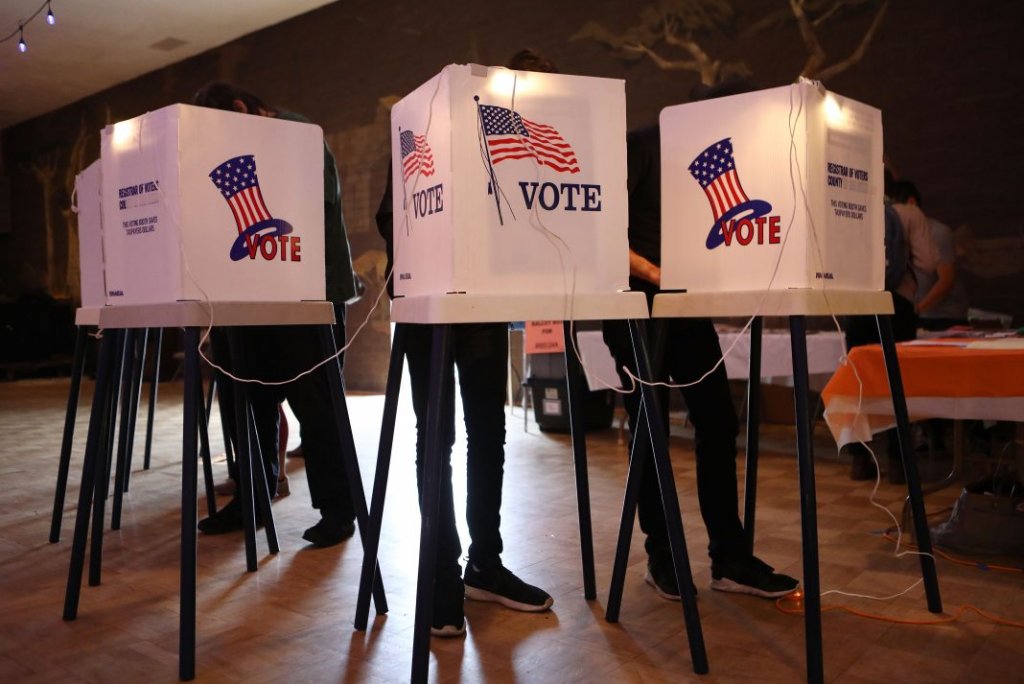
    Voters casting ballots. | Mario Tama/Getty Images

    Bill, along with SJR 2 constitutional amendment bill, directly impact abortion rights ballot initiative

    BY:  – Ohio Capital Journal

    Less than half a year after proclaiming August elections to be too expensive for the turnout they attract, the Senate Republican majority expanded the use of a special election this year, complete with $20 million in funding.

    “This is legislative whiplash, and we do it really well here in Columbus,” said state Sen. Kent Smith, D-Euclid.

    In a mostly party-line vote, Senate Bill 92 was passed Wednesday by the body. The only Republican to vote against SB 92 was state Sen. Nathan Manning, R-North Ridgeville.

    The vote came immediately after the state senate also passed an increase in the threshold for passing a constitutional amendment from 50% to 60% along party lines.

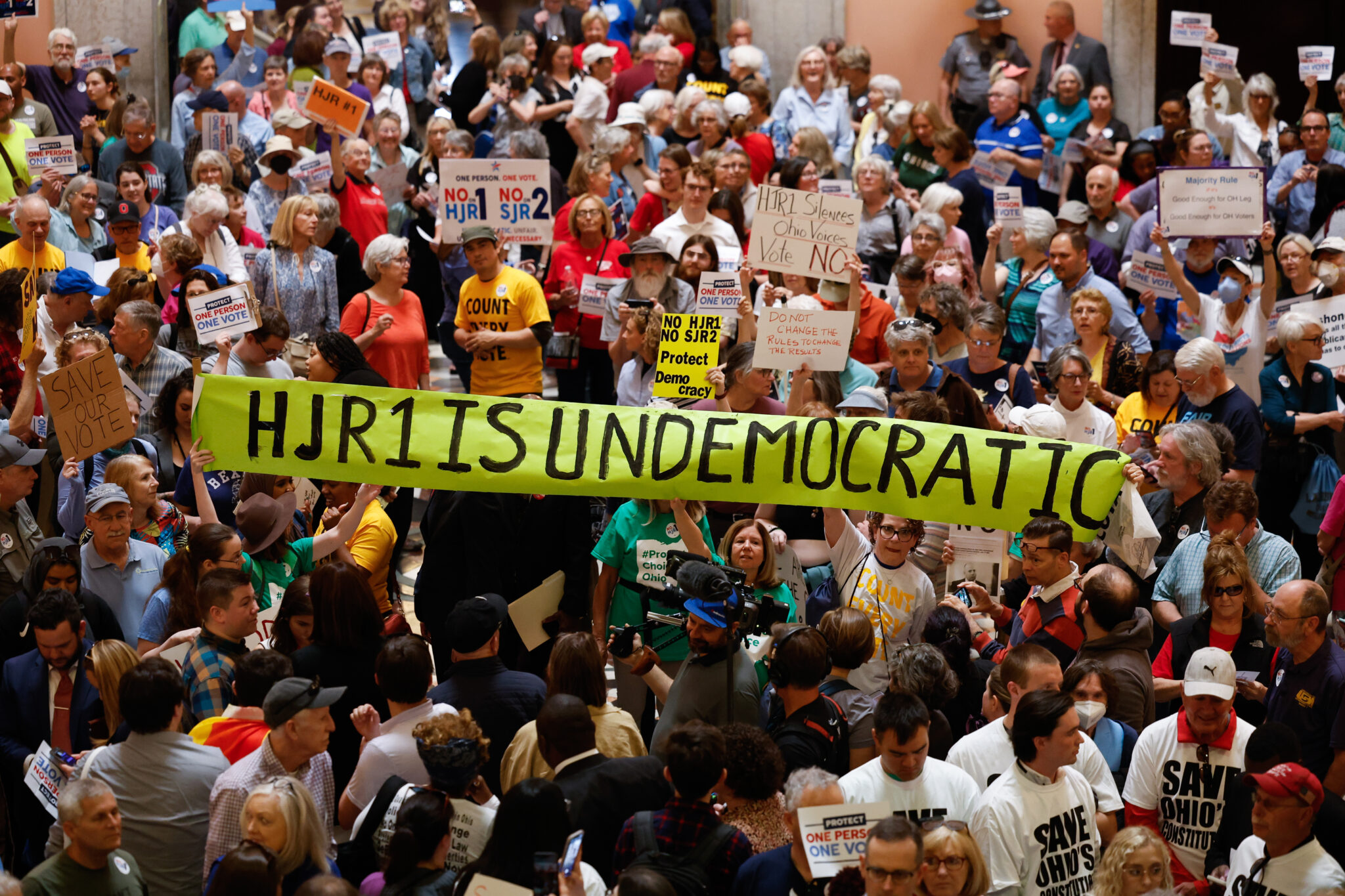
    The threshold bill, SJR 2, is a companion bill to HJR 1, which has been making its way through the Ohio House, but has yet to come up for a floor vote. The House resolution passed its committee after three hours of testimony on Wednesday, most of which spoke in opposition to the bill.

    Both bills could lead to a ballot measure where voters would approve or deny a constitutional amendment to raise that threshold.

    With the approval of SB 92, August special elections will now be held “for consideration of a General Assembly proposed constitutional amendment,” to fill a congressional vacancy or hold a special primary for congressional party candidates.

    The bill also appropriates $20 million to conduct “a one-time August special election on August 8, 2023,” a funding influx made while the bill was in committee.

    That August election would be to send a constitutional voter threshold to the ballot for voters to approve an legislature-initiated amendment to raise the threshold from 50% to 60%.

    Republicans pushed back on comparisons between previous August elections, including last year’s that saw an abysmal 8% turnout, with the argument that this time around, voters will care.

    “With this being a bonafide, statewide question, and with it being an important question … I would say the turnout is going to be markedly higher in this August election,” McColley told his colleagues on the Senate floor.

    The legislative measures seem to be direct hits at a potential constitutional amendment that would codify abortion rights if it makes it to the ballot box and is approved by voters in November. Abortion rights advocates are currently collecting the needed signatures. State law currently requires more than 400,000 in 44 of the 88 states.

    One of the pro-abortion rights groups helping with the ballot measure, Pro-Choice Ohio, called the passage of SB 92 “both expected and incredibly disappointing” in a post on Twitter.

    Last year, after redistricting confusion rocked the legislature, Republicans all-but eliminated the August election in a move that they said would save the state money and get rid of an unneeded annual election date that historically had low voter turnout.

    In August of last year, the special primary election included statehouse races because the redistricting maps were rejected by the Ohio Supreme Court before they could be included in the May election. A U.S. District Court then intervened in the legal snarl that swept up the redistricting process, and allowed the state to use a map previously deemed unconstitutional by the Ohio Supreme Court as the map for the August primary.

    That map is still in effect currently.

    Speaking in opposition for SB 92, state Sen. William DeMora, D-Columbus, quoted Ohio Secretary of State Frank LaRose who spoke in support of reducing August special election usage last year, when he said they “aren’t good for taxpayers, election officials, voters or the civic health of our state.”

    “(SB 92) is so bad that (LaRose) Secretary LaRose couldn’t even find the time to come and testify about it in committee,” DeMora said.

    State Sen. Theresa Gavarone, R-Bowling Green, said claims that the August special elections were eliminated last year was an exaggerated claim.

    “We’re not reinventing the wheel on this legislation,” Gavarone said, pointing out that certain occasions allowed for an August special election.

    SB 92 now moves to the House for consideration.

    _____________________

    Susan Tebben is an award-winning journalist with a decade of experience covering Ohio news, including courts and crime, Appalachian social issues, government, education, diversity and culture. She has worked for The Newark Advocate, The Glasgow (KY) Daily Times, The Athens Messenger, and WOUB Public Media. She has also had work featured on National Public Radio.


    MORE FROM AUTHOR

  • Ohio Ballot Board sued over approval of proposed abortion rights constitutional amendment

    Ohio Ballot Board sued over approval of proposed abortion rights constitutional amendment

    Gavel,” a sculpture by Andrew F. Scott, outside the Supreme Court of Ohio. Credit: Sam Howzit / Creative Commons.

    Meanwhile, Ohio Senate president eyes August for proposal to raise threshold for voters to pass constitutional amendments

    BY: SUSAN TEBBEN – Ohio Capital Journal

    A new lawsuit claims the Ohio Ballot Board made the wrong call when they approved the validity of a constitutional amendment proposal on abortion.

    In the lawsuit, filed this week with the Ohio Supreme Court, Cincinnati attorney Curt Hartman asks the court to demand the ballot board vacate their March 13 decision, in which they said the proposed ballot language to cement abortion rights in the Ohio Constitution attempts to make changes to only one constitutional issue.

    The lawsuit also wants the state Ballot Board to “issue a determination that the foregoing initiative petition contains more than one proposed amendment to the Ohio Constitution,” divide the petition into separate initiatives and certify those with the Ohio Attorney General.

    To prove the separate issues, the lawsuit cites the overturned legalization of abortion in Roe v. Wade, in which abortion was described as “inherently different” than other personal rights. Because abortion is “inherently different,” parties in the lawsuit argue it represents a different issue than “one’s own reproductive decisions,” which is part of the ballot initiative, therefore “does not and cannot relate to a single general object or purpose.”

    The lawsuit acknowledges in a footnote that supporters of the ballot initiative “have not, to date, provided any explanation of the distinction between a decision concerning ‘continuing one’s own pregnancy’ versus concerning ‘abortion.’

    Ohio Attorney General Dave Yost saw the initiative before the board, and certified the amendment proposal in a separate process. In his letter confirming that the proposal could then move on to the ballot board, Yost made his own comments on the issue.

    “I cannot base my determination on the wisdom or folly of a proposed amendment as a matter of public policy,” Yost wrote in his letter on the amendment proposal.

    The lawsuit now sets the state, specifically Yost, up to defend the decision of the ballot board, despite any personal feelings he may have on the initiative itself.

    The board made no decisions on the merits of the issue, though state Sen. Theresa Gavarone, R-Bowling Green, made a point to speak out against the issue during the board meeting, saying she was “horrified at the thought of this amendment.”

    Hartman is representing Margaret DeBlase and John Giroux, both members of the Cincinnati Right to Life. Giroux spoke during the Ohio Ballot Board meeting.

    “If this is about one issue, this amendment is about abortion, and that’s plain and simple,” Giroux told the board. “They want to advance abortion in our state constitution.”

    In the lawsuit, Hartman argues there was “absolutely no discussion or debate whatsoever” by the members of the board, other than Gavarone’s comments.

    Parties challenging the decision say the ballot board’s action, or lack thereof, “constitutes an abuse of discretion and/or an act in clear disregard of applicable legal provisions.”

    The Ohio Supreme Court has not decided whether or not they will accept the lawsuit for review.

    Pro-abortion rights groups are facing a July 5 deadline to gather signatures in support of placing the petition on the ballot in November. That deadline might also lie in the shadow of an August special election now, with Senate President Matt Huffman expressing interest in placing a measure on the ballot that month to increase the threshold needed to amend the constitution by changing it to 50% plus one vote to 60%.

  • Ohio abortion rights groups merge and set sights for amendment on November ballot

    Ohio abortion rights groups merge and set sights for amendment on November ballot

    Getty Image

    BY: SUSAN TEBBEN – Ohio Capital Journal

    Two groups who had already committed to separate efforts to get reproductive rights in the hands of Ohio voters have now merged and set an end goal: abortion access on the November ballot.

    Ohioans for Reproductive Freedom and Ohio Physicians for Reproductive Rights announced Thursday that they are joining together to “file language with the Ohio Attorney General to place a citizen-initiated constitutional amendment to restore and protect reproductive rights and abortion access on the November 2023 statewide general election ballot.”

    “This grassroots initiative – by and for the people of Ohio – is foundational to ensuring access to abortion and the right to bodily autonomy, not only for ourselves, but for generations to come,” said Kellie Copeland, executive director of Pro-Choice Ohio and member of Ohioans for Reproductive Freedom, said in the announcement.

    The groups said the constitutional amendment will look similar to a Michigan amendment which voters approved in November 2022.

    After the amendment is drafted and reviewed by the state Attorney General and Ohio Ballot Board, the groups plan to circulate petitions to place the issue on the ballot.

    Rumblings of a constitutional amendment have been floating for months now, spurred on by the Dobbs v. Jackson Women’s Health Organization case, in which the U.S. Supreme Court overturned decades old nationwide rights to abortion nationwide in Roe v. Wade.

    Placing the measure on the 2023 ballot was called a “moral imperative” which “offers the best prospects for success,” according to Dr. Lauren Beene, executive director of the OPRR.

    “The lives and health of Ohioans have been at risk since Roe was overturned,” Beene said in a statement. “That is why we must seize the earliest possible opportunity to ensure that doctors and patients, rather than politicians and the government, are empowered to make decisions about pregnancy, contraception and abortion.”

    The move comes as some abortion rights advocates are ramping up legal efforts to protect patients and physicians seeking abortion care or advice, along with a battle involving Ohio’s Attorney General Dave Yost to keep abortion pills from being distributed through the mail or at national pharmacies, and a new study that showed abortion clinics find it more and more difficult to comply with laws on the subject because of bureaucratic discretion.

    The ballot measure might have another issue if in-fighting within the state’s Republican caucus continues. One side of the caucus is promoting the controversial legislation that would raise the threshold to approve constitutional amendments, while House Speaker Jason Stephens didn’t list it as one of the priority bills he and his faction unveiled on Wednesday.

    Republicans on both sides of the aisle have expressed interest in legislative prohibitions to abortion since the downfall of Roe, and both sides are awaiting the resolution of a court case under which a six-week abortion ban is paused indefinitely as appeals go through.


  • Andrew Bateman: Well-meaning Issue 1 obscures harmful unintended consequences

    Andrew Bateman: Well-meaning Issue 1 obscures harmful unintended consequences

    by Andrew Bateman,

    The November 6th election, with all its national implications, is fast approaching. Ohio Issue 1, a proposed state constitutional amendment to reduce drug possession offenses from felonies to misdemeanors, is frequently used as a barometer of sorts amid ongoing coverage of state campaign races. The barrage of 30-second campaign ads are hyperbolic at best, and some feature fear tactics to persuade a no vote on Issue 1. What follows is my practice at a more reasoned case against the issue with hopes you come to the conclusion that Ohio Issue 1 hurts Clermont County and other local governments more than it helps.

    What follows is my practice at a more reasoned case against the issue.

    On its surface, Issue 1 has its merits. Given that the United States is the world leader in incarceration, 5 states have already passed similar legislation aimed at reforming the current criminal justice system. Ohio Issue 1 intends to reduce the state’s incarceration rate by reclassifying penalties for drug offenses such as possession, purchasing, and the use of illicit drugs or drug paraphernalia from a felony to a misdemeanor. The resulting reduction of over 50,000 prisoners would generate savings to the state. Money saved would go back into the system for addiction treatment and rehabilitation services as well as crime victim funds.The initiative places additional value on treatment by incentivizing prisoners that participate in rehabilitation services with a potential 25% sentence reduction.The reclassification would not apply to drug trafficking offenses, preventing drug dealers from dodging hard time.

    Ohio Issue 1 misses the mark on two interrelated key points.

    For all the big concepts of saving money and improving public safety, the ballot initiative over-simplifies the nuances of the criminal justice system and disregards the true state of addiction services within local governments. Ohio Issue 1 misses the mark on two interrelated key points: Access to money and access to treatment.

    The amendment would immediately reduce the prison population. First, by granting prisoners with previous applicable felony convictions the right to appeal for a reduced sentence. Secondly by prohibiting jail or prison time for the same offenses, provided it is not the offenders third time in 24 months. Only 15 percent of inmates in state prisons across the United States are incarcerated for drug offenses. A sentence reduction of the approximately 7,500 eligible prisoners in Ohio would be a limited, one-time savings

    Ohio Issue 1 places an undue burden on local governments to process repeat offenders up to three times before sentencing them to jail.

    Not all of Ohio’s counties and municipalities have the same needs; but many face similar problems of overcrowded jails and ever-tightening budget crunches. And while inaccurate to say Ohio Issue 1 decriminalizes drugs, it certainly won’t deter people from buying and using drugs, which if the initiative passes, would shift sole responsibility of processing drug offenders to local governments. Ohio Issue 1 places an undue burden on local governments to process repeat offenders up to three times before sentencing them to jail.

    Issue 1 is a major threat to the progress that has been made by county governments and agencies to address the opioid crisis in Ohio. Drug courts, which mandate treatment as an alternative to prison, are among the most effective methods of rehabilitation for addicts, many of whom would otherwise not seek treatment on their own. Issue 1 removes that authority from the judicial system and puts vulnerable offenders back in harm’s way. The treatment funding mechanism proposed by Ohio Issue 1 is not well-defined and could be distributed through grants. This complicates local government’s ability to allocate funds year-over-year and create stable infrastructure for addiction treatment programs and services.

    In recent years national and state politics have been more cognizant of the opioid crisis, but the most significant positive impacts are made through collaboration between local government agencies and law enforcement. Effective programs such as quick-response teams and recovery coaches could be on the chopping block when local law enforcement and jails absorb more of the state’s cost.

    Andy Bateman is a resident of Loveland, Ohio and serves as a member of the Clermont County Mental Health and Recovery Board.

    As complex as Ohio Issue 1 is, it is understandable that the easier argument against it is to say that it normalizes drug use and puts dangerous criminals out on the streets. In my opinion it is more interesting to evaluate it in practical terms. One major concern with Ohio Issue 1 is, as a constitutional amendment, it does not pertain to an individual’s rights or freedoms and would be more difficult to repeal once approved.

    One major concern with Ohio Issue 1 is that it is a constitutional amendment.

    The choice is ours on November 6th. Please take the time to read for yourself the ​full language of the Statewide Issue​. My intent is to vote against it and I urge others to do the same.


  • Secretary Husted certifies signatures for Marsy’s Law ballot initiative

    Secretary Husted certifies signatures for Marsy’s Law ballot initiative

    “Today, we move closer to making equal rights for crime victims a reality in Ohio,” said Dr. Henry T. Nicholas, founder of Marsy’s Law for All. “We are excited that Ohioans will be able to vote on placing basic, enforceable rights for victims of crime into the state constitution.”

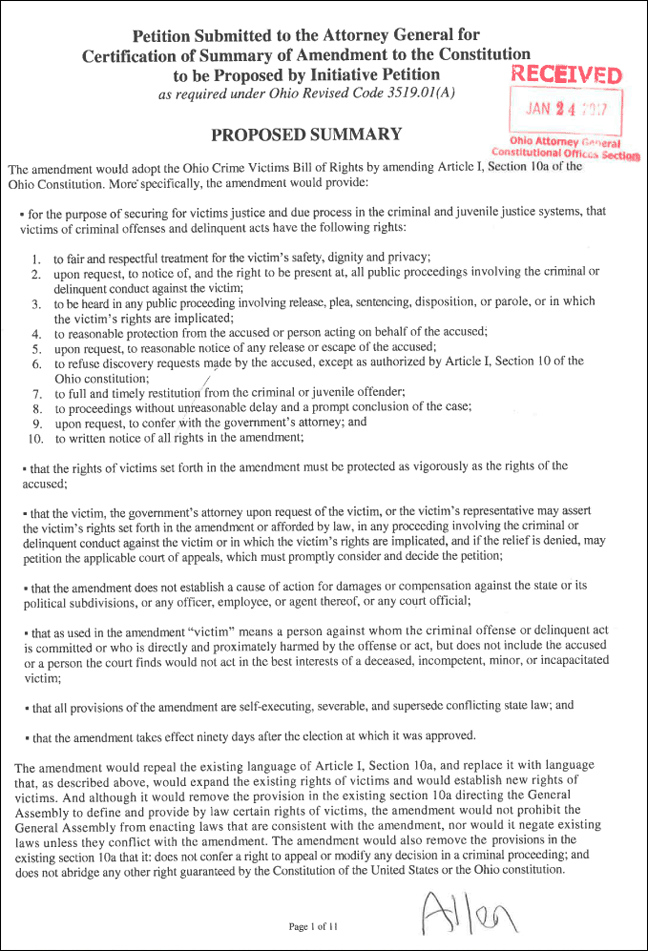
    [quote_box_left]The amendment would provide crime victims with specific rights, including the right to be treated with fairness and respect for the victim’s safety, dignity and privacy; to be notified about and present at proceedings; to be heard at proceedings involving release, plea, sentencing, disposition, or parole of the accused; to a prompt conclusion of the case; to reasonable protection from the accused; to be notified about release or escape of the accused; to refuse an interview or disposition at the request of the accused; and to receive restitution from the individual who committed the criminal offense. (Credit BallotPedia)[/quote_box_left]by David Miller,

    Columbus, Ohio – Ohio Secretary of State Jon Husted today certified that Marsy’s Law proponents have met the necessary requirements to place their proposed constitutional amendment, titled the “Ohio Crime Victims Bill of Rights,” on Ohio’s November 2017 General Election Ballot.  

    Petitioners were required to submit at least 305,591 valid signatures, a number equal to 10 percent of the total votes cast for governor in the most recent gubernatorial election, 2014. The petitioners of Marsy’s Law satisfied this requirement through the submission of 371,749 valid signatures statewide.  

    As part of the total number of signatures needed to place the measure on the ballot, petitioners are also required to have submitted signatures from at least 44 of Ohio’s 88 counties, and within each of those counties, collected enough signatures equal to five percent of the total vote cast for governor in the most recent gubernatorial election, 2014. The petitioners met this requirement, having collected enough signatures to meet the five percent threshold in 54 counties.

    Under the Marsy’s Law for Ohio amendment, crime victims would have the right to notification of all proceedings as well as be guaranteed the right to be heard at every step of the process. Victims would have the right to have input on all plea deals for offenders as well as the right to restitution resulting from the financial impact of the crime.

    Having met the constitutional and legal requirements to place the matter before Ohio voters, the issue will appear on the ballot during the General Election held on November 7, 2017. The next step in the process is for the Ballot Board to convene to approve the ballot language that voters will consider this fall.  

    It is the constitutional and statutory duty of the Secretary of State to verify and certify signatures submitted for citizen-initiated constitutional amendments, initiated statutes and legislative referenda.
    The Marsy’s Law movement began in 1983 when Marsy Nicholas was stalked and killed by her ex-boyfriend in California. Only a week after her murder, Marsy’s mother and brother, Henry T. Nicholas, walked into a grocery store where they saw the accused murderer. The family, who had just visited Marsy’s grave, had no idea the accused murderer had been released on bail.  

    Following his sister’s murder, Dr. Nicholas has dedicated himself to giving victims and their families across the country constitutional protections and equal rights. Dr. Nicholas, who is a native of Cincinnati, is funding the effort in Ohio.

    You can watch the video below from the national office of Marsy’s Law. Read more about the Ohio effort.


    Rick Ogden Heating & Air Conditioning

    Installation and maintenance of heating and cooling systems in Loveland, Ohio Rick Ogden Heating & Air Conditioning is a family owned company