Tag: consumers

  • Ohio Attorney General says former Loveland car dealer failed to deliver vehicle titles to customers

    Ohio Attorney General says former Loveland car dealer failed to deliver vehicle titles to customers

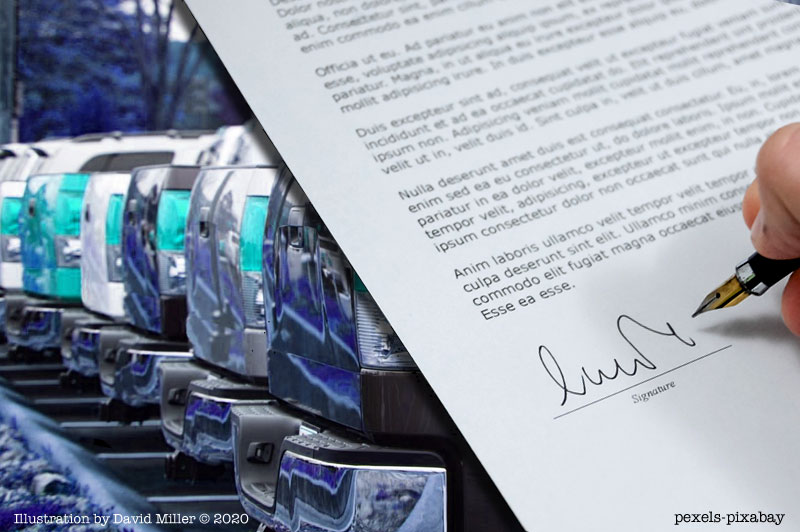
    Loveland, Ohio – Ohio Attorney General Dave Yost has filed a consumer protection lawsuit against a former Loveland used car dealership after receiving about 80 complaints from Ohioans that the owners of the dealership failed to deliver vehicle titles to its customers.

    Consumers who wish to file complaints for deceptive business practices can do so here or by calling 800-282-0515.

    “Innocent people were taken for a ride of lies and deception,” Yost said. “People who do business like that better buckle up, because the next stop is justice.”

    The lawsuit was filed this week by Yost’s Consumer Protection section in Hamilton County Common Pleas Court against Worldwide Auto Sales, doing business as Cincinnati Auto Wholesale and its owners Anthony W. Blevins and Charles W. Reynolds.

    The dealership, which is no longer in operation, was located at 421 Loveland-Madeira Road in Loveland.

    The complaint alleges that dealership owned by Blevins and Reynolds sold vehicles, some of which did not have clear titles to complete ownership. The suit also accuses the defendants of failing to deliver vehicle warranties and misrepresenting details of the sale.

    Yost’s Consumer Protection Section administers the Title Defect Recision (TDR) fund which helps used car buyers resolve title problems. This fund provides remedies to consumers who were not given proper title within 40 days after a vehicle purchase.

    Yost’s office has made payments totaling $226,823.82 to date from the TDR fund to help those with issues who bought used cars from the defendants.

    The lawsuit alleges failure to deliver title, in violation of ORC 4505.181, and engaging in unfair and deceptive acts by failing to deliver titles and auto warranties, in violation of ORC 1345.02.

    The lawsuit seeks to recover the TDR funds paid out to consumers in addition to declaratory relief, injunctive relief and civil penalties.

    Yost is also seeking to prevent the owners from maintaining or obtaining a dealer or sales license until they comply with the Consumer Sales Practices Act and Certificate of Motor Vehicle Title Act and have reimbursed the TDR fund.

  • Consumer advocate wants to know where utility got $60M from in alleged bribery scandal

    Consumer advocate wants to know where utility got $60M from in alleged bribery scandal

    cccc

    Ohio’s official utility watchdog wants to know where Akron-based FirstEnergy got the $60 million that federal prosecutors say fueled the largest bribery scandal in Ohio history.

    The Office of Ohio Consumers’ Counsel on Tuesday evening filed several motions with the Ohio Public Utilities Commission

    • A request for an investigation and a management audit of FirstEnergy.
    • A requirement that the company show that it hadn’t misused consumer money to support the passage of a nuclear bailout. 
    • And that the regulator reopen a probe into how FirstEnergy spent money intended to upgrade the electricity grid.

    In July, the U.S. Attorney’s office charged then-House Speaker, Larry Householder, R-Glenford, in an alleged scheme to funnel FirstEnergy money through 509(c)(4) “dark money” groups in a corrupt effort to elect supportive lawmakers and make Householder speaker. 

    The feds say the goal was to pass House Bill 6, a $1.3 billion bailout that went primarily to two failing nuclear power plants, but also subsidized two failing coal-powered generators. In addition, the money was used to fund a xenophobic campaign to stop a voter repeal of HB 6 and to line the pockets of Householder and his alleged conspirators, federal officials said.

    Also charged were Matt Borges, a lobbyist who was formerly chairman of the Ohio Republican Party, Neil Clark, a lobbyist who owns Grant Street Consulting, Juan Cespedes, also a lobbyist, and Householder’s aide, Jeffrey Longstreth.

    In its filing, the consumers’ counsel said it was asking the utilities commission to do its job.

    “The (Public Utilities Commission of Ohio) has the right and duty to regulate public utilities, for the protection of the public,” it said. “The PUCO should require FirstEnergy to show that money it collected from consumers, including the distribution modernization charge money, was not improperly used regarding House Bill 6 and that it did not violate any utility regulatory laws or PUCO orders regarding House Bill 6.”

    A FirstEnergy spokeswoman said her company will comment through official channels.

    “We are unable to comment on pending litigation, but we will respond to the motion by September 23 as required,” External Communications Manager Jennifer M. Young said in an email.

    In its filings, the consumers’ counsel noted that “Long before the House Bill 6 subsidies, FirstEnergy was authorized to charge its consumers nearly $7 billion for these and other FirstEnergy power plants as part of the transition to power plant competition (and a supposed end to future power plant subsidies) under Ohio’s 1999 electric deregulation law.”

    The documents also focused on $465 million FirstEnergy was allowed to collect from Ohio ratepayers in 2017 and 2018 as a “distribution modernization rider.” In other words, the charge was meant to fund improvements to the lines and poles and other equipment needed to efficiently deliver electricity in Ohio.

    The consumers’ counsel pointed to an independent audit showing that at least some of the money was used for other purposes. For example, it was placed in FirstEnergy’s “Regulated Utility Money Pool,” where its out-of-state utilities could borrow from it.

    The dividends FirstEnergy paid shareholders also took a big jump once the company started collecting more from ratepayers, supposedly to improve the power grid. The money for dividends from FirstEnergy’s Ohio utilities went from $141 million in 2016 to $350 million in 2017 — the first year of the subsidy — to $400 million in 2018.

    The Ohio Supreme Court subsequently declared the charge to be unlawful, but the money wasn’t refunded to ratepayers. 

    After the court ruling, the utilities commission shut down an investigation into the extra charge and how the money was used. But now the consumers’ counsel says it “should be reopened in light of the new information alleged in the U.S. Criminal Complaint about FirstEnergy’s use of extraordinary amounts of money in its efforts for the passage of House Bill 6.”

    After other interested parties have a chance to respond to the consumers’ counsel motions the utilities commission will decide whether to approve them.


    Marty Schladen

    Marty Schladen has been a reporter for decades, working in Indiana, Texas and other places before returning to his native Ohio to work at The Columbus Dispatch in 2017. He’s won state and national journalism awards for investigations into utility regulation, public corruption, the environment, prescription drug spending and other matters.

  • Attorney General DeWine Offers Consumer Tips Following Marriott Starwood Hotels Breach

    Attorney General DeWine Offers Consumer Tips Following Marriott Starwood Hotels Breach

    Affecting as many as 500 million guests

    Columbus, Ohio – Ohio Attorney General Mike DeWine today offered tips for consumers following Marriott’s recent announcement of a data breach affecting as many as 500 million guests who made a reservation at a Starwood brand hotel, which includes Sheraton Hotels & Resorts and Westin Hotels & Resorts, among others.

    Marriott has reported it believes hackers gained unauthorized access to the Starwood guest reservation database in 2014 and that people who made a reservation on or before Sept. 10, 2018, at a Starwood property may have been affected.

    The company has reported that for approximately 327 million guests, the information breached included some combination of name, mailing address, phone number, email address, passport number, Starwood Preferred Guest account information, date of birth, gender, arrival and departure information, reservation date, and communication preference. It also said some payment card numbers and expiration dates may have been affected.

    “Any time there is a breach that has gone undetected for this long and affected this many people, it’s very concerning,” Attorney General DeWine said. “We’re hoping Marriott will step up to help those affected. We’re also encouraging individuals to take steps to protect themselves.”

    Tips for consumers include:

    • Monitor your accounts. Look for suspicious activity. If you find errors, immediately notify your bank or credit card provider.
    • Beware of scams related to the breach. Con artists may pretend to have information about the breach or they may falsely claim to want to help you. Some calls or messages may be scams designed to steal your money or personal information. Don’t give out personal information to those who contact you unexpectedly (even if they say they want to help you) and be wary about clicking on links or downloading attachments in messages.
    • Check your credit report. Monitoring your credit report can help you identify signs of potential identity theft. You are entitled to one free credit report per year from each of the three major credit reporting agencies. Visit www.AnnualCreditReport.com to access those reports. You can pull all three at once, or you can stagger pulling your reports throughout the year.
    • Place an initial fraud alert on your credit report. Contact one of the three major credit reporting agencies — Experian, Equifax, or TransUnion — to place an initial fraud alert, which will stay on your credit report for one year. The alert is free of charge and will make it more difficult for someone to open credit in your name.
    • Consider placing a security freeze on your credit report. A security freeze (or credit freeze) essentially puts a lock on your credit so that most third parties can’t access your report. This helps protect you from unauthorized accounts being opened in your name. Security freezes are permanent until you lift them, and they are now free to place or to remove. Contact each credit reporting agency separately to place a freeze.

    Consumers should keep in mind that even if their information is compromised in a data breach, it doesn’t necessarily mean it will be used by an identity thief to open accounts or commit other fraud. However, consumers should watch for warning signs that their information may have been used fraudulently.

    Signs of possible identity theft may include:

    • Unexpected mail about accounts you did not open.
    • Unexpected collection calls or letters.
    • Another person’s name showing up in your background check or credit report.
    • Credit reporting errors or a lower-than-expected credit score.

    Consumers who want help correcting the effects of identity theft should contact the Ohio Attorney General’s Office at 800-282-0515 or www.OhioProtects.org. Attorney General DeWine created an Identity Theft Unit in 2012 to help victims repair the damage caused by identity theft, such as by clearing fraudulent debt in a victim’s name. The unit has eliminated over $2 million in fraudulent charges since its creation.


      Accounting Plus–Bingaman Accounting and Tax Service, LLC is a tax preparation, payroll and bookkeeping company locally based in Loveland, OH.