Tag: Contraception

  • Ohio Issue 1 and Issue 2 carry massive significance for younger voters

    Ohio Issue 1 and Issue 2 carry massive significance for younger voters

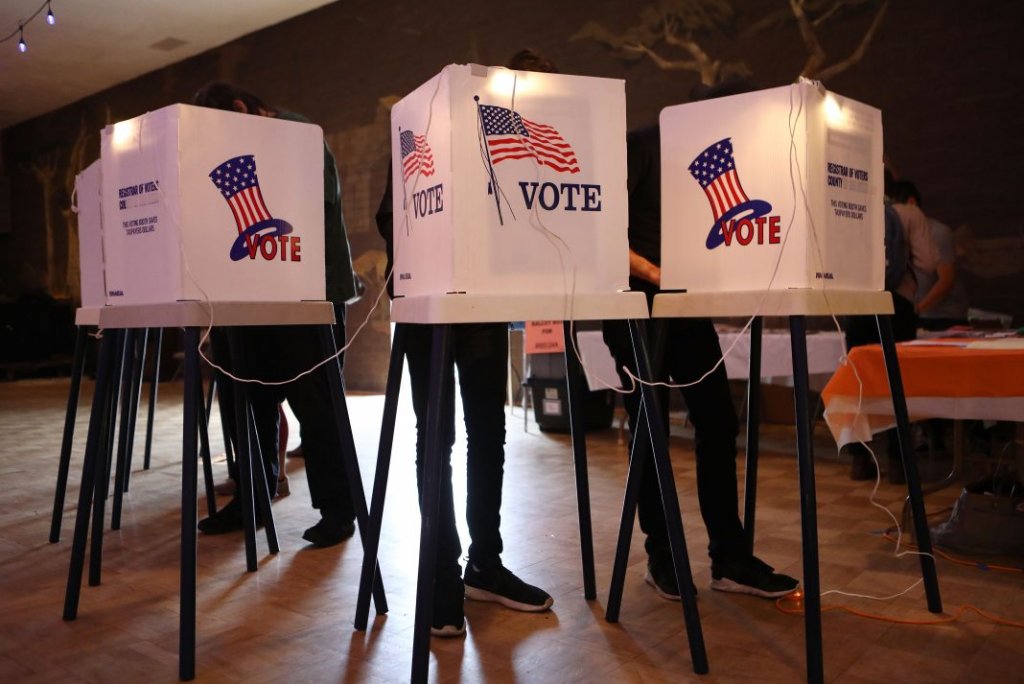
    A college student voter. Getty Images.

    COMMENTARY

    Gen Z and millennial voters could play an important role in deciding fate of reproductive rights amendment and marijuana law

    by David DeWitt

    For Gen Z and millennial Ohio voters, Issue 1 and Issue 2 are critically important. Whether we vote and how we vote will shape what kind of rights and freedoms we have for ourselves and our loved ones well into the future.

    Issue 1 would establish a state constitutional right to “make and carry out one’s own reproductive decisions,” including decisions about abortion, contraception, fertility treatment, miscarriage care, and continuing pregnancy.

    Issue 2 would create a new state law to legalize and regulate recreational marijuana for adults aged 21 and above, including cultivation, processing, sale, purchase, possession, and home growth.

    Tussling over legal access to abortion care and the criminalization of marijuana has shaped American politics for decades, and they stand as two issues where the consequences of law and policy fall heaviest on younger people.

    In an average of births in Ohio between 2019 and 2021, 4.9% were to women under the age of 20, and 2.5% were to women ages 40 and older, while 92.6% were to women ages 20 to 39, according to the March of Dimes.

    Using Ohio Department of Health statistics for 2022, patients 17 and under received 2.5% of abortions performed, and patients over age 40 received 3% of abortions performed, while patients between the ages of 18 and 40 received 94.5% of abortions performed.

    According to the FBI Crime Data Explorer — which does not sort by type of drug involved in state-by-state data — 60% of drug violations in Ohio in 2022 were charged against people between the ages of 20 and 39, a far higher percentage than any other age group. Nationwide, it wasn’t until 2020 that other drugs took over marijuana possession as the No. 1 reason for a drug-related arrest. Nevertheless, more than 315,000 people across America were arrested for marijuana possession in 2020, accounting for 27.5% of drug-related arrests. Also in 2020, Black Americans accounted for about 38.8% of marijuana possession arrests despite representing just 13.6% of the population.

    Younger voters are notoriously unreliable at showing up to vote during non-presidential elections, much less odd-number year elections. Even during presidential elections they show up to the polls at lower rates than other age groups.

    The 2020 presidential election, for instance, had the highest turnout of the 21st century, with 66.8% of citizens 18 years and older voting, but for voters ages 18 to 24, only 51.4% cast ballots, according to U.S. Census Bureau reports. In 2018, Americans ages 18 to 29 made up 11% of voters and 30% of non-voters, according to Pew Research Center. In 2022, they made up 10% of voters and 27% of non-voters.

    This Nov. 7 in Ohio, the stakes are highest for millennial and Gen Z voters. What kind of present and future do we want for ourselves and for Ohio?

    What rights do we want to establish in the constitution, or would we rather leave it up to the politicians to determine our generations’ access to reproductive medical care?

    What kind of freedom do we think adults 21 and over should have from criminal marijuana charges, or should Ohio continue to saddle adults with drug offense records over cannabis possession?

    Voting is our most precious and fundamental right, the spigot from which all of our other rights and freedoms flow. Gen Z and millennial generation voters must participate in these critical decisions, or we are relinquishing significant power over our lives to others who do not bear the same burdens of impact.

    As the writer David Foster Wallace observed, “In reality, there is no such thing as not voting: you either vote by voting, or you vote by staying home and tacitly doubling the value of some Diehard’s vote.”

    Early voting in Ohio has begun. Here is everything voters need to know:

    When do I vote?

    For early, in-person voting, vote at your local county board of elections on these days:

    • Oct. 26-27: 8:00 a.m. – 5:00 p.m.
    • Oct. 30: 7:30 a.m. – 7:30 p.m.
    • Oct. 31: 7:30 a.m. – 8:30 p.m.
    • Nov. 1-3: 7:30 a.m. – 7:30 p.m.
    • Nov. 4: 8:00 a.m. – 4:00 p.m.
    • Nov. 5: 1:00 p.m. – 5:00 p.m.

    Citizens can no longer vote on Nov. 6, the Monday before the election.

    Mailed absentee ballots must be postmarked by Nov. 6.

    On Election Day Nov. 7, vote at your polling location. Find your polling place by clicking or tapping here.

    Polls are open from 6:30 a.m. to 7:30 p.m. on Election Day. If you are in line at the time polls close, stay in line, because you can still cast your ballot.

    If absentee ballots are not returned by mail, they must be received by your board of elections by 7:30 p.m. on Election Day.

    What do I need to vote?

    In order to cast a ballot, voters must have an unexpired Photo ID such as a passport or driver’s license. Previously, voters were able to use non-photo documentation such as bank statements, government checks or utility bills to vote. That is no longer the case under a new law passed in Ohio last year. Student IDs are not considered valid under that law.

    CLICK HERE for more information on ID requirements.

    Here is the list of acceptable types of valid photo ID:

    • Ohio driver’s license
    • State of Ohio ID card
    • Interim ID form issued by the Ohio BMV
    • A US passport
    • A US passport card
    • US military ID card
    • Ohio National Guard ID card
    • US Department of Veterans Affairs ID card

    More information for voters

    To check your voter registration status, find your polling place, view your sample ballot and more, head to the Ohio Secretary of State’s VoteOhio.gov website.


    David DeWitt
    DAVID DEWITT

    OCJ Editor-in-Chief and Columnist David DeWitt has been covering government, politics, and policy in Ohio since 2007, including education, health care, crime and courts, poverty, state and local government, business, labor, energy, environment, and social issues. He has worked for the National Journal, The New York Observer, The Athens NEWS, and Plunderbund.com. He holds a bachelor’s degree from Ohio University’s E.W. Scripps School of Journalism and is a board member of the E.W. Scripps Society of Alumni and Friends. He can be found on Twitter @DC_DeWitt

    MORE FROM AUTHOR

  • Ohio Supreme Court approves abortion rights amendment Ballot Board summary for voters with one tweak

    Ohio Supreme Court approves abortion rights amendment Ballot Board summary for voters with one tweak

    BY: 

    The Ohio Supreme Court has ordered one tweak to summary language approved by Republicans on the Ohio Ballot Board for voters to see in November on a proposed reproductive rights amendment. The split state supreme court rejected using the full text of the proposed amendment and declared that that summary language that voters will see on their ballots is not misleading.

    That summary language was written by the office of Ohio Secretary of State Frank LaRose, a Republican ballot board member who has spoken out against November’s Issue 1 reproductive rights amendment proposal, and campaigned vigorously for August’s Issue 1 proposal to make amendments harder to pass, saying that the Aug. 8 effort was “100% about keeping a radical pro-abortion amendment out of our constitution.” Issue 1 in August was rejected by voters 57% to 43%.

    LaRose said at the Aug. 24 ballot board meeting that he “worked extensively on drafting this” November ballot language.

    Fellow Ohio Ballot Board member, Republican state Sen. Theresa Gavarone, explicitly spoke against the November amendment proposal during that same ballot board meeting where the summary language for voters to see on their ballots was approved by the board in a 3-2 decision.

    The coalition proposing November’s reproductive rights amendment sued to the Ohio Supreme Court claiming that the summary language is deceptive and asking the full amendment text be used instead.

    They argued that the summary makes changes advocates say alter the language in a biased way, such as using “unborn child” rather than the medically accurate term “fetus,” and changing “pregnant patient” to “pregnant woman.” The summary also only lists 1 of 5 protected rights included in the amendment, focusing on abortion and failing to mention contraception, miscarriage care, fertility treatment, and continuing one’s pregnancy.

    Moreover, the abortion rights groups and individuals said the summary actually “inverts” protections that would be given in the amendment by saying the amendment would “always allow an unborn child to be aborted” if a physician determines it necessary. Amendment supporters say the actual language of the amendment “would prohibit such an abortion if the patient objects to it.”

    Finally, the complaint took issue with the summary language saying “citizens of the state of Ohio” would be prohibited from enacting laws regulating abortion in certain ways instead of “the state of Ohio” would be so prohibited.

    The Ohio Supreme Court ruled Tuesday that this last part is the only tweak the Ballot Board must make — they can not use “the citizens of the state of Ohio” instead of “the state of Ohio.”

    ______________

    Proposed amendment: “B. The State shall not, directly or indirectly, burden, penalize, prohibit, interfere with, or discriminate against either: 1. An individual’s voluntary exercise of this right or 2. A person or entity that assists an individual exercising this right, unless the State demonstrates that it is using the least restrictive means to advance the pregnant individual’s health in accordance with widely accepted and evidence-based standards of care. C. As used in this Section: … 2. “State” includes any governmental entity and any political subdivision.”

    The Ohio Ballot Board’s language that needs changed to remove “citizens”: “The proposed amendment would: • Prohibit the citizens of the State of Ohio from directly or indirectly burdening, penalizing, or prohibiting abortion before an unborn child is determined to be viable, unless the State demonstrates that it is using the least restrictive means. • Only allow the citizens of the State of Ohio to prohibit an abortion after an unborn child is determined by a pregnant woman’s treating physician to be viable and only if the physician does not consider the abortion necessary to protect the pregnant woman’s life or health.”

    ______________

    The Ohio Supreme Court wrote they were tasked with determining whether the GOP summary language is “impermissibly argumentative, either in favor of or against the issue.”

    Regarding the Ballot Board summary’s failure to mention 4 of 5 categories included in the reproductive rights amendment proposal, the Republican court majority cited the amendment’s own emphasis on abortion care and said “the omission is not material when considering the amendment as a whole.”

    Regarding the Ohio Ballot Board changing “fetus” to “unborn child” in the summary for voters, the majority said this is not improper persuasion. They did not elucidate an argument but instead quoted precedent from a 2021 court decision: “[I]f ballot language is factually accurate and addresses a subject that is in the proposed amendment itself, it should not be deemed argumentative.”

    The court majority referenced this again later in rejecting that other portions of the summary language are weighted against the proposal.

    ______________

    Proposed Amendment: “A. Every individual has a right to make and carry out one’s own reproductive decisions, including but not limited to decisions on: … 3. continuing one’s own pregnancy; B. The State shall not, directly or indirectly, burden, penalize, prohibit, interfere with, or discriminate against either: 1. An individual’s voluntary exercise of this right, However, abortion may be prohibited after fetal viability. But in no case may such an abortion be prohibited if in the professional judgment of the pregnant patient’s treating physician it is necessary to protect the pregnant patient’s life or health.”

    Ballot Language: “The proposed amendment would: • Prohibit the citizens of the State of Ohio from directly or indirectly burdening, penalizing, or prohibiting abortion before an unborn child is determined to be viable, unless the State demonstrates that it is using the least restrictive means. • Only allow the citizens of the State of Ohio to prohibit an abortion after an unborn child is determined by a pregnant woman’s treating physician to be viable and only if the physician does not consider the abortion necessary to protect the pregnant woman’s life or health; and • Always allow an unborn child to be aborted at any stage of the pregnancy, regardless of viability if, in the treating physician’s determination, the abortion is necessary to protect the pregnant woman’s life or health.”

    ______________

    The court majority wrote, “While (litigants) do not like the way in which the language is phrased, the structure of statements is not improperly argumentative. As stated above, this court will not deem language to be argumentative when it is accurate and addresses a subject in the proposed amendment.”

    Ohio Supreme Court Democrats agreed with ordering the change from “citizens of the state” to “the state,” but panned the approval of the rest of the ballot board’s language.

    Justice Jennifer Brunner, a Democrat, said the Ohio Ballot Board “obfuscated the actual language” of the proposed amendment by “substituting their own language and creating out of whole cloth a veil of deceit and bias in their desire to impose their views on Ohio voters…”

    Democratic Justice Melody Stewart said that the Ohio Ballot Board failed its duty and instead it “crafted partisan ballot language designed to do any number of things, but not simply designed to do its job—that is, inform voters of the substance of the proposed amendment.”

    Democratic Justice Michael Donnelly said of the Ohio Ballot Board that “it’s unfortunate that advocacy seems to have infiltrated a process that is meant to be objective and neutral,” but that he’s confident that voters will be informed about the issue in November.

  • LaRose pushes unfair, inaccurate language for voters on November Ohio reproductive rights amendment

    LaRose pushes unfair, inaccurate language for voters on November Ohio reproductive rights amendment

    COMMENTARY

    by Marilou Johanek

    Play fair or play dirty. Issue 1 showed Ohio voters how state Republicans play when they can’t persuade. Extremists know most Ohioans support the right to abortion within limits. The outright ban on abortion gerrymandered pols seek is wildly unpopular. Convincing rational minds otherwise is pointless. So Ohio’s GOP overlords cheat to win.

    Lawmakers rushed a game-changing ballot amendment to an August election (in violation of state law) to sabotage the abortion rights amendment in November. Ohio Secretary of State Frank LaRose spearheaded the shady maneuver to cancel self-governance by majority vote — just to keep a majority of Ohio voters from having their say on abortion access as a constitutional right.

    The state’s elections chief actively campaigned to end the only enduring recourse of ordinary citizens to circumvent a crooked government because he didn’t want an abortion rights amendment to pass. Sit with that for a minute. The guy who administers the electoral system in Ohio tried to undercut the electorate.

    That’s how amoral LaRose has become as he angles for attention as the greatest MAGA candidate in the U.S. Senate race. Burnishing his anti-abortion bona fides with the pro-Issue 1 crowd, in partnership with a leading anti-abortion lobbyist, was more important than upholding majoritarian democracy. Stumping for minority rule on the hollow pretense of “protecting” the constitution was a new low for LaRose.

    But the integrity-is-overrated elections boss and Republican kingpins in the Statehouse badly mistook the masses for rubes. All the misleading, fear-mongering, coming-after-your-children TV ads (out-of-state money could buy) didn’t fool an overriding majority of ticked-off Ohio voters who showed up in record numbers to beat back an egregious political power grab on Aug. 8.

    The beaten cheerleader for Issue 1 refused to concede the people had spoken (a Trumpian reflex?) and last week rolled out another snow job to derail the abortion rights amendment through ballot language subterfuge. LaRose chairs the Republican-dominated Ohio Ballot Board that voted along party lines Thursday to approve the summary language voters will read on their November ballot about the proposed abortion amendment.

    Under state law, LaRose could have used the full text of the amendment as written, and attorneys for Ohioans United for Reproductive Rights urged him to so “there can be no dispute about whether legal standards have been satisfied, or whether the condensed text misleads, deceives, or defrauds voters.” Instead, LaRose recast the amendment to purposely mislead and deceive.

    His draft is slanted with such routinely deployed anti-abortion propaganda it could have been dictated, word for word, by Ohio Right to Life President Mike Gonidakis. LaRose’s specious interpretation of the proposed amendment to enshrine reproductive freedom in the state constitution is deliberately deceptive with provocative wording to unfairly prejudice outcome.

    The revisions he engineered on an amendment he campaigned against are so beyond the pale of “fair and accurate,” as the secretary ludicrously declared, that stunned amendment backers filed suit Monday with the state supreme court for fairness and accuracy. LaRose omitted actual provisions of the original amendment.

    He deleted a description of reproductive choices an individual should have the “right to make and carry out” such as “decisions on contraception, fertility treatment, continuing one’s own pregnancy, miscarriage care, and abortion.” LaRose’s altered the language stipulating an individual right to “one’s own reproductive decisions” to just “a right to one’s own reproductive medical treatment, including but not limited to abortion.”

    Perhaps most blatant was the secretary of state’s pointed replacement of the medical term “fetus” throughout the amendment with “unborn child,” employing the same weighted rhetoric seeded over decades by the anti-abortion movement. He also curiously substituted “the citizens of the State of Ohio” for amendment prohibitions specifically targeting “The State,” defined in the language “as any governmental entity and political subdivision.”

    So what was originally worded “The State shall not, directly or indirectly, burden, penalize, prohibit, interfere with, or otherwise discriminate against” Ohioans exercising their reproductive rights became “the citizens of the State of Ohio” prohibited for doing the same. Different meaning. Why?

    Original language allows that “abortion may be prohibited after fetal viability” or when the fetus can survive outside the womb — a standard restriction for decades under Roe. With a six-week ban on hold by the courts, abortion is currently legal in Ohio up to 22 weeks of pregnancy, a measured limitation widely acceptable.

    LaRose flipped that reasonable allowance upside-down with inflammatory assertions that the amendment would “always allow an unborn child to be aborted at any stage of pregnancy, regardless of viability, if, in the treating physician’s determination” the applicable life and health exceptions are met. The glaring prejudicial language and selective editing of the fall abortion amendment to intentionally distort an initiative petition so it fails should infuriate every Ohioan — regardless of their beliefs about abortion.

    Frank LaRose, the public servant responsible for conducting free and fair elections in Ohio is playing dirty to win. It’s wrong. But it’s only the beginning. Issue 1 was a preview of the depths Ohio Republicans will go to when they can’t persuade. They cheat.

    The devious battle to deny abortion access in Ohio, despite the wishes of a majority of voters, will be epic.


    Marilou Johanek
    MARILOU JOHANEK

    Marilou Johanek is a veteran Ohio print and broadcast journalist who has covered state and national politics as a longtime newspaper editorial writer and columnist.

    MORE FROM AUTHOR

  • Split ballot board approves reproductive rights amendment summary written by Ohio Sec. of State

    Split ballot board approves reproductive rights amendment summary written by Ohio Sec. of State


    In a 3-2 decision, the Ohio Ballot Board rejected using the full amendment proposal text for voters to see, and the approved summary language leaves out protecting contraception, fertility treatment and miscarriage care

    BY:  Ohio Capital Journal

    In a 3-2 split decision Thursday, the Ohio Ballot Board rejected using the full text of a proposed reproductive rights amendment on the ballot in November, adopting instead summary language written by the Ohio Secretary of State’s Office that was criticized for being incomplete and inaccurate.

    The board’s approval of the language – which is now titled Issue 1 for the November general election – was the next step in the process of voters deciding whether or not the Ohio Constitution will include the right to abortion, as well as contraception, fertility treatment, miscarriage care, and continuing one’s own pregnancy. Those last four items were all left out of the language approved by the ballot board majority.

    The summary language does not change what the actual amendment would state in the constitution, but would be the last representation of the amendment voters read before the casting their approval or rejection.

    The full text of the amendment will be available at boards of elections during the election, but not in the ballot booths with voters. LaRose said posters with the text will be accessible at voting locations.

    In the summary language approved by the board, the medical term “fetus” is changed to “unborn child,” and the amendment’s “decision” language is changed to “medical treatment.”

    The leader of the Ohio Ballot Board, Secretary of State Frank LaRose, said the changes were made by “staff” of the board, though Democratic board member and state Rep. Elliot Forhan said “I would assume that the buck stops with the secretary of state.”

    LaRose during the meeting also said that, “having worked extensively on drafting this, I do believe it’s fair and accurate.”

    LaRose has been vocal in his opposition of the amendment, even saying the effort around the previous Issue 1, which would have changed the threshold to approve a constitutional amendment had it not been roundly defeated, was targeting the abortion rights fight specifically.

    At the beginning of Thursday’s meeting, he prefaced the board’s activity by saying the group was not there to “debate the merits” of the amendment or the marijuana ballot initiative also on the table at the meeting.

     Ohio Ballot Board member, State Sen. Theresa Gavarone, R-Bowling Green, speaks at the Ballot Board meeting Thursday. (Photo by Graham Stokes for Ohio Capital Journal. Republish photo only with original article.) 

    Board member and state Sen. Theresa Gavarone, however, gave a speech in the middle of the meeting harshly criticizing the amendment and calling it “a bridge too far,” even after multiple comments by LaRose about the neutrality with which the board was supposed to conduct their business.

    “This is a dangerous amendment that I’m going to fight tirelessly against,” Gavarone said. “But that’s not why we’re here today.”

    Gavarone also claimed, as anti-abortion groups throughout the state do as well, that the amendment is “an assault on parental rights.” Neither the amendment nor the summary approved by the board mention parental rights of any kind.

    The senator continued her comments during the board meeting, saying the true nature of the amendment “is hidden behind overly broad language,” despite the fact that the board summary took out pieces of the full text.

    The summary passed by the board does not include a list of the rights to “reproductive decisions” spelled out in the ballot measure, including contraception, fertility treatment, continuing one’s own pregnancy, and miscarriage care, all of which would be impacted under the new constitutional amendment.

    A clause in the proposed amendment that says “the state shall not, directly or indirectly, burden, penalize, prohibit, interfere with, or discriminate against” the exercise of the amendment by an individual or an assistant of the individual was reduced to “the citizens of the state of Ohio” in the summary.

    The phrase “the citizens of the state of Ohio” is also used in the clause summarizing a prohibition of abortion that would only happen if a pregnant patient’s physician finds the pregnancy to be viable.

    The phrase “pregnant patient” in the ballot measure was changed to “pregnant woman” in the summary.

     Ohio Ballot Board member, State Sen. Paula Hicks-Hudson, D-Toledo, speaks at the Ballot Board meeting Thursday. (Photo by Graham Stokes for Ohio Capital Journal. Republish photo only with original article.) 

    State Sen. Paula Hicks-Hudson, the other Democratic member of the ballot board, made two motions to change the language of the summary to bring back the full text or certain clauses of the actual amendment text into the approved language.

    “The full text is clear, it’s concise and it’s direct, which is one of the requirements that’s needed for us to present to voters in the state of Ohio,” Hicks-Hudson said.

    Both motions were rejected 3-2, with LaRose, Gavarone and the final board member, Bill Morgan, voting against the motions.

    Morgan didn’t speak during the meeting other than to register his votes, and didn’t specifically comment on the amendment discussion or language afterward.

    “I think it’s what we were supposed to do, what the ballot board does,” Morgan told the OCJ.

    Groups for and against the initiative anticipated potential issues with the board’s decision, with pro-abortion rights group Ohioans United for Reproductive Rights requesting that the ballot language mirror the amendment itself, so voters could see the entire constitutional change when they vote in November.

    Lauren Blauvelt, a member of the coalition, decried the changes made to the language, and said the group is considering a lawsuit to fight back.

    “The entire summary is really propaganda and we are going to talk about all of the reasons why Ohio voters should just be able to see the language for what it is,” Blauvelt said after the board meeting.

    Anti-abortion groups argued against using the full text, saying it was unnecessary, and Ohio Right to Life president Mike Gonidakis pushed back on calls for a lawsuit against the summary.

    “Any litigation filed on this is going to be thrown out by the Ohio Supreme Court because the statutory responsibility of the ballot board is to provide a fair and accurate representation. That’s what the law requires, and that’s what they did today,” Gonidakis said.

    Gonidakis said he did not work with anyone on the ballot board on the summary language, but he wished the language was “stronger.”

     Mike Gonidakis, president of Ohio Right to Life, talks to the press after the Ohio Ballot Board meeting Thursday. (Photo by Graham Stokes for Ohio Capital Journal. Republish photo only with original article.) 

    “Look, at the end of the day, people are going to make up their minds before they go in the ballot box anyways, and they’re not going to go in and then try to figure out what they want to do by reading something on a screen,” he said.

    The proposed amendment has gone through a rollercoaster of activity since the Ohio Ballot Board approved the measure in March as compliant with the regulations for a constitutional amendment proposal, allowing a petition campaign that resulted in nearly 500,000 supporting signatures from Ohio voters.

    Amid all the necessary hoops through which the abortion rights campaign has jumped, abortion rights groups have also had to battle against lawsuits attempting to block the amendment from voters. Another lawsuit alleged the Ohio Ballot Board hadn’t taken enough time or consideration before certifying that the amendment was compliant.

    The Ohio Supreme Court rejected both lawsuits, clearing the way for voters to see the issue in the Nov. 7 general election.


    Susan Tebben
    SUSAN TEBBEN

    Susan Tebben is an award-winning journalist with a decade of experience covering Ohio news, including courts and crime, Appalachian social issues, government, education, diversity and culture. She has worked for The Newark Advocate, The Glasgow (KY) Daily Times, The Athens Messenger, and WOUB Public Media. She has also had work featured on National Public Radio.

    MORE FROM AUTHOR

  • Ohio abortion rights supporters submit signatures, gunning for November ballot

    Ohio abortion rights supporters submit signatures, gunning for November ballot

    BY:  Ohio Capital Journal

    Two trucks loaded with more than 400 boxes rolled into the Ohio Secretary of State’s Office Wednesday. In those boxes were 710,000 signatures abortions rights advocates say prove they have the support they need to bring a ballot measure asking voters to put abortion care in the Ohio Constitution.

    “Those (402) boxes are filled with hope, and love, and freedom of bodily autonomy … of being able to say ‘we decide what happens to us,’” said Kellie Copeland, executive director of Pro-Choice Ohio.

    In the last 12 weeks, advocates from groups including Ohioans for Reproductive Freedom and Ohio Physicians for Reproductive Rights have gone to farmer’s markets, held drive-through signing events, and reached across the state to collect the nearly 414,000 signatures required of them to place a measure on an Ohio voting ballot. Signature-gatherers collect far more than that minimum in an attempt to make sure enough signatures are correct and valid to meet the threshold.

     COLUMBUS, Ohio — JULY 05: Field staffer for Ohioans United for Reproductive Rights, Carlos Ortiz unloads the first of 402 boxes of petitions with over 700,000 signatures being delivered to Ohio Secretary of State Frank LaRose, July 5, 2023, at the loading dock of the Office of the Ohio Secretary of State, downtown Columbus, Ohio. (Photo by Graham Stokes for Ohio Capital Journal. Republish photo only with original article.) 

    Bill Wood was one of many collecting signatures, and he said he was overwhelmed by the support he saw the past three months.

    “What amazed me is that even late in this process, there were people who were coming up to us and saying, ‘I have been looking forward to signing this, thank you for being here,’” Wood said. “The number of thank-you’s and compliments and wonderful support that we got from people at every stage was amazing.”

    As part of the Westerville Progressive Alliance, he said he has participated in many signature drives and campaigns over the years.

    “I will tell you when we brought this to our people, we have never seen an outpouring of interest and commitment like we’ve seen this year,” Wood said.

    He said the Westerville group alone collected 9,000 signatures.

    The measure would allow abortion in the state via an amendment to the Ohio Constitution, that states “every individual has a right to make and carry out one’s own reproductive decisions, including but not limited to decisions on contraception, fertility treatment, continuing one’s own pregnancy, miscarriage care and abortion.”

    “Ultimately, this is about giving my patients, our patients, our friends, our families, their power back,” said Dr. Marcela Azevedo, co-founder of OPRR.

    If approved, the amendment would bar the state from doing anything to “directly or indirectly burden, penalize, prohibit, interfere with, or discriminate against either an individual’s voluntary exercise of this right or a person or entity that assists an individual exercising this right, unless the state demonstrates that it is using the least restrictive means to advance the individual’s health in accordance with widely accepted and evidence-based standards of care,” according to the ballot language certified by the Ohio Ballot Board.

    Abortion can, however, be prohibited “after fetal viability,” defined in the proposed amendment as “the point in pregnancy when, in the professional judgment of the pregnant patient’s treating physician, the fetus has a significant likelihood of survival outside the uterus with reasonable measures.”

    Pro-abortion rights groups say signatures were collected in every Ohio county, something that may come in handy with another constitutional amendment, Issue 1, on the ballot in August that would require 60% of Ohio voters to approve of a measure, and require signatures to come from all 88 counties, rather than just the 44 of 88 required in current law.

    Now, the Secretary of State’s Office will have until July 25 to verify the signatures and determine whether the measure has enough valid Ohio voter support to move forward.

    If the number falls short of the required amount, advocates have 10 days to file a supplementary petition with more signatures, which must be from registered Ohio voters who didn’t sign the previous petition.

    The groups working to get the measure on the ballot estimate the campaign to do it may cost approximately $35 million.

    A spokesperson for Secretary of State Frank LaRose did not respond to requests for comment.


    Susan Tebben
    SUSAN TEBBEN

    Susan Tebben is an award-winning journalist with a decade of experience covering Ohio news, including courts and crime, Appalachian social issues, government, education, diversity and culture. She has worked for The Newark Advocate, The Glasgow (KY) Daily Times, The Athens Messenger, and WOUB Public Media. She has also had work featured on National Public Radio.

    MORE FROM AUTHOR

  • Ohio abortion rights groups merge and set sights for amendment on November ballot

    Ohio abortion rights groups merge and set sights for amendment on November ballot

    Getty Image

    BY: SUSAN TEBBEN – Ohio Capital Journal

    Two groups who had already committed to separate efforts to get reproductive rights in the hands of Ohio voters have now merged and set an end goal: abortion access on the November ballot.

    Ohioans for Reproductive Freedom and Ohio Physicians for Reproductive Rights announced Thursday that they are joining together to “file language with the Ohio Attorney General to place a citizen-initiated constitutional amendment to restore and protect reproductive rights and abortion access on the November 2023 statewide general election ballot.”

    “This grassroots initiative – by and for the people of Ohio – is foundational to ensuring access to abortion and the right to bodily autonomy, not only for ourselves, but for generations to come,” said Kellie Copeland, executive director of Pro-Choice Ohio and member of Ohioans for Reproductive Freedom, said in the announcement.

    The groups said the constitutional amendment will look similar to a Michigan amendment which voters approved in November 2022.

    After the amendment is drafted and reviewed by the state Attorney General and Ohio Ballot Board, the groups plan to circulate petitions to place the issue on the ballot.

    Rumblings of a constitutional amendment have been floating for months now, spurred on by the Dobbs v. Jackson Women’s Health Organization case, in which the U.S. Supreme Court overturned decades old nationwide rights to abortion nationwide in Roe v. Wade.

    Placing the measure on the 2023 ballot was called a “moral imperative” which “offers the best prospects for success,” according to Dr. Lauren Beene, executive director of the OPRR.

    “The lives and health of Ohioans have been at risk since Roe was overturned,” Beene said in a statement. “That is why we must seize the earliest possible opportunity to ensure that doctors and patients, rather than politicians and the government, are empowered to make decisions about pregnancy, contraception and abortion.”

    The move comes as some abortion rights advocates are ramping up legal efforts to protect patients and physicians seeking abortion care or advice, along with a battle involving Ohio’s Attorney General Dave Yost to keep abortion pills from being distributed through the mail or at national pharmacies, and a new study that showed abortion clinics find it more and more difficult to comply with laws on the subject because of bureaucratic discretion.

    The ballot measure might have another issue if in-fighting within the state’s Republican caucus continues. One side of the caucus is promoting the controversial legislation that would raise the threshold to approve constitutional amendments, while House Speaker Jason Stephens didn’t list it as one of the priority bills he and his faction unveiled on Wednesday.

    Republicans on both sides of the aisle have expressed interest in legislative prohibitions to abortion since the downfall of Roe, and both sides are awaiting the resolution of a court case under which a six-week abortion ban is paused indefinitely as appeals go through.


  • OSU study: Contraception used to control when families have children, not prevent them

    OSU study: Contraception used to control when families have children, not prevent them

    Getty Image

    BY: SUSAN TEBBEN – Ohio Capital Journal

    In the U.S., contraception is being used for pregnancy prevention along with other medical conditions. Meanwhile, an Ohio State University study showed other countries are using birth control not as a way of avoiding having children, but as a way of inserting control into the family planning process.

    The report, which was published in a recent edition of Studies in Family Planning, pored over data going back 50 years in health surveys done in Africa, Latin America, the Caribbean and Asia.

    Analysis of the surveys showed 10% to 15% of the increase in contraception use came from women who wanted to have children in the next two years, according to the study’s lead author, Mobolaji Ibitoye, a postdoctoral student with Ohio State’s Institute for Population Research.

    The evidence refuted a so-called “contraception revolution” in those counties, which argued that contraception was being used for the sole purpose of reducing the amount of children parents are having.

    “The revolution is that women can now carry through on what they want because of modern contraceptives,” said study co-author and OSU sociology professor John Casterline, in a release announcing the study.

    The survey didn’t touch on other medical uses for oral contraception. Women’s health advocates are concerned that future abortion bans, including those in Ohio, may impact contraception since the U.S. Supreme Court overturned Roe v. Wade. 

    Contraception can be used to decrease the risk of ovarian cysts and pelvic inflammatory disease, according to the Cleveland ClinicMedical studies have also shown certain contraceptions can decrease the risk of endometrial cancer, ovarian, ectopic pregnancy, a pregnancy in which the egg implants outside of the uterus, making it inviable.

    Follow OCJ Reporter Susan Tebben on Twitter.