Loveland, Ohio – Children face special risks from air pollution because their lungs are growing and because they are so active and breathe in a great deal of air according to the American Lung Association.
“Just like the arms and legs, the largest portion of a child’s lungs will grow long after he or she is born. Eighty percent of their tiny air sacs develop after birth. Those sacs, called the alveoli, are where the life-sustaining transfer of oxygen to the blood takes place. The lungs and their alveoli aren’t fully grown until children become adults. In addition, the body’s defenses that help adults fight off infections are still developing in young bodies. Children have more respiratory infections than adults, which also seems to increase their susceptibility to air pollution. Furthermore, children don’t behave like adults, and their behavior also affects their vulnerability. They are outside for longer periods and are usually more active when outdoors. Consequently, they inhale more polluted outdoor air than adults typically do.”
Air Pollution Affects Children Before They Are Born
Several studies have found air pollution linked to harm to children while they are still in the womb. A large study in California found that higher particle pollution levels increased the risk of preterm birth. Pregnant women exposed to even low levels of particle pollution had higher risk for preterm birth in a Boston study. Preterm births occurred more frequently when particle pollution spiked, as an Australian study found, even when they controlled for other risk factors.
Air Pollution Limits Lung Growth in Children
The Southern California Children’s Health study looked at the long-term effects of air pollution on children and teenagers. Tracking 1,759 children who were between ages 10 and 18 from 1993 to 2001, researchers found that those who grew up in more polluted areas face the increased risk of having reduced lung growth, which may never recover to their full capacity. The average drop in lung function was similar to the impact of growing up in a home with parents who smoked.
Community health studies are pointing to less obvious, but serious effects from year-round exposure to ozone, especially for children. Scientists followed 500 Yale University students and determined that living just four years in a region with high levels of ozone and related co-pollutants was associated with diminished lung function and frequent reports of respiratory symptoms. Another earlier report from the Children’s Health study of 3,300 schoolchildren in Southern California found reduced lung function in girls with asthma and boys who spent more time outdoors in areas with high levels of ozone.
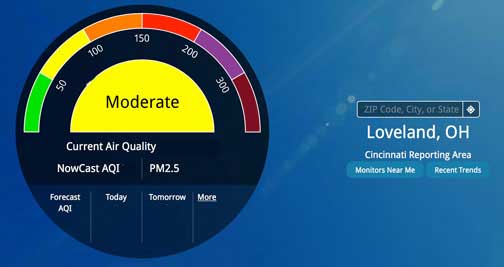
Loveland, Ohio – With sunny skies and temperatures expected to be in the mid-90s Tuesday through Thursday and likely associated dangerous levels of ground-level ozone (Smog), we’ve once again loaded our Ozone Alert widget to our homepage.
Loveland Magazine will continue providing our readers with information when air pollution alerts are issued for our area and this widget on our home page will allow readers the real-time information they need.
When alerts are issued for our local area we will provide tips you can use to do your share to avoid adding to the dangerous levels of Ozone both at home and at work.
Click below to give the widget a spin today:
Active hildren and the elderly are especially affected by high levels of Ozone that causes respiratory harm.
Ozone worsens asthma and COPD, and can cause early death from both short-term and long-term exposure.
Ozone can cause cardiovascular harm (e.g., heart attacks, strokes, heart disease, congestive heart failure) and may cause harm to the central nervous system. It may also cause reproductive and developmental harm.
Because children are so active during the Summer months and their lungs are still developing they are at particular risk when Ozone levels are elevated.
It may be hard to imagine that pollution could be invisible, but ozone begins that way. As ozone concentrates and mixes with other pollutants, we often call it by its older, more common name—smog. It is currently one of the least well-controlled pollutants in the United States.1 And it is also one of the most dangerous.
Scientists have studied the effects of ozone on health for decades. Hundreds of studies have confirmed that ozone harms people at levels currently found in the United States. In the last decade, we have learned that it can also be deadly.https://www.youtube.com/embed/7c2w1eATkro?rel=0
Breathing in ozone is like getting a sunburn on your lungs.
What Is Ozone?
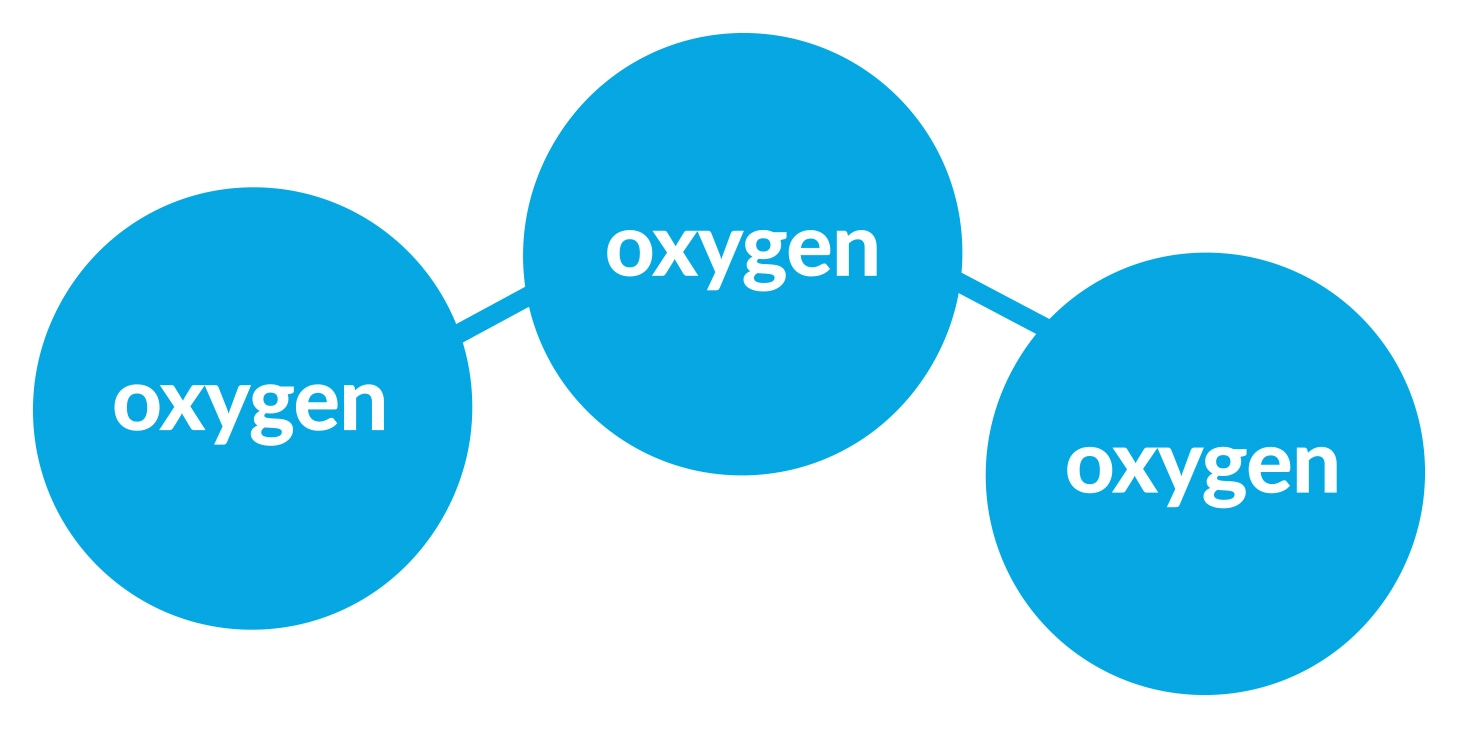
Ozone (O3) is a gas molecule composed of three oxygen atoms. Often called “smog,” ozone is harmful to breathe. Ozone aggressively attacks lung tissue by reacting chemically with it. When ozone is present, there are other harmful pollutants created by the same processes that make ozone.
The ozone layer found high in the upper atmosphere (the stratosphere) shields us from much of the sun’s ultraviolet radiation. However, ozone air pollution at ground level where we can breathe it (in the troposphere) causes serious health problems.
Where Does Ozone Come From?
Ozone develops in the atmosphere from gases that come out of tailpipes, smokestacks and many other sources. When these gases come in contact with sunlight, they react and form ozone smog.
The essential raw ingredients for ozone are nitrogen oxides (NOx) and volatile organic compounds (VOCs). They are produced primarily when fossil fuels like gasoline, oil or coal are burned or when some chemicals, like solvents, evaporate. NOx is emitted from power plants, motor vehicles and other sources of high-heat combustion. VOCs are emitted from motor vehicles, chemical plants, refineries, factories, gas stations, paint and other sources.2
If the ingredients are present under the right conditions, they react to form ozone. Sunlight is key. And because the reaction takes place in the atmosphere, the ozone often shows up downwind of the sources of the original gases. In addition, winds can carry ozone far from where it formed, even internationally across borders and across the oceans.
You may have wondered why “ozone action day” warnings are sometimes followed by recommendations to avoid activities such as mowing your lawn or driving your car. Lawn mower exhaust and gasoline vapors contain nitrogen oxides (NOx) and volatile organic compounds (VOCs) that are key to the formation of ozone in the presence of heat and sunlight.
Who Is at Risk from Breathing Ozone?
Anyone who spends time outdoors where ozone pollution levels are high may be at risk. Four groups of people are especially vulnerable to the effects of breathing ozone:
children and teens;3
anyone 65 and older;4
people with existing lung diseases, such as asthma and chronic obstructive pulmonary disease (also known as COPD, which includes emphysema and chronic bronchitis5; and
people who work or exercise outdoors.6
In addition, some evidence suggests that other groups—including women, people who suffer from obesity and people with low incomes—may also face higher risk from ozone.7 More research is needed to confirm these findings.
The impact on your health can depend on many factors, however. For example, the risks are greater if ozone levels are higher, if you are breathing faster because you’re working or exercising outdoors or if you spend more time outdoors.
Again, the impact of even short-term exposure to ozone pollution on healthy adults was demonstrated in the Galveston lifeguard study. In addition to the harmful effects of particle pollution, lifeguards had greater obstruction of their airways at the end of the day when ozone levels were high.8
How Ozone Pollution Harms Your Health
Premature death. Breathing ozone can shorten your life. Strong evidence exists of the deadly impact of ozone from large studies conducted in cities across the U.S., in Europe and in Asia. Researchers repeatedly found that the risk of premature death increased with higher levels of ozone.9 Newer research has confirmed that ozone increased the risk of premature death even when other pollutants also are present.10
Immediate breathing problems. Many areas in the United States produce enough ozone during the summer months to cause health problems that can be felt right away. Immediate problems—in addition to increased risk of premature death—include:
shortness of breath, wheezing and coughing;
asthma attacks;
increased risk of respiratory infections;
increased susceptibility to pulmonary inflammation; and
increased need for people with lung diseases, like asthma or chronic obstructive pulmonary disease (COPD), to receive medical treatment and to go to the hospital.3,4,5
Long-term exposure risks. New studies warn of serious effects from breathing ozone over longer periods. With more long-term data, scientists are finding that long-term exposure—that is, for periods longer than eight hours, including days, months or years—may increase the risk of early death.
Examining the records from a long-term national database, researchers found a higher risk of death from respiratory diseases associated with increases in ozone.14
New York researchers looking at hospital records for children’s asthma found that the risk of admission to hospitals for asthma increased with chronic exposure to ozone. Younger children and children from low-income families were more likely than other children to need hospital admissions even during the same time periods.15
California researchers analyzing data from their long-term Southern California Children’s Health Study found that some children with certain genes were more likely to develop asthma as adolescents in response to the variations in ozone levels in their communities.16
Studies link lower birth weight and decreased lung function in newborns to ozone levels in their community.17 This research provides increasing evidence that ozone may harm newborns.
Breathing other pollutants in the air may make your lungs more responsive to ozone—and breathing ozone may increase your body’s response to other pollutants. For example, research warns that breathing sulfur dioxide and nitrogen oxide—two pollutants common in the eastern U.S.—can make the lungs react more strongly than just breathing ozone alone. Breathing ozone may also increase the response to allergens in people with allergies. A large study published in 2009 found that children were more likely to suffer from hay fever and respiratory allergies when ozone and PM2.5 levels were high.18
Research shows lower levels of ozone cause harm. EPA released their latest complete review of the current research on ozone pollution in February 2013.19 EPA had engaged a panel of expert scientists, the Clean Air Scientific Advisory Committee, to help them assess the evidence that was brought together by EPA; in particular, they examined research published between 2006 and 2012. The experts on the committee and EPA concluded that ozone pollution posed multiple, serious threats to health. Their findings are highlighted in the box below. Based on that review, EPA strengthened the official limit on ozone, called the National Ambient Air Quality Standard, in 2015.
However, new research provides evidence that ozone can cause serious harm even at much lower levels. In a 2017 scientific paper, researchers provided further evidence in a nationwide study that older adults faced a higher risk of premature death even when levels of ozone pollution remained well below the current national standard.20
EPA Concludes Ozone Pollution Poses Serious Health Threats (2013)
Along with diseases known to increase risk, the CDC lists 12 other conditions that “might” increase the risk of people who have them. These include other massively common conditions like hypertension, liver disease, pregnancy, smoking and others.
The underlying health conditions that lay a path for severe COVID-19 complications are widespread in Ohio, potentially affecting as much as half the population, according to experts, state data and government research.
Take obesity: Ohio Department of Health 2017 survey data estimates that 34% of Ohioans are obese. Similarly, more than 74,000 Ohioans were diagnosed with cancer that same year.
Dr. Peter Pronovost (Photo by University Hospitals)
“The statistics are about 60% of the public has one or more chronic diseases,” said Dr. Peter Pronovost, a University Hospitals physician. “Four in 10 have two or more diseases.”
The ubiquity of chronic disease in Ohio complicates any policy response when there’s no easy-to-draw line between people at low-risk for COVID-19 and those at higher risk levels.
It also illuminates the reality of a “herd immunity” strategy, as reportedlyoffered by an influential adviser to President Donald Trump.This would entail allowing the virus to run its course through the population unimpeded, purportedly allowing healthier people to develop antibodies at a large enough volume to break down chains of transmission.
The CDC listseight diseases known to increase risk of severe illness from COVID-19. The list, coupled with data from theOhio Annual Cancer Report, Behavioral Risk Factor Surveillance Systemannual report from 2018, and other state and federal sources, shows how deep chronic disease runs in the Buckeye state.
Cancer: 74,000 cases diagnosed in 2017
Chronic kidney disease: About 15% of U.S. adults have chronic kidney disease, per the CDC
COPD (chronic obstructive pulmonary disease): 8.3% of Ohio adults have COPD
Immunocompromised state from solid organ transplant:1,916 Ohioans received organ transplants in 2019
Obesity: 34% of Ohio adults are obese. An additional 34% are overweight
Dr. Nirav Vakharia (Photo by the Cleveland Clinic)
“When we go beyond age as a risk factor … if we’re just thinking about these chronic diseases, they’re so prevalent, it’s hard to isolate a young, healthy cohort,” said Dr. Nirav Vakharia, a physician from the Cleveland Clinic.
Health care groups in Ohio are undertaking different efforts to help residents with some of these conditions to stay at home.
LifeCare Alliance, an in-home health care agency, has seen a spike in the number of meals it has delivered to the homes of its diabetic patients since the pandemic began.
“If you have diabetes, the chances of you having a mild case of the coronavirus is much less — you’re gonna have a harder case, because your immune system just can’t fight it off,” said CEO Charles Gehring. “Patients have been scared to death by coronavirus.”
Similarly, Pronovost, the chief clinical transformation officer with University Hospitals, said the health care network recently accelerated its efforts to provide proactive care for people with chronic diseases.
He said staff is reaching out to patients to ensure they’re properly managing and controlling their diseases, like keeping insulin or blood pressure at healthy levels.
“The idea is we want to make sure chronic disease people are doing all they can to avoid being hospitalized and avoid needing to go to the [emergency room],” he said.
Early data shows the network reduced hospital admissions of certain chronic disease patients by 28%, and emergency visits by 79%, he said.
“The idea is we want to make sure chronic disease people are doing all they can to avoid being hospitalized and avoid needing to go to the [emergency room],” he said.
Along with diseases known to increase risk, the CDC lists 12 conditions that “might” increase the risk of people who have them. These include other massively common conditions like hypertension, liver disease, pregnancy, smoking and others.
As of Wednesday, COVID-19 has killed 4,176 Ohioans. The virus has infected nearly 120,000 state residents and put more than 13,500 in the hospital.
Jake Zuckerman is a statehouse reporter. He spent three years chronicling the West Virginia Legislature for The Charleston Gazette-Mail after covering cops and courts for The Northern Virginia Daily.


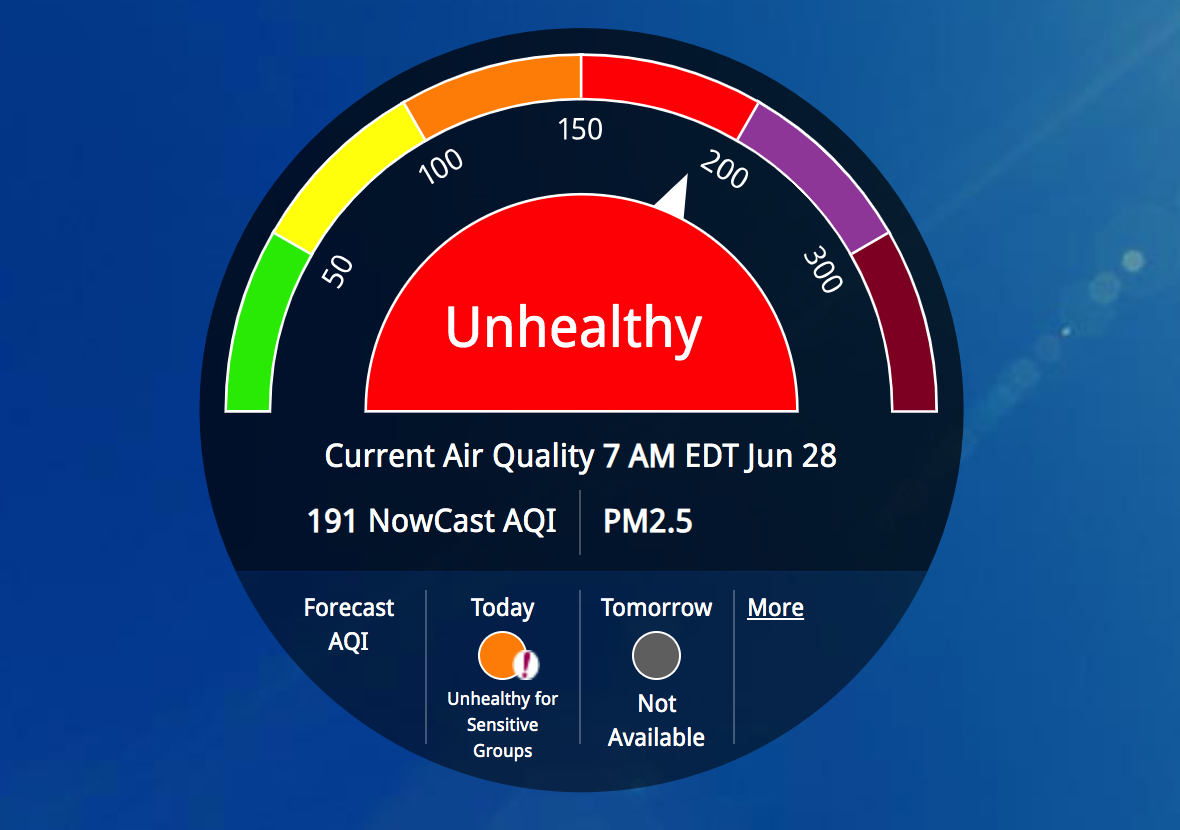
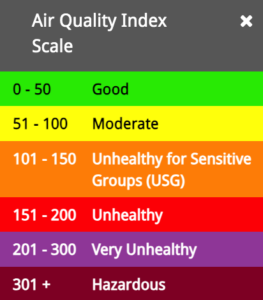 The Air Quality Index for Loveland, Ohio was in the “Unhealthy” range at 8 AM this morning and approaching the “Very Unhealthy category.
 Continuing reading from the American Lung Association…