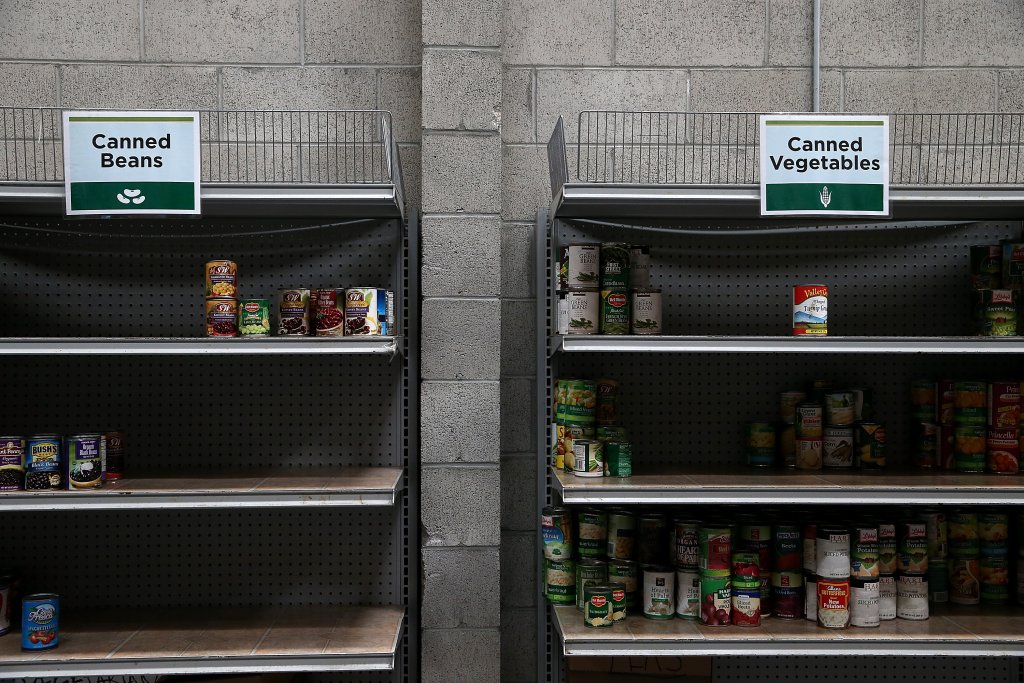
For millions of Ohioans, world events are making it harder to fill their pantries and refrigerators, an official who helps oversee the state’s food banks said on Wednesday. Those pressures will only increase pantries’ need for state assistance, she said.
The coronavirus pandemic had already put pressure on the state’s food banks as demand increased and supply-chain disruptions made it harder and more expensive to get food. Now the Russian invasion of Ukraine is poised to further squeeze global flows of wheat and fuel, exacerbating those trends, said Lisa Hamler-Fugitt, executive director of the Ohio Association of Foodbanks.
Further complicating the picture is that the new scarcity of food is slashing commercial contributions to organizations that supply the neediest Ohioans, making them desperate for help.
“I would say that is an understatement,” Lisa Hamler-Fugitt said. “Overall, donations are down substantially. Before we went into the pandemic, private-sector donations from food manufacturers, wholesalers, retailers and local food and fund drives would range from 45% to 50 % of all we had to distribute. Since the pandemic that has declined dramatically.”
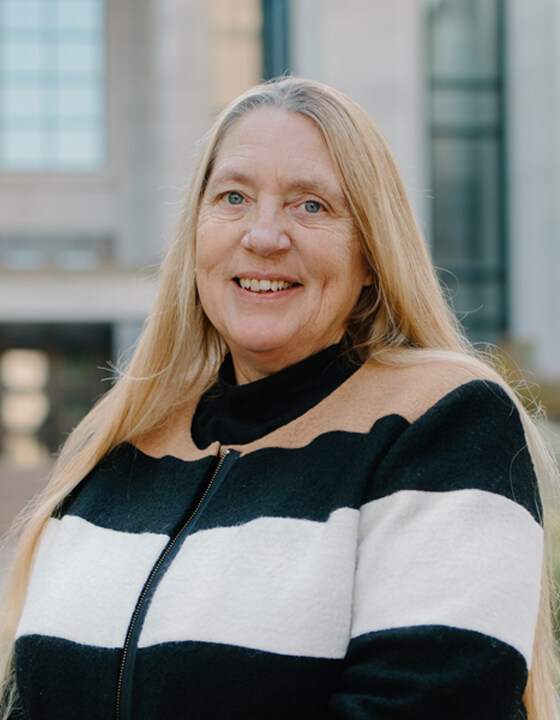
Lisa Hamler-Fugitt
Now the portion donated by commercial suppliers is closer to 33% at the same time that costs to purchase and transport food are growing. Consider:
Eggs that cost food banks 40 cents a pound in 2019 now cost 94 cents, a 135% increase.
Ground beef that cost $2.14 a pound in 2019 costs $2.84, a 33% increase.
Pasta has gone from 42 cents a pound in 2019 to 70 cents now, a 66% hike.
Also, a $2,000 per-child tax credit expired in December, plunging an estimated 10 million American children and 280,000 in Ohio back into poverty. Hamler-Fugitt said that of families receiving the credit, 59% said food was their No. 1 expense, so its expiration is increasing demand at Ohio food banks even as costs go up.
“Families that were standing in grocery store lines are back in our food pantries,” she said.
Federal data appear to support that claim. The Census Bureau’s Household Pulse Survey estimated that about a month after the credit expired, 339,000 Ohio families with children sometimes or often didn’t have enough to eat in the past seven days.
Compare that to the period from Sept. 15-27 when the credit was in full force. Then an estimated 264,000 Ohio families with children sometimes or often didn’t have enough to eat, the survey said.
If those estimates are accurate, that means food insecurity for families with children has leapt 28% since the expiration of the child tax credit.
In addition to all the other inflationary pressures on food, Hamler-Fugitt said she suspected another: price gouging.
“I hear from the farmers saying, ‘We’re not making any more money.’ How is that possible?” she said.
In his State of the Union Address Tuesday, President Joe Biden echoed that suspicion. He said concentration in the meatpacking industry is alarmingly high.
“Guess what, you got four basic meat packing facilities,” he said. “That’s it. You play with them or you don’t get to play at all. And you pay a hell of a lot more. A hell of a lot more because there’s only four.”
The White House estimates that those four companies — JBS, Cargill, National Beef Packing and Tyson Foods — control 85% of beef packing in the United States, 54% of poultry and 70% of pork. The administration says it’s making an effort to promote competition in those sectors and across the economy.
But even if those efforts are eventually successful, Hamler-Fugitt said Ohio food banks need help more quickly. She praised the support they’ve gotten from Gov. Mike DeWine throughout the pandemic, but said the food centers need $183 million for supplies, operating costs and to upgrade their infrastructure.
Ohio has more than $600 million in unexpended funds from the American Rescue Act and about $500 million more is on the way, Hamler-Fugitt said. A DeWine spokesman didn’t immediately respond to a request for comment.
A year ago Wednesday, the coronavirus pandemic officially started in Ohio when the decision was made to cancel The Arnold sports festival.
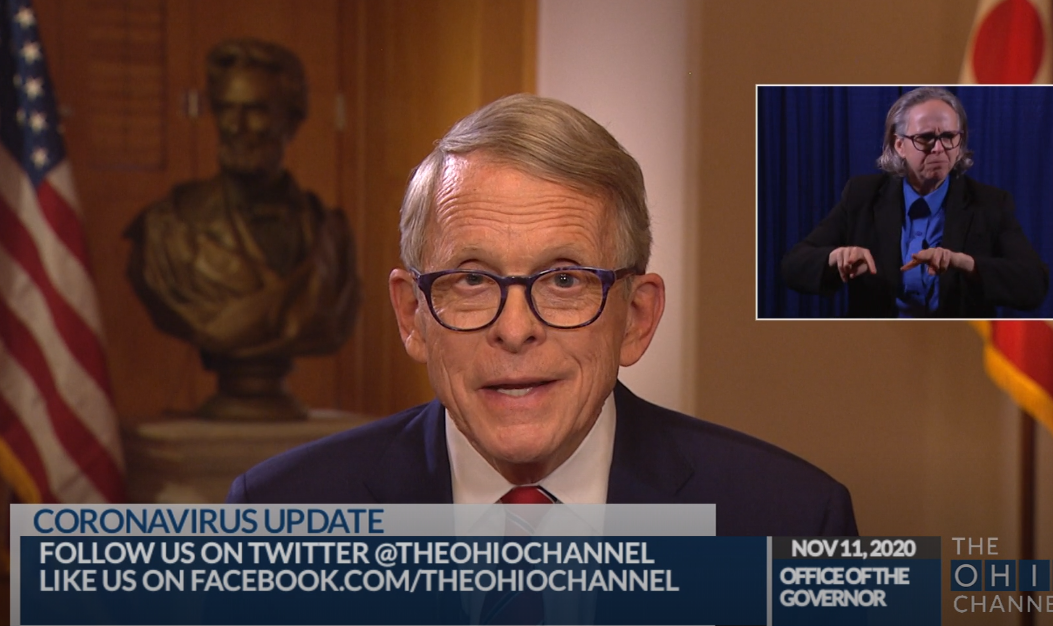
On Thursday, Gov. Mike DeWine gave a primetime address to tell Ohioans that a return to normal is in sight — so long as they don’t become complacent.
“No marathoner pulls out on purpose at the 25th mile marker,” DeWine said.
The governor made some news during the speech. He announced that he would lift all remaining health orders once the number of coronavirus cases drops to 50 per 100,000 Ohioans.
That might seem distant, with Wednesday’s rate standing at 179 per 100,000. But DeWine noted that the rate has been falling rapidly, from 445 on Feb. 23 and 731 on Dec. 3.
“Ohio is on the right path to get us to 50,” DeWine said.
However, such drops can’t be counted on to continue. Federal health officials reported this week that daily numbers appear to be hitting a plateau at levels that might seem low after the past several months, but were perceived as quite high last summer.
Also concerning is that at least six worrisome variants of the virus are struggling to gain a foothold. Some are more transmissible, others more lethal and still others less susceptible to the three vaccines that have been approved in the United States.
DeWine’s unusual primetime speech was to mark the one-year anniversary of Ohio’s fight against the disease.
“None of us then fully understood the battle ahead,” he said. “This has been a tough year. Many of you have lost a parent. grandparent, sibling, spouse. Some of you have even lost a child. Some of you have lost your job. Some of you have lost your business.”
It also was to announce the metrics by which he’ll decide to lift remaining health orders.
But it also seemed a repudiation of two other Republican governors’ announcements in recent days that they were lifting all of their orders — including ones requiring mask wearing in indoor public spaces. Texas Gov. Greg Abbott and Mississippi Gov. Tate Reeves both made such announcements on Tuesday, prompting widespread condemnation from public health experts and from President Joe Biden.
Anthony Fauci, the leading communicable disease expert in the country, said the daily number of new cases needs to be one-sixth of what it is now before ending mask mandates should be considered.
DeWine didn’t mention other states, but he made it clear that Ohio’s mask mandate would remain in place for the time being. As he touted the rapidly growing number of vaccines coming into Ohio, he said, “We have one battle-tested tool that has worked so well and that is the mask.”
The governor also appealed to Ohioans’ community spirit — a spirit that critics have said is lacking in Abbott and Reeves’ approach to the pandemic.
“It’s been a difficult year,” DeWine said. “But we did what Ohioans always do. We rallied together. We sacrificed. We showed the world our Ohio grit. Our communities have come together.”
Loveland, Ohio – The classic A Midsummer Night’s Dream is directed by Jacqlyn Schott and produced by Jill Gornet, and Micheal Harris-Kiser.
Acts 1 through 5 are now available for listening and watching.
Theater is BACK!
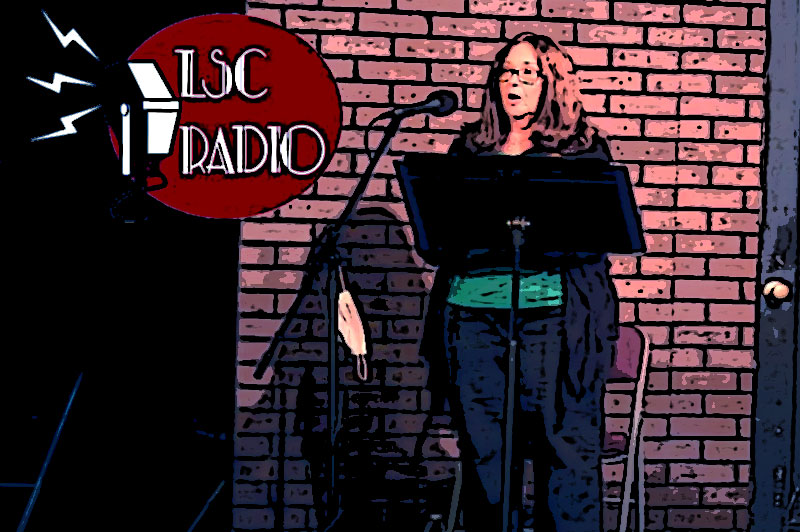
While the Coronavirus pandemic has closed down so many things, Loveland Stage Company found a way to keep theater alive – Radio! While doing their best to keep social distancing and other good practices in place, the cast brings you Midsummer Night’s Dream, Radio Style!
The tradition of old-time radio.
There are no tickets for sale for these events, so won’t you consider a donation to the Loveland Stage Company?
A Midsummer Night’s Dream
By William Shakespeare
Recorded: October 9, 2020 Released: October 30 (Acts 1 & 2), November 6 (Act 3), November 13 (Acts 4 & 5), 2020
Synopsis:
A Midsummer Night’s Dream is a comedy written by William Shakespeare in 1595/96. The play is set in Athens and consists of several subplots that revolve around the marriage of Theseus and Hippolyta. One subplot involves a conflict between four Athenian lovers. Another follows a group of six amateur actors rehearsing the play which they are to perform before the wedding. Both groups find themselves in a forest inhabited by fairies who manipulate the humans and are engaged in their own domestic intrigue. The play is one of Shakespeare’s most popular and is widely performed. (Courtesy of Wikipedia)
Cast:
Abby Kinnebrew Smith – Titania/Quince/Fairy Abby Kinnebrew Smith is new to LSC, although she is no stranger to the stage itself. Abby has been involved in theatre in just about every capacity possible for most of her life. Abby is a graduate of Florida State University’s theatre department, and is privileged to have had the opportunity to play a wide variety of roles throughout her life. Some of her favorite roles include, Viola in Twelfth Night, Sister Amnesia in Nunsense, Gretchen in Boeing Boeing and Suzi in Wait Until Dark. Abby is thrilled to be joining the talented cast of A Midsummer Night’s Dream and has so enjoyed getting to know each person involved. She would like to thank her kids for being quiet (it’s so hard) during Zoom rehearsals and her husband for his help and support.
Adrianna Boris – Helena/Hippolyta/Snug/ Mustardseed You may have seen Adrianna on the LSC stage as Philia in “A Funny Thing Happened on the Way to the Forum,” or around town as Rizzo in “Grease” at Mariemont Players and Footlighters. Most recently, she voiced Jack Worthing in LSC Radio’s “The Importance of Being Earnest”. Other favorite roles have included Julia in “The Wedding Singer,” Cecily in “The Importance of Being Earnest,” and the Witch in “Into the Woods”. Off stage, Adrianna serves on the boards at Cincinnati Music Theatre and Footlighters; heads the Cincy/NKY chapter of the Shakespeare 2020 Project; and is a loving wife and dog mom. Adrianna holds a B.A. in Theatre Studies from NYU, where she took so many Shakespeare courses she accidentally completed a minor in Medieval & Renaissance Studies. Thanks to Jacqlyn and the whole team at LSC for bringing us together for this project, and thanks to our audience for continuing to support the arts during these weird times!
Chris Ball – Lysander/Oberon/Flute/Peaseblossom Chris would like to thank LSC Radio for a wonderful opportunity! Most recent credits include: Algernon Moncrieff in The Importance of Being Earnest (Mason Community Players); Sky in Mamma Mia (Footlighters Inc.); Leo Frank in Parade (CenterStage Players); Sir Lionel/Dance Ensemble in Camelot (CMT); White Guy in The Toxic Avenger (Sunset Players); Robbie in The Wedding Singer (Sunset Players). Enjoy the show!
David Reid Hatfield – Theseus/Egeus/Snout David proudly makes his Loveland Stage radio debut, following his recent area successes with Center Stage (The Hot L Baltimore) and Mariemont Players (All the Way and Three Bags Full). Favorite stage assignments over five decades include co-starring with John Lithgow in Harvard’s Iolanthe, and playing ‘Granddaddy’ in the world premiere of True Accents (Norfolk,Virginia). Recent film and TV credits include ‘The Author’ in Bright, ‘Pete Hill’ in Dogwood Pass, and ‘Grandpa’ in The Journey Home. A big thank you to director Jacqlyn Schott. David produces 2 radio programs a week for CABVI’S Radio Reading Service from his home studio. He dearly loves his wife Carol, his three children, and his four grandchildren.
Jacqlyn Schott – Hermia/Mote – Director Jacqlyn could not be more thrilled to return to LSC Radio to direct this talented cast and crew in one of her favorite plays! After her first directorial debut with INNOVAtheatre’s multiple award-winning Ordinary Days, she was eager to find another passion project; and, after the cancellation of Little Shop of Horrors due to the pandemic, she’s so grateful for this opportunity. Currently studying Student Affairs at Miami University, Jacqlyn is extremely passionate about Diversity, Equity, and Inclusion; and she strives to bring color consciousness, meaningful representation, and safe/brave spaces to any project she is a part of–including her roles on the boards of both INNOVAtheatre and Cincinnati Music Theatre. Special thanks to her loved ones for their never-ending support. And of course, thanks to her beloved cast and crew for being a part of this dream of a show.
Jazz McMullen – Demetrius/Puck/Cobweb Jazz is a Cincinnati Native and graduate of The School for Creative and Performing Arts, where he majored in Drama, Vocal Music and Musical Theatre. He is thrilled to be making his Loveland debut voicing one of his dream roles! Being no stranger to the stage, Jazz has appeared in such productions as; Dreamgirls (James “Thunder” Early), Parade (Newt Lee/Riley), Beauty and the Beast (Maurice), Little Shop of Horrors (Mushnik), The Whiz (Lion) and a host of others! “Give me your hands if we be friends and Robin shall restore amends.”
Jill Gornet – Announcer Jill is excited to be one of the Producers/Founders for LSC Radio. Jill is a multiple Orchid winner for Producing Gypsy, Bugsy Malone Jr, The Drowsey Chaperone and A Funny Thing Happened on the Way to the Forum. She also won an Orchid for Costuming Bugsy Malone Jr. Jill was last seen on-Stage at LSC in Memphis (Clara/ensemble), White Christmas (quintet/ensemble), Will Rogers Follies (quartet) and Fiddler on the Roof (Rilke/ensemble). Her favorite role was Vera in Smoke On The Mountain with Sharonville Fine Arts. Retired from the USPS, she sings with Sharonville Chorus at retirement/assisted living homes. Jill would like to thank her family and friends for their love and support.
John Nixon – Incidental Music John’s musical experience stretches over a wide range of styles and eras from directing a Renaissance choral group in his native England to performing and recording on digital electronic instruments for modern-day musicals. John has worked with many of Cincinnati’s community theater groups as music director and orchestra member and is the recipient of numerous Orchid awards at local, regional and state levels. He directed the music and vocals for “Miss Saigon”, “Anything Goes”, “The Producers” and “A Funny Thing Happened On The Way To The Forum” and most recently “Cole” for Loveland Stage Company.
John Sloan – Bottom/Starveling/Philostrate John is thrilled to be performing one of his dream roles in this production. Having been a mainstay at LSC for almost ten years now, he has performed in 14 LSC shows and directed 2. He would like to thank Jacqlyn, Micheal, and Jill (hi Mom!) for this opportunity and would like to emphasize the importance of continuing the arts during these strange times. Your donations to LSC will not only be very much appreciated, but will also ensure that we can continue to bring quality theatrical entertainment to Loveland and the rest of the Cincinnati area.
Micheal Harris-Kiser – Foley Micheal is a multiple award-winning director, actor, and set designer. Studying acting at The American Academy of Dramatic Arts, Micheal has pursued his passion for theatre in various fields. He is co-founder of Stage and Steel in Pittsburgh, PA. He has performed with many groups throughout the city. His set designs have graced many a stage. He currently serves as President of LSC, as well as secretary for The Greater Cincinnati ACT board.
Crew:
Bob Kessler – Tech Director Bob works as both a Director of Photography in the regional video community, and as an artist at Kessler Studios, a Loveland-based stained glass and mosaic firm. Bob has served as the Lighting Chair for the Loveland Stage Company since 2013, and has volunteered as Lighting Director on many plays at LSC: Cole: An Entertainment, Memphis, 9 to 5, Jekyll & Hyde, Fiddler On The Roof, I Remember Mama, Oklahoma!, and The Producers.
Dave Bauer – Audio Director The webmaster of LSC’s award-winning website, Dave brings a lifetime of passion for all things music, sound and photography. By day, Dave works in schools in Southwest Ohio maintaining computer systems and making sure teachers have the technology they need. By nights and weekends, Dave is the owner of Technology Concierge Services and is the sound designer for two local bands. This is Dave’s second involvement in an LSC production.
Greg Smith – Lighting Design An Orchid award-winning Lighting Designer, Set Designer and Producer, Greg always enjoys doing lighting design for a musical at LSC. The opportunities for creativity are endless when working with such a talented cast and crew.
Nancy Hartman-Downing – Camera Operator Nancy has been Owner/President of Cleveland Specialties Company since 1986, which designs and manufactures paperboard and plastic packaging products for the food and dairy industry. Her experience is in administration, sales, accounting and computer technology. She holds a B.A. in Business Administration from Baldwin-Wallace College. She currently serves as President for Loveland Woman’s Club. Nancy has been involved with LSC since 2006 doing fundraising, photography, publicity, ticket sales, program ad sales, as well as serving on the Board of Directors as Treasurer. She enjoys working with such a talented group and looks forward to continuing her involvement into the future.
Thomas Cavano – Camera Operator Tom has been involved with community theater in the Cincinnati area for over 30 years. He first performed with LSC in 2008 (The King and I). Since then, he has performed in numerous LSC productions, directed three award-winning shows (Spelling Bee, The Producers, and Young Frankenstein), co-produced many shows, the most recent being Memphis, and has taken an active role in off stage work including set construction, design, decor and stage crew.
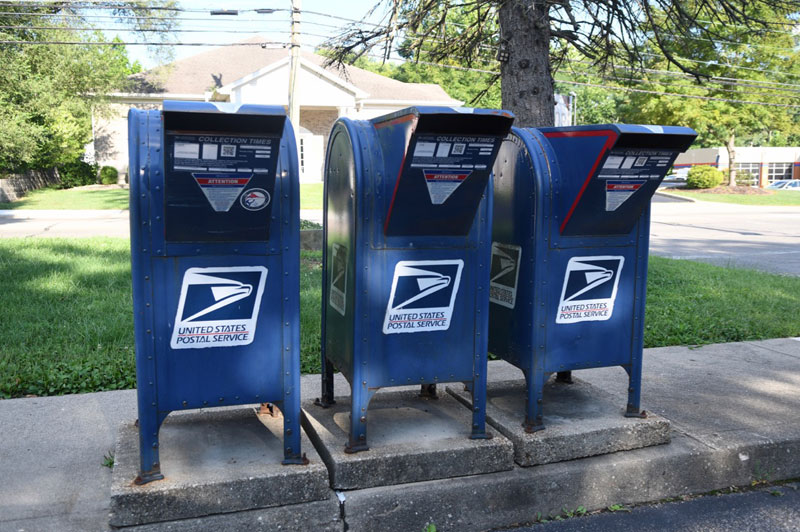
Loveland, Ohio – To supplement the story below (4 Ohio Republicans join House Dems to pass bill to boost post office funding by $25B) from the Ohio Capital Journal, Loveland Magazine visited two of the closest local U.S. Post Offices to document the number of mailboxes placed outside the buildings. We also documented the days and hours of operation of each.
While unlikely that the Trump Administration would attempt to interfere with the delivery of election-related mail in our heavily Republican voting area, nearly all Loveland mail does go to or from the Dalton Street processing center in Cincinnati. Interfering with mail delivery in the heavily Democratic voting urban areas of Cincinnati’s urban core is not beyond reasonable suspicion. And, the President may use mail problems in any part of the country to delegitimize and dispute the November election results.
One day ago the President tweeted, “The greatest Election Fraud in our history is about to happen. This may top the Democrats illegally spying on my campaign!”
On August 20 the President tweeted this, “They are sending out 51,000,000 Ballots to people who haven’t even requested a Ballot. Many of those people don’t even exist. They are trying to STEAL this election. This should not be allowed!”
Trump said last week on Fox News that he opposes some funding because he doesn’t want it used for mail-in votes, repeating his claim that it would lead to “fraudulent” election results.
WCPO has reported that processing machines from Cincinnati’s Dalton Street post office have been removed and remain offline and unusable.
The Cincinnati Enquirer recently reported that according to Jim Sizemore, president of the American Postal Workers Union in Cincinnati that in May and June, the USPS “pulled the plug on eight mail processing machines in Cincinnati, accounting for 19% of the processing center’s capacity.” The eight machines could process collectively 243,000 pieces of mail an hour according to the Enquirer. Mail is piling up on the floor at the Queensgate facility according to Sizemore.
WCPO’s John Matarese says the VA is now notifying veterans that they should order their medicine earlier than usual because at this time it cannot guarantee on-time delivery. And, by law, it cannot ship medication via private services.
Sen. Rob Portman said on August 21 on his FaceBook page, “A number of veterans have reached out to my office recently expressing concern about delays in the USPS delivery of their critical prescription medications. This is not acceptable. This morning I pressed Postmaster General DeJoy for answers.” And on August 19 Portman said, “We must protect Ohioans right to vote during to the ongoing COVID-19 pandemic. That’s why I sent a letter to the Postmaster General with Congressman Bob Latta calling on the USPS to ensure the timely & accurate delivery of election-related materials in Ohio.”
Rep. Brad Wenstrup told constituents in an email on Monday that the postal service has enough money on hand, “$14 billion cash” and that he voted to “open a $10 billion line of credit through the CARES Act” to help with any COVID-19 issues. Wenstrup said the USPS has enough money on hand to remain “fully function” until August of next year and that Speaker Pelosi has “manufactured a crisis and rushed the House back to vote on an irresponsible and unneeded amount of money on a problem that does not currently exist.”
Paige Pfleger reported in a Cincinnati Public Radio story on August 20 that, “Since the pandemic, even more Ohioans have opted to receive their medications by mail, to avoid possible exposure or to save money.”
Antonio Ciaccia of the Ohio Pharmacists Association is quoted in the story, “We have heard some extreme anecdotes over the last couple weeks where patients are waiting one, two, three weeks for their medications,” and adds that he’s never heard so many complaints about delivery delays.
On August 18, Senator Sherrod Brown is quoted in a Cleveland.com article about mail sorting equipment being dismantled in Cleveland. Brown said, “As the U.S. Postal Service has warned Ohio and other states that it may not be able to meet mail-voting deadlines this November, the visibly idle equipment along with mail delays and post office budget shortfalls have fueled fears that the upcoming election will be undermined.”
Reporter Sabrina Eaton writes in the Cleveland.com article:
President Donald Trump’s assaults on mail-in balloting, even as he has requested an absentee ballot to vote from his new residence in Florida, have raised questions over whether he’s deliberately trying to sabotage an election that will likely have more mail-in ballots than ever because of reluctance to vote in person during the coronavirus pandemic.
In a news conference over the weekend, Trump said universal mail-in voting would be “catastrophic. It’s going to make our country a laughingstock all over the world.”
“The ballots are lost, there’s fraud, there’s theft, it’s happening all over the place,” said Trump. “Now we’re going to do it with this whole, vast, big section of the country? It’s crazy.
Check out these two voter guides recently published by Loveland Magazine with information about requesting absentee ballots. Keep in mind that Ohio officials are recommending you stay ahead of these absolute dates to ensure your mail coming to and from the post office is delivered in time for your vote to count.
Loveland Magazine is interested in hearing from readers if they have experienced any delays in receiving mail (timely delivery of medicine, paychecks and other essentials) or about concerns they may have about receiving absent ballot requests or sending their ballot back to the local Boards of Elections. Please send us your thoughts.
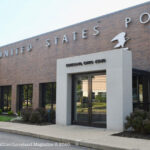
These photos were taken on the evening of August 16 at the Loveland and Symmes post offices. We do not know if any additional boxes were recently removed but is does not appear so. Although the quantity of mailboxes and hours of operation at these locations would not necessarily reflect current delays in mail delivery, we did want to document current conditions in advance of the November 3rd Presidential Election.
Mail boxes at the Symmes Township Post Office at 9370 Fields Ertel Road
Mail boxes at the Loveland Post Office at 200 Loveland Madeira Road
Loveland Post Office at 200 Loveland Madeira Road
Collection times on the mailboxes at the Loveland Post Office at 200 Loveland Madeira Road
Service times at the Symmes Township Post Office at 9370 Fields Ertel Road
Service times at the Loveland Post Office
4 Ohio Republicans join House Dems to pass bill to boost post office funding by $25B
House Speaker Nancy Pelosi said Saturday that mail delays are depriving Americans of timely delivery of medicine, paychecks and other essentials. Photo by Justin Sullivan | Getty Images
WASHINGTON — The U.S. House convened a rare weekend session Saturday in an attempt to stop the U.S. Postal Service from allegedly disrupting mail service to sabotage the November elections.
The Democratic-led chamber passed a bill 257-150 that would infuse $25 billion into the agency as it prepares for a surge in mail-in ballots and bar it from changing operations or service levels in place at the beginning of the year.
The prohibition would remain in effect through January 2021 or for the duration of the coronavirus crisis — whichever is later.
The bill passed largely along party lines, though more than two dozen Republicans joined Democrats in backing the legislation, including four Ohio Republicans: Reps. Troy Balderson (12th District), David Joyce (14th District), Steve Stivers (15th District) and Mike Turner (10th District). Rep. Bob Gibbs (R-7th District) did not vote. No Democrats voted against the bill.
One Republican in favor was Rep. Brian Fitzpatrick of Pennsylvania, who said the post office needed to be funded so his constituents could get their mail delivered on time. “Republicans and Democrats must come together and address the serious challenges that USPS has been facing for some time now,” he said.
Senate Majority Leader Mitch McConnell (R-Ky.) is not expected to take up the measure. He told his hometown paper Tuesday that he doesn’t think a stand-alone bill funding the postal service would pass the chamber.
The White House threatened Friday to veto the post office boost, calling it “an overreaction to sensationalized media reports that have made evidence-free accusations that USPS has undertaken reforms to achieve political rather than operational objectives.”
But House Speaker Nancy Pelosi (D-Calif.) maintains that the administration is trying to suppress votes as the nation heads into a fraught election season in which the postal service will serve as “election central.”
In addition to undermining the integrity of the elections, the delays are depriving Americans of timely delivery of medicine, paychecks and other essentials, Pelosi said at a press conference Saturday.
Democratic lawmakers made similar allegations on the House floor.
The administration has mounted a “sabotage campaign” to manipulate the vote, Rep. Debbie Dingell, a Michigan Democrat, said Saturday morning.
Democratic Rep. Brenda Lawrence of Michigan and a member of the House Oversight and Reform Committee, said the bill would prohibit the postmaster general from making any changes that would undermine the post office. She said the postmaster general has “tried to rip it apart from the inside” and “our democracy is hinging” on delivery of the mail.
“Don’t mess with the USPS,” said Rep. Debbie Wasserman Schultz (D-Fla.).
Republicans charged Democrats with ginning up a manufactured crisis intended to deny the president a second term. House Minority Leader Kevin McCarthy (R-Calif.) said postal problems predate 2020 and the Trump administration.
GOP Rep. Rob Woodall of Georgia called Saturday’s vote a “punctuation mark” at the close of last week’s Democratic National Convention. This “wasteful partisan exercise” will “go nowhere” in the GOP-controlled Senate and “help no one,” he added.
Rep. Debbie Lesko, a Republican from Arizona, echoed the sentiment, calling the controversy “phony political theater.” Pelosi has gone “politically postal,” she said, quoting a recent Wall Street Journaleditorial.
The House approved $25 billion for the postal service in a $3 trillion coronavirus relief package approved in May. Pelosi pointed out Saturday that the USPS board of governors — a bipartisan group of members appointed by Trump — backs the funding.
Trump said last week on Fox News that he opposes some funding because he doesn’t want it used for mail-in votes, repeating his claim that it would lead to “fraudulent” election results.
He said changes to overtime, retail hours and the location of mail processing machines and blue mailboxes were made to save costs and streamline operations but said earlier this week he would suspend some of his moves until after the elections to avoid the appearance of impropriety. He also said he wouldn’t close existing mail processing facilities and would use “standby” resources in October to meet mail surges.
On Friday, he insisted that secure elections are his “sacred duty” and top priority this fall.
But Pelosi on Saturday called DeJoy’s promise into question, pointing to his decision not to replace mail infrastructure that has already been removed. She also pointed to Trump’s comment earlier this week calling for law enforcement officers at polling places.
“It is all designed to suppress the vote,” Pelosi said.
DeJoy is slated to testify again on Monday in a hearing before the Democratic-led House Oversight and Reform Committee, where he is expected to face more withering questioning. Robert Duncan, chair of the U.S. Postal Service Board of Governors, will also appear before the committee.
Allison Stevens is a Washington D.C. reporter for States Newsroom, a network of state-based nonprofit news outlets that includes the Ohio Capital Journal.
Columbus, Ohio – The coronavirus is raging in Ohio, but the state’s Republican leaders seem disinclined to enforce rules intended to protect against it. (How does Hamilton County avoid Level 4 Alert)
Attorney General Dave Yost won’t say whether he’ll support enforcement of new orders to wear masks in the state’s hardest-hit counties. And the official who issued them, Gov. Mike DeWine, has made several statements indicating that he doesn’t want to see anybody punished for not following measures intended to slow the spread of the deadly disease.
Mike Samet the Public Information Officer for Hamilton County Public Health told Loveland Magazine on Friday that from an enforcement perspective, as a county agency, the Health Department is not able to issue citations. “Nobody wants to be the mask police. This is education over enforcement, he said. Samet added that he wants people to understand why masks are important now, not punish them for non-compliance.
Ohio set a record for new cases Friday — 1,525 — after seeing them trend sharply upward over the past few weeks. The case count was nearly triplethe three-week average of 531.
Gov. Mike DeWine, has made several statements indicating that he doesn’t want to see anybody punished for not following measures intended to slow the spread of the deadly disease.
The news comes as six other states — Alabama, Idaho, Missouri, Montana, Oregon and Texas — set new single-day records of their own on Thursday. It also was the sixth day out of the past 10 in which the United States set one-day records for new cases of the coronavirus, which now has killed more than 3,000 in Ohio and more than 130,000 nationwide.
Also last week, a New York Times data analysis showed that the disease in the United States is taking on a disturbing racial dimension, with Blacks and Latinos around three times as likely as whites to get the new coronavirus.
The World Health Organization and the U.S. Centers for Disease Control both have said that widespread mask wearing would reduce the spread of the disease. One study indicated that if 80% of people wore them, the spread would plummet to one twelfth what it would be if nobody did.
Yet Yost, the state’s top law-enforcement officer, last week didn’t respond to questions about whether he supports enforcement of last week’s orders that people in Ohio’s 12 hardest-hit counties must wear masks inside public buildings.
In late March, Yost ordered that many abortions be halted in Ohio, arguing that the move was intended to conserve healthcare resources in the face of the coronavirus pandemic.
In June, he urged a municipal court to drop charges against a couple accused of opening their Cambridge-area restaurant in defiance of an earlier, DeWine-issued health order that it remain closed.
Then earlier this week, Yost said that the Columbus city government doesn’t have the power to enforce mask orders in state buildings — places where many Republican lawmakers have refused to wear them.
On Monday, a spokeswoman for Yost explained that the attorney general can’t have any official involvement in cases relating to health orders unless asked by local prosecutors. “We don’t have the authority,” the spokeswoman, Bethany McCorkle, said in a text message.
She added, however, that Yost has worn a mask since before there was a health order and encourages others to do the same.
The attorney general and his staff haven’t responded to subsequent questions about the order DeWine issued on Wednesday evening requiring masks in the worst-hit counties.
David Pepper (Photo from Ballotpedia)
Ohio Democrats are already up in arms about Republican legislative leaders’ refusal to share details about the spread of coronavirus in the Statehouse and surrounding office towers. David Pepper, the party chairman, on Friday slammed the attorney general for his apparent reluctance to support the enforcement of mask orders.
“As far as Dave Yost is concerned, refusing to enforce health orders is just one more example that the Ohio GOP has become the party of Donald Trump, Nino Vitale and John Becker,” Pepper said in a text message. “Sadly Ohio COVID cases are spiking because of it.”
“Even though initially it appeared that Mike DeWine was being guided by scientists and public health experts, it seems that politics and the desires of the business community are driving more of the governor’s decision making now,” party chairman David Pepper said.
President Donald Trump has repeatedly downplayed the pandemic, floated unproven cures for it and refused to appear in public wearing a mask. Among his other statements, Ohio Rep. Nino Vitale, R-Urbana, last Tuesday took to Facebook to urge Ohioans to stop even getting tested for coronavirus. And Ohio Rep. John Becker, R-Union Township, has introduced legislation that would strip state officials of the power to enforce any health order.
Meanwhile, in the absence of much support from his party, DeWine has said he doesn’t plan to use his authority under his mask order to arrest people for not following it.
Ohio Governor Mike DeWine
“We’re not talking about throwing people in jail,” DeWine said during a press conference Thursday. “This is a law to advise people what to do.”
DeWine has enjoyed overwhelming, bipartisan support over his handling of the coronavirus. But at least for Ohio’s top Democrat, patience might be wearing thin.
“Even though initially it appeared that Mike DeWine was being guided by scientists and public health experts, it seems that politics and the desires of the business community are driving more of the governor’s decision making now,” Pepper said. “Even with fewer cases, even West Virginia and Kentucky are being more proactive in addressing the pandemic.”
The Ohio Capital Journal is a hard-hitting, independent, nonprofit news organization dedicated to connecting Ohioans to their state government and its impact on their lives. The Capital Journal combines Ohio state government coverage with relentless investigative journalism, deep dives into the consequences of policy, political insight and principled commentary.
The following businesses and operations remain closed as of May 15, 2020, as part of Ohio’s plan to prevent the spread of COVID-19:
K-12 schools.
Childcare services (permitted to reopen May 31).
Restaurants and bars dine-in service.
Carry-out and delivery services are permitted.
Outdoor dining is permitted.
Dine-in service permitted May 21.
Older adult day care services and senior centers.
Adult day support or vocational habilitation services in congregate settings.
Rooming and boarding houses, and workers’ camps.
Entertainment/recreation/gymnasium sites.
Includes, but is not limited to:
All places of public amusement, whether indoors or outdoors, such as:
Laser tag facilities, roller skating rinks, ice skating rinks, arcades, indoor miniature golf facilities, bowling alleys, indoor trampoline parks, indoor water parks, arcades, and adult and child skill or chance game facilities remain closed.
Gambling industries. (Horse racing is permitted without spectators May 22.)
Auditoriums, stadiums, arenas.
Movie theatres, performance theatres, and concert and music halls.
Public recreation centers and indoor sports facilities.
Parades, fairs, festivals, and carnivals.
Amusement parks, theme parks, outdoor water parks, children’s play centers, playgrounds, and funplexes.
Aquariums, zoos, museums, historical sites, and similar institutions.
Country clubs and social clubs.
Spectator sports, recreational sports tournaments and organized recreational sports leagues. (Non-contact and limited-contact sports leagues are permitted to reopen May 26.)
Health clubs, fitness centers, workout facilities, gyms, and yoga studios (permitted to reopen May 26).
Swimming pools, whether public or private, except swimming pools for single households. (Public pools and club pools regulated by local health departments are permitted to reopen May 26.)
Residential and day camps.
Campgrounds, including recreational camps and recreational vehicle (RV) parks (permitted to reopen May 21).
Excludes people living in campground RVs with no other viable place of residence.
Excludes people living in cabins, mobile homes, or other fixed structures that are meant for single families and where preexisting residential activity already has been established. (E.g., for people who have part-time preestablished residences at campgrounds for the summer months.)
For answers to your COVID-19 questions, call 1-833-4-ASK-ODH (1-833-427-5634).
Your mental health is just as important as your physical health. If you or a loved one are experiencing anxiety related to the coronavirus pandemic, help is available 24 hours a day, seven days a week. Call the COVID-19 CareLine at 1-800-720-9616.











 The
The 