Tag: corporate bailouts

  • FirstEnergy gave heavily to Trump and Trump worked for a federal bailout, report says

    FirstEnergy gave heavily to Trump and Trump worked for a federal bailout, report says

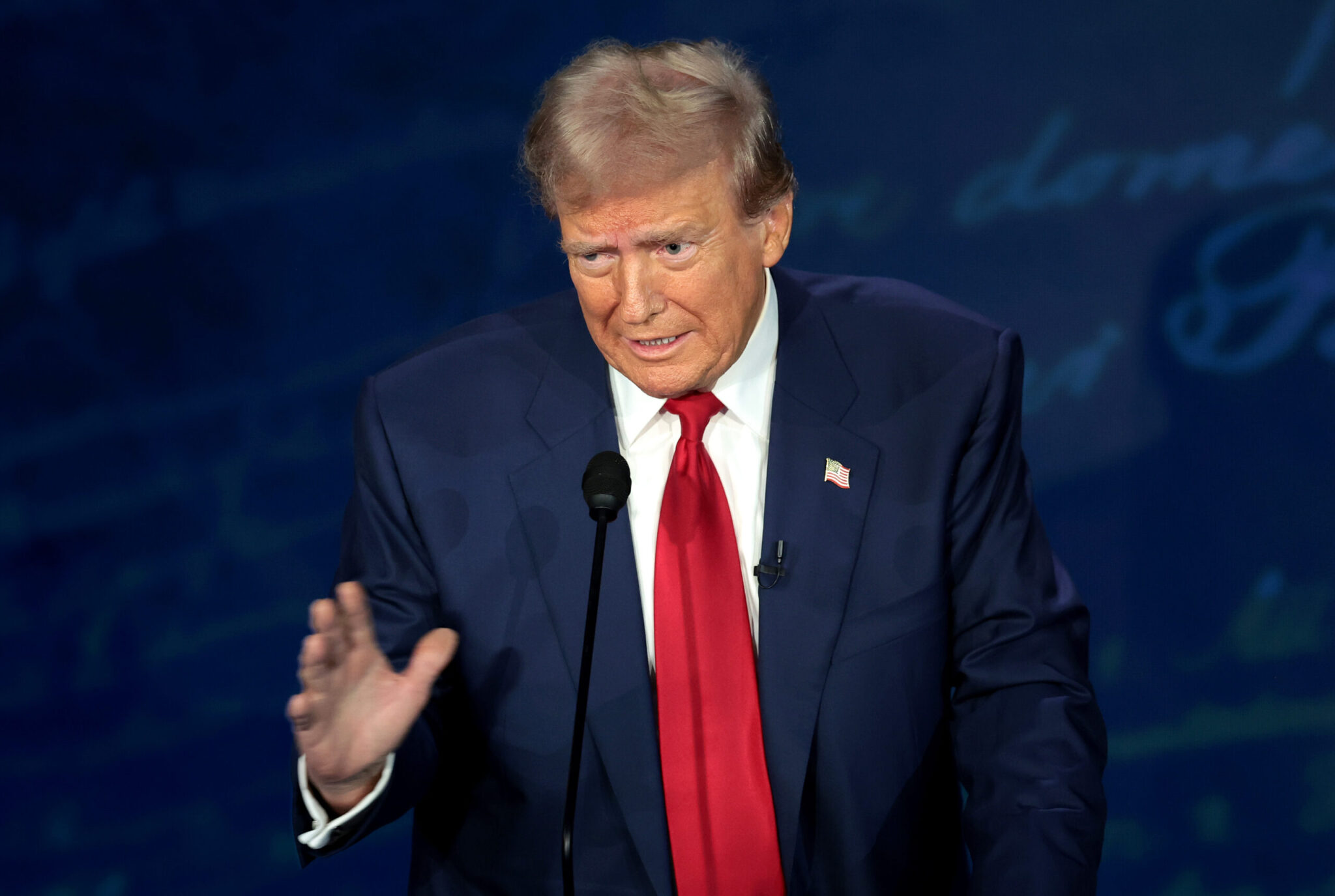
    The Republican presidential nominee, former President Donald Trump. (Photo by Win McNamee/Getty Images)

    By:  – Ohio Capital Journal

    As it sought a massive, corrupt bailout in Ohio, Akron-based FirstEnergy also spent lavishly on Trump-aligned dark money groups and at hotels and golf courses owned by the former president, a new report said this week.

    Trump and his aides wanted to provide a federal bailout for the company’s coal and nuclear plants, but they hit a brick wall — first in the form of a regulator, and then by public opposition to corporate bailouts, the report said.

    Done by the Energy and Policy Institute, the report is a deep dive into otherwise-secret records that have been pried out as a result of prosecutions and litigation around the Ohio bailout scandal. Called one of the biggest bribery scandals in Ohio history, FirstEnergy funneled $61 million through dark money groups to pass a $1.3 billion ratepayer bailout through the state’s gerrymandered legislature and then protect it from popular opposition.

    Former Ohio House Speaker Larry Householder is serving a 20-year federal prison sentence as a consequence of his involvement, former state Republican Party Chair Matt Borges is serving five years and two others have pleaded guilty and await sentencing. Two others were charged and then died by suicide.

    Former FirstEnergy CEO Chuck Jones and Vice President Michael Dowling face state felony charges related to their involvement in the scandal. Testimony during last year’s federal trial in Cincinnati showed that the pair were desperate for a bailout anywhere they could get one.

    FirstEnergy was heavily invested in coal and nuclear generation when the natural gas boom and the advent of cheap renewables made them uncompetitive. In other words, FirstEnergy’s millionaire leaders had made poor business decisions, and they wanted to escape the consequences.

    So by 2016, the executives were seeking bailouts to prop up the plants so they could spin them — and their environmental liabilities — off.

    Starting in 2015, FirstEnergy had already contributed $1.25 million to the Cleveland Host Committee to support the 2016 Republican National Convention in that city.

    Then, nine days after Trump became the party’s nominee, FirstEnergy CEO Jones met on July 28, 2016 with Trump at Trump Tower. The two discussed electricity generation and how Trump could deliver on his “promise to save coal jobs,” according to a letter the Energy and Policy Institute obtained.

    Some time after, Jones met Trump at a Canton fundraiser where Jones “did explain to Mr. Trump that while I was working behind the scenes to help his campaign, because of a (regulatory proceeding) in Ohio I could not be out front and he completely understood that,” Jones said in an email detailed in the report.

    Trump’s campaign didn’t respond to questions for this story.

    By late 2016, Jones and Dowling were courting Householder at World Series games in Cleveland. And after Trump’s election, they flew the now-imprisoned former speaker to Washington, D.C. aboard FirstEnergy’s corporate jet for Trump’s January 2017 inauguration.

    By April 2017, FirstEnergy had engaged Avenue Strategies — a lobbying firm founded by former Trump Campaign Manager Corey Lewandowski — to help it get “federal relief for nuclear and coal-fired plants,” the Energy and Policy Institute report said. The following month, Lewandowski stepped away from the firm amid accusations that he was violating federal lobbying laws by not registering, Politico reported.

    Lewandowski, who is again working for Trump, later denied that he lobbied on FirstEnergy’s behalf.

    On May 1, 2017, FirstEnergy started really putting money into its efforts, paying $5 million to America First Policies, a 501(c)(4) dark money group founded and run by supporters of Trump. The company financed its bribes in Ohio by pumping tens of millions through such groups, which don’t have to disclose their donors.

    As Jones undertook his charm offensive, he used FirstEnergy money to enrich Trump personally. His expense reports show that on a July 2017 trip to Washington, D.C., Jones spent $1,400 on drinks, another $5,400 for dinner and $900 for a room at the Trump International Hotel, as well as $400 on caddie fees at the Trump National Golf Club.

    And as he spread around the FirstEnergy largesse, Jones had broad interactions with Trump officials. They include Vice President Mike Pence, EPA Administrator Scott Pruitt, Chief of Staff Rick Dearborn, Chief Strategist Steven Bannon, White House Counsel Don McGahn, Energy and Environmental Policy Advisor Mike Catanzaro, and National Economic Council Director Gary Cohn and Deputy Director Jeremy Katz, according to documents assembled by the Energy and Policy Institute.

    To save FirstEnergy’s power-generating subsidiary from bankruptcy, then-Energy Secretary Rick Perry in September 2017 proposed to allow special subsidies for coal and nuclear plants.

    The Federal Energy Regulatory Commission rejected the proposal in early 2018, saying allowing it would upend wholesale markets for electricity generation. In other words, the regulator said it would give unfair special treatment to FirstEnergy and other companies that missed the boat on fracking and renewables.

    In June 2018, Trump ordered Perry to use a provision in the Defense Production Act to prop up coal and nuclear energy — a step that could cost as much as $11 billion a year. That effort also collapsed as the (correct) public perception grew that both measures proposed by the Trump administration were corporate bailouts, the Energy and Policy Institute report said.

    In 2018, Perry called on the states to bail out their own coal and nuclear plants.

    Ohio did just that with the corrupt House Bill 6. Householder shepherded it through Ohio’s gerrymandered legislature and Gov. Mike DeWine signed it immediately.

    Prosecutors haven’t accused them of wrongdoing, but DeWineLt. Gov. Jon HustedAttorney General Dave Yost and Secretary of State Frank LaRose all played roles in the passage and protection of the billion-dollar bailout that they haven’t fully explained.

    For its part, FirstEnergy entered into a deferred prosecution agreement with the Justice Department, admitted wrongdoing and paid a $230 million fine. It fired Jones and Dowling and now says it has new ethical standards.

    However, a group of institutional investors suing the utility accuse it of trying to limit accountability to the two former top executives, Jones and Dowling.

    FirstEnergy spokeswoman Jennifer Young was asked whether FirstEnergy thought it was proper to enrich Trump-aligned groups and Trump personally as it sought taxpayer bailouts from his administration. She was also asked whether it was proper for a regulated utility to — as Jones claimed — play political kingmaker for the ratepayers the utility serves.

    “While we’re unable to respond to your specific questions due to ongoing litigation, it’s important to note that in early 2022, FirstEnergy Corp. adopted a new Political & Public Engagement Policy and Practice grounded in integrity and transparency to ensure principled political and public policy engagement by its Board of Directors, officers, employees, and those acting on the company’s behalf,” Young said in an email. “Positions we take will align with the company’s core values and responsibilities to shareholders and other stakeholders.”

    She added, “Led by a reconstituted Board of Directors and executive team, FirstEnergy has taken significant steps to move the company forward and put past issues behind us. Today, FirstEnergy is a different, stronger company with a sound strategy, a highly effective compliance program and a companywide culture of ethics, integrity and accountability.”


    Marty Schladen
    Marty Schladen

    Marty Schladen has been a reporter for decades, working in Indiana, Texas and other places before returning to his native Ohio to work at The Columbus Dispatch in 2017. He’s won state and national journalism awards for investigations into utility regulation, public corruption, the environment, prescription drug spending and other matters.

    Ohio Capital Journal is part of States Newsroom, the nation’s largest state-focused nonprofit news organization.

    MORE FROM AUTHOR

  • Ohio SOS gives yet another reason to make it a lot harder for voters to amend Constitution

    Ohio SOS gives yet another reason to make it a lot harder for voters to amend Constitution

    [vc_row][vc_column][vc_column_text]

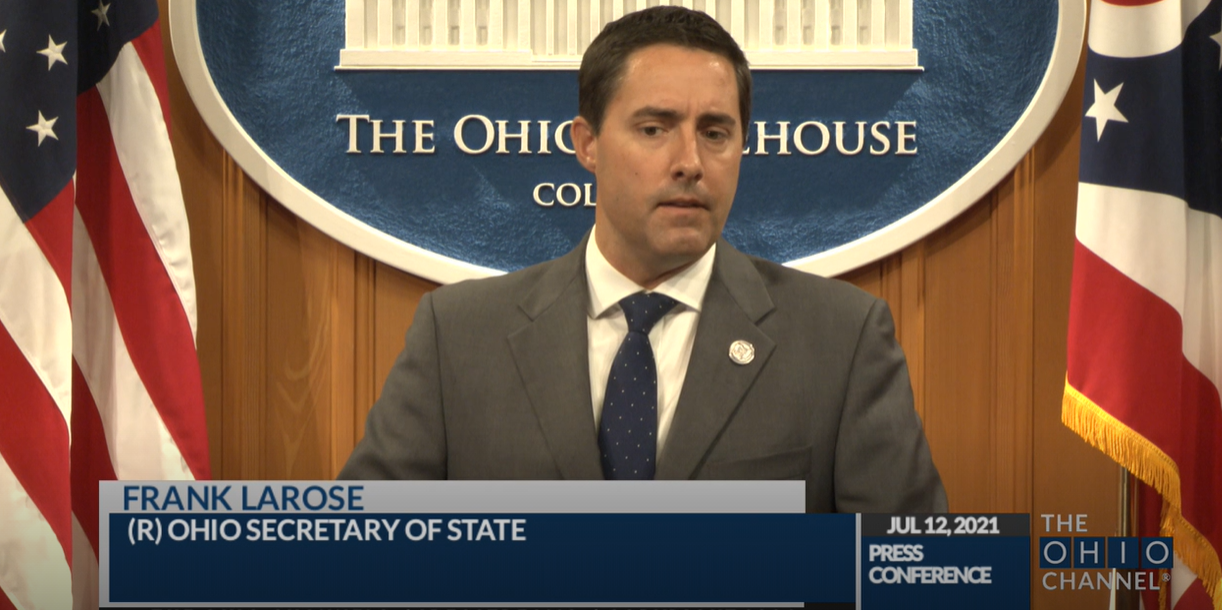
    Secretary of State Frank LaRose announces the referral of 117 cases of alleged voting and voter registration fraud stemming from the 2020 elections. Photo courtesy The Ohio Channel.

    BY:  Ohio Capital Journal

    Ohio Secretary of State Frank LaRose on Wednesday offered another rationale for making it much more difficult for voters to amend the Ohio Constitution. Now he’s saying it’s needed to fight a possible power grab like one that grew out of a massive bribery and money-laundering scandal.

    But LaRose didn’t mention in his op-ed that his name came up repeatedly in a criminal trial related to the scandal and that he appeared to be in close communication with some of its central figures.

    Nor did his office respond when asked whether LaRose ever spoke out against the corrupt utility bailout before the FBI started arresting people in July 2020.

    Slippery explanations

    The secretary of state — who is said to be eyeing a run for U.S. Senate next year — has been pushing to increase the portion of votes needed for a citizen-initiated amendment from 50% to 60%. As he and his allies have, they’ve given a shifting set of reasons for why that’s needed.

    Last November, during a lame-duck session of the legislature, LaRose and state Rep. Brian Stewart, R-Ashville, held a press conference saying that the change was necessary to prevent wanton amendments to the Ohio Constitution by monied special interests. But they didn’t point to any examples of how that had happened in the past.

    Many suspected an ulterior motive.

    LaRose sat on a Republican-dominated redistricting commission that last year ignored seven Ohio Supreme Court rulings saying that the legislative and congressional maps the commission produced violated anti-gerrymandering amendments overwhelmingly approved by Ohio voters. That prompted Maureen O’Connor, the outgoing Republican chief justice, to urge Ohioans to pass new, more-tightly written amendments this year.

    Ohio was also roiled when a highly restrictive abortion law took effect last June just after the U.S. Supreme Court overturned Roe v. Wade and horror stories poured out of abortion clinics and hospitals. An effort quickly started to get an amendment on the ballot protecting abortion rights after other protections easily passed in other states.

    But at last year’s presser, LaRose denied that his goal was to block anti-gerrymandering or abortion-rights amendments. The constitutional change he was advocating was a long-term, fundamental one that he didn’t seek to block such short-term disputes, he claimed.

    Just weeks later, however, Stewart, LaRose’s sidekick at the presser, sent a letter to his GOP colleagues in the House explaining the real reasons for making it harder for Ohioans to amend their constitution: to stop abortion-rights and anti-gerrymandering amendments that appear to be favored by strong majorities of Ohioans.


    [/vc_column_text][vc_raw_html]JTNDYmxvY2txdW90ZSUyMGNsYXNzJTNEJTIydHdpdHRlci10d2VldCUyMiUzRSUzQ3AlMjBsYW5nJTNEJTIyZW4lMjIlMjBkaXIlM0QlMjJsdHIlMjIlM0VIZXJlJTI2JTIzMzklM0JzJTIwdGhlJTIwZnVsbCUyMGxldHRlci4lMjBJdCUyMGFsc28lMjB0aWVzJTIwdGhlJTIwaXNzdWUlMjB0byUyMHJlZGlzdHJpY3RpbmclMjByZWZvcm0lMkMlMjBhbmQlMjByZXNwb25kcyUyMHRvJTIwdGhlJTIwb3JnYW5pemVkJTIwbGFib3IlMjBncm91cHMlMjB0aGF0JTIwcmFsbGllZCUyMGF0JTIwdGhlJTIwT2hpbyUyMFN0YXRlaG91c2UlMjB5ZXN0ZXJkYXkuJTIwJTNDYSUyMGhyZWYlM0QlMjJodHRwcyUzQSUyRiUyRnQuY28lMkZpbGhXTFBpV00wJTIyJTNFcGljLnR3aXR0ZXIuY29tJTJGaWxoV0xQaVdNMCUzQyUyRmElM0UlM0MlMkZwJTNFJTI2bWRhc2glM0IlMjBBbmRyZXclMjBUb2JpYXMlMjAlMjglNDBBbmRyZXdKVG9iaWFzJTI5JTIwJTNDYSUyMGhyZWYlM0QlMjJodHRwcyUzQSUyRiUyRnR3aXR0ZXIuY29tJTJGQW5kcmV3SlRvYmlhcyUyRnN0YXR1cyUyRjE2MDMxMzAzODQ3NDQ1MzQwMTYlM0ZyZWZfc3JjJTNEdHdzcmMlMjU1RXRmdyUyMiUzRURlY2VtYmVyJTIwMTQlMkMlMjAyMDIyJTNDJTJGYSUzRSUzQyUyRmJsb2NrcXVvdGUlM0UlMjAlM0NzY3JpcHQlMjBhc3luYyUyMHNyYyUzRCUyMmh0dHBzJTNBJTJGJTJGcGxhdGZvcm0udHdpdHRlci5jb20lMkZ3aWRnZXRzLmpzJTIyJTIwY2hhcnNldCUzRCUyMnV0Zi04JTIyJTNFJTNDJTJGc2NyaXB0JTNF[/vc_raw_html][vc_column_text]The attempt to rush a bill through lame duck last year failed.

    Now Stewart, LaRose and their allies are trying to pass it through Ohio’s now-unconstitutionally gerrymandered legislature. If it passes, it would put the measure requiring 60% of the vote to amend the state constitution on the ballot. And, since the vote would be under the existing rules, it would require just 50% of the vote to pass.

    Also on the pile of accusations that it’s a naked power grab is that LaRose, Stewart and their allies want to put the measure on the ballot in a low-turnout August election. They’re doing so just months after passing a bill that had LaRose’s support to eliminate such elections as costly and unnecessary — and three months before the abortion amendment is expected to hit the ballot.

    A new reason

    While he’s being accused of attempting a power grab, LaRose says he’s trying to stop them.

    On Tuesday, The Columbus Dispatch published an op-ed in which he furnished yet another reason to make it harder for voters to change the state Constitution. He cited an attempt by former House Speaker Larry Householder to pass an amendment changing the state’s term limits so Householder could stay speaker for another 16 years.

    It was part of a breathtaking scheme in which Householder and his allies took more than $61 million from Akron-based FirstEnergy and other utilities, used the money to make him speaker in January 2019, and then pass and protect a $1.3 billion ratepayer bailout that mostly went to FirstEnergy.

    Fresh off the passage of the bailout, Householder raised millions in early 2020 from FirstEnergy and AEP for his scheme that would allow him to stay longer in office. But it died with his arrest that July.

    It might seem ironic that LaRose would use a corruption scandal to gut a 1912 reform measure that was aimed at curbing corrupt, unresponsive government, but that’s what he argued. He said all it takes to change the Constitution now “is a well-funded, dishonest political campaign and a simple majority vote.”

    LaRose added that Householder planned to call his tenure-extension scheme “Ohioans for Legislative Term Limits, a deceptive name for a constitutional amendment that would more than double his term in office. It should come as no surprise that FirstEnergy Corporation, the company at the center of Householder’s racketeering scandal, agreed to bankroll the amendment campaign.”

    Significant omissions

    While he accused his opponents of “hysterical hyperbole” as he tries to make it 20% harder for voters to succeed in the already difficult process to amend the Ohio Constitution, there were some important things LaRose didn’t say in his Op-Ed.

    For starters, FirstEnergy didn’t only bankroll Householder in 2018 as the now-convicted former speaker elected a team of lieutenants who would hand him the speaker’s gavel. The utility also bankrolled LaRose to the tune of $25,000 that year as he ran for secretary of state.

    It was part of nearly $50,000 that the energy company — which signed a deferred prosecution agreement in the Householder scandal — has given LaRose, the campaign-finance tracker FollowTheMoney.org reports.

    And while LaRose is decrying the bailout now that there have been arrests and convictions, there was reason to know there was something wrong with it well before they took place.

    Insiders knew that somebody was burying Capitol Square in cash throughout the 2019 passage of House Bill 6, the corrupt utility bailout. That was especially true as FirstEnergy dumped what the FBI later determined was $36 million into a blatantly-dishonest-but-successful fight to beat back a repeal.

    Because the funds were non-disclosable 501(c)(4) dark money, it was impossible for the public to know exactly where they were coming from until the feds stepped in and used subpoenas and other special powers to find out.

    But HB 6 was such bad legislation and the campaign to stop the repeal so over-the-top that there was plenty of reason to suspect that somebody was being bought off to pass it. It was a massive corporate bailout that Householder and others were trying to officially declare a tax. Republican lawmakers who didn’t want to cast such a damaging vote described withering pressure from House leadership.

    Former friends

    LaRose’s office didn’t answer Wednesday when asked if the secretary of state ever spoke out against HB 6 before the FBI started making arrests.

    In the Cincinnati corruption trial that ran from late January to mid-March, federal prosecutors presented several communications to the jury that might indicate that LaRose was actually sympathetic to the effort to pass and protect the corrupt bailout.

    On July 23, 2019, as the repeal effort got underway, text messages flew between two prominent figures in the scandal: Matt Borges, the former Ohio Republican Party chairman who was convicted along with Householder; and Juan Cespedes, a lobbyist who pleaded guilty and cooperated with prosecutors.

    Borges told Cespedes he had received “a message from the secretary of state on the ballot-measure issue.”

    The men were hoping for help from LaRose. He’s chairman of the Ohio Ballot Board, which, along with Attorney General Dave Yost, has to approve the language of constitutional amendments before they’re circulated for the hundreds of thousands of needed voter signatures — and before they’re placed on the ballot.

    In the case of the HB 6 repeal, Yost initially sent the language back for revisions, then he and the ballot board approved it. But that wasn’t before the original 90 days opponents had to gather the signatures was whittled down to 53.

    In the end, time ran out before opponents could gather them. But at the beginning of the effort, Borges seemed to be talking to LaRose about what LaRose needed in exchange for his help.

    “LaRose is expecting us to be publicly supportive of him,” Borges said. “Apparently petitioners (for the repeal of HB 6) are going to call on him to step down from the ballot board because of ‘conflicts.’ He can be our friend in this process, so let’s be prepared to speak for him.”

    Continuing communication

    Later in the repeal fight, FirstEnergy’s two top executives discussed asking LaRose’s help with Yost. In addition to hamstringing the petition effort, supporters of the corrupt bailout wanted to have it officially declared a tax, and thus legally exempt from repeal.

    “I’ve been asked by (subsidiary FirstEnergy Solutions) to call Frank LaRose to get Frank to call Dave Yost,” Vice President Michael Dowling texted CEO Chuck Jones, according to messages put into evidence by prosecutors. “If Frank tells Yost that he believes HB 6 is a tax, Yost will come out publicly and say it, which (FirstEnergy Solutions) thinks helps with the Supreme Court. Frank is reluctant to make the call. I have a call in to Frank and I will ask him to do it.”

    LaRose may have been reluctant about making that call. But he apparently wasn’t reluctant to keep talking to the people who funded the scandal he’s now condemning and using as a reason to make it harder for voters to amend the Ohio Constitution.

    In October 2019 — shortly before the repeal effort failed — Jones sent a text to John Kiani, the chairman of the FirstEnergy subsidiary that was to receive $1 billion of the bailout. It indicated that both LaRose and Householder had been providing the FirstEnergy CEO with “private” information on the repeal effort.

    “For what it’s worth, LaRose and Householder think it’s game over,” Jones told Kiani. “But that is a private conversation unless they’ve told you the same thing. And Householder has a ‘quick fix’ anyway.”

    And then in November 2019 — just after the repeal failed — other messages indicated that LaRose wanted to cement a relationship with Kiani, the hard-charging former Enron executive whom Cespedes testified stood to make $100 million off the sale of FirstEnergy’s bailed-out nuclear and coal plants.

    Borges texted Cespedes that LaRose, “told me he wants to get to know Kiani, and I said, ‘Are you sure about that?’”

    Cespedes replied, “He will live to regret that.”[/vc_column_text][/vc_column][/vc_row]

    ____________________________________

    MARTY SCHLADEN

    Marty Schladen has been a reporter for decades, working in Indiana, Texas and other places before returning to his native Ohio to work at The Columbus Dispatch in 2017. He’s won state and national journalism awards for investigations into utility regulation, public corruption, the environment, prescription drug spending and other matters.

    MORE FROM AUTHOR

  • Defense lawyer boils over in Ohio utility bailout and political bribery racketeering trial

    Defense lawyer boils over in Ohio utility bailout and political bribery racketeering trial

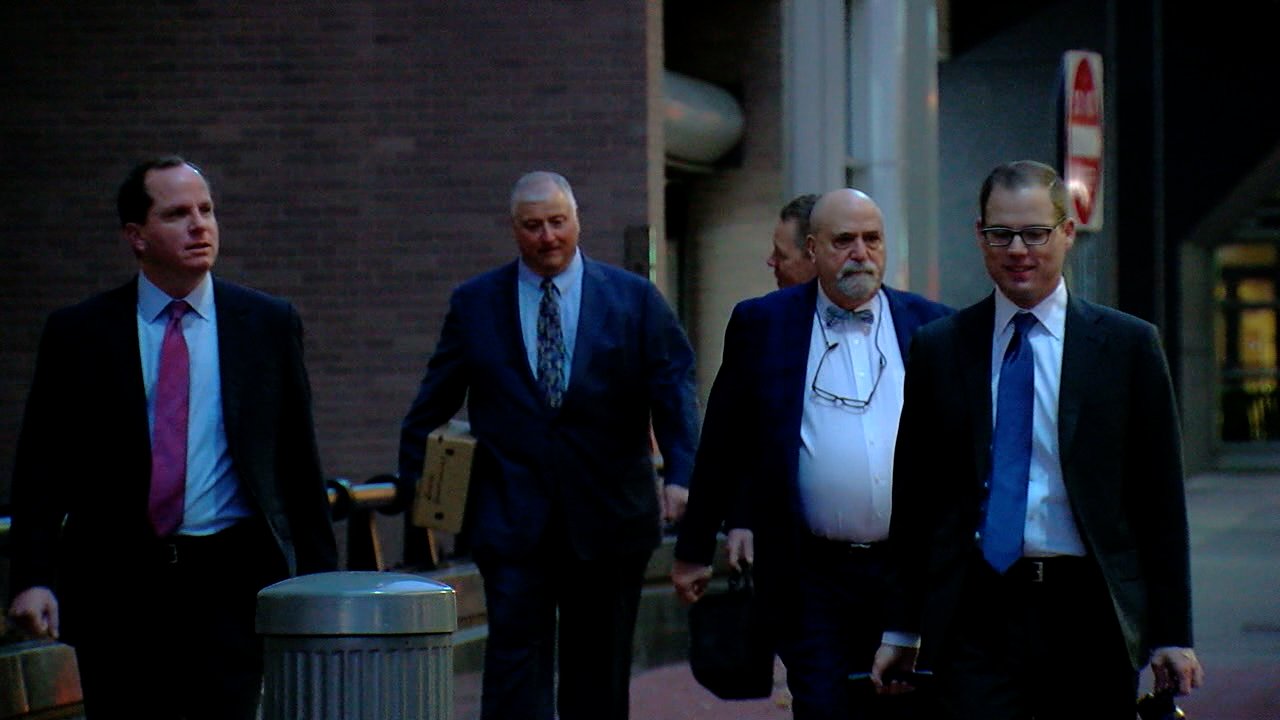
    Former Ohio House Speaker Larry Householder, a Perry County Republican, second from left, with attorneys outside of his racketeering trial. Photo courtesy of WEWS.

    BY: MARTY SCHLADEN – Ohio Capital Journal

    CINCINNATI — The defense of former Ohio House Speaker Larry Householder erupted Thursday in Householder’s epic corruption trial.

    Defense attorney Mark Marein of Cleveland suggested it was because of U.S. District Judge Timothy Black’s unfairness. But it came after a day in which the defense team’s attempts to undermine prosecution witnesses’ credibility might have come to naught.

    The sparks flew in the fourth week of the trial. Householder and former Ohio Republican Party Chairman Matt Borges are accused of racketeering in a scheme to use $61 million in utility money to make Householder speaker and pass a $1.3 billion bailout that mostly benefited Akron-based FirstEnergy, the primary contributor.

    Earlier on Thursday, defense attorney Steven Bradley cross examined Jeffrey Longstreth, who operated as Householder’s right-hand man through his bid for the speakership and the 2019 passage and defense of the bailout law, House Bill 6.

    Longstreth was arrested along with Householder, Borges, and two others in July 2020. He is now cooperating with prosecutors in exchange for a sentencing recommendation of less than six months.

    The dinners

    During direct examination Wednesday, Longstreth described fancy dinners with Householder and FirstEnergy’s top executives during Donald Trump’s inauguration in 2017 in Washington, D.C. 

    At one, Longstreth described being at one end of a long table with FirstEnergy Vice President Michael Dowling in a noisy steakhouse, while Householder sat with company CEO Chuck Jones at the other. Longstreth said he couldn’t hear the conversation at the other end of the table, but at his end Dowling told him FirstEnergy needed help and it wanted to help Householder become speaker.

    Dowling instructed Longstreth to set up an organization to receive FirstEnergy’s millions, Longstreth said. 

    “He said (the money) needed to be undisclosed and unlimited contributions,”  Longstreth testified on Wednesday.

    Apparently seeking to impeach Longstreth’s memory, Bradley on Thursday showed the jury an itinerary indicating that Jones took the FirstEnergy corporate jet to D.C. the morning after the steakhouse dinner. He also produced a credit card receipt showing that Jones attended a dinner at a different restaurant the following night than where a second, more-intimate dinner was described by Longstreth on Wednesday.

    But Assistant U.S. Attorney Emily Glatfelter asked Longstreth if itineraries change. He agreed they often do.

    She then produced credit card receipts and car records that indicated Jones may well have been in D.C and could have attended the first dinner as Longstreth described. She also showed that on the following night, the dinner Bradley said Jones attended ended about 30 minutes before the one Longstreth said he attended began.

    Longstreth testified that it was common at presidential inaugurations to attend multiple receptions and dinners in the same evening. Apparently that’s a major purpose of the quadrennial gatherings: To stay in $600 hotels, eat multiple $200 dinners, and figure out how to split up the taxpayers’ —or  ratepayer’s — money.

    Whistleblower former state Rep. Dave Greenspan

     Former State Rep. Dave Greenspan, R-Westlake. Official photo.

    After Longstreth left the stand, the prosecution called former state Rep. Dave Greenspan, R-Westlake. He said he never voted to make Householder speaker and he never supported House Bill 6. 

    “I didn’t believe in corporate bailouts,” Greenspan said, explaining that this one was especially hard to support because FirstEnergy hadn’t shown that it needed the money and the bill put no restrictions on how it was spent. “There was nothing in the bill that required FirstEnergy to do anything.”

    As a sign of how unpopular the bill was, 17 Republicans voted against it when it passed the House in April 2019. And it’s an important reminder that it would never have become law without the support of Ohio House Democrats.

    Greenspan described the intense pressure he was under from Householder and lobbyist Neil Clark to vote for the bill. He was so disturbed by it that he contacted a member of the U.S. Marshal’s Service, who put him in touch with the FBI.

    During cross examination, Marein, another of Householder’s attorneys, seemed dumbfounded that Greenspan contacted the FBI, which he referred to as the “Federal Bureau of Investigation” in a tone that in many places would pass for shouting.

    Then, as he tried to read lengthy passages of Greenspan’s grand jury testimony, Judge Black repeatedly cut the attorney off and told him to ask a question.

    Another attack at the judge

    On Feb. 1, Marein undertook a risky gambit by accusing the judge of bias, saying that Black had it in for his client because Householder opposed Black’s run for Ohio Supreme Court 22 years ago. After the jury filed out Thursday afternoon, Marein doubled down.

    He started off so loudly that Black admonished Marein to show the same respect for him that Black believed he’d shown Marein.

    A little more quietly, Marein said, “You’re really tying our hands. Overruling our objections. Quite frankly, I don’t know what’s going on.”

    Then he added, “Is there something personal against Mr. Householder?”

    When Marein finished, Black asked, “Is that all?”

    Marein said yes, Black banged his gavel and said, “We’re in recess.”