Tag: COVID-19 skeptic

  • DeWine re-ups anti-abortion lobbyist, COVID skeptic on Ohio Medical Board

    DeWine re-ups anti-abortion lobbyist, COVID skeptic on Ohio Medical Board

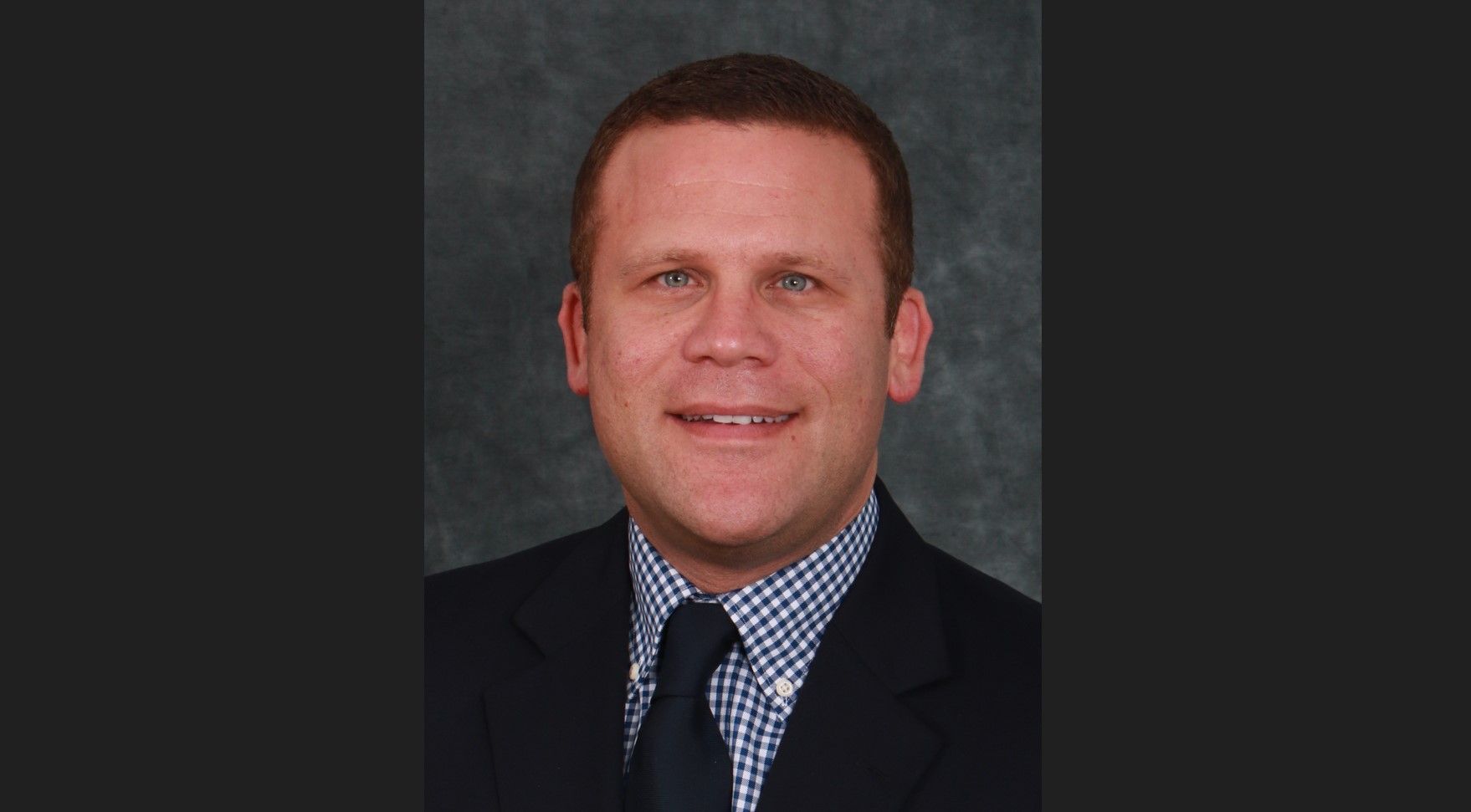
    Michael Gonidakis. Photo from the Ohio Medical Board.

    BY: JAKE ZUCKERMAN – Ohio Capital Journal

    Ohio Gov. Mike DeWine plans to re-appoint a longtime anti-abortion lobbyist and COVID-19 skeptic to the Ohio Medical Board, a spokesman said Monday.

    Michael Gonidakis, 48, a lawyer and president of Ohio Right to Life, will serve his third five-year term on the board, which is charged with licensing and disciplining physicians and other health care providers.

    “I’m honored that the governor has confidence in me to serve,” he said in an interview. “I think there’s no greater service than public service, and I encourage everybody to find a board or commission or way to give back to the state of Ohio.”

    Abortion rights advocates have criticized Gonidakis’ appointment in the past, claiming his anti-abortion lobbying intractably clashes with his state responsibilities. More recently, the U.S. Supreme Court’s overturning of Roe v. Wade in June allowed a new abortion restriction in Ohio to take effect that gives enforcement authority to the state medical board.

    Ohio’s new abortion law, enacted hours after Roe’s demise, prohibits the procedure starting at about six weeks after a woman’s last period, with narrow exceptions to save the life of the mother. This exemption requires physicians to document their beliefs in writing regarding a woman’s medical emergency and report it to the Ohio Department of Health. The Ohio Medical Board can revoke or suspend a physician’s license for noncompliance, or order the state attorney general to initiate a case seeking up to a $20,000 fine.

    Gonidakis sits on the medical board as one of three members who “shall represent the interests of consumers,” per state law. At least two of those members “shall not be a member of, or associated with, a health care provider or profession.”

    Besides his anti-abortion advocacy, state lobbying records show Gonidakis has registered to lobby for an array of health care clients before state lawmakers and the executive branch during his time on the board.

    For instance, he has represented eight medical marijuana companies: The Source HoldingsCannaNat TheraputicsCielo ProcessingNorth Coast TherapeuticsOhio ReleafGreenleaf GardensThe Pharm, and Marijuana Policy Group.

    His other health care clients have included WebMD Health Corp., Comprehensive Pain ManagementHealth Compliance Associates, and Proove Biosciences.

    A spokeswoman for the state medical board declined to answer whether Gonidakis is complying with the requirements of the consumer representative board seat, only noting that the governor appoints members of the board.

    Dan Tierney, a DeWine spokesman, said the appointment doesn’t create any conflict.

    “With respect to abortion or marijuana, neither of these have been an issue related to Mr. Gonidakis’ service in his first two terms,” he said. “We trust they will not be an issue in his third term either, as the vast majority, if not almost all, of medical licensure issues are unrelated to abortion or medical marijuana.”

    He added the sentiment applies to Gonidakis’ other lobbying clients’ industries as well.

    Gonidakis said he recuses himself on issues relating to abortion and medical marijuana when they come up before the Medical Board. He said he believes he’s following the statute, given his clients likely don’t qualify as a “health care provider.”

    COVID skeptic

    A review of Gonidakis’ comments on social media about COVID-19 show a pattern of skepticism around lockdowns, masks, closing schools, efficacy of vaccines, and vaccination policies.

    In February of 2021, Gonidakis shared a Fox News article quoting Dr. Anthony Fauci, the federal government’s top infectious disease expert, warning indoor dining is still unsafe after vaccination given high rates of COVID-19 spread at the time.

    “If this is accurate (and I do not believe it is), then there is absolutely no reason to get the vaccine … There is just no justifiable reason whatsoever,” he said.

    Around that same time, he shared an article citing a study suggesting hydroxychloroquine could help COVID-19 patients. The drug grew in popularity following praise from former President Donald Trump, despite multiple, large-scale, double-blind studies finding no benefit in treating COVID-19 and possible risk to patients.

    “Wonder how many Americans had to die because politicians and the media hated Trump so much & just rejected this drug because Trump promoted it???” he said.

    He said in an interview he’s not an “anti-vaxxer” and that he and his family are all vaccinated against COVID-19. He noted the Medical Board doesn’t create policy — it abides by state law. Of his tweets, he said he doesn’t retract any of his comments, but noted they come in his personal capacity and not as a member of the medical board.

    “Any Ohioan can be vaccinated and want to protect the health of their family but also question some of the politicians’ decisions that are being made,” he said. “At the medical board, we license and regulate doctors. We don’t set policy as it relates to pandemics.”


  • Catherine Stein: Ohio public health professor by day; a COVID-19 truther by night

    Catherine Stein: Ohio public health professor by day; a COVID-19 truther by night

    The Wolstein Research Building at Case Western Reserve University. Photo from Google Maps.

    By Jake Zuckerman and Ohio Capital Journal

    More than 500,000 Americans have died from COVID-19, but that’s not scaring Catherine Stein.

    As the pandemic’s death toll rises and the scientific consensus has crystalized regarding how COVID-19 spreads and how to prevent it, Stein, who teaches infectious disease epidemiology at Case Western Reserve University, remains defiant.

    COVID-19, she wrote in January 2021, is “not the scary killer the media and government portray it to be.”

    The Centers for Disease Control and Prevention, the World Health Organization, the American Medical Association, state health departments, and the rest have it all wrong, according to Stein.

    On blogs, research posts published by anti-vaccine political groups, and in testimony to state lawmakers, Stein insists that COVID-19 simply isn’t that bad.

    She claims that the Ohio Department of Health pads its case counts; the Ohio Hospital Association inflates hospitalization numbers it provides to ODH; health officials fear monger via flawed projection models; the death count only looks bad because of the rate of people dying of COVID-19 who have preexisting medical conditions; and other assertions downplaying COVID-19.

    Catherine Stein. Source: Case Western Reserve University

    ODH’s COVID-19 dashboard — which provides daily updates on cases, hospitalizations, infections, vaccinations, testing and more — has been “inaccurate, inconsistent, and confusing,” Stein alleged to lawmakers in June.

    Stein’s take on COVID-19, among the leading killer of Ohioans since its emergence, is unmistakably at odds with the greater public health community, nearly all of whom oppose various legislative attacks on the health department that Stein lends her expertise to support.

    Case Western Reserve University, where Stein has worked since 2004, emphasized she does not speak on behalf of the university. A spokesman declined to provide any professor from the school of medicine or public health to back Stein’s remarks up.

    She is currently conducting research funded by the National Institute of Allergy and Infectious Diseases, the National Institute of Health, and the Gates Foundation, according to the university.

    She teaches introduction to epidemiology, infectious disease epidemiology, and other courses.

    Her role as a COVID-19 skeptic raises key questions: Where does academic freedom end and counter-factualism begin? Who is an expert and who isn’t?

    What do you do with health misinformation during a pandemic in a society that cherishes and protects the freedom of speech?

    When lawmakers advanced legislation last year to give themselves the ability to strike down health orders, the Ohio State Medical Association, the Ohio Hospital Association, the state chapter of the American Academy of Pediatrics, an association representing Ohio’s health commissioners, and more all testified in opposition to the idea.

    They argued it would politicize public health and allow lawmakers — many of whom refuse to wear masks and regularly downplay the severity of the pandemic — to strike down key public health tools like mask mandates or bar and restaurant capacity limits.

    Conversely, Stein emailed several lawmakers to submit testimony in support of the bill. She argued that masks don’t work; the “emphasis on case counts is inappropriate;” and that “this continued focus on fear and likely inflated numbers is doing nothing but hurting families;” and cites research from Health Freedom Ohio, an anti-vaccine group that has refocused its advocacy on COVID-19 issues.

    “I refuse to live in fear of a virus with a >99% survival rate,” she wrote in an email to lawmakers, obtained via public records request.

    “This fear narrative must stop.”

    Email from Catherine Stein to lawmakers, obtained via public records request.

    The emails are from a personal account, though they list her as an associate professor at Case Western.

    In one, she sent a copy of the email to Thomas Renz and Robert Gargasz, two lawyers suing the health department seeking to overturn all public health orders related to the pandemic. In the last month, a federal judge deemed their lawsuit nearly “incomprehensible.” Likewise, YouTube removed footage of Renz’s legislative testimony to a panel of lawmakers for violating its policies on COVID-19 misinformation.

    Stein broke from the medical experts and testified in support of different versions of legislation written to allow lawmakers to vote down public health orders. She spoke in support of the bills alongside affiliates of HFO and the Ohio Advocates for Medical Freedom, another anti-vaccine group that has similarly refocused on COVID-19.

    Stein testified in support of a “Truth in COVID Statistics” bill this summer, which essentially would force ODH by law to publish certain data points about COVID-19 — most of which the department already publishes.

    In a January 2021 blog post published by All In Ohio, an online hotbed of anti-mask and anti-public health activism and organizing, Stein invoked a piece of misinformation that public health officials have combatted since the coronavirus was first detected — that it’s just the flu.

    “People get sick, but these statistics very much resemble influenza,” Stein said. “There have been years with even higher influenza hospitalization rates, even exceeding hospital capacity, but those didn’t get media attention or invoke shutdowns of businesses and church closures.”

    The comparison between COVID-19 and the flu is baseless. The CDC estimates that between 12,000 and 61,000 Americans die of the flu in a given year. The U.S. is nearing 500,000 COVID-19 deaths since the pandemic began.

    Similarly, no statewide public health order closed churches in Ohio, though many churches chose to do so internally.

    Even into February 2021, Stein’s view of the pandemic has hardly budged, as evidenced by testimony submitted to lawmakers last week.

    About 954,000 Ohioans have been diagnosed with COVID-19. Nearly 50,000 have been hospitalized with the disease. Nearly 17,000 have died.

    COVID-19 data comes from public and private labs, hospitals, health departments, urgent care centers and governments across the globe. More than 110 million people worldwide have contracted COVID-19, 2.44 million of whom have died, according to data from Johns Hopkins University.

    Historically, epidemiological data on pandemics are usually underestimated, not overestimated. Thus, the CDC tracks “excess deaths” — the rate of mortality above an estimated normal rate of death in a population — to gauge pandemics’ death tolls. Undiagnosed cases, provider issues, data submission issues and more can all warp official counts of cases and deaths.

    Analysis of the excess death data from the Journal of American Medicine, the University of Minnesota, and media outlets have found the COVID-19 death toll is likely an underestimation.

    Stein’s outlook on COVID-19 is on the fringe of the public health community, according to Angy El-Khatib, president of the Ohio Society for Public Health Education.

    “You can debate methods of dealing with the issue at hand, but to deny there is an issue at hand is just negligence to me,” she said.

    Beyond fighting a wily new virus and its emerging mutations, El-Khatib said, health care workers now also must combat a deluge of COVID-19 misinformation as it proliferates online. She said it’s sad to hear a public health professional is worsening things.

    “There’s no denying that the misinformation is out there, and it’s affecting and delaying our response to the pandemic,” she said.

    Dr. Cathy Slemp, a former state health officer and bureau of infectious disease director in West Virginia, reviewed Stein’s testimony and writings. She said they seem to reflect her political opinions.

    Dr. Cathy Slemp (LinkedIn photo)

    “I’d be concerned about both many of the data interpretations made and the website materials cited,” she said. “Few have been nor would they stand up to scientific peer review.”

    The university distanced itself from Stein’s comments.

    “The views Associate Professor Stein expressed regarding Senate Bill 311 neither reflect nor align with those of Case Western Reserve,” said William Lubinger, a Case spokesman, in a written statement.

    William Lubinger, a Western Reserve University spokesman (University photo)

    He said all university faculty are free to express their personal perspective as individuals.

    However, the university requires students on campus to wear masks, while Stein peddles bunk claims that masks could “adversely affect the health of the mask wearer.”

    The university says it’s working to secure vaccines for the community, while Stein moonlights as a researcher for Health Freedom Ohio, a group allied with Robert F. Kennedy’s Children’s Health Defense, one of the most prolific national anti-vaccine advocacy groups.

    Stein did not respond to multiple interview requests.

    When she reached out in May 2020 to Sen. Kristina Roegner, who sponsored Senate Bill 311, Stein was a familiar name. She testified in support of the “heartbeat bill” Roegner sponsored in 2019, which bans abortions six weeks after gestation.

    “I’m not sure you realized this, but my actual career is as an infectious disease epidemiologist,” she wrote.

    “I believe the response to COVID-19 has been absolutely wrong at the state level and I will happily testify in favor of your bill.”