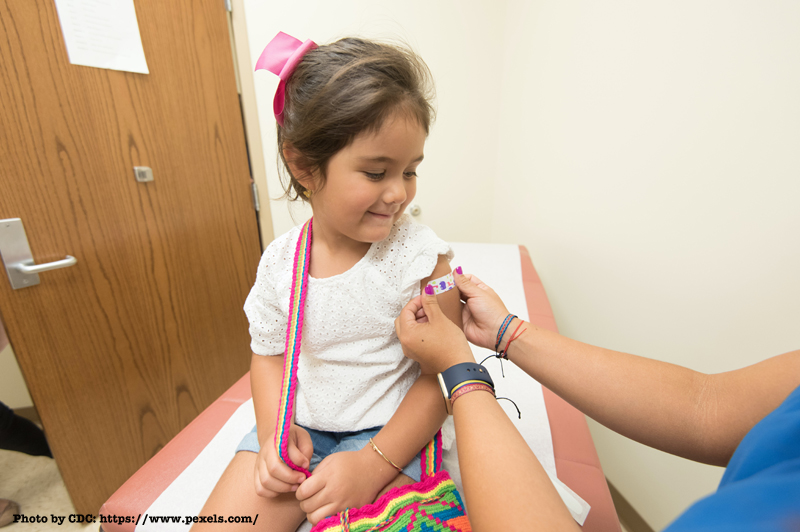
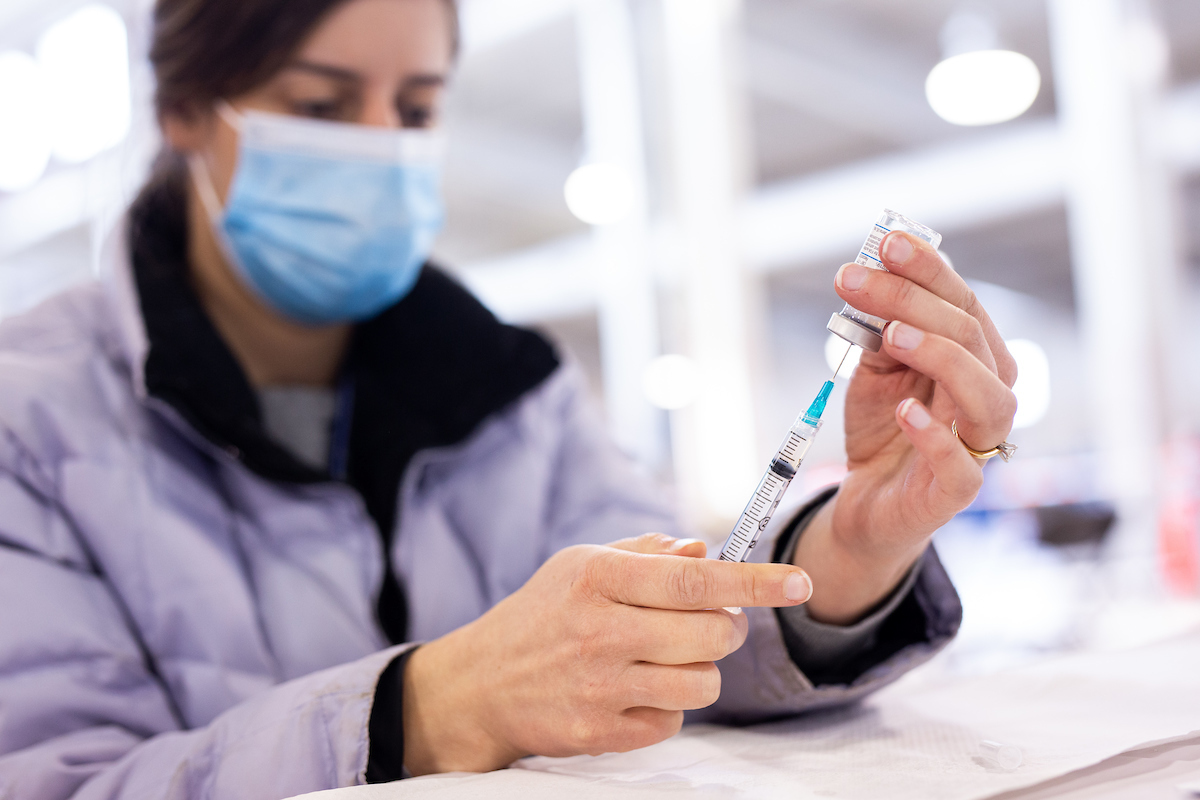
Today, the U.S. Food and Drug Administration amended the emergency use authorizations (EUAs) of the updated (bivalent) Moderna and Pfizer-BioNTech COVID-19 vaccines to include use in children down to 6 months of age.
“More children now have the opportunity to update their protection against COVID-19 with a bivalent COVID-19 vaccine, and we encourage parents and caregivers of those eligible to consider doing so – especially as we head into the holidays and winter months where more time will be spent indoors,” said FDA Commissioner Robert M. Califf, M.D. “As this virus has changed, and immunity from previous COVID-19 vaccination wanes, the more people who keep up to date on COVID-19 vaccinations, the more benefit there will be for individuals, families and public health by helping prevent severe illnesses, hospitalizations, and deaths.”
What parents and caregivers need to know:
Children 6 months through 5 years of age who received the original (monovalent) Moderna COVID-19 Vaccine are now eligible to receive a single booster of the updated (bivalent) Moderna COVID-19 Vaccine two months after completing a primary series with the monovalent Moderna COVID-19 Vaccine.
Children 6 months through 4 years of age who have not yet begun their three-dose primary series of the Pfizer-BioNTech COVID-19 Vaccine or have not yet received the third dose of their primary series will now receive the updated (bivalent) Pfizer-BioNTech COVID-19 vaccine as the third dose in their primary series following two doses of the original (monovalent) Pfizer-BioNTech COVID-19 Vaccine.
Children 6 months through 4 years of age who have already completed their three-dose primary series with the original (monovalent) Pfizer-BioNTech COVID-19 Vaccine will not be eligible for a booster dose of an updated bivalent vaccine at this time. Children in this age group who already completed their primary series would still be expected to have protection against the most serious outcomes from the currently circulating omicron variant. The data to support giving an updated bivalent booster dose for these children are expected in January. The agency is committed to evaluating those data as quickly as possible.
The Moderna and Pfizer-BioNTech bivalent COVID-19 vaccines include an mRNA component corresponding to the original strain to provide an immune response that is broadly protective against COVID-19 and an mRNA component corresponding to the omicron variant BA.4 and BA.5 lineages to provide better protection against COVID-19 caused by the omicron variant.
Individuals who receive the updated (bivalent) vaccines may experience similar side effects reported by individuals who received previous doses of the original (monovalent) mRNA COVID-19 vaccines.
The fact sheets for both bivalent COVID-19 vaccines for recipients and caregivers and for healthcare providers include information about the potential side effects, as well as the risks of myocarditis and pericarditis.
“Vaccines remain the best defense against the most devastating consequences of disease caused by the currently circulating omicron variant, such as hospitalization and death. Based on available data, the updated, bivalent vaccines are expected to provide increased protection against COVID-19,” said Peter Marks, M.D., Ph.D., director of the FDA’s Center for Biologics Evaluation and Research. “Parents and caregivers can be assured that the FDA has taken a great deal of care in our review, and we encourage parents of children of any age who are eligible for primary vaccination or a bivalent COVID-19 vaccine booster dose to consider seeking vaccination now as it can potentially help protect them from COVID-19 during a time when cases are increasing.”
Moderna COVID-19 Vaccine, Bivalent
The monovalent Moderna COVID-19 Vaccine is authorized as a two-dose primary series in individuals six months of age and older and as a third primary series dose for individuals 6 months of age and older who have been determined to have certain kinds of immunocompromise. With today’s authorization, the Moderna COVID-19 Vaccine, Bivalent is now authorized for administration in individuals 6 months through 5 years of age as a single booster dose at least 2 months after completion of primary vaccination with the monovalent Moderna COVID-19 Vaccine. The Moderna COVID-19 Vaccine, Bivalent is also authorized for use in individuals 6 years and older as a single booster dose at least two months after completion of either primary vaccination with any authorized or approved COVID-19 vaccine, or receipt of the most recent booster dose with any authorized or approved monovalent COVID-19 vaccine.
For the authorization of a single booster dose of the Moderna COVID-19 Vaccine, Bivalent for children 6 months through 5 years of age, the FDA relied on immune response data that it had previously evaluated from a clinical study in adults of a booster dose of Moderna’s investigational bivalent COVID-19 vaccine that contained a component corresponding to the original strain of SARS-CoV-2 and a component corresponding to the omicron lineage BA.1.
In addition, the FDA conducted an analysis of data from a clinical study that compared the immune response among 56 study participants 17 months through 5 years of age who received a single booster dose of monovalent Moderna COVID-19 Vaccine at least six months after completion of a two-dose primary series of the vaccine to the immune response among approximately 300 study participants 18 through 25 years of age who had received a two-dose primary series of monovalent Moderna COVID-19 Vaccine in a previous study which determined the vaccine to be effective in preventing COVID-19. The immune response to the booster dose of monovalent Moderna COVID-19 Vaccine in the 17 months through 5 years age group was comparable to the immune response to the two-dose primary series in the adult participants.
The safety of a single booster dose of the Moderna COVID-19 Vaccine, Bivalent for children 6 months through 5 years of age is supported by safety data from a clinical study which evaluated a booster dose of Moderna’s investigational bivalent COVID-19 vaccine (original and omicron BA.1), safety data from clinical trials which evaluated primary and booster vaccination with the monovalent Moderna COVID-19 Vaccine, and postmarketing safety data with the monovalent Moderna COVID-19 Vaccine and Moderna COVID-19 Vaccine, Bivalent.
In one clinical study, the safety of a single booster dose of monovalent Moderna COVID-19 Vaccine was evaluated in 145 clinical study participants 6 months through 5 years of age who received a booster dose of monovalent Moderna COVID-19 Vaccine at least six months after completion of the monovalent Moderna COVID-19 Vaccine two-dose primary series. The most commonly reported side effects after a booster dose of the monovalent Moderna COVID-19 Vaccine across this age group included pain, redness and swelling at the injection site, swelling/tenderness of the lymph nodes of the injected arm or thigh, and fever. In clinical study participants 17 months through 36 months of age, other commonly reported side effects included irritability/crying, sleepiness, and loss of appetite. In clinical trial participants 37 months through 5 years of age, other commonly reported side effects included fatigue, headache, muscle pain, joint pain, chills, and nausea/vomiting.
The data accrued with the investigational Moderna bivalent COVID-19 vaccine (original and omicron BA.1) and with the monovalent Moderna COVID-19 Vaccine are relevant to the Moderna COVID-19 Vaccine, Bivalent because these vaccines are manufactured using the same process.
Pfizer-BioNTech COVID-19 Vaccine, Bivalent
With today’s authorization, children 6 months through 4 years of age who have not yet received the third dose of the three-dose primary series with the monovalent Pfizer-BioNTech COVID-19 Vaccine will now receive the Pfizer-BioNTech COVID-19 Vaccine, Bivalent as the third dose of the primary series. The Pfizer-BioNTech COVID-19 Vaccine, Bivalent is also authorized for administration in individuals 5 years of age and older as a single booster dose at least two months after completion of either primary vaccination with any authorized or approved COVID-19 vaccine, or receipt of the most recent booster dose with any authorized or approved monovalent COVID-19 vaccine.
With today’s action, the monovalent Pfizer-BioNTech COVID-19 Vaccine is no longer authorized for use as the third dose of the three-dose primary series in children 6 months through 4 years of age. The monovalent Pfizer-BioNTech COVID-19 Vaccine remains authorized for administration as the first two doses of the three-dose primary series in individuals 6 months through 4 years of age, as a two-dose primary series for individuals 5 years of age and older, and as a third primary series dose for individuals 5 years of age and older who have been determined to have certain kinds of immunocompromise.
The authorization of the Pfizer-BioNTech COVID-19 Vaccine, Bivalent for administration as the third dose of a three-dose primary series following two doses of the monovalent Pfizer-BioNTech COVID-19 Vaccine in children 6 months through 4 years of age is supported by the FDA’s previous analyses of the effectiveness of primary vaccination with the monovalent Pfizer-BioNTech COVID-19 Vaccine in individuals 16 years of age and older and individuals 6 months through 4 years of age, and previous analyses of immune response data in adults greater than 55 years of age who had received a two-dose primary series and one booster dose with the monovalent Pfizer-BioNTech COVID-19 Vaccine and a second booster dose with the investigational Pfizer-BioNTech bivalent COVID-19 vaccine (original and omicron BA.1).
The safety of the Pfizer-BioNTech COVID-19 Vaccine, Bivalent for administration as the third dose of a three-dose primary series following two doses of the monovalent Pfizer-BioNTech COVID-19 Vaccine in children 6 months through 4 years of age is based on safety data from a clinical study which evaluated a booster dose of Pfizer-BioNTech’s investigational bivalent COVID-19 vaccine (original and omicron BA.1) in individuals greater than 55 years of age, safety data from clinical trials which evaluated primary vaccination in individuals 6 months of age and older with the monovalent Pfizer-BioNTech COVID-19 Vaccine, safety data from clinical trials which evaluated booster vaccination in individuals 5 years of age and older with the monovalent Pfizer-BioNTech COVID-19 Vaccine and postmarketing safety data with the monovalent Pfizer-BioNTech COVID-19 Vaccine and the Pfizer-BioNTech COVID-19 Vaccine, Bivalent.
The data accrued with the investigational Pfizer-BioNTech bivalent COVID-19 vaccine (original and omicron BA.1) and with the monovalent Pfizer-BioNTech COVID-19 Vaccine are relevant to the Pfizer-BioNTech COVID 19 Vaccine, Bivalent because these vaccines are manufactured using the same process.
The amendments to the EUAs were issued to Moderna TX Inc. and Pfizer Inc.
The virus that causes COVID-19 changes over time. Keep your protection against COVID-19 up to date by getting a bivalent COVID-19 vaccine booster dose.
The bivalent COVID-19 vaccines include a component of the original virus strain to provide broad protection against COVID-19 and a component of the omicron variant to provide better protection against COVID-19 caused by the omicron variant. These are called bivalent COVID-19 vaccines because they contain these two components. A bivalent COVID-19 vaccine may also be referred to as “updated” COVID-19 vaccine booster dose.
COVID-19 vaccines can help protect against severe illness, hospitalization and death from COVID-19. As the virus changes and your immunity naturally decreases over time, you may lose some of that protection.
Search in your zip code to find a location where a bivalent COVID-19 vaccine booster dose is available near you.
What bivalent COVID-19 vaccines has FDA authorized for use as a booster dose?
Video: Why should I get the updated COVID-19 vaccine now? [1:35]
The FDA authorized bivalent formulations of the Moderna and Pfizer-BioNTech COVID-19 vaccines for use as a single booster dose.
The Moderna COVID-19 Vaccine, Bivalent is authorized for use as single booster dose in children 6 months through 5 years of age at least two months after completion of a primary series with the monovalent Moderna COVID-19 Vaccine. It is also authorized for use as a single booster dose in individuals 6 years of age and older at least two months after completion of either primary vaccination with any authorized or approved COVID-19 vaccine, or receipt of the most recent booster dose with any authorized or approved monovalent COVID-19 vaccine.
The Pfizer-BioNTech COVID-19 Vaccine, Bivalent is authorized for use as a single booster dose in individuals 5 years of age and older at least two months after completion of either primary vaccination with any authorized or approved COVID-19 vaccine or receipt of the most recent booster dose with any authorized or approved monovalent COVID-19 vaccine.
Am I eligible for an updated (bivalent) COVID-19 vaccine booster?
Eligibility for a booster depends on:
Your age
When you completed your primary vaccination OR
When received your most recent booster dose of a monovalent COVID-19 vaccine
If eligible, consider getting a bivalent COVID-19 vaccine booster dose.
Video: Are the new bivalent COVID-19 vaccines safe? [1:57]
A single booster dose with an updated bivalent COVID-19 vaccine provides broad protection against COVID-19 and is expected to provide better protection against COVID-19 caused by the currently circulating Omicron variant.
CDC recommends use of COVID-19 Community Levels to determine the impact of COVID-19 on communities and to take action. CDC also provides Transmission Levels (also known as Community Transmission) to describe the amount of COVID-19 spread within each county. Healthcare facilities use Transmission Levels to determine infection control interventions.
The COVID-19 Community Level and associated metrics presented below are updated weekly on Thursday; the values for the same hospital-based metrics presented below may differ because they are updated daily.
Weekly deaths and cases are rising in Butler County.
COVID-19 Community Level Medium Recommended actions based on current level Stay up to date with COVID-19 vaccines. Get tested if you have symptoms. Wear a mask if you have symptoms, a positive test, or exposure to someone with COVID-19. Wear a mask on public transportation. You may choose to wear a mask at any time as an additional precaution to protect yourself and others. If you are at high risk for severe illness, consider wearing a mask indoors in public and taking additional precautions.
Weekly deaths and cases are rising in Clermont County.
COVID-19 Community Level Medium Recommended actions based on current level Stay up to date with COVID-19 vaccines. Get tested if you have symptoms. Wear a mask if you have symptoms, a positive test, or exposure to someone with COVID-19. Wear a mask on public transportation. You may choose to wear a mask at any time as an additional precaution to protect yourself and others. If you are at high risk for severe illness, consider wearing a mask indoors in public and taking additional precautions.
Weekly deaths and cases are rising in Hamilton County.
COVID-19 Community Level Medium Recommended actions based on current level Stay up to date with COVID-19 vaccines. Get tested if you have symptoms. Wear a mask if you have symptoms, a positive test, or exposure to someone with COVID-19. Wear a mask on public transportation. You may choose to wear a mask at any time as an additional precaution to protect yourself and others. If you are at high risk for severe illness, consider wearing a mask indoors in public and taking additional precautions.
Weekly deaths and cases are rising in Warren County.
COVID-19 WARREN Community Level Medium Recommended actions based on current level Stay up to date with COVID-19 vaccines. Get tested if you have symptoms. Wear a mask if you have symptoms, a positive test, or exposure to someone with COVID-19. Wear a mask on public transportation. You may choose to wear a mask at any time as an additional precaution to protect yourself and others. If you are at high risk for severe illness, consider wearing a mask indoors in public and taking additional precautions.Weekly Metrics Used to Determine the COVID-19 Community Level
This story was originally published by ProPublica. ProPublica is a Pulitzer Prize-winning investigative newsroom. Sign up for ProPublica’s The Big Story newsletter to receive stories like this one in your inbox.
Late one afternoon last October, Dr. Shelley Odronic sat in her office and, just as she had thousands of times before, slid a rectangular glass slide onto her microscope.
A pathologist who works in rural Ohio, Odronic leaned forward to examine tissue from the placenta of a woman who had recently given birth. She increased the magnification on the microscope. Never had she seen so many tiny, congealed reservoirs of blood or such severe inflammation of the tissue, a sign the placenta had been fighting an infection.
“Right away, I knew it wasn’t compatible with life,” Odronic said.
She asked her secretary to print out the patient’s chart. In dark letters were the words “fetal demise.” A stillbirth, the death of a fetus at 20 weeks or more of pregnancy. But that didn’t solve the mystery. Odronic had examined many placentas from pregnancies that ended in stillbirth. None looked like this — withered and scarred.
Odronic kept reading. No chronic medical conditions. Good prenatal care. Then, buried in the middle of the report, she spotted something. Seven days before the stillbirth, the mother had tested positive for COVID-19. Odronic wondered if the virus could explain the damage to the placenta. In the world of placenta pathology, a new affliction is unusual, especially one so dramatic in presentation and so devastating in effect.
In the world of placenta pathology, a new affliction is unusual, especially one so dramatic in presentation and so devastating in effect.
Her mind traveled to Dr. Amy Heerema-McKenney, a pathologist at Cleveland Clinic and an expert on the placenta, who had trained Odronic during residency. Odronic went to sleep that night with a pit in her stomach and a plan to call her former teacher in the morning.
Heerema-McKenney was in her office when the phone rang. As she listened, she knew that what Odronic was describing was what she and her colleagues had observed repeatedly over the past several months: a patient positive for the coronavirus, a placenta destroyed by COVID-19, a baby stillborn.
Their next discovery was equally stunning. None of the stillbirths they studied involved a pregnant person who had been fully vaccinated. The doctors checked with colleagues across the country and around the world. The fatal pattern held.
Unvaccinated women who contracted COVID-19 during pregnancy were at a higher risk of stillbirths. They also were more likely to be admitted to the intensive care unit, give birth prematurely or die. Yet their greatest protection — the COVID-19 vaccine — sat largely untouched, buried under doubt, polluted by disinformation.
Pharmaceutical companies and government officials failed to ensure that pregnant people were included in the early development of the COVID-19 vaccine, a calamitous decision made amid the urgency of a rapidly spreading pandemic. That decision left pregnant people with little research to rely on when making a critical decision on how best to keep the babies growing inside of them safe.
Their greatest protection — the COVID-19 vaccine — sat largely untouched, buried under doubt, polluted by disinformation.
At the same time that research was excluding pregnant people from vaccine trials, a full-scale assault on vaccination was unfolding online. Taking advantage of the lack of data, conspiracy theorists, anti-vaxxers and even some medical professionals spread false claims about the vaccine’s safety in pregnancy, leading many pregnant people to delay or refuse the vaccine. Even now, with numerous studies unequivocally announcing the safety of the vaccine for pregnant people, some doctors have failed to communicate the dangers of COVID-19 to pregnant people or the vaccine’s role in mitigating it.
The Centers for Disease Control and Prevention contributed to the confusion with vague early messaging about whether pregnant people should get vaccinated. While Americans lined up at pharmacies and stalked vaccine websites in hopes of securing a shot last year, pregnant people had some of the lowest vaccination rates among adults, with only 35% fully vaccinated by last November. Meanwhile, many Americans were already moving on to their boosters after federal officials that month expanded eligibility for the additional shots to anyone 18 or older. And much of the country was beginning to return to pre-pandemic life. The Sunday after Thanksgiving, for instance, set the record for the busiest day of air travel since March 2020.
November also marked a key moment in the understanding of COVID-19’s impact on stillbirths. A CDC study looking at 1.2 million births in the first 18 months of the pandemic found that more than 8,000 pregnancies ended in stillbirths, including more than 270 of them in patients with a documented COVID-19 diagnosis at the time of delivery.
Although stillbirths were rare overall, babies were dying. The risk of a stillbirth nearly doubled for those who had COVID-19 during pregnancy compared with those who didn’t. And during the spread of the delta variant, that risk was four times higher.
The risk of a stillbirth nearly doubled for those who had COVID-19 during pregnancy compared with those who didn’t.
Indeed, doctors discovered that some stillbirths resulted from COVID-19 directly infiltrating the placenta, a condition they named SARS-CoV-2 placentitis. Cases were found even in people whose COVID-19 symptoms were mild or nonexistent. In some cases, however, placentas were discarded with medical waste without being tested for COVID-19, and parents never learned what led to their baby’s stillbirth.
COVID-19 also led to stillbirths among pregnant people who became exceedingly ill after contracting the virus. It damaged their lungs and clotted their blood, putting their babies in such severe distress that they were born before they could take their first breath.
“These are pregnancies that should not have ended,” Heerema-McKenney said.
She and others had tried to alert the CDC as well as maternal and state health organizations to their findings, but she said they either didn’t get a response or were told they needed to collect more data and publish studies. Pathologists are experts in disease diagnosis, dealing with death and illness from the safe distance of their labs. Convincing obstetricians who met with patients daily or doctors who were making policy recommendations was a challenge.
“I tried to sound the alarm. We tried so hard to get people to listen,” Heerema-McKenney said. “It was a really frustrating place to be as pathologists doing these autopsies, looking at these placentas and saying, ‘God, no, not another case.’”
Around the same time Heerema-McKenney was examining the damaged placentas, Ginger Munro was on life support in a hospital 250 miles away in another part of Ohio.
She and her husband, Kendal, had been trying to have a child for five years. They hadn’t expected that she’d get pregnant in the middle of a pandemic. But when her pregnancy test came back positive in the spring of 2021, she rushed to post a picture of it in an online pregnancy group. “Is it just me or can you see the 2 lines??” she asked.
The pandemic had already brought much change to their lives. Ginger, who lives in the small town of Washington Court House in southwest Ohio, quit her job as assistant nutrition director with the county’s Commission on Aging. She stationed hand sanitizer throughout her house and in her car, and she only went grocery shopping early in the morning. If she noticed someone in an aisle, she skipped it.
“I knew the virus was real,” she said, “but I was terrified to take the vaccine.”
Ginger worried that the vaccine’s development had been rushed, and she hadn’t seen any data showing it was safe for pregnant people. At this point, the CDC had not explicitly recommended the vaccine during pregnancy. Ginger already worried she was tempting fate by getting pregnant at 40; she said she didn’t want to risk endangering her baby by taking the vaccine.
Besides, if it was really important, her doctor would have mentioned it, and, she said, she would have followed his advice. But, she said, he never did. Her family hadn’t gotten vaccinated either. In a mostly rural county where less than half of the residents were vaccinated, they were hardly alone.
Her doctor declined to comment through a spokesperson at the hospital system where he works; the spokesperson said the hospital couldn’t disseminate information about the vaccine to pregnant patients before it was recommended.
Ginger’s pregnancy progressed without complications. She and Kendal shared the news of a new baby with Ginger’s two daughters from a previous marriage. At their kitchen table, near a sign that read “eat cake for breakfast,” Sophia, then 14, covered her mouth with both hands while Hailee, then 18, simply beamed.
At a backyard gender reveal three months later, Ginger’s growing belly resembled a basketball against her tiny frame. She leaned in to kiss her husband, her long, dark hair falling onto her shoulders. Red confetti rained down on the deck.
Kendal, an aircraft maintenance and avionics manager at an airport two counties away, worked through the pandemic. In the summer, when they realized his cough was actually COVID-19, it was too late. Ginger was sick.
When they realized his cough was actually COVID-19, it was too late. Ginger was sick.
Having trouble reaching her doctor, she went to two different emergency rooms. One, she said, declined to treat her with monoclonal antibodies, which research had shown can be an effective treatment for pregnant people with COVID-19. The other, which described her in medical records as “an exceedingly pleasant individual admitted with symptomatic COVID-19 pneumonia,” transferred her about an hour away to the University of Cincinnati Medical Center. There, records show, she was admitted with acute respiratory distress syndrome due to COVID-19.
The University of Cincinnati doctor asked Ginger and Kendal — who was on FaceTime because of the hospital’s COVID-19 protocols — about “fetal priority.” Ginger made her wishes clear: Save the baby, their baby, the baby they had tried so hard to have. Kendal, who was worried about both his wife and their unborn child, said he went along with Ginger in that moment.
“You were so scared,” Kendal wrote in a notebook that night. “We told each other over and over how much we loved each other.”
They hung up so the doctors could insert a breathing tube. Before they could begin, Kendal called back three more times just to hear her voice.
Doctors put Ginger on ECMO, a form of life support reserved for the sickest patients. Kendal, Hailee, Sophia and Ginger’s mother and sister were later allowed in the hospital two at a time, and they prayed at her bedside nearly every night. Ginger was sedated, her face swollen and obscured by tubing, her cheeks flattened by the crush of the ventilator straps, her wrists tied down so she wouldn’t accidentally pull out her breathing tube.
Her family took solace in knowing the baby’s heartbeat was steady and her ultrasounds were normal. The doctors gave Ginger medication to help the baby’s lungs mature in case she was born early. After more than 30 days on ECMO, doctors took Ginger off the machine only to put her back on the next morning. She was the first patient in the hospital’s history to be placed on ECMO twice.
The plan, records show, was to deliver at 28 weeks. But the day after Ginger was put back on life support, Kendal got the call telling him the baby was on her way. As doctors prepared for the delivery in Ginger’s intensive care room, the family camped out in the waiting room, jittery from excitement and vending machine snacks. They talked about baby names and future family outings. They pulled the waiting room chairs together to form makeshift beds and covered themselves with blankets they brought from home.
They don’t know if they actually fell asleep before a nurse burst through the doors screaming at them to follow. “She’s coming! She’s coming!” They didn’t make it far before they were blocked by doctors and nurses, some huddled over an incubator in the middle of the hall and the rest crowded around Ginger.
Hailee tried to peer over the sea of blue scrubs to catch the first glimpse of her little sister. She smiled beneath her black mask. She’ll be OK, she said to herself.
But after a few minutes of trying to revive the baby, a doctor told Kendal it was time. Kendal nodded, asked for a chair and collapsed as he tried to process his daughter’s death.
Then another wave of grief washed over him. Someone would have to tell Ginger.
Ginger’s medical records describe a baby born at 27 weeks “without signs of life” after an “uncomplicated delivery.” Her placenta had separated from the wall of the uterus, the risk of which studies have shown increases with COVID-19.
When Ginger woke up, she looked down at her sunken belly and realized she had given birth. She assumed her daughter was in the newborn intensive care unit. Ginger was barely able to speak around the tube in her trachea, but after a few days in which no one brought the baby to her, she couldn’t wait any longer. Ginger turned to her mother and sister and mouthed the words, “Where’s the baby?”
When Ginger woke up, she looked down at her sunken belly and realized she had given birth. She assumed her daughter was in the newborn intensive care unit.
The room fell silent. They called Kendal, who rushed to the hospital. He told her what had happened. He described their daughter’s dark hair and her long fingers and toes, just like her mother’s.
Ginger, who had always loved the sweet smell of a newborn’s breath, whispered to her husband.
“Did you smell her breath?”
“She wasn’t breathing,” he said.
In the hurried quest for a safe and effective COVID-19 vaccine, pharmaceutical companies and government officials did not include pregnant people in their initial plans. It’s a failure that continues to reverberate.
“They absolutely should have been included in COVID vaccine trials from the beginning,” said Kathryn Schubert, president and CEO of the Society for Women’s Health Research, a Washington, D.C.-based nonprofit that advocates for the inclusion of women in research and clinical trials.
Researchers and advocates have spent more than four decades trying to dismantle the belief that it’s unsafe or unethical for pregnant women to participate in clinical trials. A couple years ago, it seemed like they had finally prevailed.
Shortly before leaving office, President Barack Obama signed into law the 21st Century Cures Act, which established the Task Force on Research Specific to Pregnant Women and Lactating Women. The group found longstanding obstacles, including liability concerns, to including pregnant and lactating people in clinical research. It concluded that recommending halting medication or forgoing treatment while pregnant may actually endanger the health of the mother and her fetus more than the treatment itself.
The need for everything from asthma to depression medication doesn’t stop when a person gets pregnant, and when a catastrophic event such as a pandemic hits, experts said, pregnancy should not preclude someone from receiving life-saving treatment.
Around the same time, researchers discovered that the Zika virus, which was mainly transmitted through mosquitoes, could pass from a pregnant person to their fetus and cause severe birth deformities. A second group of experts joined together to develop separate guidance on including pregnant people in the research, development and deployment of pandemic vaccines.
Both groups pushed to remove pregnant women from a list of vulnerable populations that required additional review before being allowed to participate in research. Instead of proving that pregnant women should be included, manufacturers would need to provide compelling evidence for why they shouldn’t.
In 2018, the federal task force issued recommendations calling for including pregnant and breastfeeding people in biomedical research, and the Department of Health and Human Services adopted some of the guidance. But a gap remained between what the task force and others insisted was needed and what was actually happening.
“We were frustrated because COVID-19 provided an opportunity to implement the recommendations of the task force,” said Dr. Diana Bianchi, the director of the Eunice Kennedy Shriver National Institute of Child Health and Human Development and the chair of the task force.
In February 2021, Bianchi and her colleagues published an article lamenting the exclusion of those who were pregnant or breastfeeding from the initial COVID-19 vaccine clinical trials. “Pregnant and lactating persons should not be protected from participating in research, but rather should be protected through research,” they wrote.
Ruth Faden, the founder of the Johns Hopkins Berman Institute of Bioethics, helped lead the group that issued the guidance after Zika. She and others urged manufacturers to include pregnant people in the development of the COVID-19 vaccine as part of Operation Warp Speed, the federal program that provided billions of taxpayer dollars to pharmaceutical companies to speed up vaccine production.
“There is a playbook in place so that when the U.S. launches Operation Warp Speed, it should be pretty obvious what should be done,” she said. “It’s not like no one knows how to do this, either ethically or technically.
“Nevertheless, it doesn’t happen,” Faden added. “Once again, pregnant people are left behind.”
A spokesperson for Pfizer said the company followed guidance from the Food and Drug Administration. Although pregnant people were not included in the initial vaccine clinical trials, Pfizer tested its vaccine on pregnant rats and did not identify any safety concerns. The company subsequently launched a clinical trial with pregnant women but halted it because at that point the vaccine had already been recommended for pregnant people.
Similarly, Moderna also studied its vaccine on pregnant animals, but the company said it made the decision “to prioritize the study of the safety and efficacy” of the vaccine in adults who weren’t pregnant. It called that approach “consistent with the precedent to study new vaccines in pregnant women only after demonstration of favorable benefit and risk in healthy adults.”
In response to questions from ProPublica, Johnson & Johnson referred a reporter to its website, which didn’t address the relevant issues.
Some government officials, including several from the Food and Drug Administration, said they support having pregnant women take part in clinical studies of vaccines for emerging infectious disease, including COVID-19. A spokesperson for the National Institute of Allergy and Infectious Diseases, which is part of the National Institutes of Health, said the agency did not “dictate the protocol development” for the trials and said that responsibility lies with the companies.
The failure to include pregnant people early on in COVID-19 vaccine trials was, at least in part, a casualty of the tremendous urgency to respond to an intense public threat and develop the vaccine as quickly as possible, Faden said. But multiple groups had published road maps on how to ethically include pregnant people without slowing down that process.
“I can’t tell you how many pregnant people might not have died or how many stillbirths might not have occurred if the playbook had been followed,” she said, “but I’m willing to bet it was a significant chunk that would have been prevented if there had been a full-throated, evidence-based recommendation for COVID-19 vaccines in pregnancy almost simultaneous to when it was available for the rest of the adult population.”
“I can’t tell you how many pregnant people might not have died or how many stillbirths might not have occurred if the playbook had been followed,” she said.
By the time the CDC specifically recommended the vaccine for pregnant people, in August 2021, the damage had been done.
A dizzying and vague series of advisories led to confusion and delayed vaccinations. When the COVID-19 vaccines were first made available in December 2020, the CDC said health care workers and residents of long-term care facilities should be prioritized, but the shots were not explicitly recommended for pregnant people. Instead, the agency said on its webpage for vaccines and pregnancy that pregnant health care workers “may choose to be vaccinated.” In explaining that decision, the CDC said that experts had considered how mRNA vaccines, which do not contain the live virus, work. They concluded that the vaccines “are unlikely to pose a risk for people who are pregnant.”
“However,” the CDC added, “the potential risks of mRNA vaccines to the pregnant person and her fetus are unknown because these vaccines have not been studied in pregnant women.”
In January, the World Health Organization recommended against pregnant people getting the vaccine unless they faced increased risk, such as complicating comorbidities or exposure to the virus due to a job in health care, but the agency later reversed course.
A few months later, in March 2021, the CDC continued its lukewarm messaging that pregnant people “may choose” to be vaccinated. The agency listed some points for pregnant people to consider discussing with their health care providers, starting with how likely they are to be exposed to COVID-19.
After a promising study showed that the vaccine was safe for pregnant people, CDC Director Dr. Rochelle Walensky said at a White House briefing in late April that the CDC was recommending the vaccine for them. But the CDC did not update its website to reflect her comments and said the agency’s guidance had not changed: Pregnant people “may choose to be vaccinated.”
Once again, pregnant people were put in the precarious position of receiving ambiguous and inconsistent recommendations. In May 2021, the CDC reiterated that pregnant people faced an increased risk of getting severely ill from COVID-19, but the language surrounding the vaccine — “If you are pregnant, you can receive a COVID-19 vaccine” — was noncommittal.
A CDC spokesperson, responding to questions from ProPublica, said in an email that pregnant people were part of the first recommendations in December 2020 that encouraged people 16 and older to get vaccinated. At that time, data about the safety and efficacy of the vaccine during pregnancy was limited “because pregnant people had been excluded from pre-authorization clinical trials,” so the CDC included additional supporting language for pregnant people, saying they were eligible and could choose to receive the vaccine. The agency said its recommendations were based on available evidence and evolved throughout the pandemic.
Before making changes to its guidance, the CDC had its team of scientists review available data to ensure that there was “an abundance of evidence.”
“For each update to the statement of risks during pregnancy, multiple types of studies and the strength of evidence for each were reviewed,” another CDC spokesperson said. “These reviews of the evidence were accompanied with discussions among subject matter experts both internally and externally with clinical partners for an ultimate determination of risk.”
Dr. Cynthia Gyamfi-Bannerman, a perinatologist and chair of the department of obstetrics, gynecology and reproductive sciences at the University of California, San Diego School of Medicine, shared the daunting task of making vaccine recommendations for pregnant people as part of COVID-19 task forces for two leading organizations, The American College of Obstetricians and Gynecologists and the Society for Maternal-Fetal Medicine.
In the beginning, she said, the only pregnancy-specific data they had came from a few dozen participants who were inadvertently included after becoming pregnant during the clinical trials and from some pregnant animal data.
“It played out in real time in the COVID pandemic because we see the effects of not including pregnant people in these trials,” Gyamfi-Bannerman said. “We couldn’t make a strong recommendation, so pregnant people were hesitant. I think that directly led to fewer people using the vaccine than we would have wanted.”
At the end of June 2021, the CDC added a general update to its website to reflect the dangers of the delta variant tearing across much of the country. “Getting vaccinated prevents severe illness, hospitalizations, and death,” it wrote. “Unvaccinated people should get vaccinated and continue masking until they are fully vaccinated.”
But it wasn’t until Aug. 11, eight months after the first vaccine was administered, that the CDC issued its formal recommendation that pregnant and breastfeeding people get vaccinated.
“The vaccines are safe and effective,” Walensky said in a statement at the time, “and it has never been more urgent to increase vaccinations as we face the highly transmissible Delta variant and see severe outcomes from COVID-19 among unvaccinated pregnant people.”
August would prove to be the deadliest month for COVID-19-related deaths of pregnant people. The CDC issued an emergency call the next month strongly recommending the vaccine to pregnant people, noting that approximately 97% of pregnant people hospitalized with COVID-19 were unvaccinated. The dangers to symptomatic pregnant people included a 70% increased risk of death, and their developing babies could face a host of perils, including stillbirths.
August would prove to be the deadliest month for COVID-19-related deaths of pregnant people. The CDC issued an emergency call the next month strongly recommending the vaccine to pregnant people, noting that approximately 97% of pregnant people hospitalized with COVID-19 were unvaccinated. The dangers to symptomatic pregnant people included a 70% increased risk of death, and their developing babies could face a host of perils, including stillbirths.
Researchers have yet to determine exactly why some pregnant people with COVID-19, vaccinated and unvaccinated alike, deliver stillborn babies, while others do not. Attempts to answer that question have been hindered, in part, by incomplete data. The CDC’s statistics on COVID-19-related fetal and maternal deaths are undercounts. The CDC has data on less than 73,000 birth outcomes following a mother’s confirmed COVID-19 diagnosis in 2020 and 2021, of which 579 were pregnancy losses.
That information was sent in by fewer than three dozen health departments, and those estimates don’t include states like Mississippi, which in September reported 72 COVID-19-related stillbirths since the start of the pandemic, nearly double what the state would have expected, according to data from the Mississippi State Department of Health. Preliminary state data shows total stillbirths increased there in 2020 then dipped in 2021, but were still higher than pre-pandemic numbers.
A separate CDC database shows more than 220,000 COVID-19 cases and at least 305 deaths among pregnant people.
“CDC recognizes that pregnant people faced challenging decisions about how to best protect themselves in the setting of uncertainty related to both the infection and the COVID-19 vaccine,” a CDC spokesperson said, adding, “COVID-19 vaccination remains one of the best ways to protect yourself and your family from serious illness from COVID-19.”
Heartbroken and determined, Jaime Butcher has emerged as an unofficial ambassador for the vaccine, posting in online pregnancy and stillbirth forums about the risks of being pregnant and unvaccinated.
No one, she said, told her of the risks. Doctors, the CDC and health officials, she continued, aren’t doing enough to inform people. Even now, well into the pandemic’s third year, the message still isn’t getting through.
No one, she said, told her of the risks. Doctors, the CDC and health officials, she continued, aren’t doing enough to inform people. Even now, well into the pandemic’s third year, the message still isn’t getting through.
“I kept seeing it happening more and more to women and it wasn’t talked about,” she said. “They just say, ‘Oh, get the vaccine,’ which is great, but they don’t talk about what getting the virus can do to pregnant women.”
As a wedding planner, Butcher was surrounded by love. She found it with her husband, then in the daughter growing in her belly, who they named Emily after Butcher’s grandmother.
Butcher suffered five miscarriages before, she said, she opened an email from an in-vitro fertilization clinic confirming her pregnancy in the summer of 2020. She screamed, and her husband rushed to wrap her in a hug.
They waited until she was five months along to announce her pregnancy at Thanksgiving. The next day, Black Friday, they bought a high chair, a tummy time mat and pink onesies.
They were taking precautions, Butcher said, especially since the vaccine wasn’t yet available to her or her husband. But a week later, she woke up with a runny nose, though she didn’t think much of it. Still, she went to the hospital to make sure everything was OK. An ultrasound came back normal.
When her daughter’s kicking slowed the next morning, she called her doctor’s office again. They told her to eat something sweet to get the baby moving. She tried everything she could find: orange juice, Cheerios, Twix, graham crackers, peanut butter and jelly. Nothing worked.
A few hours later, Butcher drove herself to the hospital, where she followed her daughter’s heartbeat on the screen. Steady. Then slow. Then still.
A few hours later, Butcher drove herself to the hospital, where she followed her daughter’s heartbeat on the screen. Steady. Then slow. Then still.
She delivered at 23 weeks. Butcher didn’t know she had COVID-19 until they tested her at the hospital. A lab report later revealed extensive damage to the placenta.
“I was in shock. I was in shock that I lost my daughter, in shock that I had COVID,” Butcher said. “She should be alive, but it’s because of COVID that I lost her.”
A week later, she parked in front of Kohl’s to return the high chair, the clothes still on tiny hangers and the stroller her mom gave her. As she made her way to the register, she saw a baby in an identical stroller. The tears stung all the way down her cheeks.
“You see what you want right in front of you,” she said, “and it’s like, ‘My baby should be here. This shouldn’t have happened.’”
Even before the pandemic, almost a quarter of all stillbirths may have been preventable. The stillbirth crisis has simmered silently in the U.S., claiming the lives of more than 20,000 babies annually. But parents often suffer alone, overwhelmed by grief and guilt.
Butcher, now 45, scheduled her vaccine as soon as she could. Her second dose fell on what was supposed to be Emily’s due date. After getting the shot, she and her husband drove up to Cleveland to visit their daughter’s grave and tell her that her mother got the vaccine in her honor. They let her know how much she was loved and how desperately they wished she was still safe inside her mother’s womb.
They didn’t linger long that spring day. It was a quiet visit. Butcher brought Emily pink flowers, always pink, and said goodbye.
They didn’t know it at the time, but they’d be back in a year to introduce her to her little brother.
Amid the devastation of the pandemic, Heerema-McKenney sees a glimmer of hope. The antibodies from the vaccine have been shown to transfer through the placenta. That immunity in the womb, research shows, reduces the risk of the youngest infants being hospitalized with COVID-19. She continues to encourage pregnant patients to get vaccinated and boosted. If not for them, for their baby.
While 71% of pregnant people were fully vaccinated as of mid-July, a figure not much lower than national vaccination rates for people 18 or older, only around 2% received at least one of their shots while they were pregnant — suggesting that persuading people who are already pregnant to get vaccinated remains a challenge. Research points to a substantial waning in immunity five to eight months after getting the first vaccine, yet only 58% of pregnant people were boosted. Like with booster rates among those who aren’t pregnant, Black and Hispanic people trail behind.
Heerema-McKenney said obesity, high blood pressure, age and diabetes may also increase the risk of stillbirth, but, she said, it appears the strongest risk factor is not being vaccinated.
“We have a set of data saying that the vaccination is safe, and we have a set of data saying that COVID causes an increase in stillbirth. When you’re seeing those two,” she said, “to me it says, ‘Get the vaccine.’”
Another reason for optimism is that the height of SARS-CoV-2 placentitis appears to have coincided with the dominance of the delta variant; Heerema-McKenney said she has not seen a case of COVID-19 directly infiltrating the placenta for months.
Neither has Odronic, who is relieved to get back to her routine work of cancer biopsies after the punishing period last fall when she saw one to two stillbirths a week. Her hospital honored her in November as Physician of the Year for the “tireless leadership she demonstrated during the COVID response,” the first time the award was given to a pathologist.
But, doctors warn, the virus continues to mutate and the risk of stillbirth remains.
“Maybe we’re out of the woods with this, but we just don’t know,” Heerema-McKenney said. “There’s nothing more tragic than seeing a healthy pregnancy end because of something that’s potentially preventable.”
Back in southwest Ohio, doctors released Ginger from the hospital at the end of October, two and a half months after she was admitted. Her oldest daughter, Hailee, who is now 19, got vaccinated shortly after her mother was hospitalized. Ginger said she wanted to get vaccinated when she awoke in the hospital, but she said her doctors told her to wait a bit.
Since then, she said, her fear of the vaccine came flooding back.
At a recent appointment, Ginger listened carefully as her doctor urged her to get vaccinated, which, the doctor said, would be even more important if she were to get pregnant again. Ginger trusted her. “There’s no agenda behind it,” Ginger said. “I will get the vaccine.”
Ginger continues to wrestle with feelings of gratitude and guilt for surviving when her baby did not. In December, the family held a memorial service for the daughter they named Elliotte Jo and called Ellie. Ginger and Kendal were still too grief-stricken to speak, so Hailee and her uncle prepared remarks.
“You have the best dad that I know would have given you everything under the sun and protected you with every ounce of his being,” Hailee said. “And you also have the best mom to guide you through life. Having two older sisters, you would have had the best wardrobe and many visits to Starbucks.”
She breathed laughter into the room, if only briefly.
In June, the family traveled to Florida. As the waves lapped against the shore and the sunrise turned the sky pink, they etched Elliotte’s name in the sand.
CDC Recommends COVID-19 Vaccines for Young Children
On Saturday, CDC Director Rochelle P. Walensky, M.D., M.P.H., endorsed the Advisory Committee on Immunization Practices’ (ACIP) recommendation that all children 6 months through 5 years of age should receive a COVID-19 vaccine. This expands eligibility for vaccination to nearly 20 million additional children and means that all Americans ages 6 months and older are now eligible for vaccination.
Parents and caregivers can now get their children 6 months through 5 years of age vaccinated with the Pfizer-BioNTech or Moderna vaccines to better protect them from COVID-19. All children, including children who have already had COVID-19, should get vaccinated.
COVID-19 vaccines have undergone—and will continue to undergo—the most intensive safety monitoring in U.S. history. Parents and caregivers can play an active role in monitoring the safety of these vaccines by signing their children up for v-safe – personalized and confidential health check-ins via text messages and web surveys where they can easily share with CDC how a child feels after getting a COVID-19 vaccine.
Distribution of pediatric vaccinations for these younger children has started across the country, and will be available at thousands of pediatric practices, pharmacies, Federally Qualified Health Centers, local health departments, clinics, and other locations this week. Children in this younger age group can be vaccinated with whichever vaccine is available (either Moderna or Pfizer-BioNTech). Parents can reach out to their doctor, nurse, local pharmacy, or health department, or visit vaccines.gov to see where vaccines for children are available.
“Together, with science leading the charge, we have taken another important step forward in our nation’s fight against COVID-19. We know millions of parents and caregivers are eager to get their young children vaccinated, and with today’s decision, they can. I encourage parents and caregivers with questions to talk to their doctor, nurse, or local pharmacist to learn more about the benefits of vaccinations and the importance of protecting their children by getting them vaccinated,” said CDC Director Dr. Rochelle P. Walensky.
WASHINGTON — A COVID-19 vaccine for young children will be delayed by at least two months as Pfizer and BioNTech gather more information on a three-dose regimen.
The disappointing news for many parents came after the Biden administration earlier had announced it was preparing to get the vaccines out to states as soon as it could following federal approval.
The pharmaceutical companies and the Food and Drug Administration released separate statements Friday saying a review of the vaccine for children under 5 years old will likely not take place until early April.
“Based on the agency’s preliminary assessment, and to allow more time to evaluate additional data, we believe additional information regarding the ongoing evaluation of a third dose should be considered as part of our decision-making for potential authorization,” the FDA said in a statement.
The FDA said it would postpone the Vaccines and Related Biological Products Advisory Committee meeting scheduled for Tuesday to “give the agency time to consider the additional data, allowing for a transparent public discussion as part of our usual scientific and regulatory processes for COVID-19 vaccines.”
Pfizer and BioNTech began submitting data to the FDA on a two-dose regimen for children under 5 earlier this month at the request of the agency.
Pfizer Chairman and Chief Executive Officer Albert Bourla said at the time the company would submit data on a two-dose regimen while it continued researching a three-dose regimen.
“Ultimately, we believe that three doses of the vaccine will be needed for children 6 months through 4 years of age to achieve high levels of protection against current and potential future variants,” he said on Feb. 1.
The Biden administration immediately began getting ready for approval of the emergency use authorization request. White House Coronavirus Response Coordinator Jeffrey Zients said the next day the federal government was preparing to ship the vaccine to states as soon as it was approved.
“Following FDA authorization, we would immediately begin packing and shipping doses to states and health care providers,” Zients said, noting the federal government had already “secured ample doses and the necessary needles and supplies” designed for this age group.
The White House was also preparing to work with local and state health officials as well as pediatricians to distribute information about the vaccine, including to hesitant parents.
That process now won’t get underway until at least April, as Pfizer and BioNTech gather more data on what will likely be a three-shot vaccine.
“Given that the study is advancing at a rapid pace, the companies will wait for the three-dose data as Pfizer and BioNTech continue to believe it may provide a higher level of protection in this age group,” the companies said in a statement. “The companies expect to have three-dose protection data available in early April.”
WASHINGTON — Pfizer and BioNTech on Tuesday asked the federal government to begin the approval process for a two-dose COVID-19 vaccine for children under 5.
The companies said in a joint statement they began the rolling submission process for an emergency use authorization at the request of the Food and Drug Administration “in response to the urgent public health need in this population.”
While the approval process is underway for the two-dose regimen, the company will continue researching a third dose that would likely be given at least eight weeks after a child receives the second dose.
Pfizer Chairman and Chief Executive Officer Albert Bourla said in the statement that increasing infections and hospitalizations of young children led the two companies to begin the approval process.
“As hospitalizations of children under 5 due to COVID-19 have soared, our mutual goal with the FDA is to prepare for future variant surges and provide parents with an option to help protect their children from this virus,” Bourla said.
“Ultimately, we believe that three doses of the vaccine will be needed for children 6 months through 4 years of age to achieve high levels of protection against current and potential future variants.”
Bourla said that if the FDA authorizes the two doses, that would allow parents to begin vaccinating their young children while waiting on approval of a third dose.
The submission announcement on Tuesday comes sooner than previously expected.
In mid-December, Pfizer and BioNTech announced they were modifying their trial to include a third dose of the vaccine for children between 2 and 4 years old after the two-dose approach didn’t lead to the type of immune response researchers sought. The trial did, however, produce the levels desired in children between six months and 2 years old.
The company said at the time that if the three-dose trial was successful, it would likely submit its emergency use request to the federal government in the first half of 2022.
Dr. Anthony Fauci, director of the National Institute of Allergy and Infectious Diseases, then said last week that parents needed to be patient in waiting for approval of the vaccine for younger children.
“I don’t think we can predict when we will see an [emergency use authorization] with that because the company is still putting the data before the FDA,” Fauci said during a White House briefing on the pandemic.
A poll released Tuesday by the Kaiser Family Foundation indicated about 31 percent of parents would get their small children vaccinated immediately.
Another 29 percent said they would wait and see while 12 percent said only if required and 26 percent of respondents said they definitely would not give their young child the vaccine.
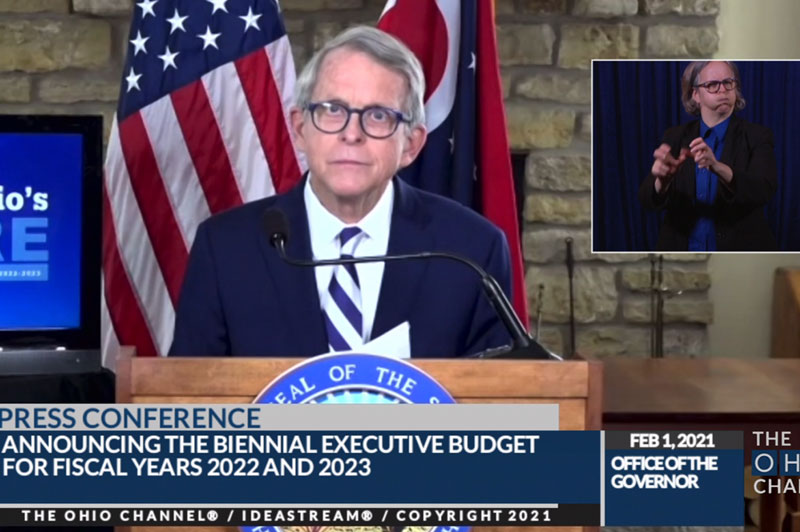
Some are questioning Gov. Mike DeWine’s sincerity when he says he’s doing all he can to fight the spread of coronavirus among children.
DeWine and the leaders of children’s hospitals are in a panic over the lack of masking in Ohio schools. Hospital admissions of children with covid are up 536% since July and the hospitals report that they’re being overwhelmed by the surging delta variant and an unusual jump in other respiratory illnesses.
DeWine and the hospitals are pleading with local school officials to enact their own mask mandates because DeWine says his hands are tied by Senate Bill 22 — a law the GOP-controlled legislature passed in March over his veto.
It circumscribes the governor’s ability to issue health orders such as his 2020 statewide mask mandate by limiting them to 30 days. After that, the legislature would have to sign off in order to continue them.
Asked on Tuesday why he wouldn’t impose a mask mandate as a temporary measure, DeWine said he didn’t want to muddy the issue.
“All that will do is cause a great deal of confusion and then I think people would say, ‘Well there’s no mandate on, there’s no requirement on, we can go back, there’s really no reason to keep masks on,” the governor said. “I’m afraid what would happen is we would slide backwards, we would go the wrong way.”
However, some noted that when SB 22 was passed, the governor, who is a lawyer, didn’t believe it would stand up in court.
Lots of talk out there excusing @GovMikeDeWine's refusal to issue a school mask mandate.
His hands are NOT tied. He could issue a mandate today and if the legislature fights it, he could take them to court.
“Lots of talk out there excusing @GovMikeDeWine‘s refusal to issue a school mask mandate,” Katie Paris, founder of the group Red Wine and Blue, tweeted. “His hands are NOT tied. He could issue a mandate today and if the legislature fights it, he could take them to court.”
She followed up with a thread that included the statement DeWine issued when he vetoed SB 22.
“We believe that significant portions of SB 22 are unconstitutional,” the statement says. “Parts of the bill violate the separation of powers doctrine embedded in our Ohio Constitution; other parts violate Article II, Section 15 of the Ohio Constitution, proscribing how laws must be made; and even other parts of the bill likely violate Article IV, Section 5 of the Ohio Constitution, by exercising power reserved to the judiciary.”
Loveland School Superintendant Mike Broadwater
Loveland School Superintendant Mike Broadwater told Loveland Magazine on Thursday, “It is unfortunate that Governor DeWine no longer has the power to issue health orders that would put every school district across the state in the same situation if that’s what he feels is best. But by leaving it to local control, he’s allowing each district to make the decision that fits best for their community.”
The current policy of the Loveland City School District is that students in grades PreK-6 are required to wear a mask indoors. Students in grades 7-12 do not have to wear face coverings. All others, while in the buildings must wear masks.
The Legislative Service Commission also questioned the legality of a draft of the bill, writing that it “might be vulnerable to a constitutional challenge on the grounds that the legislature cannot take such an action by resolution.” But for some reason, it was dropped from the final version of the bill, which was otherwise unchanged.
Asked why DeWine doesn’t just impose a mask order and fight it out in court, Press Secretary Dan Tierney on Wednesday said it was too risky.
“Somebody who’s advocating for that is hoping that a judge puts on an immediate restraining order that would allow (the mask mandate) to continue, but you also have to weigh the chance that a judge could rule the other way: that the legislative recision is perfectly valid,” Tierney said.
He added that DeWine’s current approach — persuading local officials to put on their own mask mandates — is making rapid progress. The portion of students in schools with mask mandates has jumped from 35% on Sept. 1 to 54% on Tuesday, Tierney said.
“We went from a little over a third to a little over a half of students being in a school where everybody wears a mask in less than two weeks,” he said.
But while DeWine is blaming the GOP supermajority in the legislature for sapping his ability to fight his coronavirus, on Wednesday he signed off on legislative maps that would preserve that supermajority. Even as DeWine helped to approve the maps, he questioned whether they would survive a court challenge, Gannett journalist Haley BeMiller reported.
.@GovMikeDeWine told reporters in Circleville that he voted for maps he wasn’t happy with because he didn’t think there would be an agreement, even if they kept working.
“I felt we needed just to get it over with and move on.”
The move by DeWine — who has also criticized President Joe Biden’s vaccination-or-test mandate — prompted a blast from John Hagner, campaign manager for Dayton Mayor Nan Whaley, who is seeking the 2022 Democratic gubernatorial nomination.
“Mike DeWine on Tuesday: the gerrymandered Republican supermajority is keeping me from protecting kids and keeping them in school,” Hagner tweeted. “Mike DeWine on Wednesday: ok, let’s have four more years of an even more gerrymandered Republican supermajority.”
Reporter Jake Zuckerman of the Ohio Capital Journal and David Miller, Editor of Loveland Magazine contributed to this rstory.
Top U.S. health officials announced a plan Wednesday to begin offering COVID-19 booster shots to Americans starting Sept. 20, with the scheduling of the additional shot to be based on when a person was fully vaccinated.
The new round of jabs will be extended to those who received the two-dose vaccine from either Pfizer or Moderna, and can be taken eight months after an individual’s second dose.
Dr. Vivek Murthy, the U.S. surgeon general, told reporters Wednesday that recent data makes clear that while the current COVID-19 vaccines have been highly effective against severe disease, hospitalization and death, the protection against mild and moderate disease has appeared to decrease over time.
“This is likely due to both waning immunity and the strength of the widespread delta variant,” Murthy said, adding that health officials are concerned that the decline in immunity could reduce protection against severe disease and death in the months ahead.
The more than 13 million Americans who received the one-dose shot from Johnson & Johnson may also need boosters, but will not yet be eligible.
Federal health officials said they are awaiting data from J&J in the next few weeks before urging additional doses. The J&J shot wasn’t approved until March, so those who received it will not hit eight months past inoculation until November.
The new booster rollout plan is subject to formal authorization from the Food and Drug Administration and the Centers for Disease Control and Prevention’s vaccine panel.
Those agencies will hold public meetings before the booster rollout can begin. But officials said they were detailing the booster plan ahead of those meetings in part to give state and local health officials time to prepare for another wave of vaccination logistics.
State and local health officials again under pressure
The plan for offering a third shot puts yet another layer of pressure on state and local health departments that have carried out the massive vaccination campaign.
Those officials are still seeking to boost vaccination rates that have lagged in certain regions amid skepticism and misinformation. Meanwhile, vaccine manufacturers are expected this fall to seek approval for administering shots to children under 12, who so far have not been eligible.
During Wednesday’s news briefing, Dr. Rochelle Walensky, the CDC director, cited several new studies that tracked vaccine effectiveness, including among New Yorkers across age groups and another following case counts from nursing homes.
Those studies have shown that protection against severe infection has held up but not against milder infections, she said, adding that other countries, such as Israel, also are starting to see “worsening outcomes.”
“In the context of all of these studies, different cohorts, different settings across the country, and our international colleagues, we’ve made the decision to plan for these booster doses,” Walensky said.
The booster shots will be available at roughly 80,000 sites nationally, including 40,000 local pharmacies. As with the other COVID-19 shots, the boosters will be free of charge.
The CDC had already approved a third COVID-19 shot for some immunocompromised individuals, who may not have received strong protection from the initial doses of the vaccine.
While the booster plan does not specifically mention other categories of individuals to receive a priority for boosters, the initial vaccine rollout did put certain groups first in line. So the first individuals to hit eight months after their second shot should be those in the earliest priority categories, such as health care workers and nursing home residents.
In response to the Food and Drug Administration’s (FDA) recent action that authorizes an additional dose of COVID-19 vaccine for immunocompromised individuals, CMS is assuring people with Medicare who qualify for an additional dose that they can receive it with no cost sharing. This is part of President Biden’s commitment that patients have access to the necessary vaccinations to protect themselves from COVID-19.
Medicare would pay for administering an additional dose of COVID-19 vaccines consistent with the modified FDA emergency use authorization (EUA) that was announced today. For COVID-19 vaccines administered on or after March 15, 2021, the national average payment rate for physicians, hospitals, pharmacies and many other immunizers is $40 to administer each dose of a COVID-19 vaccine. The Medicare program would continue to pay providers $40 to administer this additional dose – the same amount as paid for other doses of the COVID-19 vaccine.
CMS will share more information and guidance in the coming days about billing and coding for the additional dose of the COVID-19 vaccine for immunocompromised patients.
Loveland, Ohio – The Loveland City School District Board of Education met tonight. Without a motion coming forward to change or alter the “Use of Face Coverings/Masks” policy, the Board let stand the current policy of the District.
Below is the current policy.
Revised June 3, 2021
8450.01 – USE OF FACE COVERINGS/MASKS
The Loveland Board of Education is committed to providing students, staff, and visitors with a safe and healthy environment.
On May 12, 2021, Ohio Governor Mike DeWine lifted the State’s COVID – 19 mask requirements, including the requirement of face coverings inside public buildings, effective June 2, 2021 Furthermore, he declared that local school districts will make their own determinations on Covid-19 mitigation efforts, including the wearing of masks and/or face shields.
As of the adoption date, June 3, 2021, of this updated policy, unless required by additional mandates, the decision to wear face coverings/masks on school buses, in school buildings, or at other school events, will be left to adult individuals and parents/guardians of K-12 students. The Loveland City Schools will continue to follow COVID-19 mitigation protocols to maintain a healthy environment for students, staff, and visitors and will continue to provide recommendations for personal protection from the spread of infectious diseases.
In order to maintain a healthy environment, the Board will follow any mandates set forth by the Ohio Governor, Ohio State Health Department, Hamilton County Health Department, and Ohio Department of Education, (“Directing Entities”) as it relates to protecting the health of students, staff and visitors. When any of these Directing Entities requires staff, students, and visitors to wear face coverings/masks while attending school, reporting to work at a school, or visiting a school, the District’s Administration will follow and enforce such directives.