Tag: COVID-19 vaccines

  • COVID-19 Treatments and Medications

    COVID-19 Treatments and Medications

    From the CDC: What You Need to Know

    • If you test positive for COVID-19 and are more likely to get very sick, treatments are available that can reduce your chances of hospitalization and death.
    • Don’t delay: Treatment must be started within days after you first develop symptoms to be effective.
    • Other medications can help reduce symptoms and help you manage your illness.
    • The Treatment Locator (hhs.gov) can help you find a location that offers testing and treatment or a pharmacy where you can fill your prescription.

    Treating COVID-19

    illustration of older woman speaking on mobile phone with doctor

    If you test positive and are more likely to get very sick from COVID-19, treatments are availableexternal icon that can reduce your chances of being hospitalized or dying from the disease. Medications to treat COVID-19 must be prescribed by a healthcare provider and started as soon as possible after diagnosis to be effective. Contact a healthcare provider right away to determine if you are eligible for treatment, even if your symptoms are mild right now.

    Don’t delay: Treatment must be started within days of when you first develop symptoms to be effective.

    People who are more likely to get very sick include older adults (ages 50 years or more, with risk increasing with age), people who are unvaccinated, and people with certain medical conditions, such as chronic lung disease, heart disease, or a weakened immune system. Being vaccinated makes you much less likely to get very sick. Still, some vaccinated people, especially those ages 65 years or older or who have other risk factors for severe disease, may benefit from treatment if they get COVID-19. A healthcare provider will help decide which treatment, if any, is right for you. Check with your healthcare provider or pharmacist if you are taking other medications to make sure the COVID-19 treatments can be safely taken at the same time.

    Types of Treatments

    person receiving treatment pamphlet from healthcare provider

    The FDA has authorized certain antiviral medications and monoclonal antibodies to treat mild to moderate COVID-19 in people who are more likely to get very sick.

    • Antiviral treatments target specific parts of the virus to stop it from multiplying in the body, helping to prevent severe illness and death.
    • Monoclonal antibodies help the immune system recognize and respond more effectively to the virus.

    The National Institutes of Health (NIH) provides COVID-19 Treatment Guidelines for healthcare providers to help them work with their patients and determine the best treatment options for them. Several options are available for treating COVID-19. They include:

    Treament • Who • When • How


    Nirmatrelvir with Ritonavir (Paxlovid)Antiviral

    Adults; children ages 12 years and older

    Start as soon as possible; must begin within 5 days of when symptoms start

    Taken at home by mouth (orally)


    Remdesivir (Veklury)Antiviral

    Adults and children

    Start as soon as possible; must begin within 7 days of when symptoms start

    Intravenous (IV) infusions at a healthcare facility for 3 consecutive days

    BebtelovimabMonoclonal antibody


    Adults; children ages 12 years and older

    Start as soon as possible; must begin within 7 days of when symptoms start

    Single IV injection


    Molnupiravir (Lagevrio)Antiviral

    Adults

    Start as soon as possible; must begin within 5 days of when symptoms start

    Taken at home by mouth (orally)


    Some treatments might have side effects or interact with other medications you are taking. Ask a healthcare provider if medications to treat COVID-19 are right for you. If you don’t have a healthcare provider, visit a Test to Treat location or contact your local community health center or health department.

    If you are hospitalized, your healthcare provider might use other types of treatments, depending on how sick you are. These could include medications to treat the virus, reduce an overactive immune response, or treat COVID-19 complications.

    Managing COVID-19 symptoms
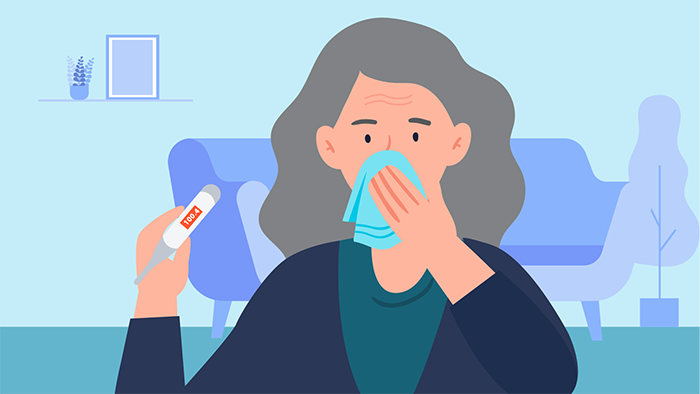
    person experiencing symptoms from COVID-19 infection

    Most people with COVID-19 have mild illness and can recover at home. You can treat symptoms with over-the-counter medicines, such as acetaminophen (Tylenol) or ibuprofen (Motrin, Advil), to help you feel better.

    Learn more about what to do if you are sick.


    Treatment Locator

    Click the link below or call 1-800-232-0233 (TTY 1-888-720-7489) to find a location that offers testing and treatment or a pharmacy where you can fill your prescription.

    View Locations


    Preventing COVID-19

    COVID-19 vaccines

    COVID-19 vaccines available in the United States effectively protect people from getting seriously ill, being hospitalized, and even dying—especially people who are boosted. As with vaccines for other diseases, you are protected best when you stay up to date. CDC recommends that everyone who is eligible stay up to date on their COVID-19 vaccines.

    To find COVID-19 vaccine locations near you: Search vaccines.gov, text your ZIP code to 438829, or call 1-800-232-0233.

    Preventive medications

    The FDA has issued an emergency use authorization for tixagevimab plus cilgavimab (EVUSHELDTM), a medicine that can help protect you from getting COVID-19. EVUSHELDTM contains two different antibodies and is given as two separate consecutive intramuscular (IM) injections at a doctor’s office or healthcare facility before you are exposed or test positive for COVID-19. If you are moderately or severely immunocompromised, or severely allergic to COVID-19 vaccines, you may be eligible for EVUSHELDTM  every 6 months. EVUSHELDTM  may offer less protection against certain strains of the Omicron variant. It is important that even if you receive EVUSHELDTM  you take multiple prevention measures. Additionally, you should undergo testing and seek medical attention if you develop symptoms of COVID-19, and start treatment for COVID-19 as appropriate. Talk to your healthcare provider to determine if EVUSHELDTM  is right for you.

    The right medications for COVID-19 can help. People have been seriously harmed and even died after taking products not approved for use to treat or prevent COVID-19, even products approved or prescribed for other uses. Talk to a healthcare provider about taking medications to treat COVID-19.

    For Healthcare Professionals

    General Treatment Resources

    Oral Antiviral Treatment Resources

    Monoclonal Antibody Treatment Resources

    Other Resources

  • FDA greenlights emergency use of COVID vaccines for kids under 5

    FDA greenlights emergency use of COVID vaccines for kids under 5

    BY: JENNIFER SHUTT –  Ohio Capital Journal

    WASHINGTON — The U.S. Food and Drug Administration on Friday authorized emergency use of two COVID-19 vaccines for children under 5, moving the country one step closer to having shots for all age groups.

    The decision leaves just one hurdle, a recommendation from the Centers for Disease Control and Prevention, before parents can begin getting babies and toddlers vaccinated against the virus. That CDC decision was expected this weekend.

    “As we have seen with older age groups, we expect that the vaccines for younger children will provide protection from the most severe outcomes of COVID-19, such as hospitalization and death,” FDA Commissioner Robert M. Califf said in a statement.

    “Those trusted with the care of children can have confidence in the safety and effectiveness of these COVID-19 vaccines and can be assured that the agency was thorough in its evaluation of the data.”

    The FDA’s decision to grant emergency use requests for a two-dose Moderna shot and a three-dose Pfizer vaccine came two days after its outside panel of advisers unanimously voted on Wednesday to recommend use of the two vaccines.

    White House COVID-19 Response Coordinator Ashish Jha said earlier this month that the federal government would begin shipping the vaccines to states as soon as the FDA granted the emergency use authorization.

    He expects shots can begin next week as long as the CDC issues its recommendation over the weekend.

    The Biden administration made 10 million doses of vaccine for kids under 5 available for states during a two-week pre-ordering period that closed Tuesday.

    States, tribes, territories, pharmacies and other federal partners ordered 2.5 million Pfizer doses, about 50% of those available, and 1.3 million Moderna doses, about 25%, according to a spokesperson for the U.S. Department of Health and Human Services.

    “Jurisdictions will have an opportunity to order additional doses if and when the vaccines are authorized by FDA and recommended by CDC,” an HHS spokesperson said in a statement.

    Florida vaccination distribution in question

    Florida remains the only state not to have placed any pre-orders.

    White House press secretary Karine Jean-Pierre said Thursday that some pharmacies and community health centers in the state would have COVID-19 vaccines for kids under 5 through federal distribution. But those options are limited for parents wishing to vaccinate their kids, she said.

    “By being the only state, this is Florida, not pre-ordering … pediatricians, for example, in Florida will not have immediate ready access to vaccines,” Jean-Pierre said.

    “Some pharmacies and community health centers in the state get access through federal distribution channels, but those options are limited for parents. We encouraged Florida on several occasions to order vaccines. We’ve been aware of this, and we will continue to do so.”

    Florida not pre-ordering, Jean-Pierre said, will “make it harder” for parents to get their children vaccinated.

    “That’s why we continued to, on several occasions, encourage Florida to do this,” she said.

    The Florida Department of Health said in a statement Thursday that its officials have “made it clear to the federal government that states do not need to be involved in the convoluted vaccine distribution process, especially when the federal government has a track record of developing inconsistent and unsustainable COVID-19 policies.”

    “Doctors can order vaccines if they are in need, and there are currently no orders in the Department’s ordering system for the COVID-19 vaccine for this age group,” the statement continued.

    Florida Gov. Ron DeSantis said Thursday that “there’s not going to be any state programs,” to vaccinate babies and toddlers against COVID-19.

    “That’s not something that we think is appropriate and so that’s not what we’re going to be utilizing our resources in that regard,” DeSantis said.

  • FDA Authorizes Second Booster Dose of Two COVID-19 Vaccines for Older and Immunocompromised Individuals

    FDA Authorizes Second Booster Dose of Two COVID-19 Vaccines for Older and Immunocompromised Individuals

    Today, the  U.S. Food and Drug Administration (FDA). authorized a second booster dose of either the Pfizer-BioNTech or the Moderna COVID-19 vaccines for older people and certain immunocompromised individuals. https://bit.ly/3NuxvY6

    They previously authorized a single booster dose for certain immunocompromised individuals following completion of a three-dose primary vaccination series.

    This action will now make a second booster dose of these vaccines available to other populations at higher risk for severe disease, hospitalization and death according to a FDA news release.

    The emergency use authorizations was amended as follows:

    • A 2nd booster dose of the Pfizer-BioNTech or Moderna COVID-19 vaccines may be administered to people 50+ years old at least 4 months after receipt of a 1st booster dose of any authorized or approved COVID-19 vaccine.
    • A 2nd booster dose of the Pfizer-BioNTech COVID-19 Vaccine may be administered to people 12+ years old with certain kinds of immunocompromise at least 4 months after receipt of a 1st booster dose of any authorized or approved COVID-19 vaccine.
    • A 2nd booster dose of the Moderna COVID-19 Vaccine may be administered at least 4 months after the 1st booster dose of any authorized or approved COVID-19 vaccine to people 18+ years old with the same certain kinds of immunocompromise.

    Today’s announcement applies only to the Pfizer-BioNTech and Moderna COVID-19 vaccines, and the authorization of a single booster dose for other age groups with these vaccines remains unchanged.

    READ the full news release HERE.

  • Report calls on medical boards to go after COVID “disinformation doctors;” Ohio’s has not

    Report calls on medical boards to go after COVID “disinformation doctors;” Ohio’s has not

    Dr. Sherri Tenpenny testifies before the Ohio House Health Committee on June 8, 2021. During her presentation, she said vaccines are magnetizing to their recipients and “interface” with 5G cell towers. (Photo source: The Ohio Channel)

    BY: JAKE ZUCKERMANOhio Capital Journal

    In June, Sherri Tenpenny, a state-licensed doctor of osteopathic medicine and notorious COVID-19 disinformer, baselessly claimed in a televised, government meeting that COVID-19 vaccines “magnetize” recipients and “interface” with cell towers.

    The comment wasn’t an aberration from Tenpenny, who has in the past described vaccines as a tool of “depopulation.” The Ohio State Medical Board, an agency tasked with overseeing discipline and complaints of state physicians, still renewed her license in September as part what it called an “automatic” process of handling renewals.

    Her renewal points to a bigger problem at the intersection of politics, mass media and public health: a loud, super minority of physicians has found ways to monetize lies about COVID-19 and vaccines that prevent it, and state medical boards are ill equipped to handle the problem, according to a report released earlier this month by the de Beaumont Foundation.

    “During this ongoing public health emergency that has claimed more than 5 million lives globally, a small minority of physicians have exploited the credibility that comes with their medical licenses to disseminate disinformation to the public,” the report states. “Their lies, distortions, and baseless conspiracy theories have caused unnecessary suffering and death that are prolonging the pandemic.”

    “Their lies, distortions, and baseless conspiracy theories have caused unnecessary suffering and death that are prolonging the pandemic.”

    de Beaumont Foundation

    Only about 21% of state medical boards have taken any disciplinary action against a licensee for disseminating false or misleading health information, according to a survey conducted by the Federation of State Medical Boards. About 2 in 3 boards said they’ve noticed an increase in complaints on the issue.

    Ohio’s medical board’s stated mission is to “protect and enhance the health and safety of the public through effective medical regulation.” Spokeswoman Jerica Stewart said state law allows the board to discipline doctors for making a “false, fraudulent, deceptive, or misleading statement in relation to the practice of medicine and surgery.” However, there’s a high standard of proof to meet. Tenpenny’s license, Stewart said, was automatically renewed, part of an automated process to keep up with the 92,000 licensees in Ohio. Tenpenny did not respond to an email.

    “Ohio law prohibits the Medical Board from sharing details about received complaints and investigations even if a licensee chooses to publicly comment on their interactions with the board,” she said. “I’d also like to reiterate, a recent renewal does not prevent the board from taking future disciplinary action and does not mean that there isn’t an open investigation.”

    The de Beaumont report criticizes boards that have “rubber stamped renewals for doctors who are in clear violation of medical standards, which allows them to do more harm with no questions asked.”

    Medical boards have structural problems stopping them from disciplining disinformers, per the report. Their work is shrouded in secrecy, the problem is somewhat new and fast-evolving, and investigations are time consuming.

    Several physicians identified in the report have spread untruths throughout the pandemic about COVID-19 all while being “able to point to their medical license for credibility.” For instance, California physician Simone Gold said in a CNN interview that vaccines are “disease-causing.” Indiana physician Dan Stock, speaking at a school board meeting, attributed a COVID-19 outbreak to vaccines. North Carolina physician Rashid Buttar claimed on CNN that the vaccine has killed more people than COVID-19.

    These claims fly in the face of real-world evidence showing vaccines are incredibly powerful protectors against serious health outcomes from COVID-19 like hospitalization or death. Likewise, researchers have found there’s no increase in mortality in vaccine recipients, and that recipients had lower rates of non-COVID-19 mortality after adjusting for age and other characteristics.

    The de Beaumont Foundation, a public health advocacy group, commissioned polling on the issue from Morning Consult. Of 2,200 adult respondents, about 9 in 10 said physicians don’t have the right to “intentionally spread misinformation or false health information.” About 8 in 10 said they should be disciplined for doing so.

  • She says vaccines make you magnetized. This lawmaker invited her testimony

    She says vaccines make you magnetized. This lawmaker invited her testimony

    Republican Rep. Jennifer Gross of West Chester

    By Jake Zuckerman and Ohio Capital Journal

    Columbus, Ohio – After a discredited doctor’s conspiracy theories involving COVID-19 vaccines, magnetics and 5G towers made a mockery of the Ohio House of Representatives, the Health chairman blamed the sponsor of anti-vaccination legislation for inviting the doctor to testify before the committee.

    House Health Committee Chairman Scott Lipps, R-Franklin, said in an interview that fellow Republican Rep. Jennifer Gross of West Chester personally requested that Cleveland area physician Dr. Sherri Tenpenny testify in support of Gross’ bill, the “Vaccine Choice and Anti-Discrimination Act.”

    Lipps said he warned against Tenpenny, but Gross “vehemently” overrode his objections.

    Tenpenny is a prominent anti-vaccination advocate who was deemed “unreliable” by a special master in federal court, who forbade her testimony as an expert witness in an alleged vaccine injury case. 

    Gross also personally invited Fremont attorney Tom Renz to testify at the hearing. A federal judge similarly blasted as “incomprehensible” a federal lawsuit Renz filed alleging “tyranny” from Ohio’s government regarding the pandemic.

    Lipps said Gross and Stephanie Stock, president of anti-vaccination advocacy group Ohio Advocates for Medical Freedom, were adamant.

    “We did not include Tom Renz or Sherri Tenpenny on our agenda,” he said. “They protested, called me personally, and said they wanted Renz and Tenpenny.”

    Renz and Tenpenny both testified in support of Gross’ House Bill 248, which would prohibit colleges, insurers, hospitals, nursing homes, employers and others from requiring, incentivizing or asking about vaccination — all vaccines, not just for COVID-19. Public health experts have said in previous interviews the legislation would suppress Ohio’s vaccination rates against a number of diseases and increase the likelihood of outbreaks of infectious disease.

    The bill drew huge public interest, prompting the committee to allow only certain, invited witnesses to testify.

    Tenpenny, one of the few invited witnesses, unleashed a torrent of inaccurate and bizarre claims about purported dangers of the vaccine. She alleged that vaccinated people become “magnetized,” as evidenced by pictures on the internet of them with forks and spoons sticking to their persons.

    “There has been people who have long suspected there was some sort of an interface, yet to be defined, an interface between what’s being injected in these shots, and all of the 5G towers,” Tenpenny said.

    See footage of Tenpenny’s comments to the committee here

    The comments, which are not accurate, would soon drag the Ohio House through lampooning national media coverage and ridicule from late night comics like John Oliver and Stephen Colbert.

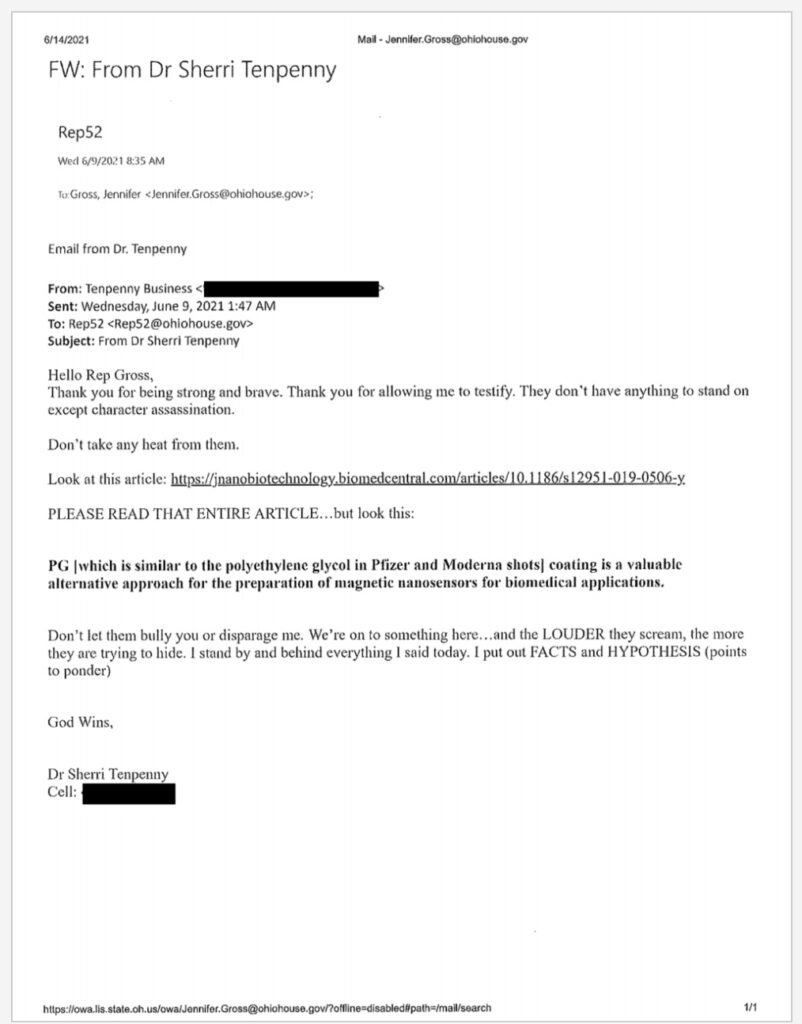
    At 1:47 a.m. the day after Tenpenny’s comments, the doctor emailed Gross to thank the lawmaker for being “strong and brave” and allowing her to testify, according to an email obtained in a public records request.

    In the email, Tenpenny sent a largely unrelated article from the Journal of Nanobiotechnology examining the biochemical functionality of magnetic particles as nanosensors, which are used in cancer diagnosis and treatment. Tenpenny seemed to claim it as proof of her comments regarding COVID-19 vaccines.

    “Don’t let them bully you or disparage me,” she wrote. “We’re on to something here… and the LOUDER they scream, the more they are trying to hide. I stand by everything I said today. I put out FACTS and HYPOTHESIS (points to ponder).

    God Wins,

    Dr. Sherri Tenpenny.”

    The day after the testimony, with the comments going viral online, Gross came to Lipps’ office and said she needed help with “damage control,” according to Lipps’ remarks in an interview. 

    Gross declined to confirm or deny Lipps’ account or answer emailed questions. She said she’s busy and considers the questions “old news.” However, she claimed Lipps praised Renz’s testimony and alleged he thought Tenpenny “sounds great.”

    Ohio House Health Chairman Scott Lipps. Source: Ohio General Assembly.

    Lipps denied saying this.

    “I would expect nothing different from Rep. Gross,” he said in a text message to the Capital Journal. “I have quickly learned she [accepts] no responsibility for her actions or decisions and is quick to blame anyone and everyone. Also, the first agenda we [put] out for proponent testimony had NO Renz and NO Tenpenny. Rep. Gross vehemently objected.”

    When the House Health Committee met a week after the comments went viral, Lipps defended the practice of bringing in witnesses like Tenpenny, even if doing so made people “uncomfortable.” He emphasized the importance of hearing from those one disagrees with.

    “Please step outside your own little world and understand that people are not all the same, and they don’t all believe the same,” he said. “You are not always right.”

    Ohio Advocates for Medical Freedom helped draft Gross’ HB 248 legislation and has paid for a spread of radio ads to gin up support for the bill, according to disclosures with the Federal Communications Commission.

    Stock — president of the group, which researchers found to be the fourth-largest purchaser nationwide of anti-vaccination ads on Facebook — declined to answer questions for this report.

    So who is Sherri Tenpenny?

    Most Ohioans had probably never heard of Tenpenny before video of her June 8 testimony went viral.

    In anti-vaccination corners of the internet, however, she’s something of a celebrity doctor. 

    She is close with Alex Jones, a conspiracy theorist and media figure who is facing libel lawsuits after claiming the Sandy Hook school shooting that left 20 young children and six adults dead at a Connecticut school was a “giant hoax.” The two have been friends for 20 years, they both said in a recent interview on Jones’ show.

    On a recent episode of her podcast, Tenpenny interviewed pillow magnate Mike Lindell, who is among the loudest backers of former President Donald Trump’s lie that the 2020 election was rigged. Lindell and his company are also facing libel suits related to these claims

    While Tenpenny has repeated similar claims of election fraud, her primary focus is vaccines and wrongfully depicting them as dangerous. 

    “Vaccines are now, and people, listen to this closely, always have been a method of mass destruction, a method of depopulation,” she claimed earlier in 2021.

    Tenpenny’s anti-vaccine activism has generated multiple related revenue streams for her. She hosted a “boot camp” this year for $623, training people to convince others to refrain from vaccination. In May, she hosted a live streaming training event to explain the “20 mechanisms of injury from the shots” — platinum package tickets went for $199. Her 2008 book, “Saying No to Vaccines: A Resource Guide for all Ages,” isavailable on Amazon for $877.95, one of several similar titles she has authored.

    Despite this work, Tenpenny does not follow acceptable scientific methodology, her testimony is “unreliable” and she is “unqualified” to address vaccine injury, according to Special Master Richard Abell, appointed by the U.S. Court of Federal Claims.

    Abell made these remarks in a 2010 ruling that blocked Tenpenny’s testimony on behalf of a man who alleged a hepatitis B vaccination gave him Guillain-Barre syndrome, a rare side effect of vaccination.

    The legal standard, he wrote, calls on judges to presume admissibility of testimony of an expert witness. However, he found her methodology “so divergent from the scientific method as to be nonsensical and confusing,” prompting his ruling.

    “Her ideas on vaccine injury have not been exposed to any critical analysis of those in the relevant field, let alone peer-reviewed medical journals,” he said. “There is no way to ascertain whether Dr. Tenpenny’s opinion is credibly accepted by those who would know; there are only the patent defects in her report that militate for the opposite.”

    Tenpenny did not respond to repeated phone calls.

    Tom Renz speaks to the House State and Local government Committee Feb. 17. Source: Ohio Channel.

    Who is Tom Renz?

    After Tenpenny wrapped up her testimony on June 8, Fremont attorney Tom Renz addressed the committee.

    Renz obtained his law license shortly before the pandemic began and his legal career has since wrapped around it. (He says he previously clerked for an Indian Supreme Court justice but doesn’t remember when.)

    He is currently representing clients in COVID-19 related lawsuits against:

    The lawsuits are sprawling, some stretching over 100 pages, and are rife with claims that the COVID-19 death count is “inflated,” that asymptomatic spread of disease is a “fallacy,” that masks don’t work and a deluge of other inaccurate and often debunked claims.

    No cases have yet received any significant rulings. U.S. District Judge James Carr described the first lawsuit against DeWine as “a jumble of alleged facts, conclusory and speculative assertions, personal and third-party allegations, opinions, and articles of dubious provenance and admissibility.”

    Renz withdrew the lawsuit and has since filed a similar case that awaits a ruling. Ohio Stands Up, a citizens group that acts as plaintiffs in the cases, created a crowdsourced legal fund to pay Renz and his partner, Robert Gargasz. The fund has raised nearly $140,000 since it launched around September 2020.

    Earlier this year, Renz testified before a separate committee regarding a pandemic-related bill. YouTube ultimately removed footage of the hearing from its site for violating its COVID-19 misinformation policy

    Renz didn’t respond to an email.

    Ohio Stands Up recently posted on Facebook a flier for an August fundraiser: “An Evening With Dr. Sherri Tenpenny and Attorney Thomas Renz.” Tickets cost $75. 

  • ‘5G towers,’ ‘magnetization’, other conspiracies flourish at hearing on vaccine bill

    ‘5G towers,’ ‘magnetization’, other conspiracies flourish at hearing on vaccine bill

    By Jake Zuckerman and Ohio Capital Journal edited by Loveland Magazine

    Columbus – A doctor warned that vaccinated people might be magnetized and pose a health risk to unvaccinated people around them.

    A pastor said vaccines contain ingredients like formaldehyde and fetal cells.

    A nurse sought to prove the truth of “magnetic vaccine crystals.”

    These statements — none of which are true — came during the Ohio House Health Committee’s review Tuesday of House Bill 248, a broad weakening of state vaccination laws. The five-hour hearing, limited to proponent testimony, devolved into a forum of fear-stoking, speculation, and conspiracy theorizing around the COVID-19 vaccines.

    Dr. Sherri Tenpenny, a board-certified physician from the Cleveland area, repeatedly raised unfounded claims of deaths, strokes and other “horrendous side effects” from the vaccine. The Center for Countering Digital Hate identified Tenpenny as one of a dozen of the most prolific anti-vaccination disinformers “who play leading roles in spreading digital misinformation about Covid vaccines.”

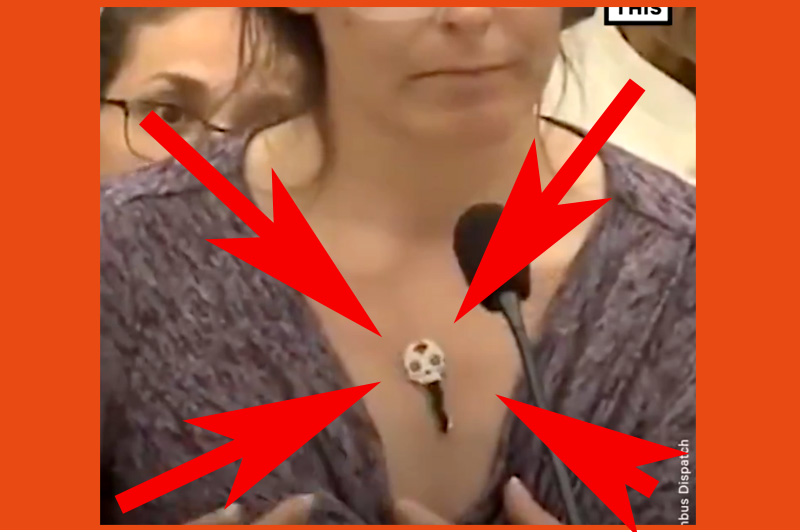
    At one point, Tenpenny made a claim to lawmakers, with no evidence behind it, that vaccinated people are somehow magnetized.

    “They can put a key on their forehead, it sticks. They can put spoons and forks all over them and they can stick, because now we think there’s a metal piece to that,” she said. “There’s been people who have long suspected that there was some sort of an interface, yet to be defined interface, between what’s being injected in these shots and all of the 5G towers.”

    Shortly thereafter, Tom Renz, a lawyer, testified in support of the bill as well. Renz has filed lawsuits in states around the U.S. crying foul of an array of government practices related to COVID-19 and vaccination.

    He filed one such case in Ohio, which he withdrew after U.S. District Judge James Carr called Renz’s arguments nearly “incomprehensible” and his supporting evidence “a jumble of alleged facts, conclusory and speculative assertions, personal and third-party allegations, opinions, and articles of dubious provenance and admissibility.”

    Renz, like several other witnesses, accused health officials of secretly profiting from vaccines while covering up their dangers.

    House Bill 248, co-sponsored by 16 House Republicans, would prohibit any of the following institutions from mandating, incentivizing, or “otherwise requesting” their employees, customers or students get vaccinated: businesses, hospitals, nursing homes, colleges, day-care centers, and insurers.

    It also:

    • Prohibits a person from mandating, requiring, or otherwise requesting that an individual receive a vaccine.
    • Compels public schools, which already accept exemptions for non-medical and medical reasons, to emphasize vaccine exemptions “in the same timing and manner, including text size and font, as it provides notice of the requirements.”
    • Blocks businesses from separating patrons by vaccination status or asking whether they’ve been vaccinated.

    Rep. Jennifer Gross, R-West Chester, the bill’s lead sponsor, has said she isn’t opposed to vaccination, but people should have the right to choose.

    “This is not a scientific bill,” she said last month. “This is a freedom bill.”

    Several public health experts have warned in interviews that the legislation will likely lead to sagging vaccination rates, and in turn, outbreaks of infectious disease.

    In the last two weeks, Gov. Mike DeWine, Ohio Department of Health Director Stephanie McCloud, and ODH Medical Director Dr. Bruce Vanderhoff declined to comment on the legislation.

    At a press call last week, a physician joined Vanderhoff for a largely unrelated press conference encouraging vaccination against COVID-19. When asked by a reporter about the bill, she didn’t share Vanderhoff’s reticence.

    “I’ll be very direct and say this bill threatens how we take care of children, and how we keep them healthy, and how we keep them alive,” said Dr. Patty Manning-Courtney, the chief of staff at Cincinnati Children’s Hospital.

    “To limit and restrict the ability to require vaccinations in schools or to check vaccination status, it’s almost unthinkable in a pediatric community to think that one of the best tools we have at prevention would be limited, restricted, or discussed in a way that is negative.”

    Similarly, a “vaccine coalition” of business groups along with the largest medical groups and associations in the state — including the Ohio Chamber of Commerce, the Ohio Hospital Association, the Ohio Children’s Hospital Association, Anthem, OhioHealth, and others — issued a public letter warning the legislation puts all children at risk.

    “At its core, this proposal would destroy our current public health framework that prevents outbreaks of potentially lethal diseases, threaten the stability of our economy as it recovers from a devastating pandemic, and jeopardize the way we live, learn, work and celebrate life,” the coalition wrote.

    An item that fully escaped the committee’s attention: during the hearing itself, the CDC published an early release of a report analyzing COVID-19 infections by age group and vaccination status.

    The researchers found occurrences of COVID-19 infection, hospitalization and death plummeted among Americans aged 65-and-up (about 82% of whom are vaccinated) compared to those aged 18-49 (about 42% of whom are vaccinated).

    The finding builds on mounting evidence of the COVID-19 vaccines’ safety and efficacy.

    The legislation drew immense support including more than 800 pieces of written testimony. The hearing room was virtually full, requiring two overflow rooms for supporters. At a lunch recess, a man stood outside the statehouse passing out faux vaccination cards with a vulgarity on the flip side.

    “Mandatory vaccines and masks are a joke … much like this card!” it states.

    In an interview after the hearing, House Health Chairman Scott Lipps, R-Franklin, said it’d be tough but possible to see the bill passed out of committee before lawmakers break for summer recess at the end of the month.

    He indicated looming amendments might narrow the bill, possibly restricting its focus solely to the flu or COVID-19 vaccine as opposed to its current form of all vaccinations.

    “If you could trim this bill down, you could pass it,” he said.

    During the hearing, Lipps tried to steer witness testimony and lawmakers’ inquiries toward the philosophical questions about the role of government in public health as opposed to litigating the safety and efficacy of vaccines. The attempts were largely unsuccessful with both proponents and opponents.

    He distanced himself from Tenpenny’s remarks.

    “I do believe Representative Gross requested Dr. Tenpenny to speak, and she got a little off balance, I think she got a little outside the lines of what we were intending or hoping to keep her in,” he said. “I hope that didn’t harm her credibility, but I think some committee members walked away with big questions.”

  • Feds issue new rules for COVID-19 vaccines at facilities serving people with disabilities

    Feds issue new rules for COVID-19 vaccines at facilities serving people with disabilities

    by Michelle Diament from disabilityscoop

    Government officials are setting new expectations related to COVID-19 vaccines at institutions for people with disabilities and similar rules are under consideration for group homes as well.

    Long-term care facilities like nursing homes and intermediate care facilities for individuals with intellectual disabilities must educate residents and staff about COVID-19 vaccines and offer shots to them under the interim final rule being published by the Centers for Medicare & Medicaid Services in the Federal Register this week.

    In addition, the facilities are required to report the COVID-19 vaccination status of both residents and staff to the Centers for Disease Control and Prevention on a weekly basis.

    Continuine reading at disabilityscoop

  • DeWine’s removal of Ohio health orders comes amid legislative pressure

    DeWine’s removal of Ohio health orders comes amid legislative pressure

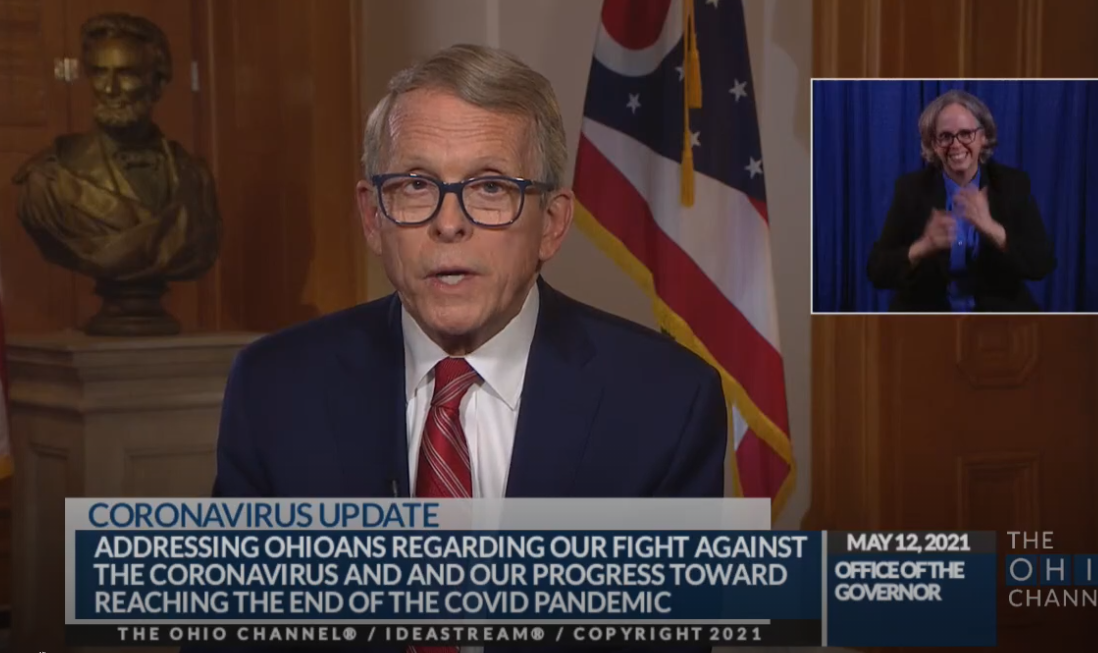
    Gov. Mike DeWine is pictured during a statewide address on the COVID-19 pandemic on Wednesday, May 12. Photo courtesy the Ohio Channel.

    By Tyler Buchanan and Ohio Capital Journal

    Since passing a bill in March to give themselves power to rescind public health orders, Republican lawmakers in Ohio have been counting the days until that power went into effect.

    They may not need to use it.

    In a Wednesday evening address outlining Ohio’s next steps in handling the pandemic, Gov. Mike DeWine announced “it is time” to remove those health orders.

    DeWine said all pandemic orders would be removed on June 2, except for those involving nursing homes and assisted living facilities.

    Republican legislators, who have battled with the DeWine administration since the early months of the pandemic, effectively gave the governor little choice. He had until late June to remove the health orders — or else they would remove them.

    DeWine had already committed to removing the orders once Ohio reached a low threshold of new cases: an average of 50 cases per 100,000 residents over the course of a two-week time frame. While the state has made progress toward that goal in recent weeks, it’s remained unclear when exactly the target figure would be hit.

    Amid pressure from the legislature, DeWine said the positive impact of the COVID-19 vaccines meant Ohio could remove the health orders even without having reached the target.

    “There comes a time when individual responsibility simply must take over,” he said.

    Senate Bill 22 goes into effect on June 23. It will give lawmakers the ability to rescind health orders and the state of emergency declaration through passing a concurrent resolution.

    Hours before DeWine was set to speak, state Rep. Scott Wiggam, R-Wooster, announced plans to introduce a resolution to remove all of Ohio’s existing COVID-19 health mandates.

    https://twitter.com/Scott_Wiggam/status/1392534091942318083?s=20

    “The issue of removing the health orders is a very important one for our caucus,” House Speaker Bob Cupp, R-Lima, told reporters on Wednesday before the governor’s speech.

    “There’s a strong sentiment that the health orders need to be dissolved,” he added.

    Cupp declined to answer questions as to whether he’s spoken with the governor recently about the health order situation.

    Throughout the pandemic, Republicans have accused the executive branch of overstepping its legal bounds in enforcing various COVID-19 health restrictions. Members have bristled at the governor for not adequately considering the inputs of lawmakers. DeWine has defended his administration’s aggressive stance as being necessary to combat a pandemic that, to date, has led to more than 19,400 deaths across the state.

    The Republican supermajorities within the Ohio General Assembly have repeatedly attempted to curb the authority of the state health department. 

    Only a few of those bills have made it to the governor’s desk, each time leading to a DeWine veto.

    While the GOP caucuses could not muster a veto override in 2020, things looked more favorable for this term when the party gained several seats in last November’s elections.

    The legislature moved quickly to pass SB 22. A day after the governor vetoed it, members met again on March 24 to override that veto. The bill was passed without an emergency clause, meaning it would take 90 days for it to go into effect. Senate President Matt Huffman, R-Lima, telegraphed plans that day to use the powers of SB 22 as early as possible.