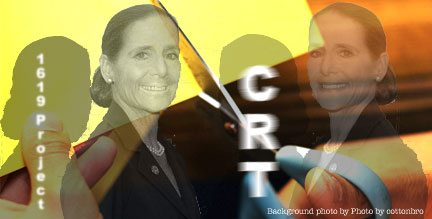
In this back to school season, millions of American students are returning to classrooms where the wrong course, lesson, or textbook can lead to deep trouble. Why? Because for the last several years, conservative activists and lawmakers have been waging a crusade against “critical race theory,” or CRT.
Critical race theory is an academic concept acknowledging that racism isn’t simply the result of individual prejudice but is also embedded in our institutions through laws, regulations, and rules.
As school districts have emphasized, it’s a higher education concept rarely taught in K-12 schools. But cynical activists have used CRT as a catch-all term to target a broad range of diversity, equity, and inclusion initiatives — and seemingly any discussion about race and racism in the classroom.
Since January 2021, 44 states have “introduced bills or taken other steps that would restrict teaching critical race theory or limit how teachers can discuss racism and sexism,” according to Education Weekly. And as of this writing, UCLA has identified 807 anti-CRT “bills, resolutions, executive orders, opinion letters, statements, and other measures” since September 2020.
________________
IN OHIO
Bills that would have prohibited discussion of certain topics related to race and sex, forbid schools from awarding credit for student service learning with advocacy groups, and ban “any textbook, instructional material, or academic curriculum that promotes any divisive or inherently racist concept” all failed to pass during the 2021 and 2022 sessions.
________________
Critics claim — falsely — that CRT teaches that all white people are oppressors, while Black people are simply oppressed victims. Many opponents claim it teaches white students to “hate their own race,” or to feel guilty about events that happened before they were born.
In reality, CRT gives students of every race the tools to understand how our institutions treat people of different races unequally — and how we can make those systems fairer. That’s learning students of every race would be better off with.
But instead, this barrage of draconian legislation is having a chilling effect on speech in the classroom.
In 2022, Florida passed the “Stop W.O.K.E. Act,” which prohibits teaching that could lead to a student feeling “discomfort” because of their race, sex, or nationality. But the law’s vague language makes it difficult for educators to determine what they can or cannot teach, ultimately restricting classroom instruction. In my home state of Texas, SB3 similarly restricts these classroom discussions.
Running afoul of these laws can get teachers and school administrators in trouble. As a result of this hostile environment, the RAND Corporation found that two-thirds of K-12 school teachers have decided “to limit instruction about political and social issues in the classroom.”
Notably, this self-censorship extends beyond states with such policies: 55 percent of teachers without state or local restrictions on CRT have still decided to limit classroom discussions of race and history.
As a student, I find this distressing.
My high school history classes gave me a much richer understanding of race in our history, especially the discussions we had at the height of the Black Lives Matter protests. And in college, I’ve gotten to learn about racial inequalities in everything from housing and real estate to health care, politics, education, and immigration policy.
As a person of color, I can’t imagine where I’d be without this understanding. Neither white students nor students of color will benefit from laws designed to censor their understanding of history, critical thinking, and open dialogue in the classroom.
The fight against CRT is a fight against the principles of education that encourage us to question, learn, and grow. Rather than shielding students from uncomfortable truths, which they can certainly handle, we should seek to equip them with the knowledge to navigate the world, think critically about our history and institutions, and push for a more inclusive country.
Christina Collins’ journey to become an educator started when she helped her grandfather read his mail.
He had dropped out in middle school, and had trouble with reading and understanding words, even ones specifically written for him.
Collins’ dad and brother both struggled in school as well, and it was through their struggles that she saw “how hard it was for some people to be successful.”
“So, those moments all kind of led to, for me, believing that literacy is a key civil rights issue,” Collins told the Capital Journal. “I mean, the ability to participate in the world around you is to be a literate human being.”
The Gahanna native became a high school English teacher, and cherished the interactions she’d have with students, the kids who seemed to be doing fine and the kids who struggled or made trouble.
“I was always very driven about recognizing every student, and getting other people to recognize every student to help support every student,” Collins said.
To this day, she gets messages from students who have moved on to become educators themselves.
That new generation of teachers is facing a whole host of new challenges, from culture war battles to ever-changing education standards, and Collins sees the developments in education statewide and nationally as a departure from the true aims of the field.
“Our pendulum has swung way too far over to seeing kids as test scores,” she said. “We should be finding every kid’s talents and getting them going in the right direction.”
Joining the board
While Collins was an educator, she taught her classes, kept up with the curriculum and all the other everyday roles of a high school teacher.
But she realized that, for other teachers, those roles didn’t include staying up all night reading legislation.
“I thought that was just a thing all teachers did,” she said. “I thought ‘well this is part of education, everybody’s reading legislation.’”
When her colleagues dispelled that belief, she realized perhaps her next move might be toward honing the policy that came from the statehouse into local school districts.
She became an administrator with the purpose of “being a filter for the noise” coming out of Columbus via policy mandates and standard changes, from Race to the Top and performance evaluations to the third-grade reading guarantee.
“There was a time when I was in a district as curriculum director where in five years there were four different sets of graduation requirements,” Collins said.
Feeling the impact of constant and rapid changes coming from legislative bodies who included many non-educators compelled Collins to run for a spot on the Ohio State Board of Education. She took her spot on the board right as one of the biggest level-sets ever to happen to Ohio education unfolded: the COVID-19 pandemic.
The pandemic brought school closures, virtual learning, a scramble to decide whether testing made sense among uncertain learning environments, and a reckoning when it came to what kids really needed from their educational facilities.
Amid the stress of teachers learning new roles, and parents learning what it takes to be a teacher, Collins saw the era as a point of hope, as a needed reflection period for policymakers and districts alike.
“I saw it as a key moment where we could just blank-slate reset and think differently about our education system,” she said.
Surely, she thought, the adaptation that students had gone through in their methods of socialization and learning will lead to changes in the way education is conducted. Surely things like student hunger and poverty that were so starkly spotlighted amid a global pandemic would stay at the forefront of the minds of leadership as they move forward.
“My experience on the board, especially that first year, I was like ‘can we think differently, can we think about competency-based learning models, how can we meet their needs?’”
As a member of the board, she was part of many discussions when it came to coming out of the pandemic and the needs of the education system. But those discussions didn’t go the way she’d hoped.
“It was like the rush to return to normal was the sole focus, and that was coming straight from the statehouse,” she said.
She wasn’t naive to the fact that the state Board of Education, whose candidates appear on nonpartisan ballots, had its conservative and liberal members. But discussions during the pandemic were markedly bipartisan, with some “more known conservative members” hearing the ideas of education reform related to pandemic-era impacts and thinking “maybe we should think differently,” according to Collins.
“Coming out of the pandemic, this culture of kids has changed, and I don’t think that we’re focused on the right things to meet their needs,” she said.
The tune coming to Collins and the rest of the board was the return of state testing and the return of “normal” in-person instruction, despite a years-long pivot to learning alternatives.
“At no point did (the state) slow down and address how we’re throwing (the students) all back together,” Collins said.
The legislature paused testing amid the pandemic, and policymakers sought to allow schools to move forward without reflection on the tests that were conducted, some through federal mandate, at least for a while. But as 2022 rolled around, the restart of testing became a discussion at the legislative level again, a decision Collins thinks should have been put on the back-burner a little longer.
“That was a moment where we should have delayed, there should have been a bit longer before that happened again,” she said.
Culture wars over change
When the pandemic seemed to be in the rearview mirror, the board’s work didn’t slow down, instead shifting to an area Collins wasn’t quite expecting: culture wars.
She hadn’t been fully caught off-guard when anti-racism resolutions brought white-hot debate to the board’s door, or when proposed Title IX language changes brought along talk of transgender rights in schools. Her seat on the board was barely warm when she started receiving emails accusing her of being anti-American and even socialist, all based purely on the fact that she was an educator, she said.
“I think I’m still a little shocked that in Ohio we’re at a point where we’ve had those kinds of culture war issues,” Collins said. “I don’t believe the majority of Ohioans want those issues to be at the forefront.”
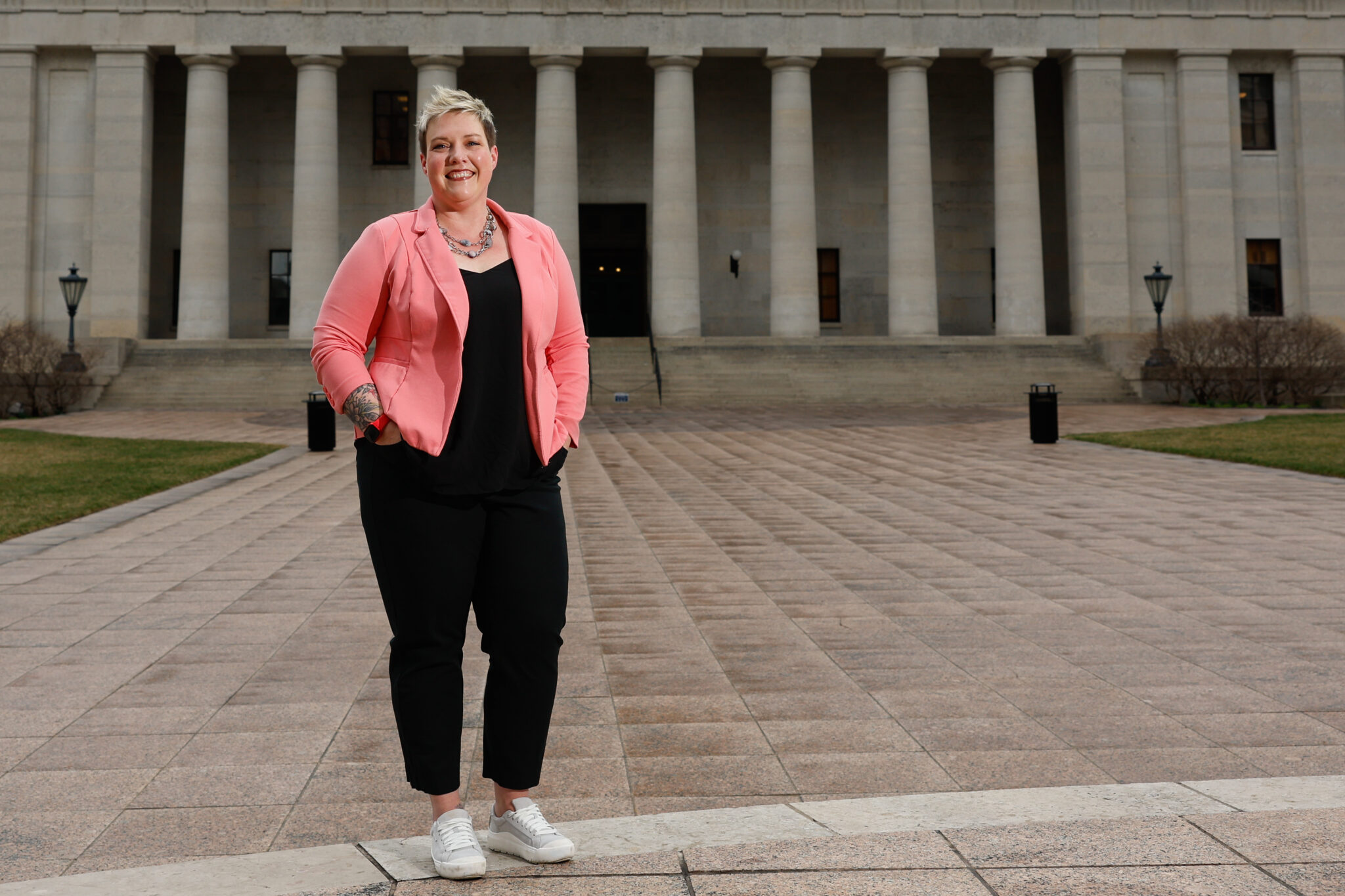
COLUMBUS, OH — MARCH 05: Christina Collins, former State Board of Education member and currently the head of Honesty for Ohio Education a pro-public schools organization that testifies in favor of fair school funding, March 5, 2024, outside the Statehouse in Columbus, Ohio. (Photo by Graham Stokes for Ohio Capital Journal. Republish photo only with original article.)
Having those issues, which Collins acknowledged weren’t necessarily within the board’s purview, become months-long debates with resolution approval, then reversal, meant other things that the board could have been doing within the education space weren’t seeing the light of day.
“All of that was happening at the same time, which I think is how we lost that potential for change,” she said.
A bigger change was headed for the board, that would remove many of its responsibilities, and cause a shift that would eventually convince Collins to move on.
A bill had been floating in the Ohio legislature for more than a year. The more than 2,000-page policy would not only change the name of the Ohio Department of Education to the Ohio Department of Education and Workforce, but it would restructure the department to have two leaders under the umbrella of the governor’s cabinet, one for education and another for workforce.
The ODEW would still include the State Board of Education, but board members would be mainly focused on teacher licensure, educator disciplinary actions and district territory disputes.
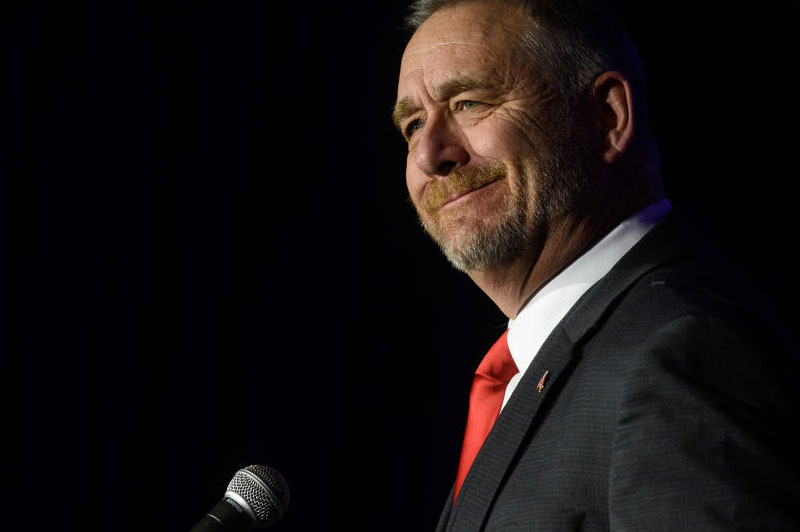
State Sen. Andrew Brenner, R-Delaware, an ex-officio member of the board of education, was not the main sponsor of the bill, but pushed hard for it as chairman of the Ohio Senate Education Committee.
Arguments were made that the board was ineffectual and inefficient. Collins sees no reason to place blame for the way the board has worked, but from her perspective, the board filters legislative measures to the local districts as another cog in a wheel that needs improvement.
“The board’s seeming inability to get things done – which I don’t believe, but the rhetoric around it – I think that’s a reflection of what our local districts are dealing with because they are struggling to implement all of the things,” Collins said.
During committee hearings on the bill, members of the state board, including Collins, submitted testimony against the changes, saying putting the leaders under the governor’s cabinet would decrease the level of accountability they could have to districts and voters.
Collins brought up the many mandates under which the board had guided local districts, and the source of any and all of those mandates.
“These were all legislated efforts, but you’re still saying our schools are failing,” she wrote in her testimony. “I ask, who holds this (General) Assembly accountable when the unending educational initiatives it doles out do not work?”
The overhaul of the ODE did not play out in the first General Assembly in which it was introduced, but shortly after a new General Assembly came to work, the push for Senate Bill 1 and the changes to the department were introduced again.
Teachers unions, board of education members and advocacy groups alike all came out in opposition to the bill, representing hours of testimony in committee. Supporters of the bill included the Ohio Chamber of Commerce.
The bill passed the Senate last March, but it wasn’t until it was inserted into the state budget in the summer of 2023 that it saw full passage.
Collins was one of a number of board members who signed a letter asking Gov. Mike DeWine to line-item veto the changes to the state board’s roles in the budget document.
“From my experience being on the board, I think the way that (SB 1) was shoved through and how it was shoved through and when it was shoved through was a little bit unbelievable,” Collins told the Capital Journal. “Something that had essentially stalled in process was added (to the budget) and pushed through the way it was, and then that quickly it was (passed).”
Honesty for Ohio Education
As the board faced drastic legislative changes and a significant reduction in the authority it held, Collins started to wonder if being a member would help her make the most change, something she says she looks for in any career move she makes.
Armed with a superintendent’s license, she debated going back into schools. Ultimately, the departure of Honesty for Ohio Education’s executive director at the end of 2023, and the fact that she’d just had a baby that November made Collins reflect on all the aspects of education and the changes needed.
“It’s a scary time as a parent, it’s a scary time for education,” she said. “I’m worried about my own kids, I’m worried about everyone else’s kids.”
As a staunch supporter of public education, the changes being made on a state level with the transformation of the ODEW and the implementation of near-universal private school vouchers made her nervous about the future of her chosen field.
But like the times with her grandfather years ago, the connection between education and civic duty floated to the top of her mind.
“On a grander scale, I’m really, really, really worried that we’re losing our democracy, and for me education and democracy are in this reciprocal relationship,” Collins said.
Honesty for Ohio Education started in 2021 as a reaction to “critical race theory” bills that sought to keep children from learning the connection between race and American history, with claims that the bills would protect children from feeling guilt for history.
The group started small, but as they began testifying against CRT bills, among others, the group’s numbers grew, and now the coalition “has outgrown itself” from its nascent days, according to Collins.
“That’s a response to the attacks on education, it’s the attacks on LGBTQ+ kids, it’s the attacks on multi-racial education, it’s the attacks on honest history,” she said. “All of that … has created this avalanche with Honesty where we’re at this influx, where we have to decide how we step into adulthood, essentially.”
But as the coalition makes its next moves, Collins said it plans to stay focused on things like state curriculum, fights against book bans and how schools can work better, even for the 10% of students outside of the public school system.
“It’s not just public education … it’s about the kids everywhere in any educational environment who deserve to be safe and have honest and diverse, inclusive education,” Collins told the Capital Journal.
The coalition focuses on content in schools, but Collins said the ability for school districts to succeed certainly comes down to how well they’re funded and supported by state and local sources.
Public education is a “common good” for Collins, and that means the 90% of Ohio children in public education should be taken care of in the way the Ohio Constitution dictates. For public education unions, advocacy groups and for Collins, that includes full implementation of the Fair School Funding Plan.
That reform of the state’s public school funding model emphasizes a formula based around the needs of individual school districts, to allow schools who have more need than others to build up their performance.
The plan as it is now began it’s push through the legislature in August 2020 but negotiations and the hesitance of legislative leaders like Senate President Matt Huffman to push out the entire $10 billion per year plan in one shot led to a six-year phase-in. The plan is currently up to about 66% implementation.
Meanwhile, however, the General Assembly fully funded what amounts to a near-universal private school voucher program in the last budget cycle, allowing students in what are considered under-performing public school districts to leave and take state-funded scholarships with them to nearby private schools if their household income is up to 450% of the federal poverty level, or $135,000 for a family of four.
“When we pass universal voucher bills that give more money to students when they leave the school than a lot of the schools receive for that student, that’s a sign of the value that at least our legislature places on public education kids,” Collins said.
SUSAN TEBBEN
Susan Tebben is an award-winning journalist with a decade of experience covering Ohio news, including courts and crime, Appalachian social issues, government, education, diversity and culture. She has worked for The Newark Advocate, The Glasgow (KY) Daily Times, The Athens Messenger, and WOUB Public Media. She has also had work featured on National Public Radio.
Dr. Jenny Shafer Kilgore, a member of the state Board of Education, speaks in support of a bill to eliminate the teaching of “divisive concepts” in schools. Kilgore lost her race for re-election in Tuesday’s general election. Photo from The Ohio Channel
Two incumbents on the Ohio State Board of Education were not reelected in Tuesday’s general election.
One unseated member was part of a movement on the board to rescind an anti-racism resolution that mired the state board in controversy, and the other was a governor-appointed member before he sought election to the board.
Of the 19 members of the board, 11 are elected and the rest are appointed by the governor.
The school board races were also different this year because of a district shuffle caused by statewide redistricting. Though the changes were spurred by changes in the statehouse and congressional voting districts, decisions on what the school board districts looked like were approved solely by the governor.
Incumbent Dr. Jenny Kilgore, an elected board member since 2019, lost her bid for reelection, with challenger Katie Hofmann edging past her in a margin just north of 30,000 votes.
Kilgore was a vocal opponent of an anti-racism resolution passed following the death of George Floyd and social unrest in the country regarding racial issues, though she abstained from the initial vote on the measure. A movement then began to rescind the resolution as conservative outcry for so-called “critical race theory” and “indoctrination” came to a head in Ohio. The resolution was also rescinded amid efforts in the Ohio legislature to put up “divisive concept” bills that would ban discussions of the impact of race on history if it was determined to create “guilt” among white students.
District 4 board member Kilgore also participated in public protests against “critical race theory” in schools, and testified before a legislative committee, saying House Bill 327 “would allow teachers to teach the subject without the distractions of critical race theory… they would have more opportunity to focus on the subject matter.”
Fellow incumbent Tim Miller lost his bid to join the board as an elected member to challenger Tom Jackson. Jackson received 44% of the vote in unofficial results from Tuesday. Miller was more than 50,000 votes behind Jackson, also narrowly falling behind a third challenger, Cierra Lynch Shehorn, by just under 600 votes.
Miller was appointed by Gov. Mike DeWine in 2021 to fill Sarah Fowler Arthur’s District 10 seat left vacant when she joined the Ohio House.
The outgoing member was instrumental in sending a resolution condemning the Biden administration for changes to anti-discrimination regulations that would include gender identity if accepted on the federal level to executive committee, rather than a full board of ed vote.
Also elected on Tuesday was former state senator and Toledo-area educator Teresa Fedor, who defeated opponent Sarah McGervey with 56% of the unofficial vote totals in the District 2 race.
Hofmann said the elections that happened on Tuesday show the need for a different tack on the board of ed.
“The election of Theresa Fedor, Tom Jackson and (Hofmann) is a clear message that people in Ohio want high quality public schools, not more charters or vouchers,” Hofmann said in a statement to the OCJ. “Ohio public schools must be welcoming, accepting and inclusive where ALL children are respected.”
Though all state board of ed races are considered non-partisan, the changes to the board are encouraging to the Democratic party as a whole and education associations in the state as well, despite “mixed results” in other general election races.
“I think having dedicated candidates who are going to reject some of the extremism we’ve seen on the state board of education … is really going going to help change the dynamic in terms of the issue and hopefully refocus the state board on really what students need,” said Scott DiMauro, president of the Ohio Education Association.
Elizabeth Walters, chair of the Ohio Democratic Party, praised “taking the majority” on the school board, saying the current school board “has become this dysfunctional show of what happens when we elect people who aren’t focused on the things that parents and students care about most.”
She also said the party worked to bring in candidates, and is prepared to recruit more in the future.
“We worked hard to recruit strong folks for these seats who have strong backgrounds in education and who can be advocates for what teachers and students really need to be successful here in Ohio,” Walters said in a Wednesday press call.
The newest bill to regulate school curriculums and keep out what legislators see as “divisive concepts” entered the Ohio House on Tuesday.
State Reps. Jean Schmidt, R-Loveland, and Mike Loychik, R-Bazetta, brought House Bill 616 to the State and Local Committee, which prohibits all Ohio schools from “teaching or providing training that promotes or endorses divisive or inherently racist concepts.”
Though the co-sponsors said they want to deputize the State Board of Education with making decisions about what those concepts would be, the bill includes “critical race theory,” a misnomer used by conservatives to refer to the teaching of race in American history, and name the “1619 Project,” a New York Times project that laid out the chronology of slavery and racism, as concepts that would be prohibited under the bill.
“Diversity, equity and inclusion learning outcomes” (DEI) are also named as “divisive or inherently racist concepts” under the bill. When asked to explain DEI and why it’s being prohibited, Loychik connected DEI to “critical race theory,” saying the two are connected based on research he and Schmidt had made.
“The word ‘critical race theory’ was not very well accepted at that point in time, so it was re-developed into DEI – diversity, equity and inclusion – and based off our research, like I said before, it’s very, very similar to the teachings under critical race theory,” Loychik told the committee.
DEI trainings have been used in schools to train employees about learning disparities that can happen in education.
The well-known conservative public policy think tank The Heritage Foundation connects CRT and DEI, saying diversity trainings “pressure employees to become activists or to discuss controversial topics in the workplace.”
Part of the bill prohibits teaching kindergartners about topics related to gender.
“It ensures that sexual orientation and gender ideology are not taught in kindergarten through third grade,” Loychik said. “Starting in fourth grade it must be age appropriate.”
Loychik has made his feelings on gender in schools clear through posts on his Twitter, in which he said “the left thinks a 6-year-old should be able to change their gender but an 18-year-old shouldn’t be able to buy a firearm,” and asks for support not to allow “teaching transgenderism or allowing teachers to discuss their sex life with kindergarteners.”
Under the newest bill, the State Board of Education would also be required to “establish a procedure by which individuals may file complaints against a teacher, school, administrator, or school district superintendent alleging a violation of the bill’s prohibitions and to adopt rules to govern the implementation of and monitor compliance with the bill’s provisions,” according to Legislative Service Commission analysis of the bill.
Democratic committee members pushed back on the bill’s language, decrying it as “censorship” and questioning the vague language used, and the state board of education’s role in defining the off-limits topics in school curricula.
“That’s the responsibility of legislators to define these terms,” said state Rep. Mike Skindell, D-Lakewood.
The co-sponsors said they would be willing to consider amendments to the bill, but said the focus of the bill is on curriculum, not disciplinary regulations or hallway disagreements.
Loychik said the school district’s role would be to address disciplinary problems, and “hall monitors” could deal with school-day disagreements regarding “divisive concepts.”
Schmidt said “invited guests,” such as state legislators, would be allowed to “talk about what they want to talk about,” because it’s not a part of the curriculum, answering a question from state Rep. Tavia Galonski, D-Akron.
“There is a lot to discuss in the schools, and by no means would any kind of prohibition or any type of censorship be the answer for it,” Galonski said.
Education groups like Honesty for Ohio Education have criticized the bill as a “nationally coordinated educational gag order.”
This is the third “divisive concepts” bill to come through the Ohio legislature, with the last bill receiving heavy criticism after one of the co-sponsors said equal time should be given on both sides of Holocaust lessons. Neither bill has passed through the General Assembly.
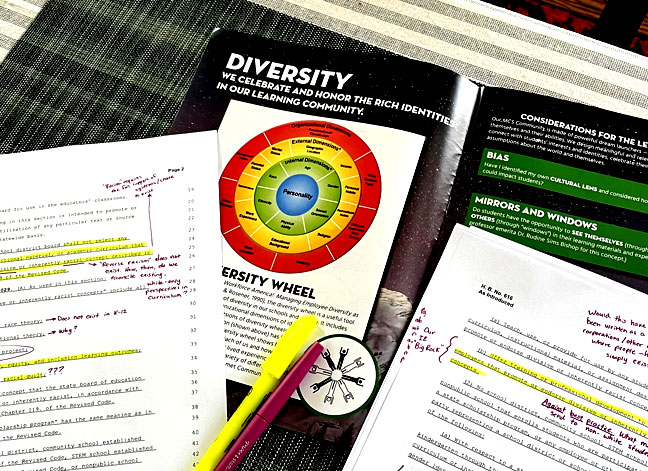
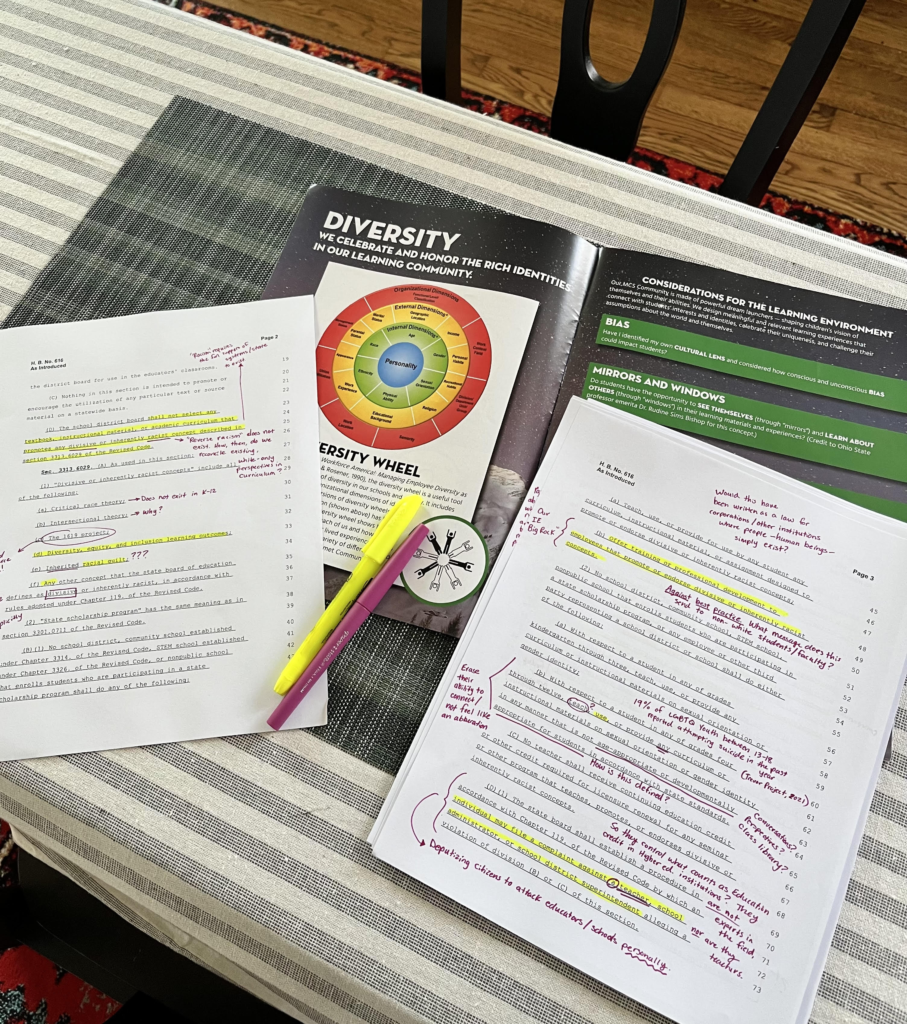
At the beginning of each school year, I teach my students how to annotate. I want them to pay close attention to what they read, and I encourage them to ask questions about it. Today, I had to practice what I teach. I grabbed a highlighter and every teacher’s friend (a felt-tipped pen) all because of one proposed bill: Ohio HB 616.
If you aren’t familiar, this bill copies and pastes direct lines from both Florida’s recently-passed ‘Don’t Say Gay’ bill and a litany of other bills passed by certain legislatures attacking Critical Race Theory (which doesn’t exist in K-12 classrooms), “divisive” concepts, and anything that might make anyone feel “guilty.”
I have read all 18 pages of this bill and placed here for you two particular ones next to an open copy of my district’s Inclusion guide. I want to show you, firsthand, just how antithetical this is to the field of education. Culturally-responsive education that acknowledges students’ identities is best practice—and we will be at risk of losing our licenses and funding for it should this bill—or any similar form of it—pass. We will be targeted and discharged for doing what is actually right by the professional standards in our field.
We will be targeted and discharged for doing what is actually right by the professional standards in our field.
In this bill, you’ll find vague language that isn’t defined; the enabling of any citizen to personally report teachers, administrators, and superintendents for discipline; the threat of punishment for including diversity/equity/inclusion training for staff or students; and consequences for using any curriculum (including my own classroom library) that includes any “divisive” or “racist” (here meaning “non-white”) perspectives or concepts.
Most personal to me, this bill needlessly includes language whose intention is to further alienate and marginalize LGBTQ+ youth. For the first twenty-six years of my life, I was afraid to admit that I was gay. Had my experience in school (and elsewhere) been different, more representative, that may have been different. I may have been healthier and felt like there was a place for me, my identity—as I was.
I don’t know if this bill will make it through a committee or whether it will ultimately be passed, but here’s what I do know.
• 19% of LGBTQ+ youth ages 13-18 reported attempting suicide at least once in 2021 (The Trevor Project)
• Some form of this bill, and more of the like, will continue to crop up—in Ohio and elsewhere across the U.S.
• This type of legislation, and really, these mentalities, must be met head-on and forcefully resisted and debunked.
• We must continue to vote en masse. In every election—locally and otherwise. Vote for people who will not make a culture war of the most vulnerable lived experiences. Vote for your teachers, your medical professionals, your neighbors who are Black or gay or some other “divisive” subset. Inclusion at the elected level is an antidote to the misguided assumption that this is desirable or even acceptable to most.
• It’s important to remember that one of the noblest goals of quality public education is to make space for all; it is about more seats at the proverbial table. This bill seeks to send a chilling reminder that—still, in 2022—so many must raise their voices as though to ask permission to simply exist or belong.
If you live in Ohio, you can make your voice heard on this bill by contacting the following:
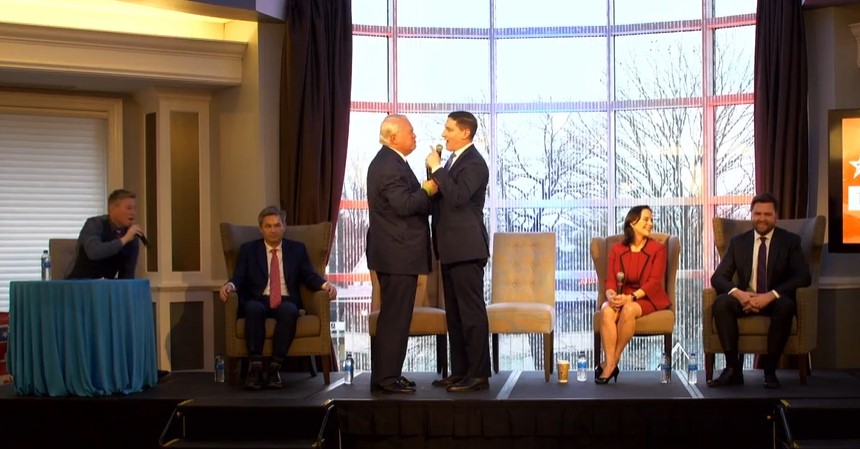
The leading candidates for the Ohio Republican U.S. Senate nomination met in Gahanna Friday. Two of them nearly came to blows.
The candidate forum hosted by FreedomWorks didn’t make it through opening statements before former Ohio Treasurer Josh Mandel began attacking investment banker Mike Gibbons. The other candidates, state Sen. Matt Dolan, former GOP chair Jane Timken and author J.D. Vance did their best to avoid the fracas.
The substance
The moderator took candidates through foreign policy, big tech “censorship” (twice), critical race theory, the opioid crisis and their feelings on Donald Trump’s presidency. The candidates largely agreed on support for Ukraine, but complained about how Congress approved a nearly $14 billion support package.
“You can not just put, in the dark of night, all of these spending provisions into a bill, plop it on peoples’ desks and say you’ve got 12 hours to vote for this,” Dolan argued.
Vance has argued against engaging the Ukraine war — raising eyebrows by saying he didn’t really care what happened. His position hasn’t really changed, but the framing has. Instead of emphasizing neglect, he uses the conflict to criticize establishment Republicans who couldn’t fund Trump’s border wall and to warn against American adventurism.
“The only thing that will salvage Joe Biden’s presidency is if a bunch of stupid, weak-willed Republicans let this guy bumble us into a war that we have no business fighting,” he told the crowd.
Biden has, from the outset and repeatedly since, insisted that American troops will not be sent to fight in Ukraine.
Timken decried big tech as, “the weapon of the cancel culture and the woke left.”
But beneath the red meat rhetoric, their arguments weren’t that dissimilar from what many on the left have demanded. Break them up, don’t let companies profit on your data, reform or eliminate section 230, the candidates argued.
“There is no reason that Facebook or Meta as it’s called should be as powerful as it is, and also, meddling in our elections,” Timken said.
The confrontation
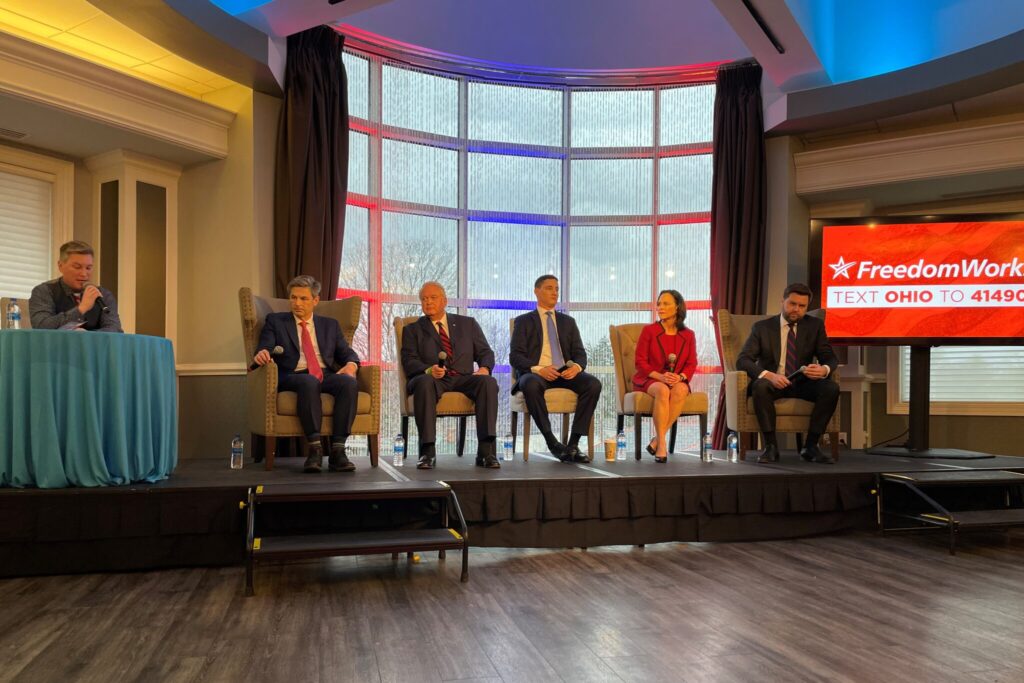
From left, moderator Brandon Boxer, Matt Dolan, Mike Gibbons, Josh Mandel, Jane Timken and J.D. Vance. Photo by Nick Evans, OCJ.
Almost immediately, it became clear that Mandel would use the forum to attack Gibbons. In his opening statements Mandel argued the fight for the “soul of the Republican Party” was even more important than the fight against Democrats.
“Here’s the fork in the roads,” he argued. “Down one path goes these squishy, RINO Republicans many of whom have been pro-China over the years.”
He rattled off the list of excommunicated Republicans — Liz Cheney, Adam Kinzinger, Mitt Romney — before turning to Gibbons.
“(He) had all these companies here in America and made money selling them to China,” Mandel said. “That is not the path that we should be taking in this country.”
Mandel repeatedly steered his answers into Gibbons’ investment holdings criticizing him for shipping Ohio jobs overseas, selling companies “to China,” or simply holding stock in Chinese firms. By the third time he tried it, Mandel’s tactic was met with sustained boos from the crowd.
“Again Josh is showing his ignorance,” Gibbons said after one critique tied to Lordstown Motors. He then turned to the former state treasurer and asked, “Josh, do you know anything about economics or finance at all?”
Gibbons also made a dig he uses regularly on the campaign trail — Mandel has “zero” experience in the private sector.
That’s incorrect. Mandel has served on corporate boards and advised payday lenders since leaving office in 2019. He also served in the military.
The confrontation between the two became more heated, with Mandel jumping out of his seat after Gibbons told Mandel, “You might not understand this,” about a stock trade.
“You’ve never been in the private sector in your entire life,” Gibbons insisted. “You don’t know squat.”
“Two tours in Iraq,” Mandel growled, “don’t tell me I haven’t worked.”
The other candidates traded uncomfortable laughs as the moderator broke up the incident while the crowd booed.
“You’re dealing with the wrong guy,” Mandel said returning to his seat. “You watch what happens, p—-, you watch what happens.”
The incident is in keeping with Mandel’s increasingly belligerent campaign. He’s taken to ending campaign ads with the tag line “send in the marine.”
A few minutes after the confrontation, Vance, who is also a marine corps veteran, chastised Mandel.
“I think the way you use the U.S. Marine Corps, Josh, is disgraceful,” Vance said. “It’s not a political football for you to toss around.”
After the event ended, Gibbons waded out into the crowd to shake hands with attendees, but refused to talk to reporters. Instead, his campaign sent out a press release after the fact calling Mandel “unhinged, unfit and flailing.”
Mandel handled things differently.
When the forum concluded, he shook hands with his opponents and rushed off stage. He weaved through attendees and made a beeline for the service kitchen.
In a straw poll, Mandel got just 4.6%, dead last among the candidates on stage. The winner was J.D. Vance with about 43% of votes.
Speaking after the event Vance called Mandel’s conduct “embarrassing,” but he didn’t want to belabor it, instead focusing on how the crowd had reacted to the points he made during the evening. But asked about Mandel’s exit, Vance smiled and paused.
“Well,” he said. “If I’d had his debate I may have run for the kitchen, too.”
Something very disturbing is occurring in the elections for our Loveland (and possibly others) school board: The politicization of the board and the candidates. In the past, most people running for school boards truly had the interests of the students and the community at heart. Republican, Democrat, Conservative, or Liberal was not an issue. Even when the candidates may have been using the office as a springboard to future political venues.
This 2021 race is featuring a block of candidates running to achieve a political purpose. They appear to be running as a block to further their political ideals, regardless of what the ideals really have to do with education and the enhancement of our school district.
One key issue this block keeps bringing up is Critical Race Theory (CRT) in the curriculum.
First of all, Critical Race Theory is not a part of the curriculum and is not taught in the school system. (A point that several of the candidates who are not part of the “block” have stated.)
Secondly, to be part of the curriculum it would have to be approved and instituted at the State level. That has not and is not being done. Yet, members of the block state unequivocally that whether it is here or not, it is coming. Is this a scare tactic? Is it possibly a tactic to unite certain people to vote for them to make sure Critical Race Theory never happens?
Also, I ask, what is Critical Race Theory? Most people have either no idea or only a vague understanding based upon what rumors they have heard. Why are certain people afraid of elements of CRT. I have tried to study CRT and admit I still do not really know what it is. And if it goes toward teaching the truth, is that a problem. Should we cleanse our education system of the truths we do not want to believe or do not like? Isn’t that a bit scary? (Sounds a little like The Scopes Monkey Trial or Banned in Boston.) Many people are using CRT as a way to unite certain elements and scare those who do not understand what is and is not part of our local and state curriculum and what Critical Race Theory really means.
Finally, do we really want block voting; i.e. Voting on issues that may not be in the best interest of students and education, but instead benefits a political point of view. Perhaps blocking good issues. Haven’t recent politics caused enough problems in our society without bringing it into the schools?
Let us make sure that we get and keep politics out of the classroom and leave education to those who truly understand what and how to do it, with our oversight and assistance. Sure, a previous school board almost made some big mistakes. But they were in the best interest of the students and we, the voters, prevented them from implementing those mistakes. Most of those people, both board and administrators, are now gone. Let us make sure that we are trying to improve and broaden the education of our students so that they might avoid the pitfalls that our older generations have set up for them.
Please vote responsibly, with understanding, and beware of the political tyranny that could be brought to our school system by political blocks attempting to take over our school system.
Robert Hess lives in the Claiborne West Neighborhood in Loveland.
The National School Boards Association is walking back its letter to President Joe Biden asking for federal help for school board members who have been harassed and threatened over masking requirements and discussions of race in public schools.
The shift came after Republican members of Congress led by Iowa Sen. Charles Grassley raised strong objections to a Department of Justice investigation that was launched in response to the association’s letter. The Ohio School Boards Association (OSBA) announced Tuesday it would end its affiliation with the national group, saying it had no input into the original letter.
GOP senators said that the government was trying to police the speech of parents, and it was “entirely inappropriate” for the association to ask for a review of whether crimes are being committed by parents or others under various statutes including the PATRIOT Act, which is aimed at deterring terrorism.
Some conservative groups and local school boards also sharply criticized the DOJ investigation and the national association.
“(The Ohio School Boards Association’s) decision to terminate membership and affiliation with the NSBA Association is a direct result of the letter sent by you to President Joe Biden late last month,” the Ohio board informed the national group in a letter Monday. “The letter purported to be sent on behalf of state associations and school board members across the nation. This assertion could not be further from the truth. OSBA was not notified of the letter, nor were we asked for our thoughts on the matter. If we had been consulted, we would have strongly disagreed with NSBA’s decision to request federal intervention as well as your claims of domestic terrorism and hate crimes.”
In a memorandum dated Friday and provided to States Newsroom, NSBA’s Board of Directors wrote to its members that “we regret and apologize for the letter.” NSBA did not answer questions about the specific language the organization regretted.
“As we’ve reiterated since the letter was sent, we deeply value not only the work of local school boards that make important contributions within our communities, but also the voices of parents, who should and must continue to be heard when it comes to decisions about their children’s education, health, and safety,” according to the memo.
According to its website, NSBA’s Board of Directors includes John Halkias of the Plain Local School District in Ohio, Donald Hubler of Macomb Intermediate School District in Michigan, Steven Chapman of Tolleson Union High School District in Arizona, Kathy Gebhardt of Boulder Valley School District in Colorado, Kathryn Green of Austin Public Schools ISD 492 in Minnesota, Ronald Hopkins of Jefferson City Schools in Georgia and Beverly Slough of St. Johns County School District in Florida, among others.
The six-page Sept. 29 NSBA letter to Biden asked for federal assistance and detailed, at length, threats and harassment that school board officials and teachers across the country are facing. It was signed by Viola M. Garcia, association president, and Chip Slaven, the interim executive director and CEO.
“As these acts of malice, violence, and threats against public school officials have increased, the classification of these heinous actions could be the equivalent to a form of domestic terrorism and hate crimes,” the letter said.
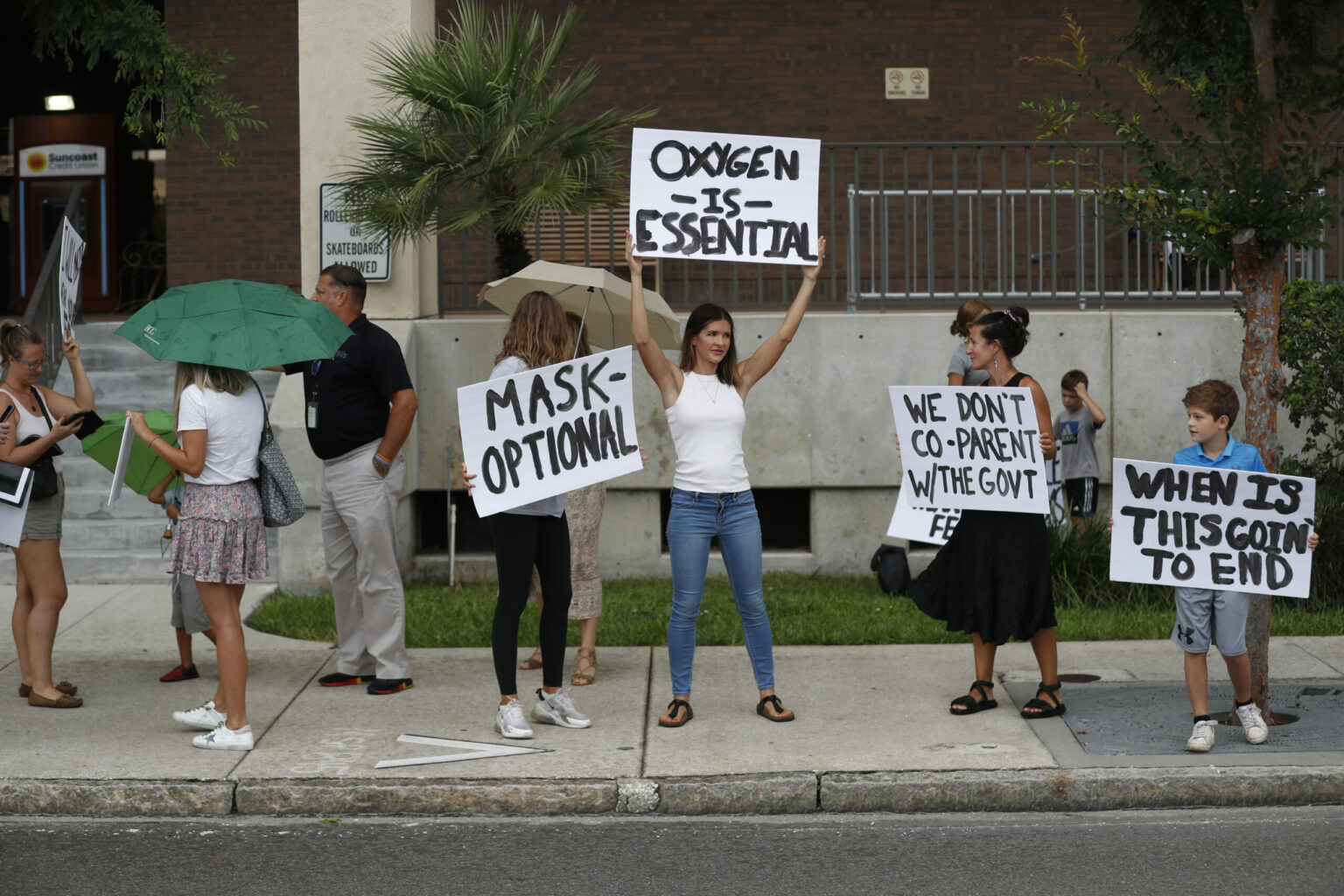
The vitriol stems from controversy surrounding teaching about the history of racism as well as requirements for students and staff to wear masks to mitigate the risk of spreading COVID-19.
In the last year, conservative activists and some parents have targeted school board meetings, protesting “critical race theory,” which generally is not taught at the K-12 level and is instead an academic theory of the intersection of race and U.S. law that is studied in college.
U.S. Attorney General Merrick Garland directed the FBI earlier this month to meet with local law enforcement officials to strategize how to deal with the threats.
Garland is also set to appear before the U.S. Senate Judiciary Committee Wednesday during a hearing about the oversight of the Justice Department, where he will likely be asked questions about the DOJ and FBI’s handling of threats to school board officials.
The memo from NSBA did not ask the Justice Department to end its investigation into threats.
The OSBA said in a news release Tuesday morning that the association believes in the value of parental and community discussion at school board meetings, and “there is tremendous value in allowing and encouraging the public to have meaningful input into the decision-making process.”
“However, that participation should not come at the expense of interfering with the board’s ability to conduct its business or subjecting individual board members to threats of violence, abuse, or harassment,” said OSBA Chief Executive Officer Rick Lewis. “But dealing with such interference should be dealt with at the local level, not by federal officials.”
The NSBA had praised the decision to begin the investigation in an Oct. 4 press release. “The U.S. Department of Justice’s swift action in response to NSBA’s request is a strong message to individuals with violent intent who are focused on causing chaos, disrupting our public schools, and driving wedges between school boards and the parents, students, and communities they serve,” the association said in a statement.
But Republicans in Congress criticized Garland’s decision to have the FBI look into the threats and called the move an attack on parents for exercising their right to free speech.
“Violence and true threats of violence should have no place in our civic discourse, but parents should absolutely be involved in public debates over what and how our public schools teach their children, even if those discussions get heated,” according to a letter led by Grassley, the top Republican on the U.S. Senate Judiciary Committee.
NSBA in its original letter cited disruptions at school board meetings in Georgia, Florida, Michigan, Ohio, New Jersey, Virginia, Wisconsin, Tennessee and Nevada.
For example, in Florida, the Florida Phoenix reported that several school board members detailed threatening text messages, vandalism and harassment they continue to face over masking requirements amid the pandemic.
“When these behaviors are ignored, when there’s no accountability for these actions, they become normalized and acceptable, and they get reinforced,” Brevard County School Board member Jennifer Jenkins said during a Monday Zoom conference, the Phoenix reported.
Jenkins also detailed in a Washington Post opinion piece how someone outlined the letters “FU” in weedkiller on her front lawn and she said that someone falsified a report accusing her of abusing her child.
“My 5-year-old daughter was on a play date last month when an investigator from the Florida Department of Children and Families sat at my kitchen table to question me about how I disciplined her, then accompanied me to the play date to check for nonexistent burn marks beneath her clothes,” Jenkins wrote.
“Someone had falsely reported that I abused my child. The report was quickly dismissed, but this was the low point in the short time I have been a Brevard County School Board member.”
The NSBA said in its Friday memo that it would “do better going forward” and review its policies and procedures.
“To be clear, the safety of school board members, other public school officials and educators, and students is our top priority, and there remains important work to be done on this issue. However, there was no justification for some of the language included in the letter. We should have had a better process in place to allow for consultation on a communication of this significance. We apologize also for the strain and stress this situation has caused you and your organizations,” the memo said.
“When we speak we are afraid our words will not be heard nor welcomed, but when we are silent we are still afraid. So is it better to speak?” – Audre Lorde
I am in sixth grade. My hands, gripping the edge of my desk in a quiet rage. Knuckles white. I. Hate. It. Here. My skin crawls. There isn’t a place in the world I want to exist. Everyone listens to me say this. But no one hears me. I am ignored.
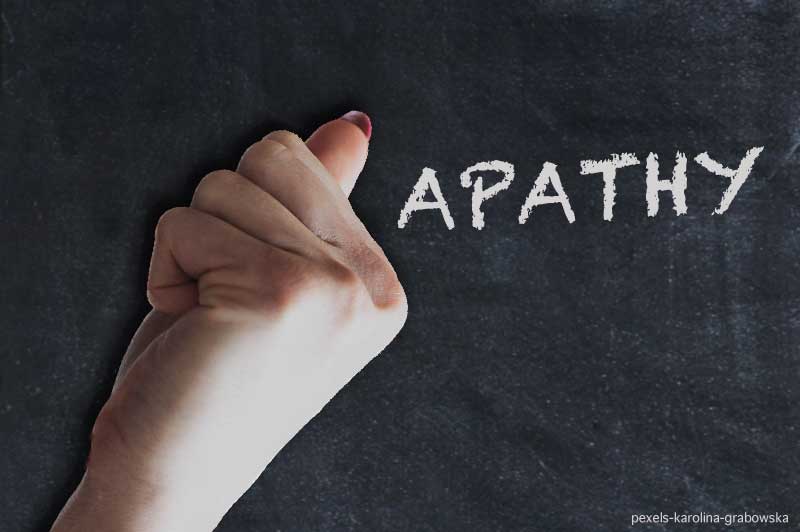
Mrs. S. wrote the word “Apathy” on the board.
“That feeling. That word, murdered 11 million people. 6 million Jews. 1.5 million Jewish Children. Look at it.”
We stare for a minute. Silent.
I hear a soft laugh. Is that my snicker? Another. Uncomfortable shifting in desk chairs. Whoever it was, Brandon has the loudest giggle, and he receives the teacher’s corrective glare.
She darkens the room and pulls down the screen. A slide of a naked, emaciated, woman, dead appears. My eyes glance over at the word. Apathy.
The next slide. A gas chamber. Dead bodies slumped over each other.
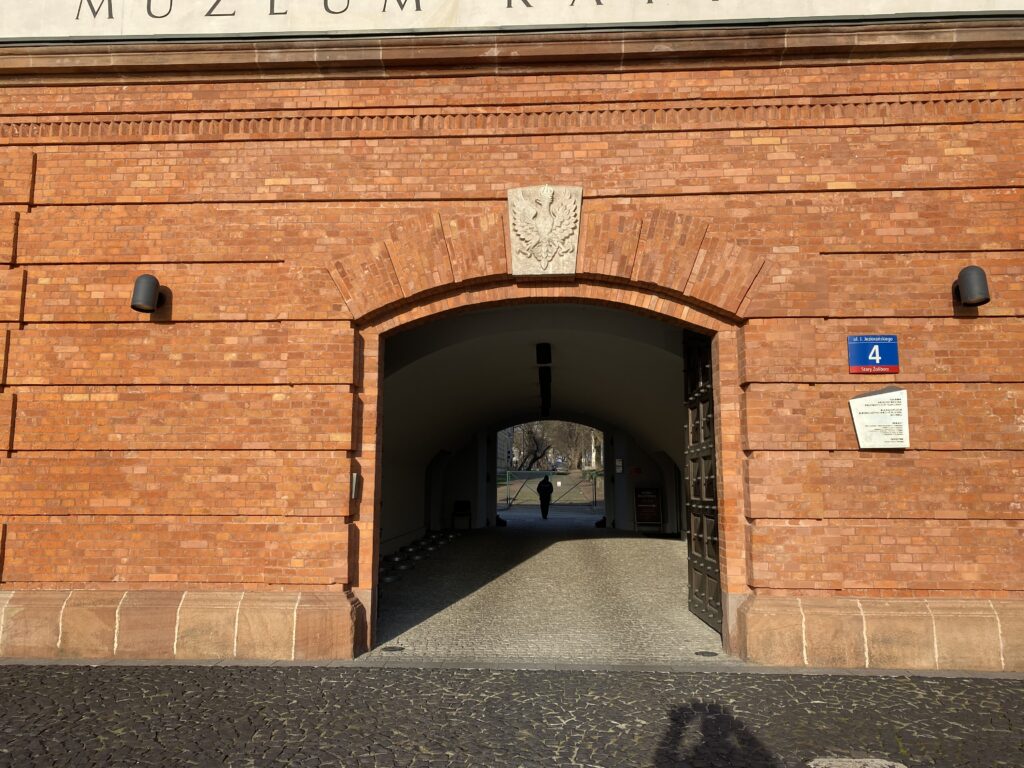
Next, the entrance to Birkenau.
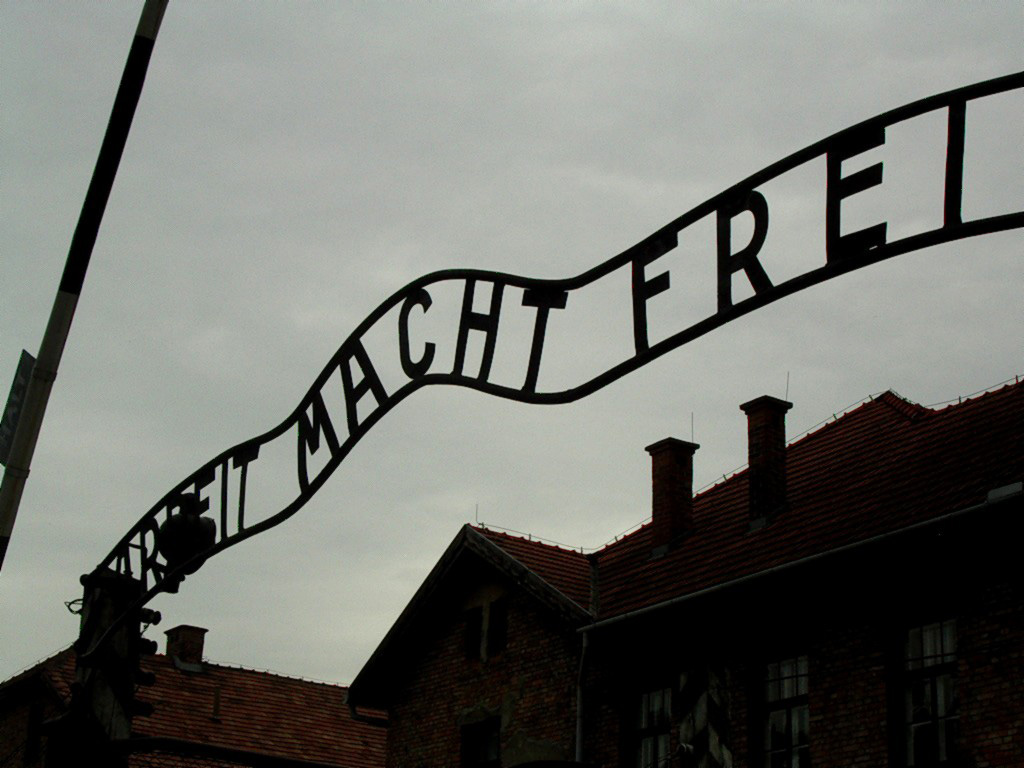
Next, Auschwitz. “Arbeit Macht Frei” Apathy.
The deceitful message at the entrance to Auschwitz- translated means “Work sets you free”.
Another slide.
“This is Babi Yar”. Mrs. S. delivers the information with a cold, flat, statement. The class gasps. All of us. Collectively. Gasping at the sight – a photograph of a mass grave holding the dead and starved bodies of 33,771 Jews, murdered over 2 days. Marci looks down at her paper and reads the quote that was to accompany the slide, number 18, “There is no gravestone that stands on Babi Yar; Only coarse earth heaped roughly on the gash.” One of the boys groans, “Ugh…Gash.”
Apathy.
I silently rode home with my father. I will never look at my Grandmother the same. “What did she see in Germany?”
Apathy.
I visited Majdanek, Sobibor, Auschwitz, Treblinka, Birkenau when I was 17. I am numb, the feeling of existing nowhere. I think I have died, but I am only numb. Every day, I want to die. Instead I am numb. Now I can survive.
And I promise to share these words, as I stand under the gallows of Auschwitz:
“Never shall I forget that night, the first night in camp which has turned my life into one long night, seven times cursed and seven times sealed. Never shall I forget that smoke. Never shall I forget the little faces of the children, whose bodies I saw turned into wreaths of smoke beneath a silent blue sky.
Never shall I forget those flames which consumed my faith forever.
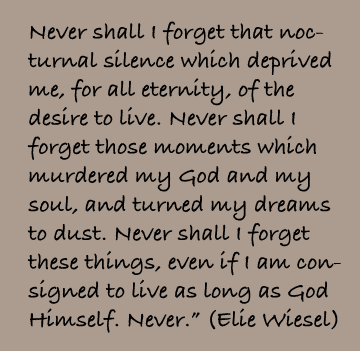
Never shall I forget that nocturnal silence which deprived me, for all eternity, of the desire to live. Never shall I forget those moments which murdered my God and my soul, and turned my dreams to dust. Never shall I forget these things, even if I am consigned to live as long as God Himself. Never.” (Elie Wiesel)
“It doesn’t feel right.”
“Let it go.”
“Ok, I’ll move on.”
That conversation has dominated my life for 34 years. Apathy. I define it. My stomach rumbles every day, I never feel good. I sit with my husband at dinner and watch the news. This isn’t how it is supposed to be. All that I have seen and heard. I am numb and dead inside, as I was in Majdenak choking on the stench on rotten leather shoes. Trophies saved by Nazis to commemorate 80,000 murders.
“Never Again. What does that mean?”
He stares back at me. My question emerges from my apathetic silence.
“When we say never again, doesn’t that mean we’re supposed to do something? What does `never again’ mean to you?”
He quietly speaks of his dreams for peace. Eradicating poverty. Housing for the poor. Healthcare. College. Employment.
“What about you?”
“I can’t live here anymore. Not the way it is. When I said never again, I meant I would stop a train carrying cattle cars of Jews with my body, with my strength, with my power. I don’t have power. I don’t want to live that way anymore. I don’t want to live here anymore.”
“Like Loveland? You don’t want to live in Loveland anymore?”
“No. I can’t live in the world as it is anymore. I have to change it. It’s unbearable.” I cry. I can’t stop. I feel the quiet rage of my youth. But my hands lie flat on the table, my knuckles pink. I don’t think I can exist here. I look to my husband and children. But they exist here.
I pick up books and learn. I register voters. I learn how to organize large groups of people to fight for a common cause, not because of politics, but because it aligns with their self-interests. I learn about my privilege. I learn about systemic racism. I make so many mistakes. I am corrected aggressively. Kindly. Ignored. I cry. I laugh. I am successful. I learn as I go. Things change.
One day, I press play. My daughter is watching over my shoulder. We watch George Floyd die. She has closed her eyes. I restart the video.
“Open them. Open your eyes. We have to see.”
I think, “There is no gravestone that stands on Babi Yar; Only coarse earth heaped roughly on the gash.”
We exist in a world like this – coarse earth heaped roughly on the gash. I don’t want this world to exist as long as I live in it.
We hug at the end of the video.
When my husband finishes work, I greet him by stating simply, “Never Again.”
He knows what it means.
I step in front of the train and put my hand up.
With a short meeting and trusted friends, the Loveland Diversity Advisory Board is formed.
John comments only occasionally, but when he does, I put the “mature administrator” hat on immediately and respond with a question, “Help me understand…” or “I’m not sure I am following what you mean…could you say more about that?” Inevitably, John replies with a co-opted statement about the thread and relates it back to Critical Race Theory or Reparations, or School Funding and School Policy. Clearly, he is looking to push buttons and searching for a “gotcha moment”.
I don’t want this world to exist as long as I live in it. My stomach rumbles. Looking down, I see that my hands are clutching the edge of my desk. My knuckles are white.
He writes, “Critical Race theory has no place in American Schools. The tenets of Critical Race Theory are based in the destructive ideal of inherent racism and will teach our children to judge and self segregate based solely on skin color….It promotes the dismantling of American Society thru (sic) Marxist anti American rhetoric.”
It takes my breath away to see it in writing. “Marxist anti-American Rhetoric”. In the rambling online blogs of the Poway Synagogue shooter, references to Jews and their control of the media, the banks, and his description of hatred for Jews and their role in “cultural Marxism”. This phrase has repeatedly created a rationale for violence against leftists, against Jewish people, and against anyone associated with either.
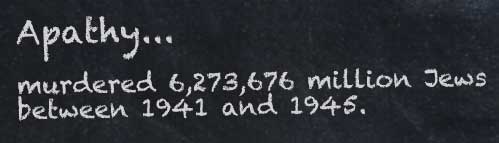
My alarm is sounded. Bully. Microassault. Dog Whistle. “There is no gravestone that stands on Babi Yar; Only coarse earth heaped roughly on the gash.” Apathy murdered 6,273,676 million Jews between 1941 and 1945.
Never Again.
I step in front of the train.
Stop.
You’re either driving the train. Or you’re stopping it.
The more people that stand in front of this train, the faster it will stop.
We must always take sides. Neutrality helps the oppressor, never the victim. Silence encourages the tormentor, never the tormented. –Elie Wiesel Z”L, Buna, Buchenwald, Auschwitz Survivor (1928 – 2016)
This Guest Column by Leah Marcus is presented by Loveland Magazine in collaboration with the Loveland Diversity Advisory Board. Contact them if you’ve a story to share.
Washington — More than two dozen Republican attorneys general including Ohio’s Dave Yost are voicing their disapproval over the Department of Education’s proposed priorities for teaching K-12 students about American history and civics education because they would include references to systemic racism and how the history of slavery has shaped the U.S.
The state attorneys general argue in a May 19 letter to Education Secretary Miguel Cardona that public schools should not be given grant funds to teach about critical race theory, “including any projects that characterize the United States as irredeemably racist or founded on principles of racism (as opposed to principles of equality) or that purport to ascribe character traits, values, privileges, status, or beliefs, or that assign fault, blame, or bias, to a particular race or to an individual because of his or her race.”
Critical race theory says that racism is systematic and embedded in policies and the legal system. Scholars who study the issue focus on understanding how racism has shaped U.S. laws and how those actions have affected Black communities and communities of color.
“Though the Department does not overtly refer to (Critical Race Theory) in its priorities, it is prioritizing teaching this highly controversial ideology through the vehicle of this grant program,” the AGs wrote. “This is hardly what Congress intended when it authorized this program.”
The attorneys general also warn against approving grants for teachings of the Pulitzer Prize-winning 1619 project from the New York Times Magazine.
The Department of Education did not respond to requests for comment.
The attorneys general who signed the letter include Mark Brnovich of Arizona, Christopher Carr of Georgia, Lawrence Wasden of Idaho, Derek Schmidt of Kansas, Jeff Landry of Louisiana, Eric Schmitt of Missouri, Austin Knudsen of Montana and Dave Yost of Ohio, among others.




 Collins’ dad and brother both struggled in school as well, and it was through their struggles that she saw “how hard it was for some people to be successful.”