Tag: CVS Health

  • Pursuit of quick profits makes hospice care worse, new research says

    Pursuit of quick profits makes hospice care worse, new research says

     (Getty Images)

    By:  Ohio Capital Journal

    Private equity firms — high-dollar investors known for aggressively seeking profit — and publicly traded health conglomerates have been buying up businesses that provide hospice care. But when it comes to caring for patients facing the end of their lives, those businesses perform worst, according to a research letter published Monday in the Journal of the American Medical Association.

    Since private equity firms and publicly traded companies thirst for short-term profit, the researchers wanted to see if they sacrificed quality to get it.

    Publicly traded behemoths such as UnitedHealth Group and CVS Health are already the subject of investigations and lawsuits by federal and state government over allegedly anticompetitive actions as drug middlemen. At the same time, both provide hospice care.

    Meanwhile, the business practices of private equity groups have been coming under increasing scrutiny over the past decade. They often buy businesses in deals structured so they can quickly recoup their investment, identify the most profitable assets, sell them and then sell the resulting business or declare bankruptcy. Indeed, private equity funds were behind 65% of billion-dollar bankruptcies in the first half of 2024, the Private Equity Stakeholder Project reported in September.

    GET THE MORNING HEADLINES.


    The firms also have been accused of being predatory toward consumers.

    In her book “These are the Plunderers,” journalist Gretchen Morgenson reported how they sought profit by purchasing medical providers such as emergency rooms, sometimes engaging in surprise billing, and then fighting legislation intended to stop the practice.

    In the case of hospice care, researchers at Emory, Vanderbilt, and Cornell universities, plus the Department of Veterans Affairs, looked at four different ownership models for hospice providers and evaluated the quality of care provided by each. It classified providers as for-profit private equity, publicly traded for-profit companies, for-profit companies that are neither publicly traded or private equity, and nonprofit.

    To evaluate quality, they looked at datasets of eight indices — “communication, timely care, treating family member with respect, emotional and religious support, help for symptoms, hospice care training, hospice rating, and willingness to recommend.”

    When they ran the numbers, the researchers’ suspicions were confirmed.

    “Across all… measures, (private equity and publicly traded company) owned hospices demonstrated the lowest performance and not-for-profit hospices the highest performance,” the research letter said.

    Placed on a scale of one to 100, private equity and publicly traded company-owned hospice providers scored 79.8 points, other for-profit companies scored 81.2 points, and nonprofits scored 83.1 points.

    “Although prior research has highlighted poorer user experiences in for-profit vs not-for-profit hospices, this study found that (private equity or publicly traded company) ownership was an especially problematic category of for-profit hospice,” the report said.

    Another issue that critics of private equity have been raising is that some of its biggest investors — pension funds — represent people private equity is hurting. For example, the Ohio State Teachers Retirement System has plowed $1.3 billion into private equity groups that are heavily invested in big fossil fuel producers and users.

    YOU MAKE OUR WORK POSSIBLE.

    ____________
    Marty Schladen
    Marty Schladen

    Marty Schladen has been a reporter for decades, working in Indiana, Texas and other places before returning to his native Ohio to work at The Columbus Dispatch in 2017. He’s won state and national journalism awards for investigations into utility regulation, public corruption, the environment, prescription drug spending and other matters.

    Ohio Capital Journal is part of States Newsroom, the nation’s largest state-focused nonprofit news organization.

    MORE FROM AUTHOR

  • Ohio’s Medicaid director owns the stock of some major contractors, but won’t say how much

    Ohio’s Medicaid director owns the stock of some major contractors, but won’t say how much

    A group representing small pharmacists says large chains, especially CVS, are moving patients’ prescriptions to their own stores without consent. CVS adamantly denies that. Photo by Marty Schladen, Ohio Capital Journal.

    It’s unclear if she disclosed potential conflict during massive procurement

    BY: MARTY SCHLADEN and Ohio Capital Journal

    Since she became director of the Ohio Department of Medicaid in January 2019, Maureen Corcoran has owned stock in some of the department’s biggest contractors. Given the size of those contracts, they could have increased the value of the stock Corcoran owned.

     Ohio Medicaid Director Maureen Corcoran. Official photo.

    But while she complied with one set of state disclosure requirements, Corcoran won’t say just how much stock she owns in such companies as CVS Health, UnitedHealth Group and Express Scripts — each of which has done billions of dollars worth of business with the Medicaid department since Corcoran started running it. 

    In addition, Corcoran won’t say if she filed legally required affidavits disclosing that she had an ownership stake in corporations the department hired earlier this year as part of its $20 billion managed-care re-procurement or the company the state hired to run its $1 billion OhioRISE program. Should they be found, violations of the law could carry criminal penalties and invalidate contracts signed without proper disclosures.

    Big money

    When Corcoran took the reins of the Medicaid department, she held a stake in some companies that were getting a lot of scrutiny over their business with the state. Two were CVS Caremark and OptumRX, pharmacy middlemen that together were handling more than $2 billion a year in prescription-drug transactions for the department.

    Ohio’s independent pharmacists and others accused the companies of several questionable practices — including charging a lot more for drugs than they were paying pharmacists. A state-commissioned analysis showed that in 2017, CVS and Optum charged almost a quarter-billion dollars more for drugs than they reimbursed the pharmacies that had bought and dispensed them.

    The findings were still big news — and the companies were suing the Medicaid department — when Corcoran took control just after Gov. Mike DeWine took office at the start of 2019. Even so, Corcoran held onto stocks in CVS Caremark owner CVS Health and in OptumRX owner UnitedHealth.

    According to disclosures filed with the Ohio Ethics Commission, Corcoran owned at least $1,000 worth of those companies’ stock. 

    Given that they were among 180 stocks and mutual funds she disclosed owning as of Jan. 31, 2019, it’s possible that Corcoran wasn’t even aware that she held stakes in companies that did such high-profile business with her agency. Whatever the case, Corcoran held onto shares in the companies through 2019 and 2020, her ethics filings show.

    Under Ohio’s aging ethics laws, agency bigwigs like Corcoran are allowed to own stock in companies with which their departments do business so long as their holdings don’t exceed 5% of the company’s outstanding stock. In the case of Medicaid’s big contractors, that would mean the director would have to be one of the wealthiest people in Ohio to violate the provision.

    CVS and UnitedHealth are the fourth and fifth-largest corporations in the country by revenue. In order to violate the ethics provision, Corcoran would have to have owned a combined $18 billion worth of the companies’ stock in 2019. 

    Potential for conflict

    That’s a clear sign that the state’s ethics laws need to be updated, said Catherine Turcer, executive director of Common Cause Ohio, a watchdog group.

    “Five percent of a company’s stock in the 70s, 80s or even the 90s wasn’t anywhere near what it is now,” Turcer said.

    In addition, knowing just how much Corcoran’s investments with Medicaid contractors were worth would go a long way toward showing how big a conflict of interest she has. If it’s just over $1,000, the conflict might seem nominal, but if it’s much more, it would be a lot more serious, Turcer said.

    “There are two things Maureen Corcoran could do,” Turcer said. “One would be to publicly identify how much over the $1,000 she owns and allow the public to weigh in. The other thing she could do so the public didn’t worry about the conflict of interest is actually divest herself of these stocks.”

    Last Friday, the Medicaid department was asked the value of Corcoran’s investments in CVS, UnitedHealth and Express Scripts, a third pharmacy middleman with which the department has done business.

    A spokeswoman for the department said it would respond to those and other questions, but as of Tuesday afternoon, it hadn’t. The spokeswoman also didn’t answer questions about when responses would be forthcoming.

    Bigger problem?

    Potentially more ominous for Corcoran and her department is another question they haven’t responded to: Whether Corcoran filed affidavits disclosing her interest in companies with whom the department recently entered into huge contracts.

    This year, the Medicaid department implemented a big redesign of its managed care program. 

    To gain more insight into drug transactions, the department will work next year with a single drug middleman contracted directly with the department — instead of being hired by managed-care providers as they have in the past.

    But while UnitedHealthcare’s OptumRx might be losing that business, the Medicaid department is hiring UnitedHealthcare Community Plan of Ohio to be one of six companies administering the state’s $20 billion-a-year managed-care program.

    The re-procurement has raised other questions. Also hired was a plan owned by managed-care giant Centene, which agreed earlier this year to pay out more than $1 billion to Ohio and 21 other states after being accused by Attorney General Dave Yost of fleecing taxpayers. Corcoran has struggled to explain why her department would keep doing business with the company.

    The state also is creating OhioRISE, an ambitious program intended to help 60,000 Ohio children with the most complex behavioral health and other needs. Aetna Better Health of Ohio was selected in April to administer the $1 billion program.

    The company is a subsidiary of insurer Aetna. CVS — in which Corcoran has been invested — bought the Aetna for $70 billion in 2019.

    It’s unclear whether Corcoran continues to own stock in UnitedHealth or CVS, or whether she disclosed any ownership when contracts were let this year. 

    But the state law governing such disclosures spells out potential criminal penalties for violations and it says any contract so made “is void and unenforceable.”

  • Community pharmacy group says CVS, other bigs are unfairly steering patients

    Community pharmacy group says CVS, other bigs are unfairly steering patients

    A group representing small pharmacists says large chains, especially CVS, are moving patients’ prescriptions to their own stores without consent. CVS adamantly denies that. Photo by Marty Schladen, Ohio Capital Journal.

    A huge majority of community pharmacists have lost patients in the last six months due to unfair practices by much larger competitors, an industry group that represents small pharmacists said last week.

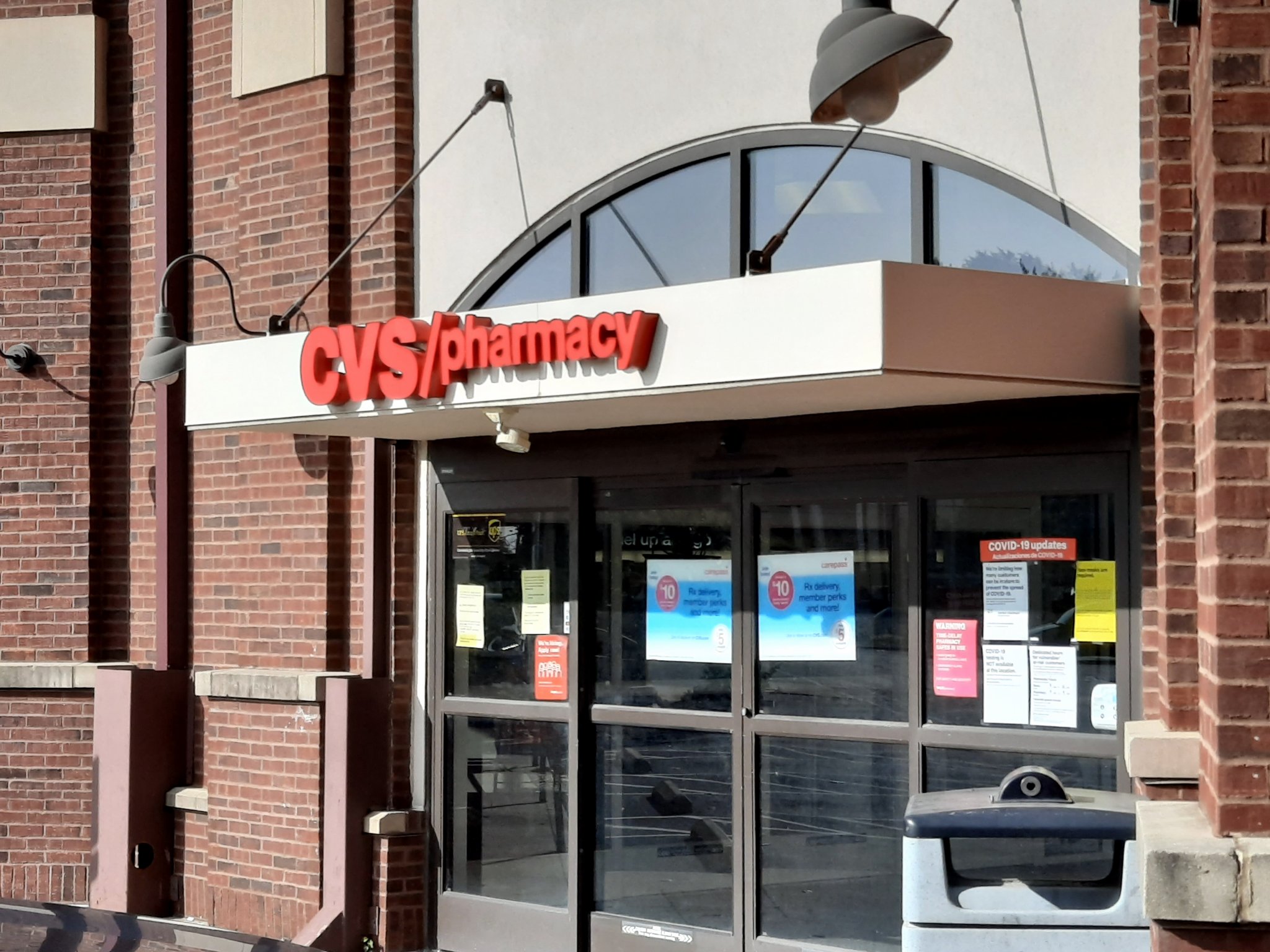
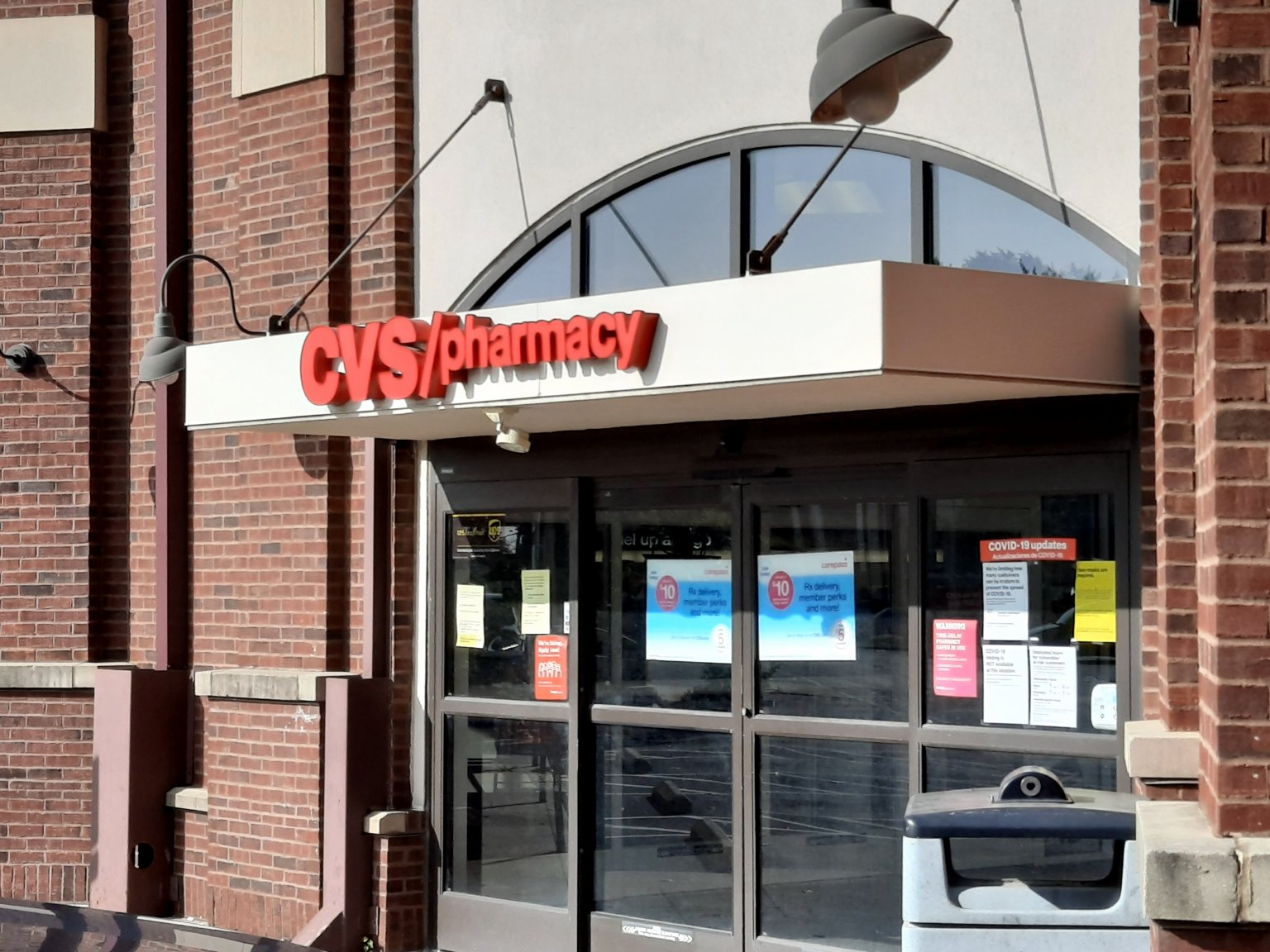
    They accuse CVS Health — which operates as an insurer, claims administrator and pharmacy retailer — as being the company responsible for the most abuses. CVS denies the claim.

    The National Community Pharmacy Association (NCPA) said that between Sept. 8-11, it collected 412 responses to a survey about a practice known as “patient steering.” 

    In addition to being the nation’s largest pharmacy retailer, CVS is now also the largest pharmacy benefit manager, which charges insurers, pays pharmacists, decides which drugs get favorable treatment and collects rebates from manufacturers. The company has said it maintains a strict firewall between the businesses, but critics have accused the company of using one business to advantage the others.

    For example, in the fall of 2017, Ohio community pharmacists complained Medicaid reimbursements from CVS’s pharmacy benefit manager, CVS Caremark, had dropped so low that they were having a hard time staying in business. At the same time the pharmacists they were receiving letters from from another arm of CVS acknowledging that reimbursements were low and that CVS was willing to buy out the community pharmacists.

    That made pharmacists suspicious that the part of the corporation that acquires pharmacies was using CVS Caremark’s reimbursement data to determine which independent pharmacies were most likely to be struggling and vulnerable to a buyout offer. CVS denied that.

    Some observers feared such concerns would only get worse when a federal judge last year allowed CVS to merge with Aetna, the country’s third-largest health insurer.

    Now the NCPA, the group representing small pharmacists, says things are getting worse.

    One method of patient steering is to transfer their prescriptions to another pharmacy without their knowledge, much less their consent. 

    According to the NCPA survey, 79% of community pharmacists said that had happened with one or more of their patients in the past six months. Almost 78% of respondents said some of the patients thus steered saw their prescriptions moved to CVS.

    “That’s a big red flag,” NCPA CEO B. Douglas Hoey said in a statement. “The pharmacy sector is very competitive, and most big chains have aggressive marketing schemes aimed at taking patients from rivals. CVS Health not only owns brick-and-mortar stores, but it also owns its own insurance companies, Aetna and Caremark. That information allows it to eavesdrop on when and where patients are getting their prescriptions and, as the survey reported, coerce unknowing patients into CVS stores.”

    In an email, CVS Senior Director of Corporate Communications Michael DeAngelis said the NCPA claims were patently false.

    “Our pharmacies only initiate prescription transfers when requested by a patient,” he said. “Also, CVS Caremark members have access to our broad network of more than 60,000 pharmacies, including most independent pharmacies and chain pharmacies, in addition to CVS Pharmacy. In fact, more than 40% of the pharmacies in our network are independently owned. If a plan sponsor chooses a particular network design that includes specific pharmacies, their members are notified in advance.”

    DeAngelis also panned the process behind the NCPA survey.

    “The ‘survey’ conducted by the business trade association, NCPA, of its own members has no basis in fact and is nothing but a self-serving attempt to disparage CVS Health,” he said. “Accusations that we transferred patients’ prescriptions to our own pharmacies without their knowledge or consent are simply not true.”

    One Ohio pharmacist said he doesn’t know why he’s losing patients, but he knows he’s been losing them.

    “We’re down 300 or 400 patients a month” compared to last year, said Barry Klein, owner of Klein’s Pharmacy in Cuyahoga Falls. “It’s hard to say what was the cause of it, but definitely our patient count is down.”


    Marty Schladen

    Marty Schladen has been a reporter for decades, working in Indiana, Texas and other places before returning to his native Ohio to work at The Columbus Dispatch in 2017. He’s won state and national journalism awards for investigations into utility regulation, public corruption, the environment, prescription drug spending and other matters.