Tag: CVS

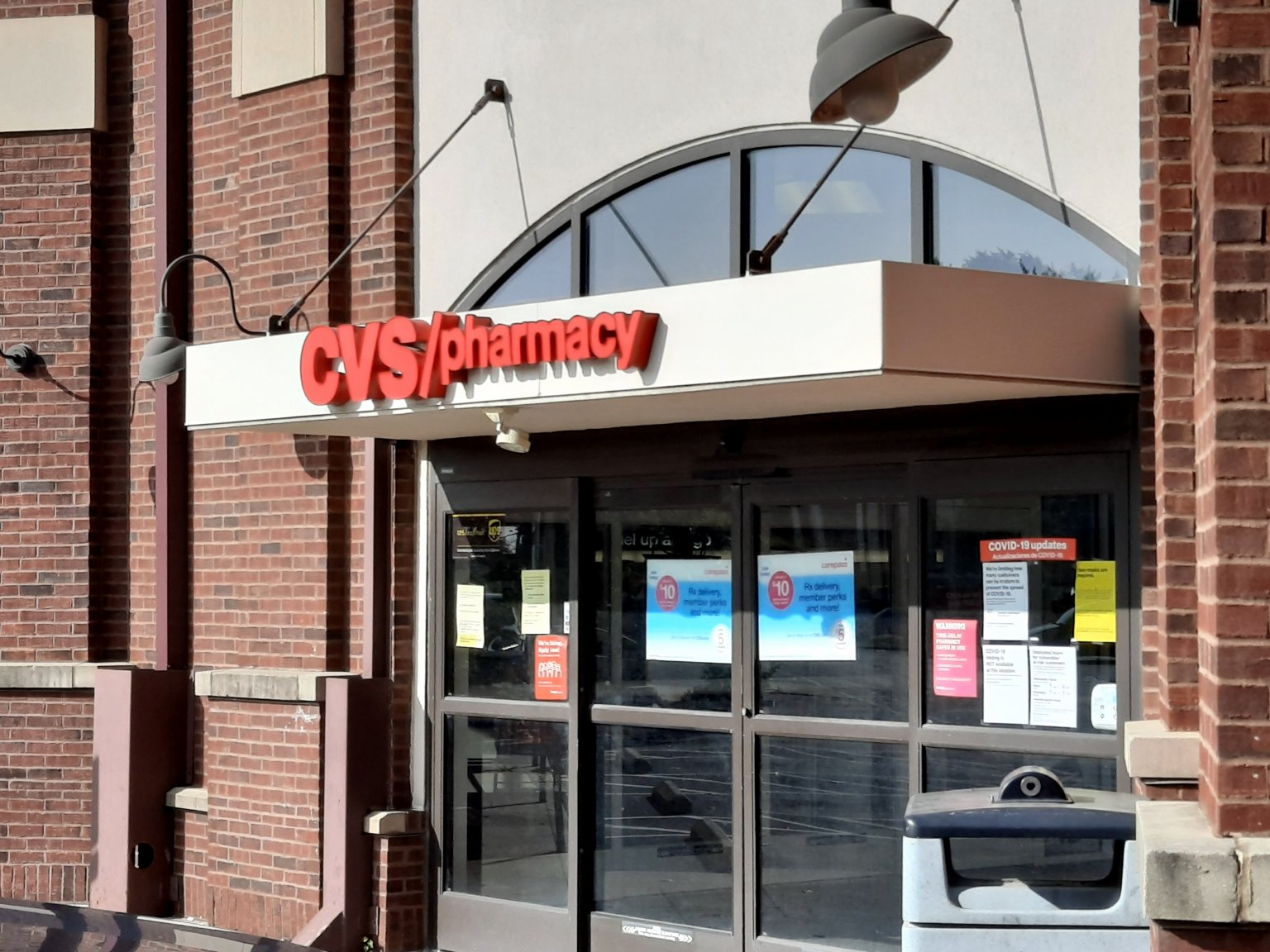
  • CVS Pharmacy on Loveland Madeira/Kemper to close

    CVS Pharmacy on Loveland Madeira/Kemper to close

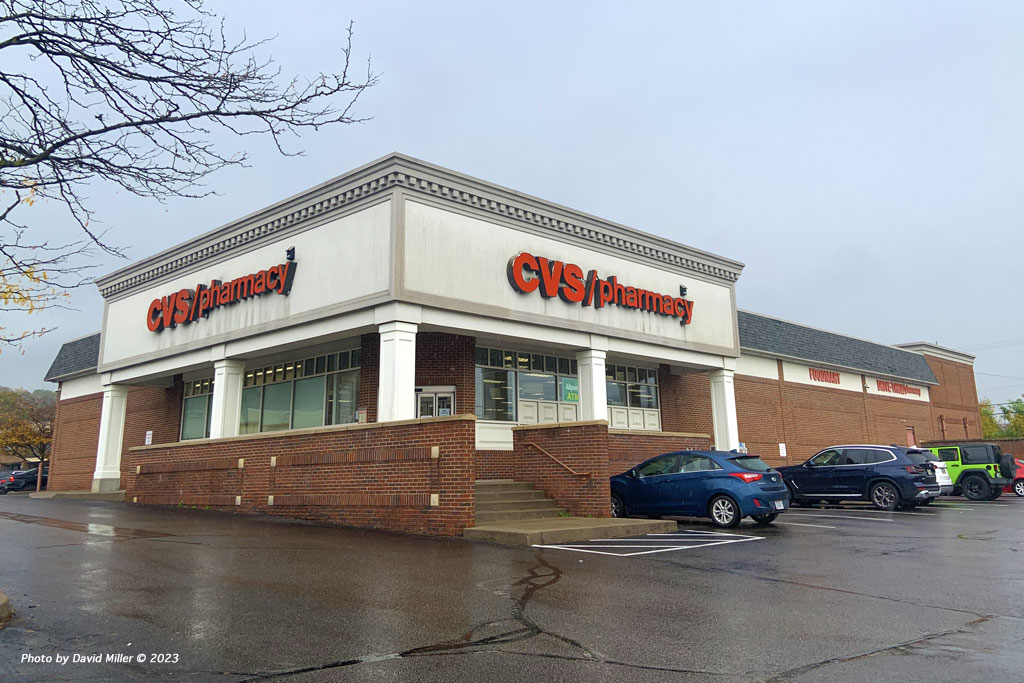
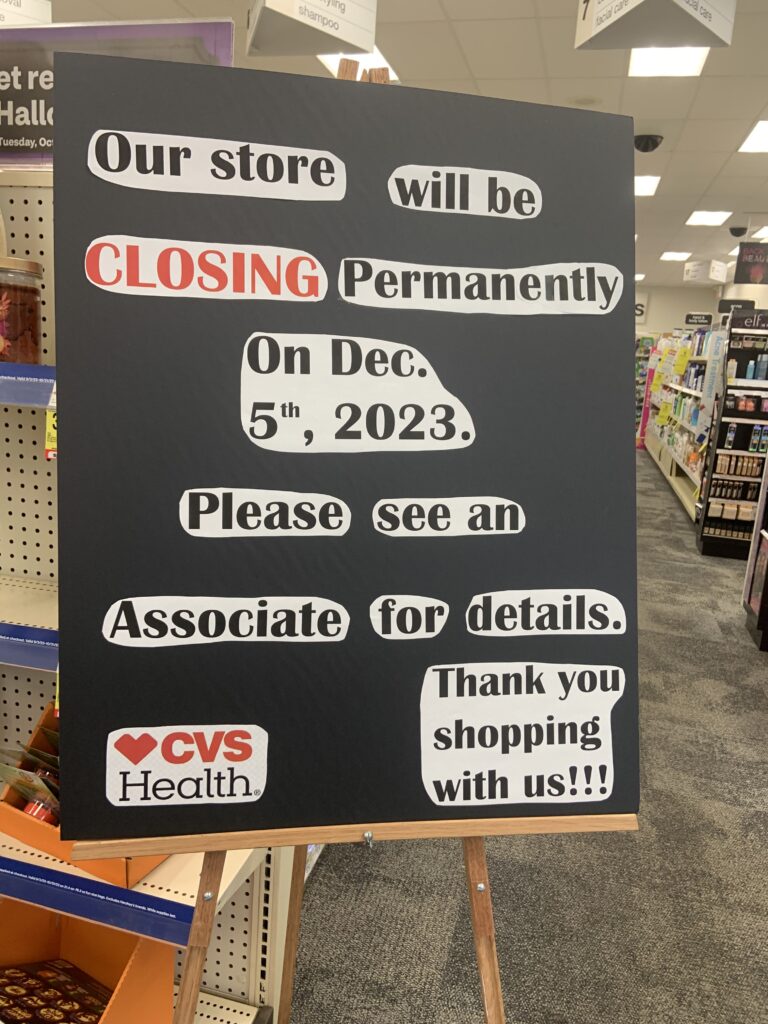
    Symmes Township, Ohio – The CVS Pharmacy at Loveland Madeira and Kemper Road is permanently closing on December 5.

    CVS, the largest US chain of pharmacies, closed 244 stores between 2018 and 2020. In 2021, it announced plans to close 900 stores by 2024.

    The Ohio Capital Journal reported in September, “The news comes after inspectors have found that CVS’s understaffed stores in Ohio have in some instances lacked controls to protect patients. And it raises the prospect that after buying up independent and small-chain competitors, cost-cutting large chains might not be able to adequately protect patients — when they can provide service at all.”

    Ohio Capital Journal reporter Marty Shadlen said, “CVS bought and closed numerous smaller competitors and moved their prescriptions to its stores. Now it’s been closing its own stores and moving those scripts into its remaining stores, seemingly without adding staff to accommodate the new patients.”

    In at least some cases, the problem isn’t that the companies owning big chains are losing money, it’s that they’re not making enough to keep Wall Street happy. For example, CVS Health made almost $2 billion in profit in the second quarter of this year, but that was 37% less than a year earlier, CNBC reported. But the corporation owns not only the biggest pharmacy retailer. It also owns Aetna, a top-ten health insurer, and CVS Caremark, the nation’s largest drug middleman. And not all of the slump was due to pharmacy operations.

    In the CVS’s second-quarter earnings call, CEO Karen Lynch said, “We grew (pharmacy) revenue to $28.8 billion, an increase of nearly 8% versus the prior year. We generated $1.4 billion of adjusted operating income in the quarter, a decrease of 17% from the prior year, largely due to lower COVID-related volumes.”

  • Pharmacies file antitrust suit against massive drug middleman

    Pharmacies file antitrust suit against massive drug middleman

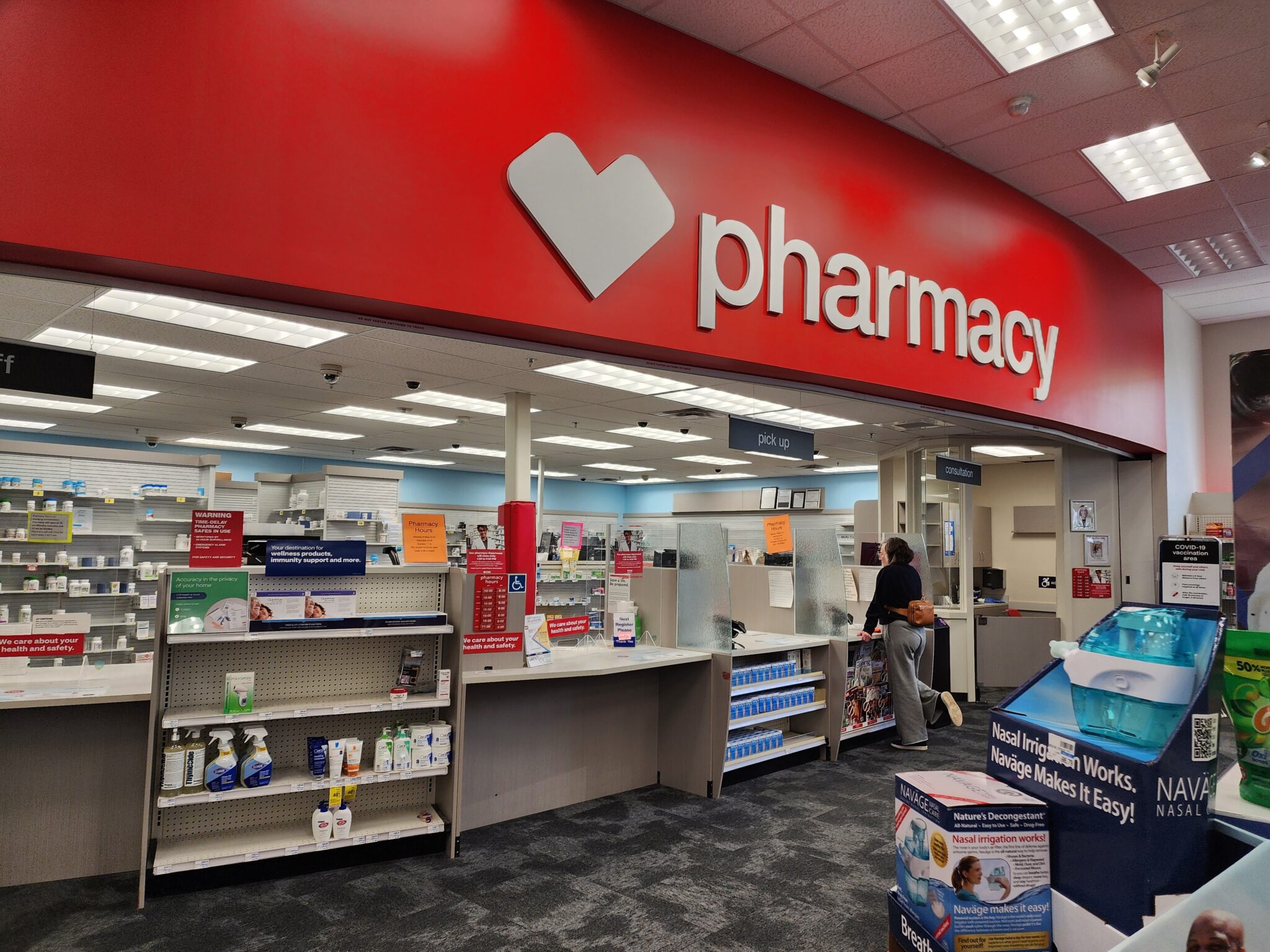
    A CVS store. Photo by Lynne Terry, Oregon Capital Chronicle, States Newsroom.

    BY:  Ohio Capital Journal

    A class-action suit has been filed in federal court on behalf of community pharmacies claiming that health giant CVS has used its dominance as a drug middleman to force pharmacies to pay large, after-the-fact fees in Medicare transactions.

    The suit was filed last week in Seattle on behalf of Osterhaus Pharmacy, which until last year did business in Maquoketa, a small town in eastern Iowa. The lawyers representing the pharmacy say they also represent other, “similarly situated” pharmacies.

    It’s the latest antitrust action against CVS and two other dominant middlemen — Express Scripts and OptumRx — which are known as pharmacy benefit managers. The Federal Trade Commission last year opened an investigation into all three companies, and Ohio Attorney General Dave Yost in March sued Express Scripts, alleging violations of the state’s antitrust law.

    Pharmacy benefit managers, or PBMs, occupy a pivotal position in the drug-supply chain.

    Each of the big three is part of a corporation that also owns a major health insurer. CVS owns Aetna, UnitedHealth owns OptumRx and Express Scripts and Cigna are part of the same corporation.

    The PBMs represent those and other insurers when it comes to filling prescriptions for people covered by the insurers. Among their functions, they create lists of drugs that are covered by the plans, create networks of pharmacies and they determine how much to reimburse those businesses for the medicines they dispense.

    The suit filed in Seattle argues that under the Medicare Part D program — which covers prescriptions for the elderly — CVS is forcing pharmacies to join its networks and agree to a system of arbitrary clawbacks long after CVS Caremark initially reconciles claims.

    The company is able to do so because it and the other two large PBMs are estimated to control 80% of that marketplace, the suit says. In other words, pharmacies have to sign contracts on CVS’s terms or give up the business of millions of insured patients.

    And in addition to its heft as a PBM, CVS is “vertically integrated.” It owns the largest retail pharmacy chain, a large mail-order pharmacy operation and a top-10 insurer. The lawsuit filed last week said CVS is able to control too many sides of prescription transactions.

    “This vertical consolidation has served CVS Caremark well,” it said. “It now controls not just the pricing of drugs, not just the selection of the drugs covered by Part D Plans, and not just the selection of pharmacies in each Part D network; CVS Caremark also controls access to at least a third of the Medicare beneficiaries enrolled in PBM-affiliated Plans. Pharmacies must accept the increasingly anti-competitive pricing and contract terms set forth by CVS Caremark or face exclusion from its Part D network.”

    For its part, CVS said the claims are false.

    “We believe the allegations are without merit and intend to defend ourselves vigorously,” spokesman Phillip Blando said in an email Monday.

    The suit alleges that some CVS fees in the Medicare Part D program violate the Sherman Antitrust Act of 1890 — which is aimed at keeping companies from using market dominance to suppress competition.

    That body of law has strong ties to Ohio. The Sherman Act was sponsored by an Ohio senator, John Sherman, and signed by an Ohio (and Indiana) president, Benjamin Harrison.

    The Buckeye State also has long had its own antitrust law, which the suit filed in Seattle last week referenced as it quoted from Yost’s suit against Express Scripts.

    “PBMs are modern gangsters… ” the Ohio suit says. “They were designed to protect and negotiate on behalf of employers and consumers after Big Pharma was criticized for overpricing medications, but instead they have absolutely destroyed transparency, scheming in the shadows to control drug prices on all sides of the market.”

    The latest suit specifically targets direct-and-indirect remuneration, or DIR, fees charged by CVS in its Part D program.

    Those are performance-based fees pharmacies have to pay if they want to be in the CVS network. The suit says CVS’s use of them has grown dramatically and increasingly rapidly over the past 13 years.

    “From 2010 to 2020, pharmacy DIR fees increased by more than 100,000%—that is, they grew more than 1,000 times larger,” the suit said. “In 2021, DIR fees increased an additional 33% from 2020 levels to $12.6 billion.”

    The suit says that all network pharmacies must pay minimum DIR fees, but they can be forced to pay much more because of factors pharmacies can’t control.

    “For example, CVS Caremark penalizes an Independent Pharmacy on adherence if a patient discontinues fulfilling her prescriptions at the pharmacy, regardless of circumstances,” the suit says. “The cause may be that the patient spends winters in a different part of the country and fills her prescriptions there, or the patient was told by the physician to discontinue using a drug, or the patient died, or the manufacturer has discontinued manufacturing the drug. CVS Caremark could assess performance so that Independent Pharmacies are not penalized for these events, none of which is within pharmacy control or actually measures pharmacy performance, but it has chosen not to do so.”


    Marty Schladen
    MARTY SCHLADEN

    Marty Schladen has been a reporter for decades, working in Indiana, Texas and other places before returning to his native Ohio to work at The Columbus Dispatch in 2017. He’s won state and national journalism awards for investigations into utility regulation, public corruption, the environment, prescription drug spending and other matters.

    MORE FROM AUTHOR

  • Ohio officials not tracking rate of vaccine refusals

    Ohio officials not tracking rate of vaccine refusals

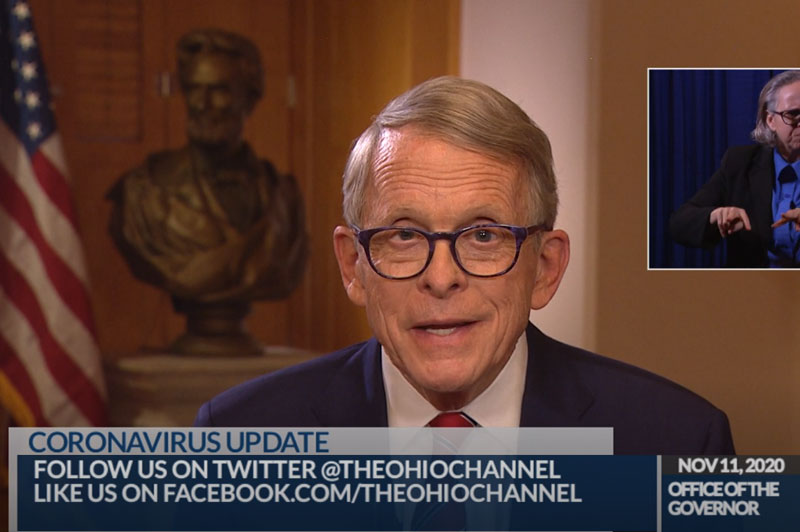
    Gov. Mike DeWine is pictured during his statewide address on Wednesday, Nov. 11. Photo courtesy Ohio Channel.

    By Marty Schladen and Ohio Capital Journal

    Columbus, Ohio – Ohio Gov. Mike DeWine got a lot of attention Wednesday when he said that 60% of nursing home workers who were offered a coronavirus vaccine refused to take it

    DeWine: 60% of Ohio nursing home workers are refusing vaccine

    But state health officials on Thursday said there’s no organized effort to track refusals among people they consider so critical that they’ve been given first crack at the scarce vaccines.

    In a press conference, DeWine implored people who are eligible for the vaccine to accept it, warning that it could be a long time before they get another chance. That argument might seem pretty compelling, given that a fast-spreading variant of the virus has popped up in two statesICU beds are filling and the two approved vaccines have trickled out at a rate far lower than the Trump administration promised.

    But DeWine lamented that many nursing home workers are passing on the vaccines anyway.

    “Our bigger concern is the amount of staff who are not taking it,” he said. “I don’t have data in front of me, but anecdotally, it looks like somewhere around 40% of staff at nursing homes are taking the vaccines and 60% are not taking it.”

    The statement went viral. A tweet about it generated more than 5 million impressions as of Thursday evening.

    Despite the obvious interest in how many people are refusing to be vaccinated, that’s not something the state is measuring.

    DeWine made his statement about nursing home workers “from some reports we have been hearing from our pharmacy partners,” Ohio Department of Health spokeswoman Melanie Amato said in an email Thursday. “It ranges in facilities, but this is a rough average. Remember the nursing home are largely being vaccinated by Walgreens/CVS as part of the federal program. We rely on them for the information. Same with hospitals. We track vaccines that have been given. We don’t track who would have refused.”

    Neither CVS nor Walgreens could immediately be reached for comment. While they are handling vaccinations in congregate settings such as nursing homes, they aren’t in charge of vaccinating hospital staff, paramedics and the like. Ohio health officials apparently aren’t tracking the rate at which those groups are refusing the vaccine, either.

    Dan Tierney, DeWine’s press secretary, said that despite the low level of nursing home workers agreeing to be vaccinated, the governor isn’t considering a mandate — at least for now.

    “On mandating the vaccine for these groups, we are still in the rollout of this phase, and our message to Ohioans is that if you are in group 1A, we urge you to take the vaccine now, because it may be months before there is another opportunity available to you,” he said. “We believe that increasing awareness will help increase the utilization rate. Ultimately, it is up to each health care provider to determine which workers they employ meets the criteria in group 1A to receive the vaccine in this phase.”

  • Community pharmacy group says CVS, other bigs are unfairly steering patients

    Community pharmacy group says CVS, other bigs are unfairly steering patients

    A group representing small pharmacists says large chains, especially CVS, are moving patients’ prescriptions to their own stores without consent. CVS adamantly denies that. Photo by Marty Schladen, Ohio Capital Journal.

    A huge majority of community pharmacists have lost patients in the last six months due to unfair practices by much larger competitors, an industry group that represents small pharmacists said last week.

    They accuse CVS Health — which operates as an insurer, claims administrator and pharmacy retailer — as being the company responsible for the most abuses. CVS denies the claim.

    The National Community Pharmacy Association (NCPA) said that between Sept. 8-11, it collected 412 responses to a survey about a practice known as “patient steering.” 

    In addition to being the nation’s largest pharmacy retailer, CVS is now also the largest pharmacy benefit manager, which charges insurers, pays pharmacists, decides which drugs get favorable treatment and collects rebates from manufacturers. The company has said it maintains a strict firewall between the businesses, but critics have accused the company of using one business to advantage the others.

    For example, in the fall of 2017, Ohio community pharmacists complained Medicaid reimbursements from CVS’s pharmacy benefit manager, CVS Caremark, had dropped so low that they were having a hard time staying in business. At the same time the pharmacists they were receiving letters from from another arm of CVS acknowledging that reimbursements were low and that CVS was willing to buy out the community pharmacists.

    That made pharmacists suspicious that the part of the corporation that acquires pharmacies was using CVS Caremark’s reimbursement data to determine which independent pharmacies were most likely to be struggling and vulnerable to a buyout offer. CVS denied that.

    Some observers feared such concerns would only get worse when a federal judge last year allowed CVS to merge with Aetna, the country’s third-largest health insurer.

    Now the NCPA, the group representing small pharmacists, says things are getting worse.

    One method of patient steering is to transfer their prescriptions to another pharmacy without their knowledge, much less their consent. 

    According to the NCPA survey, 79% of community pharmacists said that had happened with one or more of their patients in the past six months. Almost 78% of respondents said some of the patients thus steered saw their prescriptions moved to CVS.

    “That’s a big red flag,” NCPA CEO B. Douglas Hoey said in a statement. “The pharmacy sector is very competitive, and most big chains have aggressive marketing schemes aimed at taking patients from rivals. CVS Health not only owns brick-and-mortar stores, but it also owns its own insurance companies, Aetna and Caremark. That information allows it to eavesdrop on when and where patients are getting their prescriptions and, as the survey reported, coerce unknowing patients into CVS stores.”

    In an email, CVS Senior Director of Corporate Communications Michael DeAngelis said the NCPA claims were patently false.

    “Our pharmacies only initiate prescription transfers when requested by a patient,” he said. “Also, CVS Caremark members have access to our broad network of more than 60,000 pharmacies, including most independent pharmacies and chain pharmacies, in addition to CVS Pharmacy. In fact, more than 40% of the pharmacies in our network are independently owned. If a plan sponsor chooses a particular network design that includes specific pharmacies, their members are notified in advance.”

    DeAngelis also panned the process behind the NCPA survey.

    “The ‘survey’ conducted by the business trade association, NCPA, of its own members has no basis in fact and is nothing but a self-serving attempt to disparage CVS Health,” he said. “Accusations that we transferred patients’ prescriptions to our own pharmacies without their knowledge or consent are simply not true.”

    One Ohio pharmacist said he doesn’t know why he’s losing patients, but he knows he’s been losing them.

    “We’re down 300 or 400 patients a month” compared to last year, said Barry Klein, owner of Klein’s Pharmacy in Cuyahoga Falls. “It’s hard to say what was the cause of it, but definitely our patient count is down.”


    Marty Schladen

    Marty Schladen has been a reporter for decades, working in Indiana, Texas and other places before returning to his native Ohio to work at The Columbus Dispatch in 2017. He’s won state and national journalism awards for investigations into utility regulation, public corruption, the environment, prescription drug spending and other matters.