Tag: Dan McCarthy

  • Ohio AG Yost is prosecuting others in utility scandal, but he won’t discuss his own involvement

    Ohio AG Yost is prosecuting others in utility scandal, but he won’t discuss his own involvement

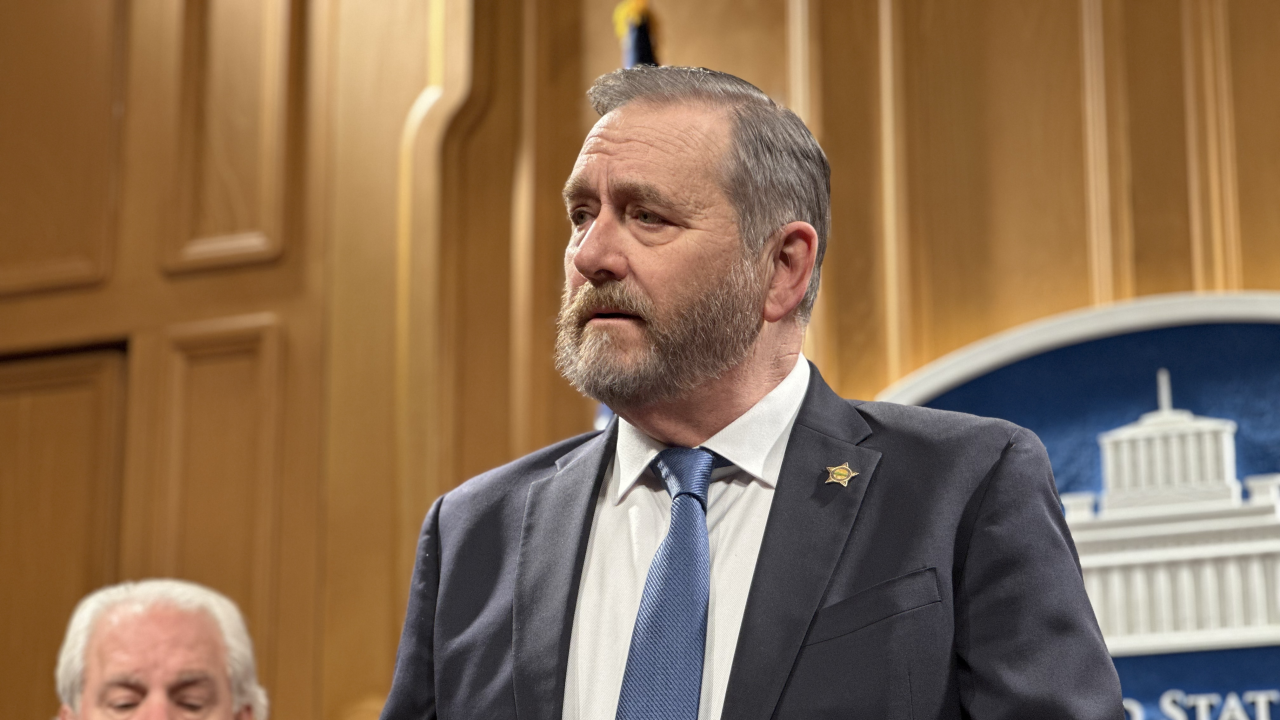
    Ohio Attorney General Dave Yost. (Photo by Morgan Trau, WEWS.)

    BY:  Ohio Capital Journal

    Ohio Attorney General Dave Yost this year brought criminal charges against four figures who were involved in the biggest bribery scandal in state history.

    Many thought they were long overdue. That’s especially true of cases filed against men accused of funding the conspiracy, but who still hadn’t been charged by federal prosecutors four years after the last of the alleged wrongdoing took place — and almost a year after two others began lengthy prison sentences.

    But Yost’s own name came up several times in the federal trial and his office last week again ignored detailed questions about the matter.

    The attorney general played an important role in the defeat of an attempted repeal of the corrupt bailout. And there were claims that he believed that the bailout was a bad law, but kept his mouth shut out of loyalty to one of the conspirators — and to the law’s major beneficiary.

    The issue is politically fraught for Yost because the state charges he filed this year have raised new questions about Lt. Gov. Jon Husted’s involvement in the scandal. Yost and Husted are widely expected to face each other in the 2026 race to be Ohio’s Republican nominee for governor.

    New charges

    Former House Speaker Larry Householder, R-Glenford, was sentenced to 20 years in federal prison last June for his role in a scheme in which Akron-based FirstEnergy paid more than $60 million to make him speaker in 2018 and to pass and protect a $1.3 billion ratepayer bailout the following year. It’s one of the biggest scandals in Ohio history, and so far it has also sent former GOP Chairman Matt Borges to prison for five years, resulted in two more guilty pleas — and seen two defendants die by suicide.

    But U.S. Attorney Kenneth Parker sidestepped a pretty important question last June when he stood in front of the federal courthouse in Cincinnati and boasted to the press about the convictions and sentences his assistants had just won. He was asked, what about the people who paid the bribes? Would they be charged? If so, when?

    All Parker would say was that the investigation was ongoing.

    In December, his team indicted Sam Randazzo, Gov. Mike DeWine’s nominee to be Ohio’s top utility regulator. In a deferred prosecution agreement, FirstEnergy said it paid Randazzo a $4.3 million bribe just before he became regulator. From that post, he did a number of lucrative favors for the company related to the bailout and he improperly helped with other matters as well, according to the indictment.

    But still uncharged by the feds are former FirstEnergy CEO Chuck Jones and Vice President Michael Dowling, the executives alleged to have directed truckloads of company money into 501(c)(4) dark money groups that financed the scandal.

    In February, a team of state prosecutors led by Yost stepped into the void by securing a grand jury indictment against Jones, Dowling and Randazzo. The charges relate to the bailout scandal, and also to a decade’s worth of shady dealings that allegedly paid Randazzo more than $10 million and ripped off industrial energy users and residential customers alike.

    In April, Randazzo died by suicide.

    Other questions

    The state indictment also raised new questions about the cozy relationships between the DeWine/Husted administration, FirstEnergy and Randazzo.

    Weeks before they were inaugurated, DeWine and Husted had dinner in downtown Columbus with Jones and Dowling — FirstEnergy’s top leadership — and discussed whether Randazzo would be acceptable to regulate the company. Jones and Dowling then drove about a mile to Randazzo’s German Village residence and negotiated the $4.3 million payoff, according to text messages that are being used in multiple court proceedings.

    The state indictment alleges that DeWine’s chief of staff, Laurel Dawson, knew about the payoff before the governor appointed Randazzo to chair the Public Utilities Commission of Ohio. But Dawson — whose husband was a FirstEnergy lobbyist who allegedly received a $10,000 loan from Randazzo — isn’t talking publicly about what she knew or what she told her boss.

    DeWine also continues to stand behind his former governmental affairs director, Dan McCarthy, who lobbied the legislature on DeWine’s behalf to pass the bailout law.

    Just before taking that job, McCarthy, too, was a FirstEnergy lobbyist — a job in which he set up a dark-money group that became a conduit for tens of millions in funding for the scandal. In last year’s trial, the prosecution presented evidence that FirstEnergy VP Dowling in 2019 ordered a subordinate to keep the then-DeWine aide’s name off of a $10 million infusion into the corrupt bailout even after being told that it would violate IRS rules to do so.

    DeWine and his staff haven’t explained what McCarthy and Dawson knew about the corrupt machinations as the bailout law was in the works — or when DeWine signed it mere hours after its passage.

    DeWine, Husted and their administration also haven’t explained what they knew about the long, shady relationship between Randazzo and FirstEnergy described in the state indictment. The governor’s spokesman has tried to suggest that it was common knowledge, but extensive evidence shows that Randazzo and FirstEnergy went to great lengths to conceal it.

    DeWine also has said he didn’t know about millions in dark money contributions FirstEnergy made in 2018 to support his gubernatorial bid. But a University of Cincinnati political scientist said it’s simply not believable that a company would make that kind of an expenditure and not make sure the beneficiary knew about it. That seems especially true for a company that subsequently admitted that it paid millions more in outright bribes.

    For his part, Husted won’t comment on the $1 million in dark money FirstEnergy spent supporting his 2018 bid for governor, or whether he  promoted Randazzo for the regulatory job when he dropped his bid and joined DeWine’s ticket.

    The two had history. As House speaker in 2007, Husted appointed Randazzo to the PUCO Nominating Council — a position he held until DeWine nominated him to chair the agency.

    Questions for the Attorney General

    Husted and Yost, the attorney general, are widely regarded as the frontrunners for the 2026 GOP gubernatorial nomination in a state that hasn’t elected a Democrat to that job since 2006.

    There hasn’t been any suggestion that Yost brought charges in the bailout scandal as a way of embarrassing his likely opponent. But at the same time, Yost’s office has avoided questions about his own involvement in the bailout controversy.

    According to text messages presented at last year’s federal court trial, Yost was drawn into the fight at a critical time. The bailout passed the Householder-run House at the end of May 2019, but a month later, opposition was growing in the state Senate.

    Borges, the former GOP chair who had run some of Yost’s political campaigns, had a June 26, 2019 text conversation with Juan Cespedes, who was also being paid to push the corrupt bailout law. Borges intimated that Yost believed that the law was a bad one.

    The AG “‘would be out front (in opposition) if not for (FirstEnergy) support and your involvement,’” Borges quoted Yost as saying.

    A spokesperson for Yost declined to comment at the time, citing the fact that he’d been subpoenaed in the case.

    Regardless of the AG’s view, so many people agreed that the bailout was a horrible law that an effort to undertake the cumbersome repeal process was getting underway even before it passed. Borges noted to Cespedes that Yost would have to give his approval before a repeal could get on the ballot. The AG would try to help them there, too, Borges said.

    If there’s any way the law will allow him to reject the language, he will do it,” Borges texted.

    Regardless of why, Yost ended up doing just that.

    Crucial lost time

    DeWine signed the bailout, House Bill 6, the day the Senate passed it — July 23, 2019. Six days later, repeal advocates had gathered 1,000 signatures from registered voters and submitted a summary of the repeal to Yost for his approval.

    Time was of the essence because under Ohio law, repeal advocates had to gather another 265,000 voters’ signatures within 90 days of the law’s passage to get it on the ballot. But first they had to wait for Yost to approve the ballot summary.

    The attorney general waited the full 10 days allotted him and then issued a rejection letter that seems at odds with any concept of “summary.”

    It was a six-page, 1,535-word document that picked apart the summary in excruciating detail.

    “He listed a lot of different things,” said Rachael Belz, CEO of Ohio Citizen Action, which was strongly opposed to the bailout. “It seemed like a lot to overcome. It didn’t seem very neutral.”

    The repeal was a referendum — the only one for which Yost has considered summary language since he’s been attorney general. Of the 26 other summaries he’s rejected, the vast majority were for proposed constitutional amendments and the rest were for initiated statutes.

    His rejection of the summary for the bailout repeal stands out for its length. It’s more than twice as long as his other rejections are on average, according to information available on the attorney general’s website.

    In the event, Yost’s initial rejection did heavy damage to the repeal effort.

    Proponents on Aug. 16, 2019 submitted a new summary, which Yost certified on Aug. 29, 2019. But by that time, the repeal team had only 54 days left of the original 90 to gather and submit more than a quarter-million valid signatures. Their time to complete the gargantuan task was cut almost in half, in other words.

    What followed was a lying, xenophobic and sometimes-violent campaign to defeat the repeal into which FirstEnergy plowed $36 million in dark money. Perhaps unsurprisingly, the repeal couldn’t get enough signatures and parts of the corrupt bailout law are still on the books.

    Yost’s office didn’t respond to questions about his role in the repeal — or Borge’s statements that were presented at the former political boss’s criminal trial. But for Belz of Citizen Action, there’s plenty of blame to spread among Ohio’s statewide leaders.

    “I don’t think Yost’s hands are clean,” she said. “I don’t think Husted’s hands are clean. I don’t think DeWine’s hands are clean. I don’t know whose hands are clean. Frankly, that’d be a shorter list.”

    Marty Schladen
    MARTY SCHLADEN

    Marty Schladen has been a reporter for decades, working in Indiana, Texas and other places before returning to his native Ohio to work at The Columbus Dispatch in 2017. He’s won state and national journalism awards for investigations into utility regulation, public corruption, the environment, prescription drug spending and other matters.

    Ohio Capital Journal is part of States Newsroom, the nation’s largest state-focused nonprofit news organization.

    MORE FROM AUTHOR

  • FirstEnergy exec tried to keep DeWine aide’s name off of $10M transaction

    FirstEnergy exec tried to keep DeWine aide’s name off of $10M transaction

    BY: MARTY SCHLADEN – Ohio Capital Journal

    In October 2019, as a battle raged over an attempt to repeal a $1.3 billion utility bailout, a FirstEnergy executive worked to keep the name of a senior aide to Gov. Mike DeWine off of a $10 million infusion of corporate cash into the fight. 

    The executive, Vice President Michael Dowling, did so even after an assistant told him it would violate IRS rules to not list the DeWine aide on the transaction, according to text messages presented Tuesday in the federal corruption trial of former Ohio House Speaker Larry Householder and lobbyist Matthew Borges. The men are accused of racketeering in a scheme to use $61 million from FirstEnergy in exchange for the massive bailout, most of which went to prop up the company’s failing nuclear and coal plants in order to make them attractive to buyers.

    DeWine has denied involvement in the arrangement even though he met with FirstEnergy executives and visited one of its nuclear plants in 2018 as he was seeking the governorship and FirstEnergy was lavishly funding Householder’s effort to elect sympathetic Republicans who would then vote to make him speaker. For his part, DeWine received $23,000 from the Akron-based utility for his campaign and his inaugural celebration, according to Ohio Citizen Action. He vowed to donate the money to charity following revelations of the scandal.

    The governor appointed as chairman of the Public Utility Commission of Ohio a former FirstEnergy consultant who was paid $4.3 million by the utility just before taking his seat on the commission. Even though he was supposed to be regulating the utility, the official, Sam Randazzo, played a role in writing the bailout legislation, according to documents released by the Ohio House. 

    In early 2019, DeWine also appointed FirstEnergy lobbyist Dan McCarthy to be his legislative affairs director, meaning McCarthy was in charge of representing DeWine’s interests before the General Assembly.

    In early 2017, while McCarthy was still working for FirstEnergy, Householder and his son, along with FirstEnergy CEO Chuck Jones and others, flew corporate jets to Washington, D.C. for fancy dinners and Donald Trump’s inaugural

    Just after that, McCarthy formed a 501(c)(4) group called Partners for Progress. Also known as a “dark money” group, it received $5 million from FirstEnergy within a few weeks of when McCarthy founded it.

    In an affidavit supporting Householder’s arrest, FBI Special Agent Blane Wetzel said Partners for Progress was “designed to conceal the nature, source, ownership, and control of the payments” from FirstEnergy and associated companies. Through the rest of 2018, McCarthy continued as president of Partners for Progress as it pumped FirstEnergy money into a Householder-controlled dark money group and funded the effort to make Householder speaker.

    The following year, McCarthy resigned that role to work for DeWine in the legislature as Householder shepherded the bailout legislation, House Bill 6. When a final version passed in July 2019, DeWine signed it the same day.

    But opponents quickly started a campaign to circulate petitions to put a repeal on the ballot. That prompted FirstEnergy to pump even greater sums into a “decline to sign” campaign aimed at thwarting the petitions.

    It funded xenophobic mailers and broadcast ads claiming without evidence that the repeal effort was a Chinese plot.

    “Who is knocking at your door?” began a mailer read in court Tuesday. “Foreign enemies have infiltrated our energy grid,” it added and said, ominously, that circulators of repeal petitions “are asking for your information.”

    In October 2019, executives with FirstEnergy and its generation-owning subsidiary seemed panicked that the repeal effort might succeed and they were planning to pump $10 million more into the effort to stop it — through Partners for Progress, the dark money group started by McCarthy, who was now a DeWine aide.

    Dowling, the FirstEnergy vice president, seemed to think it wouldn’t be a good look for the name of a DeWine official to show up on paperwork accompanying the huge transaction.

    “Please make sure Dan McCarthy’s name is not on the filing,” Dowling said in a text message to Partners for Progress Treasurer Michael Vanburen that was presented in court Tuesday.

    Vanburen replied that even though McCarthy was no longer president of the dark money group, IRS rules required that his name be on the filing. Dowling didn’t accept that.

    “There must be a creative way to handle this,” he said. “It’s important that (McCarthy’s) name not be listed.”

    Asked if DeWine asked that McCarthy’s name not be used in paperwork regarding the money transfers, Press Secretary Dan Tierney in an email said, “No. Dan McCarthy resigned from Partners for Progress in December 2018. Dowling’s comments, as you have relayed them to me, do not match the timeline of McCarthy’s affiliation with Partners for Progress.”

    DeWine seems to have been in touch with FirstEnergy executives around the time of the repeal effort. Later in October 2019, FirstEnergy CEO Jones texted Vice President Dowling to say, “DeWine’s on board. I talked to him on Wednesday.”

    According to Jones, they talked about whether the repeal HB 6 effort would gather enough valid signatures to get the measure on the ballot.

    “He said their valid rate was less than 30%,” Jones said of DeWine.

    For his part, Tierney said, “The Governor does not have any recollection of such a conversation.”

    In a later text conversation, Jones said he’d received similar assurances from Secretary of State Frank LaRose.

    After arrests were made in the House Bill 6 scandal, DeWine staunchly defended McCarthy and kept him in his administration for more than a year, until Sept. 24, 2021.

    “As far as I know, Dan McCarthy has been well-respected for many, many years, long before he started working for me as our legislative director and I have faith in his integrity,” DeWine said in early 2021 as questions about the role McCarthy’s dark money group played in the bribery and money laundering scandal continued.

    In another trial-related matter, U.S. District Judge Timothy Black on Tuesday said that he had released a second juror, this time for testing positive for COVID. An earlier juror had been released for refusing to wear a mask.

    That brings the number of alternate jurors to two for a trial that is expected to last into early March.

  • Texts, calendars, emails link DeWine to FirstEnergy’s bribery scandal

    Texts, calendars, emails link DeWine to FirstEnergy’s bribery scandal

    BY: JAKE ZUCKERMAN – Ohio Capital Journal

    Gov. Mike DeWine and his administration played a hands-on role passing an allegedly pay-for-play nuclear bailout and appointing an industry-friendly regulator who has since been accused of taking a $4.3 million bribe, documents and messages show.

    Calendar records show DeWine, a Republican, met repeatedly to discuss energy policy with FirstEnergy Corp. officials and at least once with GOP House Speaker Larry Householder, who has been criminally accused of taking a separate, multimillion-dollar bribe from the company to pass the bailout.

    Despite a cautionary letter from environmental groups and a 198-page dossier from his former campaign staffer warning against the move, DeWine appointed Sam Randazzo in 2019 to the head of the Public Utilities Commission of Ohio. FirstEnergy last summer admitted it paid Randazzo a $4.3 million bribe. Randazzo has not been charged with a crime and denies wrongdoing.

    Newly released text messages show FirstEnergy executives describing an open line with the administration on the selection and inside support from Ohio’s chief executive.

    “When the Gov Elect asked me about attributes, I listed integrity, work ethic, creativity, thick skin, circumspection in public statements,” FirstEnergy’s then CEO texted Randazzo about the open PUCO seat in December 2018, just before DeWine took office.

    “You fit all of those.”

     Former FirstEnergy CEO Charles “Chuck” Jones. Source: FirstEnergy, via Flickr

    In one text, FirstEnergy executive Mike Dowling credits DeWine and Lt. Gov. Jon Husted with performing “battlefield triage” to save Randazzo’s appointment before a key vote. Both DeWine and Husted have previously denied that a redacted version of the text message that appeared in criminal documents referred to them.

    Federal prosecutors accused House Speaker Larry Householder of secretly controlling a nonprofit that took $60 million from FirstEnergy. He allegedly used the money to enrich himself personally and politically and to ensure the passage of House Bill 6, which provided a massive bailout to two nuclear plants owned at the time by FirstEnergy. Householder was charged with racketeering and awaits trial. Two alleged conspirators pleaded guilty.

    FirstEnergy admitted last summer to the $60 million payment as well as a separate $4.3 million bribe to Randazzo just before he started as Ohio’s top utility regulator. The payment topped off $22 million in consulting fees to Randazzo since 2010 from the company.

    Court documents from prosecutors reveal no focus on DeWine, who has not been charged with any crime. However, a review of records turned over in subpoenas, public records requests for his official calendars by the Energy and Policy Institute, text messages attached to regulatory filings, and others show DeWine and his staff repeatedly influencing and shepherding HB 6 into law.

    On the campaign trail in July 2018, DeWine visited one of the nuclear plants that would receive a bailout, his official calendar shows. A month later, he met with FirstEnergy executives at their Akron headquarters. In October of that year, DeWine met with FirstEnergy at a fundraiser for Republican governors.

    FirstEnergy contributed about $1 million in total to DeWine’s campaign, political organizations supporting it, and to another nonprofit supporting his daughter’s campaign for county prosecutor, according to the Dayton Daily News.

    After winning a close race, DeWine, Husted, Jones and Dowling celebrated over dinner at The Athletic Club in Columbus. The next day, Jones sent Randazzo the text message (above) indicating they discussed the open PUCO seat.

    In January of 2019, the FirstEnergy officials texted one another trying to fill not just one but two open PUCO seats, all the while mentioning phone calls with “DeWine guys” about it.

    “That’s their plan but nothing certain until Sam’s [Randazzo’s] meeting [with DeWine],” Jones texted Dowling. “Four people in DeWine world, you, Sam, and I know about this.” The PUCO seats would eventually be filled by Randazzo with another commissioner renewed.

    Dowling relayed to the other two men a message from Josh Rubin — a DeWine 2018 campaign adviser and a FirstEnergy lobbyist. He said once Randazzo takes office, DeWine will “lean on him on everything.”

    Several texts focus on HB 6. The bill (and eventual law) would bail out FirstEnergy’s nuclear plants, subsidize two coal plants owned by other Ohio utility companies, and create a “decoupling” mechanism that effectively put ratepayers on the hook to guarantee certain revenue streams of FirstEnergy’s. Prosecutors estimate the bill as worth about $1.3 billion to the company.

    Two days before the bill was introduced, DeWine’s calendar shows a slot for an “Energy Discussion” at the governor’s residence. Later that month, after the bill was repeatedly criticized during an opponent testimony hearing at the statehouse, DeWine, Husted, Randazzo and various staffers all met up at 5 p.m. for what the governor’s calendar calls a “Nuclear Bailout Bill Discussion.”

    Over the next month, DeWine’s calendars show two entries for energy policy meetings, plus a call with Householder about HB 6, and another call on the bill.

    On June 9, 2019, DeWine showed signs of wavering.

    “Sam, what do we know about whether nuclear plants need this boost?” DeWine, using his personal email, wrote to Randazzo. “One editorial suggested testimony was not conclusive.”

    Dowling paid a visit to the governor’s residence the next day. Randazzo responded to DeWine’s email on June 11, casting doubt on the studies referenced in the editorials.

    On July 1, Dowling texted Jones.

    “Just had a long conversation with JHusted just now,” he said, going on to explain that Husted sought to extend the length of the bailout. “All is well.”

    Court records contain another text from Jones stating that “State Official 2,” later confirmed to be Husted, joined with others in “fighting to the end” for a beefier bailout.

    After a long slog, lawmakers passed HB 6 on July 23, 2019. DeWine signed it into law mere hours later.

     FBI agents remove boxes of materials from PUCO Chairman Sam Randazzo’s condo in Columbus Nov. 17, 2020. Photo courtesy of Daniel Konik/Statehouse News Bureau.

    Loyalty to staff and HB 6

    As the FBI made its first arrests, DeWine began a pattern of defending HB 6 on the merits and showing unflinching loyalty to his staffers, some of whom have ties to FirstEnergy.

    Householder, his political strategist, a prominent GOP lobbyist, and two FirstEnergy lobbyists were arrested and charged with racketeering in connection with HB 6 on July 21, 2020. The next day, DeWine stood by the law he signed.

    “Because people did bad things does not mean that the policy is not a good policy,” he said.

    He reversed himself the next day and called for a repeal of the bill.

    In October, FirstEnergy fired Jones, Dowling, and fellow executive Dennis Chack as it waged an internal investigation. The company fired another two executives days later “due to inaction and conduct that the Board determined was influenced by the improper tone at the top.”

    At this point, the public remained unaware of the multimillion-dollar financial arrangement between the embattled FirstEnergy and Randazzo. However, on Nov. 16, 2020, FBI agents were seen raiding Randazzo’s condo and removing boxes of material from inside. The next day, FirstEnergy submitted a little-noticed securities filing outlining the $4.3 million payment.

    Despite the images of FBI agents entering Randazzo’s condo, DeWine publicly defended his appointee.

    “We have no indication he’s under investigation or he’s the target of an investigation. We’ll wait until we find additional facts,” he said in a Nov. 17, 2020 news conference. “Look, the FBI many times will indicate if someone is a target. They have not indicated he’s a target. I have no reason to think he’s a target. I don’t know. So, we’re waiting for additional information, quite candidly. I hired him. I think he’s a good person. If there is evidence to the contrary, then we’ll act accordingly, but not going to act without facts.”

    Randazzo would resign three days after that statement.

    Mid-summer 2021, FirstEnergy signed a deferred prosecution agreement with the U.S. Department of Justice. The company agreed to pay a $230 million penalty and cooperate with investigators to avert a charge of honest services wire fraud.

    The agreement contained a lengthy set of facts from the company, stating it paid the $64 million in bribes in exchange for official action from Householder and Randazzo.

    Days after the agreement was announced, DeWine held a press conference on anti-hazing legislation. Reporters asked questions afterward about the agreement, including a line that refers to “State Official 1” and “State Official 2” lobbying to ensure Randazzo’s appointment. DeWine said he’s “not aware” of anyone in his administration, including himself, appearing in the document. Husted, in a statement, said he too “does not believe” he’s referenced in the document.

    Texts obtained by the Ohio Consumers’ Counsel from FirstEnergy and attached to a regulatory filing contain the unredacted version of the text, identifying DeWine and Husted by name.

    In 2017, a lobbyist named Dan McCarthy created a nonprofit entity called Partners for Progress to engage in “advocacy in support of nuclear power,” tax records show. FirstEnergy would later admit to paying $25 million to Partners for Progress, some $15 million of which went to Householder’s nonprofit.

    DeWine hired McCarthy as his legislative director in 2019, around the time McCarthy stepped down from the organization’s board. In February 2021, after media reports identified McCarthy’s role with Partners for Progress, DeWine defended McCarthy.

    “As far as I know, Dan McCarthy has been well-respected for many, many years, long before he started working for me as our legislative director, and I have faith in his integrity,” DeWine said.

    McCarthy resigned in September 2021.

    DeWine response

    In a phone interview, DeWine spokesman Dan Tierney said the OCC-obtained text messages and meetings listed by the Ohio Capital Journal contain no new information.

    The texts, he said, in fact show the lack of a role from DeWine and Husted within the scandal. He said prosecutors have not subpoenaed him or any of his employees.

    “This all along has been a Larry Householder scandal and a FirstEnergy scandal,” he said.

    When asked whether DeWine, a former prosecutor and attorney general, detected any sense of impropriety during all his contacts with Householder and FirstEnergy leading up to the passage of House Bill 6, he declined comment.

    Husted offered a similar comment through a spokeswoman, stating that “there is nothing new here” in the texts, emails and meetings.

    “This kind of advocacy is well within his responsibilities as a public official, and, as we know, the bill was ultimately passed with bipartisan support,” he said.

  • FirstEnergy admits it controlled dark money group started by DeWine aide

    FirstEnergy admits it controlled dark money group started by DeWine aide

    BY: MARTY SCHLADEN and Ohio Capital Journal

    Columbus, Ohio – The mammoth scandal surrounding a 2019 energy bailout appeared to creep closer on Thursday to the administration of Ohio Gov. Mike DeWine.

    FirstEnergy said in a deferred prosecution agreement that the man DeWine appointed to lead the Public Utility Commission of Ohio took a $4.3 million payment and then acted on behalf of the Akron-based power company instead of as the state’s top regulator. 

    That man, Sam Randazzo, has resigned. 

    But FirstEnergy also helped control a 501(c)(4) “dark-money” group started by a senior DeWine aide while he was still a FirstEnergy lobbyist, the agreement showed. The company passed a torrent of money through the secretive group as part of a successful $61 million effort to buy a $1.3 billion, ratepayer-funded bailout, the document FirstEnergy signed off on said.

    While Acting U.S. Attorney Vipal J. Patel slammed the dark money group, DeWine and the aide, Legislative Affairs Director Dan McCarthy, didn’t respond to requests for comment. DeWine has staunchly defended McCarthy since the scandal broke almost exactly a year ago.

    Patel held a press conference in Cincinnati on Thursday to announce that his office had entered into a deferred prosecution agreement with FirstEnergy. The company will pay $230 million and, if it lives up to the terms of the agreement, will have a charge of conspiracy dismissed.

    Former Ohio House Speaker Larry Householder, R-Glenford, has been charged in the case. He was stripped last year of his speakership and he was ejected from the House earlier this year.

    Two of Householder’s associates charged in the case have pleaded guilty and a third, Neil Clark, took his own life in March.

    For its part, FirstEnergy fired CEO Chuck Jones and two other executives and is conducting an investigation of its own.

    In Cincinnati Wednesday, Patel stressed that the investigation is continuing. But he wouldn’t comment on matters other than the agreement with FirstEnergy. 

    DeWine aide McCarthy hasn’t been charged and last summer, he denied wrongdoing. But Partners for Progress, the dark-money group he founded, was a topic of the prosecution agreement.

    Then still a FirstEnergy lobbyist, McCarthy founded it, “weeks after certain FirstEnergy Corp. senior executives traveled with (Householder) on the FirstEnergy Corp. jet to the presidential inauguration (of Donald Trump)  in January 2017,” the agreement said.

    The prosecution agreement added, “Although Partners for Progress appeared to be an independent 501(c)(4) on paper, in reality, it was controlled in part by certain former FirstEnergy Corp. executives, who funded it and directed its payments to entities associated with public officials. 

    “For example, FirstEnergy Corp. executives directed the formation of Partners for Progress and decided to incorporate the entity in Delaware, rather than Ohio, because Delaware law made it more difficult for third parties to learn background information about the entity. Certain FirstEnergy Corp. executives were also involved in choosing the three directors of Partners for Progress, two of whom were FirstEnergy Corp. lobbyists.”

    Millions would flow through Partners for Progress while McCarthy was its president and tens of millions more would later run through it and into the furious effort to pass the bailout after McCarthy resigned to become DeWine’s legislative affairs director in early 2019.

    The prosecution agreement also appears to refer to McCarthy as “Official Aide 1”  as he worked on DeWine’s behalf to help pass the bailout that DeWine would sign later that year.

    It cites emails among energy executives saying that Official Aide 1 and others were “fighting” to extend the term of a bailout of two failing nuclear reactors in Northern Ohio.  It also cites a text-message discussion between a FirstEnergy executive and the aide about language that would make the bailout harder to challenge in a referendum.

    And in the press conference, Patel said the scandal would never have happened if not for the dark-money group of which McCarthy was president and another, Generation Now, which has pleaded guilty.

    “This effort would not have been possible — both in the nature and the amount of the money provided — without the use of 501(c)(4)s,” Patel said.

    The acting U.S. attorney called the scheme, and even the name of McCarthy’s former dark-money group, dishonest.

    “These are supposed to be, according to the (tax) code, social welfare organizations. You all see a lot of social welfare going on? I don’t,” Patel said, adding, “What about these names? Partners for Progress? What are the partners here? The conspirators? What’s the progress? Passage of (the energy bailout) through bribery?”

    While DeWine’s office didn’t respond to questions on Thursday, the governor in February defended his legislative affairs director.

    “As far as I know, Dan McCarthy has been well-respected for many, many years, long before he started working for me as our legislative director and I have faith in his integrity,” DeWine said.

    For Dayton Mayor Nan Whaley, a Democrat challenging DeWine in the 2022 election, that’s not good enough.

    “Today’s charges make clear that this corruption case reaches the highest levels of government in Ohio,” she said in a statement. “Enough is enough. It’s time for Gov. DeWine to come clean about his knowledge and involvement in this scandal.”

  • DeWine refuses to explain aide’s role in bailout scandal

    DeWine refuses to explain aide’s role in bailout scandal

    By Marty Schladen and Ohio Capital Journal

    If you asked most people to start up a dark money group and then funnel more than $1 million through it and into another such group, they’d probably want to know what it was going to be used for.

    But now that the second 501(c)(4) dark-money group, Generation Now, has pleaded guilty to being at the heart of one of the biggest bribery and money laundering scandals in Ohio history, Gov. Mike DeWine is refusing to discuss what one of his top aides was told when he formed the first dark money group, Partners for Progress.

    Generation Now pleaded guilty earlier this month to being the major conduit of money between Akron-based FirstEnergy and related organizations and the effort to pass House Bill 6, a $1.3 billion bailout that mostly went to two nuclear plants FirstEnergy started spinning off in 2016. DeWine signed the bill into law in 2019.

    Last summer, federal authorities arrested then-Speaker Larry Householder and four associates as part of the scandal and two of the associates later pleaded guilty.

    As he announced the arrests, U.S. Attorney David DeVillers stressed that the dark money made the massive scandal possible.

    “I don’t see how (the conspiracy) could possibly have happened” without it, DeVillers said.

    The feds haven’t accused DeWine’s aide, Legislative Affairs Director Dan McCarthy of wrongdoing, but they refer to his dark-money group in an affidavit supporting Householder’s arrest as “Energy Pass-Through.”

    Among the activities Generation Now pleaded guilty to was engaging in transactions “designed to conceal the nature, source, ownership and control of the payments” from FirstEnergy and associated companies.

    But DeWine and McCarthy don’t want to discuss whether McCarthy intended to obscure that FirstEnergy was bankrolling an effort to prop up nuclear plants it was spinning off.

    Asked last week about the matter, DeWine Press Secretary Dan Tierney pointed to a statement McCarthy issued last summer when The Cincinnati Enquirer first reported that he’d started a dark money group that helped fund the HB 6 effort.

    In it, McCarthy explained that in addition to his lobby work for FirstEnergy, he had also worked with people who had adversarial relationships with Householder and one of his indicted associates, Neil Clark, so “any insinuation I was involved in this disgusting scheme is without merit.” 

    But he didn’t explain why he founded Partners for Progress two days after the founding of Generation Now, or why a week later his dark money group got $5 million from FirstEnergy and within a month it was forwarding some of that money to Generation Now. 

    In early 2019, McCarthy stopped lobbying for FirstEnergy and resigned as president of Partners in Progress to become DeWine’s legislative affairs director. The following October, while McCarthy was advocating for HB 6 in that capacity, FirstEnergy and associates wired $20 million to McCarthy’s former money group and it forwarded $10 million of that to Generation Now the same month, the federal affidavit said.

    Despite these and other revelations about DeWine appointees, DeWine on Tuesday declined to give a more complete explanation of what McCarthy believed he was doing when he started Partners for Progress and began funneling money into a now-guilty dark money group.

    “As far as I know, Dan McCarthy has been well-respected for many, many years, long before he started working for me as our legislative director and I have faith in his integrity,” DeWine said.