Tag: David Miller

  • Cassie Mattia selected Young Professional of the Year

    Cassie Mattia selected Young Professional of the Year

    “I promise to all those surrounding me including all of you in Loveland I will continue to make this community the absolute best place to live and visit.”
    Cassie Mattia

    Listen as Cassie Accepts her Award.

    ______________________________________________

    by David Miller
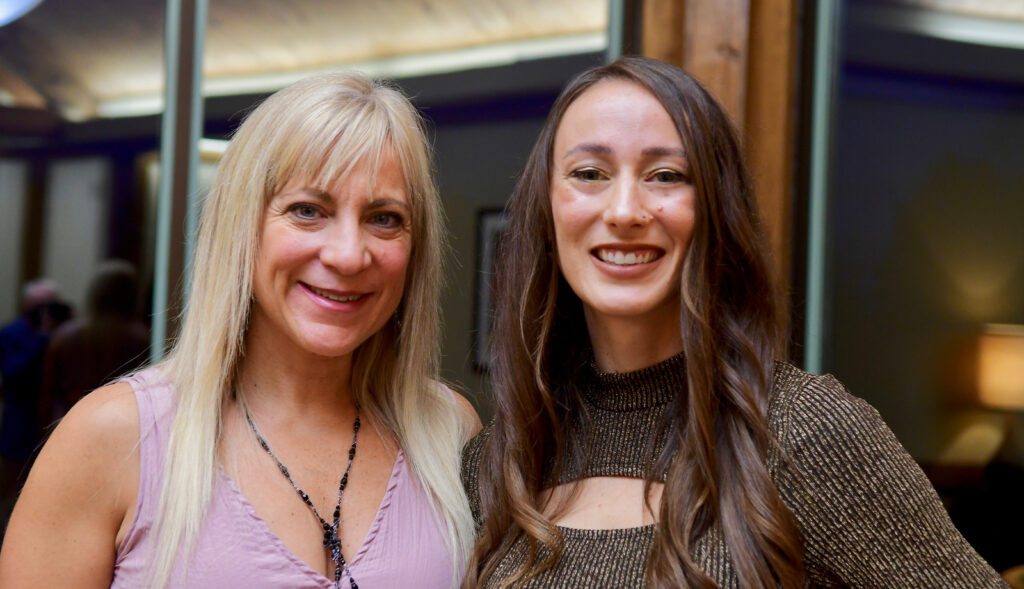
    Cassie’s friend Jennifer D’Alberto Kavensky had pre-recorded a video introduction of her that was projected onto a big screen.

    Loveland, Ohio – “Words cannot describe how unbelievable the 2021 Little Miami River Chamber Alliance Awards were on Wednesday,” said Loveland Magazine Co-Owner Cassie Mattia. “The atmosphere, the music, the people, the decor, the food, and of course the awards ceremony was the icing on the cake for one of the best years of my life.”

    The occasion was the 2021 Annual Awards Dinner, a gala put on by the Little Miami River Chamber Alliance. It is an evening for area businesses to come together and celebrate their successes and community contributions. The celebration was at the Oasis Conference Center.

    Cassie was selected as the 2021 Young Professional of the Year.

    AND ALL THE WINNERS ARE

    Photo by Loveland Lifestyle Magazine/Courtney Kraemer


    Business of the Year – Premier Tumbling and Dance

    Emerging Business of the Year – Monarch Financial Advisors

    Beautification Award – Mile 42 Coffee and Eads Fence Company

    Community Involvement Award – Jason Pinson

    Business Community Advocate Award – Brittney Frietch Team, Re/Max Preferred Group

    Non-Profit of the Year – The Care Center

    Woman Owned Business of the Year – Loveland Lifestyle

    Young Professional of the Year – Cassie Mattia

    Randy K. Stanifer Health, Wellness & Fitness Business of the Year – Loveland Massage Center

    Recreation Business of the Year – Grand Sands Volleyball

    Community Responder Award – Miami Township Fire/EMS

    Chamber Choice Award – Tano Bistro – Loveland


    Co-Owners of Loveland Magazine David Miller and Cassie as they enter the Oasis Conference Center.

    Proceeds from a silent auction benefited Grant Us Hope, an organization dedicated to youth suicide prevention, and a Chamber Scholarship fund. Emily Barlow with Loveland Lifestyle Magazine was the Emcee.

    I could not be more proud to call Cassie my business partner. I’m so very happy that she was recognized for her achievements and as a community leader. She is the Co-owner, Associate Editor, and Director of Marketing for Loveland Magazine.

    Cassie said the next day, “Thank you to all those that spent time out of their day to send in nominations and testimonials on my behalf for this award, you have no idea how much it means to me and how eternally grateful I am. I am so excited to see where this unbelievable path takes me and I promise to all those surrounding me including all of you in Loveland I will continue to make this community the absolute best place to live and visit.”

    Cassie walked into my life 3-1/2 years ago by knocking on the door and announcing she wanted to write for Loveland Magazine. It was unbelievable fun Wednesday night celebrating with her.

    There is more to the story. What she brought with her in that oversized purse she carries was dedication, hard work, kindness that I see every single day, and a devotion to her family and to her boyfriend Adam. She’s the big sister that everyone should have.
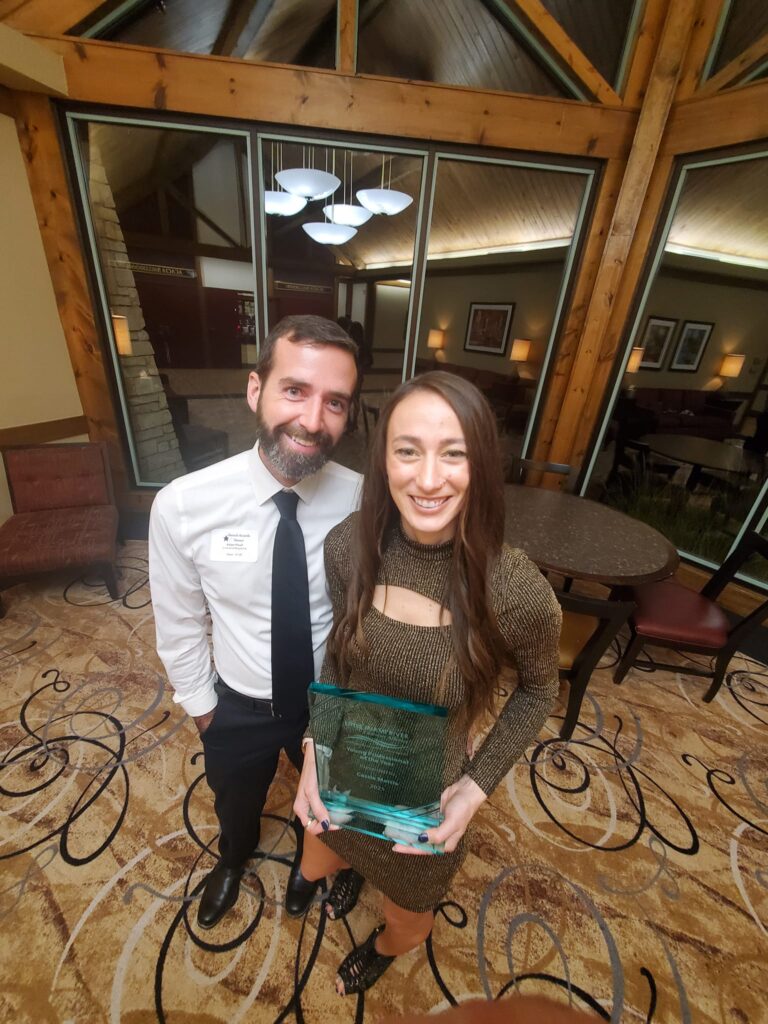
    Cassie and her boyfriend Adam Ploof

    In that bag is forgiveness, is a photographic memory, what just must be an off-the-scale high IQ, writing skills, and her journalism background with degrees she worked so hard to achieve. However, her bag is always 90% packed with positivity, sometimes to overflow.

    She recently joked that I was so old that when I ran road races they were on dirt roads. Well… Cassie is so young-of-heart, that she runs each day on sunshine younger than today’s sunrise. A rare personality that anyone older than today, and most people her age, should be so lucky to have.

    Thank you so much Cassie for agreeing to be a co-owner of Loveland Magazine. It was such a fun, fun night celebrating with you and Adam.

    When we walked under the Oasis portico, before we went in – I pointed in both directions with a sweeping motion and joked “Look Cassie… they reserved this whole country club just for you tonight! Hmm, where’s the red carpet I ordered?”

    Adam parked the car and caught up with us and, well, I just went in pretending the three of us were walking on the red carpet and I saw the evening transform into the “Gala” it was billed to be.

    And, no one could’ve wiped off the grin I carried the rest of the evening being with my friend and partner, the Loveland Area’s “Young Professional of the Year”.

  • Journalism in middle America got communities through the pandemic

    Journalism in middle America got communities through the pandemic

    Stock photo from Getty Images.
    EDITOR’S NOTE:

    We are pleased people are now researching the Pandemic and how local newspapers survived. Some didn’t. Loveland Magazine did survive, and it was pure everyday persistence, sacrifice, and a dedication to staying alive (literally), and as a local Newspaper. We were early declared “Essential Workers” however that declaration did not provide us anything as the designation was quickly ignored at every level of government when they dolled out relief dollars and the help they could have provided. We stood in line with everyone else at the chance to apply for PPE funds, etc., and at times we were at the back of the lines for eligibility. We were still standing when our own City bought new high-tech water fountains with the COVID relief funds they received. Much of what you read here though is how we did it. What this story misses is an incredible effort it took for local papers in smaller communities to find accurate specific COVID 19 data in a hometown like ours that is in three counties with each county reporting in different formats and on different days of the week.

    By William Thomas Mari, Louisiana State University

    News of the pandemic’s devastating effect on journalism was conveyed by headlines across the nation telling of newsroom closures, layoffs and furloughs.

    Journalism was in trouble in 2020. In fact, it had been in trouble for a while.

    But how did so many local news organizations – especially newspapers – manage to survive the pandemic? Weeklies beefed up their daily online news coverage, business models were blown up and existing rationales for why journalism matters became more than theoretical to rural journalists.

    Their determination to survive and serve as a public health lifeline for their communities fueled an oral history project that my colleague Teri Finnemanand I conducted, interviewing 28 journalists across seven states in the middle of the country. We learned how locally owned and family-owned newspapers made it through COVID-19.

    “There’ve been times that we’ve had to reach out to mayors and different cities and communities across the state … to make sure that … they knew that [journalists] were deemed essential workers,” said Ashley Wimberley, executive director of the Arkansas Press Association. That label exempted news workers from stay-at-home orders and designated them as critically needed by their communities.

    There were no easy answers. Not in Louisiana, where I teach journalism at Lousiana State University. Not anywhere.

    Telling the history

    Oral history grabs the first impressions of history for those living now, looking back at what just happened. It helps people understand the present and how to move forward, out of a crisis. But it also records events for scholars and citizens in the future.

    “Always remember that when you’re putting those stories in your newspaper, that you are printing your community’s history,” Amy Johnson, the publisher of the Springview Herald in Nebraska, told us.

    Benny Polacca of the Osage News in Oklahoma told us something similar: He encouraged journalists covering some future pandemic to “do your due diligence in order to come to some type of understanding, some type of argument, some type of focus, if you were going to be reporting or researching the time of COVID-19.”

    Often, it’s journalism on the coasts that gets the attention of researchers. The New York Times, The Washington Post, the Los Angeles Times – these big news organizations are written about constantly.

    By talking to journalists in North Dakota, South Dakota, Nebraska, Kansas, Oklahoma, Arkansas and Louisiana, our project pushed back against this tendency to ignore the middle of the nation and its important journalism. As a kind of new essential worker, journalists found themselves in charge of explaining complicated guidance from state and local officials about COVID-19, how schools would work and where to get help.

    “I hope that, through this, that our role as journalism, they [the public] realize how important it is that the information we put out, you know, how it affects them every day,” Johnson said.

    Kansas Press Association Executive Director Emily Bradbury had a message for these journalists who were working for news organizations increasingly threatened with being shut down: “I want them to know that in the midst of an emergency, in the midst of what can seem like a hopeless situation, when they look at their financials, that what they’re doing is important. And what they’re doing matters, and that no one else can do what they do, and they look out for their communities like no one else.”

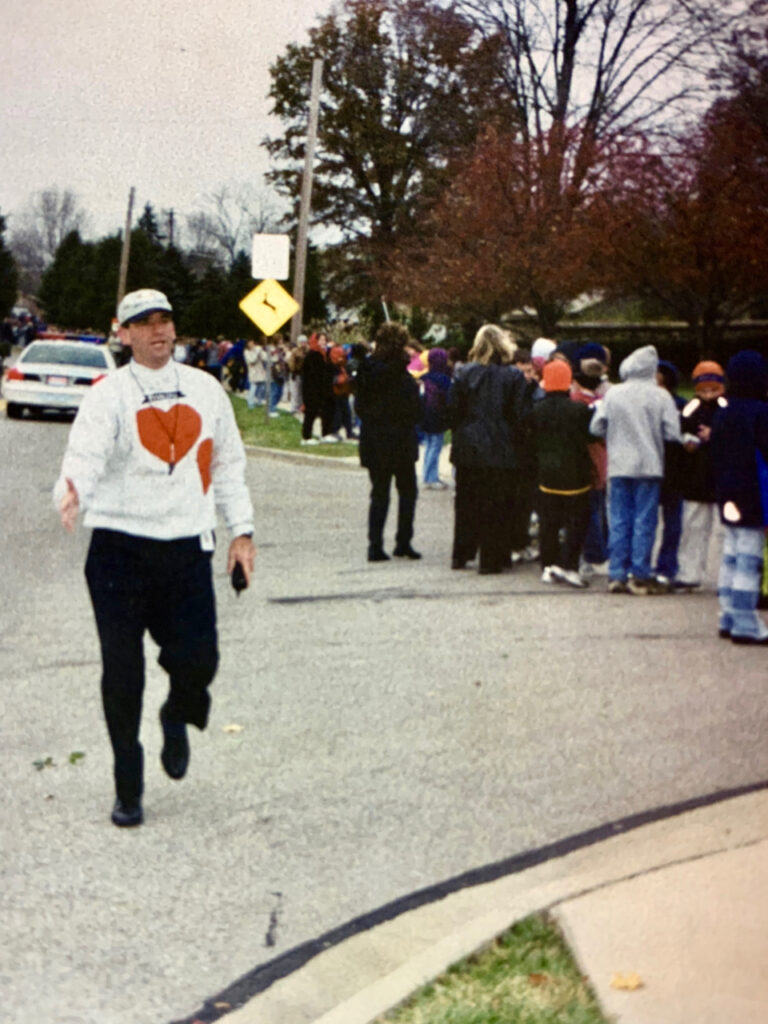
    Emily Bradbury, Kansas Press Association head, stands in front of a building with the Kansas Press Association logo. on it.
    Emily Bradbury, Kansas Press Association Executive Director, tells reporters that ‘what they’re doing is important. And what they’re doing matters…and they look out for their communities like no one else.’ Will Mari and Teri Finneman, Author provided photo.

    Loans, side hustles and deals

    Reporters and editors found new ways of paying the bills. That meant accepting government subsidies in the form of Paycheck Protection Program loans. It meant, for some, going door to door and asking readers to subscribe, or keep subscribing. It meant consolidating newspapers, putting out more online editions, or taking pay cuts.

    “People just don’t understand. It costs a lot of money and time to do this, and I just wish we – there was more value or people appreciate it or understood the value and the cost of really providing this service,” said Bonita Gooch, the publisher of The Community Voice, a Black newspaper based in Wichita, Kansas.

    Some publishers took on side hustles to bring in revenue, creating ad copy for local business or doing marketing work.

    At The Kingfisher Times & Free Press in Oklahoma, for example, Christine Reid, the paper’s editor, created ads for a local vocational-technical school. “I’ve also tried to use that as an avenue to … generate more ads for the newspaper,” Reid said.

    Some papers worked out advertising deals with local businesses as consumers shopped more locally.

    Local publishers did whatever it took to stay afloat. As some of our initial findings have shown, that showed both opportunity and hesitancy about change.

    “We’re gonna have to rely less on advertising revenue and more on subscription revenue, and so we’ve got to make sure we’re offering a unique product that they want to pay for,” said Letti Lister, the president and publisher of the Black Hills Pioneer in Spearfish, South Dakota.

    We saw tentative signs of hope, as journalists got financial and moral support from their readers during a fraught election. “If anything, it’s rallied the troops, if you will, in our community because they trust us, they know that we’re going to report the news in a timely manner and keep the public up to date,” said Amy Wobbema, publisher of the New Rockford Transcript in North Dakota. Arguably most coverage was calm and steady.

    But there was still hesitancy over what newspapers had to do to adapt. Some journalists are uncomfortable with receiving government funding and would rather rely on community support.

    As South Dakota Newspaper Association Executive Director Dave Bordewyk put it: “Sort of, ‘Look, contribute to our newspaper … because if you value that importance of local news and journalism, then we need your support beyond just subscribing to the newspaper or advertising, which has gone away.’”

    Ultimately, the pandemic showed that more research needs to be done on journalism in rural areas – we managed to talk to only a fraction of the total number of small-town journalists and publishers. Other scholars have already learned that local journalism helps reduce violent partisanship and reinforces institutions. To be clear, scholars have defined violent partisanship as the willingness to resort to physical altercations to resolve disputes – good local journalism channels that energy toward peaceful, democratic ends. Other scholars have found that institutions like local courts and governments get increased legitimacy as a result of local news. More sustained scholarly attention will likely turn up other benefits that the public isn’t yet aware of.

    “That’s what we hope. What I hope comes out of this is that readers can understand that, and can … have a renewed value on what that [local] publication has done for their community during this pandemic,” Bradbury told us.

    William Thomas Mari, Assistant Professor of Media law and Media History, Louisiana State University

    This article is republished from The Conversation under a Creative Commons license. Read the original article.

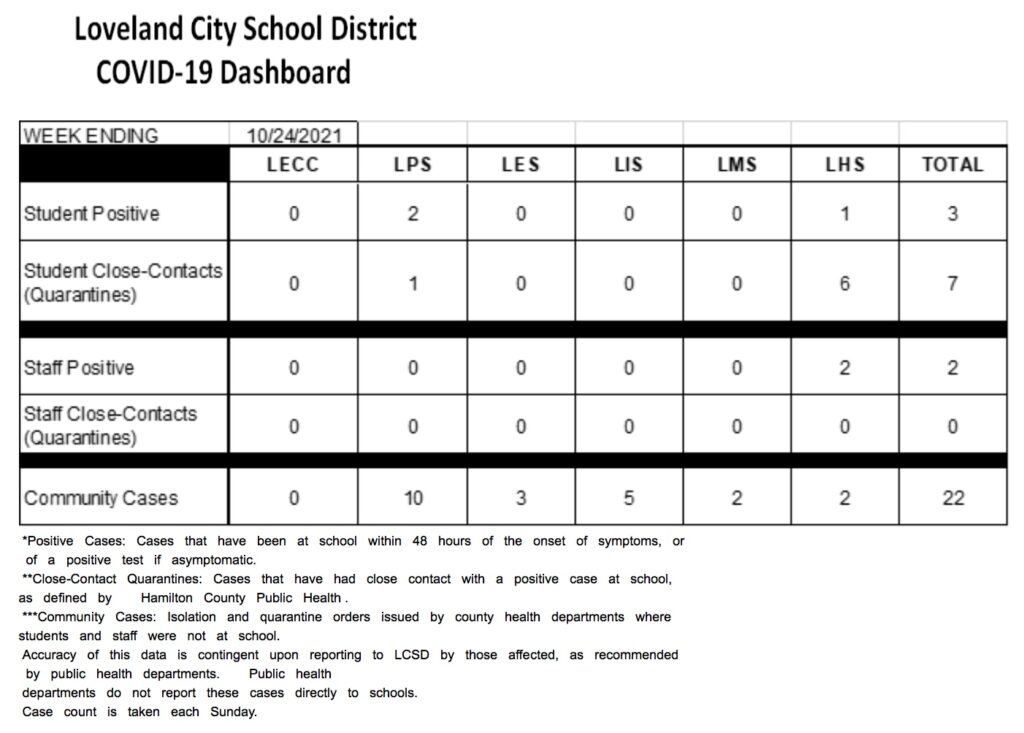
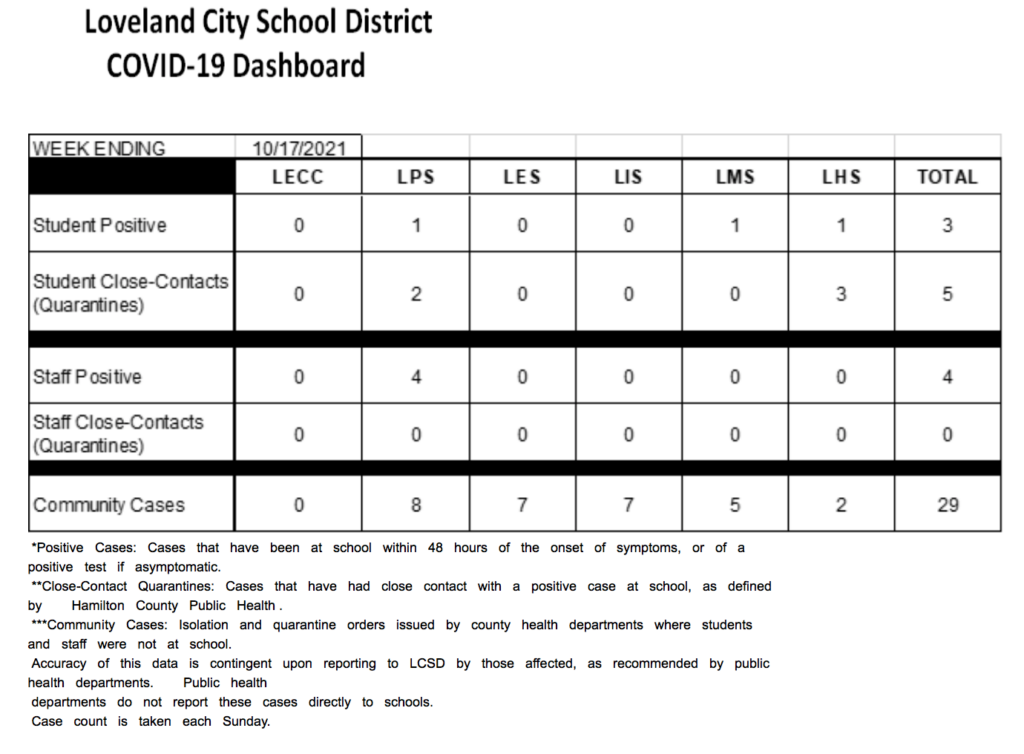
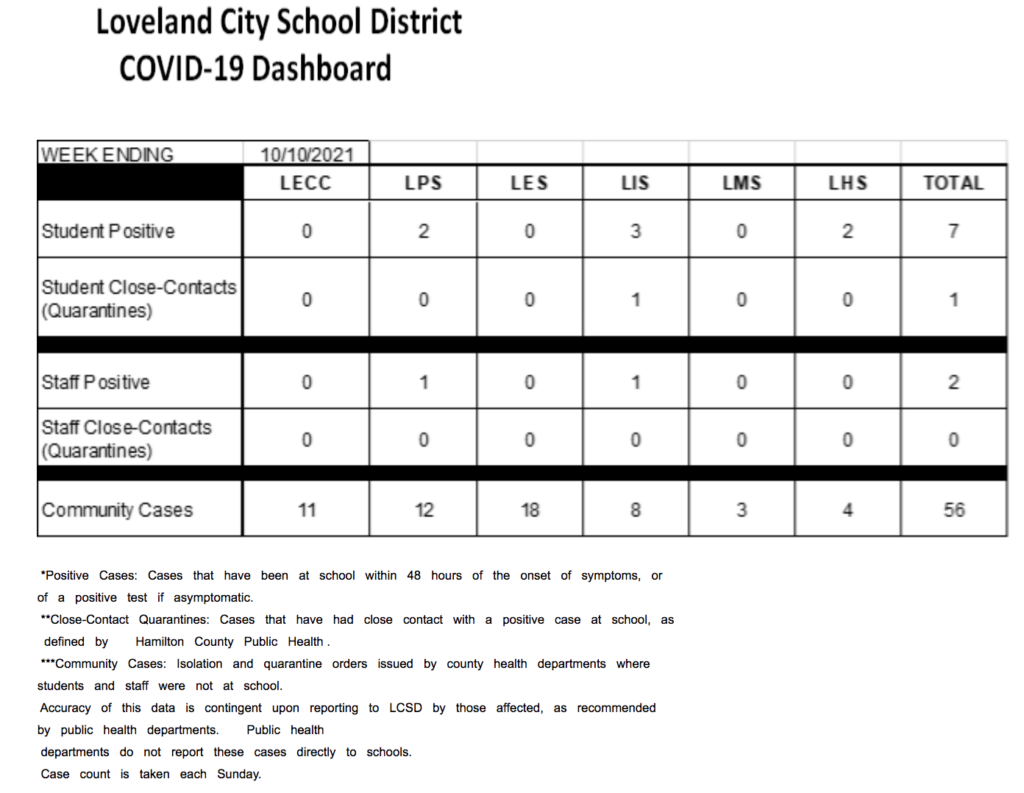
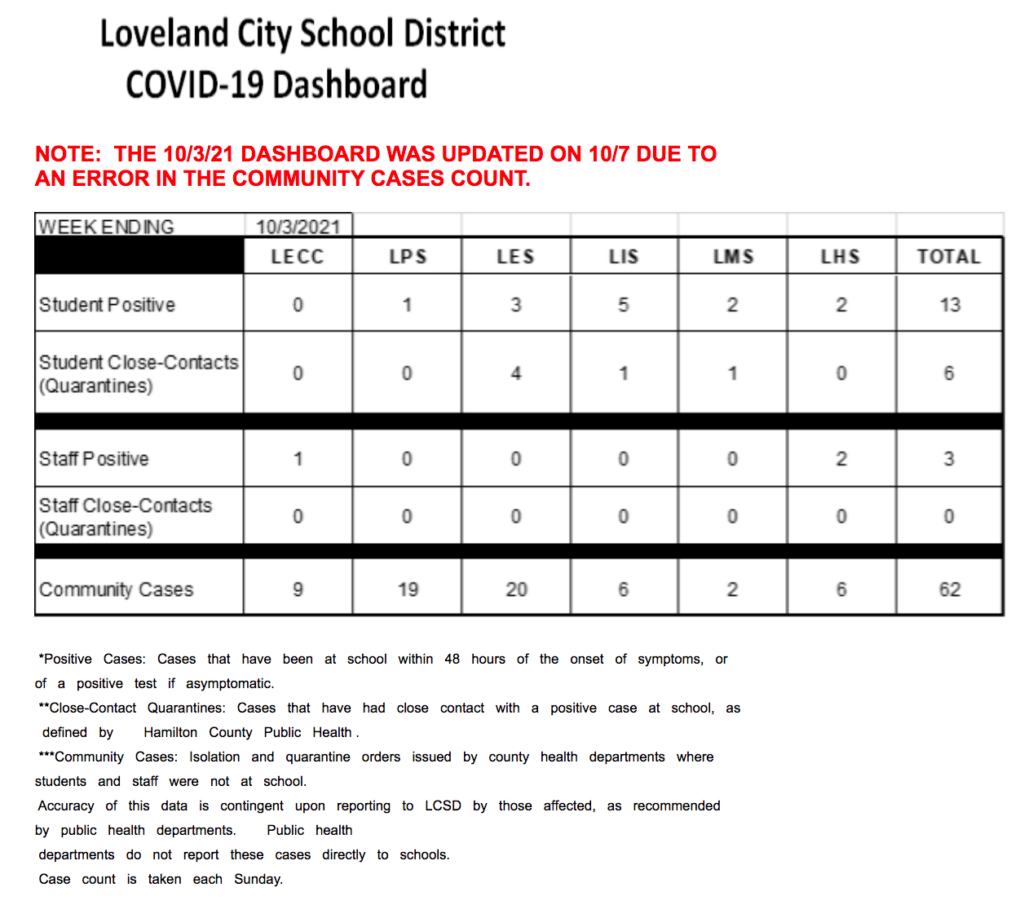
  • Loveland School Covid 19 Dashboard for November 21, 2021

    Loveland School Covid 19 Dashboard for November 21, 2021

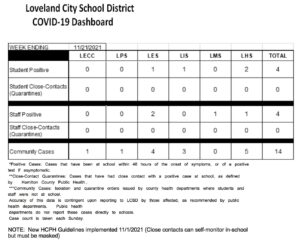
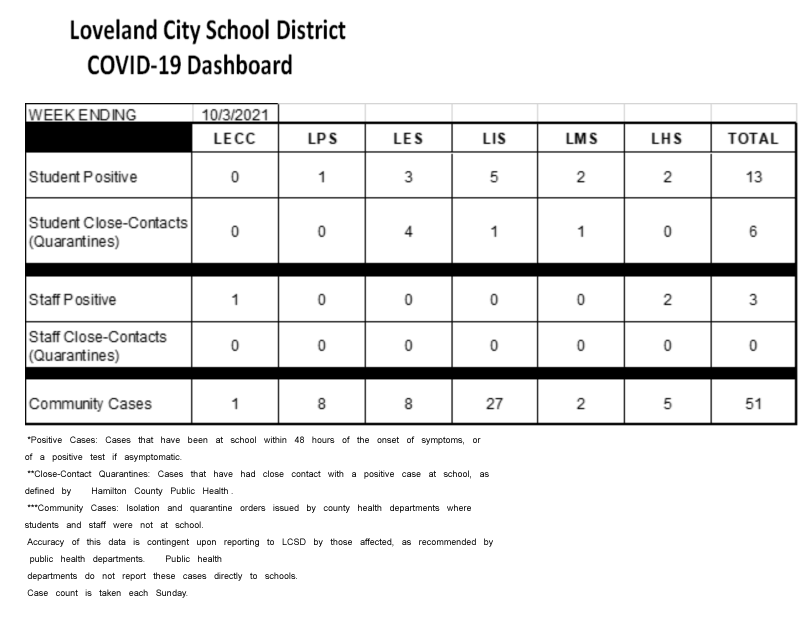
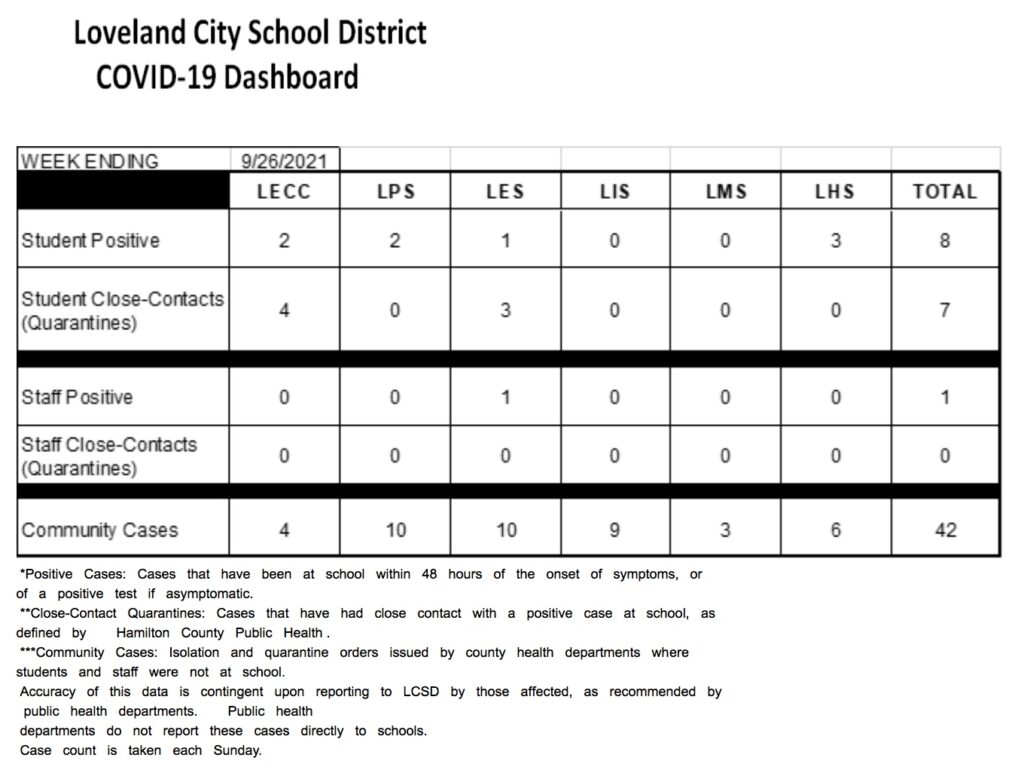
    Loveland, Ohio – At the beginning of each week, the Loveland City School District releases their latest Covid 19 Dashboard.

    NOTE: On November 1st the District District implemented new Close Contact guidelines…

    Note the correction to the 10/3/ report and that community cases increased from 51 to 62.

  • Parents: Your food donations were “Passed On” and delivered!

    Parents: Your food donations were “Passed On” and delivered!


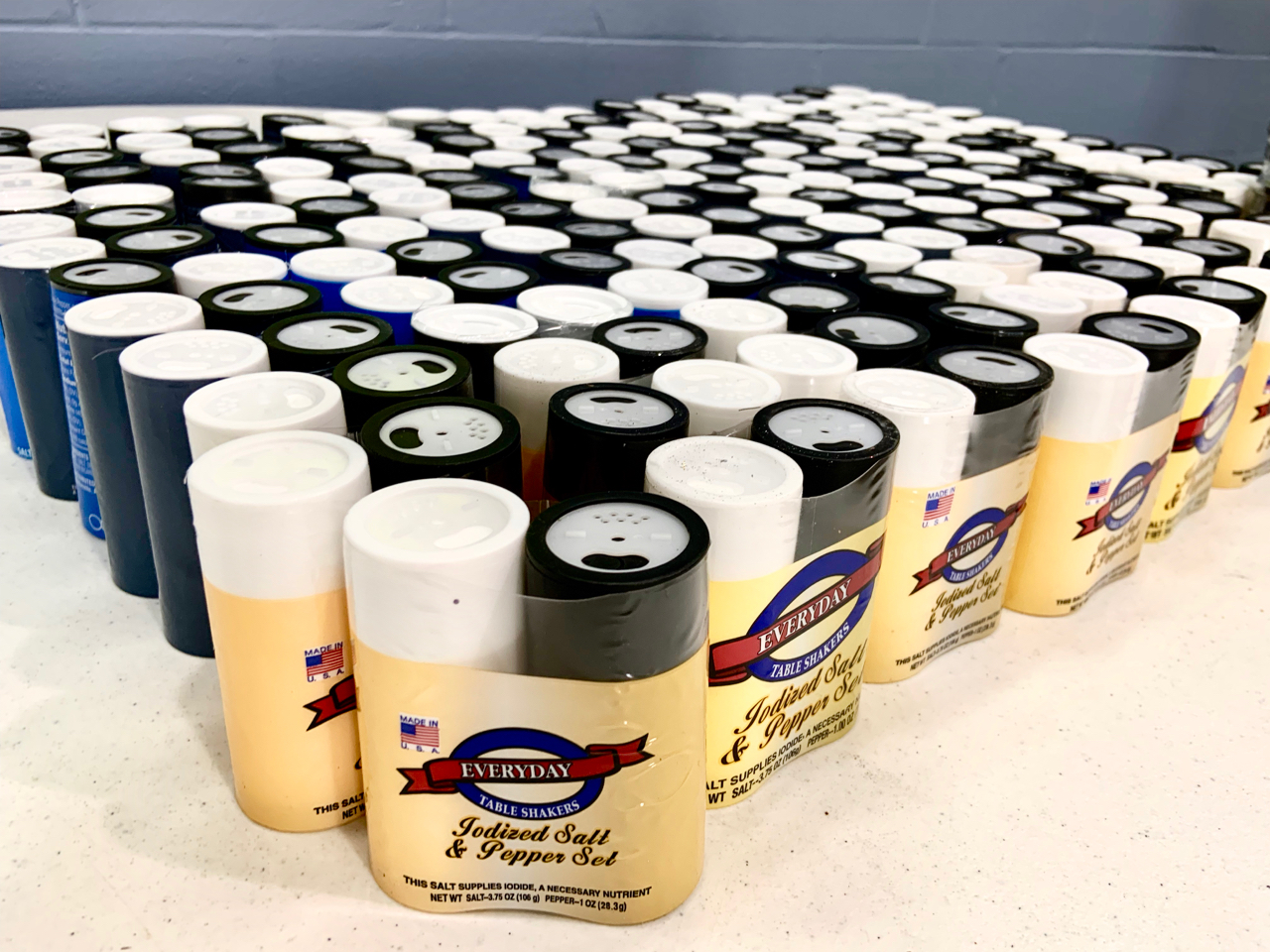
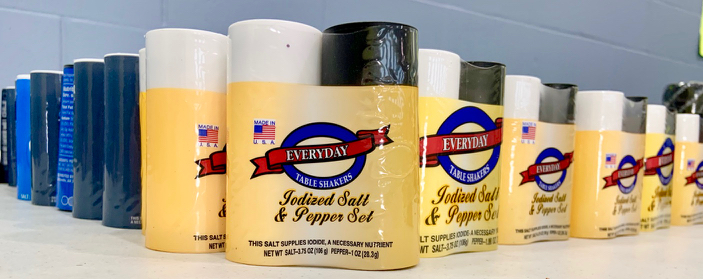
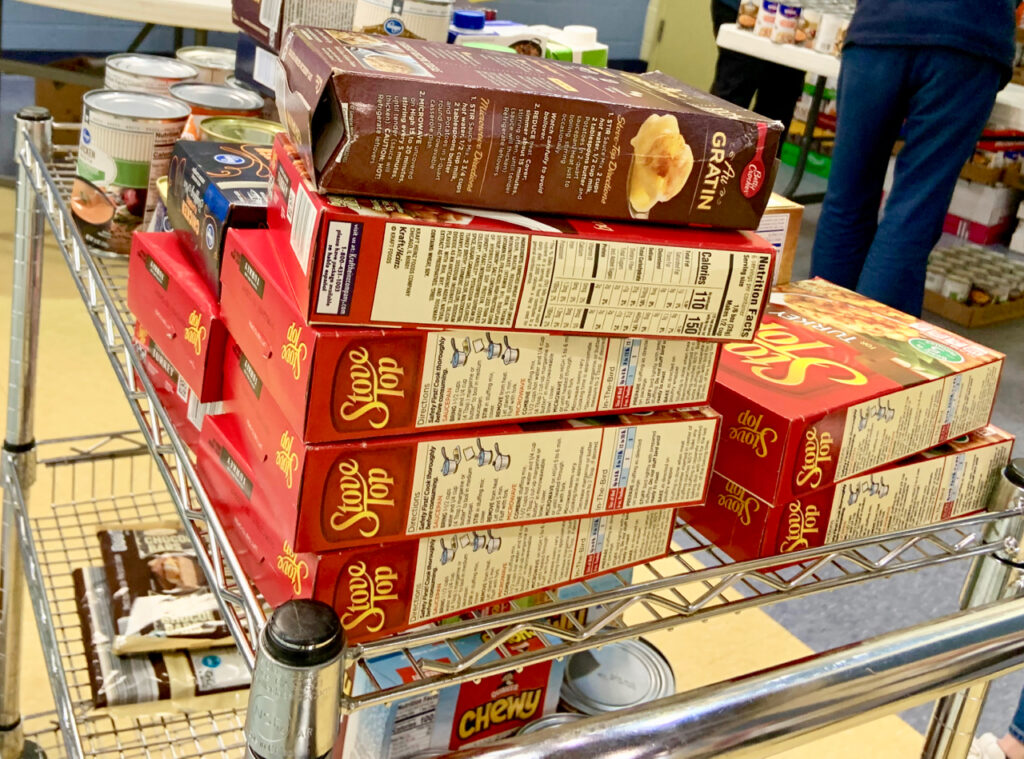
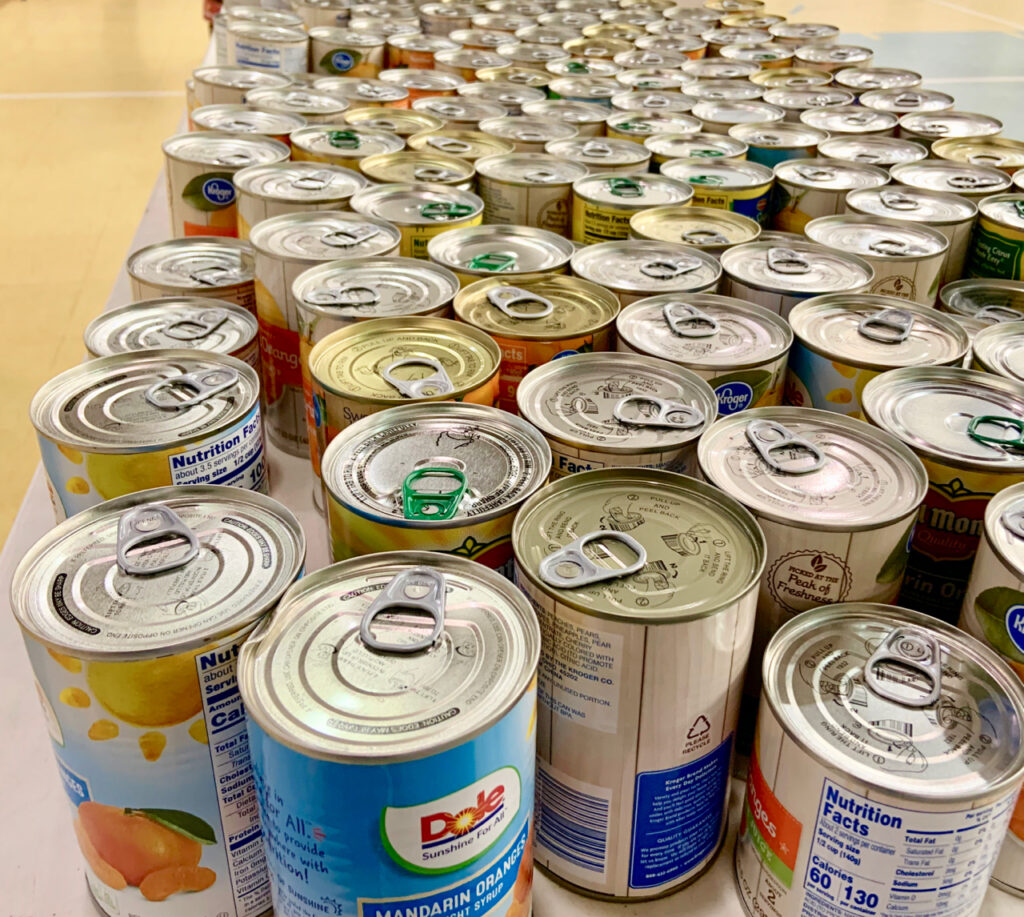
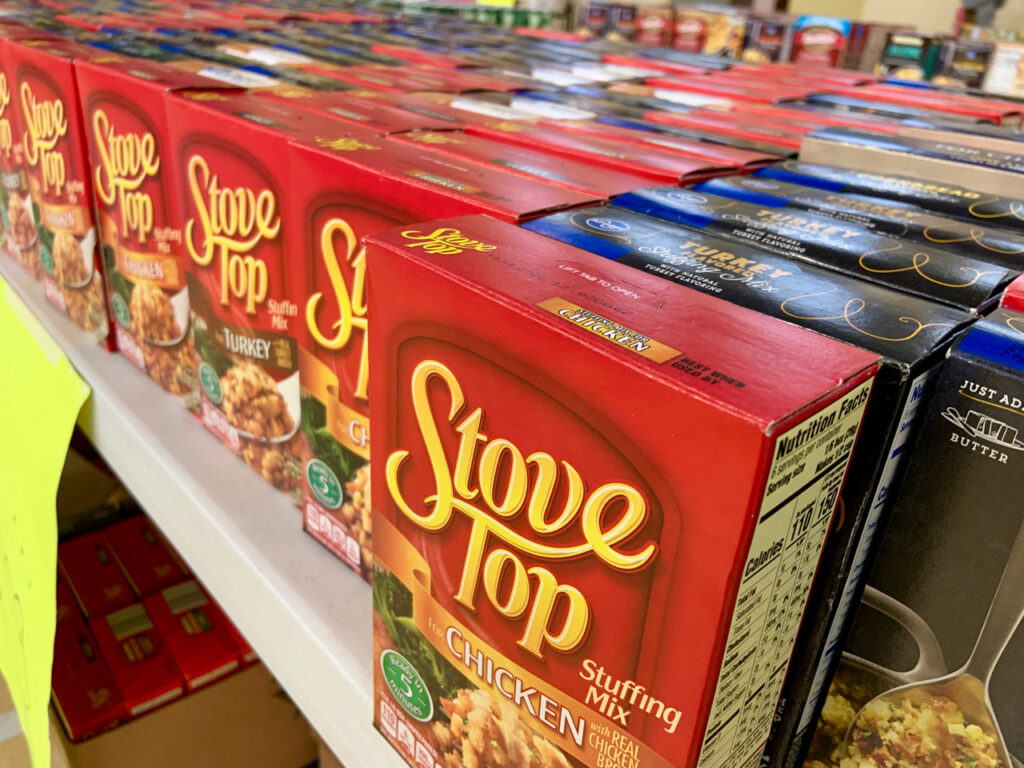
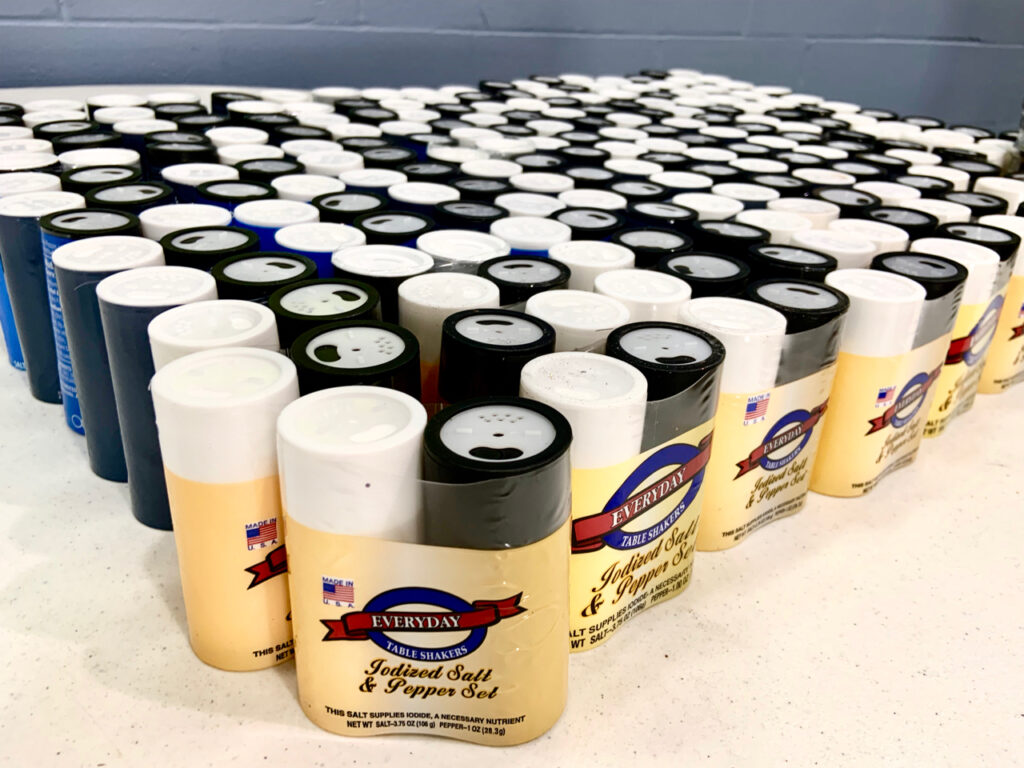
    I never put a title to photographs, however, this will be an exception. In honor of our Loveland school children, “The Everyday Table Shakers“.

    David Miller is the Publisher of Loveland Magazine

    by David Miller

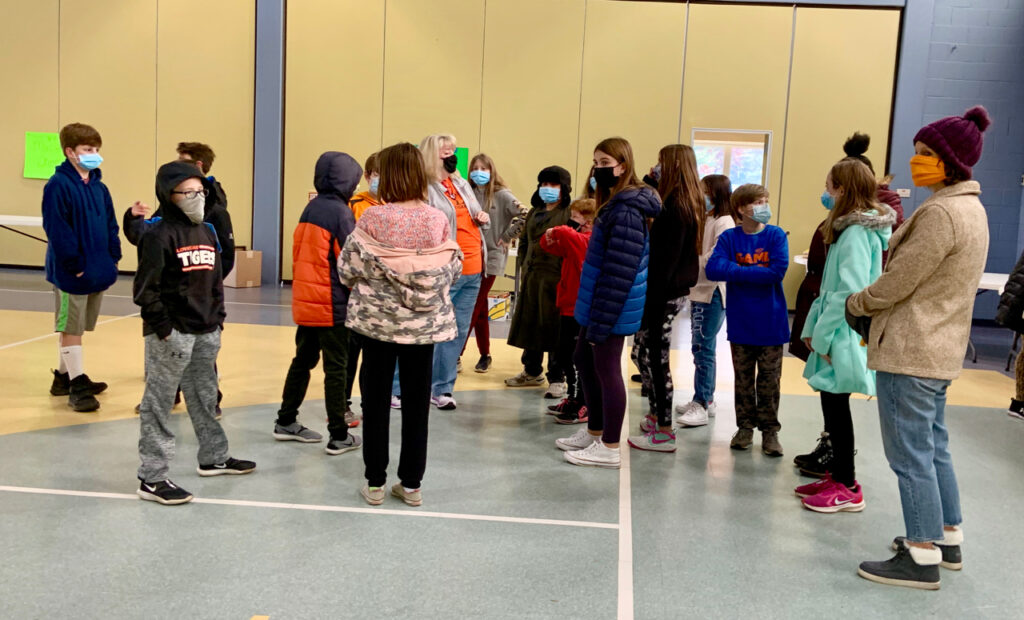
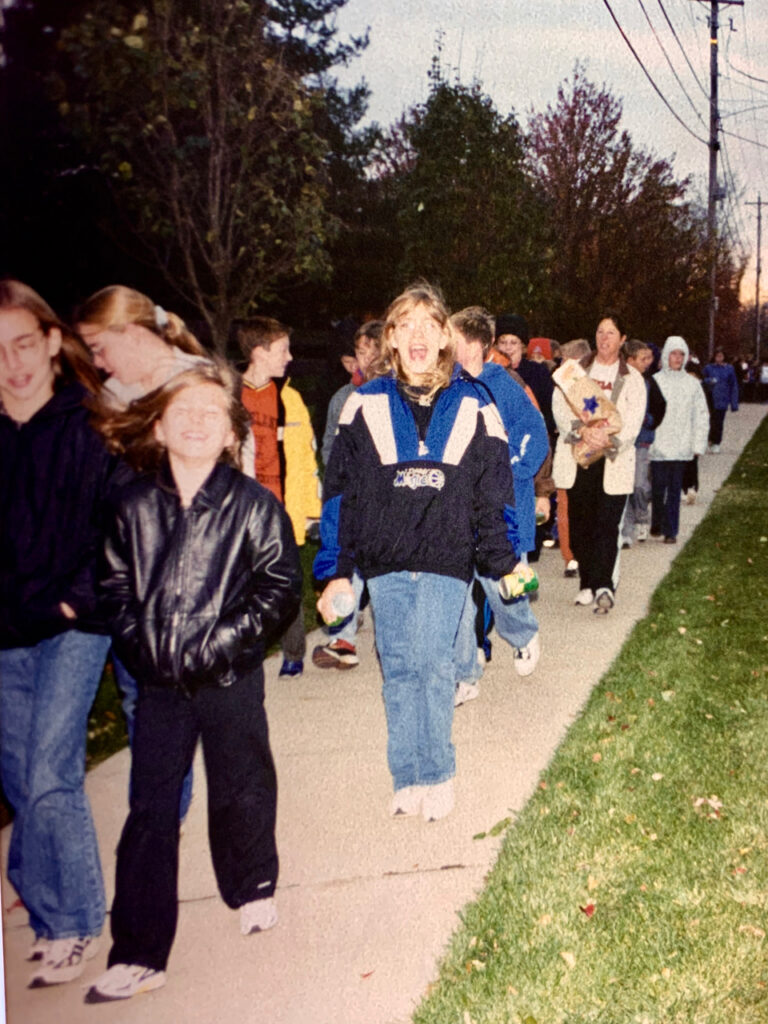
    Loveland, Ohio – Loveland Magazine was invited to the LIFE Food Pantry Pass it On Food Drive last Friday to witness hundreds of students walking food donations from their school to the Prince of Peace Lutheran Church on Lebanon Road. The two buildings are about 3/4 mile from each other.

    This was the 20-year anniversary of the food drive started by Nancy Grant to heal wounds after the terrorist attack on 9/11. It has always been scheduled ahead of the holiday season. The purpose is so that clients of the LIFE Food Pantry and other residents in the community can eat well at Thanksgiving and later in December. This was Libby Westerman’s third year of organizing the food drive throughout the Loveland schools

    Ahead of Friday, LIFE Executive Director Linda Bergholz explained how extremely important the event is for the pantry. She said, “As you all know, Thanksgiving is coming up and for us at the food pantry. It is an extraordinarily important time of year. Food insecurity has always been important. Food insecurity during a Pandemic is enormous.”

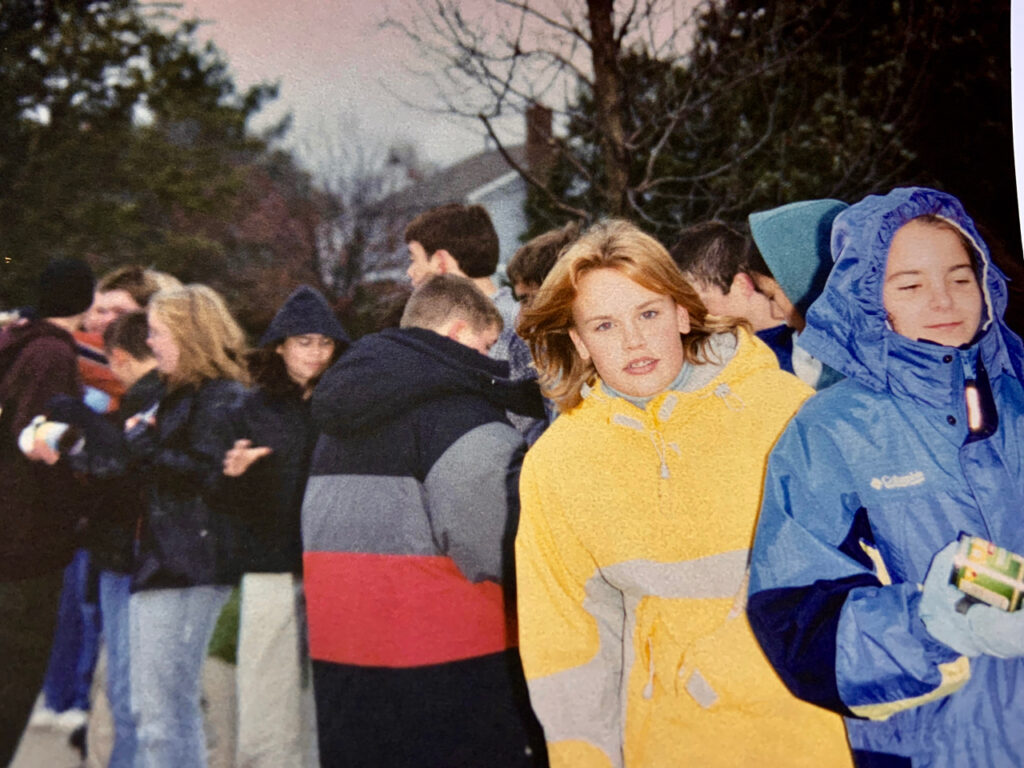
    Grant said twenty years ago, “Well, we can’t change the world, but we can change our little corner of it.” She had this idea to line up the kids down the street and pass the food donations one bag and box, hand-to-hand at a time to one another until it reached the church. A pay it forward so children could feel good about themselves. She thinks it worked after 9/11 and will now – during the Pandemic. This year the students at the Loveland Intermediate and Middle schools didn’t exactly “pass-it-on” to one another, but each carried their own donations to the church.

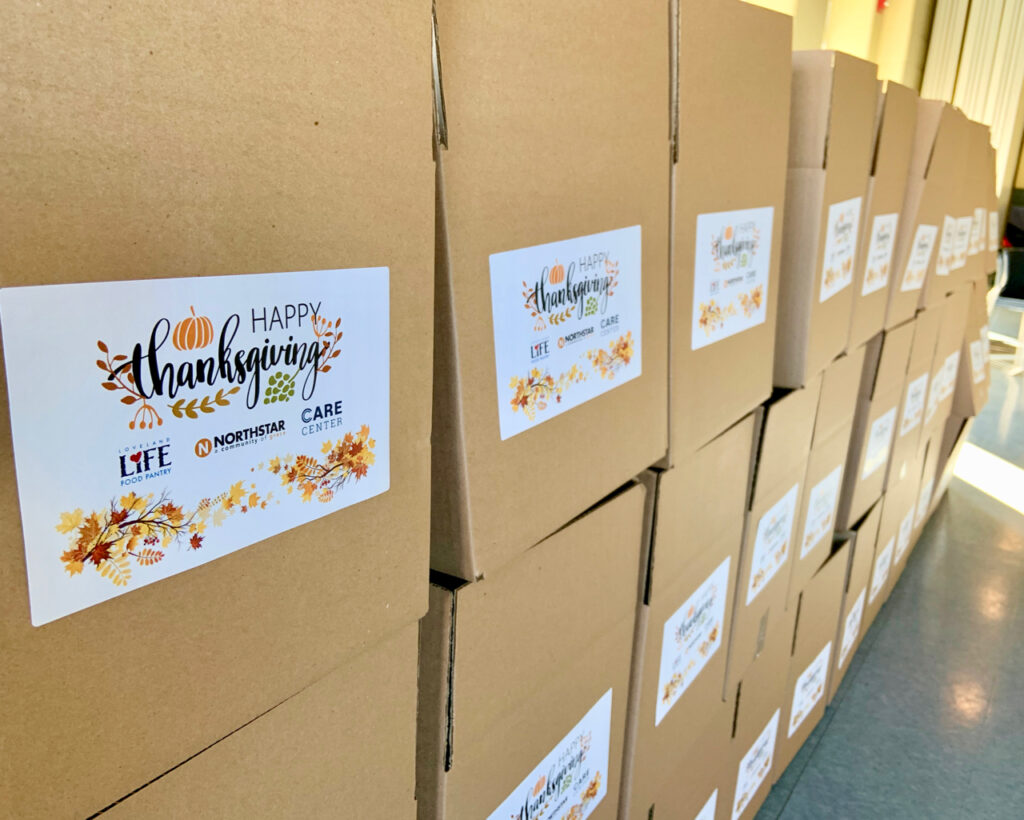
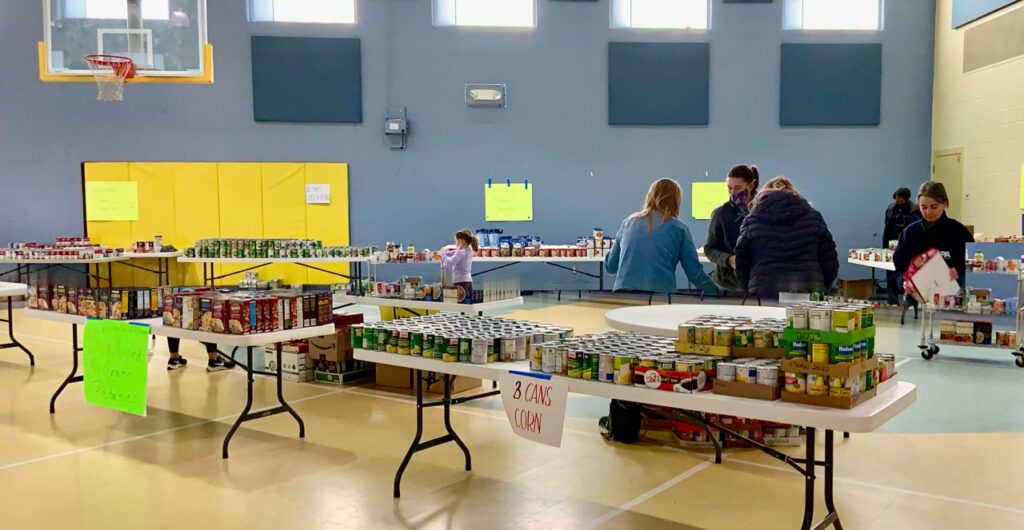
    After the donations arrived, volunteers sorted, date checked, organized, and assembled a Thanksgiving meal box to go out to area families. The huge effort is to ensure that all our Loveland families and singles will have the items they would need so they can sit down together and enjoy a traditional meal for the holiday.

    Each classroom/grade K-4 also had specific items to collect that were delivered to the church in cars and vans.

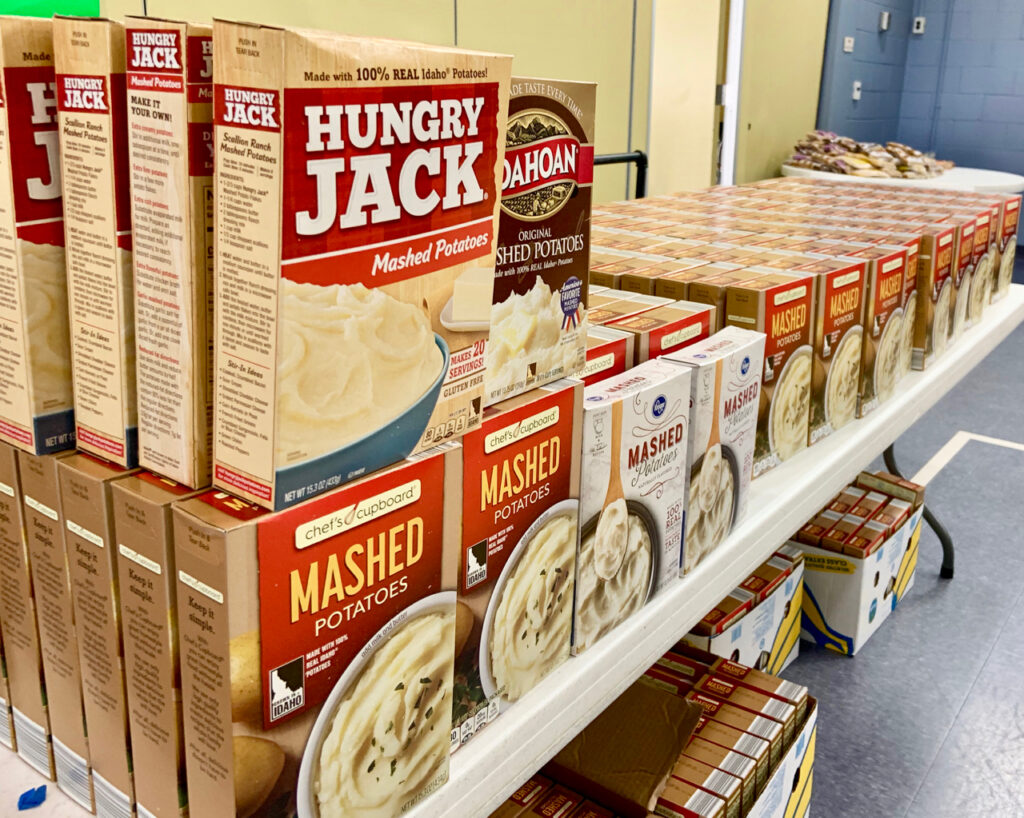
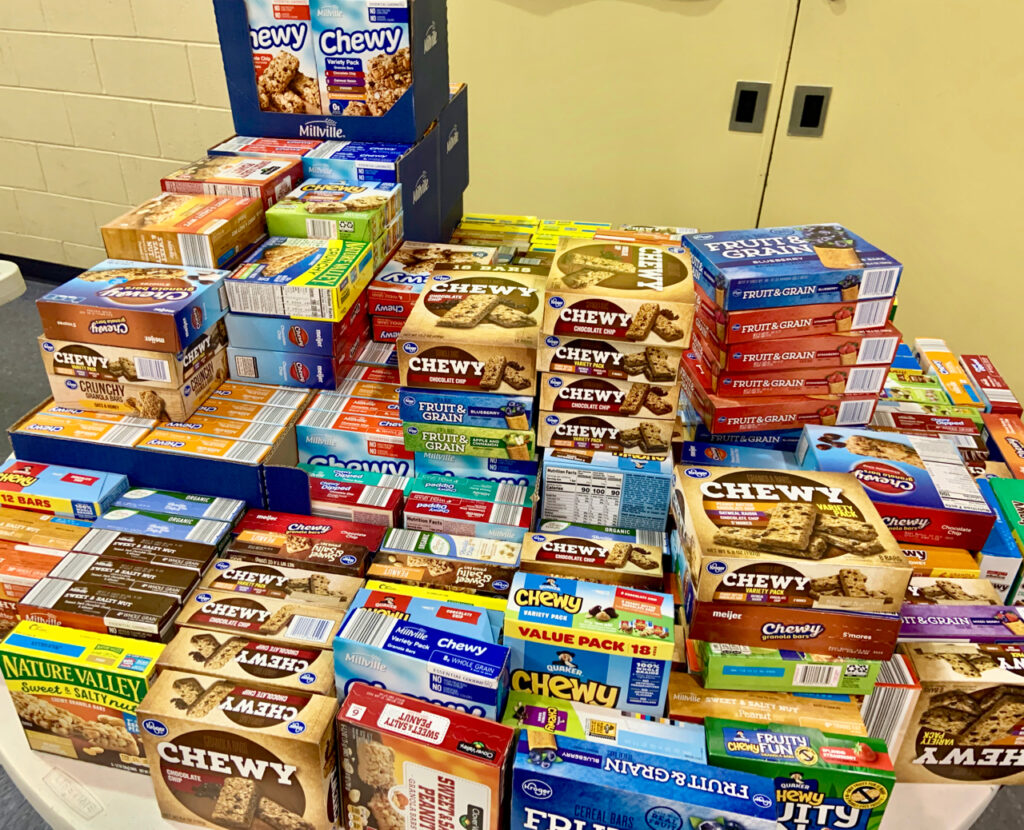
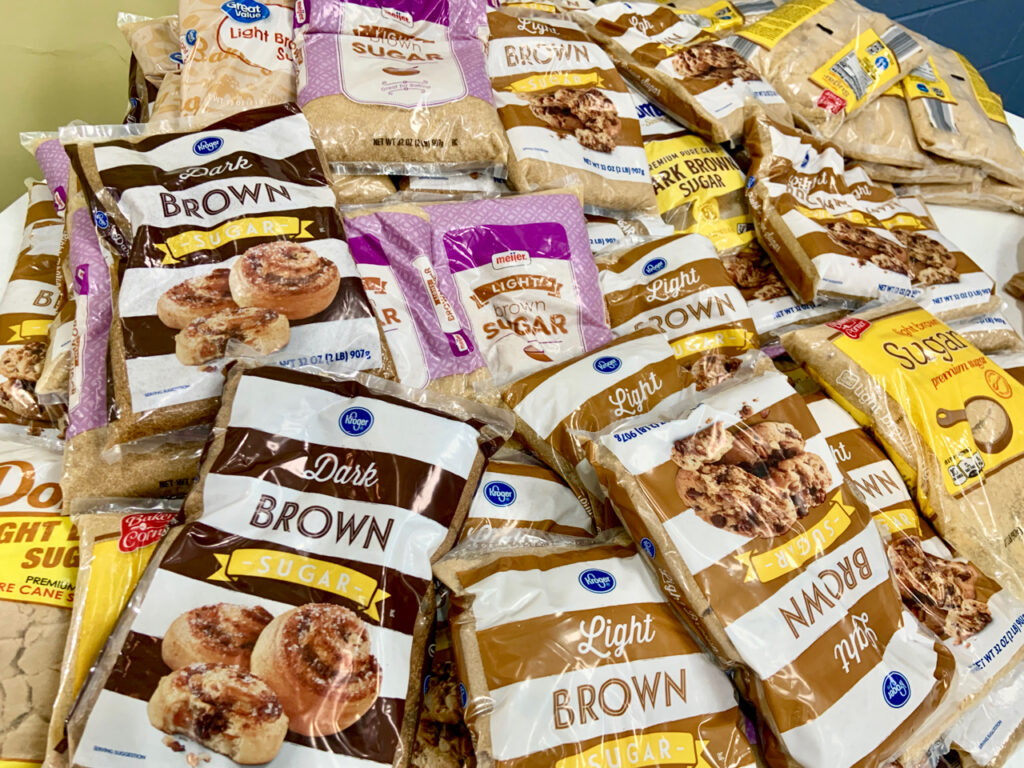
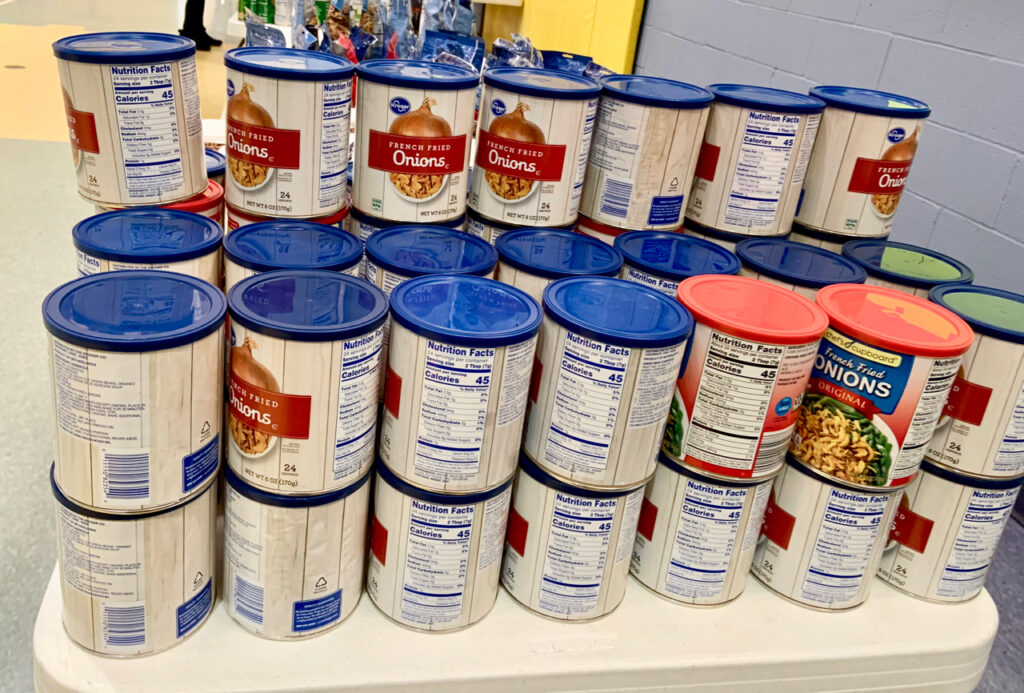
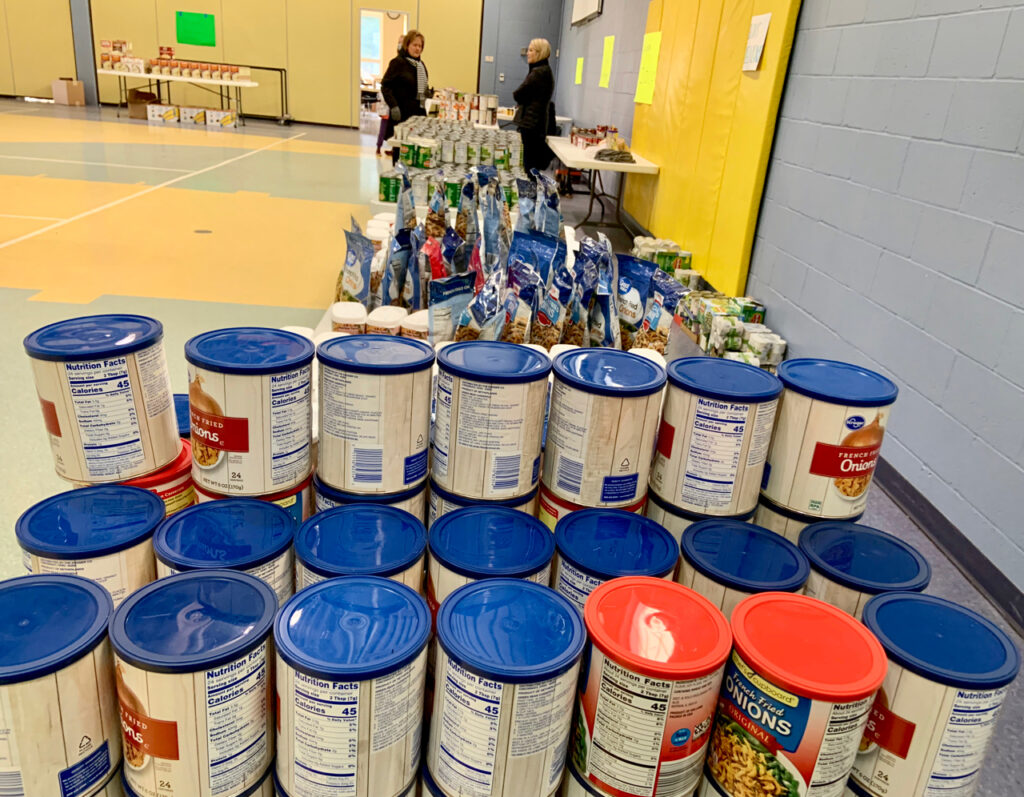
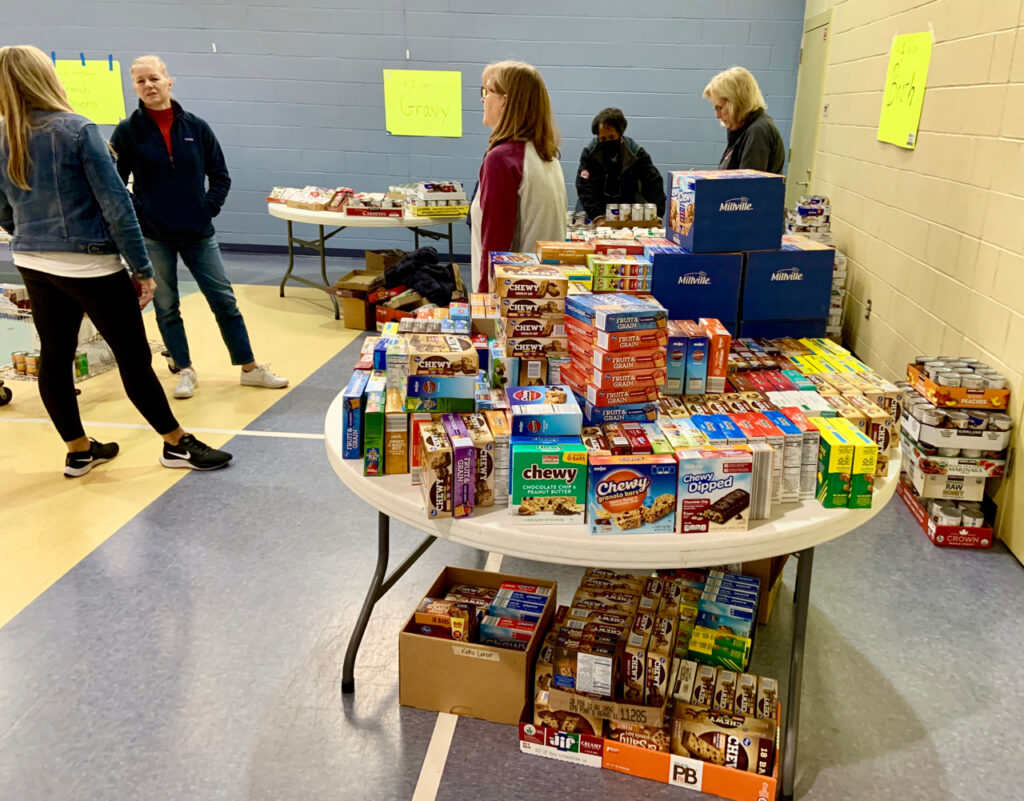
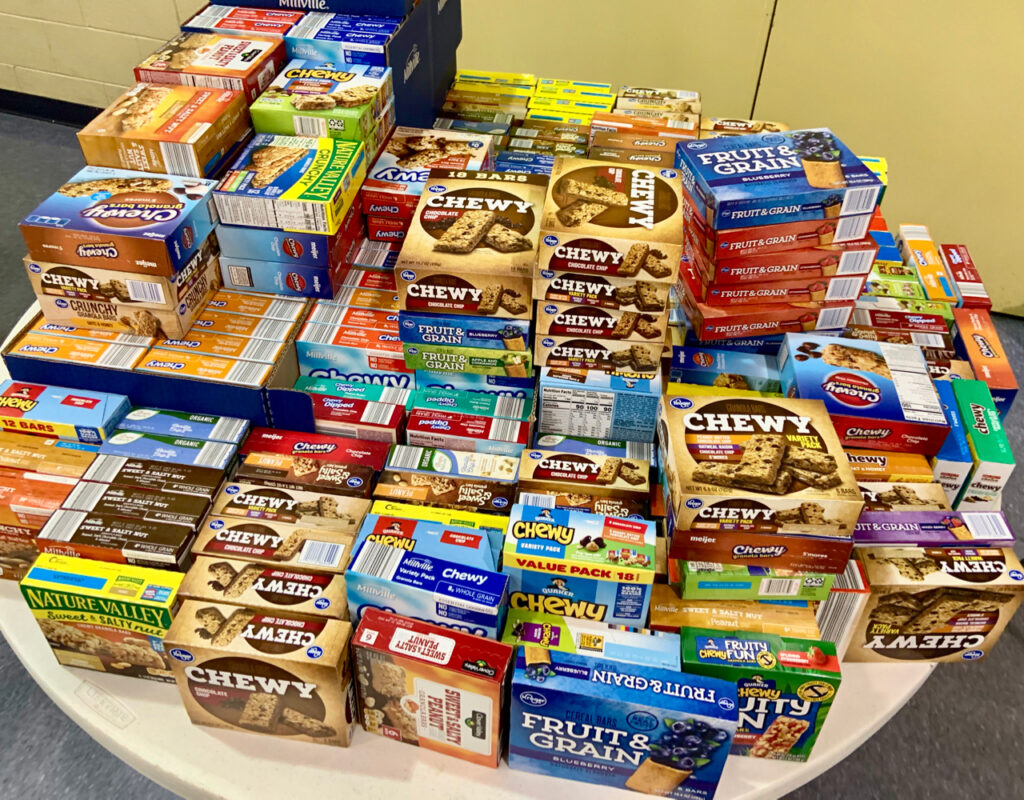
    Here is a very short timelapse video of the food being delivered and a few photos of the donations.


    As we move into the season of gratitude, we are so thankful for our donors and our volunteers that work together to make the holidays brighter for families in our community that need a helping hand.

    Without the dedication, long hours, giving spirits, and loving hearts, the LIFE Food Pantry wouldn’t be able to provide Thanksgiving Box Meals, the Holiday Giving Shop and Holiday Bag Meals.

    From canned goods to gift cards, from turkeys to stuffing — all of your donations fill the boxes with meals for the season. New coats, toys, household items, clothing, stocking stuffers fill our Holiday Giving Shop tables with gifts for the holiday guaranteed to bring happy smiles to both the littles and the seniors and everyone in between.

    Your generosity touches the lives of so many, and for this we give thanks.

    Happy Thanksgiving to you and yours.

    Linda Bergholz, Executive DirectorLIFE Food Pantry


    Above Photos © 2021 by David Miller/Loveland Magazine

  • Get your (HIP) – Hamilton County Home Improvement Loan Program

    Get your (HIP) – Hamilton County Home Improvement Loan Program

    The Hamilton County Home Improvement Program (HIP) is an initiative of the Hamilton County Commissioners and the Hamilton County Treasurer. The “HIP” loan allows homeowners in Hamilton County communities to borrow money to repair or remodel their homes at interest rates 3% below the lowest rate a bank would normally offer.

    Loans may be used for:

    BathroomsDecksKitchen RemodelingPlumbingCeilings & WallsGaragesLandscapingRoom AdditionsCentral Air & FurnacesGutters & RoofsPaint & CarpetingSiding, Windows & Doors

    … and much more!
    CONTACT INFORMATION

    Steve Johns, Planning Services Administrator
    Hamilton County Department of Planning and Development
    138 East Court Street, Room 807
    Cincinnati, OH 45202

    Phone: (513) 205-1486
    Fax: (513) 946-4475
    Email: Steve.Johns@hamilton-co.org

    DETAILS

    HOW TO APPLY

    FREQUENTLY ASKED QUESTIONS

  • SOPHOMORES: Apply now for Fall classes at Great Oaks!

    SOPHOMORES: Apply now for Fall classes at Great Oaks!

    Promoted Post

    High school sophomores:  Ready to apply for fall 2022?  Click here for the application!  Apply by February 8 for priority consideration!

    In the late 1960s and early 1970s, there was growing concern too many young people were not prepared to enter the labor market. Ohio responded by creating vocational school districts, which ensured that young people would have a broad range of career options.

    By 1970, 22 school districts joined together to form the Hamilton County Joint Vocational School District.

    Initially, there were to be two campuses, one on the east side and one on the west, but in 1971 all that changed when Great Oaks acquired the old Army depot in Sharonville. Additionally, 13 more school districts joined the vocational school district. In 1972, the school changed its name to Great Oaks and added a fourth campus with the addition of the Clinton County Air Force Base.

  • [Video Interview] Thousands of Loveland Children will “Pass It On” and you can join them!

    [Video Interview] Thousands of Loveland Children will “Pass It On” and you can join them!

    Loveland Magazine Editor, David Miller

    by David Miller

    Loveland, Ohio – “So, for all of you who are grocery shopping this weekend, please keep us in mind and up the items you could donate to the Pass It On Food Drive,” said Libby Westerman on Monday evening.

    Loveland Magazine was invited to the LIFE Food Pantry on Monday so we could help spread the word about this year’s annual food collection that for the past 20-years has always been scheduled ahead of the holiday season.

    Every year, along with the assistance of Loveland City Schools, a food drive takes place to collect items to disburse as Thanksgiving boxes – to clients of the LIFE Food Pantry and other residents in the community as well as holiday bags for later in December.

    Westerman is in her third year of organizing the food drive throughout the Loveland schools and wanted to give parents and others in the community a heads-up about participating.

    In this LOVELAND MAGAZINE TV video, LIFE Executive Director Linda Bergholz explains how extremely important the event is for the pantry. She said, “As you all know, Thanksgiving is coming up and for us at the food pantry it is an extraordinarily important time of year. Food insecurity has always been important. Food insecurity during a Pandemic is enormous.”

    Bergholz introduces Westerman and Nancy Grant who founded Pass It On in 2001 as a way children could give to the community and heal after the 9/11 terrorist attacks.

    Grant said twenty years ago, “Well, we can’t change the world, but we can change our little corner of it.” She had this idea to line up the kids down the street and pass the food donations one bag and box, hand-to-hand at a time to one another until it reached the church. A pay it forward so children could feel good about themselves. She thinks it worked after 9/11 and will now – during the Pandemic.

    Westerman tells you how you can participate and Grant tells you about the origin, and because of the Pandemic, why it is still so important for the children and our community.

    You don’t want to be that parent that opens up a backpack on the morning of the drive and discovers at the bottom an unread note and realizes there are no canned cranberry sauce or Mandarin oranges in the cupboard that your child is supposed to take to school that morning. Each classroom/grade K-8 will have specific items to collect, bring to school, and pass along to the food pantry.

    Students at the Loveland Intermediate and Middle schools will walk the food the several blocks to Prince of Peace Lutheran Church down the road from their school where it will be sorted and eventually given away.

    This year’s “Pass It On” will be on Friday, November 19th.

    This is a heads-up to grandparents and guardians as well because your child can probably only participate if you do some early shopping for them.

    Many students and volunteers deliver the donations from the food drive to Prince of Peace Lutheran Church where volunteers sort, date check, organize and assemble a Thanksgiving meal box to go out to area families. The huge effort is to ensure that all our Loveland families and singles will have the items they would need so they can sit down together and enjoy a traditional meal for the holiday.

    Each classroom/grade K-8 will have specific items to collect. When your child brings home information about the Pass It On Food Drive, please be generous when you send your donations with them to take to school.

    Here is the shopping list. You can also download and print this shopping list to take with you while grocery shopping.

    (Right-Click to open in a new tab or window to view larger)


  • Loveland School Covid 19 Dashboard for November 14, 2021

    Loveland School Covid 19 Dashboard for November 14, 2021

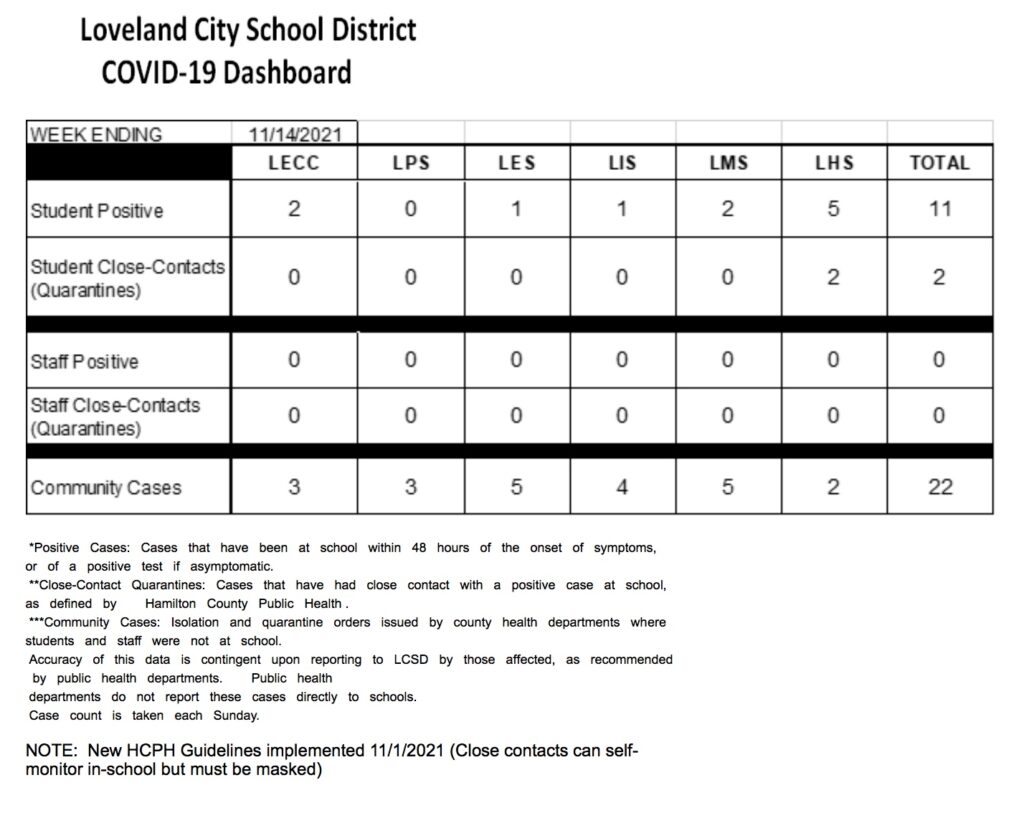
    Loveland, Ohio – At the beginning of each week, the Loveland City School District releases their latest Covid 19 Dashboard.

    NOTE: On November 1st the District District implemented new Close Contact guidelines…

    Note the correction to the 10/3/ report and that community cases increased from 51 to 62.

  • Statehouse Republicans introduce congressional map heavily favoring GOP

    Statehouse Republicans introduce congressional map heavily favoring GOP

     Senate President Matt Huffman, R-Lima. Photo from the Ohio Channel.

    BY: DAVID DEWITT – Ohio Capital Journal

    Statehouse Republicans introduced a newly drawn map for Ohio’s districts in U.S. Congress Monday night that maintains a firm GOP majority.

    While amendments are possible, the map is poised to pass out of a Senate committee Tuesday with a full Senate session to follow, and House sessions planned for Wednesday and Thursday.

    Data behind the map were not made available Monday evening for full analysis, but it appears to show two safely Democratic seats based in Cleveland and Columbus and a majority of others being solidly Republican or leaning Republican and one district that could be a toss-up.

    That district is one of three splitting Cuyahoga County, including the southwestern portions of it in a district with all of Medina County and Akron in Summit County.

    Hamilton County is also split into three districts, with all of Republican Warren County connected to the city of Cincinnati and an eastern portion of the county included in a district that stretches east out to Meigs County. The map also takes a chunk out of central Hamilton County for a district that stretches along the western Ohio border from Butler up to Darke County.

    Click to open in a new tab and view larger

    While the center of Franklin County in the map would be a safely Democratic seat, outlying areas in a C-shape along the northern, western, and southern portion would be included in a Republican-leaning district that stretches westward to Clark County and southward to include Clinton, Fayette and parts of Ross County.

    The map combines Montgomery County with Greene County and the central part of Clark, creates a district that stretches from Trumbull and Mahoning counties down along the Ohio River on the eastern border to Washington County, and puts Toledo and Lucas County in with Defiance, Williams, Henry, Fulton, Ottawa, Sandusky and Erie counties.

    Statehouse Republicans claim the map presents seven competitive districts and noted that it keeps seven of eight of Ohio’s largest cities whole while dividing only 12 counties.

    On Twitter, a number of Statehouse Democrats panned the proposal.

    Without bipartisan support, Republican legislators could vote through four-year maps. Any maps will have to be approved by Gov. Mike DeWine. If four-year maps go through, court challenges are likely.

    State legislative maps passed in September by the Ohio Redistricting Commission are currently before the Ohio Supreme Court after three lawsuits were filed against them. The court has four Republicans and three Democrats. Republican Chief Justice Maureen O’Connor ruled against Ohio’s current maps in 2012, and is considered a possible swing vote.

  • COVID-19 rises again in an undervaccinated Ohio

    COVID-19 rises again in an undervaccinated Ohio

    Photo by John Moore | Getty Images.

    BY: JAKE ZUCKERMAN – Ohio Capital Journal (Local dated added by Loveland Magazine)

    COVID-19 cases are once again ascendant in the 10th least vaccinated state in the nation.

    State data shows infection rates are climbing and the workloads are reupping at hospitals, where more than 2,700 Ohioans are currently hospitalized with COVID-19.

    An analysis of state data shows that 11 months into the vaccine rollout, the ground is still fertile for outbreaks all around Ohio. Of 88 counties in the Buckeye State, only Delaware (71% vaccinated) surpasses the national vaccination rate of 68.5%. In 58 counties, less than half the population is vaccinated, according to data as of Sunday.

    Ranked by state, Ohio (56% vaccinated) is the 10th least-vaccinated in the country, according to data from The New York Times.

    In Henry County, a rural swath of northwest Ohio, COVID-19 is spreading at more than twice the statewide rate of about 400 infections per 100,0000 residents. About 52% of residents are vaccinated. Health Commissioner Joy Ermie said the spread is not specific to any outbreak or location, it’s just swimming through homes and social events of mostly unvaccinated people.

    “The quicker we turn this around, the quicker we’ll see a decrease in our cases,” she said. “It will be a forever cycle if we cannot increase our overall vaccination rates.”

    Public health workers in coronavirus-sieged counties said in interviews for this article that it’s time to start accepting that COVID-19 is likely here to stay in some form or fashion, absent a paradigm shift on vaccination.

    Several indicated a circular pattern in vaccination; the unvaccinated, by and large, are staying unvaccinated. The vaccinated are fortifying their immune system with booster doses.

    “I would absolutely love to say COVID is over in X [number of] months,” Ermie said. “But I feel much more confident that we should take our energy away from, ‘How is this going to end?’ to ‘How can we learn to live with it?’”

     Gavin Smits receives a first dose of the Pfizer COVID-19 vaccine. (Photo by David Ryder/Getty Images)

    Federal authorities approved the use of vaccines on children aged 5-11 earlier this month, which will likely jumpstart vaccination rates to some extent. In north-central Ohio’s Seneca County, a population of roughly 55,000 people, about 47% of residents are vaccinated. The county’s case rate is nearly twice the statewide average.

    About 20 children were vaccinated at a clinic last Tuesday night, according to county health commissioner Anne Goon. She said there hasn’t been any mad rush on vaccines, but she was happy with Tuesday’s crowd.

    She said adults in the community have bristled with vaccines, masks, and assorted infection control policy responses to the pandemic. Some parents have refused to have their kids tested after they’re exposed to the coronavirus at school, she said, even if it’s required for an after-school sport.

    “We have a portion of our population that just doesn’t think COVID is real,” Goon said. “That it’s just a hoax.”

    To Dr. Bruce Vanderhoff, Ohio’s top doctor and director of the state health department, the state is “approaching” a point in the pandemic where coronavirus becomes more of a nuisance than threat to the public welfare. We’re not there yet though as the extra-transmissible delta variant of the coronavirus “relentlessly” seeks out the unvaccinated, he said.

    “In some circumstances, what is driving what we’re seeing is low vaccination rates in some communities,” he said. “So we have to continue to focus on the importance of vaccination.”

    Vanderhoff, speaking to reporters Friday, offered a more optimistic take on Ohio’s vaccination rate. Among Ohio adults, more than 2 in 3 have now received at least one dose of vaccination. The COVID-19 vaccination rate, he said, has surpassed the rate of Ohioans who get their annual flu shot. It pales in comparison to vaccination against disease like measles or polio, but those vaccines have been around longer and are (mostly) legally required to enroll in school.

    Despite Vanderhoff’s optimism, hospitalizations for COVID-19 have increased across every age group over the last week. For people aged 30-39, who are less vaccinated than their elder counterparts, hospitalizations leapt 48% in that time frame. More than 2,700 Ohioans are currently hospitalized with COVID-19, up from less than 2,200 earlier this month.

    John Palmer, a spokesman for the Ohio Hospital Association, said the statewide COVID-19 patient census has been increasing by about 60 patients daily as of late.

    “Hospitals are operating at high-capacity levels with workforce challenges and any surge will have a devastating impact leading to disruption of health care access for communities,” he said. “Despite three safe, approved and effective vaccines available today to stop this virus we continue to see spread and it’s frustrating to respond to a virus that is preventable.”

    All told over about 20 pandemic months, more than 25,600 Ohioans have died from COVID-19, part of the U.S.’ 762,000 dead. More than 82,000 Ohioans have been hospitalized, including more than 10,000 who required ICU care. A staggering 1.6 million Ohioans have been infected with COVID-19.

    Data on infections that “break through” the vaccines’ protection is limited, but available evidence suggests it’s a rare occurrence. CDC research shows vaccination decreases the risk of infection by a factor of five; the vaccines are between 88% and 93% effective in preventing hospitalization; and months’ worth of data shows there’s no increased risk for mortality among vaccine recipients. Since Jan. 1 in Ohio, fewer than 5% of people hospitalized or dead from COVID-19 were vaccinated.

    Mark Cameron, an immunologist at Case Western Reserve University, is not surprised by COVID-19’s resurgence. Even highly vaccinated states like Vermont (82% vaccine started) are wrestling with outbreaks. In Ohio, cold weather makes respiratory viruses more spreadable and drives humans to gather inside instead of outside.

    “It’s absolutely unacceptable to operate in a space in which 50-60% of the people are unvaccinated,” he said.

    He expressed frustration with a sense of complacency from the public whenever the coronavirus ebbs, and an unwillingness to acknowledge the predictable patterns of disease spread based on low vaccine coverage, weather and human behavior.

    “I don’t know what unique to say at this point,” he said. “Here we are risking another impact on our holiday season through sickness, hospitalization and death.”


    Hamiolton County Public Health 11-16-2021

    November 16

    Warren County Health Services reported 62 additional COVID-19 cases on Tuesday, along with 60 recoveries. Health Services is monitoring 493 active COVID cases as of Tuesday, 471 of them involving mild illness.

    Thirteen (13) people are hospitalized as of Tuesday, one (1) fewer than Monday. One (1) is critically ill, and the remainder have moderate illness. Nine (9) others are moderately ill outside of the hospital.

    All but two (2) of Tuesday’s cases involved community spread of COVID-19, as two (2) were reported in a skilled nursing facility.

    Warren County Health Services continues to see a significant spike in COVID-19 transmission, with the majority of its new cases arising from workplace exposures, family/household exposures and indoor events/gatherings as the highly transmissible Delta variant remains involved with virtually all local cases.

    Sixteen (16) of Tuesday’s cases involved individuals who had been fully vaccinated. Cumulatively as of Tuesday, 1,086 of 44,513 fully vaccinated Warren County residents have tested positive for COVID-19. To date, 1,027 of 1,086 had mild illness, while 41 became moderately ill, two (2) seriously ill and one (1) critically ill. Fifteen (15) passed away, all of them elderly and/or with extensive health issues, seven (7) of them at nursing homes.