Tag: DEA

  • Biden administration to greatly ease marijuana regulations

    Biden administration to greatly ease marijuana regulations

    BY:  Ohio Capital Journal

    The Biden administration plans to remove marijuana from a list of the most dangerous and highly regulated drugs, the Department of Justice said Tuesday night.

    The Drug Enforcement Administration will propose moving the drug from a Schedule I substance, which also includes heroin and methamphetamine, to Schedule III, which is the category for regulated-but-legal drugs including testosterone and Tylenol with codeine.

    “Today, the Attorney General circulated a proposal to reclassify marijuana from Schedule I to Schedule III,” DOJ spokesperson Xochitl Hinojosa said in a statement to States Newsroom. “Once published by the Federal Register, it will initiate a formal rulemaking process as prescribed by Congress in the Controlled Substances Act.”

    Cannabis has been listed as a Schedule I drug under the Controlled Substances Act since 1971, even as many states have moved to legalize recreational use for more than a decade and medicinal use for even longer.

    State-legal marijuana businesses make up a multibillion-dollar industry, but the illegal status of the drug under federal law creates barriers unseen by other industries, including a lack of access to banking and the inability to deduct business expenses from taxes.

    Social justice advocates have also noted that prosecutions for marijuana-related crimes have hurt communities of color. Many of those convicted for offenses related to marijuana have not benefited from the recent decriminalization in many states.

    Moving cannabis to Schedule III would allow a more permissive approach to the drug, including permitting greater study of medicinal uses and allowing related businesses to use a common tax deduction.

    Schumer praises development

    Congressional leaders on the issue and other advocates of changing marijuana’s status welcomed the news Tuesday afternoon, even as they called for further action.

    “It is great news that DEA is finally recognizing that restrictive and Draconian cannabis laws need to change to catch up to what science and the majority of Americans have said loud and clear,” Senate Majority Leader Chuck Schumer said in a statement.

    The New York Democrat added that other legislation, including bills to provide cannabis businesses with greater access to banking and to completely delist the drug, is still needed.

    “Congress must do everything we can to end the federal prohibition on cannabis and address longstanding harms caused by the war on drugs,” he said.

    Sen. John Hickenlooper, a Democrat from Colorado who was the state’s governor when it and Washington became the first states to legalize recreational use in 2012, said the news was welcome but did not go far enough.

    “Rescheduling marijuana is a step in the right direction. But – just a step,” he posted to X. “Marijuana should be DEscheduled altogether.”

    The state’s current Gov. Jared Polis, also a Democrat, cheered the move in a written statement.

    “I am thrilled by the Biden Administration’s decision to begin the process of finally rescheduling cannabis, following the lead of Colorado and 37 other states that have already legalized it for medical or adult use, correcting decades of outdated federal policy,” Polis said.

    “This action is good for Colorado businesses and our economy, it will improve public safety, and will support a more just and equitable system for all.”

    The U.S. Cannabis Council, a business group, applauded the expected change.

    The move was based on U.S. Department of Health and Human Services research and would have myriad benefits for business, Executive Director Edward Conklin said in a written statement.

    The update would put marijuana on a path to full legalization and make it easier for state-legal businesses to run profitable operations, he said.

    “Moving to Schedule III represents a tectonic shift in our nation’s drug laws. The US Cannabis Council is committed to ending federal cannabis prohibition, and we believe that reclassification is a necessary and critical step toward that goal,” he wrote. “In the coming days, we will submit comments to the DEA in support of the proposed rule.”

    Jennifer Shutt contributed to this report.


    Jacob Fischler
    JACOB FISCHLER

    Jacob covers federal policy as a senior reporter for States Newsroom. Based in Oregon, he focuses on Western issues. His coverage areas include climate, energy development, public lands and infrastructure.

    Ohio Capital Journal is part of States Newsroom, the nation’s largest state-focused nonprofit news organization.

    MORE FROM AUTHOR

    _____________
    Jennifer Shutt
    JENNIFER SHUTT

    Jennifer covers the nation’s capital as a senior reporter for States Newsroom. Her coverage areas include congressional policy, politics and legal challenges with a focus on health care, unemployment, housing and aid to families.

    Ohio Capital Journal is part of States Newsroom, the nation’s largest state-focused nonprofit news organization.

    MORE FROM AUTHOR


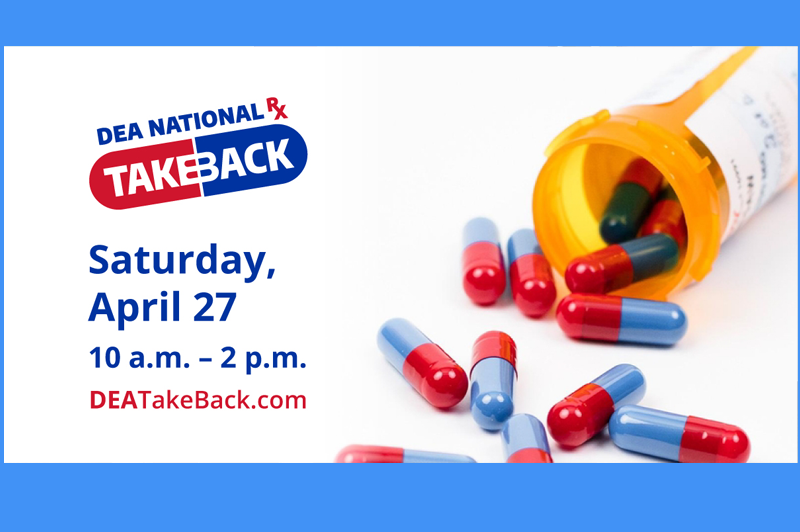
  • The 26th National Prescription Drug Take Back Day is Saturday, April 27, 2024

    The 26th National Prescription Drug Take Back Day is Saturday, April 27, 2024

    Loveland, Ohio – The Loveland Police Department will participate in the spring National Prescription Drug Take Back Day on Saturday, April 27.

    Drop off items the the Loveland Safety Center from 10 AM until – 2 PM

    DEA and its partners will collect tablets, capsules, patches, and other solid forms of prescription drugs.

    Rid your home of unneeded medications—those that are old, unwanted, or expired—that too often become a gateway to addiction.

    Take Back Day offers free and anonymous disposal of unneeded medications at close to 5,000 local drop-off locations nationwide.

    Collection sites will not accept syringes, sharps, and illicit drugs. Liquid products, such as cough syrup, should remain sealed in their original container. The cap must be tightly sealed to prevent leakage

    Collection Site Locator

  • Loveland participating in Drug “TakeBack” Day on Saturday

    Loveland participating in Drug “TakeBack” Day on Saturday

    Safely Dispose of Expired/Unused Prescriptions

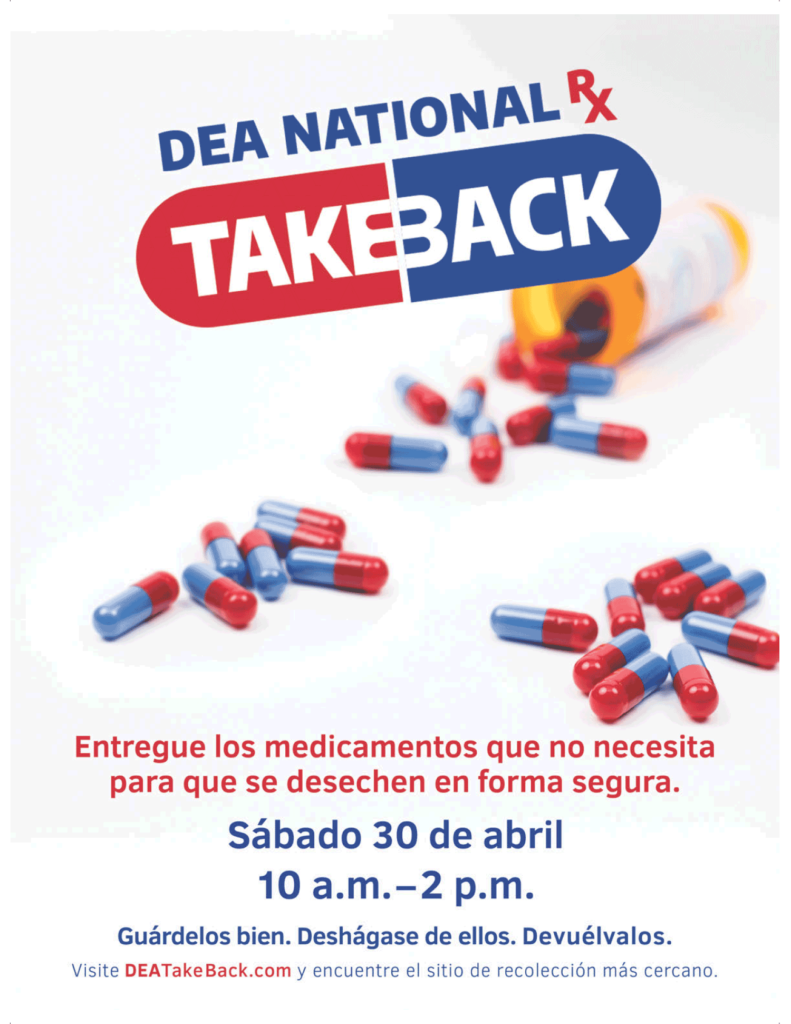
    Local communities, including Loveland, are participating in the DEA’s National Take Back Day: Saturday, April 30, from 10 AM until 2 PM.

    Loveland’s location is at the Safety Service Center located at 126 South Lebanon Road.

    Search for other locations near you:

  • Attorney General DeWine files lawsuit against opioid distributors for practices fueling opioid diversion

    Attorney General DeWine files lawsuit against opioid distributors for practices fueling opioid diversion

    Columbus, Ohio – Ohio Attorney General Mike DeWine today filed a lawsuit against four major prescription opioid distributors in Madison County Court of Common Pleas. The lawsuit alleges that the drug companies engaged in unsafe distribution practices that ignored their responsibility under law to provide effective controls against opioid diversion.

    “We believe the evidence will show that these companies ignored their duties as drug distributors to ensure that opioids were not being diverted for improper use. They knew the amount of opioids allowed to flow into Ohio far exceeded what could be consumed for medically-necessary purposes, but they did nothing to stop it,” said Ohio Attorney General Mike DeWine. “And much like the drug manufacturers who continue to fail to do the right thing, these distributors are doing precious little to take responsibility for their actions and help pay for the damage they have caused.”

    In 2016, the last year for which data is available, an average of more than 76 opioid doses was distributed for every man, woman, and child in Madison County.

    The four distributors which are listed as defendants include:

    • McKesson Corporation
    • Cardinal Health, Inc., and its subsidiaries
    • AmerisourceBergen Drug Corporation
    • Miami-Luken, Inc.

    The lawsuit alleges, among several counts, that the drug companies were negligent and created a public nuisance by using unsafe distribution practices and by irresponsibly oversupplying the market in and around Ohio with highly-addictive prescription opioids. The companies are alleged to have failed to act upon their responsibilities under both federal and Ohio law to stop such orders that would result in oversupply and report these suspicious orders to the United States Drug Enforcement Agency (DEA) and the Ohio Board of Pharmacy. The lawsuit also alleges that the companies should have known that the volume of opioids supplied far exceeded what could be responsibly used in markets in Ohio and would likely have contributed to the opioids being illegally diverted and abused. This behavior directly fueled the opioid epidemic Ohio is currently facing.

    In the lawsuit, Attorney General DeWine is seeking a number of remedies including punitive damages as well as compensatory damages for costs incurred by Ohio for its increased spending for healthcare, criminal justice, social services, and education. The lawsuit also seeks to enjoin the defendants from further improper conduct by complying with reporting requirements for suspicious orders and to undertake more complete reporting of suspicious orders to the DEA and the Ohio Board of Pharmacy as well as the Ohio Attorney General’s Office.

    The lawsuit was filed in Madison County, which has consistently had a higher number of opioids distributed to it than the statewide average. In 2016, the last year for which data is available, an average of more than 76 opioid doses was distributed for every man, woman, and child in Madison County, a rate that was 39% higher than the Ohio statewide average for that year.

    A copy of the lawsuit is available on the Ohio Attorney General’s website.