Tag: democracy

  • Today is the 4th of July, and each stripe and every star is there, messy as it is

    Today is the 4th of July, and each stripe and every star is there, messy as it is

    I smiled and thanked him. “Not sure how long it will last this time,” I said, “but we’ll see.”

    by Stefanie Badders Laufersweiler

    “Patriotism” has taken on so many different and sometimes wildly varying meanings and interpretations that even the word itself feels divisive, a point of constant contention. A contest rather than a coming together. Who is truly a patriot and who isn’t? Are you patriotic enough, or at all? Do your views, does your existence, insult the very idea of patriotism?

    I wish we could throw out the word and find another.

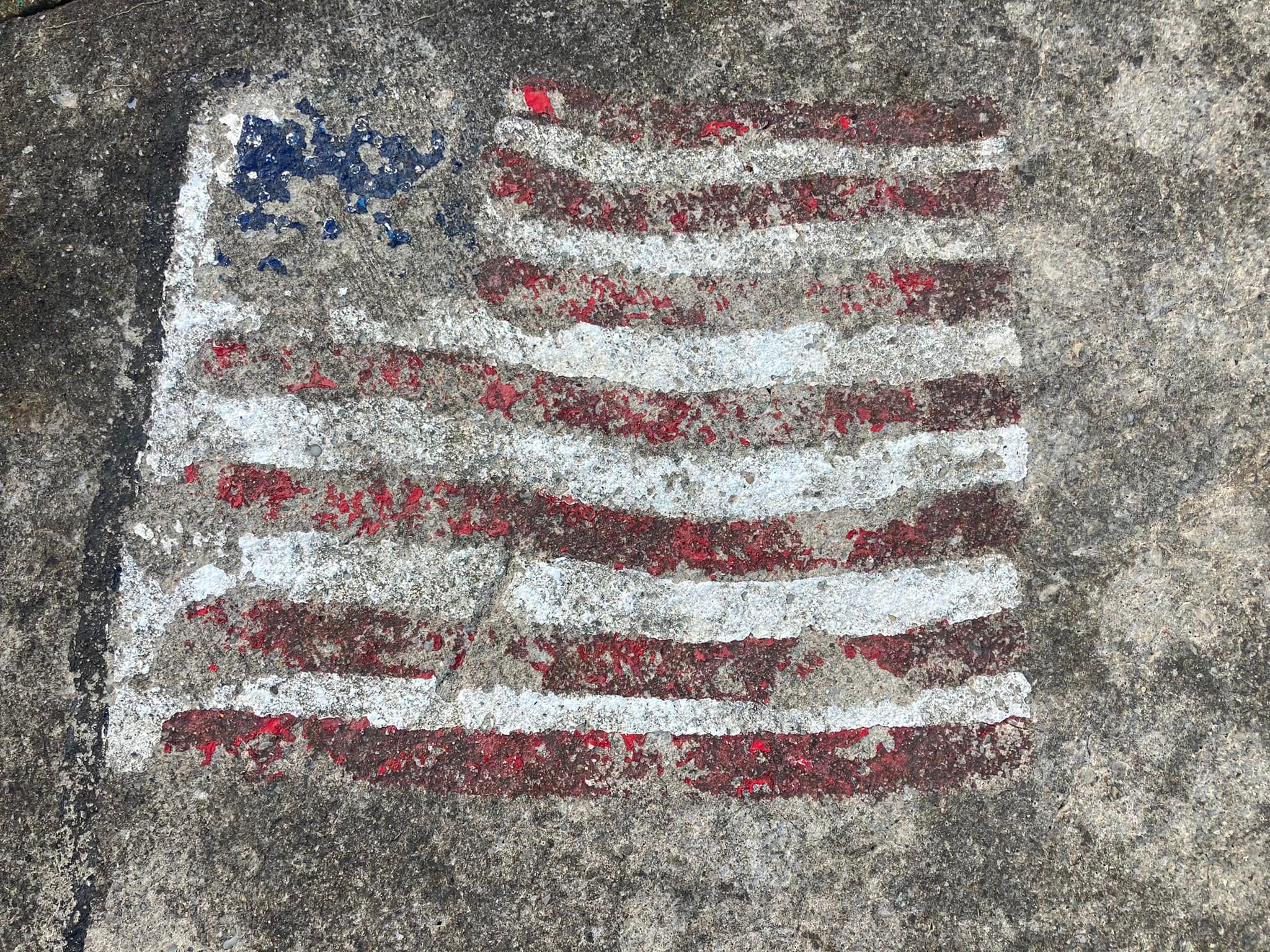
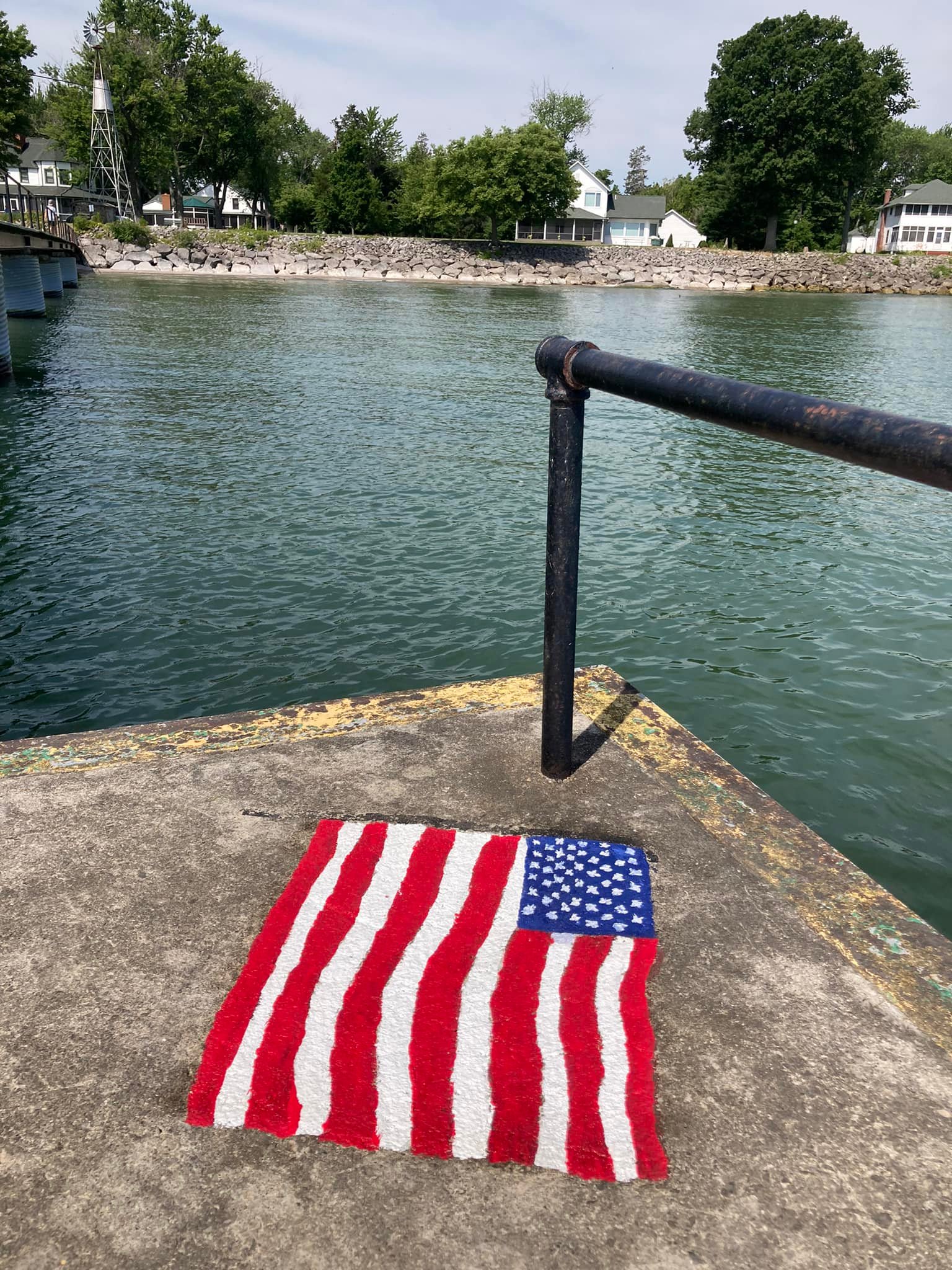
    It feels loaded, weaponized, and as worn out as this flag that someone painted at the edge of our dock. A few flags have come and gone in that same spot over the years. Fresh paint from some well-meaning fellow lake-goer always gives way to waves and wind that batter the concrete over time. But, someone always repaints it, eventually.

    Today is the 4th of July, and some (like me) woke up not really feeling it. For those reeling from recent events (take your pick), it feels disingenuous right now to celebrate independence, unity and democracy as they relate to America. For others, it feels more celebratory this year; for some, it may feel the same way it does pretty much every year. And we all manage to offend each other with our individual takes, long after the fireworks and barbecues are over.

    I still love this country, even when it’s hard. Even when I believe we have endless work to do to make it a better place. Even when it doesn’t feel all that united. Even when the weight of our differences, our inequities and our struggles feels incredibly heavy. Because, perpetually, underneath all of that is hope.

    I still love this country, even when it’s hard.

    Hope is what powers and empowers us. To keep trying, and talking. To show up always, or anyway. To set boundaries, but still leave a door cracked. To appreciate what’s been done that we can be proud of, while acknowledging there’s still much more to do, because this country is, if anything, a work in progress.

    Today I walked down to the dock with some brushes and got to work repainting that worn-out flag. I didn’t do it perfectly; the stars barely resemble stars, and the stripes run into each other in places. But each stripe and every star is there, messy as it is. It got me wondering who painted it in the first place, and who repainted it after that.

    As I packed up my painting supplies, I wished a father and his son good luck as their fishing lines hung over rail.

    “It looks great,” the dad told me, eyeing the fresh paint. “It’s needed to be done for a while.”

    I smiled and thanked him. “Not sure how long it will last this time,” I said, “but we’ll see.”

  • To the Mayor and City Council: 
Why Can’t We Vote?

    To the Mayor and City Council: 
Why Can’t We Vote?

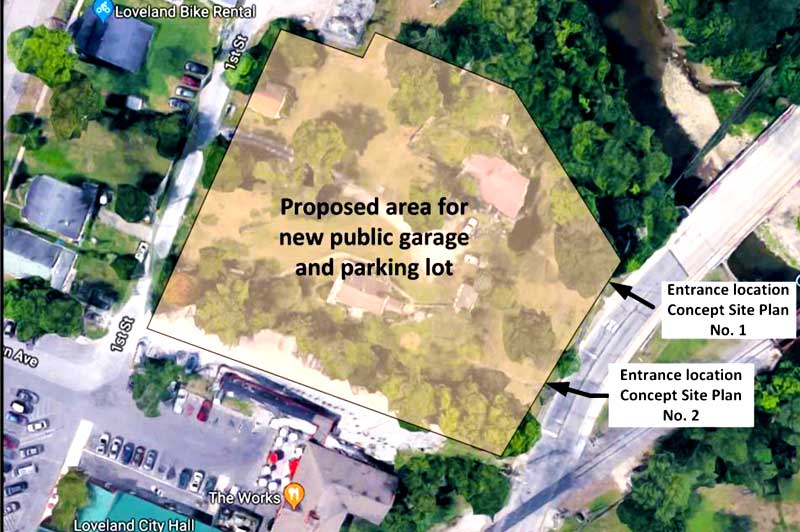
    The proposed parking garage for Historic Downtown as envisioned by City Hall.

    “A man without a vote is a man without protection.”

    Lyndon B. Johnson

    by Lauren Enda

    I retired here from the National Security Agency after 30 years of playing my part to protect the United States. I did not expect to continue that role in retirement, but in my opinion, democratic principles in Loveland are in trouble, especially with the proposed parking garage in Historic Downtown. The Mayor is on record denying residents the right to vote on whether to build the garage. I will not stay silent when this and other examples of abuse of power in my own city are happening. Below, I outline examples.

    In recent weeks, we have heard evidence about the mayor’s record of stifling free speech – both of ordinary citizens and of council members. Also, a Loveland resident captured a photo of a campaigner for the Mayor’s “endorsed block” who was removing campaign signs of their opponent on Election Day. Removing campaign signs subverts open, free and fair elections. Who authorized this tactic? Every Loveland resident should be concerned that this type of anti-democratic behavior is happening here. This behavior does not uphold democratic principles. These are two examples of democracy in trouble, but I will focus now on the garage. 

    Building a multi-story level parking garage in Loveland is very controversial. Many Loveland residents do not want it. The only official feedback we have about the garage is the recent election. Only one council member indicated he was opposed to the garage. And he won the most votes. The message is clear. Loveland voted against the garage. If the Mayor and the newly appointed Council go forward with the garage, they do so against the will of the people. 

    But does the will of the people matter in Loveland? Mayor Bailey clearly does not think so. During a council meeting on 11 February 2020, the mayor said, “Residents will not be voting on the garage.” When asked WHY residents were not allowed to vote, the mayor responded, “You vote on your elected officials and those are the decisions we have been elected to make.” The Mayor would like for residents to become mute after an election, however, an election does not provide the winning party free rein with taxpayer money. An election does not give the winning party carte blanche to permanently disfigure a town without the clear support of the people. An election does not give anyone a green light to plan a large, controversial project in virtual secrecy. 

    Below is video of resident Karen Hawkins asking the Council, and specifically, Mayor Kathy Bailey, about the inevitably of the parking garage being built in Historic Downtown Loveland and if the public will be allowed to vote on its construction.:

    Elected officials should uphold the will of the people. They should give citizens a voice, not deny their voice. Residents are not mute once they leave the polling booth. Quite the contrary. Loveland citizens should retain a voice in what is decided here – especially on the largest capital expenditure in the history of Loveland.

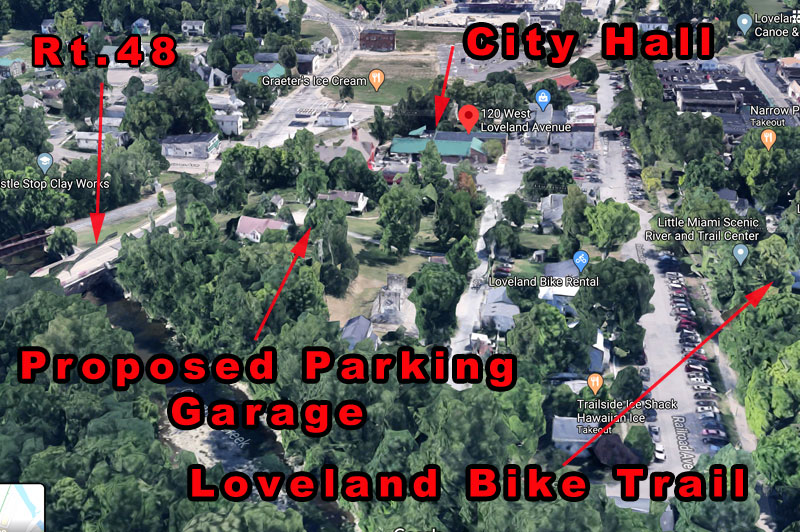
    The proposed parking garage for Historic Downtown as envisioned by City Hall.

    Protection from abuse of power at the federal level is enshrined in the Constitution by checks and balances between the executive, legislative and judicial branches. What safeguards against abuse of power does Loveland have?  Where are our checks and balances? How does Loveland’s electorate ensure our voices are heard? 

    Luckily, there is precedence that the council could use to uphold democratic principles – Council could determine the will of the people by submitting the garage to a vote. In 2007, Loveland was faced with a similar decision – whether or not to build a YMCA. Since it was an expensive project with strong opposing views, the council wanted citizen input and put in on a referendum. The voters went to the polls and voted the project down. Other municipalities have put similar proposals to a vote. This is how democracy can work when a Council respects the electorate and allows them a vote. Why is our Council not providing us the same opportunity?

    My recommendation to the new Council who support the garage is to let Loveland vote on it. The recent election suggests the public doesn’t want the garage. The burden lies with Council to convince the public that this project is in the best interests of the city and the taxpayers. Once appropriate data is gathered and shared with the public on why it is necessary and how much it will cost, then let us vote. Ignoring voter input from the recent election and restricting voter input for the next election is certainly not democratic. 

    It is not too late for the Council to make this right. Loveland goes to the polls again on May 3rd. To the new Council, this is your chance to show that you are listening to us, not developers or outside interests. Your responsibility to listen to the voters does not end once the election is over. That is when your responsibility begins. Let us vote.

  • Exercising your right to vote on Election Day

    Exercising your right to vote on Election Day

    Commentary by Michael Hamper III

    Michael Hamper III is a partner at Lemire & Hamper LLC, a firm in Jefferson, Ohio that focuses on the areas of bankruptcy, oil and gas, probate, real estate, and municipal law. Michael has served as the Solicitor for the Village of Jefferson since 2016 and has a passion for helping his local community that inspired him to run for office in 2018.

    Turn on the news or read a newspaper today and you will see political candidates and public officials making the rounds throughout the country trying to earn your vote. While the issues and formats are much different today, those candidates and public officials are participating in America’s time-honored tradition of democracy.

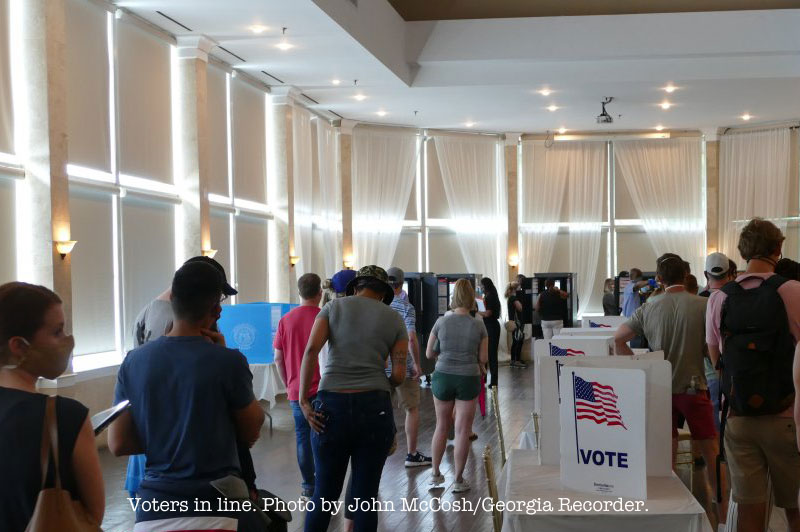
    When it comes to elections, both the voter and precinct election officials have responsibilities to protect voting rights. It is important to be prepared when you vote and to know what your rights are at the polling place in order to ensure a smooth Election Day.

    Voter Responsibilities

    In Ohio, you are generally eligible to vote if you are a citizen of the United States, a resident of Ohio for at least 30 days prior to the election in which you desire to vote, at least 18 years old on or before the next general election, and if you are not currently incarcerated for a felony conviction.

    You must be registered 30 days prior to Election Day to be able to vote. You can register to vote in future elections online at the Ohio Secretary of State’s website or visit your office, local Board of Elections office, Bureau of Motor Vehicles, or public library, among other places.

    In order to cast your ballot on Election Day, you must bring one of the following proofs of identification (note, though an option, it does not have to be a photo ID):

    • Current photo ID card with your name and address, such as a driver’s license or state ID;
    • Other government ID (but not a U.S. Passport or student ID as those do not prove current address);
    • S. Military ID card with your name and photo (address is not required); or
    • A form of identification that shows your name and address, such as a utility bill, bank statement, paycheck, government check or other government document, such as a benefits letter from the Social Security Administration or the Ohio Department of Job & Family Services.

    On Election Day, it is also your responsibility to show up at the correct precinct to vote. If you do not know this information, you can look it up on the Ohio Secretary of State’s website.

    Precinct Responsibilities: Protecting Your Rights

    If you are at the proper precinct, have registered to vote at least 30 days before the election and brought a proper form of identification (see list above), then you should have no problems at the polling place. However, it is still helpful to know some more details about your rights and the duty of precinct election officials to enforce them.

    If you are at the correct precinct and are eligible to vote, but you do not have the proper identification or are not on the poll list, then the precinct election official has the responsibility to allow you to vote by provisional ballot. You also have the right to vote by provisional ballot if you moved to a different precinct within Ohio in the 30 days before the election. A provisional ballot is like a regular ballot, except the board of elections will review the information for the voter and determine if the voter was eligible and should have their vote counted. Each provisional ballot voter must receive a provisional ballot notice that details how a voter can determine if their vote was counted and why or why not.

    There are several other voting rights that you should also be aware of, such as:

    • It is the responsibility of the polling place to allow you to vote as long as you are in line before the polls are scheduled to close.
    • You are not required to provide proof of citizenship in order to vote.
    • If you need assistance to vote due to blindness, disability or illiteracy, you are permitted to receive assistance from a person of your choice, so long as that person is not your employer, representing your union or a candidate whose name is on the ballot. You can also receive assistance from two precinct election officials (one from each political party).

    It is also important for you to know that polling places are neutral ground. This means there should be no election official wearing campaign materials, attire or paraphernalia. Election officials cannot advise, instruct or educate voters on candidates or the issues. They are there to ensure a fair, unbiased voting process, and it is not their goal to influence voters in any way. Voters should also follow these rules and should not wear campaign materials, attire or paraphernalia. Candidates and volunteers are also not permitted to campaign within 100 feet of the polling place, which is often marked by small American flags.

    What Should You Do if You Believe Your Rights Are Being Violated?

    If you believe you are being wrongfully denied the ability to vote, ask to speak to the voting location manager and they will work with you to fill out the form to report the issue (Form 10-U) and then have you vote by provisional ballot.

    If you believe there are violations of voting laws occurring at a polling place, whether by candidates, advocates, precinct election officials or voters, you should report the violations to the local board of elections.

    How an Attorney Can Help

    Should you run into problems, an attorney can help you determine whether your voting rights have been violated and to decide on an appropriate course of action. An attorney can also help you make contact with the appropriate local and state officials to notify them of how your rights were violated and seek to resolve the matter and correct the issues before the next election so that no other voter experiences the same hardship. An attorney will also be able to advise you of the different methods of reporting election complaints to the local board of elections, Ohio Secretary of State and United States Department of Justice.

    A Note on COVID-19 and Voting

    In-person voting may look different this year in response to COVID-19. Be sure to check your polling place in advance, as it may have changed. You may also be required to wear a face mask, and there will likely be markers to keep you distant from the other voters. If you have questions, be sure to check with your county’s Board of Elections. For more information about voting by an absentee ballot, read this article.


    Clermont County Board of Elections

    Hamilton County Board of Elections

    Warren County Board of Elections


  • Educators battle misinformation in run-up to November election

    Educators battle misinformation in run-up to November election

    File photo from Wikimedia Commons by Tom Arthur.

    We are living in the age of fake news. No, not the “deep state is out to get the president” kind. The real “fake news” is all around us, spreading partially by word of mouth and at certain political rallies, and much more so on Facebook and Instagram, as people pass along rumors and myths that fit their world view. 

    So what?  

    Scott DiMauroScott DiMauro, a high school social studies teacher from Worthington, was elected President of the Ohio Education Association in 2019 after having served as vice president for six years. Over his 29-year career as an educator, Scott has worked to provide students the critical thinking and decision-making skills they need to be successful citizens in our democratic society. He has likewise advocated for students, educators and strong public schools at all levels of his union.

    Well, for one thing, it is frustrating. As educators, we teach facts — the laws of physics, the branches of government, grammar rules, math formulas — things that don’t change, no matter how you feel about them. More importantly, we teach critical thinking. It is a reflection of the era in which we live that the children in our classrooms can separate fact from fiction better than some adults. 

    The widespread misinformation circulating among adults is threatening the foundation of our democracy. There is a chance a considerable number of Americans will not vote in the coming election or will cry foul over the results because of lies they have read online.  

    To be clear, the long-standing method of absentee voting by mail is safe and secure, and any attempt to say otherwise is misinformation.

    In one recent Facebook post I came across, a well-respected community leader falsely claimed that a) there was no way of ensuring that someone who votes by mail can’t also vote in person, b) ballots sent to wrong addresses based on voter records could be cast by the current resident, and c) someone who receives a ballot they shouldn’t have could cast a second vote for their candidate of choice if that candidate was behind in votes. 

    None of this is true. 

    Ohio keeps track of who requests absentee ballots and those voters are not allowed to vote on Election Day. If you requested an absentee ballot and still show up to vote in person — whether because you never received your

    The widespread misinformation circulating among adults is threatening the foundation of our democracy.

    ballot, never mailed your ballot or, as some would claim, you’re trying to vote a second time in the same election — you would need to cast a provisional paper ballot which goes through layers of verification before it is counted after Election Day. Any attempt to vote twice will be caught and that person would likely face prosecution.

    Procedures in Ohio prevent ballots from being sent to the wrong addresses. Voters must submit an absentee ballot application by mail or in-person at their local board of elections. The absentee ballot application requires voters to provide their address, as well as their name, date of birth, and either their driver’s license number or the last four digits of their Social Security number. Each application is compared with voter registration records to ensure the person requesting the ballot is who they say they are and is eligible to vote. 

    The notion that someone would cast a second ballot based on the current vote tally is ludicrous. While absentee ballots can be scanned into the system before Election Day in Ohio, they are not tabulated until polls close at 7:30 p.m. on Nov. 3. Absentee ballots must be postmarked by Nov. 2.

    Bottom line: For as long as there has been absentee voting, there have been safeguards in place to prevent fraud.

    It is worth noting, though, that ballots sent by the correct deadline will be accepted and counted up to ten days after Election Day to allow for delivery time. Because of the high volume of absentee ballots expected to be cast this year, we probably will not receive the full election results until at least mid-November. This does not mean the final, certified tally is not legitimate; it simply means every legitimate vote counts. 

    Bottom line: For as long as there has been absentee voting, there have been safeguards in place to prevent fraud. Ohio has had no-fault absentee voting since the 2006 Gubernatorial Election, and members of both political parties have enjoyed using it since then. Incidents of voter fraud are exceedingly rare to the point of being essentially non-existent in Ohio, despite the calumny on the internet claiming otherwise.  

    What is true is that there will be more absentee ballot applications and returns going through the mail this fall than usual because of safety concerns amid the global pandemic. Couple that with operational changes handed down from a political appointee who has vowed to run the U.S. Postal Service like a business, rather than the public service it was always intended to be, and it’s not hard not to envision delivery delays this election season.  

    That makes it absolutely critical that you request and return your absentee ballot as early as possible, if you intend to vote by mail. 

    You can apply now to receive a ballot in the first batch of mailings, which will go out Oct. 6. Fill it out and return it right away, taking care to fully complete the information on the ID envelope, which will again be compared with voter registration records to ensure no nonsense has occurred. Ballots can be returned by mail or in secure drop boxes provided by every county board of elections the state. 

    I’m alarmed by the current misinformation epidemic that will dissuade some Americans from casting their ballots and the resulting impact that will have on our system of government. 

    Ohio will also offer four weeks of early in-person voting in every county, for those who do not want to contend with the process by mail but want to avoid long Election Day lines that could be COVID-19 hotbeds.

    Ohio’s educators care deeply about ensuring free and fair elections. As a social studies teacher with three decades of experience, I’m alarmed by the current misinformation epidemic that will dissuade some Americans from casting their ballots and the resulting impact that will have on our system of government. 

    No matter how you choose to vote – absentee by mail, early in-person, or on Nov. 3 — the most important thing is that you cast your ballot. Our democracy depends on it.


    Check out these two voter guides recently published by Loveland Magazine with information about requesting absentee ballots. Keep in mind that Ohio officials are recommending you stay ahead of these absolute dates to ensure your mail coming to and from the post office is delivered in time for your vote to count.

    Sidebar: What You Need to Know to Vote This Year

    Loveland Area November Voting Guide: What you need to know to…

  • We thought that all this talk about us being the enemy of the people would be dismissed for the silliness that it is

    We thought that all this talk about us being the enemy of the people would be dismissed for the silliness that it is

    An Editorial

    We’ve been complacent

    David Miller is the Publisher of Loveland Magazine

    We thought everybody knew how important a free press was to our world and that all this talk about us being the enemy of the people would be dismissed for the silliness that it is.

    However, it took President Trump only 6-1/2 minutes into his one-hour long campaign speech last night in Warren County before launching into his familiar tirade about the “fake” news media. When his supporters began booing after he wagged a disapproving finger at the press cameras and reporters, he proudly grinned his supportive endorsement.

    But the reckless attacks have continued, instigated and encouraged by our president.

    The reckless attacks on the press have continued, instigated and encouraged by our president. 

    When the leader of the free world works to erode the public’s trust in the media, the potential for damage is enormous, both here and abroad. We once set an example of free and open government for the world to follow. Now those who seek to suppress the free flow of information are doing so with impunity.

    The time has come for us to stand up to this dangerous taunting. The role journalism plays in our free society is too crucial to allow this degradation to continue.

    We aren’t the enemy of the people. We are the people.

    We aren’t the enemy of the people. We are the people. We aren’t fake news. We are your news and we struggle night and day to get the facts right.

    On bitter cold January nights, we’re the people’s eyes and ears at City Hall and school board meetings. We tell the stories of our communities, from the fun of a street fair, our successful school children, to the despair a family faces when a loved one dies.

    We are always by your side. We shop the same stores, attend the same churches, and hike the same trails. We struggle with daycare, utility bills, and worry about paying for retirement. 

    In our work as journalists, our first loyalty is to you. Our work is guided by a set of principles that demand objectivity, independence, open-mindedness and, the pursuit of the truth. We make mistakes, we know. There’s nothing we hate more than errors but we acknowledge them, correct them and learn from them.

    Our work is a labor of love because we love our community.

    Our work is a labor of love because we love our community and believe we are playing a vital role in our democracy. Self-governance demands that our neighbors need to be well-informed and that’s what we’re here to do. We go beyond the government issued press release or briefing and ask tough questions. We hold people in power accountable for their actions. Some think we’re rude to question and challenge. We know it’s our obligation. We strive to always give the ordinary citizen the last word.

    People have been criticizing the press for generations. We are not perfect. But we’re striving every day to be a better version of ourselves than we were the day before.

    The problem has become so serious that newspapers across the nation are speaking out against these attacks in one voice this week on their editorial pages.

    That’s why we welcome criticism. But unwarranted attacks that undermine your trust in us cannot stand. The problem has become so serious that newspapers across the nation are speaking out against these attacks in one voice this week on their editorial pages.

    As women’s rights pioneer and investigative journalist Ida B. Wells wrote in 1892: “The people must know before they can act and there is no educator to compare with the press.”


    This Editorial has been adapted from an editorial by Judy Patrick, VP of Editorial Development for the New York Press Association that she releases to celebrate National Newspaper Week.


  • President missed an opportunity to do something about Russia: Brown statement on President Trump’s meeting with President Putin

    President missed an opportunity to do something about Russia: Brown statement on President Trump’s meeting with President Putin

    WASHINGTON, D.C. – U.S. Senator Sherrod Brown (D-OH) today released the following statement on President Trump’s meeting with Russian President Vladimir Putin. During that meeting, President Trump refused to publically condemn Moscow’s interference in the 2016 elections – despite the U.S. intelligence community’s resounding agreement that Russia continues to attack America’s critical infrastructure.

    “The intelligence experts we trust to keep America safe have said that Russia continues to threaten our democracy and our critical infrastructure, and the President missed an opportunity to do something about it,” Brown said. “The Ukrainian community in Ohio knows all too well the dangers of unchecked Russian aggression. We must demand Russia turn over the spies who hacked our election and show Putin we will not put up with threats to our infrastructure that undercut our democratic institutions.”

    Brown joined a group of top Democratic Senators last week urging President Trump to cancel his meeting with Putin if he was not prepared to press the Russian President on his election meddling and push him to hand over the 12 recently indicted Kremlin intelligence officials.


    Loveland Sweets – Fine Candies

    Loveland Sweets is a purveyor of hand-crafted chocolates, caramels, marshmallows, and ice creams. Our house-made candies are prepared in small batches.