Tag: Department of Education and Workforce

  • Ohio superintendent says state board of education may not make payroll by summer

    Ohio superintendent says state board of education may not make payroll by summer

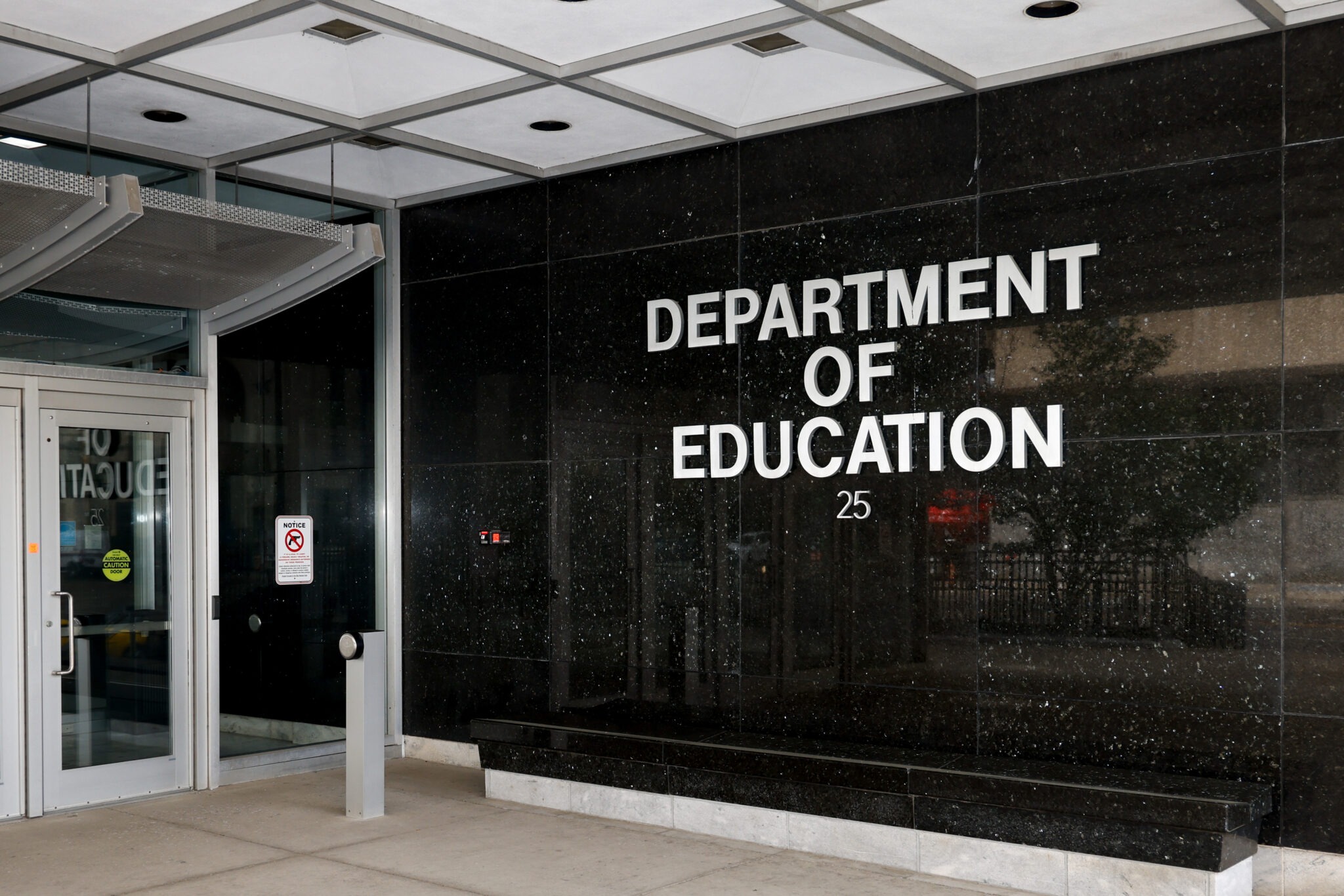
    The Ohio Department of Education and Workforce in Columbus, Ohio. (Photo by Graham Stokes for Ohio Capital Journal. Republish photo only with original story.)

    Newest superintendent’s goal target responsibilities of the board, rebuilding of relationships

    BY:  – JANUARY 12, 2024 – Ohio Capital Journal

    Pointing directly to changes made in the Ohio legislature’s most recent budget, Ohio’s new superintendent of public instruction said the State Board of Education is facing real funding issues.

    “What we face, in terms of a budget deficit right now, is a clear and present danger for our ability to do the roles that we’ve been assigned to do,” Superintendent Paul Craft told the board at his first monthly meeting, a mere six days into his tenure.

    The deficit was spelled out as part of an introduction of goals the superintendent has as he begins his job, and as the job and the role of the state board changes under the new Department of Education and Workforce. As superintendent, Craft also serves as secretary for the board.

    To stem the funding issues, which Craft said amount to a shortfall of about $2 million for a $10 million total budget in the next fiscal year, he and board members will need to work with legislative partners “pretty quickly.”

    “As we get into that June timeframe, we’ll probably not be able to make payroll,” Craft told the board. “That’s worrisome.”

    He added that staffing issues could only get worse as the year goes on, and the board will continue its struggle to maintain current staff.

    “There’s not a chance to cut our way through this and still do the educational licensure and educational professionalism functions with which we’ve been tasked,” he said.

    Board member Meryl Johnson asked Craft directly if the budget bill, House Bill 33, “left us without enough funding to do our job.”

    “Yeah,” Craft responded. “And again, that will happen from time to time. The governor had a good patch in (the budget) that would have gotten us through at least, I would say, three years. That was in the House version and it disappeared in the Senate version.”

    To Johnson, the lack of adequate funding the board is seeing indicates state leaders who supported the changes that eliminated state board roles and authorities “want to put us out of business.”

    Craft’s other proposed goals include building or rebuilding relationships between the state board and other “educational stakeholders” in an effort “to get as many interactions as we can around educational discussions … so that we continue to be viewed as a key component to the educational infrastructure in this state.”

    “So those roles that we are given, we need to make sure we’re doing those in such a way that our districts and our other educational stakeholders say ‘they’ve got their stuff together, they’re doing what we need to support our staff and students throughout the state of Ohio,’” Craft said.

    The superintendent also pledged to finish his dissertation, which he said was interrupted by the pandemic and its impact on educational data he studied. But board member John Hagan said that goal could stand to be back-burnered.

    “As far as your continuing education, I would hope that that’s the lowest priority on your list, because I think you’ve got a lot to do here and probably won’t have a lot of spare time,” Hagan said.

    One of the many other things on the superintendent’s list is a proposal by the Ohio Department of Administrative Services to move the state board to an office within the Ohio Department of Agriculture, located in Reynoldsburg.

    While the cost of housing the board downtown versus moving to the A.B. Graham Building is only marginally different, according to Craft, the losses are more professional than financial.

    “I think the loss we would get in terms of no longer being co-located with the other educational stakeholders in the state of Ohio, I can’t support from an operational perspective what the Department of Administrative Services would like to do with the team,” Craft said.

    The superintendent said the board would probably need intervention from “some other state actors” to push back against the proposed move, along with the leveraging of relationships from the board members as well.

    There was agreement among the members that the move did not seem necessary, nor were they in favor of it. The opposition brought on a resolution asking the director of the state DAS to appear in person before the board and explain the move.

    “I see no rationale that makes any sense to move out there,” said member Walt Davis. “For us to be located out there is the Gulag, frankly, and I’m strenuously opposed to it.”

    The state board’s next monthly meeting is scheduled for Feb. 12.


    Susan Tebben
    SUSAN TEBBEN

    Susan Tebben is an award-winning journalist with a decade of experience covering Ohio news, including courts and crime, Appalachian social issues, government, education, diversity and culture. She has worked for The Newark Advocate, The Glasgow (KY) Daily Times, The Athens Messenger, and WOUB Public Media. She has also had work featured on National Public Radio.

    MORE FROM AUTHOR

  • Gov. DeWine taps Steve Dackin as head of Ohio K-12 education, despite previous ethics investigation

    Gov. DeWine taps Steve Dackin as head of Ohio K-12 education, despite previous ethics investigation

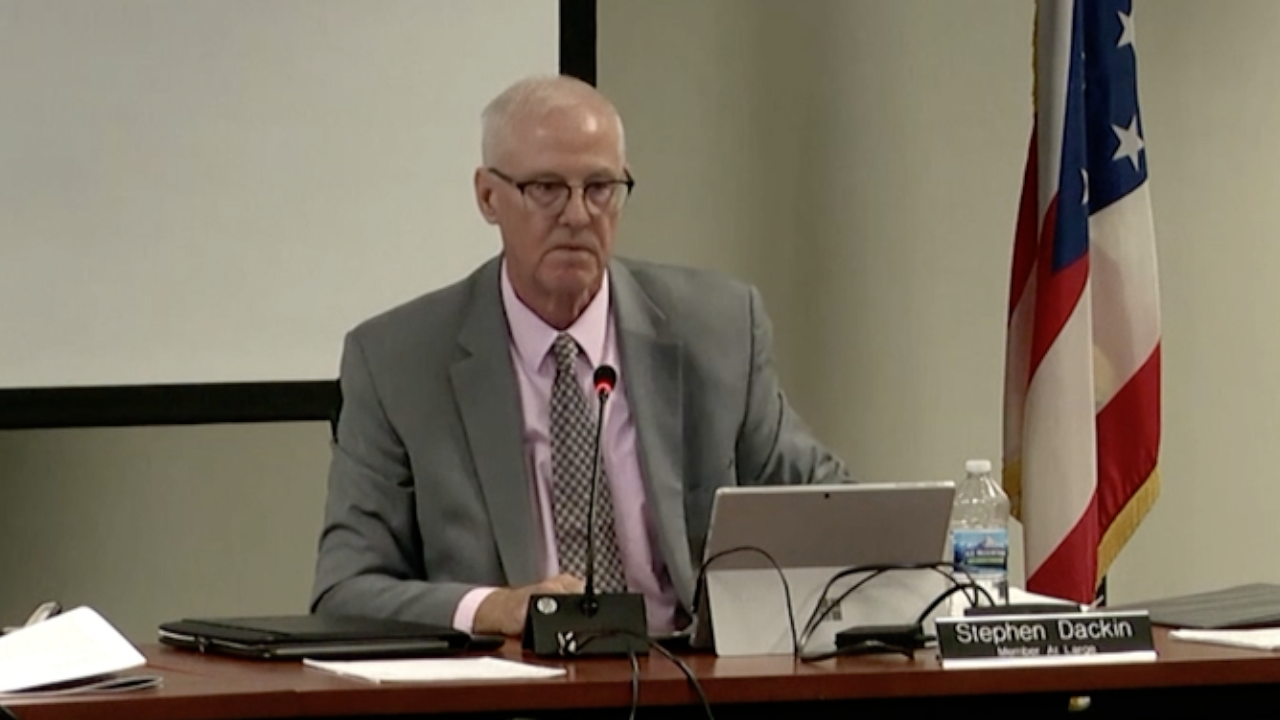
    Steve Dackin. Photo from The Ohio Channel.

    BY:  Ohio Capital Journal

    Ohio Gov. Mike DeWine nominated Steve Dackin to lead the new Department of Education and Workforce — despite Dackin’s previous ethics investigation during his less than two-week stint as state superintendent.

    Dackin previously served as the vice president of the Ohio State Board of Education and had access to the job applications for the state superintendent position in 2022 after Paolo DeMaria retired in 2021.

    In February 2022, Dackin resigned from the Ohio State Board of Education days before the application deadline and applied for the state superintendent position.

    The State Board of Education voted Dackin for state superintendent on May 10, 2022, and he assumed office on May 23, 2022. In between those 13 days, the Ohio Ethics Commission opened an investigation into Dackin.

    He resigned 11 days later on June 3, 2022, and signed a settlement with the Ohio Ethics Commission to avoid criminal prosecution in October 2022. Dackin did not take any compensation for the 11 days he was in charge of the Ohio Department of Education.

    “Dackin has a broad base of experience that will benefit Ohio’s continued efforts to create a transformative education system that provides the resources and support for students and serves as a pipeline of talented young people to Ohio employers, colleges, universities, and career and technical education centers, helping every Ohioan live up to their God-given potential,” DeWine said in a statement Thursday afternoon announcing his pick.

    The Director of the Department of Education and Workforce must be confirmed by the Ohio Senate.

    DeWine’s appointment comes weeks after a Franklin County Common Pleas Court Judge denied a preliminary injunction request to stop the transfer of power of K-12 education from the state school board to the governor’s office, which allowed the Ohio Department of Education to became the Ohio Department of Education and Workforce.

    This created a cabinet-level director position and puts the department under the governor’s office.

    The conservative think tank Fordham Institute’s Vice President for Ohio Policy and Advocacy Chad Aldis praised DeWine’s appointment of Dackin.

    “Steve Dackin is a widely respected leader and educator who has served Ohio students for decades in a wide variety of roles including as a teacher, principal, and superintendent,” Aldis said in a statement.

    The business coaltion Ohio Excels also celebrated DeWine’s appointment.

    “We were proud to support him before and praise the governor for picking this talented, committed education leader to guide this new department at this critical time,” Lisa Gray, president of Ohio Excels, said in a statment.

    Dackin was superintendent of Reynoldsburg City Schools from 2007-2014 and then worked as the superintendent of school and community partnerships for Columbus State Community College until December 2021.

    He earned his undergraduate degree in history from Ohio Northern University and his master’s in educational administration from the University of Dayton.

    Follow OCJ Reporter Megan Henry on Twitter.


    Megan Henry
    MEGAN HENRY

    Megan Henry is a reporter for the Ohio Capital Journal and has spent the past five years reporting in Ohio on various topics including education, healthcare, business and crime. She previously worked at The Columbus Dispatch, part of the USA Today Network.

    MORE FROM AUTHOR

  • Ohio education overhaul falls short

    Ohio education overhaul falls short

    BY: SUSAN TEBBEN – Ohio Capital Journal

    The Ohio House did not agree to Senate amendments to a bill banning trans athletes from participating in youth sports based on their gender identity, leaving behind more than a thousand pages of state education overhauls loaded in at the last minute.

    House Bill 151, with language from Senate Bill 178 attached to it was voted down in the House by a 46-41 vote after 2 a.m. on Thursday morning following an entire day of hemming and hawing.

    The education overhaul is not completely done yet. Even if lawmakers decline to move forward in the current General Assembly, Senate President Matt Huffman previously pledged to bring the bill back in the new year, with a General Assembly that will have an even larger GOP supermajority.

    The education overhaul part of the bill, which entered the House as a standalone this week after passing the Senate last week, would have restructured the Ohio Department of Education into the Department of Education and Workforce, and reduced the state Board of Education roles down to superintendent searches, teacher conduct and licensure issues.

    “The system is not working, it doesn’t prioritize our students,” said bill sponsor state Rep. Don Jones, R-Freeport.

    The department, and most of the roles currently under the state board of ed and state superintendent’s purview would have been put under the governor’s office umbrella, according to the bill.

    The State Board of Education put off hiring a search firm for the next superintendent due to concerns about budgetary changes SB 178 might bring and fears the legislative uncertainty might “pollute” the marketplace of candidates.

    The bill also received pushback from public school education advocates and some homeschooling groups. The Ohio Education Association and the Ohio Federation of Teachers both spoke against the bill in committee hearings, not only decrying claims that the ODE was unresponsive and inaccessible, but also criticizing the pace at which the bill came through the General Assembly.

    SB 178 sponsor state Sen. Bill Reineke, R-Tiffin, said attempts to redo the state agencies have been years in the making and urgency is needed to help improve student success.

    “I’m not looking at growing an organization; I’m looking at making it more efficient and more structurally purposeful,” Reineke said on Tuesday as he defended his bill in House Primary and Secondary Education Committee.

    It was up to that committee to pass the standalone bill over to the House for a full vote, something that didn’t happen in a Tuesday night committee that went until about 9 p.m., or a Wednesday morning meeting that recessed before the House’s session began, and didn’t return even after multiple recesses in that body.

    When committee chair state Rep. Gayle Manning, R-North Ridgeville, was asked the status of the bill or the committee at about 9 p.m. Wednesday night, she said she was waiting to see what the GOP caucus was thinking on the matter.

    Amidst the day-long discussion, the Senate decided to take matters into its own hands, inserting SB 178 into HB 151, originally meant to be a teacher mentorship bill that was made to include a ban on athletes competing on teams based on their gender identity.

    The Senate also tried to slide in language from a bill that would have banned COVID-19 vaccine mandates for K-12 students.

    After the additions, HB 151 passed on a party-line 23-7 vote in that chamber, moving it back to the House.

    The controversial part of HB 151 was added in another late-night move in June, when HB 151 was up for passage in the House before moving on to the Senate. The trans athletes part of the bill no longer includes a requirement for genital inspections of children suspected of being transgender, something Senate President Matt Huffman previously said he wouldn’t support.

    Verification of a student’s gender will be done using a birth certificate in the new version of the bill.

    The bill’s sponsor, state Rep. Don Jones, R-Freeport, wouldn’t speak on the trans athletes part of the bill when he introduced the bill in the Senate, but on the House floor he stood in support of it.

    “This bill only applies to K-12 education, so our daughters in grades kindergarten through 12 will not have to compete with biological males in primary and secondary schools,” Jones said.

    The bill would impact very few Ohio students and policies are already in place to keep equality in youth sports, causing LGBTQ advocates, education leaders and the Ohio High School Athletic Association to stand against the bill as unnecessary.

    The original language of the bill would make changes to the Ohio Teacher Residency Program and teacher mentorship.

    Democrats pushed hard for the House not to support the bill as amended, saying stakeholders needed to be involved and more time was needed to find out the impact of it.

    State Rep. Phil Robinson, D-Solon, continued an argument made by critics of the bill that the volume of the bill didn’t get the proper review by legislators or individuals in Ohio education.

    “Passing something at 1 o’clock or 2 o’clock in the morning that no one’s read and no one’s seen … is not the way to change education in the state of Ohio,” Robinson said.

    State Rep. Jeff Crossman, D-Parma, said the bill was “moving deck chairs on a sinking ship” by addressing issues that don’t solve the true problems in Ohio education.

    State Rep. Juanita Brent, D-Cleveland, said the bill would impact economic success in Ohio by making conferences question coming to the state and businesses wonder whether or not to bring employees to the state. She also said passage of the bill in the middle of the night would send a message to current Ohio voters as well.

    “We’re telling Ohioans who elected us that they can’t be seen in this process,” Brent said.