Tag: Department of Health and Human Services

  • Trump disbands health equity panel examining Medicare and Medicaid

    Trump disbands health equity panel examining Medicare and Medicaid

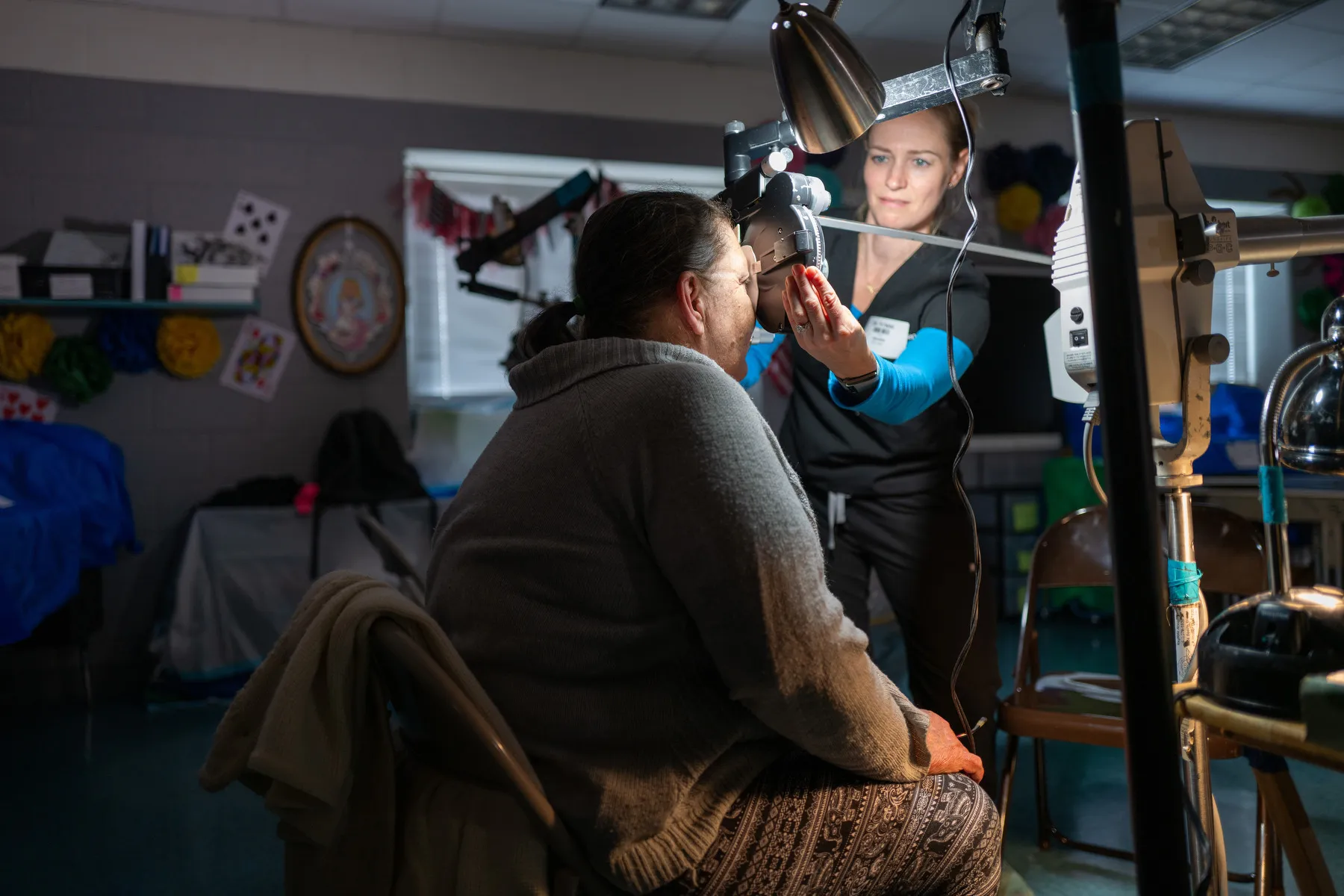
    A patient takes a vision test at a Remote Area Medical (RAM) mobile clinic in Virginia on October 7, 2023. (Spencer Platt/Getty Images)

    Read Amanda Becker’s Loveland connection in her Bio below.

    This story was originally reported by Amanda Becker of The 19th. Meet Amanda and read more of her reporting on gender, politics and policy.

    ________________

    The committee was designed to reduce barriers to care for people of color, LGBTQ+ people and rural Americans.  A new executive order deemed it “unnecessary.”

    President Donald Trump has directed the Centers for Medicare and Medicaid Services (CMS) to disband a committee to identify and reduce systemic barriers that people of color, LGBTQ+ people and rural Americans encounter when trying to access government health care programs.

    The directive came as part of an executive order on “commencing the reduction of the federal bureaucracy.”

    Trump directed the heads of relevant agencies to disband within two weeks entities that include the Health Equity Advisory Committee at CMS, the Advisory Committee on Voluntary Foreign Aid at the U.S. Agency for International Development, the Community Bank Advisory Council at the Federal Deposit Insurance Corporation, and Secretary’s Advisory Committee on Long COVID at the Department of Health and Human Services.

    “It is the policy of my Administration to dramatically reduce the size of the Federal Government,” Trump wrote in the order. “This order commences a reduction in the elements of the Federal bureaucracy that the President has determined are unnecessary.”

    The establishment of the CMS Health Equity Advisory Committee was prompted by an executive order “On Advancing Racial Equity and Support for Underserved Communities Through the Federal Government” that Democratic President Joe Biden signed on his first day in office.

    Xavier Becerra, the head of the Department of Health and Human Services under Biden, published the committee’s charter in July 2024, with the stated goal of making “recommendations on the identification and resolution of systemic barriers in the CMS programs that hinder access and quality for beneficiaries and consumers.”

    The committee’s purview included Medicare, the government health insurance program for the elderly and disabled; Medicaid, the government health insurance program for lower-income Americans; the Children’s Health Insurance Program (CHIP) for children from low-income families; and the marketplace of health insurance programs established by the Affordable Care Act. Its mandate included addressing systemic barriers to access that included structural racism, which Trump labeled a “divisive concept” during his first administration.

    A December 2024 notice in the Federal Register soliciting nominations for committee members said that the panel would, “focus on health disparities in underserved communities … such as but not limited to Black, Latino, and Indigenous and Native American persons, Asian Americans and Pacific Islanders and other persons of color; members of religious minorities; lesbian, gay, bisexual, transgender, and queer persons; persons with disabilities; persons who live in rural areas; and persons otherwise adversely affected by persistent poverty or inequality.”

    Health disparities in underserved communities are well documented, as are disparities in accessing medical care.

    Research shows that Type 2 diabetes, a condition that often worsens with age and requires frequent doctor’s visits, impacts Black and Latinx Americans at higher rates than White Americans. Rates are also higher in rural areas, with Alabama, Kentucky, Georgia and West Virginia reporting some of the highest. An April 2024 CMS report showed that Indigenous and Black Americans in particular faced barriers to accessing care for diabetes and related conditions.

    Non-White Americans with kidney failure are referred for transplants at lower rates and wait longer for them when they are. A November 2024 CMS report showed that rural patients were at a particular disadvantage when trying to access medical care for kidney disease.

    In the first month of his second presidency, Trump has focused on reducing the size of the federal government and dismantling diversity, equity and inclusion (DEI) and accessibility (DEIA) efforts within federal agencies. Civil rights groups on Wednesday sued the Trump administration over a series of DEI-related executive orders, arguing they were unconstitutional because Trump both exceeded his presidential authority and because the orders discriminated against Black and transgender Americans.

    Researchers have warned that the DEI orders are so broad that they could hamper efforts to study race- and gender-identity-related disparities across a variety of subjects, including health care.

    A list of diversity-related words that are allegedly banned from being used by federal agencies has been circulating in Washington. Reuters reported Thursday that some scientists at the Food and Drug Administration (FDA) had been told to stop using the words “woman,” “disabled” and “elderly” in external communications. The White House told the newswire that the agency had misinterpreted Trump’s executive orders.

    Trump said in an interview with Fox News this week that “Medicare, Medicaid, none of that stuff is going to be touched.” Hours later, he endorsed a GOP budget proposal in the House of Representatives that would gut Medicaid funding. A White House spokesperson told Politico that “the Trump administration is committed to protecting Medicare and Medicaid while slashing the waste, fraud, and abuse within those programs.”
  • Trump taps vaccine skeptic RFK Jr. to lead Department of Health and Human Services

    Trump taps vaccine skeptic RFK Jr. to lead Department of Health and Human Services

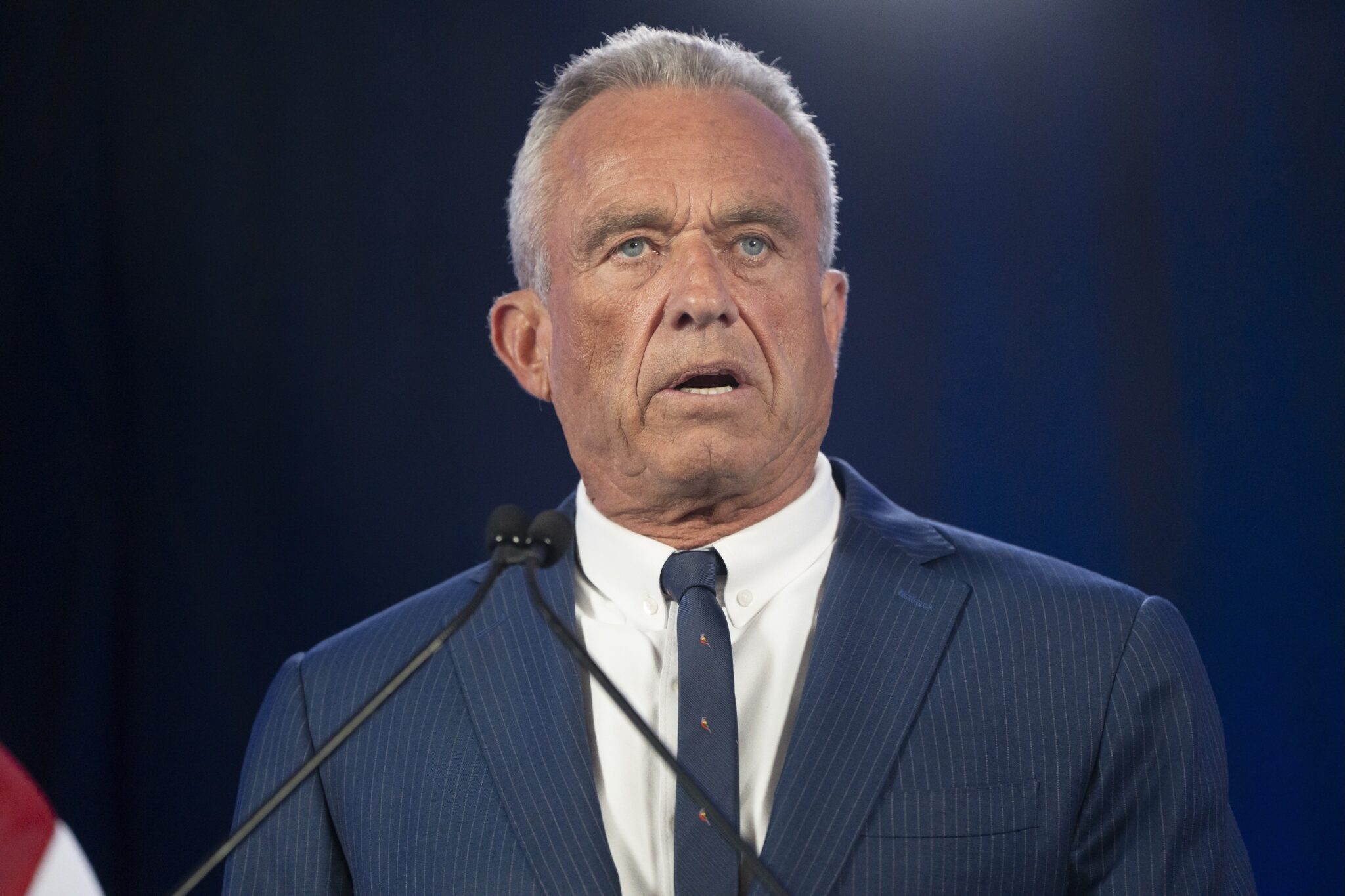
    Robert F. Kennedy Jr. gives remarks at the Renaissance Phoenix Downtown Hotel on Aug. 23, 2024 in Phoenix, Arizona. (Photo by Rebecca Noble/Getty Images)

    By:  Ohio Capital Journal

    WASHINGTON — President-elect Donald Trump announced Thursday he plans to nominate Robert F. Kennedy Jr. to head the Department of Health and Human Services, another controversial candidate who could face a challenging confirmation process in the U.S. Senate given his non-scientific beliefs about public health, including his anti-vaccine stance.

    “I am thrilled to announce Robert F. Kennedy Jr. as The United States Secretary of Health and Human Services (HHS),” Trump posted on social media. “For too long, Americans have been crushed by the industrial food complex and drug companies who have engaged in deception, misinformation, and disinformation when it comes to Public Health.

    “The Safety and Health of all Americans is the most important role of any Administration, and HHS will play a big role in helping ensure that everybody will be protected from harmful chemicals, pollutants, pesticides, pharmaceutical products, and food additives that have contributed to the overwhelming Health Crisis in this Country.”

    HHS receives about $116.8 billion in discretionary federal funds and about $1.7 trillion in mandatory spending each year and houses several big-name public health agencies, including the Administration for Strategic Preparedness and Response or ASPR, the Centers for Disease Control and Prevention, the Centers for Medicare & Medicaid Services, the Food and Drug Administration, the National Institutes of Health and the Substance Abuse and Mental Health Services Administration.

    Kennedy ran in this year’s presidential election as an independent candidate, often repeating inaccurate information about vaccines and spreading other conspiracy theories about public health.

    He has no background in science, research, or medicine. He graduated from Harvard University before going on to receive a law degree from the University of Virginia Law School.

    He pleaded guilty to felony heroin possession in Rapid City, S.D., in February 1984, before receiving two years of probation, which ended a year early. He volunteered with the Natural Resources Defense Council as part of that probation.

    Kennedy spent much of his career as an environmental lawyer and published several books.

    After ending his own presidential bid this year, Kennedy endorsed Trump and campaigned frequently for him.

    Criticism of the nomination began quickly after news broke Thursday, though far-right Republicans are expected to celebrate the nomination.

    Lisa Gilbert, co-president of the watchdog nonprofit organization Public Citizen, released a written statement saying, “Kennedy is a science-denying, morally-bankrupt conspiracy theorist who will endanger people’s lives if placed in a position of authority over health. The U.S. Senate should unanimously reject this nomination.”

    Louisiana Republican Sen. Bill Cassidy, ranking member on the Health, Education, Labor, and Pensions Committee, released a written statement that he’s interested in learning more about Kennedy during the confirmation process.

    “RFK Jr. has championed issues like healthy foods and the need for greater transparency in our public health infrastructure,” Cassidy wrote. “I look forward to learning more about his other policy positions and how they will support a conservative, pro-American agenda.”

    Washington state Democratic Sen. Patty Murray, a senior member of the HELP panel that will hold the confirmation hearing, wrote in a statement that Kennedy “could not be more dangerous — this is cause for deep concern for every American.”

    “There is no telling how far a fringe conspiracy theorist like RFK Jr. could set back America in terms of public health, reproductive rights, research and innovation, and so much else,” Murray wrote. “The consequences here are not theoretical or superficial — health care access, coverage, research, and public health are life or death issues for people — and the COVID pandemic was an all too recent, all too painful reminder.”

    Kentucky Republican Sen. Rand Paul congratulated Kennedy on social media, writing “Congratulations to @RobertKennedyJr on his nomination as Secretary of Health and Human Services. Finally, someone to detox the place after the Fauci era. Get ready for health care freedom and MAHA!”

    Colorado’s Democratic Gov. Jared Polis, a former member of Congress who previously criticized Kennedy’s anti-vaccine stance as a way to bring back polio and measles, cheered his nomination in a lengthy social media post.

    “I hope he leans into personal choice on vaccines rather than bans (which I think are terrible, just like mandates) but what I’m most optimistic about is taking on big pharma and the corporate ag oligopoly to improve our health.”

    Polis added another post about an hour later, writing that science “must remain THE cornerstone of our nation’s health policy and the science-backed decision to get vaccinated improves public health and safety.”

    “But if as a country we follow the science we would also be far more concerned about the impact of pesticides on public health, ag policy on nutrition, and the lack of access to prescription drugs due to drug high prices,” Polis added. “This is why I am for a major shake-up in institutions like the FDA that have been barriers to lowering drug costs and promoting healthy food choices. Lest there by any doubt, I am vaccinated as is my family. I will hold any HHS Secretary to the same high standard of protecting and improving public health.”

    _______

    Jennifer Shutt
    Jennifer Shutt

    Jennifer covers the nation’s capital as a senior reporter for States Newsroom. Her coverage areas include congressional policy, politics and legal challenges with a focus on health care, unemployment, housing and aid to families.

    Ohio Capital Journal is part of States Newsroom, the nation’s largest state-focused nonprofit news organization.

    MORE FROM AUTHOR

  • Brown votes against funding cuts that threatened jobs at NIOSH construction in Cincinnati

    Brown votes against funding cuts that threatened jobs at NIOSH construction in Cincinnati

    by David Miller,

    Washington, D.C. – The U.S. Senate voted on June 20 against an effort to pass the so-called “rescission package,” which would have slashed the fund that is supposed to pay for construction of Cincinnati’s new NIOSH facility by half. The rescission package would have taken back federal dollars intended for a wide range of projects and programs – including Cincinnati’s NIOSH construction – in order to pay for the $1 trillion deficit created by Republican tax cuts. With U.S. Senator Sherrod Brown’s (D-OH) opposition, the package failed on the floor by a vote of 48-50.

    “We made a commitment to Cincinnati, and we shouldn’t be putting southwest Ohio jobs and economic development at risk to pay for tax cuts that benefit companies shipping American jobs overseas,” said Brown.

    In May, Brown called on the Administration to tell Ohio how it will keep its commitment to move forward with the NIOSH project after the fund is cut.

    In 2015, Brown helped secure $110 million in federal funds to advance construction and site consolidation for NIOSH’s new facility in Cincinnati.That money is supposed to come from the nonrecurring expense fund (NEF) at the Department of Health and Human Services, which currently has about $500 million for NIOSH and other projects.

    Brown’s office said he had worked to protect that fund from cuts for years in order to ensure the NIOSH construction continues moving forward. And up until now, the project had been proceeding on schedule. In fact, the CDC recently solicited bids for a design-build contract. The Administration’s rescission package would take $220 million away from the nonrecurring expense fund – cutting he fund by about half and threatening the future of the project, according to a statement issued by Brown.

    Sen. Rob Portman (R-OH) voted for the rescission package.

    As part of the Centers for Disease Control and Prevention (CDC), NIOSH is responsible for conducting research and making recommendations to prevent work-related injury and illness. The NIOSH facilities in Cincinnati employ more than 500.

    The new construction project is intended to consolidate NIOSH’s Cincinnati facilities into one central location to improve and enhance scientific collaboration, as employees conduct research and make recommendations to prevent work-related injury and illness. The funding will also ensure that there are appropriate and adequate research facilities for NIOSH’s scientific program and will reduce operating costs by consolidating multiple campuses.