Tag: depression

  • Mental Health First Aid (Adults)

    Mental Health First Aid (Adults)

    March 18, 9 AM – 3:30 PM at Northern Kentucky University

    (FREE)

    6 CEUs (for Peer Professionals and possibly others)

    Mental Health First Aid for Adults teaches people how to recognize signs of mental health or substance use challenges in adults ages 18 and older, how to offer and provide initial help, and how to guide a person toward appropriate care if necessary. Topics covered include anxiety, depression, psychosis, and addictions. Check with your state’s licensing board to see if you can receive CEUs.
    Learn More/Register
  • Loveland parents: “Hey all, It’s time to take our combined effort and show our Superintendent and School Board what is important.”

    Loveland parents: “Hey all, It’s time to take our combined effort and show our Superintendent and School Board what is important.”

    Loveland, Ohio – Loveland parents Leah Marcus and Becca Moates say, “Hey all, It’s time to take our combined effort and show our Superintendent and School Board what is important.” They wrote a template letter, a petition, with the help of who they call a super IT friend to solicit support to help them protect school children, teachers, and the community by performing the following COVID 19 related steps.

    1. Read the below letter.
    2. Open your email client and start a new email by clicking this link.
    3. Copy the contents of the below template and paste it into the body of the email message. 
    4. Add your name and additilal comment to the bottom of the document.
    5. Share your voice by hitting send.

    Moates adds, “I can’t stress enough how important it is as a community for us to come together around this. Our healthcare systems are drowning and we are hurting our most vulnerable if we don’t act.”

    Dear Superintendent and School Board Members,
    
    I am writing as a resident of the Loveland City School District to urge you, our Superintendent and elected School Board members, to maintain the all staff and PreK through 6th grade universal indoor masking requirements, scheduled to end January 18, 2021. I am also writing to request that the current universal indoor masking requirement be expanded to include students in grades 7 -12.
    
    This request is being made in consideration of the recent COVID-19 Omicron variant case surge, which has been shown to be more transmissible and contagious than previous variants.
    
    The Ohio Department of Health, the Ohio Department of Education, the American Academy of Pediatrics, the CDC, and locally, the Cincinnati Children’s Hospital Medical Center, recently provided clear guidance for universal masking in schools and in the community. Universal indoor masking, in addition to vaccination and boosters for those eligible, are strongly recommended as the best tools, especially when used in tandem, for mitigating the spread of COVID-19 and the current variant.
    
    The pandemic also continues to take a toll on our children’s and educators’ mental health. Since the pandemic began, rates of psychological distress among young people, including anxiety, depression, and other mental health disorders have increased substantially. There is much to be done and each of us has a part to play. Supporting the mental health of youth will require a community effort to address challenges, strengthen the resilience of young people, support their families, and mitigate the pandemic’s mental health impact.
    
    As a resident of the Loveland City School District, I am asking that you consider the following actions:
    
    1. Maintain universal indoor masking for all staff.
    2. Maintain Universal indoor masking for all students Pre-K through Grade 6.
    3. Expand universal indoor masking requirements to include students in grades 7 - 12.
    4. Identify a threshold for educator and/or student absence at which the district will move forward with a remote learning plan.
    5. Increase the frequency with which you report to the public student and educator absences as well as individuals positive for COVID.
    6. Create and promote safe, positive, and affirming school environments which are inclusive and supportive of student’s social, emotional, and cultural needs.
    7. Provide key administrative, educator, and paraprofessional staff with the necessary training to recognize signs of changes in mental and physical health among students.
    8. Provide Mental health gatekeeper training so that staff and peers take appropriate action when needed.
    9. Support the mental health of all school personnel, including providing competitive wages, time off, access to well paid substitute teachers, regularly assessing staff well-being, and integrating measures to help personnel maintain their own empathy, compassion, and ability to create positive environments for students.
    
    As superintendent and elected school board members, your roles include the evaluation of district operations, interpretations of public health policies, and health service delivery.
    
    My role as a district resident is to help our district leadership identify the areas in need of protection, prioritization, and planning to keep Loveland City School District safe and in school: Universal Indoor Mask Requirements and adequate Mental Health Support for Students and Staff. 
     
    Signature
    
    Add Additional Comment
    
    References for Information:
    
    https://www.scientificamerican.com/article/omicrons-effect-wont-be-as-mild-as-hoped1/
    https://www.reuters.com/world/us/us-coronavirus-cases-hit-record-high-2021-12-29/
    https://www.kcur.org/news/2021-12-17/kansas-city-hospitals-are-full-again-omicron-has-arrived-and-doctors-are-begging-for-your-help
    https://www.cdc.gov/mmwr/volumes/70/wr/pdfs/mm7046a4-H.pdf
    https://www.the-scientist.com/news-opinion/omicron-propagates-70-times-faster-than-delta-in-bronchi-study-69540
    https://www.med.hku.hk/en/news/press/20211215-omicron-sars-cov-2-infection
    https://edition.cnn.com/2021/12/28/health/chicago-childrens-hospital-surge-doctor-vaccines/index.html
    https://www.hhs.gov/sites/default/files/surgeon-general-youth-mental-health-advisory.pdf
    https://yourlocalepidemiologist.substack.com/p/our-youth-are-struggling-with-mental

    If you choose, please go to the original post: https://theweis01.github.io/?fbclid=IwAR05yFIugYOv7X3FjgC2wfho59WggZB7-_75SPbS777LcLykpWTBDXqDINE

  • Calls to Clermont County 528-SAVE crisis hotline increase

    Calls to Clermont County 528-SAVE crisis hotline increase

    Help is available 24/7 through the Clermont County Crisis Hotline at 528-SAVE (7283).  The Hotline is staffed by trained and licensed mental health providers who can assist with connection to needed services.  There is also a crisis text line that can be accessed 24/7.  Text the keyword “4hope” to 741 741.

    Ongoing stress due to the pandemic has contributed to increased calls to the Clermont County 528-SAVE Crisis Hotline over the past several months. The Clermont County Crisis Hotline has seen a 21-percent increase in the number of calls in the fiscal year that ended June 30, 2020, as compared to the previous 12 months. The hotline has also seen an increase in the number of suicidal/crisis calls.

    “The long-term impact of the COVID-19 pandemic is starting to take its toll,” said Lee Ann Watson, associate director, Clermont County Mental Health & Recovery Board. “This has been a challenging time for nearly everyone, especially those with possible underlying behavioral health concerns.”

    Clermont County has the second-highest suicide rate in Southwest Ohio and is 13th in the state per 100,000 for suicide deaths. Fortunately, there has not been an increase in suicide deaths in 2020.  People appear to be reaching out for help more than in previous years.  But there is still a reason for concern. While the suicide deaths have decreased in 2020, one death by suicide is too many.

    Watson asks people to recognize warning signs and know how to reach out for help.  It is important to know the warning signs and the resources to seek help because likely people who are depressed and at risk for suicide are not often motivated to seek help. Losses such as the end of a relationship, death of a loved one, or loss of employment, all of which are situations that can be occurring during COVID-19, can increase the risk for depression.

    Common Warning Signs of Acute Suicide Risk

    The following are not always communicated directly or outwardly:

    • Threatening to hurt or kill him or herself, or talking of wanting to hurt or kill him/herself; and or,
    • Looking for ways to kill him/herself by seeking access to firearms, available pills, or other means; and/or,
    • Talking or writing about death, dying or suicide, when these actions are out of the ordinary.

    Additional Warning Signs:

    • Increased substance (alcohol or drug) use
    • No reason for living; no sense of purpose in life
    • Anxiety, agitation, unable to sleep or sleeping all of the time
    • Feeling trapped – like there’s no way out
    • Hopelessness
    • Withdrawal from friends, family, and society
    • Rage, uncontrolled anger, seeking revenge
    • Acting reckless or engaging in risky activities, seemingly without thinking
    • Dramatic mood changes
    • Giving away prized possessions or seeking long-term care for pets

    (Source: American Association of Suicidology)

    Help is available 24/7 through the Clermont County Crisis Hotline at 528-SAVE (7283).  The Hotline is staffed by trained and licensed mental health providers who can assist with connection to needed services.  There is also a crisis text line that can be accessed 24/7.  Text the keyword “4hope” to 741 741.   

    High-risk groups: Men, those 65 and older
    Middle-aged men and individuals over the age of 65 comprise high-risk groups in Clermont County, similar to national trends. Men have always had a higher rate of suicide death than females, but the number of males dying from suicide has significantly increased. During 2019, 37-percent of the suicide deaths were men between the ages of 40-59.  This is a 100-percent increase in the number of deaths in 2019 of this age group compared to 2018.  In 2020, 88 percent of the suicide deaths were men.  Of those, 23 percent were aged 40-49, and 26 percent were aged 60-69.

    While it is often difficult for men to reach out for help, it is important for men to remember that now more than ever “it is ok not to be ok” and that feeling overwhelmed is not a sign of weakness.  Seeking help is a sign of strength.  Mental health professionals are available to assist with the specific needs and concerns of men.  Further, a 2019 study published in the Journal of Mental Health found that receiving support from a trusted and respected friend can be an effective suicide prevention strategy for men. Forming connections with other people who are going through the same thing can also be helpful.

    The Clermont County Suicide Prevention Coalition is working to decrease suicide in our County through increasing knowledge of warning signs, and availability of treatment. If you are interested in joining the Coalition, please contact Lee Ann Watson at (513) 732-5400.

    Number of overdose deaths decline; meth use increases

    With regard to unintentional fatal overdose deaths, Clermont County has seen a decrease in deaths over the past three years.

    The decrease in deaths can be partially attributed to the widespread distribution of Naloxone to county residents. While the overdose deaths have decreased, nonfatal overdoses are still occurring in Clermont County, albeit less than in previous years.

    Regarding non-fatal overdoses, the County was ranked 16th in the state in 2019 for the number of Naloxone administrations (387 doses; Ohio EMS, 2019). This ranking is based on the number of administrations, not by population. For the first three quarters in 2020, Clermont is ranked 17th in the state for the number of Naloxone administrations (315; Ohio EMS, 2020). The number of administrations is underreported since not all the EMS departments in Clermont County report the use of Naloxone, and the figures do not include the Naloxone utilized by law enforcement.

    Clermont County saw a surge in nonfatal overdoses in the summer months of 2020, but the overdoses have now decreased to lower than in the previous year.  There continue to be “hot spots” in Clermont County where overdoses are occurring:  Union Township; New Richmond and Felicity.

    The use of stimulants, particularly methamphetamine, has substantially increased in Clermont County. The degree of complexity related to stimulant misuse has impacted the county. A large portion of the homicides in 2019 was related to stimulant misuse. Individuals on meth can have extreme paranoia and often aggressive behavior, and difficult to engage in treatment.

    The CCMHRB’s substance use disorder treatment provider has seen an increase in treatment admissions for stimulant misuse in the last year (14 percent), and the local hospital also reports an increase in the rate of admissions to the Emergency Department (ED) and the behavioral health unit due to meth misuse.

    Individuals who are brought into the ED under the influence of meth most often have to be admitted to the behavioral health unit. Those stays are often long since it is taking several days for the individual to clear.

    Clermont County Children’s Protective Services has also reported a substantial increase in the number of children in custody due to stimulant use disorders. In 2019, more than 30 percent of the cases were related to methamphetamine.  The number of cases has increased in 2020 as reported by CPS.

    Stimulant misuse differs greatly from opioid misuse.  Due to the nature of the drug, individuals actively using stimulants are often not able to engage in discussions related to treatment, and therefore outreach to attempt to engage them in treatment is not successful as it has been for individuals using opioids.  Further, many individuals with a stimulant use disorder do not believe they have an addiction, and therefore do not voluntarily enroll in treatment.  The CCMHRB’s contract substance use disorder treatment provider reports that in 2019, 21 percent of clients identified stimulants as their primary drug of choice, while 34 percent identified opioids as their primary drug of choice.


  • Local counselor Tonya Schaeffer: How you can help prevent suicide 

    Local counselor Tonya Schaeffer: How you can help prevent suicide 

    Tonya Schaeffer, M.Ed, LPCC-S is a co-owner of Hope Restored Counseling Services, LLC in the West Loveland Historic District at 600 West Loveland Avenue. She can be reached at 513-683-HOPE (4673)

    by Tonya Schaeffer

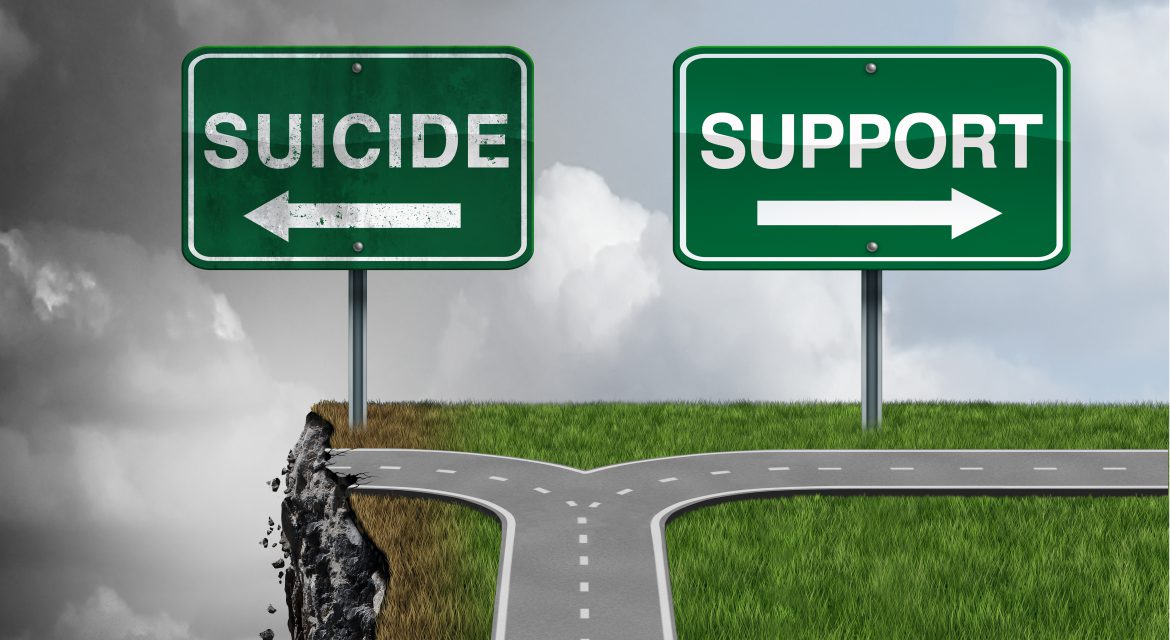
    According to National Institute of Mental Health, suicide is a major public health problem and a leading cause of death in the United States. The effects of suicide go beyond the person who acts to take his or her life – it can have a lasting effect on family, friends and communities.

    Are Suicide Rates Increasing?

    The American College Health Association (ACHA) states that the suicide rate among young adults, ages 15-24, has tripled since the 1950’s.  On average, there are 129 suicides per day in the U.S. More males die from suicide than females (approximately four male deaths by suicide for each female death by suicide). However, females attempt suicide three times more often than males. 

    Some risk factors for suicide include: previous attempts; depression and other mental health disorders; family history of a mental health or substance disorder; family history of suicide; drug and alcohol abuse; family history of violence, including physical or sexual abuse; impulsivity and or poor self control; hopelessness; medical illness; firearms in the home; and being exposed to others’ suicidal behavior, such as a family member, peer or media figure.

    There are many other factors that could lead to suicide, too. Even among people who have risk factors for suicide, most do not attempt it. It remains difficult to predict who will act on suicidal thoughts.

    The following behaviors may be a sign that someone is thinking about suicide: talking about wanting to die or wanting to kill themselves, sharing feelings of hopelessness, or feeling empty or numb. Other behaviors include planning or looking for a way to kill themselves, such as searching online for ideas, stocking up on pills or newly acquiring potentially lethal items (firearms or ropes). In addition, talking about being a burden to others, giving away important possessions, displaying extreme mood swings, or suddenly changing from very sad to very calm or happy are telltale signs.  

    Often in my office, a parent might be confused about how serious they should take their child talking about suicide. They might think their child is just seeking attention. However, suicidal thoughts or actions are a huge red flag that the person is in distress and an alert they need help. Any warning sign or symptom of suicide should not be ignored. Threatening to die by suicide is not a typical response to stress and should not be taken lightly.  

    Addressing Some Common Myths of Suicide

    If I talk about suicide, then it might put the idea in their head.

    This is not true! Several studies examining this concern have demonstrated that asking people if they are having suicidal thoughts or behaviors does not induce or increase such thoughts or experiences. Asking someone directly, “Are you thinking of killing yourself,” can be the best way to identify someone at risk for suicide. Another myth is people believing that talking to the person directly can’t make a difference to them. Talking to the person can help tremendously – it opens up a line of communication. Ignoring or minimizing a person’s feelings, thoughts or actions surrounding suicide is not advisable.  

    Most of the time a family member or friend are the first people to notice the warning signs of suicide. If someone tells you they are going to kill themselves, do not leave them alone, and do not promise anyone you will keep their suicidal thoughts a secret. It is important to have a plan in place to make sure the individual is as safe as possible. But, you should seek professional help as soon as possible.  

    As a mental health professional, suicide is a major concern and we are quite often assessing for it. The amount of request for services related to suicide has increased dramatically over the years.

    If you have someone in your life who you believe is suicidal, don’t wait to reach out for help.  This is not something to take lightly. In fact, if they are displaying risk factors and have a plan, take them to a local emergency room to be assessed. All too often people are seeing warning signs and reach out to us for services, and due to demand we can’t accommodate them in their time of need.   

    Resources

    If you know someone in crisis, you can also call the toll-free NATIONAL SUICIDE PREVENTION LIFELINE at 1-800-273-TALK (8255), 24 hours a day, 7 days a week. The service is available to everyone. The deaf and hard of hearing can contact the LIFELINE via TTY at 1-800-799-4889. All calls are confidential.

    Contact social media outlets directly if you are concerned about a friend’s social media updates, or dial 911 in an emergency.

    The Crisis Text Line is another resource available 24 hours a day, 7 days a week. Text “HOME” to 741741.

    Tonya Schaeffer, M.Ed, LPCC-S is a co-owner of Hope Restored Counseling Services, LLC in the West Loveland Historic District at 600 West Loveland Avenue. She can be reached at 513-683-HOPE (4673)

  • Milford Schools will have new start & dismissal times next year

    Milford Schools will have new start & dismissal times next year

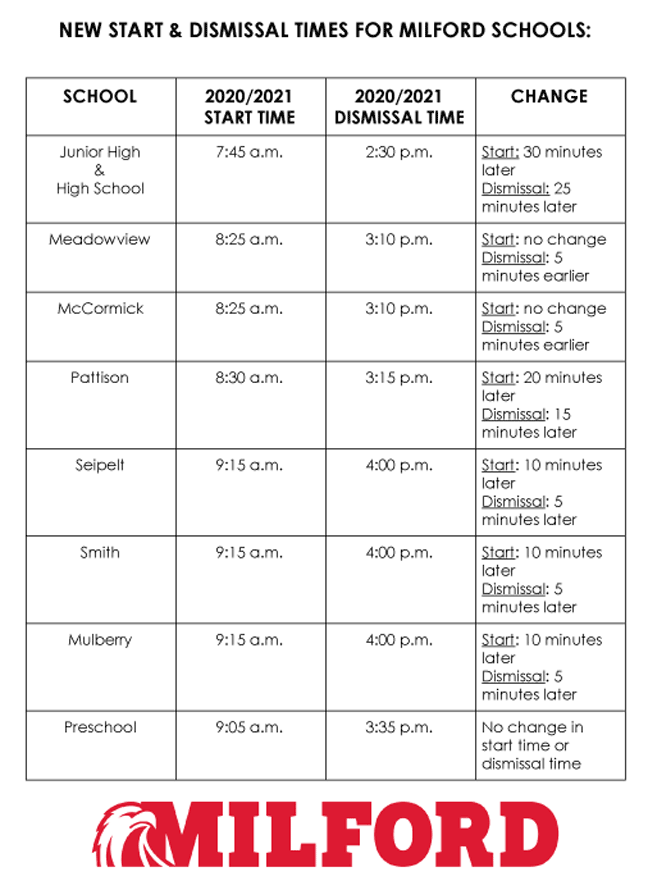
    Milford, Ohio – Last week Milford’s Board of Education approved new start and dismissal times for all of of Milford’s School buildings.

    Why are start times changing? 

    Teens typically go to bed later as they get older, but have to get up earlier to go to school. Research shows that teens require a minimum of 8 to 10 hours of sleep, with an optimum minimum of 9 and a quarter hours of sleep each night. However, surveys have shown that teens are only getting about seven hours of sleep per night or less. Sleep deprivation is a problem for teens: sleep deprivation increases the risk of injuries in sports, and increases the risks of hypertension, obesity, and depression. Research shows us the benefits of a good night’s sleep include: improved memory and learning, improved attention, emotional regulation, better weight control, and improved mental health.

    Why are the time changes not the same for each elementary building? 

    We currently operate our transportation routes on a three-tier system. Our junior high and high school routes are first, followed by two different elementary building routes. After working with a transportation consultant to look at routing our buses, it was determined that we could only start the junior high and high school later if the gap between those routes and the elementary routes remained. To maintain the cost-efficiency of a three-tier busing system, the elementary times had to be adjusted as well. Our elementary buildings have had three staggered start times, and that will continue with this new schedule to ensure efficiency. 

    Why change the start times now?

    Milford Junior High and Milford High School currently begin at 7:15 AM. Research shows that the optimum start time is 8:30 AM Pushing back the start time for our junior high and high schools means shifting the transportations schedules district-wide for eight of our school buildings K-12. Three years ago, our administrative team began investigating ways to delay start times while also being fiscally responsible. A phase-in approach to push back start times incrementally was suggested. The result is that, for the 2020/2021 school year, the junior high and high school will begin half an hour later, and the elementary buildings will shift five to 10 minutes earlier or later. Even these small adjustments will have a positive impact on students and minimum impact on district finances. 

    Why do the elementary building start times have to change to accommodate a later start time at the junior high and high school?

    In order to start the junior high and high school later, transportation routes will need to be adjusted. Buses will transport our secondary students later, therefore will be picking up and transporting our elementary students later. 

    Will the start times change again in the future?

    Research shows us that the optimum start time for junior high and high school is 8:30 AM. We would like to eventually reach the later start time of 8:30 AM and will continue to study that feasibility while also ensuring fiscal responsibility. Even this small adjustment of a half an hour later start time for our junior high and high school will have a positive impact on our teenage students. In addition, these new start times will ensure that our junior and high school students will be getting on the bus or driving to school during daylight hours for most of the school year.

    During last week’s meeting, Board President Chris Hamm said implementing the new start times now is a good first step. “We know this isn’t the finish line, but this is a very good start,” Mr. Hamm said. “We don’t know yet what next school year will look like, but we have to make plans as if we’re starting the year up normally and make contingency plans if we don’t.”


  • M/INT PTSA presents: How to Build on Boys’ Innate Character Strengths

    M/INT PTSA presents: How to Build on Boys’ Innate Character Strengths

    The speaker will be sharing insights into boys and how to build on their innate character strengths. The public is encouraged to attend.

    Loveland, Ohio – The 2018-2019 focus and priority of the Loveland Middle and Intermediate Parent Teacher Student Association (M/INT PTSA) is the social and emotional health of students in 5th through 8th grades. To accomplish their goal, they have invited experts to contribute to their newsletter and speak at public seminars.

    Their April program will be a focus on boys. The speaker will be sharing insights into boys and how to build on their innate character strengths. The public is encouraged to attend.

    The presentation will be at the Loveland Middle School Media Center on April 9, between 7 PM and 8 PM. (See Map below)

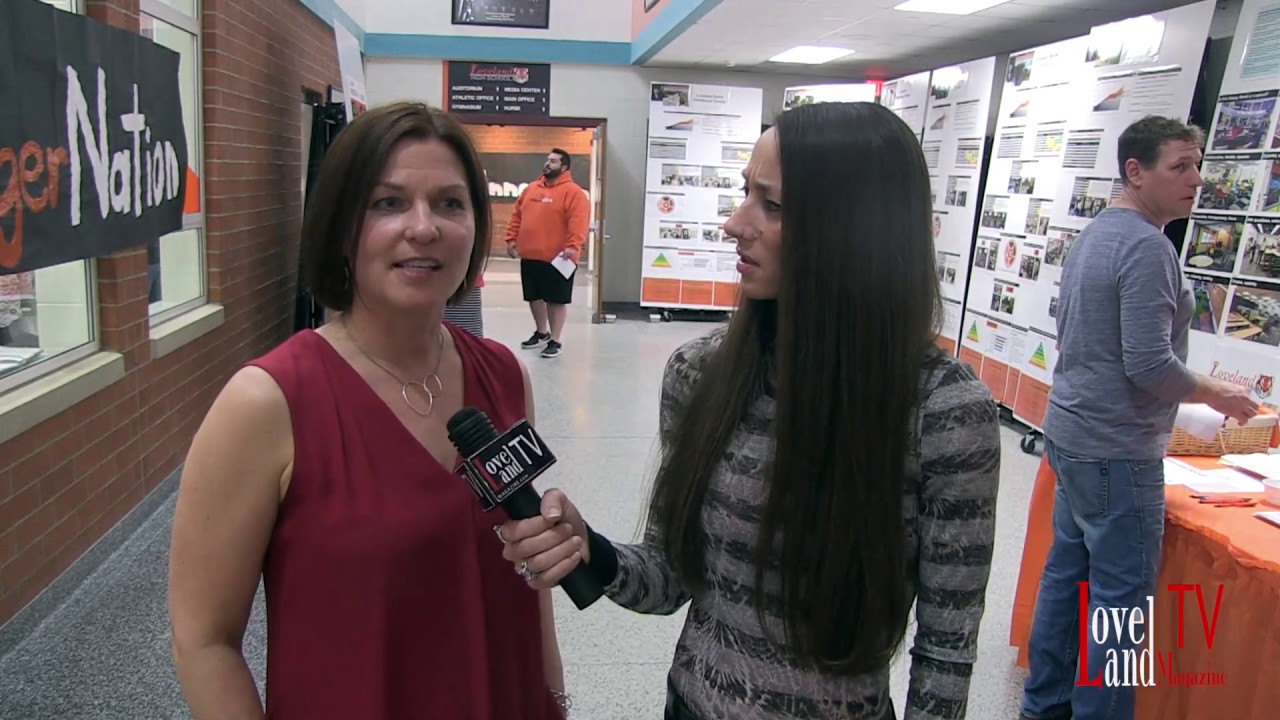
    Columnist Cassie Mattia caught up with Megan Graff last week at Loveland High School when the District held their student-led, State of the Schools event.

    Graff is President of the M/INT PTSA and talked to LOVELAND MAGAZINE TV about how the organization is tackling the “big hurdles for our kids today” such as Internet safety, suicide, depression, and anxiety.


  • [When “Calm Down” Doesn’t Help] How to Tackle Meltdowns, Anxiety & Depression with Your Daughter

    [When “Calm Down” Doesn’t Help] How to Tackle Meltdowns, Anxiety & Depression with Your Daughter

    PROMOTED POST

    Fran Hendrick, P.C.C.

    Hi — Fran Hendrick here.

    If you’ve worked with me before, you already know that when I see moms and girls consistently having the same problem, I’m going to look for a way to make it better. That’s because – first – I know you want these problems to go away; and second – I know they can.

    Toward the end of first quarter, I started hearing about meltdowns — those painful, exhausting, tearful sessions of self-doubt and giving up – often on school work or sports teams, but sometimes just on straightening the bedroom. And the topic hasn’t gone away – probably because school becomes steadily more stressful as the year goes on.

    So I’ve been working on it – which for me means creating a cost-effective solution that you can use at your own pace in your available time. To make things better.

    Would you like to be able to help your daughter manage her stress and anxiety without meltdowns – and without repeating some of the painful encounters you may have experienced with your own mom growing up?

    I know when you’re faced with the homework meltdown, what you want in that moment is for it to stop – for your daughter’s well-being and – let’s face it – for your own sanity. So you might start by trying to calm your daughter – but I’ll tell you, I’ve rarely seen “Calm Down!” help anyone feel calm. So you try pushing back a little; reassuring her that you know she can handle the task she’s panicked about. You offer help. And maybe you’ve threatened a consequence.

    Your intentions are good. It’s just that none of this works very well. You have to go deeper to get to the root of this problem.

    To help you do that, I’ve created:

    When “Calm Down” Doesn’t Help: How to Tackle Meltdowns, Anxiety & Depression in Your Daughter

    This pre-launch sale is LIVE now.

    And, instead of struggling to figure this out by yourself, here is everything you need to know in order to tackle this frustrating problem.

    • Help your daughter avoid those exhausting mood swings and move from quitting to persisting.
    • Build in her strong resistance to anxiety and depression by supporting her in moving from feeling inadequate to feeling confident.
    • Provide the very specific responses she needs from you in order to get off the Self-Esteem Roller Coaster so she can hang in there even when she’s becoming overwhelmed.

    Not only will you walk the path towards being meltdown-free, but it will also give you the momentum you need to achieve to build your daughter’s confidence and protect her from anxiety and depression.

    That’s so important – because these things – meltdowns, self-esteem, anxiety, depression – are all connected.

    Because this is a brand-new course and I want to see how you like it, I’m only offering it for the next four days (but once purchased, you’ll have access to it for as long as you want). Four days is short, I know – so in exchange for that quick decision, there is an one-time introductory price of $47.

    When “Calm Down” Doesn’t Help: How to Tackle Meltdowns, Anxiety & Depression in Your Daughter

    I’d love for you to take this opportunity to buckle down and address the meltdown saga! And remember – while you’re working the course, you can share your questions, experiences, and comments in the Raising Confident Girls Facebook group.

    I’ll be there!

    — Fran

    Fran Hendrick, P.C.C.
    Founder, Raising Confident Girls – The Power of Everyday Conversations

  • Splashing In – Welcome!

    Splashing In – Welcome!

    by Fran Hendrick

    Professional clinical counselor, parenting columnist, and instructor Fran Hendrick has provided coaching and counseling for hundreds of women and girls for twenty-five years. Clients appreciate Fran’s calm, empathic style, her practical strategies and solid advice, and her playful spirit. In addition to her therapy practice at Wildflower House in Loveland, Fran provides consultation, through private video chat and by phone, for moms participating in her online course “Helping Confidence Bloom: The Step-by-Step Approach to Raising Confident Girls”.

    “I don’t want my daughter to struggle with confidence and anxiety issues. I want to learn what I can do to help her become strong and confident – and really have fun with her life.”

    This is the concern – and the heartfelt wish — that many of my clients share with me. 

    Join Fran’s Raising Confident Girls Facebook Group – especially for moms.

    What I find both fascinating and empowering is that your daughter’s trust and confidence are not built by big actions and grand gestures; they’re actually built in the small moments of everyday life. Moments like when she’s late for school – or puts down her iPad to help her little brother with his spelling; says she hates what you’re having for dinner – or does her first headstand. 

    Believe it or not, these are the moments where what you say and do can make all the difference in building her confidence – or unintentionally eroding it. (And – by the way – what we generally think of as praise is likely to backfire completely!)

    It’s easy to miss the opportunity in these moments, not because you don’t want to be there for her but because you aren’t fully aware of what she needs from you. It’s easy to get discouraged and even feel powerless to help your daughter become less anxious and more assertive; or to help her persist at a hard task instead of feeling stupid and quitting in a storm of frustration. What you need is a lens that allows you to see things you couldn’t see before – along with the insight, tools, and a clear framework to know what to do or say. 

    And it’s so important! Confidence is not only a goal in its own right. Beyond that, a strong sense of self-confidence and self-worth provides lifelong protection against depression.

    I’m not one to step up to a microphone without major provocation. But the statistics on depression and self-harm in girls and women today in this country demand it.

    I’m not one to step up to a microphone without major provocation. But the statistics on depression and self-harm in girls and women today in this country demand it. According to the National Institute of Mental Health, a whopping 17.3% of girls ages 12-17 have experienced a major depressive episode1, along with 8.2% of adult women2.  It has even been estimated that girls’ self-esteem, their greatest protection against depression, peaks (yes, peaks) before they are ten years old!

    What makes this all the more unacceptable is that it is largely preventable! We have the knowledge to raise girls to feel whole, adequate, and joyful so they experience the world confidently and in bright colors. The knowledge exists to protect our girls from depression, from lifelong battles against feeling not good enough, from desperation – in short, to prevent rivers of tears and needless pain.

    They can joyfully become exactly who they’re meant to be.

    But for parents to actually be able to implement that knowledge in the small moments that make up everyday life with children requires a clear approach, intentional action — and a strong dose of self-reflection, because it can be scary. With that investment, our girls can be spared the lifetime of depression and anxiety that so many women experience. They can joyfully become exactly who they’re meant to be.

    They kick upwards, their arms reach for the sky, they seem to fairly prance, all with their own dance steps, their own vivid colors, their own lively style.

    On my desk at Wildflower House, I have a colorful drawing, spontaneously crayoned by a spectacular six-year-old girl. In it, twelve children jubilantly dance two-by-two in all directions across the fluorescent green paper. They kick upwards, their arms reach for the sky, they seem to fairly prance, all with their own dance steps, their own vivid colors, their own lively style. 

    That is how our girls should feel! I believe our daughters simply must be given that opportunity. Parents need a clear approach to evade those awful statistics and, in their place, to create something wonderful.

    I invite you to be part of improving the odds for today’s little girls, especially the ones within your own reach.

    “So let’s fix it together.”

    Why? Because each little girl has the potential to bloom uniquely. Because it is a sacred responsibility to learn to nurture, to discover that. And because there should be, there must be no lost voices. Each individual human being is entitled to self-expression.  Without it, our sparks dim and become buried out of our reach, hopelessness gains ground, despair sets in.  Human beings should not be locked away inside themselves. Ever.

    So let’s fix it together. 

    You really can build your daughter’s confidence right there in the midst of simple everyday conversations. I’ve designed this new column to show you how.

    I hope you’ll join me!

    Located at 111 N. Wall Street in Downtown Loveland, Wildflower House, Fran’s cozy personal development studio for coaching, counseling, and classes provides a space for women and girls to confidently become exactly who they’re meant to be. 

  • Your daughter’s cell phone — Designed to Addict (and what you can do about it)

    Your daughter’s cell phone — Designed to Addict (and what you can do about it)

    If your daughter’s reaching (or has reached) the age when you feel it’s time she had a phone, you know you’re entering into a challenge.

    by Fran Hendrick, PCC

    Getting a cell phone warrants a celebration, right? Of course! But like any rite of passage, there is both responsibility and risk attached to it. Having a phone in her possession raises a number of very real health and safety issues because cell phone use is implicated in anxiety, stress, depression, cyberbullying, addiction, and emotional dependency (that’s right, cell phones can erode confidence!) — for starters. Like driving later on, handing your daughter her first phone merits some planning.

    Join me Friday for a Facebook Livestream on this this topic!

    Got questions? 

    I’ve been looking at a different back-to-school concerns each week for the past three weeks. Please join me at www.facebook.com/franhendrick for a Facebook Live Stream on Fridays (8/3-8/24) at 11:00 AM Eastern Time.

    Post your questions about that week’s back-to-school issue in the comment section of the live stream post — or private message me on Facebook. I love helping you work out these answers.

    See you there!

    I’ve got three things for you on this topic:

    1. The Cell Phone Safe Use Resource Sheet

    I’ve put this together to help you create an informed plan — and yes, I really do think it’s that important. The research is coming in and it’s disturbing. But along with the research, we’ve now got more strategies and guidelines to help having a phone be a constructive experience for kids.

    In this Resource Sheet, I cover:

    • Links to information you need to educate yourself in order to plan for your daughter.
    • Links to information on Parental Controls — super important.
    • How your own fears can get in the way of taking steps to protect your daughter.
    • How to structure a conversation with your daughter on this delicate topic.
    • How to respond to her feelings about implementing some structure around cell phone use.

    2. From the Blog Archives

    This issue of emotional dependency cuts right to the heart of what so many moms want for their daughters — and that’s confidence. In the post below, I’ve explained how cell phones can erode confidence. It’s not a small thing.

    How smart phones can erode self-confidence and thwart independence (and why you might be having a hard time intervening)

    3. This Week’s Facebook Live

    I’ll be talking about this topic and other questions, as well, Friday August 24 at 11:00 AM Eastern Time in a Facebook Live. You can join this event on my Facebook Page. (By the way —  previous topics are also there for you to view. Just click the Video tab and you’ll see them.)

    Looking forward to connecting with you!


    About Fran Hendrick, PCC

    Professional clinical counselor, parenting columnist, and teacher Fran Hendrick has provided coaching and counseling for hundreds of women and girls for twenty-five years. She is a member of the International Association for Psychoanalytic Self Psychology. In addition to her therapy practice, Fran provides consultation online and by phone for moms participating in her Helping Confidence Bloom classes and upcoming ecourse.

    Fran divides her time among working with clients, kayaking with her husband, and scampering up jungle gyms with her granddaughters. Clients appreciate Fran’s calm, empathic style, her practical strategies and solid advice, and her playful spirit. Wildflower House, Fran’s cozy personal development studio in charming, historic Loveland, Ohio provides a space for women and girls to grow the confidence to become exactly who they’re meant to be.

    Contact Fran or call 513 677-9800.

    Quick Links

    What is Wildflower House?

    Find the bundle that fits your style


    Located in downtown Loveland Ohio at 111 N. Wall Street, Wildflower House is a place to bloom.