Tag: Developmental Disabilities Awareness Month

  • A proposal for directional signs to accessible parking in Historic Downtown Loveland

    A proposal for directional signs to accessible parking in Historic Downtown Loveland

    March is National Developmental Disabilities Awareness Month
    by David Miller

    Dear City Hall,

    I ask you to install directional signs in our Historic District that point to accessible parking spaces.

    To honor National Developmental Disabilities Awareness Month I decided to revisit the draft of a proposal I worked on from 2014 until 2016. Most of the proposal was eventually approved by Loveland City Council and the Loveland Planning and Zoning Commission and is now adopted law in the City. I started the project in 2014 when resident, Amy Clawson raised concerns to me. Amy said that unfortunately, a very common problem for people who have different needs is in finding good, appropriate parking that can accommodate their physical or health issues. She pointed me to several instances of inadequate and poorly marked parking spaces in the Historic District. After taking an inventory around town, I published this story: Accessible parking; out of sight, out of mind, neglected and abused.
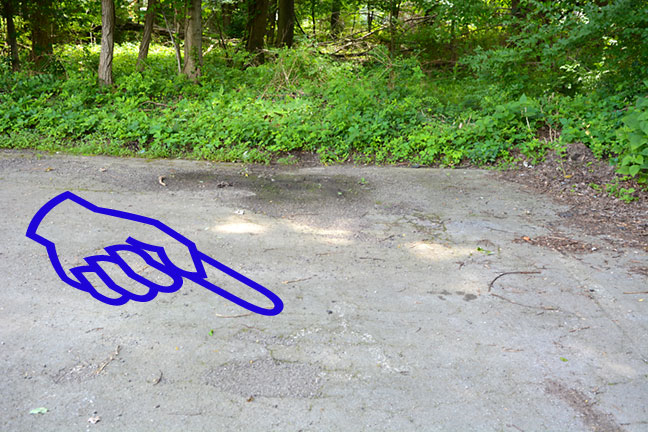
    This nearly invisible accessible parking space was at McCoy Park in 2014. There should have been a pole-mounted sign and the paint on the pavement had all but disappeared.

    Because most spaces in Loveland in 2016, whether on public or private parking lots were not in compliance with either Ohio or Federal law, the proposal was to mark all accessible parking spaces in the City in a consistent manner and for City Hall to choose a deliberate pathway to bring them all into lawful compliance.
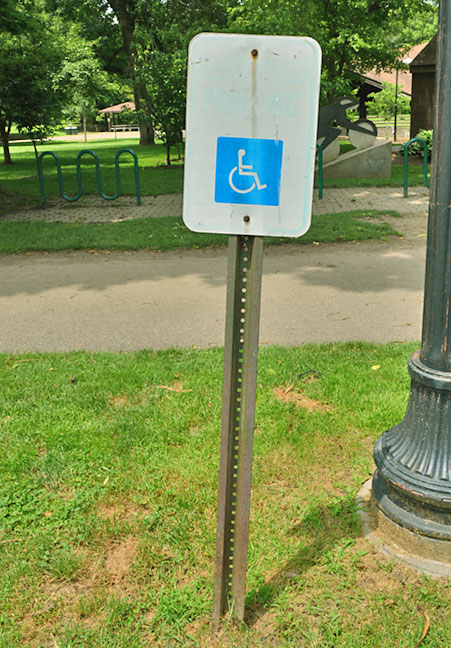
    This was the neglected condition of the accessible parking sign near the restroom at Nisbet Park in 2014.

    It’s intuition that leads you to rather easily locate the accessible parking spaces at Kroger or shopping centers, however, since most businesses in Historic Downtown do not provide their own parking, directional signs as well as signage at the parking spots themselves are needed.

    At the time I started my research, accessible parking was out of sight, out of mind, neglected, and abused. During special events, they are still mostly out of sight and mind.

    I received the full support and helpful suggestions from both City Manager Dave Kennedy and City Engineer Cindy Cindy Klopfenstein as I crafted and illustrated the plan. Kennedy from his end ensured that the planning commission and city council gave careful thought to the plan and secured their approvals.
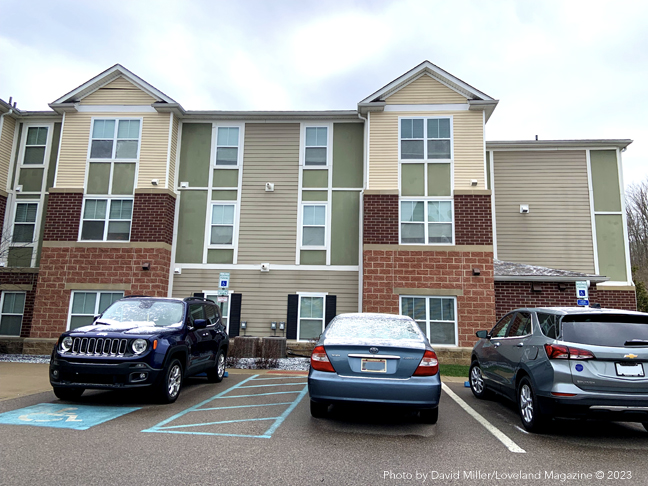
    When built, the Trails at East Loveland was the first new development to fully comply with the new requirements for accessible parking spaces.

    The plan as adopted requires that all new parking spaces from new development must tell the Planning and Zoning Commission how they intend to comply with the new requirements. Any repaving, recoating, or new stripping of existing parking lots must now also use the guidelines.

    Also adopted at the time was a policy requirement that all applications, whether from private groups or City Hall who filled out an application for special events describe on the application how they will provide the number of accessible parking spaces based on their anticipated attendance.
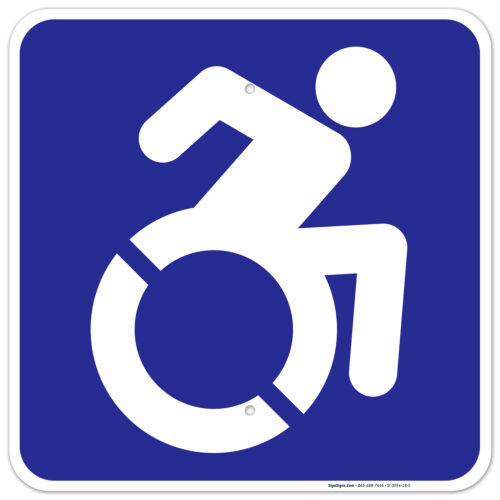
    The Accessible Parking Sign used by the State of New York

    The original plan I proposed was to use a new universal design that at the time was being adopted around the country, but through research of Ohio Department of Transportation law, I discovered that although they were considering the new design they had not yet made it their design of choice. The newer “fluid movement” design is meant to accentuate a more positive image of accessible needs rather than an expression of one using the parking spot as being “handicapped”.

    Also, one idea I had in 2016 was to have directional signs placed throughout our Downtown Historic District pointing to where a person could find accessible parking, without driving around looking for them. 

    Thus, in light of it being National Disabilities Awareness Month I have revisited my earlier proposal and now suggest “wayfinding” directional signs in the Historic District so people can find the hidden gems closest to where they want to go.

    I propose permanently mounted signs as well as portable ones that would be brought out for special events such as Christmas in Loveland, parades, and the Independence Day event.
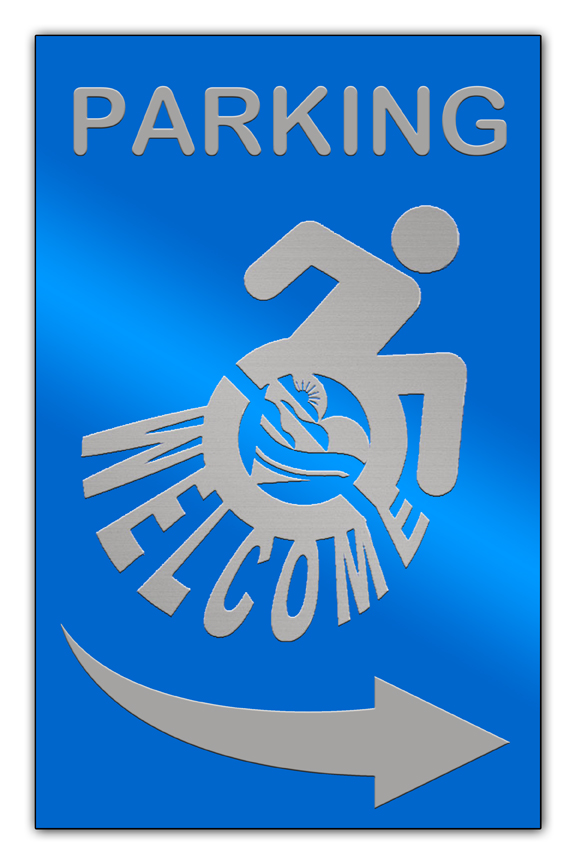
    The Direction Sign I propose for Historic Downtown Loveland would tell visitors and shoppers where to find an accessible parking space and that the Sweetheart City of Loveland, Ohio is a welcoming community.

    Thank you for considering my suggestion.

    Best regards,

    David Miller

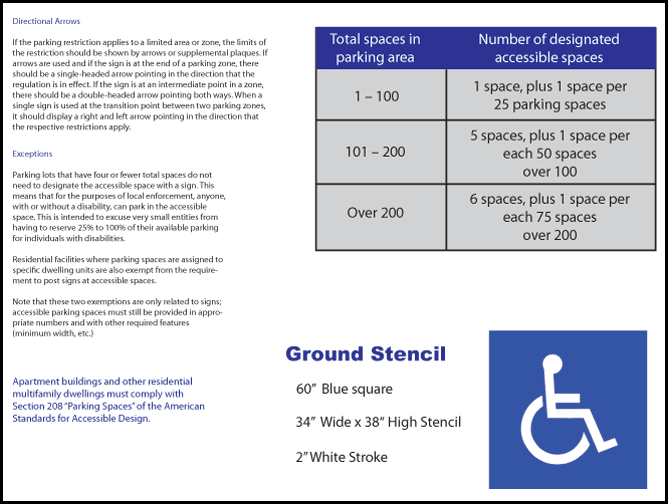
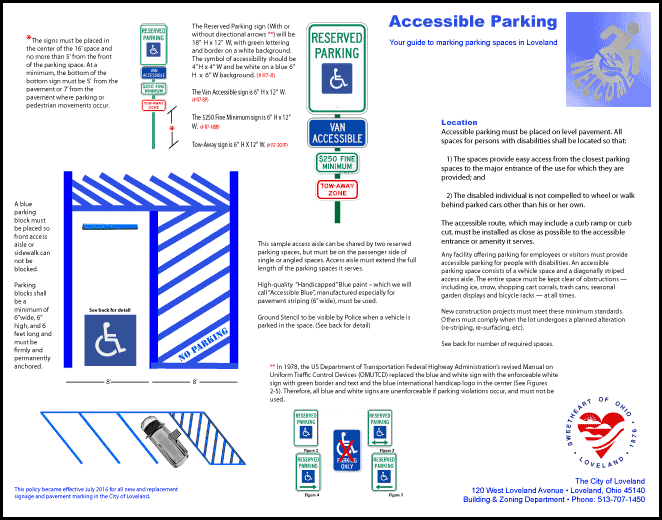
    The Accessible Parking Space Guide Approved in 2016
  • Supporting people with developmental disabilities incredibly increases our value as a society

    Supporting people with developmental disabilities incredibly increases our value as a society

    Developmental Disabilities Awareness Month is the right time to talk about it

    by Lisa Guliano

    Before the 1950s, Ohio residents with developmental disabilities were often sent to institutions or kept at home, isolated and hidden from the public. Thanks to the advocacy efforts of parents who wanted better for their children, change was brought about. In 1952, parents in Butler County formed what would later become the Butler County Board of Developmental Disabilities (BCBDD).

    With such a start, BCBDD has always had a hand in advocating for people with developmental disabilities and despite progress, there are many ways that advocacy is still needed to this day.

    In 1986, the Ohio Legislature signed into law a Bill of Rights for people with developmental disabilities.  The statute includes 24 rights to legally reinforce the freedom to choose and experience life.  These are basic rights such as:  the right to participate in decisions that affect their lives; the right to social interaction with members of either sex; the right to food adequate to meet accepted standards of nutrition; and the right to privacy, including periods of privacy and places of privacy to name some examples. 

    It has always been difficult for me to accept that people with disabilities needed additional protection under the law to simply be treated equally as all citizens. 

    Given that reality, our Board’s mission focuses on supporting people to live, work and learn in their community.  What that looks like is different for every person depending on their goals and dreams for their future – just like you and me.  Our role as advocates is an honorable one — it is vitally important given the history of people with disabilities living in institutions and being hidden from the community for being different. 

    Supporting people with disabilities to access opportunities to develop their full human potential – language also included in the Bill of Rights – incredibly increases our value as a society.  Each person realizing their goals and dreams has an exponential effect on all of us. 

    If you’re trying to think of examples of what our mission looks like in the community, I’d encourage you to look at yourself, possibly your family members and even your friends.  Haven’t we all worked on a plan for our lives and accessed support from others along the way?  Are there times when you or someone you know faced challenges, or even barriers because of being different or not fitting a “typical profile?”  As you’ve walked your path in life, recall the times where your opportunities led you to reaching goals, getting closer to your full potential, contributing to your sense of worth, your family and your community. 

    Diversity doesn’t look all that different for people with disabilities as they focus on living their best lives – not defined by us – but supported by us.  We celebrate Developmental Disabilities awareness month in March and I’m challenging you to focus on the abilities, not the disabilities of people in our community, recognizing the unique ways all of us contribute to society.