Tag: disabled

  • Ohio property tax repeal campaign preparing to collect signatures

    Ohio property tax repeal campaign preparing to collect signatures

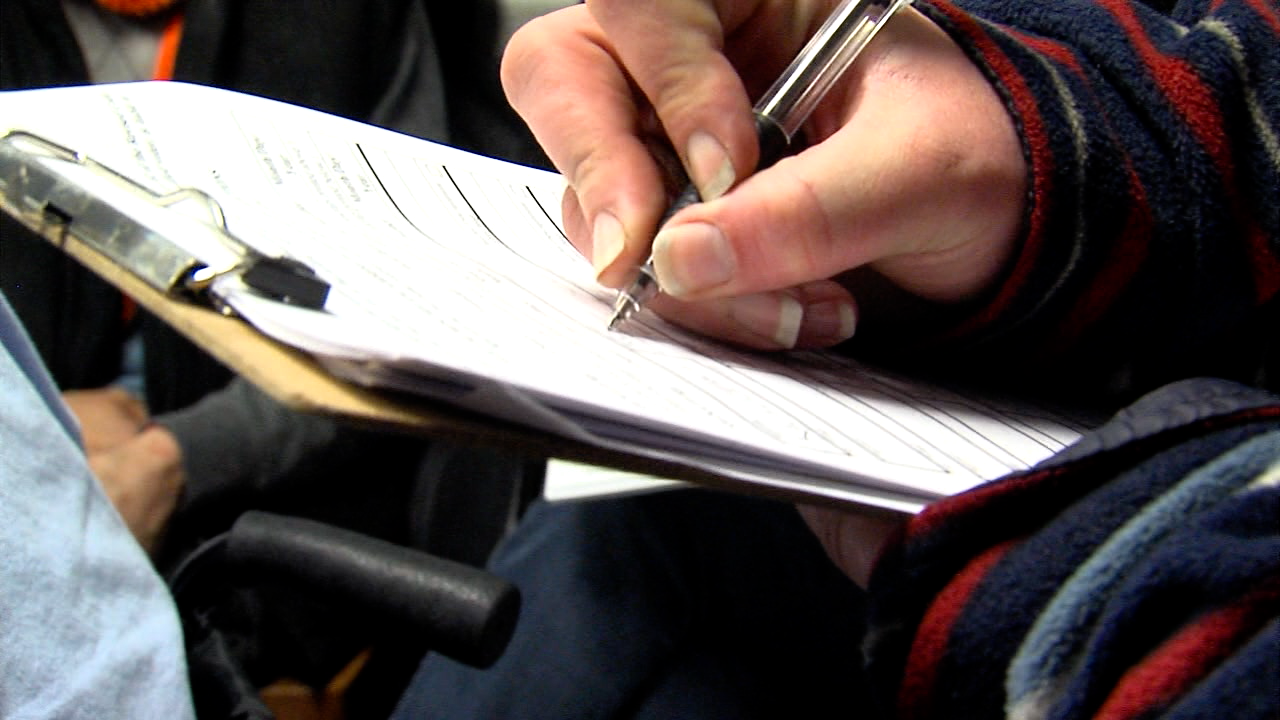
    Ballot petition signature collection. Photo by WEWS.

    By:  Ohio Capital Journal

    In a short meeting, the Ohio Ballot Board signed off on a proposed constitutional amendment abolishing property taxes in the state. The only question before the board was whether the proposal contains one or multiple amendments.

    Supporters contend lawmakers have been unwilling or unable to make significant enough changes as property taxes climb. But critics warn eliminating that revenue stream could cripple important services like schools and first responders.

    Campaign reaction

    GET THE MORNING HEADLINES.


    The day after the ballot board meeting, Beth Blackmarr described her mood as ‘busy.’

    “Busy, busy, busy,” she said, “I mean, here we go — we’ve got to hit the ground running.”

    Blackmarr is part of the organization Citizens for Property Tax Reform which is leading the repeal campaign. With the ballot board’s decision, the group is now able to start gathering signatures to appear on the ballot.

    To go before voters, they’ll need 10% of the electoral turnout from the last governor’s race (just shy of 415,000). Additionally, in 44 of Ohio’s counties, they’ll need signatures from at least 5% of the governor’s race turnout. In practice, campaigns turn in hundreds of thousands more signatures than necessary to make up for any rejections.

    Blackmarr said they want to start collecting “as soon as humanly possible,” and work could begin as early as next week. Asked whether they’d work with paid circulators, she just laughed.

    “Many of us are youthful at heart, but senior citizens that are just really working out of our pockets,” she said. “There’s no big money backing this at all. It’s all volunteer.”

    The merits

    Blackmarr argued Ohio’s current property tax system is broken. She points to other states like New Jersey and Texas that have far more generous initiatives to keep seniors, vets and the disabled in their homes.

    “You can’t have senior citizens who have paid for their homes — fully paid for — having to move out because they can’t afford property tax,” she insisted.

    Blackmarr contends those kinds of protections are low-hanging fruit. Lawmakers have had continual warnings and “ample opportunity” to act. Instead, she argued, they’ve dithered with changes at the margins.

    “I suspect it’s because they built a wobbly tower of property tax law over these decades,” she said, “and they’re afraid to pull one of the blocks out, because they’re afraid the whole thing’s gonna come tumbling down.”

    That ‘tumbling down’ is exactly the concern many critics voice about the plan. The most recent annual report from the Ohio Department of Taxation puts 2023 property tax collections at about $18.5 billion. That’s an enormous amount of funding to just disappear. It’s roughly double the amount reported for state income taxes, and a billion more than Ohio’s sales and use tax.

    Spread evenly, it would cost every single Ohioan more than $1,500 to make up that gap in funding.

    Blackmarr argued repeal will just force lawmakers “to come up with an alternative.” But that’s a big ask — particularly for Republicans allergic to tax increases.

    Still she’s right about dramatic increases in property taxes. The same Department of Taxation report shows assessed values climbing almost 40% in five years while tax collections have risen more than 21%.

    Legislature’s role

    In a statement following the ballot board decision, House minority leader Allison Russo said the proposal “clearly demonstrates frustration by Ohioans on this issue” and blamed lawmakers for failing to act.

    “However, this particular initiative concerns me because while it eliminates the property tax, it doesn’t explain how we’ll replace the funds that support police, fire departments, public education, and other critical services,” she said.

    Russo argued Democrats have signed on to bipartisan legislation providing direct relief but Republican leaders haven’t prioritized those bills.

    Blackmarr acknowledged that as their campaign gains steam, pressure will grow on lawmakers to pass legislation or propose their own ballot measure to undercut their efforts.

    “At the end of the day it goes to the voters,” she said.  “They have to make the decision for themselves.”

    And if lawmakers’ intervention means voters have to choose between competing visions, that’s just fine with Blackmarr.

    “Wouldn’t that be nice, you know?” she said.

    Follow Ohio Capital Journal Reporter Nick Evans on X or on Bluesky.


    Nick Evans
    Nick Evans

    Nick Evans has spent the past seven years reporting for NPR member stations in Florida and Ohio. He got his start in Tallahassee, covering issues like redistricting, same sex marriage and medical marijuana. Since arriving in Columbus in 2018, he has covered everything from city council to football. His work on Ohio politics and local policing have been featured numerous times on NPR.

    Ohio Capital Journal is part of States Newsroom, the nation’s largest state-focused nonprofit news organization.

    MORE FROM AUTHOR

  • Paying the disabled like everyone else would reduce poverty, economists say

    Paying the disabled like everyone else would reduce poverty, economists say

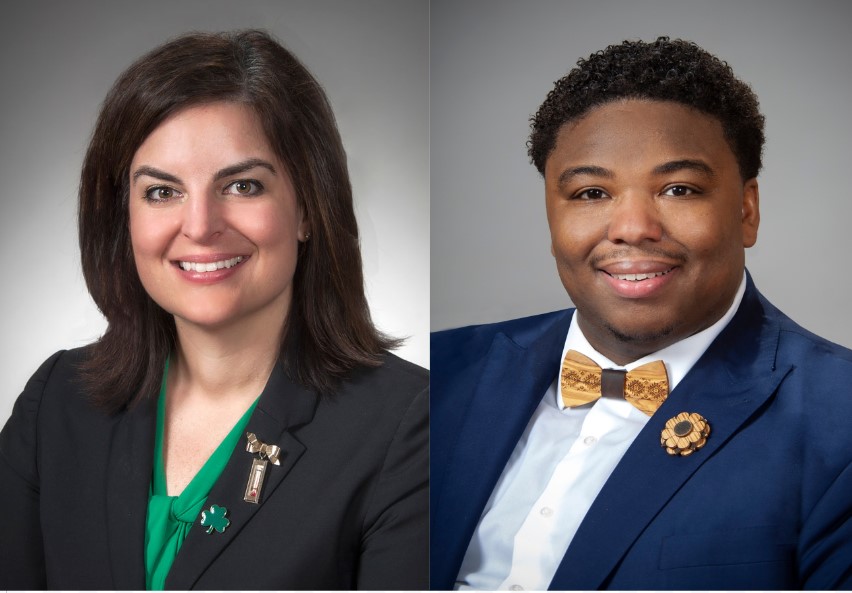
    Ohio Reps. Brigid Kelly, D-Cincinnati, and Dontavius Jerrells, D-Columbus. Official photos.

    BY: MARTY SCHLADEN – Ohio Capital Journal

    Ohio’s minimum wage is set to increase in January from $9.30 an hour to $10.10, but unless the law changes the disabled will be left far behind.

    They can currently earn the state’s “subminimum” wage of $4.25 an hour and can be paid substantially less than that, NBC 4 reported. Now Ohio Reps. Brigid Kelly, D-Cincinnati, and Dontavius Jerrells, D-Columbus want to raise it to where it will be for most other workers.

    That would lift some people out of poverty, a majority of a panel of Ohio economists said earlier this week. But a majority was also uncertain whether it would be an overall help to the state economy.

    In a survey conducted by Scioto Analysis, 12 of 18 economists said the measure would reduce poverty. Three disagreed and three were uncertain or had no opinion.

    Four economists agreed that paying the disabled the regular minimum wage would be good for the overall economy. Four disagreed and 10 were either uncertain or had no opinion.

    In the comments that accompany the survey, Youngstown State University economist Albert Sumell said increasing minimum wages for the disabled is no silver bullet, but it would be beneficial.

    “The effect will be modest but clearly some individuals with disabilities would benefit,” he said.

    On the other hand, Kent State University economist Curtis Reynolds questioned whether subminimum wages were what prompted some employers to hire disabled workers in the first place.

    “The challenge, of course, is whether individuals will still have job opportunities at the higher wage,” wrote Reynolds, who said he was uncertain about the effect of raising the wages. “If yes, then the higher minimum wage would reduce poverty. If not, then it will not reduce poverty. I am not sure which will happen for this population (which has not been studied as much in research on minimum wage policies).”

    The economists’ uncertainty about whether raising minimum wages for the disabled would grow the economy was even more pronounced. Some of the uncertainty stemmed from the relatively small number of disabled workers and how little minimum-wage workers of any group earn.

    But some of the economists argued that there are other reasons for undertaking the increase.

    “I think the main goal of minimum wages is to create equitable growth and dignity for workers,” wrote Jonathan Andreas of Bluffton University. “I’d be in favor of more equity and dignity even if it caused a little less growth, but the research on minimum wages generally finds that it doesn’t cause problems so it looks like a way to increase equity without hurting growth. I’ve never seen research about the minimum wage for people with disabilities so I haven’t seen enough information to know.”

    Follow Marty Schladen on Twitter.

  • The Unending Night of Auschwitz

    The Unending Night of Auschwitz

    Hints that tiny shafts of light can pierce the seemingly unending night

    D.-miller-mem.-day-b-wby David Miller

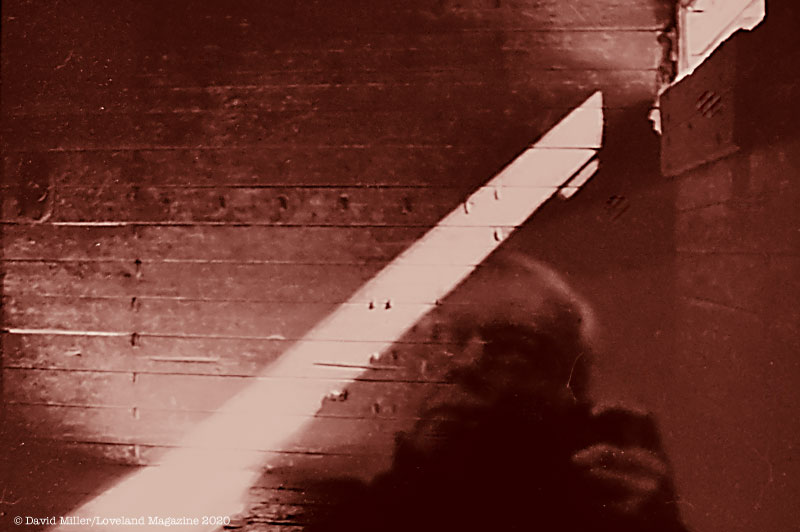
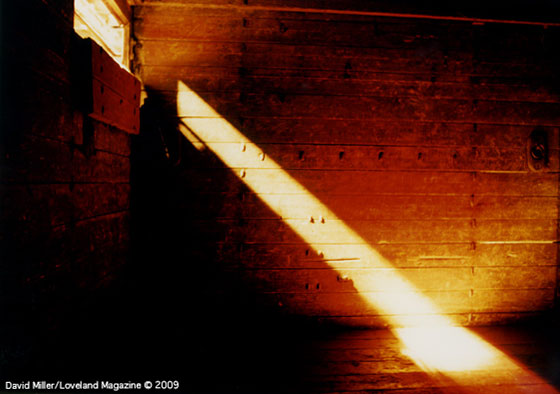
    I took the photo above in 1994 at the United States Holocaust Memorial Museum in Washington, D.C. To get from floor to floor, I and my family had to walk through this cattle wagon.

    As World War II erupted, the Nazis deported millions of victims to ghettos, concentration and extermination camps, and gas chambers in railroad cars like these – beginning their state-sponsored program of the genocide of Jews, Roma (Gypsies), gay men, Soviet prisoners of war, the disabled, and religious opponents. Nearly the whole Jewish population of Poland was forced into these cattle cars and later died in these camps.

    Elie Wiesel, in his book Night, described his experience when he was liberated from Buchenwald as a sixteen-year-old. His mother and his youngest sister had already been sent to the gas chambers, and Wiesel became his father’s caregiver at the concentration camp and watched him die, just weeks before the Allies liberated the camp.

    The cattle car was so crowded there was no room to sit or lie down, room was made for the living by throwing the dead onto the tracks. Out of 100 Jews in Wiesel’s cattle car, only twelve survived

    In his book, Wiesel wrote about the cattle car:

    The doors were closed. We were caught in a trap, right up to our necks. The doors were nailed up; the way back was finally cut off. The world was a cattle wagon hermetically sealed. With every groan of the wheels on the rail, we felt that an abyss was about to open beneath our bodies.

    Elie-Wiesel-quoteWhen liberated from the concentration camp, he said, “I wanted to see myself in a mirror, a corpse gazed back at me. The look in his eyes, as they stared into mine, has never left me.”

    Robert AcAfee Brown writing in the preface to Night, talks about breathing life into that corpse. “Most will want to continue with Wiesel on his painful journey through the darkness, through false days, until there are hints that tiny shafts of light can pierce the seemingly unending night that Auschwitz has imposed upon the earth.”

    My family and I were able to exit the cattle car, but the emotion of walking where others like Elie Wiesel had been, was burned into my subconscious by that blinding shaft of light that day.

    And now, as still more families are on the painful journey through a hateful darkness… might we see that we are all on this cattle car together. And, even though we must squint to see even the tiniest shaft of light – can we show each other where it is at?

     – David Miller is Publisher of Loveland Magazine