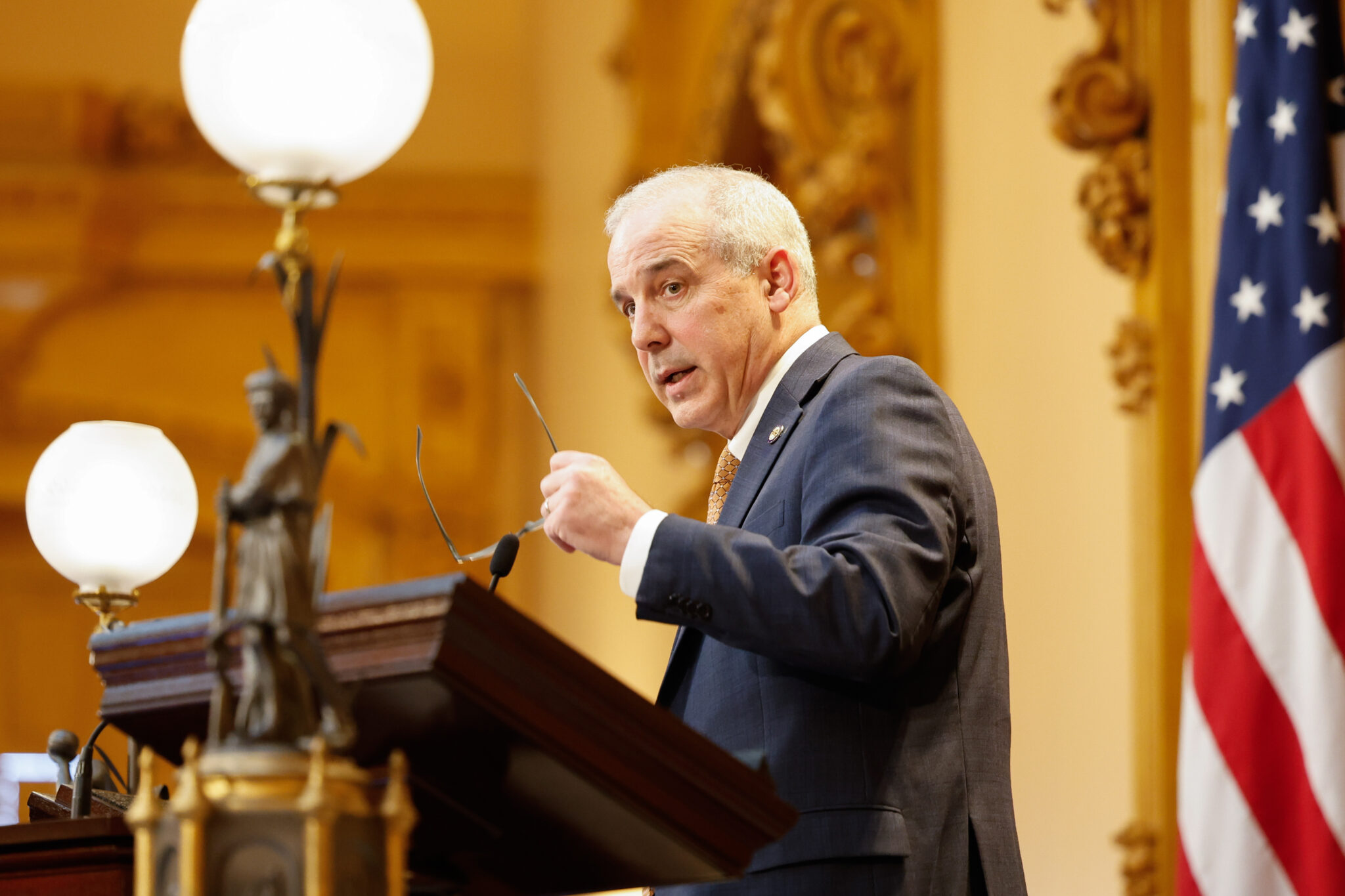
Ohio Gov. Mike DeWine on Friday signed into law a massive higher education overhaul to ban diversity efforts, regulate classroom discussion, and prohibit faculty strikes, among other things. The law will take effect in 90 days.
S.B. 1 will set rules around classroom discussion, create post-tenure reviews, put diversity scholarships at risk, create a retrenchment provision that block unions from negotiating on tenure, shorten university board of trustees terms from nine years down to six years, and require students take an American history course, among other things.
For classroom discussion, the bill will set rules around topics involving “controversial beliefs” such as climate policies, electoral politics, foreign policy, diversity and inclusion programs, immigration policy, marriage, or abortion. S.B. 1 would only affect Ohio’s public universities.
The bill moved quickly through the Statehouse. State Sen. Jerry Cirino, R-Kirtland, introduced S.B. 1, which passed the Ohio Senate in February and the Ohio House in March. Cirino introduced a nearly identical bill during the last General Assembly that went through several revisions, but the bill never made it the House floor and ultimately died.
Megan Henry is a reporter for the Ohio Capital Journal and has spent the past five years reporting in Ohio on various topics including education, healthcare, business and crime. She previously worked at The Columbus Dispatch, part of the USA Today Network.
Ohio Capital Journal is part of States Newsroom, the nation’s largest state-focused nonprofit news organization.
Ohio college students, faculty and staff are calling on Gov. Mike DeWine to veto a massive higher education bill that would ban diversity and inclusion on campus and prevent faculty from striking.
Lawmakers concurred with tweaks made to Senate Bill 1 during Wednesday’s Senate session, sending the bill to DeWine’s desk for his signature. DeWine received the bill Wednesday and has 10 days to sign the bill into law or veto it. If DeWine vetoes the bill, lawmakers would need a 3/5 vote from each chamber to override it.
DeWine, however, has previously said he would sign the bill.
GET THE MORNING HEADLINES.
S.B. 1 would set rules around classroom discussion, create post-tenure reviews, put diversity scholarships at risk, create a retrenchment provision that blocks unions from negotiating on tenure, shorten university board of trustees terms from nine years down to six years, and require students take an American history course, among other things.
For classroom discussion, the bill would set rules around topics involving “controversial beliefs” such as climate policies, electoral politics, foreign policy, diversity and inclusion programs, immigration policy, marriage, or abortion, and forbid “indoctrination,” though that remains undefined. S.B. 1 would only affect Ohio’s public universities.
“Republicans showed us they’d rather gamble with our economic future than solve real problems in our state,” Ohio Democratic Party Chair Elizabeth Walters said in a statement. “Instead of growing our state, Republicans are driving students, young adults, and business away from Ohio. We’re urging Governor DeWine to do the right thing and veto this legislation.”
“This legislation is a misguided attempt by overreaching legislators to impose their ideological beliefs on our public universities,” the letter said. “The bill undermines academic freedom, attacks collective bargaining rights, and jeopardizes the future of higher education in our state.”
The Ohio House Minority Caucus also sent a letter to DeWine asking him to veto the bill.
“You have an opportunity to protect the future of Ohio’s institutions of higher education, and your legacy as Ohio’s governor, by vetoing this bill and requiring the legislature to negate terms that are more amenable to the will of Ohioans,” the letter read.
The ACLU of Ohio wants DeWine to veto S.B. 1 and protect free speech on campus.
“By dismantling DEI structures, Senate Bill 1 sends a clear, harmful message to students that their unique backgrounds, experiences, and perspectives are not welcome in Ohio,” ACLU of Ohio Policy Director Jocelyn Rosnick said in a statement.
Anticipating S.B. 1 would pass during Wednesday’s Senate session, members of the Ohio Legislative Black Caucus urged DeWine to veto S.B. 1 during a press conference earlier that day.
“This is one of the worst government overhauls that I’ve seen to date,” said state Rep. Terrence Upchurch, D-Cleveland. “It will not only limit our First Amendment right to free speech, ban strikes and collective bargaining rights for professors, it threatens opportunities for our students, undermines workforce development and disproportionately harms black and minority communities.”
State Rep. Desiree Tims, D-Dayton, said S.B. 1 is toxic, racist and a threat to free speech and academic freedom.
“Since when is diversity, equity and inclusion a bad thing?” she asked. “Why is this necessary? The only answer is, so that we can move backwards, pre-civil rights … progress that this country and this nation has stood for. … Senate Bill 1 turns the ugly page back in history, somewhere we do not want to go, where we should not go.”
“The diversity scholarships weren’t designed to discriminate against white students,” she said. “The diversity scholarships were designed to encourage more students of color to come to little old, white Athens, Ohio and get a quality education.”
S.B. 1 will be detrimental to Ohio’s higher education, Dashiell said.
“If it hadn’t been for an extra effort at Ohio University to diversify the faculty, I would still be in Tennessee,” she said. “We also urge that Governor DeWine veto this bill because it’s going to hurt our students. It’s going to hurt those who will benefit from diversity programs and benefit from these diversity scholarships.”
Ohio State University’s Chair of the Undergraduate Black Caucus Jessica Asante-Tutu said this bill runs the risk of forcing Ohioans to move out of state.
“Students learn best in environments that encourage exchanges, where ideas flow freely and where differences are respected,” she said. “This bill stifles all of that.”
As an Olentangy Liberty High School student in Delaware County, Michelle Huang said S.B. 1 hangs over her head as she thinks about applying for colleges this fall.
“The threat of this bill passing is a deterrent from us attending Ohio State in the first place,” she said. “What DEI is actually doing is actually promoting more discourse and promoting more intellectual diversity.”
Megan Henry is a reporter for the Ohio Capital Journal and has spent the past five years reporting in Ohio on various topics including education, healthcare, business and crime. She previously worked at The Columbus Dispatch, part of the USA Today Network.
Ohio Capital Journal is part of States Newsroom, the nation’s largest state-focused nonprofit news organization.
Ohio House Republican lawmakers voted to pass a massive higher education overhaul bill Wednesday that would ban diversity and inclusion efforts and prevent faculty from striking.
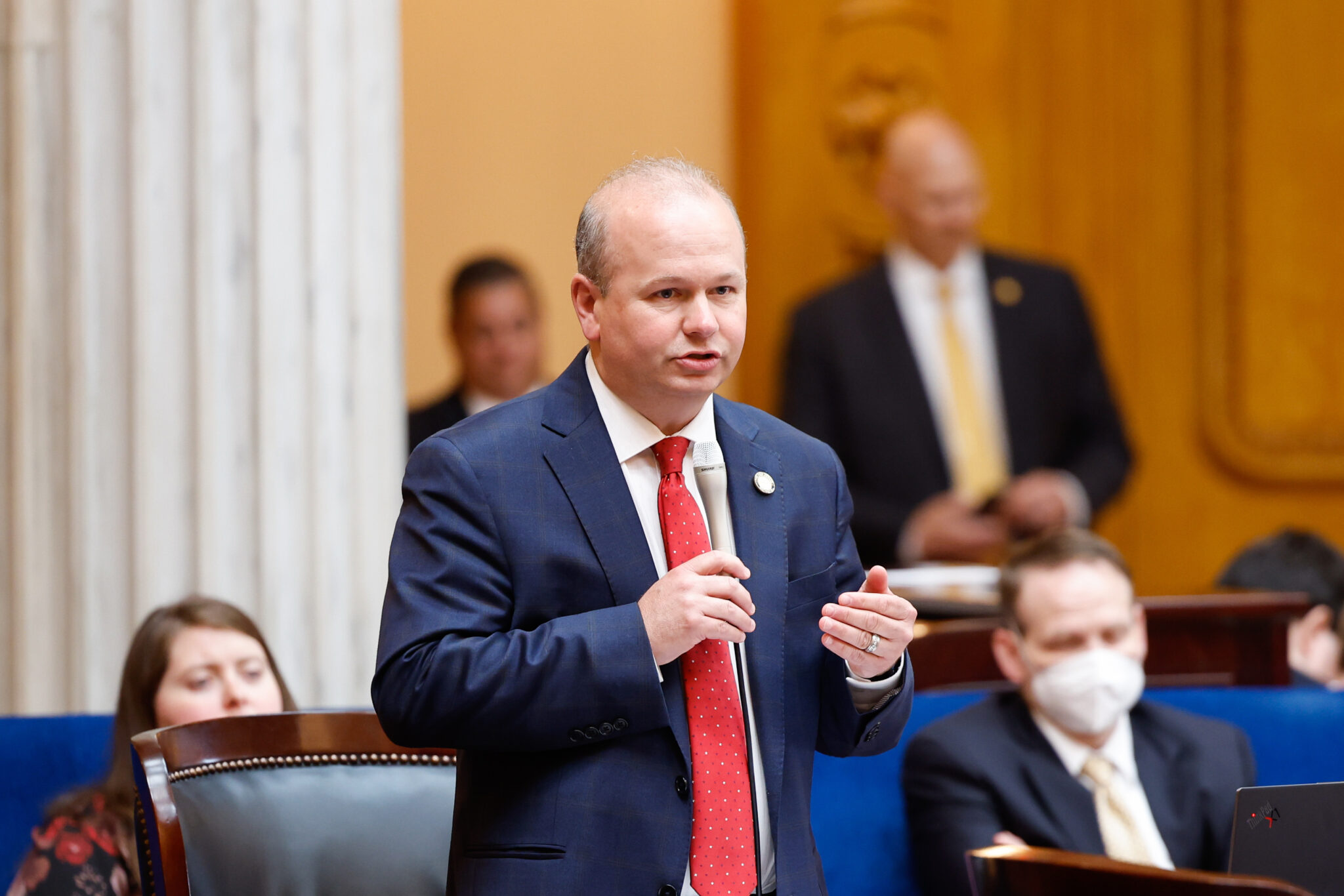
State Sen. Jerry Cirino, R-Kirtland, introduced S.B. 1, which passed the Ohio Senate last month.
Now that it’s been passed by the House, it now heads back to the Ohio Senate for concurrence with changes made to the bill by the House.
Ohio Senate President Rob McColley, R-Napoleon, said Wednesday the Senate will concur with House changes at a later date.
After the Senate concurs with the House changes, the bill will go to Ohio Gov. Mike DeWine’s desk and DeWine will have 10 days to sign the bill into law or veto it once he receives it. If DeWine vetoes the bill, lawmakers would need three-fifths vote from each chamber to override it.
In addition to the bans on diversity efforts and faculty strikes, S.B. 1 would also set rules around classroom discussion, create post-tenure reviews, put diversity scholarships at risk, create a retrenchment provision that block unions from negotiating on tenure, shorten university board of trustees terms from nine years down to six years, and require students take an American history course, among other things.
For classroom discussion, the bill would set rules around topics involving “controversial beliefs” such as climate policies, electoral politics, foreign policy, diversity and inclusion programs, immigration policy, marriage, or abortion. S.B. 1 would only affect Ohio’s public universities.
The Ohio House Higher Education Committee voted the bill out of committee Wednesday morning with a 9-4 party-line vote after listening to people testify in support of the bill.
The committee also approved amendments to S.B. 1 that would require universities to stop accepting funds for scholarships with diversity and inclusion requirements four years after the bill becomes law.
Another amendment requires the Chancellor of Higher Education to do a diversity study of students enrolled in universities based on race, ethnicity, and biological sex and submit the report to lawmakers within six years.
Outside of the Ohio Statehouse, a mass of college students and protesters rallied against the bill, saying it would destroy freedom of thought and expression on university campuses and push students out-of-state.
(Photos by David DeWitt, Ohio Capital Journal.) Ohio college students and protesters rally at the Statehouse on March 19, 2025, against Senate Bill 1, a higher education overhaul that bans diversity efforts and faculty strikes, and sets rules around classroom discussion, among other things.
Megan Henry is a reporter for the Ohio Capital Journal and has spent the past five years reporting in Ohio on various topics including education, healthcare, business and crime. She previously worked at The Columbus Dispatch, part of the USA Today Network.
Ohio Capital Journal is part of States Newsroom, the nation’s largest state-focused nonprofit news organization.
A new bill proposed by an Ohio Republican lawmaker would ban diversity and inclusion efforts in Ohio K-12 public schools.
State Sen. Andrew Brenner, R-Delaware, recently introduced Ohio Senate Bill 113 which would require every local board of education in the state to adopt a policy that would end any current diversity and inclusion offices or departments and ban any diversity, equity, and inclusion orientation or training. It would also prevent the creation of any new such offices or departments and using DEI in job descriptions.
Under the bill, each board of education would be required to create a complaint process for an alleged violation of the policy and the board would investigate the complaint with a hearing.
GET THE MORNING HEADLINES.
Ohio teacher unions were quick to critique the bill.
“This is another petty attempt from this legislature to sidestep local control and micromanage every aspect of how public schools operate,” Ohio Federation of Teachers President Melissa Cropper said in an email. “It is objectively a good thing for students of all races when school districts make an effort to hire a diverse teaching staff.”
Ohio Education Association President Scott DiMauro said S.B. 113 is a distraction.
“Ohio’s General Assembly should be focused on the real issues facing Ohioans and our schools — fully and adequately funding public schools and seeking solutions to help alleviate the economic challenges faced by families and communities,” he said in an email.
Honesty for Ohio Education Executive Director Christina Collins said this is another example of Ohio lawmakers are going after school curriculum and programming.
“This bill uses the vilified acronym ‘DEI’ without offering a definition to advance an agenda that harms our public education system,” she said in an email.
S.B. 113 is not the only bill Ohio lawmakers have introduced that would ban diversity and inclusion efforts in education. Senate Bill 1 would, among other things, ban diversity, equity, and inclusion efforts at Ohio’s public universities. The Senate passed the bill earlier this month and is waiting to be heard in the House.
S.B. 113 comes as President Donald Trump’s executive orders attempt to get rid of diversity and inclusion efforts across federal agencies.
On Feb. 14, the U.S. Department of Education sent a Dear Colleague letter to schools nationwide threatening to rescind federal funds for schools that use race-conscious practices in admissions, programming, training, hiring, scholarships, and other aspects of student life.
This would apply to all preschool, elementary, secondary, postsecondary educational institutions and state educational agencies that receive financial assistance. Institutions have until Friday to comply or else they face the “potential loss of federal funding.”
Megan Henry is a reporter for the Ohio Capital Journal and has spent the past five years reporting in Ohio on various topics including education, healthcare, business and crime. She previously worked at The Columbus Dispatch, part of the USA Today Network.
Ohio Capital Journal is part of States Newsroom, the nation’s largest state-focused nonprofit news organization.


![[BREAKING] Ohio Gov. DeWine signs higher ed bill regulating classroom discussion and banning diversity efforts](https://lovelandmagazine.com/wp-content/uploads/2025/03/Gov.-Mike-DeWine-signs-ed-bill.jpg)