Tag: donald trump

  • “Drill, baby, drill” by Claire Mirkowski-Purdy

    “Drill, baby, drill” by Claire Mirkowski-Purdy

    White House photo

    by Claire Mirkowski-Purdy

    Loveland, OhioYou may have heard our current president quoted for saying, “We are going to drill, baby, drill,” recently in the news or on social media. But what does all of this mean? Why is there so much excitement over this statement?

    For starters, Donald Trump is not the one to coin the phrase “drill, baby, drill.” In fact, former Republican governor of the state of Maryland, Michael Steele, first used the phrase in 2008 to add enthusiasm to drilling from Alaska in order to reduce energy costs in America. The increasingly popular phrase is one passed down through the Republican party.

    Our former president, Joe Biden, had called to reduce the drilling and mining in Alaska in hopes of helping the planet. Now that President Trump has been inaugurated, this is going to change.

    However, many are opposed to the idea of drilling because of the environmental degradation that is attached to it. Many scientists argue that we need to decrease more fossil fuel extractions, not increase them, so as not to increase the Greenhouse Effect anymore than it already has been. Drilling oil from Alaska is undoubtedly going to harm any and all ecosystems in the Arctic, possibly even leading to mass extinctions. Alongside that, the melting of our ice caps will increase, assisting in polluting our air and spreading respiratory diseases globally. There is a possibility for the damage done by Trump’s resumption of drilling oil from Alaska to have irreversible effects on our planet.

    With that being said, there is merit in drilling oil in Alaska. Millions of jobs will be created with the drilling reenacted. Also, a large amount of American tax dollars go towards oil and drilling, and that money is eventually used for American services in infrastructure and transportation, giving more leeway for the government to reduce the cost of necessities. In simple terms, since Alaska is far more local than other foreign oil extraction sites, it costs less to transport this fuel to Americans, making gas and groceries cheaper in the US.

    The argument of drilling in Alaska is quite polarizing, but that’s not to say there isn’t an agreement somewhere. Both former Vice President, Kamala Harris, and current President, Donald Trump, have agreed upon the fact that drilling, fracking, and mining should continue. However, that’s where the agreement ends. Donald Trump’s right-wing Project 2025 will drastically change the position that the Environmental Protection Agency has in America. If we are to look at Trump’s past, he rolled back over 100 environmental regulations in his first four years in office.  

    It’s important to note that gaining energy from renewable sources such as solar, wind, or geothermal is arguably more cost-effective over time and greener than mining and drilling. Many argue that in order to secure a healthier future, we must invest in renewable and cleaner energy sources, and others believe that the cost of these sources is unnecessarily high for a return on investment that will take many years to actualize. 

    President Trump’s right-wing phrase “drill, baby drill” comes with environmental consequences and economic benefits, no matter what, and there is validity on either side of the argument. The future of US energy policy depends on finding a way to meet in the middle, boosting our economy and environment, ensuring future generations a world where humanity and nature live in harmony.

  • Final Report of the Special Counsel Jack Smith on  efforts to interfere with the lawful transfer of power following the 2020 presidential election

    Final Report of the Special Counsel Jack Smith on efforts to interfere with the lawful transfer of power following the 2020 presidential election


    REPORT ON EFFORTS TO INTERFERE WITH THE LAWFUL TRANSFER OF POWER FOLLOWING THE 2020 PRESIDENTIAL ELECTION OR THE CERTIFICATION OF THE ELECTORAL COLLEGE VOTE HELD ON JANUARY 6, 2021

    In 2020, then-President Donald J. Trump ran for reelection against Joseph R. Biden, Jr. As alleged in the original and superseding indictments, substantial evidence demonstrates that Mr. Trump then engaged in an unprecedented criminal effort to overturn the legitimate results of the election in order to retain power.

    When it became clear that Mr. Trump had lost the election and that lawful means of challenging the election results had failed, he resorted to a series of criminal efforts to retain power.

    Read the complete report below:

    [pdf-embedder url=”https://lovelandmagazine.com/wp-content/uploads/2025/01/Report-of-Special-Counsel-Smith-Volume-1-January-2025_1648e2.pdf”]

  • The WIRED Guide to Protecting Yourself From Government Surveillance

    The WIRED Guide to Protecting Yourself From Government Surveillance

    Donald Trump has vowed to deport millions and jail his enemies. To carry out that agenda, his administration will exploit America’s digital surveillance machine. Here are some steps you can take to evade it.

    President-elect Donald Trump has promised to deport millions of undocumented immigrants. He’s vowed to jail his political foes and journalists. A Republican-controlled government could further restrict abortion and transgender rights. Influential conservatives have called for a crackdown on left-leaning activist groups, a replay of Trump’s hardline attitude against protesters in his first administration.

    To carry out all of those spoken and unspoken threats, the incoming Trump administration and Republicans in Congress will tap into—and may very well expand—the American government’s vast surveillance machinery, and they appear poised to use it more than any administration in US history.

    From Wired Magazine. Read on…

  • University of Akron poll shows comfortable lead for Trump in Ohio, dead heat U.S. Senate race

    University of Akron poll shows comfortable lead for Trump in Ohio, dead heat U.S. Senate race

    Getty Images.

    The 2024 Buckeye Poll depicts sharp partisan divisions, but U.S. Sen. Sherrod Brown continues to draw votes from Republicans

    By: Ohio Capital Journal

    A University of Akron Bliss Institute poll released Thursday found Donald Trump running ahead of Kamala Harris in Ohio by seven points, and U.S. Sen. Sherrod Brown holding a slight advantage against his Republican challenger Bernie Moreno.

    The findings are part of the school’s 2024 Buckeye Poll conducted from Sept. 12 to Oct. 24. The survey included 1,241 registered voters with a margin of error of +/- 2.8 percentage points.

    Digging into the details, pollsters noted the wide gender gap many expect to see in the presidential contest nationally didn’t really show up at the state level. They even note Trump holds a nominal 1-point lead among women, although that’s well within the margin of error and 3% remain undecided.

    The poll found independents in Ohio lean toward Trump in the presidential race, but almost a quarter of that group is still undecided. In the Senate race a third of independents still hadn’t made up their mind.

    The survey also sheds light on stark divides in voters’ vision of the country. Partisans on both sides are far apart on issues like economic policy, immigration, abortion, and trans rights.

     U.S. Senator Sherrod Brown speaks to a supporter at a Democratic Party campaign event for Franklin County voters. (Photo by Graham Stokes for Ohio Capital Journal. Republish photo only with original article.) 

    Presidential race

    The Buckeye Poll found 51% of respondents support Donald Trump compared with 44% backing Kamala Harris. Those results include respondents leaning toward a particular candidate — 4% in Trump’s case and 6% for Harris, while another 5% of voters were backing a third party or remained undecided. Trump’s seven-point advantage is beyond the poll’s margin of error, and roughly in line with his actual performance in Ohio in 2016 and 2020, which he won by eight points each time.

    “We’re not surprised at all by the numbers in the presidential race showing Donald trump with a healthy lead over Harris at seven points,” Bliss Institute director and political scientist Cherie Stachan said.

    The poll also broke down respondents’ partisanship on a spectrum running from ‘strong’ to ‘lean’-ing for both parties with independents in the middle. Among voters who identified as independents, 39% are backing Trump as compared to 24% supporting Harris. Another 23% said they were backing neither.

     VANDALIA, OHIO – MARCH 16: Ohio Senate candidate Bernie Moreno greets former President Donald Trump in Vandalia earlier this year. (Photo by Scott Olson/Getty Images) 

    U.S. Senate race

    Strachan described the contest between Brown and Moreno as a “margin of error race.” The Buckeye Poll’s topline result had Brown leading Moreno 46% to 44% — neck and neck given the poll’s margin for error.

    “The one thing that is interesting about the Senate race,” she said, “is that you do have, still, at least in this poll, enough people willing to split their ticket and support the incumbent senator for whatever reason to make it a margin of error race.”

    Based on the overlaps they saw in the poll, Brown earned about three points from respondents who support Trump, but nevertheless plan to vote for the Democratic senator.

    It’s notable, Strachan said, that “Trump’s endorsement has not pushed that challenger over the edge — Moreno has not solidified all of the Republicans despite the Trump endorsement.”

    That shows up a bit in the quality of their responses in the Senate race. Voters’ preferences were a bit squishier, with significantly more ‘lean’ voters than in the presidential race. Brown got strong support from 37% of respondents with another 9% leaning his way. But for Moreno, 30% of respondents said they’re strong supporters, and 14% said they’re only leaning his way.

    “I think that’s just another signal that he may have done some things that may have not been as successful in persuading people that he’s a good candidate,” Strachan said, “or that he’s a candidate that people feel comfortable supporting.”

    As an anecdotal example, she pointed to television ads. Although Moreno and outside groups supporting him have spent heavily attacking Brown, they’ve spent substantially less promoting Moreno — a relative newcomer politically. According to FEC data, independent groups have plowed more than $114 million into attacking Brown, but less than $66 million supporting Moreno.

    GET THE MORNING HEADLINES.

    Polarization

    The Buckeye Poll found Republicans and Democrats sharply divided on several major policy issues. On abortion, immigration, and trans-rights the parties are mirror images of one another in terms of support or opposition.

    Strachan noted those cleavages have become so pronounced and widespread in recent years that political scientists describe the phenomenon as negative partisanship: “I dislike the other side more than maybe I like my own,” Strachan described. “The animosity toward the other side is driving us to stay in our partisan silos more than liking our own.”

    That’s part of what makes Brown’s continued appeal across party lines significant, even if that appeal has put him in a statistical tie.

    “In American politics writ large, it’s becoming increasingly harder to pull off what Brown is doing and getting those voters to split their ticket.”

    Follow OCJ Reporter Nick Evans on Twitter.


    Nick Evans
    Nick Evans

    Nick Evans has spent the past seven years reporting for NPR member stations in Florida and Ohio. He got his start in Tallahassee, covering issues like redistricting, same sex marriage and medical marijuana. Since arriving in Columbus in 2018, he has covered everything from city council to football. His work on Ohio politics and local policing have been featured numerous times on NPR.

    Ohio Capital Journal is part of States Newsroom, the nation’s largest state-focused nonprofit news organization.

    MORE FROM AUTHOR
     

  • FirstEnergy gave heavily to Trump and Trump worked for a federal bailout, report says

    FirstEnergy gave heavily to Trump and Trump worked for a federal bailout, report says

    The Republican presidential nominee, former President Donald Trump. (Photo by Win McNamee/Getty Images)

    By:  – Ohio Capital Journal

    As it sought a massive, corrupt bailout in Ohio, Akron-based FirstEnergy also spent lavishly on Trump-aligned dark money groups and at hotels and golf courses owned by the former president, a new report said this week.

    Trump and his aides wanted to provide a federal bailout for the company’s coal and nuclear plants, but they hit a brick wall — first in the form of a regulator, and then by public opposition to corporate bailouts, the report said.

    Done by the Energy and Policy Institute, the report is a deep dive into otherwise-secret records that have been pried out as a result of prosecutions and litigation around the Ohio bailout scandal. Called one of the biggest bribery scandals in Ohio history, FirstEnergy funneled $61 million through dark money groups to pass a $1.3 billion ratepayer bailout through the state’s gerrymandered legislature and then protect it from popular opposition.

    Former Ohio House Speaker Larry Householder is serving a 20-year federal prison sentence as a consequence of his involvement, former state Republican Party Chair Matt Borges is serving five years and two others have pleaded guilty and await sentencing. Two others were charged and then died by suicide.

    Former FirstEnergy CEO Chuck Jones and Vice President Michael Dowling face state felony charges related to their involvement in the scandal. Testimony during last year’s federal trial in Cincinnati showed that the pair were desperate for a bailout anywhere they could get one.

    FirstEnergy was heavily invested in coal and nuclear generation when the natural gas boom and the advent of cheap renewables made them uncompetitive. In other words, FirstEnergy’s millionaire leaders had made poor business decisions, and they wanted to escape the consequences.

    So by 2016, the executives were seeking bailouts to prop up the plants so they could spin them — and their environmental liabilities — off.

    Starting in 2015, FirstEnergy had already contributed $1.25 million to the Cleveland Host Committee to support the 2016 Republican National Convention in that city.

    Then, nine days after Trump became the party’s nominee, FirstEnergy CEO Jones met on July 28, 2016 with Trump at Trump Tower. The two discussed electricity generation and how Trump could deliver on his “promise to save coal jobs,” according to a letter the Energy and Policy Institute obtained.

    Some time after, Jones met Trump at a Canton fundraiser where Jones “did explain to Mr. Trump that while I was working behind the scenes to help his campaign, because of a (regulatory proceeding) in Ohio I could not be out front and he completely understood that,” Jones said in an email detailed in the report.

    Trump’s campaign didn’t respond to questions for this story.

    By late 2016, Jones and Dowling were courting Householder at World Series games in Cleveland. And after Trump’s election, they flew the now-imprisoned former speaker to Washington, D.C. aboard FirstEnergy’s corporate jet for Trump’s January 2017 inauguration.

    By April 2017, FirstEnergy had engaged Avenue Strategies — a lobbying firm founded by former Trump Campaign Manager Corey Lewandowski — to help it get “federal relief for nuclear and coal-fired plants,” the Energy and Policy Institute report said. The following month, Lewandowski stepped away from the firm amid accusations that he was violating federal lobbying laws by not registering, Politico reported.

    Lewandowski, who is again working for Trump, later denied that he lobbied on FirstEnergy’s behalf.

    On May 1, 2017, FirstEnergy started really putting money into its efforts, paying $5 million to America First Policies, a 501(c)(4) dark money group founded and run by supporters of Trump. The company financed its bribes in Ohio by pumping tens of millions through such groups, which don’t have to disclose their donors.

    As Jones undertook his charm offensive, he used FirstEnergy money to enrich Trump personally. His expense reports show that on a July 2017 trip to Washington, D.C., Jones spent $1,400 on drinks, another $5,400 for dinner and $900 for a room at the Trump International Hotel, as well as $400 on caddie fees at the Trump National Golf Club.

    And as he spread around the FirstEnergy largesse, Jones had broad interactions with Trump officials. They include Vice President Mike Pence, EPA Administrator Scott Pruitt, Chief of Staff Rick Dearborn, Chief Strategist Steven Bannon, White House Counsel Don McGahn, Energy and Environmental Policy Advisor Mike Catanzaro, and National Economic Council Director Gary Cohn and Deputy Director Jeremy Katz, according to documents assembled by the Energy and Policy Institute.

    To save FirstEnergy’s power-generating subsidiary from bankruptcy, then-Energy Secretary Rick Perry in September 2017 proposed to allow special subsidies for coal and nuclear plants.

    The Federal Energy Regulatory Commission rejected the proposal in early 2018, saying allowing it would upend wholesale markets for electricity generation. In other words, the regulator said it would give unfair special treatment to FirstEnergy and other companies that missed the boat on fracking and renewables.

    In June 2018, Trump ordered Perry to use a provision in the Defense Production Act to prop up coal and nuclear energy — a step that could cost as much as $11 billion a year. That effort also collapsed as the (correct) public perception grew that both measures proposed by the Trump administration were corporate bailouts, the Energy and Policy Institute report said.

    In 2018, Perry called on the states to bail out their own coal and nuclear plants.

    Ohio did just that with the corrupt House Bill 6. Householder shepherded it through Ohio’s gerrymandered legislature and Gov. Mike DeWine signed it immediately.

    Prosecutors haven’t accused them of wrongdoing, but DeWineLt. Gov. Jon HustedAttorney General Dave Yost and Secretary of State Frank LaRose all played roles in the passage and protection of the billion-dollar bailout that they haven’t fully explained.

    For its part, FirstEnergy entered into a deferred prosecution agreement with the Justice Department, admitted wrongdoing and paid a $230 million fine. It fired Jones and Dowling and now says it has new ethical standards.

    However, a group of institutional investors suing the utility accuse it of trying to limit accountability to the two former top executives, Jones and Dowling.

    FirstEnergy spokeswoman Jennifer Young was asked whether FirstEnergy thought it was proper to enrich Trump-aligned groups and Trump personally as it sought taxpayer bailouts from his administration. She was also asked whether it was proper for a regulated utility to — as Jones claimed — play political kingmaker for the ratepayers the utility serves.

    “While we’re unable to respond to your specific questions due to ongoing litigation, it’s important to note that in early 2022, FirstEnergy Corp. adopted a new Political & Public Engagement Policy and Practice grounded in integrity and transparency to ensure principled political and public policy engagement by its Board of Directors, officers, employees, and those acting on the company’s behalf,” Young said in an email. “Positions we take will align with the company’s core values and responsibilities to shareholders and other stakeholders.”

    She added, “Led by a reconstituted Board of Directors and executive team, FirstEnergy has taken significant steps to move the company forward and put past issues behind us. Today, FirstEnergy is a different, stronger company with a sound strategy, a highly effective compliance program and a companywide culture of ethics, integrity and accountability.”


    Marty Schladen
    Marty Schladen

    Marty Schladen has been a reporter for decades, working in Indiana, Texas and other places before returning to his native Ohio to work at The Columbus Dispatch in 2017. He’s won state and national journalism awards for investigations into utility regulation, public corruption, the environment, prescription drug spending and other matters.

    Ohio Capital Journal is part of States Newsroom, the nation’s largest state-focused nonprofit news organization.

    MORE FROM AUTHOR

  • Trump Suggested Some With Disabilities ‘Should Just Die,’ Nephew Says

    Trump Suggested Some With Disabilities ‘Should Just Die,’ Nephew Says

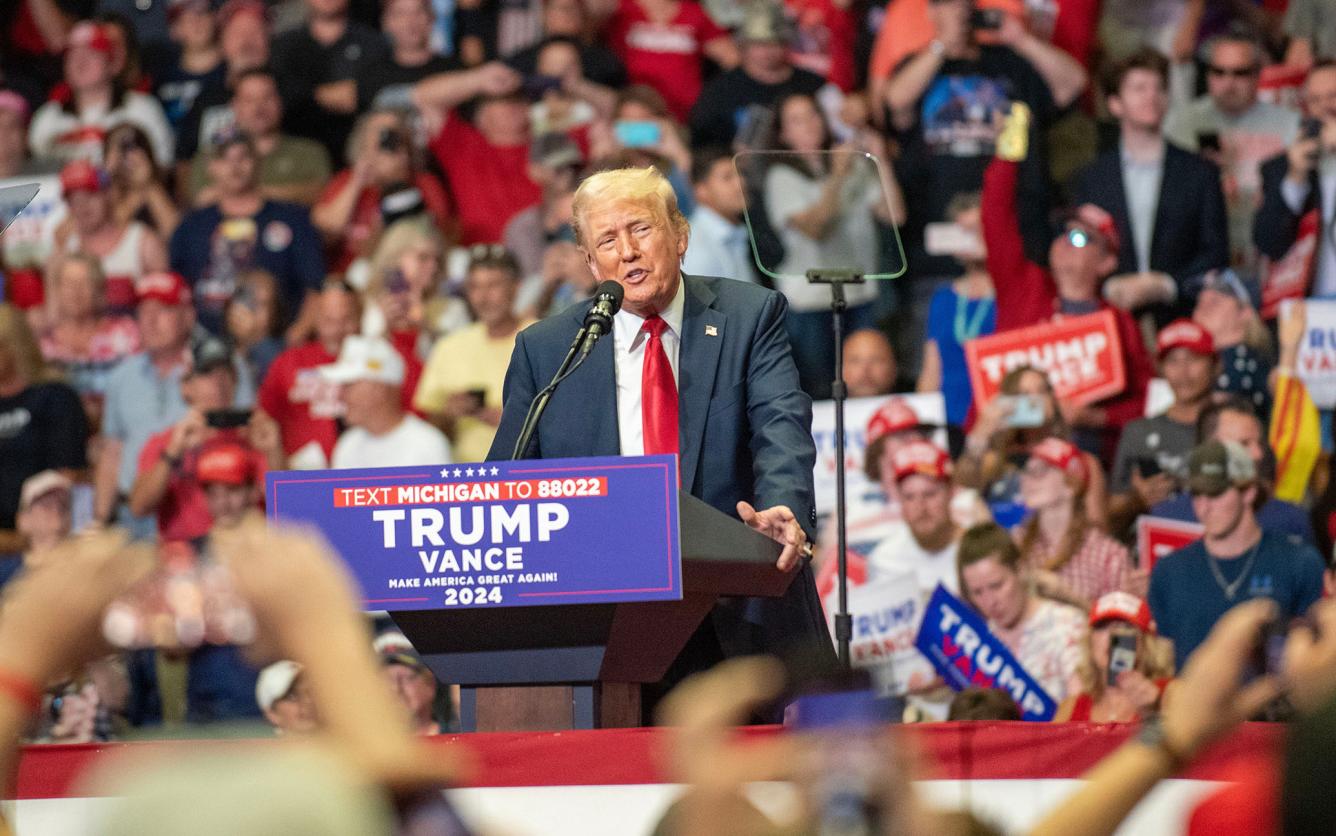
    Former President Donald Trump speaks during a campaign rally at the Van Andel Arena in Grand Rapids, Mich. last weekend. (Neo Hopkins/The Detroit News/TNS)

    by Michelle Diament | July 25, 2024 disabilityscoop

    In a new book, Donald Trump’s nephew Fred C. Trump III says that the former president told him that people like his son, who has intellectual and developmental disabilities, “should just die.”

    The claim comes in Fred Trump’s memoir “All in the Family: The Trumps and How We Got to Be This Way” that is set to be released next week. An excerpt was published by Time on Wednesday.

    Fred Trump, the son of Donald Trump’s late brother Fred Trump Jr., said that he saw his uncle being in the White House as an opportunity to advocate for housing support and other needs of people with intellectual and developmental disabilities like his son William, 25.

    After the 45-minute Oval Office meeting concluded, Fred Trump said his uncle asked to see him.

    “I thought he had been touched by what the doctor and advocates in the meeting had just shared about their journey with their patients and their own family members. But I was wrong,” Fred Trump wrote.

    “Those people,” Fred Trump said his uncle told him, “the shape they’re in, all the expenses, maybe those kinds of people should just die.”

    Not knowing what to say, Fred Trump said he “turned and walked away.”

    On another occasion, Fred Trump said he reached out to his uncle to ask for help with a medical fund that the family had set up for his son that was running low. After explaining the situation, Fred Trump recounts that the former president told him “I don’t know,” then let out a sigh and said, “He doesn’t recognize you. Maybe you should just let him die and move down to Florida.”

    The Trump campaign did not respond to a request for comment from Disability Scoop about Fred Trump’s claims. Time also said that it asked the former president to respond and received no reply.

    Read the full story at DisabilityScoop…

    Read more stories like this one. Sign up for Disability Scoop’s free email newsletter to get the latest developmental disability news sent straight to your inbox.

  • As a fellow Ohioan, I have some concerns about U.S. Sen. J.D. Vance

    As a fellow Ohioan, I have some concerns about U.S. Sen. J.D. Vance


    by David DeWitt

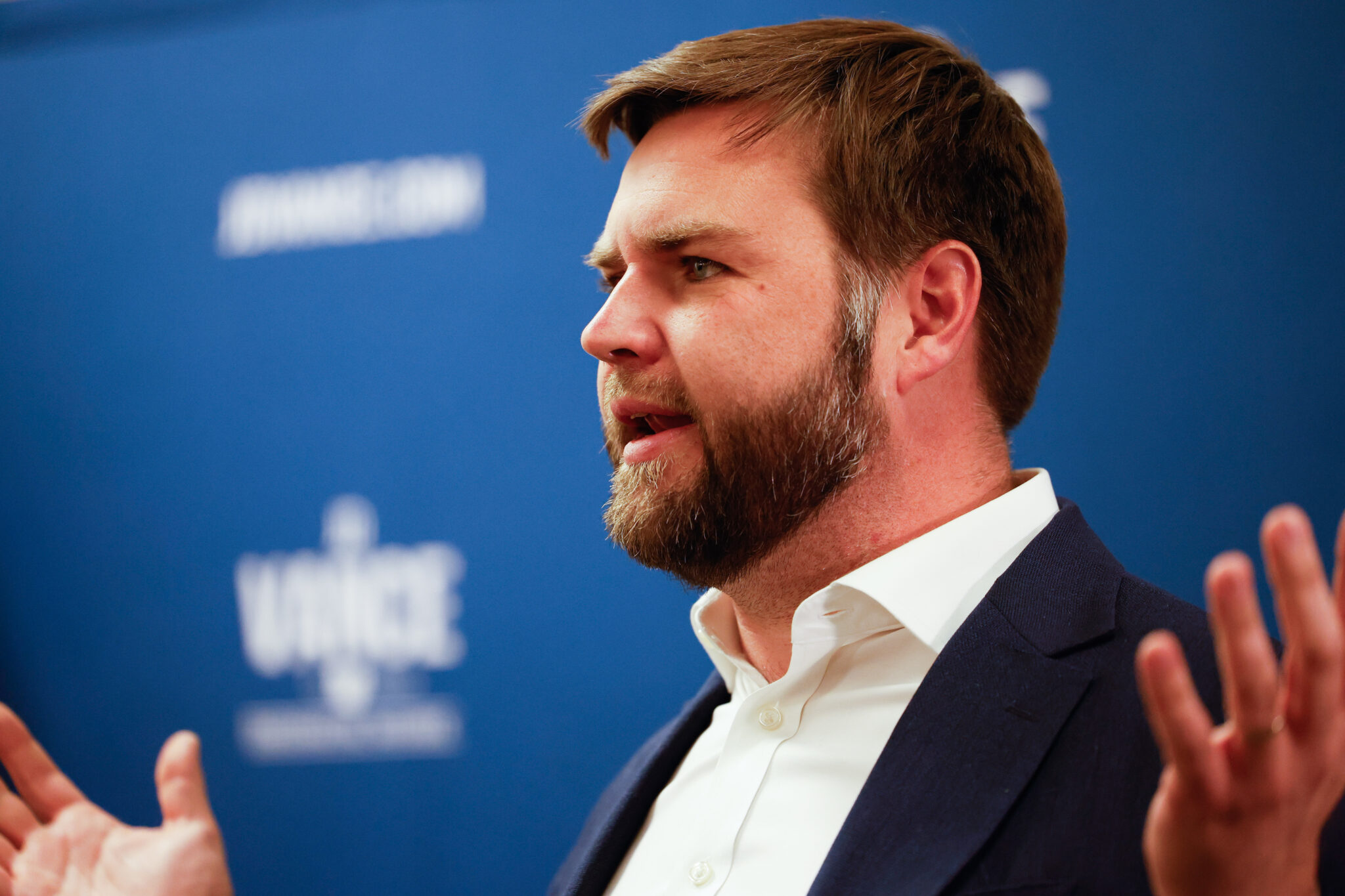
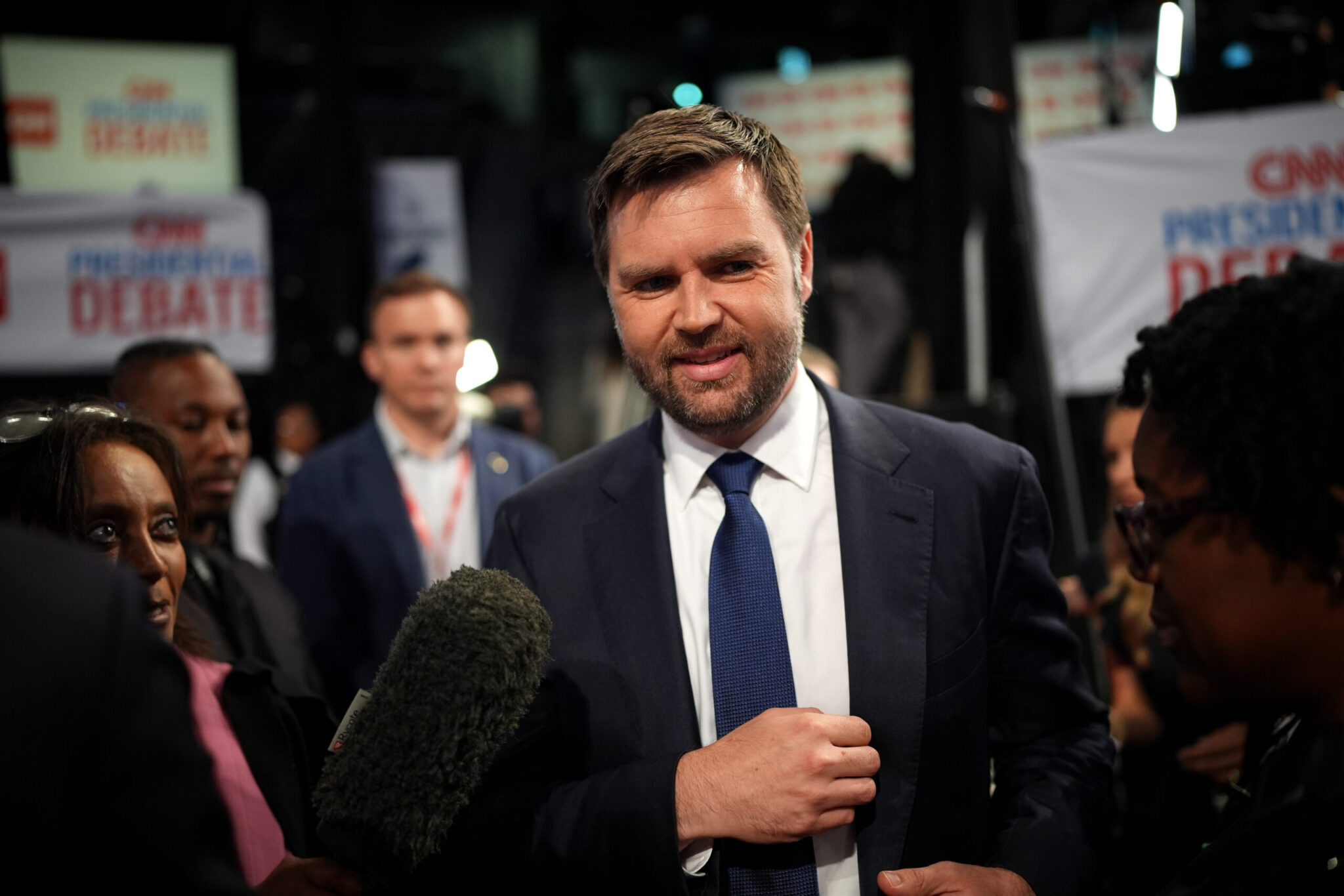
    Donald Trump announced Monday Ohio junior U.S. Sen. J.D. Vance as his running mate in the 2024 Election, and I have some concerns.

    Like J.D. Vance, I am also 39 years old; I also grew up in a struggling old industrial city in Ohio; I have also lost countless people close to me to the scourge of drug addiction; and I have also spent a lot of time in Appalachia — although my time was spent as a reporter in the Ohio foothills of Appalachia covering poverty, education, crime, courts, transportation, health care, business, and labor for nearly a decade.

    Where does one begin? Perhaps 2016 when Vance first launched into the national spotlight with his memoir, “Hillbilly Elegy.” The memoir part of the book I found interesting and sad and heartbreaking on the level of all the other stories I have witnessed, heard, and reported on about childhood traumas passed down in families struggling with poverty.

    Then there was the other part of his book, the diagnosis and prescription part, that I couldn’t understand or relate to: A certain seething contempt and scorn for the people of Appalachia and the Ohio “rust belt,” as though their struggles were the result of deep personal character flaws and a lack of bootstrapping, and not predictable consequences wrought by growing up poor in a region wracked by exploitation, stuck in cycles of generational poverty, and mired in the kind of desperation that accompanies these things.

    Most reporters drift toward certain topics of personal interest, and mine has always been the hardships of those in poverty and all its attendant ills. You see, “poverty” is not its own specific beat; it’s a topic wrapped up in the largest resource, funding and hence achievement gaps in education; it’s tied to the lack of reliable transportation to get to work, or job interviews; it’s weighted down by a lack of access to primary and preventative health care, and even internet access; it’s connected to childhood trauma, and hunger, and the long-term denial of regular meals and nutritious food; it’s burdened by increasing costs and regressive taxes: A greater and greater percentage of income goes toward rent, utilities, groceries, toiletries.

    I’ve met grandmothers providing kinship care to their grandchildren who’ve had to look at a couple boxes of mac and cheese and hot dogs, a loaf of bread and PB&J, as food for the week. I’ve met mothers working two jobs having to face a high electric bill but not having enough leftover for shampoo and deodorant. Imagine the bullying at school that leads to, and then think about how that bullying is just one more additional hardship — like not ever having your parent or parents around because they’re working two jobs, and you have to take care of younger siblings from the time you turn nine because child care is unaffordable.

    The generally crushing existence of all of it year after year, decade after decade, a lifetime of one blow after another; one trauma after another; one setback after another; one car breakdown, one broken bone or disease racking up medical debt, one layoff sending the family hurtling toward crisis and bankruptcy, just imagine it, and you begin to see how poverty perpetuates itself by breaking everyone in it down, and leaving the vast majority without a shot to break the cycle. And of course the susceptibility to addiction is high. Anything to fade away from the nightmare for a few hours. So that begets all its own problems and cycles and traumas from there. I learned all about it in the courtrooms and at the addiction treatment centers.

    So here is where I take issue. While I covered poverty in Appalachia, these are the cycles and problems of poverty at-large, wherever you find it, in the cities or in the hills, regardless of race, creed, or religion, throughout the country. This is not some cultural problem with Appalachia or the so-called “rust belt” — which is an insulting term, by the way, as is “Hillbilly.” This is what poverty is like anywhere in America. All that and much more.

    Appalachia itself is charming and noble. The “Hey Buddy” drawl and geniality of so many people is downright charismatic. A lot of folks are a helluva lot of fun to go four-wheeling with or to visit with over a draft at the local hole-in-the-wall. There’s genuine warmth and a good-times attitude. There’s an authentic kindness and lack of pretension. Then you learn the history of the coal mines and the breaker boys and the company towns and the union-busting and the Battle of Blair Mountain, and the Matewan Massacre, and you begin to understand what the region has been through and where it is now.

    The rural Ohio I know is full of strong, caring, resilient, community-minded people. I can say the same for the cities. Sometimes I get asked where I look for hope, and I always say that it’s not the politicians; it’s the thousands of good-hearted people working so hard every day to help their communities, in cities, towns and villages across Ohio. In my work as a reporter, I’ve been lucky enough to meet a whole heckuva lot of them.

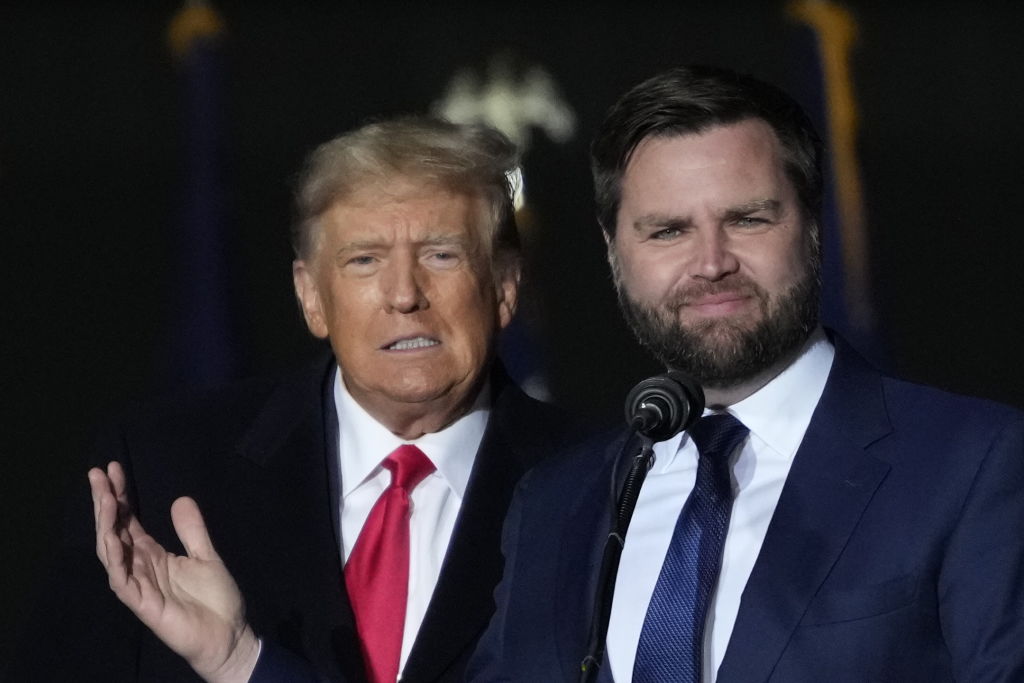
     VANDALIA, OHIO -Former U.S. President Donald Trump and Ohio Republican U.S. Senator JD Vance. (Photo by Drew Angerer/Getty Images.) 

    So after all my years of reporting their stories, some things seem pretty obvious to me as far as what can be done to help these communities, and giving tax cuts to billionaires just isn’t one of them. But that’s what Donald Trump is promising.

    Neither is saddling them with the regressive financial burden of 10% tariffs, which amounts to a $1,700 per year tax on Americans and will increase inflation that falls heaviest on those in poverty. That is another Trump promise. Replacing income taxes with tariffs, as Trump has also suggested, would send millions of families in poverty hurtling toward ruin, not only paying much higher sales taxes and other fees to try to still fund the government, but seeing vast swaths of support systems removed from under their feet. Costs going up would also forestall interest rates coming down. Devaluation of the dollar, as they propose, would also jack up inflation rates. Trump has also proposed cutting corporate tax rates from 21% to 15%, after already cutting them from 35% to 21% in 2017.

    Defunding the U.S. Department of Education as Trump has proposed would cut $18 billion a year for Title I high-poverty schools, cut $15 billion a year for special education, and cut $28 billion a year for Pell Grants. That would have a devastating impact on these communities.

    What these communities need is lots of funding and support to overcome the poverty achievement gap in education with best practices: early childhood education, before school programming with a full breakfast for those who need it; full universal lunch during school hours; and after school programs with dinner availability and options ranging from athletics to music and the arts to media production to outdoor activities. We need full, well-rounded education; and good pay and trauma-informed training for all teachers and public-facing workers; and connected, wraparound support systems for families.

    We shouldn’t be cutting our education budgets, commoditizing and privatizing education as billionaires are planning to do under Trump, and leaving whole communities out in the rain to perpetuate the cycles. We should realize, to paraphrase Frederick Douglass, that it’s easier to give a child education, hope, and opportunity than it is to fix a broken man.

    We should be making our public schools palaces of such learning, hope and opportunity, that keep children away from potentially toxic or negligent home environments for as long as possible; that give them three square, nutritious meals a day if that’s what some need; that provide them with good adult role models and mentorship, and allow them the opportunity to explore a variety of interests to find their individual passions to pursue, and a pathway toward a fulfilling, stable career and adulthood.

    On Wednesday night, J.D. Vance made his pitch to the “working man” in his vice presidential acceptance speech. Stood up next to the actual Trump agenda, I just don’t know what he’s talking about. That’s my concern. Nothing in the Trump agenda tangibly promises to help the families J.D. and I know so well. Quite the opposite. Meanwhile, as far as the heart-wrenching menace of drug addiction, J.D. has already prioritized defunding Ukraine over fighting fentanyl.

    I have many other concerns, such as his extreme moral and intellectual flexibility that raises serious questions about his ethics and candor; and his advocacy for abandoning Ukraine to the ravages of Putin; and his playing footsie with a neo-monarchist named Curtis Yarvin; and his comments that the radical right should seize institutions and ignore the courts; and his joining the ticket of a convicted felon — also adjudicated guilty of sexual assault and business fraud — who conspired to overturn the results of a free and fair election and rob millions of Americans of their votes, and instigated a violent mob attack on the U.S. Capitol on January 6, 2021 to disrupt constitutional business and the peaceful transfer of power.

    I am concerned that J.D. has said he would’ve went along with the plot to create a constitutional crisis by overstepping his authority as vice president and overthrowing the election results.

    In short, I have grave questions about J.D. Vance’s judgment and trustworthiness, and I do not understand his apparent desire to overthrow the post-WWII Pax Americana in favor of some sort of nationalistic isolationism where autocrats run amok, with a reactionary domestic agenda that dismantles programs for people in poverty and will only exacerbate and perpetuate their plight and exploitation — while Trump and the five dozen billionaires supporting him get even more filthy, stinking rich.


    David DeWitt
    DAVID DEWITT

    Ohio Capital Journal Editor-in-Chief and Opinion Columnist David DeWitt has been covering government, politics, and policy in Ohio since 2007, including education, health care, crime and the courts, poverty, state and local government, business, labor, energy, the environment, and social issues. He has worked for the National Journal, The New York Observer, and The Athens NEWS. He holds a bachelor’s degree from Ohio University’s E.W. Scripps School of Journalism and is a board member of the E.W. Scripps Society of Alumni and Friends. He can be found on X @DC_DeWitt

    Ohio Capital Journal is part of States Newsroom, the nation’s largest state-focused nonprofit news organization.

    MORE FROM AUTHOR

  • BREAKING: Trump picks Ohio U.S. Sen. J.D. Vance as his running mate

    BREAKING: Trump picks Ohio U.S. Sen. J.D. Vance as his running mate

    BY:  AND  Ohio Capital Journal

    MILWAUKEE, Wis. — Donald Trump announced Ohio U.S. Sen. J.D. Vance as his running mate Monday during the first day of the Republican National Convention, capping off months of speculation about who would get the nod as his vice presidential pick.

    Vance has not been a member of Congress long, having less than two years experience as a senator and having voted against major bipartisan bills throughout his tenure in the upper chamber.

    Before becoming a U.S. lawmaker, Vance served in the Marine Corps during the Iraq war, worked as a venture capitalist and wrote a book about growing up in Middletown, Ohio. He holds a law degree from Yale.

    “After lengthy deliberation and thought, and considering the tremendous talents of many others, I have decided that the person best suited to assume the position of Vice President of the United States is Senator J.D. Vance of the Great State of Ohio,” Trump, who will be nominated as the 2024 Republican presidential candidate on Thursday night, posted on social media.

    “J.D. has had a very successful business career in Technology and Finance, and now, during the Campaign, will be strongly focused on the people he fought so brilliantly for, the American Workers and Farmers in Pennsylvania, Michigan, Wisconsin, Ohio, Minnesota, and far beyond….,” Trump added.

    Kevin Roberts, president of the conservative Heritage Foundation, received the news while he was speaking to reporters at the foundation’s all-day policy fest in downtown Milwaukee.

    “You will see a broad smile on my face,” Roberts said, adding that he and Vance are “good friends” and that he “personifies” Heritage’s values.

    “He listens. He’s thoughtful. He’s funny. He and I had a similar upbringing, challenging childhood, so we hit it off like that when we met. He’s obviously going to be his own man. He’s got to work with our conservative standard bearer,” Roberts said. “The second thing is in terms of policy, he understands the moment we’re in in this country, which is that we have a limited amount of time to implement great policy on behalf of forgotten Americans.”

    Trump’s former Vice President Mike Pence has distanced himself from Trump since the Jan. 6, 2021, attack on the U.S. Capitol building — requiring Trump to find a different person to join him on the ticket this year.

    Pence was in the Capitol that day, when a pro-Trump mob attacked police officers, broke into building and disrupted Congress’ certification of the electoral college votes for President Joe Biden.

    Pence has been critical of how the Republican Party has changed under Trump’s leadership, including rejecting how the platform evolved on abortion this year.

    The Biden-Harris campaign immediately slammed the selection of Vance.

    “Donald Trump picked J.D. Vance as his running mate because Vance will do what Mike Pence wouldn’t on January 6: bend over backwards to enable Trump and his extreme MAGA agenda, even if it means breaking the law and no matter the harm to the American people,” said Biden-Harris 2024 Chair Jen O’Malley Dillon.

    “Over the next three and a half months, we will spend every single day making the case between the two starkly contrasting visions Americans will choose between at the ballot box this November: the Biden-Harris ticket who’s focused on uniting the country, creating opportunity for everyone, and lowering costs; or Trump-Vance – whose harmful agenda will take away Americans’ rights, hurt the middle class, and make life more expensive  – all while benefiting the ultra-rich and greedy corporations.”

    Vance background

    Vance was born in Middletown, Ohio in August 1984. After graduating from high school in 2003 he enlisted in the Marine Corps, later deploying to the Iraq War.

    He attended Ohio State University, where he received a bachelor’s degree in political science and philosophy in 2009. Vance went on to attend Yale Law School, graduating in 2013 before working for the law firm Sidley Austin LLP.

    Vance gained national attention with his 2016 memoir, “Hillbilly Elegy: A Memoir of a Family and Culture in Crisis,” which tells the story of him growing up in poverty in the Rust Belt. However, the book faced backlash from many historians and journalists over his depictions of Appalachia and the people who live there.

    The 39-year-old worked in San Francisco in the tech industry as a venture capitalist. He served as a principal at one of the firms of Peter Thiel, the co-founder of PayPal.

    Vance later moved back to Ohio and raised more than $90 million to co-found a venture capital firm in Cincinnati, Narya Capital, which received financial backing from Thiel.

    Vance ran his first campaign for U.S. Senate in 2022, defeating Democratic candidate and former U.S. House Rep. Tim Ryan with 53% of the vote.

    Since being sworn into office in January 2023, Vance has voted against several big-ticket legislative items, including the law that raised the debt limit, the national defense policy bill and two must-pass government funding packages.

    Aid to Ukraine, Israel, Taiwan

    Vance also voted against legislation that held $95 billion in military and humanitarian assistance for Ukraine, Israel and Taiwan as well as a ban on TikTok within the United States unless the social media app’s Chinese parent company sold it.

    Vance was among the 18 senators who voted against that emergency spending bill heading to President Joe Biden’s desk. Another 79 senators voted to approve the legislation.

    During floor debate on the supplemental spending package, Vance spoke out against sending more aid and arms to Ukraine, arguing that there were parallels between its fight to eject Russia from its borders and the U.S. war in Iraq.

    “And the same exact arguments are being applied today, that you are a fan of Vladimir Putin if you don’t like our Ukraine policy, or you are a fan of some terrible tyrannical idea because you think maybe America should be more focused on the border of its own country than on someone else’s,” Vance said.

    “This war fever, this inability for us to actually process what is going on in our world to make rational decisions is the scariest part of this entire debate,” he added.

    Bipartisan efforts

    Vance has also worked across the aisle on bipartisan legislation during his somewhat brief tenure in the U.S. Senate.

    He sponsored a bill alongside Ohio Sen. Sherrod Brown, Pennsylvania Sens. Bob Casey and John Fetterman, all three of whom are Democrats, to address rail safety in the aftermath of the Norfolk Southern train derailment in East Palestine.

    Vance wrote in a statement released when the bill was unveiled in March 2023 that with the legislation “Congress has a real opportunity to ensure that what happened in East Palestine will never happen again.”

    “We owe every American the peace of mind that their community is protected from a catastrophe of this kind,” Vance wrote. “Action to prevent future disasters is critical, but we must never lose sight of the needs of the Ohioans living in East Palestine and surrounding communities.”

    The bipartisan legislation has yet to advance in the Senate to either a committee markup or a floor vote.

    Ashley Murray contributed to this report.


    Jennifer Shutt
    JENNIFER SHUTT

    Jennifer covers the nation’s capital as a senior reporter for States Newsroom. Her coverage areas include congressional policy, politics and legal challenges with a focus on health care, unemployment, housing and aid to families.

    Ohio Capital Journal is part of States Newsroom, the nation’s largest state-focused nonprofit news organization.

    MORE FROM AUTHOR

    Ariana Figueroa
    ARIANA FIGUEROA

    Ariana covers the nation’s capital for States Newsroom. Her areas of coverage include politics and policy, lobbying, elections and campaign finance.

    Ohio Capital Journal is part of States Newsroom, the nation’s largest state-focused nonprofit news organization.

    MORE FROM AUTHOR

  • Donald Trump is a convicted felon. Some Ohio leaders react with fury, others silence

    Donald Trump is a convicted felon. Some Ohio leaders react with fury, others silence

    BY  Ohio Capital Journal

    A Manhattan jury made history Thursday when it convicted Donald Trump of 34 felonies. They relate to how he paid a porn star to stay quiet just before the 2016 election — and his actions cast doubt on Trump’s legitimacy during his one term as president.

    Despite now being a felon, Trump is for the third time the GOP nominee. Most of Ohio’s Republican leaders reacted with outrage to his conviction, while the governor didn’t have much to say, and the one statewide Democrat said the jury had spoken.

    Sen. J.D. Vance is on the shortlist to be Trump’s vice presidential pick and he took to the airwaves to call Trump’s prosecution political, and to say a lot of other stuff as well. On X Thursday, Vance falsely accused the Democratic Party of inventing a crime just to prosecute Trump and he made reference to a conspiracy theory with anti-semitic overtones.

    “This decision is a disgrace to the rule of law and our Constitution,” Vance wrote. “Dems invented a felony to ‘get Trump,’ with the help of a Soros funded prosecutor and a Biden donor Judge, who rigged the entire case to get this outcome. This isn’t justice, it’s election interference.”

    Actually, as the jury found, it was Trump who committed election interference. And legal experts pointed out that Trump’s lawyers helped pick the jury, put on witnesses and had input in the jury’s instructions. Trump himself could have taken the witness stand, but chose not to.

    Speaking from the White House Friday, President Joe Biden criticized Trump supporters for claiming that the justice system was rigged against Trump without providing any concrete evidence.

    “It’s reckless, it’s dangerous, it’s irresponsible for anyone to say this was rigged just because they don’t like the verdict,” Biden said.

    Ohio Attorney General Dave Yost, a likely contender for the GOP nomination to be governor in 2026, also slammed the proceedings that ended in Trump’s conviction.

    “This verdict is likely to be overturned. It is not the first unjust verdict, and it is why we have courts of appeals,” he said on X. “The aptly named (Manhattan District Attorney) Alvin Bragg picked his defendant and campaigned on prosecuting him — disreputable and unethical conduct that tarnished the justice system.”

    When it comes to courts of appeal, Yost has had his own difficulties. A panel of the 6th U.S. Circuit Court of Appeals on Wednesday ruled that Yost was improperly blocking signature gathering for a proposed amendment to the state Constitution that would reduce immunities the state has have from being sued. Yost on Thursday said he’d seek a ruling from the entire court.

    Some of the AG’s critics have accused him of stalling.

    He refused to approve a summary of the ballot language, which supporters need if they’re to gather 420,000 verified signatures from registered voters in time for the measure to make the November ballot. Yost is refusing to answer questions about a similar maneuver in 2019 that helped kill a voter-initiated repeal of a law at the center of the biggest bribery scandal in Ohio history.

    Lt. Gov. Jon Husted is likely to vie with Yost for the gubernatorial nomination. Like many other Ohio Republicans, he, too, said he was outraged over Trump’s conviction for having an extramarital tryst with a porn star, paying to silence her in order to improperly influence an election and then falsifying business records to cover it all up.

    “This quote from President Trump is ultimately the truth of the matter: ‘The real verdict is gonna be Nov. 5, by the people,’” Husted said on X. He then reposted that while saying further, “If you are mad about it, do something about it by donating, volunteering and voting.”

    Ever merciless, some commenters reminded the lieutenant governor that he was roundly booed at a 2020 Trump rally in Vandalia as he encouraged attendees to wear masks at the height of the coronavirus pandemic. Trump played a lead role in politicizing mask wearing and downplaying a scourge that has killed nearly 1.2 million Americans.

    Ohio’s top elections official also rushed onto social media to defend a newly minted felon who tried to overturn the results of the 2020 election and thereby steal the votes of 81 million Americans.

    “Partisan prosecutor,” Secretary of State Frank LaRose said on X. “Activist judge. Sham trial. Bogus verdict. It’s a sad day in America when a political party is so afraid of losing its grip on power that they’re willing to abuse justice to game an election. This will not stand.”

    LaRose is a key player in Ohio’s epic gerrymanderingquestionable voter purges and restriction of voting access, so it’s interesting that he’d accuse others of desperately clinging to power.

    One wag also pointed out that a jury had just found that Trump falsified numerous business records to further his conspiracy and that as Secretary of State, LaRose is in charge of Ohio’s business records. It’s unclear what — if anything — LaRose would have done if the former president faked them here in the Buckeye State.

    Cleveland businessman Bernie Moreno, who is challenging Democrat Sherrod Brown for Ohio’s other Senate seat, was also vociferous in his support of the only ex-president to also bear the title “felon.”

    “Today is a dark day for American democracy,” Moreno said on X. “Joe Biden and his leftwing allies engaged in election interference to prosecute their top political opponent on bogus charges. This verdict is representative of a banana republic, not a democracy. Sherrod Brown and DC Democrats should be ashamed of this weaponization of our justice system.”

    His statement ignores the fact that the Biden Justice Department declined to prosecute Trump on the charges of which the New York jurors found him guilty. It also ignores the fact that the Biden Justice Department is prosecuting the president’s own son and a sitting Democratic senator.

    Brown, his Democratic opponent, is facing a hard reelection in a Republican-leaning state. When asked to comment on Trump’s conviction Friday, Sen. Brown stuck to general principals.

    “I’m not a lawyer or a judge but I’ve said from the beginning that no one is above the law,” he said in an email. “Ultimately this is up to the legal system to sort out and for the American people to decide in November.”

    Gov. Mike DeWine’s office didn’t immediately respond to a request for comment. He’s a Republican who got on Trump’s bad side early in the pandemic, when DeWine implemented health orders that were recommended by experts.


    Marty Schladen
    MARTY SCHLADEN

    Marty Schladen has been a reporter for decades, working in Indiana, Texas and other places before returning to his native Ohio to work at The Columbus Dispatch in 2017. He’s won state and national journalism awards for investigations into utility regulation, public corruption, the environment, prescription drug spending and other matters.

    Ohio Capital Journal is part of States Newsroom, the nation’s largest state-focused nonprofit news organization.

    MORE FROM AUTHOR

  • Fulton grand jury indicts Trump, members of his inner circle

    Fulton grand jury indicts Trump, members of his inner circle

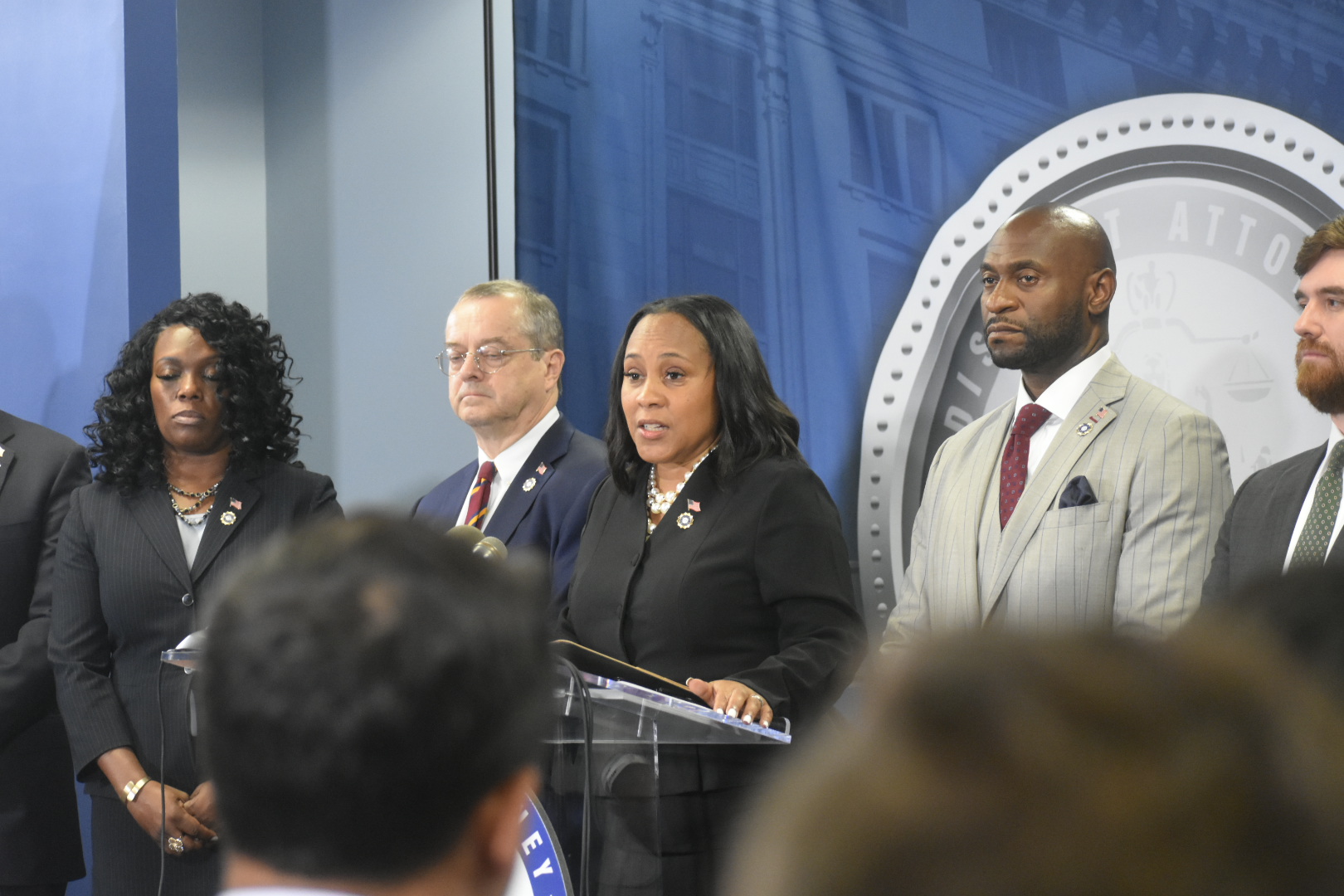
    Fulton County District Attorney Fani Willis discusses the indictments against former President Donald Trump and 18 others on Monday, Aug. 14, 2023. (Photo by Ross Williams/Georgia Recorder, States Newsroom.)

    BY:  AND  Ohio Capital Journal

    Former President Donald Trump and several members of his inner circle were indicted Monday in Fulton County Georgia’s sweeping investigation into 2020 election interference.

    Fulton County District Attorney Fani Willis held a press conference late Monday night to briefly discuss the grand jury’s felony conspiracy and racketeering charges being levied against the 2024 Republican presidential frontrunner and other allies that include his former chief-of-staff Mark Meadows, his personal attorney Rudy Giuliani and ex-Georgia Republican Party Chairman David Shafer.

    Nineteen people were indicted on 41 charges after the grand jury’s vote to hand up indictments and Fulton Judge Robert McBurney’s unsealing of the charges Monday evening.

    “All elections in our nation are administered by the states, which are given the responsibility of ensuring a fair process and an accurate counting of the votes,” Willis said late Monday evening. “That includes elections for presidential electors, Congress state officials and local offices. The state’s role in this process is essential to the functioning of our democracy.”

    “The indictment alleges that rather than abide by Georgia’s legal process for election challenges, the defendants engaged in a criminal racketeering enterprise to overturn Georgia’s presidential election result,” Willis said.

    It is the fourth time the former president has been indicted this year, and it is the second indictment directly tied to Trump’s attempts to stay in power after losing his bid for reelection.

    The defendants will have until noon on Friday, Aug. 25 to turn themselves in, Willis said.

    Read the 98-page indictment below.

    “I remind everyone here that an indictment is only a series of allegations based on a grand jury determination of probable cause to support the charges. It is now the duty of my office to prove these charges in the indictment beyond a reasonable doubt at trial,” Willis said.

    Willis said she plans to push for a trial to be held within the next six months, but acknowledged that will be up to the judge.

    Felony charges of false statements, forgery, racketeering and election fraud, solicitation of a government employee have also been filed against in the case that’s been more than a year in the making.

    The sweeping probe centers on Trump and a number of his supporters who lodged unfounded claims that widespread election fraud cost him the 2020 election in Georgia by nearly 12,000 votes. In early 2022, Willis launched the investigation after a recording of a phone call where Trump asked Republican Secretary of State Brad Raffensperger to “find” enough votes was released to the public.

    Willis, an Atlanta Democrat, has been accused of political bias by Trump and his attorneys who argue she has held fundraisers for candidates of her party in the past.

    And on Monday, Reuters reported that a document outlining charges against Trump appeared briefly on the Fulton County court’s website. A Fulton County courts spokesperson issued a statement Monday in response to a “fictitious document that has been circulated online and reported by various media outlets.”

    Trump’s Georgia-based attorneys blasted the brief appearance of the document in a statement, calling it part of a pattern that has “plagued this case from its very inception.”

    “This was not a simple administrative mistake,” Drew Findling and Jennifer Little said in a joint statement. “A proposed indictment should only be in the hands of the District Attorney’s Office, yet it somehow made its way to the clerk’s office and was assigned a case number and a judge before the grand jury even deliberated.”

    Trump also took to his social media site, Truth Social, to bemoan the indictment, calling Willis a “rabid partisan” and accusing her of timing the indictment to “maximally interfere” in next year’s presidential race. Willis brushed off the criticism when asked about the president’s comments.

    “I make decisions in this office based on the facts and the law. The law is completely nonpartisan,” Willis said.

    The group of 16 fake electors who met at the Georgia Capitol in December 2020 includes current and former state and local GOP officials, ex-Coffee County GOP Chairwoman Cathy Latham, and newly elected state Sen. Shawn Still.

    Giuliani pressed Georgia Republicans to set themselves up as alternate electors to counter state Democrat electors casting votes for Joe Biden after GOP election officials confirmed the current president as the winner of Georgia’s 2020 presidential election. The plan at first was for the “fake electors” to serve as a placeholder should the former president prevail in court challenges to Georgia’s results. But when Trump’s court challenges were all either dismissed or withdrawn, the alternate electors still signed paperwork swearing they were legitimate delegates.

    An eventful day

    Even before the prospect of a Monday grand jury decision, a throng of national and local press had assembled outside the Fulton County courthouse Monday morning where they tried to catch the witnesses as they left to quiz them on the process.

    The relative calm outside the courthouse was disrupted at one point Monday when opponents of a controversial public safety training center attempted to march through the area around the courthouse that has been closed off for the indictments. Among the group’s chants: “Donald Trump. Andre Dickens. I don’t know the f—— difference.”

    But inside the courthouse the grand jury proceeding moved at a faster pace than expected, and by late Monday afternoon, an indictment seemed possible. At least two witnesses – former Republican Lt. Gov. Geoff Duncan and Atlanta journalist George Chidi – who were originally set to testify Tuesday were moved up to Monday.

    Duncan, who did not seek reelection last year, brushed aside specific questions about his grand jury testimony Monday but he spoke generally about how he viewed his participation in the process. And politically, he described this moment in time as a potential “pivot point” for Republicans.

    “I think it’s important to tell the truth,” Duncan told reporters afterwards. “And to respond to the constitutional duties of answering the questions of the grand jury. It’s important for us as a country to finally figure out exactly what happened, and let Americans decide. Instead of misinformation and tweets, let America decide what’s next for us.”

    Other witnesses include state Sen. Jen Jordan and state Rep. Bee Nguyen, two Democrats who were part of the December 2020 legislative meetings where Rudy Giuliani pushed a false narrative in hopes of getting the General Assembly to intervene.

    Nguyen confirmed in a statement Monday that she had testified before the grand jury.

    “No individual is above the law, and I will continue to fully cooperate with any legal proceedings seeking the truth and protecting our democracy,” Nguyen said. “I believe that every individual who wrongfully and illegally tried to overturn our valid elections should be held accountable so that we can have, as John Adams said, ‘a government of laws, and not of men.’”

    Chidi, who testified before the special purpose grand jury, said late Monday that he was dismissed without testifying Monday. He called it a victory for journalists.

    The independent Atlanta reporter walked into the fake electors’ meeting at the state Capitol after noticing someone who would have likely served as a GOP elector had Trump won Georgia. He said he was intrigued when the person acted strangely toward him, so he started streaming on Facebook live and followed the man into the meeting room before quickly being ushered out.

    When he asked what kind of meeting it was, a woman said they were having an “education” meeting, he said.

    “Plainly, they were not having an education meeting. So, up until five minutes ago, the district attorney believed that that observation was relevant to these legal proceedings,” Chidi told a group of reporters who swarmed around him as he left the courthouse. “And perhaps it still is, but the jury may have enough information without me to make a decision.”

    [pdf-embedder url=”https://lovelandmagazine.com/wp-content/uploads/2023/08/CRIMINAL-INDICTMENT.pdf”]______________________

    Stanley Dunlap
    STANLEY DUNLAP

    Stanley Dunlap has covered government and politics for news outlets in Georgia and Tennessee for the past decade. At The (Macon) Telegraph he told readers about Macon-Bibb County’s challenges implementing its recent consolidation, with a focus on ways the state Legislature determines the fate of local communities. He used open records requests to break a story of a $400 million pension sweetheart deal a county manager steered to a friendly consultant. The Georgia Associated Press Managing Editors named Stanley a finalist for best deadline reporting for his story on the death of Gregg Allman and best beat reporting for explanatory articles on the 2018 Macon-Bibb County budget deliberations. The Tennessee Press Association honored him for his reporting on the disappearance of Holly Bobo, which became a sensational murder case that generated national headlines.

    MORE FROM AUTHOR

    Jill Nolin
    JILL NOLIN

    Jill Nolin has spent nearly 15 years reporting on state and local government in four states, focusing on policy and political stories and tracking public spending. She has spent the last five years chasing stories in the halls of Georgia’s Gold Dome, earning recognition for her work showing the impact of rising opioid addiction on the state’s rural communities. She is a graduate of Troy University.

    MORE FROM AUTHOR