Tag: Early Voting

  • In early morning vote, Ohio House agrees to send voter ID restrictions to the governor

    In early morning vote, Ohio House agrees to send voter ID restrictions to the governor

    The legislation, which initially eliminated most August special elections, became a vehicle for broader election restrictions included photo ID requirements

    BY: NICK EVANS – Ohio Capital Journal

    After a protracted day at the Ohio Statehouse, lawmakers approved sweeping new voting restrictions including photo ID requirements early Thursday morning. That proposal now heads to the governor.

    The House gaveled in for session early Wednesday afternoon, and after half an hour of ceremonial proceedings broke for recess. Rep. Tim Ginter, R-Salem, described the break as 30 minutes “more or less.”

    It took nearly six and a half hours for lawmakers to get back to work.

    Turns out they had a holiday party in the Statehouse atrium.

    After recess

    When House lawmakers returned to their desks, they didn’t jump straight to the controversial measures. They concurred on a bland smattering of measures amended in the Senate. Lawmakers made tweaks to occupational licensure and township authorities. They even made the All-American Soap Box Derby Ohio’s official gravity racing program.

    After that they went back to farewell speeches.

    Later, the House took up Senate Bill 202. The proposal prohibits disability from being used as a pretext for denying or limiting parenting rights. Representatives tacked on a series of unrelated amendments. Rep. Bill Seitz, R-Cincinnati, proposed a task force to study the state’s bail system to see how many people are being held for lack of money.

    “As is so much the case with so many things in Ohio — simple things that you would think we would know — we don’t know!” Seitz said.

    Other amendments allow county prosecutors to represent other officials, provide a salary bump for a Fulton County judge instead of replacing a retiring colleague, and allow lawyers to apply out of state experience toward their judicial candidacy.

    Lawmakers then took up and passed an unemployment compensation measure. Once they were done, the chamber went back into recess so the GOP could hold a caucus meeting.

    Voting legislation

    All the while, lawmakers whipped votes and opponents made a handful of eleventh-hour appeals.

    AARP’s state director Holly Holtzen wrote a letter to the House members arguing older Ohioans are “disproportionately affected” by voter ID requirements.

    “While AARP supports fair and effective procedures to detect and prevent voter fraud, we also want to ensure that Ohio’s 50+ population can exercise their voices in elections,” Holtzen wrote. “We understand that state lawmakers have a responsibility to balance these two elements but doing so responsibly and with sufficient debate is crucial.”

    The organization made a similar appeal in 2011 for a voter ID measure that didn’t go forward.

    Fifteen minutes before midnight, the House returned to take up voter ID legislation.

    The Senate added the language to legislation eliminating most August special elections.

    In addition to requiring voters to show a photo ID at the polls and allowing one drop box per county, the bill makes a series of cuts to the voting timeline. Absentee ballot requests must arrive a week, rather than three days, before Election Day. The final day of early voting will disappear, with its hours redistributed through the previous week. Absentee ballots postmarked the day before the election have to arrive within four days rather than the 10 allowed under current law.

    The debate

    Rep. Seitz explained the changes on the House floor and dismissed Democrats’ complaints about voter ID requirements.

    “What we’re doing is we’re saying anyone who does not have a driver’s license in Ohio can get a photo ID at the BMV — free. Free, free free,” Seitz said.

    Seitz also insisted he’d earned two concessions from the Senate that would be included in amendments to a separate bill. Under those changes, ballot drop boxes would be available outside regular business hours provided there’s 24-hour video monitoring. The other amendment would give boards more than four days to make their way through provisional ballots.

    Then Seitz argue the legislation represents a “missed opportunity” for Democrats. He pointed to the Senate reducing the number of proposed drop boxes from three to one.

    “As I predicted on day one with our bill,” Seitz said, “if you do not like this bill, if you are not willing to work with us on this bill, do not be surprised when at the end of the day you will get a bill that is much less to your liking.”

    Rep. Bride Rose Sweeney, D-Cleveland, pushed back, disputing Seitz’s characterization.

    “When you’re working from a basis of removing the right to vote,” she said, “that is not really a place that me and my colleagues on this side of the aisle feel that we are ever going to be in a position of supporting something.”

    Sweeney criticized the reduced time for absentee ballots to arrive after the election, and she invoked GOP concerns about voter fraud to do so. If one unlawful vote is one too many, she argued, isn’t disenfranchising one voter too many?

    Rep. Richard Brown, D-Canal Winchester, picked up the idea of voter fraud, too, and went in a different direction. He noted Secretary of State Frank LaRose’s reports of how safe and accurate Ohio elections are.

    “If our election system is the gold standard, which other states emulate and look to for how they should run their elections, then why are we changing anything at all?” Brown asked. “There’s no need to change anything. There is no problem to solve here. In fact, the changes suggested in this bill and the amendments, solve no problems, but create new ones.”

    Rep. Kent Smith, D-Euclid, noted “nothing good happens after midnight,” as he began his testimony early Thursday morning. Nevertheless, House lawmakers voted to concur with the Senate amendments around 12:30 a.m. With a vote of 55 to 32, the House passed the measure and it now heads to the governor.

    Follow OCJ Reporter Nick Evans on Twitter.

  • Ohio Republicans launch effort to make citizen-led amendments harder to pass for voters

    Ohio Republicans launch effort to make citizen-led amendments harder to pass for voters

    Secretary of State Frank LaRose (speaking) alongside Rep. Brian Stewart, R-Ashville, introducing a constitutional amendment requiring a 60% supermajority for all future citizen-led ballot amendments. (Photo by Nick Evans, OCJ.)

    Legislative Republican leaders also negotiating other changes, nix plan for automated voter registration

    BY: NICK EVANS – Ohio Capital Journal

    Lawmakers raised two ideas Thursday with massive implications for Ohio voters. One is an initiative requiring citizen-led constitutional amendments gain a 60% supermajority at the ballot for passage, the other is a House bill aimed at rewriting the underlying infrastructure of how the state conducts elections.

    The amendment

    State Rep. Brian Stewart, R-Ashville, joined Ohio Secretary of State Frank LaRose to introduce their plan to “safeguard Ohio’s constitution from special interests,” by proposing the supermajority for passage.

    “We have repeatedly watched as special interests buy their way onto the statewide ballot and then spend millions of dollars drowning the airwaves to secure fundamental changes to our state by a vote margin of 50% plus one vote,” Stewart argued.

    Their plan singles out the citizen-led process for amending the state constitution and raises the threshold for passage to 60%. The signature threshold for making the ballot would remain unchanged. LaRose argued lifting that benchmark would give the same interest groups a relative advantage.

     Ohio Secretary of State Frank LaRose. Official photo.

    “If a special interest group can afford to pay, you know, million dollars to hire people with clipboards,” LaRose reasoned, “they can afford to pay a million and a half dollars to hire more people with more clipboards.”

    The stakes are high for any groups whose ideas have fallen on deaf ears in Columbus. The prospects for abortion protection, recreational marijuana, minimum wage increases, gun violence prevention, or further redistricting reform provisions are effectively non-existent in the GOP-controlled Statehouse. LaRose and Stewart’s proposal would move the goal posts for any of those ideas.

    The proposal itself, of course, will need to go to voters and get just 50% plus one to alter the Ohio Constitution. It will follow a different process, too. Stewart’s resolution would make the ballot through a General Assembly vote rather than the citizen signature-gathering process.

    That lawmaker-led process won’t see any changes in the threshold for passage, either. LaRose and Stewart dismissed any suggestion their approach is unfair. Lawmakers have to meet a supermajority benchmark, too, they argued. It’s on “the front end” where they have to clear a 2/3 supermajority to make the ballot.

    Under maps declared to be unconstitutional gerrymandering by a bipartisan majority on the Ohio Supreme Court, Ohio Republicans once again won rock-solid supermajorities in the Ohio House and the Ohio Senate last week.

    LaRose and Stewart highlighted how 11 of 16 citizen-led amendments have failed since 2000, so it wasn’t clear exactly why they want to raise the bar higher as they also noted of the five measures that passed, three cleared 60% at the ballot box.

    The legislation

     Republican Ohio House Majority Leader Bill Seitz. Official photo.

    Meanwhile, state Rep. Bill Seitz, R-Green Township, kicked off Thursday morning by proposing sweeping changes to an already sweeping elections bill. The biggest move involved nixing the automated voter registration language contained in the initial proposal.

    Those provisions would’ve leaned heavily on the Bureau of Motor Vehicles to help voters register or update their registration any time they interact with the agency. If voters’ registration is regularly updated, the thinking goes, there will be fewer names to purge. But Seitz said after months of negotiations, the Ohio Senate hasn’t budged.

    “If we’re going to get anything done,” Sietz said, “we’ve got to have an agreement between two chambers, and the Senate does not yet feel comfortable with automated voter registration, even though I am comfortable with it.”

    “But it takes two to tango as they say,” he added with a wry chuckle.

    Among other changes, voters would be able to request absentee ballots online, but they’d have to submit paper requests on a specific form. The deadline for requesting one would be seven days before an election. The bill trims the deadline for absentee ballots to arrive post-election to seven days as well.

    Drop boxes would be available for the duration of early voting, but they’d be restricted — no more than three, all on board of elections premises and under 24/7 video surveillance.

    The bill eliminates the final day of early voting but distributes those hours in the week prior by extending weekday hours.

    Seitz also dropped a number of ID provisions from the original bill. He noted Senate legislation plans to offer free photo-ID to anyone — not just poor Ohioans as his bill envisioned.

    “They can be, you know, Leslie Wexner or Carlin Lindner III and they could still get a free photo ID,” he quipped referencing the founder of The Limited and the co-CEO of American Financial Group.

    Pushback

    A slew of press releases were released Thursday afternoon from good government groups and voters rights organizations slamming the Stewart and LaRose proposal to increase the passage threshold for citizen-initiated amendments.

    As for the Seitz proposal, voting rights advocates applauded the inclusion of online ballot requests and funding for electronic poll books. But League of Women Voters of Ohio Director Jen Miller warned the proposal would make elections “more complicated, expensive and inefficient.”

    She urged lawmakers to expand in person voting hours during the final weekend of early voting. Miller argued boards will get more bang for their buck expanding weekend voting compared to tacking on extra early morning hours during the week.

    Miller also pushed them to reconsider the automated voter registration they’d just removed. She argued 22 other states have similar policies including West Virginia, Georgia and Michigan.

    “It removes barriers to registration, but it also helps every voter because the accuracy of voter rolls are improved and it can reduce administrative costs for the boards of elections,” Miller explained. “And we reduce our provisional ballot counts which are typically very high in Ohio.”

    Miller returned to the idea of excessive provisional ballots in a discussion of stricter voter ID requirements.

    “When someone votes provisionally, which of course we support, that actually takes away all workers from the process,” Miller explained. “It increases lines, and it also increases a lot of post-election work for boards of elections. So we think that the system as is works.”

    Speaking afterward, Seitz rejected out of hand the idea that more stringent voter ID requirements could increase the number of provisional ballots cast.

    “I don’t buy that at all, that’s crap,” he said, “look at everything you need a photo ID for in life, okay?”

    Follow OCJ Reporter Nick Evans on Twitter.

  • Early voting starts today. Here are the basics

    Early voting starts today. Here are the basics

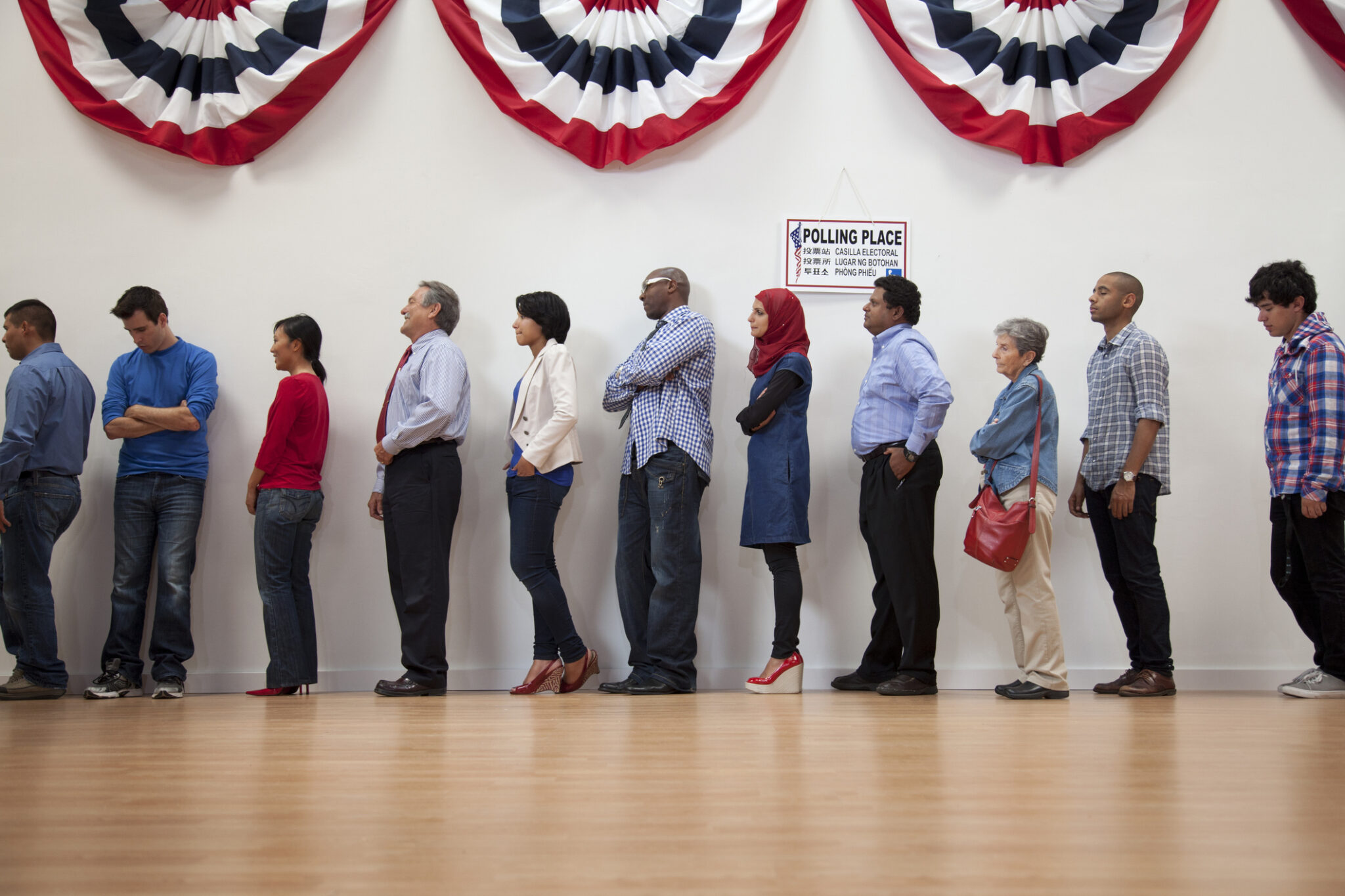
    Getty Images photo of voters in line.

    BY: JAKE ZUCKERMAN – Ohio Capital Journal

    Despite drawn out legal battles over district lines for state legislative and U.S. House seats, yes, there’s still a May 3 primary in Ohio.

    Monday was the final day to register to vote in time to participate in the May 3 primary. Early voting starts Tuesday. Here are some of the basics from there.

    What are we voting on?

    May’s election will finalize who will represent the Democratic and Republican political parties in the 2022 elections. That includes:

    • Governor
    • Statewide offices (attorney general, auditor, treasurer, secretary of state)
    • U.S. House and Senate
    • Ohio Supreme Court

    Some races, like the Republican primary for the U.S. Senate or Democratic gubernatorial primary, are hotly contested. Some, like the Supreme Court races, are uncontested. Depending on where you live, various political subdivisions have local judicial and municipal candidates and ballot issues like school levies on the ticket as well.

    What aren’t we voting on?

    Ohio House and Senate races. Those district lines, which form 99 state House seats and 33 Senate seats, are typically reconfigured every 10 years. However, in the maiden voyage of an anti-gerrymandering amendment added by voters into the state Constitution, the Ohio Supreme Court has rejected three maps proposed by the Ohio Redistricting Commission along party lines. State Central Committee elections for both parties missed the May 3 ballot as well.  Last week, Ohio Secretary of State Frank LaRose issued a directive calling for elections to proceed, minus the races caught in the redistricting quagmire.

    State lawmakers, who control when primary elections occur, have yet to set a date for the legislative primary contests.

    Read about the third rejection here and the latest fallout here.

    How can I vote absentee?

    Complete an absentee ballot request form by April 30 and mail it to your county board of elections. The board should then provide absentee ballots. The ballot can be sent by mail by May 2 but must be received by no later than 10 days after the election, so the earlier the better.

    Voters should ensure they fill their applications out accurately and thoroughly, include their email and phone number, and track their ballot online, to ensure it’s counted, according to Secretary of State Frank LaRose.

    It can also be delivered to the board in person.

    And early voting?

    Early, in-person voting in Ohio starts April 5. It runs weekdays from 8 a.m. until 5 p.m. in the first three weeks of April and for an extra two hours in the final week of the month. It is also available the Saturday and Sunday (April 30 and May 1) before the primary.

    Do I need identification to vote?

    Yes. Acceptable forms of identification include a current, federal or Ohio government-issued photo identification card; a military identification card; a utility bill; a bank statement; a government check; or a paycheck. The Ohio Secretary of State offers further guidance and specifics on its website. Identification issued by non-Ohio states, passports, insurance cards, birth certificates and social security cards do not suffice.

    People who vote at their precincts without such identification can vote provisionally. Their vote will be counted if they return within seven days to provide qualifying identification.

  • Confidence wanes in legislature’s ability to pass new congressional map

    Confidence wanes in legislature’s ability to pass new congressional map

    BY: SUSAN TEBBEN – Ohio Capital Journal

    House Speaker Bob Cupp, center right, and state Sen. Vernon Sykes, far right, co-chairs of the Ohio Redistricting Commission, speak to media after a January meeting to restart the legislative redistricting process. The process is set to start again next week. (Photo: Susan Tebben, OCJ)

    The tide seems to be turning on congressional redistricting, with legislative leaders saying the process lacks needed support in the General Assembly, and will likely head back to the Ohio Redistricting Commission.

    A day after legislative maps were sent back to the ORC for a third time, a co-chair of that commission says the congressional map is headed that way as well.

    House Speaker Bob Cupp told media at the Statehouse on Tuesday that a two-thirds vote would not be possible in the legislature, which is necessary to be able to pass a congressional map in the General Assembly.

    Because of that lack of support, a redistricting plan could not include an emergency clause, which would be needed for the plan to take effect immediately. The legislature was on the clock to pass a revised plan by Feb. 13 (Super Bowl Sunday), and for that plan to become effective in time for the May primary.

    Bills typically take effect 90 days after the governor’s signature, which would conflict with the primary deadlines.

    A spokesperson for Senate President Matt Huffman said because a commission vote doesn’t need an emergency clause, “it makes sense for the congressional map to go to the commission” if a two-thirds vote isn’t possible.

    House Democrats said the GOP made agreement difficult, having never shared a Republican proposal with the other party.

    “Democrats cannot support a map that we have not seen,” Maya Majikas, deputy communications director for the House Democratic Caucus, told the OCJ.

    Yesterday, House Minority Leader Allison Russo spelled out her expectations for the congressional redraw, which included work by the General Assembly.

    “There is a clear path to producing a fair, constitutional map that allows for the equal representation that all Ohio voters deserve. Now, it is the duty of this General Assembly to uphold our Constitutional responsibility and deliver a fair map,” Russo said in a statement.

    Democrats in both chambers spent Tuesday pushing their proposal for congressional districts, releasing a map with a GOP majority 8-7 split. One district covering Cuyahoga County is considered Dem-leaning, according to the caucus numbers, but only gives Dems a 50.9% to 49% advantage.

    Should the legislature continue to hold until the Feb. 13 deadline, the Ohio Redistricting Commission will have 30 days to come up with a congressional plan to replace the one rejected by the court.

    This deadline comes alongside a Feb. 17 deadline for the commission to submit a third version of the legislative district plan to the Ohio Secretary of State’s office, and submit it back to the court for review.

    In their Monday decision striking down the newest version of the legislative maps, the Ohio Supreme Court said they maintain jurisdiction over the maps. They also addressed the timeline for the May primary and 2022 elections in their decision.

    Republican members of the redistricting commission had asked the court to decide the case by Feb. 11 or to hold their decision until after the 2022 general election, using the now-rejected plan until that time.

    In their 4-3 decision, the majority justices on the court said the General Assembly “has the authority to ease the pressure that the commission’s failure to adopt a constitutional redistricting plan has placed on the secretary of state and on county boards of elections by moving the primary election, should that action become necessary.”

    Secretary of State Frank LaRose’s office confirmed that it is solely on the legislature to decide when an election conducted, though the secretary of state can advise them on “cascading events” that would be impacted by changing an election, according to spokesperson Rob Nichols.

    There is precedent for moving an election day, as LaRose did during the COVID-19 pandemic.

    In the ORC response to objections to the legislative maps, the commission laid out the impact the redistricting maelstrom may have on the 2022 election season.

    “Ohio’s expansive early voting framework amounts to an election season that begins with early in-person and absentee voting 29 days before the primary,” they wrote in court documents.

    That date would be April 5 this year, meaning before that date county boards of election need to print and prepare ballots under Uniformed and Overseas Citizen Absentee Voting Act (UOCAVA), for which federal law requires boards to begin mailing the ballots at least 45 days before the primary.

    Those ballots need to be sent by March 19 this year.

    “Though the General Assembly can, and has, temporarily amended Ohio law to move some of Ohio’s election deadlines for the primary election, the federal UOCAVA deadline is set by federal statute (and) it cannot be moved by the General Assembly or the Secretary,” the ORC wrote.

    Without districts to determine the voting precincts for those uniformed and overseas citizens, the ballots can’t be sent.

    Still, LaRose has only asked the General Assembly for the authority to shift some administrative deadlines having to do with the primary, not to move the election entirely.

    “His job right now is to administer an election on May 3,” Nichols told the OCJ.

    LaRose is also a member of the Ohio Redistricting Commission, so he’ll be multi-tasking as the redistricting process continues.

  • Loveland Area November Voting Guide: What you need to know to cast your ballot

    Loveland Area November Voting Guide: What you need to know to cast your ballot

    Tuesday, November 3, 2020


    LWVOH_rgb.pngThere are lots of rules around voting, but the League of Women Voters of Ohio is here to help! They offer all the “Get Ready to Vote” basic information you’ll need to cast your ballot with ease and success.

    Voter Registration

    Voter ID Requirements Voting by Mail

    Early Voting

    Find your Election Day Voting Location

    Voter Registration

    You must be registered to vote at least 30 days before an election.

    Register to Vote or Update Your Registration

    Every Ohioan should regularly confirm that they are properly registered to vote. Click here to check your Voter Registration Status​ and to find your voting location.

    Voter ID Requirements

    Ohio law requires that every voter, upon appearing at the polling place to vote on Election Day, must announce his or her full name and current address, and provide proof of identity. The forms of identification that may be used by a voter who appears at a polling place to vote on Election Day include:

      • An unexpired Ohio driver’s license or state identification card with present or former address, so long as the voter’s present residential address is printed in the official list of registered voters for that precinct;

      • A military identification;

      • A photo identification that was issued by the United States government or the State of Ohio, that contains the voter’s name and current address and that has an expiration date that has not passed;

    ​(For the following forms of identification, “current” is less than 12 months old.)​

      • An original or copy of a current utility or cell phone bill with the voter’s name and present address;

      • An original or copy of a current bank statement with the voter’s name and present address;

      • An original or copy of a current government check with the voter’s name and present address;

      • An original or copy of a current paycheck with the voter’s name and present address; or

      • An original or copy of a current other government document (other than a notice of voter registration mailed by a board of elections) that shows the voter’s name and present address, including license renewal and other notices, fishing and marine equipment operator’s license, court papers, or grade reports or transcripts.

    If you do not have any of the above forms of identification you may cast a provisional ballot. To do so you must provide either your Ohio driver’s license number, state identification number (which begins with two letters followed by six numbers), or the last four digits of your Social Security number.  Once the information is reviewed and verified by the board of elections, your ballot will be counted.

    If you do not provide one of the above documents, your driver’s license/state identification number, or the last four digits of your Social Security number at the precinct, you will still be able to vote using a provisional ballot. However, in order for that ballot to be counted, you must return to the board of elections no later than seven days following Election Day to provide a qualifying form of identification. Follow this link for more information on provisional ballots.

    Voting by Mail

    All Ohio voters whose registration information is up-to-date have the opportunity to vote in any election from the convenience of their own home by requesting an absentee ballot. Voters must fill out and return an application to vote by mail and their absentee ballot will be mailed to them so they may make their selections at their leisure and return their ballot to the board of elections ahead of Election Day. The deadline to request an absentee ballot is three days before the election in which you want to vote, but be sure to give yourself plenty of time and send your application as soon as possible if you choose to vote by mail!

    Absentee ballots must be postmarked by the day before the election in order to be counted. You can also return your absentee ballot in-person to your county board of elections before the close of the polls at 7:30pm on Election Day.

    You must complete and submit a separate application for each election in which you want to vote.

    Print the Absentee Ballot Application or contact your County Board of Election office to request an Absentee Ballot Application. 

    STEPS TO REQUEST AND VOTE AN ABSENTEE BALLOT:

      1. Complete the absentee ballot application and sign it.

      2. Mail the form back to your local county board of elections.

      3. Wait to receive your ballot in the mail from your county board of elections. If you have questions about your absentee ballot request, you should call your county board of elections or you can track the status of your ballot request as well as your voted absentee ballot through the Voter Toolkit.

      4. Return your voted ballot. You can send it by U.S. Mail or deliver it in person to your county board of elections, but the return envelope containing your marked ballot must either be received by your county board of elections prior to the close of the polls on Election Day, or postmarked no later than the day before the election and received by the board of elections no later than 10 days after the election.

        To make sure your absentee ballot is counted, it must be received by your board of elections by 7:30 p.m. on Election Day OR be postmarked by the day before Election Day.

    Starting the day after the close of voter registration, all registered voters can vote early at their local county Board of Elections office.

    Click here for Ohio’s statewide voting schedule and check here for the contact information and address of your county Board of Elections.

    Early Voting

    Starting the day after the close of voter registration, all registered voters can vote early at their local county Board of Elections office.

    Click here for Ohio’s statewide voting schedule and check here for the contact information and address of your county Board of Elections. 

    Election Day Voting Location


    Clermont County Board of Elections Web Site

    Hamilton County Board of Elections Web Site

    Warren County Board of Elections Web Site

    Ohio Secretary of State Web Site