

Tag: ecosystem

  • Open letter to Loveland City Hall about proposed parking garage from Citizens for Rights of the Ohio River Watershed

    Open letter to Loveland City Hall about proposed parking garage from Citizens for Rights of the Ohio River Watershed

    Dear Loveland City Council Members,

     Citizens for Rights of the Ohio River Watershed (CROW) is an organization that advocates for rights of communities dwelling within the watershed to protect the health, biodiversity, and safety of the Ohio River Watershed ecosystem. Government permits that put the fragile balance of this ecosystem at risk not only affect the functioning of the watershed as a living system, they deprive local communities from exercising their democratic rights to protect their own health and safety.  

    CROW joins the Sierra Club Miami Group in urging Loveland City Council to hold a public hearing before Loveland City Council takes a vote on the proposed downtown parking garage. Addressing the parking situation in Loveland should rightfully include all stakeholders in the discussion. 

    Some questions to consider:

    1. The Little Miami State Park, located within the beautiful and historic Little Miami River valley, has been designated as a federal and state scenic river. It is protected because of its high water quality, panoramic setting, and the many historic sites that can be found along its banks. In accordance with the provisions of chapter 1547 of the Ohio Revised Code, the Miami Valley Scenic Park has an Advisory Council representing local interests. Has this Advisory Council been consulted about the ecological viability of this proposed structure? 

    2. The Little Miami River traverses an ecologically vulnerable flood plain. Trail volunteers report the never-ending battle of keeping the trail free of conditions that cause flooding on parts of the trail-clogged culverts, erosion caused by bridge embankments, and other obstacles that interrupt the flow of water away from the trail surface. Even a few inches of rainfall can cause permanent flood damage. With the ground’s inability to absorb or impede the flow of water, the consequences can be disastrous. We can further expect Increased microbursts and flooding due to climate change. If you have done a geotechnical survey to study the subsurface conditions of the soil, was this survey conducted before or after a rainfall? Has a thorough environmental impact study been done? How many trees will need to be cut down to make room for this structure? Trees increase the permeability of the forest soils, preventing erosion and flooding. Other potential environmental impacts: Contamination due to increased particulate matter, increased noise pollution in Loveland, the potential increase in stormwater runoff from asphalt surfaces and bulldozed ground, and the laying down of detention basins, new water and sewer lines.

    3. If we really need a parking lot for bikers, have alternative proposals for downtown parking been considered? Since the garage would be 100 feet from the Little Miami River bike trail, presenting a potential environmental risk, why not locate the parking garage 1000 feet away from the flood plain? Bikers are fit enough to drop their bikes at the trail head and park their cars 1000 feet away. 

    The Citizens for Rights of the Ohio River Watershed (CROW) appreciate your consideration of our concerns, our questions, and our request. 

    Signed: Jeanne Nightingale, Jessica Schultz, Jim Schenk, Bill Cahalan, Deborah Jordan, Mary Aguilera, Susan Vonderhaar, Nikki Orlemann, Lynn Hamamoto, Frank Collins, Sue Brungs
  • The Eastern Coyote: Ohio’s newest mammal

    The Eastern Coyote: Ohio’s newest mammal

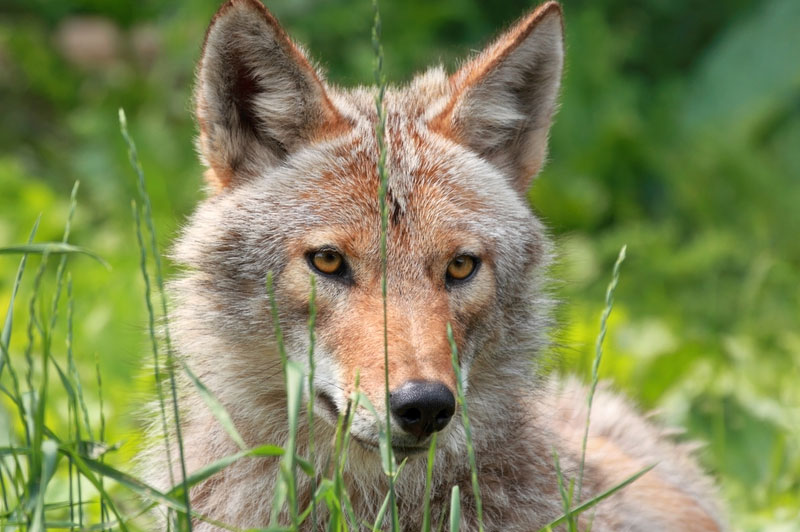
    Interbreeding between western coyotes and the remnant gray wolf populations of the Great Lakes region gave birth to a new species: the eastern coyote

    Guest Column by Chris Glassmeyer

    As the early settlers of the U.S. forged westward, their main priority was finding a place to call home. However, as they began to inhabit our country, not only did they affect the animals who lived here first, they affected where these creatures lived. The natural predators that called Ohio’s landscape home – the black bear, the bobcat and the eastern wolf – drastically reduced in size with colonization. Prior to the mid-1800s, coyotes were only found in the western U.S.  But as people colonized states, and populations grew, native predators became more and more scarce. Species native to other parts of the U.S. began traveling across the country to find a new home.

    The eastern coyote came about from interbreeding between western coyotes and the remnant gray wolf.

    With Ohio being void of apex predators, a vital niche was left unfulfilled.  That is, until the coyotes arrived. Before Europeans settled the new world, coyotes (Canis latrans) were only found in the American west. Then, in the 1940s, western coyotes started moving east into the northern Great Lakes region after the extirpation of the gray wolf. Interbreeding between western coyotes and the remnant gray wolf (Canis lupus) populations of the Great Lakes region gave birth to a new species: the eastern coyote (Canis latrans × Canis lycaon [or Canis latrans var.]). Being masters of opportunity, the eastern coyote soon swarmed Ohio and other eastern states. They quickly adapted and claimed the once-empty title of apex predator in Ohio.

    Chris Glassmeyer is the Conservation and Parks Manager for Great Parks of Hamilton County 

    One of the most notable differences between the eastern and the western coyote is size. Eastern coyotes can grow to be 30-40 pounds on average. (For comparison, the western coyote has an average weight of 20-30 pounds.) Female eastern coyotes weigh roughly 21 percent more than their male western counterparts. This size difference is largely because of the interbreeding of eastern coyotes with wolves of the Great Lakes region. The western coyote, however, has shown no interbreeding with wolves.

    The opportunistic behavior of the eastern coyote makes them adaptable to many environments, including urban and suburban areas. Their diet varies, and is largely based on the time of the year. Small rodents, such as mice, rabbits and voles, are a staple in the coyote’s diet.

    The opportunistic behavior of the eastern coyote makes them adaptable to many environments, including urban and suburban areas. Their diet varies, and is largely based on the time of the year. Small rodents, such as mice, rabbits and voles, are a staple in the coyote’s diet. Though, eastern coyotes have been known to consume larger animals, such as deer. However, because they are opportunistic feeders, eastern coyotes are both hunters and scavengers. Meaning they don’t regularly kill deer, but typically feed on the carrion deer leave behind. Coyotes have been known to eat deer during the winter months. Other food sources such as berries, vegetables and nuts are regularly consumed as an easy meal.

    Loveland Sweets is a purveyor of hand-crafted chocolates, caramels, marshmallows, and ice creams. Our house-made candies are prepared in small batches


    The cunningness and adaptability of the eastern coyote has brought them a little too close to home for many people. Coyotes are now common in city and suburban environments, as it has proven to be a bountiful food source for this resourceful predator. Those who are fearful of coyotes should take precautions against attracting them. Removing pet food and garbage, and cleaning up around outdoor grills are a good start to prevent coyotes from getting too close to your home. Small mammals make up a majority of the coyote’s diet. If you’re worried about your pet, keep small dogs and cats indoors, or supervising them while outdoors, is a good way to deter predation. Coyotes are particularly fearful of humans, so your presence can deter a problem before it arises.

    If you’re worried about your pet, keep small dogs and cats indoors, or supervising them while outdoors, is a good way to deter predation. Coyotes are particularly fearful of humans, so your presence can deter a problem before it arises.

    Predators are a necessary part of any ecosystem. Without them, the checks and balances that keep our natural areas functioning are nonexistent. We must move past the inherent fear of predators and work toward a lifestyle that embraces them in a spirit of coexistence. Humans, after all, are the greatest predator that this world has ever seen. And like the coyote, we’re working to adapt and survive.


      Loveland chiropractor Douglas Portmann, DC at Wards Corner Chiropractic & Sports Rehab is one of the best chiropractors in the Loveland area.