Tag: educators

  • Educators battle misinformation in run-up to November election

    Educators battle misinformation in run-up to November election

    File photo from Wikimedia Commons by Tom Arthur.

    We are living in the age of fake news. No, not the “deep state is out to get the president” kind. The real “fake news” is all around us, spreading partially by word of mouth and at certain political rallies, and much more so on Facebook and Instagram, as people pass along rumors and myths that fit their world view. 

    So what?  

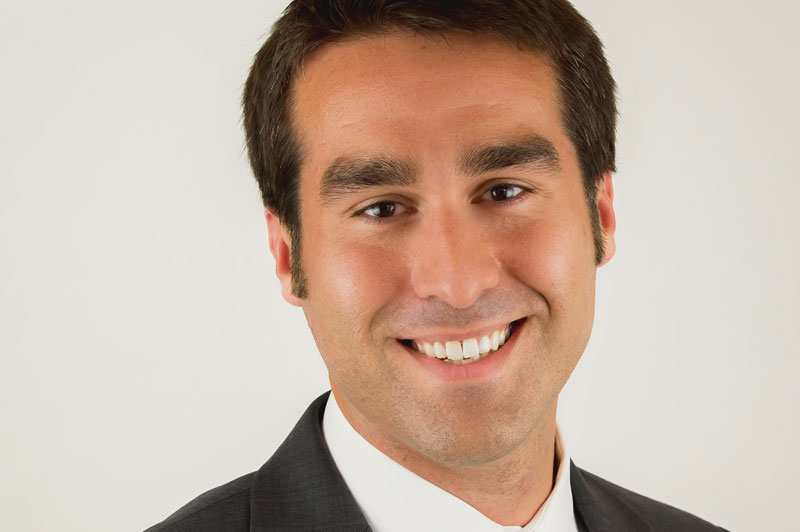
    Scott DiMauroScott DiMauro, a high school social studies teacher from Worthington, was elected President of the Ohio Education Association in 2019 after having served as vice president for six years. Over his 29-year career as an educator, Scott has worked to provide students the critical thinking and decision-making skills they need to be successful citizens in our democratic society. He has likewise advocated for students, educators and strong public schools at all levels of his union.

    Well, for one thing, it is frustrating. As educators, we teach facts — the laws of physics, the branches of government, grammar rules, math formulas — things that don’t change, no matter how you feel about them. More importantly, we teach critical thinking. It is a reflection of the era in which we live that the children in our classrooms can separate fact from fiction better than some adults. 

    The widespread misinformation circulating among adults is threatening the foundation of our democracy. There is a chance a considerable number of Americans will not vote in the coming election or will cry foul over the results because of lies they have read online.  

    To be clear, the long-standing method of absentee voting by mail is safe and secure, and any attempt to say otherwise is misinformation.

    In one recent Facebook post I came across, a well-respected community leader falsely claimed that a) there was no way of ensuring that someone who votes by mail can’t also vote in person, b) ballots sent to wrong addresses based on voter records could be cast by the current resident, and c) someone who receives a ballot they shouldn’t have could cast a second vote for their candidate of choice if that candidate was behind in votes. 

    None of this is true. 

    Ohio keeps track of who requests absentee ballots and those voters are not allowed to vote on Election Day. If you requested an absentee ballot and still show up to vote in person — whether because you never received your

    The widespread misinformation circulating among adults is threatening the foundation of our democracy.

    ballot, never mailed your ballot or, as some would claim, you’re trying to vote a second time in the same election — you would need to cast a provisional paper ballot which goes through layers of verification before it is counted after Election Day. Any attempt to vote twice will be caught and that person would likely face prosecution.

    Procedures in Ohio prevent ballots from being sent to the wrong addresses. Voters must submit an absentee ballot application by mail or in-person at their local board of elections. The absentee ballot application requires voters to provide their address, as well as their name, date of birth, and either their driver’s license number or the last four digits of their Social Security number. Each application is compared with voter registration records to ensure the person requesting the ballot is who they say they are and is eligible to vote. 

    The notion that someone would cast a second ballot based on the current vote tally is ludicrous. While absentee ballots can be scanned into the system before Election Day in Ohio, they are not tabulated until polls close at 7:30 p.m. on Nov. 3. Absentee ballots must be postmarked by Nov. 2.

    Bottom line: For as long as there has been absentee voting, there have been safeguards in place to prevent fraud.

    It is worth noting, though, that ballots sent by the correct deadline will be accepted and counted up to ten days after Election Day to allow for delivery time. Because of the high volume of absentee ballots expected to be cast this year, we probably will not receive the full election results until at least mid-November. This does not mean the final, certified tally is not legitimate; it simply means every legitimate vote counts. 

    Bottom line: For as long as there has been absentee voting, there have been safeguards in place to prevent fraud. Ohio has had no-fault absentee voting since the 2006 Gubernatorial Election, and members of both political parties have enjoyed using it since then. Incidents of voter fraud are exceedingly rare to the point of being essentially non-existent in Ohio, despite the calumny on the internet claiming otherwise.  

    What is true is that there will be more absentee ballot applications and returns going through the mail this fall than usual because of safety concerns amid the global pandemic. Couple that with operational changes handed down from a political appointee who has vowed to run the U.S. Postal Service like a business, rather than the public service it was always intended to be, and it’s not hard not to envision delivery delays this election season.  

    That makes it absolutely critical that you request and return your absentee ballot as early as possible, if you intend to vote by mail. 

    You can apply now to receive a ballot in the first batch of mailings, which will go out Oct. 6. Fill it out and return it right away, taking care to fully complete the information on the ID envelope, which will again be compared with voter registration records to ensure no nonsense has occurred. Ballots can be returned by mail or in secure drop boxes provided by every county board of elections the state. 

    I’m alarmed by the current misinformation epidemic that will dissuade some Americans from casting their ballots and the resulting impact that will have on our system of government. 

    Ohio will also offer four weeks of early in-person voting in every county, for those who do not want to contend with the process by mail but want to avoid long Election Day lines that could be COVID-19 hotbeds.

    Ohio’s educators care deeply about ensuring free and fair elections. As a social studies teacher with three decades of experience, I’m alarmed by the current misinformation epidemic that will dissuade some Americans from casting their ballots and the resulting impact that will have on our system of government. 

    No matter how you choose to vote – absentee by mail, early in-person, or on Nov. 3 — the most important thing is that you cast your ballot. Our democracy depends on it.


    Check out these two voter guides recently published by Loveland Magazine with information about requesting absentee ballots. Keep in mind that Ohio officials are recommending you stay ahead of these absolute dates to ensure your mail coming to and from the post office is delivered in time for your vote to count.

    Sidebar: What You Need to Know to Vote This Year

    Loveland Area November Voting Guide: What you need to know to…

  • Autism Society recognizes Loveland Schools’ Mary Frees as “Unsung Hero”

    Autism Society recognizes Loveland Schools’ Mary Frees as “Unsung Hero”

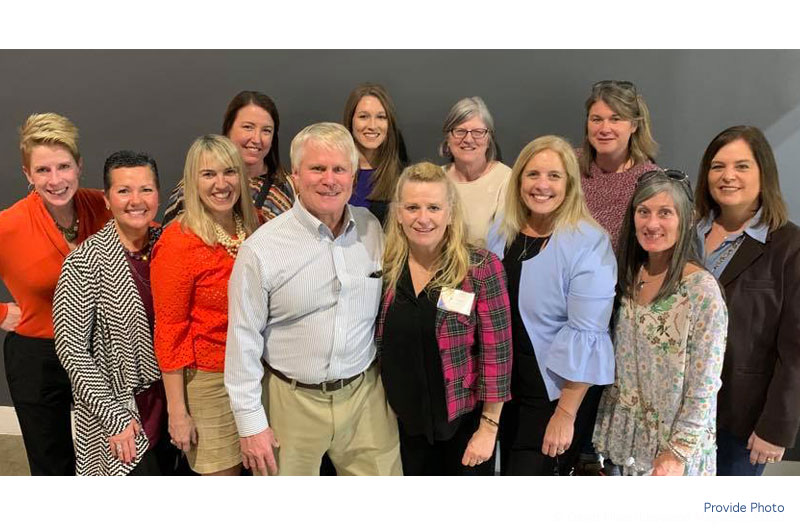
    Mary Frees (front center) was recognized for her work serving individuals with autism and their families at “Faces of Autism” on March 5. Left to right: Heidi Terselic, Donna Ernst, Jane Miller, Lara Ferrer, Joe Frees, Taylor Reid, Mary Frees, Dr. Kathryn Lorenz, Dr. Amy Crouse, Helen Jones, Michelle Grafflin and Jennifer Forren.

    Loveland, Ohio – The Regional Autism Advisory Council (RAAC) of Southwest Ohio celebrated its 20th anniversary in March with “Faces of Autism”- an event presented in collaboration with Autism Society Greater Cincinnati to recognize autism “ambassadors and unsung heroes” in the region. Mary Frees, an intervention specialist at Loveland Elementary School (LES), was among those honored for their work serving individuals with autism and their families.

    “When I learned about this special recognition, I was shocked, but felt so valued for doing what I love,” said Frees. “This just motivates and energizes me to continue to accomplish more for my students with autism and other special needs. My students make my job enjoyable each day and push me further to continue to learn more about this ever-changing field of special education.”

    The Faces of Autism Unsung Hero nominees were selected for going above and beyond the expectations of their jobs in advocating for acceptance, community inclusion, relationship building, and community impact. 12 educators were recognized, two of whom represent public school districts – Loveland and Sycamore Schools.

    “Mary is an outstanding educator who works tirelessly for her students, going above and beyond on a daily basis,” said LES Principal Jen Forren. “She works to ensure that her students and their families have an excellent experience at LES, both academically and socially.  She established an ambassador program that matches her students with other students in the building to help them work on their social skills and it has been very impactful for everyone involved.”

    Faces of Autism was presented by RAAC and the Autism Society Greater Cincinnati in partnership with several other organizations, including Cincinnati Children’s, Linden Grove School, and the Heidt Center of Excellence by The Children’s Home, among others.

    About the Autism Society Greater Cincinnati and the Regional Autism Advisory Council (RAAC)

    The Autism Society Greater Cincinnati is a leading resource and advocate for the local autism community, working to improve the lives of all who are affected by autism through education, support, and services. RAAC leads community partnerships to plan, develop, and implement a vibrant continuum of services that meets the lifelong needs of individuals with autism, their families, and those who serve them. The Advisory Council facilitates task forces on a range of subjects, such as early intervention, educational identification, and adult services.


  • Lynnette Viox will represent Loveland High School at the Third Annual Next Gen Changemaker Summit

    Lynnette Viox will represent Loveland High School at the Third Annual Next Gen Changemaker Summit

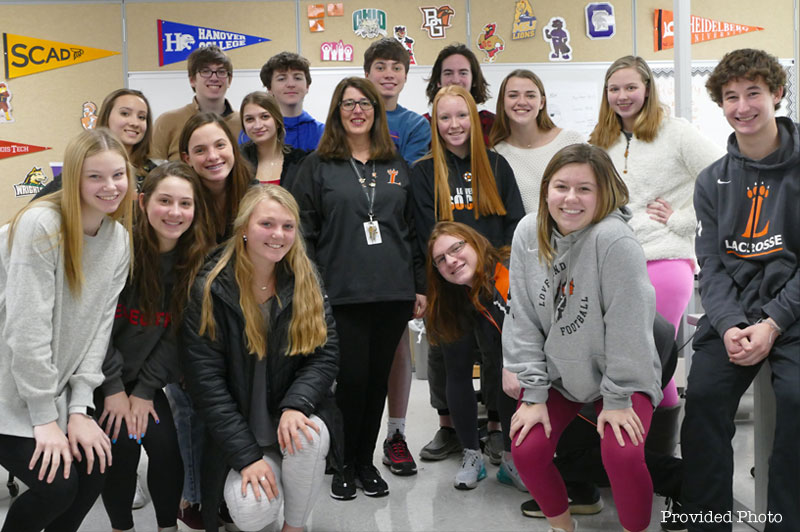
    Lynnette Viox (center), here with College Study Skills and Financial Literacy students from Loveland High School, will be attending the 2020 Next Gen Changemaker Summit in San Francisco in March

    Loveland, Ohio – “I am very honored and excited to represent Loveland at the summit and to further my professional development as we continue to advance the Business Department’s curriculum at Loveland High School,” said Lynnette Viox. “There is a strong interest in and demand for business courses among our students and this will benefit them as our program evolves.”

    Some 90 educators from 28 states across the country will gather in San Francisco for the third annual Next Gen Changemaker Summit in March. Viox, an applied technology and business teacher at Loveland High School (LHS) is one of six representatives from Ohio that will attend the conference.

    Participants at the Changemaker Summit are identified as educators who are working to achieve the Gold Standard in personal finance education in their schools and districts.

    According to Next Gen’s “Mission:2030”, schools achieving the Gold Standard ensure that all students take at least a semester-long personal finance class prior to graduation as part of the belief that all students deserve a financial education that will allow them to thrive in their personal lives beyond high school.

    “We are extremely excited about the opportunity to host such a talented and passionate group of educators for our third Annual Changemaker Summit,” said Tim Ranzetta, co-founder of Next Gen Personal Finance (NGPF). “While 90% of students and parents believe that personal finance should be taught in high school, only 16% currently get it. This inspiring group of changemakers will close that gap.”

    Summit participants will have the opportunity to collaborate and will be provided new resources and ideas on how to engage students in their classes. Teacher-led sessions and panels will showcase the progress of increasing access to personal finance education nationwide and how to support teachers in the advocacy for this type of curriculum in their communities.

    Viox, who in addition to her teaching position at Loveland High School also serves as first vice-chair of the Loveland City School District’s Business Advisory Council, worked in business for 10 years prior to becoming a teacher. She has served as a coordinator for the Clermont County Mentor Program, as a member of the district’s “Innovation X” team and as the co-founder and co-leader of the LHS Link Crew, among others.

    Viox will be representing Ohio at the Changemaker Summit along with Judy Matey, (Tuslaw High School, Massillon), Katherine Blanton (Butler Tech, Fairfield Township), Mark Rairigh and Nathan Kee (Bryan Middle and High Schools, Bryan) and Molly Tyson (Lorain High School, Lorain). NGFP has underwritten the full cost of the conference for all attendees as part of its commitment to teacher professional development.


  • Governor DeWine Announces School Safety Working Group Members

    Governor DeWine Announces School Safety Working Group Members

    Columbus, Ohio – Ohio Governor Mike DeWine today announced the members of the Governor’s new Ohio School Safety Working Group.

    Governor DeWine called for the creation of the working group in August when announcing the development of the Ohio School Safety Center, a new statewide office focused on assisting educators and law enforcement in preventing, preparing for, and responding to threats and acts of violence, including self-harm. The working group, which will be led by the Ohio Department of Public Safety, will evaluate current issues regarding school safety and advise the Ohio School Safety Center on its work.

    “Members of this working group all have a common goal of making Ohio’s schools as safe as they possibly can be,” said Governor DeWine. “I’m confident that this group will be a great asset as they work to promote a safe environment for Ohio’s school students and school employees.”

    Members of the Ohio School Safety Working Group include:

      • Tim Armelli, Teacher, Chardon High School
      • Melissa Wervey Arnold, CEO, American Academy of Pediatrics
      • Todd Barnhouse, CEO, Ohio Child Care Resource and Referral Association
      • Bobbie Boyer, Deputy Director of Prevention, Ohio MHAS
      • LeeAnne Cornyn, Director, Governor’s Children’s Initiatives
      • Courtney Ebersole, Program Administrator, Ohio ACBHA
      • Joan Englund, Executive Director, Mental Health and Addiction Advocacy Coalition
      • Dan Flannery, Director, Case Western Reserve University
      • Eric “Yitz” Frank, Director, Agudath Israel of Ohio
      • Dan Girard, Principal, Wilson Hill Elementary, Worthington Schools
      • Dan Grothause, Transportation Supervisor, St. Marys City Schools
      • Kirk Hamilton, Executive Director, Buckeye Association of School Administrators
      • Donna Harrass, Executive Director, Ohio Association of Chiefs of Police
      • Brian Hill, School Psychologist, Ohio School Psychologists Association
      • Lois Hochstetler, Assistant Director of Community Treatment, Ohio MHAS
      • Scott Huddle, Board President, Mad River Local Schools
      • Jeff Hussey, State Fire Marshal, Ohio Department of Commerce
      • Joe Kitchen, Fire Chief, Ohio Fire Chiefs’ Association
      • Jon Kochis, Fairfield County EMA Director, EMA of Ohio
      • Teresa Lampl, CEO, Ohio Council of Behavioral Health & Family Services Providers
      • Nicholas Lashutka, President, Ohio Children’s Hospital Association
      • Sarah LaTourette, Executive Director, Ohio Family and Children First
      • Rick Lewis, Executive Director/CEO, Ohio School Boards Association
      • George Maier, Sheriff, Buckeye State Sheriff’s Association
      • Krista Maxson, Associate Vice Chancellor P-16 Initiatives, Ohio Dept. of Higher Ed.
      • Mark Mecum, Executive Director, Ohio Children’s Alliance
      • Matt Miller, Superintendent, Lakota Local Schools
      • Nichole Miller, President, Ohio School Counselors Association
      • Bradley Paramore, President, Ohio School Psychologists Association
      • Kari Parsons, Executive Director, Ohio School Resource Office Association
      • Mark Porter, Director of Law Enforcement, Ohio Attorney General’s Office
      • Pam Reed, Teacher, Columbus City Preparatory School for Girls
      • Terry Russell, Executive Director, National Alliance on Mental Illness Ohio
      • Angela Sausser, Executive Director, Public Children Services Association of Ohio
      • Marcie Seidel, Executive Director, Prevention Action Alliance
      • Stephanie Siddens, Senior Executive Director, Ohio Department of Education
      • Jeff Staggs, Superintendent, Newcomerstown Exempted Village Schools
      • Joe Suozzi, Director of Safety, Security and Preparedness, Olentangy Local Schools
      • Ben Suver, Director of Law Enforcement Initiatives, Ohio Dept. of Public Safety
      • Dean Tondiglia, Director of Public Safety and Chief of Police, Kent State University
      • Kim Welter, Director of Finance and Policy, Equality Ohio Education Fund
      • Jeff Westhoven, Chief of Program Services, Ohio Facilities Construction Commission

    The Ohio School Safety Center and the Governor’s Ohio School Safety Working Group were created as part of Governor DeWine’s STRONG Ohio plan.

    The working group’s first meeting will be held tomorrow at 10 a.m. at the Ohio Department of Public Safety, 1970 W. Broad Street, in Columbus.


  • Providing a great education and a great value

    Providing a great education and a great value

    by Kevin Hawley

    Our goal at Loveland City Schools is to provide a great education for our students and a great value to the community. In order to provide the level of education our community has come to expect and our students deserve, public school districts like ours must return every few years to ask voters to support their schools. This is the reality of public-school funding in Ohio.

    Kevin Hawley is the Loveland City School District Treasurer/CFO

    Schools in the state of Ohio are financed with a combination of federal, state and local funds. The state uses a formula to determine how much money each district should receive based on enrollment and the relative wealth of a district based on property values. This amount varies widely from district to district. Typically, as is the case with Loveland City Schools, a district receives more of its revenue from local property taxes. These taxes are primarily determined by locally-voted tax increases, otherwise known as tax levies. In our case, approximately 58 percent of the financial burden falls to local taxpayers.

    The wonderful part of local revenue being a primary contributor to school funding is that the community maintains control of its schools. Conversely, the challenge is that local revenue does not increase with increases in property values. Therefore, a large portion of a district’s revenue is flat until the community votes to increase its property taxes.

    The Loveland City School District is on the right track and reflects our community, but with our operational needs and reliance on property taxes, coupled with the way Ohio funding works, we will soon need to ask our residents for their support.

    And in the Loveland City School District, we are coming up on a need to ask for additional operating funds, separate from our discussion around Building Tiger Nation and our facility needs.

    Funds generated from operating levies are used for the day-to-day operations of the district such as teachers, utilities and supplies. Because schools, by nature, are a “people” business, the majority of operating funds are used to hire and retain high quality educators as well as provide highly competitive programming for our students.

    The Loveland City School District is on the right track and reflects our community, but with our operational needs and reliance on property taxes, coupled with the way Ohio funding works, we will soon need to ask our residents for their support.

    In the meantime, we continue to send the majority of our budget – 62 percent – directly to the classroom where the biggest impact can be made to prepare students for tomorrow, today. Maintaining the district budget through thoughtful and prudent spending is and always will be my priority. And I am incredibly grateful to our residents for the continued support for our schools, which are such an important part of our community.


    Wildflower House — where women & girls bloom!

  • Stepping out of our comfort zone

    Stepping out of our comfort zone

    By David Knapp,

     “There is no innovation and creativity without failure. Period.” – Brené Brown

    At the Loveland City School District, our educators hold the growth and development of our students higher than anything else. We empathize with the needs of our students, our families and our community to do all that we can to ensure that we reach and grow every single one of our students. This is no small task, and to pull this off on a daily basis, it truly takes a village and also requires a little bit of magic. Not magic in the sense of the way of the Jedi or the stuff that happens at Hogwarts, but in the magic of stepping outside of our comfort zone from time to time to take on a new challenge. As we adapt to and embrace the changing needs of our students, innovation is the process that continues to allow us to do this. And true innovation requires failure… and grit.

    She told me she had failed – many, many times. But she never gave up.

    Our students “get it” – and, in my position, I have the amazing opportunity to learn from them daily. One young Innovation Lab student at Loveland High School recently stood out to me – she was exploring and learning the world of digital art creation. Working through intricate software programs, pen and stylus combinations, and a multitude of barriers to her success, I was in awe of the complex challenges that this student had taken on to fuel her creative passions.

    She told me she had failed – many, many times. But she never gave up. Her diligence led to works of art that she proudly showcased in a digital portfolio during our chat. Her resilience, laser-focus on her passions and her ability to step out of her comfort zone (on a consistent basis, I might add) allowed her to reach new heights. Pretty impressive stuff.

    So – how do we, as educators, help students like her? We step outside of our own comfort levels to make some magic.

    So – how do we, as educators, help students like her? We step outside of our own comfort levels to make some magic.

    It is with great excitement that we announce the Innovative Classroom Grants for the 2017-18 school year. Continuing with the momentum started last year that awarded 11 grants across the Loveland City School District, and with the purpose of positively impacting student growth and achievement, we couldn’t be more excited to give all of our teachers this unique funding and professional learning opportunity. This year, our teachers will be encouraged to partner with students to create innovative solutions that focus on student-centered learning. We will also be working with our partners at the Xavier University Center for Innovation to support us in the ideation and refinement of these ideas through the process of design thinking.

    We cannot wait to see what Loveland teachers come up with this year to promote #TigerInnovation!

    David Knapp is the Director of Technology & Innovation for the Loveland City School District knappda@lovelandschools.org

    Keep an eye out this year for a special series of district stories (www.lovelandschools.org) that feature several of our 2016-17 Innovative Instructional Grant winners, and we look forward to sharing the results of this year’s applicants with you this winter.

    Your partner in innovation,

    David Knapp


    Start the New Year Right

  • Internationally recognized student social skills authority speaks to Loveland educators

    Internationally recognized student social skills authority speaks to Loveland educators

    Michelle Garcia Winner part of district’s ongoing professional development

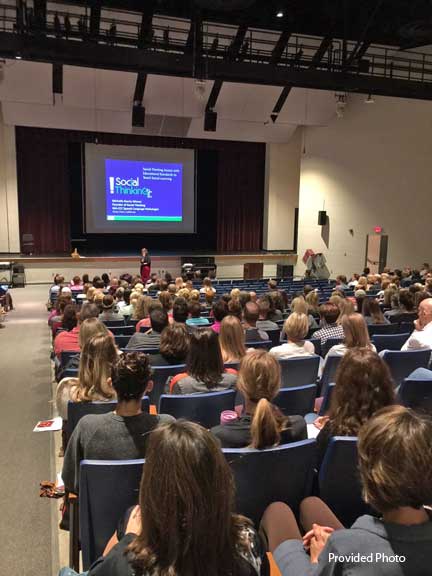
    Loveland, Ohio – Monday, Oct. 9, Loveland educators focused on their own learning district-wide as internationally recognized author and speaker Michelle Garcia Winner presented about social thinking. Her mission is to help people develop their social competencies to better connect with others and live happier, more meaningful lives.

    “Loveland is very fortunate to be able to bring Michelle Garcia Winner before our staff,” said Eric Dool, Loveland director of student services. “Michelle is widely known as an expert in the development of social competencies among all students, competencies that are critical for success in school and in life. Skills such as how to build relationships and work as teams touch on all aspects of what we do as educators to prepare students for their futures – work that embodies both Tiger Care and Tiger Growth – two of our three big district goals.” 

    “This time is precious – we are in the business of growing people and to do that we must be continual learners,” said Loveland Interim Superintendent Dr. Amy Crouse.


    Winner is the founder of Social Thinking®, a methodology which specializes in developing treatment frameworks and practical strategies for individuals with social communication challenges. The Social Thinking and Its Impact At All Ages presentation was part of a larger professional development opportunity for district employees who spent the remainder of the day in learning sessions at each building.

    “This time is precious – we are in the business of growing people and to do that we must be continual learners,” said Loveland Interim Superintendent Dr. Amy Crouse. “The department of Teaching & Learning along with all of our building leaders do an excellent job of making the most of each moment during our professional development opportunities throughout the year, and having an expert like Michelle Garcia Winner as part of our training was priceless.”


    513-683-1052
    215 Loveland-Madeira Rd

    Loveland, Ohio 45140