Tag: elderly

  • Chamber-backed tax reform group urges Ohio lawmakers stamp out ‘unvoted’ increases that impact school districts, others

    Chamber-backed tax reform group urges Ohio lawmakers stamp out ‘unvoted’ increases that impact school districts, others

    (iStock / Getty Images Plus)

    By:  Ohio Capital Journal

    Ohio lawmakers seem committed to delivering property tax relief in the current session, but they’re still zeroing in on their approach. They’ve introduced at least seven measures tweaking the homestead exemption — for disabled vets, military spouses, the elderly — and a handful more changing how counties calculate what homeowners owe.

    Most notably, however, House lawmakers have proposed an automatic rollback in the state budget that triggers if a school district carries over any more than 30% of their operating revenue.

    An organization backed by realtors, county auditors, and the Ohio Chamber of Commerce is wading into that debate. The Ohio Taxpayer Protection Coalition is urging lawmakers to avoid “unvoted” property tax increases.

    “Our point isn’t to take away revenue from school districts,” coalition chair and former state tax commissioner Tom Zaino explained. “Our point is to reduce the rate of increase of revenue without a vote of school district residents.”

    House Bill 920

    Zaino argued that state lawmakers need to revisit a measure passed in the 1970s meant to insulate homeowners from rising home values. Property taxes are calculated in mills — one mill is one thousandth of a dollar, or one tenth of a percent.

    In every county, taxing authorities like local governments, schools, and parks, can levy a total of 10 mills that will grow as home values increase. Any share beyond those 10 mills has to get approval from voters. Meanwhile, to receive state funding, school districts must levy at least 20 mills, or 2% of assessed property value.

    House Bill 920 placed a check on those voted levies to ensure rising home prices don’t result in a taxing authority raising extra money. In effect, if your home value goes up, that slice of your property tax rate would decrease to keep your tax bill steady.

    “What’s happened, though, over the last 50 years,” Zaino said, “is that these protections have been eroded by many changes made by the General Assembly, which has effectively created loopholes.”

    The tax reductions in HB 920 apply to most levies beyond a school district’s 20 mill floor. So, school districts have been resourceful and looked to other sources of funding like emergency levies or local income taxes. That way they can meet immediate funding needs and still benefit from rising property values.

    Zaino argued that amounts to an increase in taxes that voters didn’t approve, and lawmakers should prevent that strategy. To that end, the Ohio Taxpayer Protection Coalition is supporting legislation that would recalculate the 20 mill floor to include those other funding sources.

    Bailey Williams, from the liberal think tank Policy Matters Ohio argued Zaino’s coalition is blowing the problem out of proportion. “While property values across the state have seen significant growth coming out of the pandemic,” he argued, “property tax revenues have only grown at a fraction of that rate.”

    Making the changes Zaino wants “will harm schools, put more levies on the ballot, and will not fix the fact residential taxpayers are overburdened,” Williams argued.

    School districts’ view

    School leaders argue the problem isn’t just districts making clever use of the system. As property values rise, HB 920 will reduce a homeowner’s rate — but there’s a hard stop at 20 mills. That means if property values rise high enough, the reductions stop working.

    Paul Imhoff from the Buckeye Association of School Administrators told lawmakers in 2019, there were 168 districts at the 20 mill floor. By 2023, that figure had ballooned to 409.

    “Eighty-nine percent of the new floor districts went through reappraisal or update in 2023,” he explained, “which indicates that the driving force in 20 mill floor districts clearly is rising property values.”

    He warned adding new levies to the calculation to generate more reductions won’t help homeowners in the 203 districts that don’t have those extra levies. In the end the bill would “force the affected school districts to either cut essential services or place more levies on the ballot in response, or both,” he argued.

    In a written statement, Jennifer Hogue from the Ohio School Boards Association explained the group supports “thoughtful, targeted property tax relief that helps those most in need without undermining the essential funding public schools rely on.” She argued any property tax discussion relies on a “clear recognition of the vital role local taxes play” in funding public schools.

    “While we are open to reform, we cannot support measures that limit local control or compromise a district’s ability to meet the needs of their students,” Hogue added. “Any changes must protect the stability and predictability of school funding.”

    A different proposal would allow revenue increases from rising property values, but they wouldn’t be able to exceed the general inflation rate over the past three years. In his testimony, Imhoff noted his organization is still reviewing the bill.

    Zaino allowed that it would be an improvement and address some of the school funding concerns. Still, he grumbled districts “can’t rely on unvoted tax increases,” and insisted lawmakers shouldn’t give up on closing the loopholes districts have been taking advantage of for years. “There’s not any one bill that is the silver bullet here,” he said.

    Other legislation

    Zaino offered a tempered response to the various homestead and other property tax exemptions lawmakers have proposed. Those changes are relatively easy to understand and offer immediate relief, but that targeted approach usually winds up shifting the tax burden to others.

    “Somebody’s paying for this, Zaino said, “so it’s not like taxpayers are completely saving on that.”

    Williams argued instead of rejiggering the property tax calculation or providing new exemptions, lawmakers should employ a circuit breaker, like the one proposed by state Sen. Louis Blessing, R-Colerain Twp. That approach makes tax reductions based on a share of the homeowner’s income rather than the amount of funding a school district is expecting.

    Williams explained one group regularly cited for property tax exemptions is seniors.

    “There are some seniors who do not need property tax relief,” he said. “The best way to tell is by how much of their income is consumed by property taxes, not looking at their age. The circuit breaker is targeted enough to get those seniors who need the most help, while asking those who can afford it to pay their fair share.”

    As for the budget proposal capping school district carryover balances, Zaino said they’re still considering their position. He noted it might encourage districts to allocate that funding or just spend it down to avoid the reduction.

    Follow Ohio Capital Journal Reporter Nick Evans on X or on Bluesky.


    Nick Evans
    Nick Evans

    Nick Evans has spent the past seven years reporting for NPR member stations in Florida and Ohio. He got his start in Tallahassee, covering issues like redistricting, same sex marriage and medical marijuana. Since arriving in Columbus in 2018, he has covered everything from city council to football. His work on Ohio politics and local policing have been featured numerous times on NPR.

    Ohio Capital Journal is part of States Newsroom, the nation’s largest state-focused nonprofit news organization.

    MORE FROM AUTHOR

  • Find a place to get a seasonal flu vaccine via VaccineFinder.org

    Find a place to get a seasonal flu vaccine via VaccineFinder.org

    Go to the HOME PAGE to select your language

    Loveland, Ohio – The Center for Disease Control says, “Getting a flu vaccine is more important than ever during 2020-2021 to protect yourself, your family and your community from flu.”

    A flu vaccine this season can also help reduce the burden on our healthcare systems responding to the COVID-19 pandemic and save medical resources for care of COVID-19 patients.

    Area residents who do not have a primary care physician can find a place to get a seasonal flu vaccine (and other vaccines) at VaccineFinder.org.

    What vaccines do I need?
     
    We all need vaccines throughout our lives to help protect against serious diseases. CDC and other medical experts update vaccine recommendations every year based on the latest research and science. Vaccination is a critical step in protecting those that are most vulnerable to illness – infants and young children, the elderly, and those with chronic conditions and weakened systems.
     
    Visit the CDC website to take the child or adult vaccine recommendation quiz. Visit the CDC travel website for vaccine recommendations based on the country you intend to visit.


    What is the difference between Influenza (Flu) and COVID-19?

    Influenza (Flu) and COVID-19 are both contagious respiratory illnesses, but they are caused by different viruses. COVID-19 is caused by infection with a new coronavirus (called SARS-CoV-2) and flu is caused by infection with influenza viruses. Because some of the symptoms of flu and COVID-19 are similar, it may be hard to tell the difference between them based on symptoms alone, and testing may be needed to help confirm a diagnosis. Flu and COVID-19 share many characteristics, but there are some key differences between the two. Read on at CDC…

    CDC Says “Take 3” Actions to Fight Flu…


    You can also find vaccine info at your local health department:

    In Clermont County

    In Hamilton County

    In Warren County

  • Protecting children and the elderly during Air Quality Alert issued for Thursday

    Protecting children and the elderly during Air Quality Alert issued for Thursday

    The Ohio EPA is predicting that the ozone level will be 107 on Friday.

    Predicted Air Quality Index (AQI) for the Loveland Area
    107
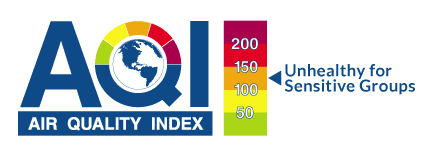
    Unhealthy for Sensitive Groups
     

    Health Message: Active children and adults, and people with lung disease, such as asthma, should reduce prolonged or heavy exertion outdoors.


    Steps you should take to protect you or your children’s health

    Reduce prolonged or heavy outdoor exertion. Take more breaks, do less intense activities. Watch for symptoms such as coughing or shortness of breath. Schedule outdoor activities in the morning when ozone is lower.

    People with asthma should follow their asthma action plans and keep quick relief medicine handy.


    Do Your Share!

    • Carpool, bike or walk instead of driving.
    • Use your most fuel efficient vehicle and drive gently.
    • Keep your motorcycle in the garage. They don’t have the pollution controls modern passenger vehicles do.
    • Refuel your vehicle after 8 PM; do not top off when refueling and tighten the gas cap.
    • Avoid idling your vehicle. (Avoid drive-thru windows.)
    • Combine trips and eliminate unnecessary vehicle trips
    • Do not use of gasoline-powered lawn equipment
    • Do not use of oil-based paints and stains
    • Never burn leaves or other yard trimmings.
    • Do not use fire pits.
    • Conserve electricity by turning off unnecessary lights.
    • Turn your air conditioner thermostat up and use room fans for cooling.
    • Save the power boating for another day.
    • Initiate an Air Pollution Alert Day policy where you work; whether that be a company you own, an employee, a local government agency you work for, or a school district.

    Sign up  for Enviroflash and Start Receiving Your Air Quality Forecast


    Children and Air Pollution

    Children face special risks from air pollution because their lungs are growing and because they are so active and breathe in a great deal of air.

    Just like the arms and legs, the largest portion of a child’s lungs will grow long after he or she is born. Eighty percent of their tiny air sacs develop after birth. Those sacs, called the alveoli, are where the life-sustaining transfer of oxygen to the blood takes place. The lungs and their alveoli aren’t fully grown until children become adults. In addition, the body’s defenses that help adults fight off infections are still developing in young bodies. Children have more respiratory infections than adults, which also seems to increase their susceptibility to air pollution.

    Furthermore, children don’t behave like adults, and their behavior also affects their vulnerability. They are outside for longer periods and are usually more active when outdoors. Consequently, they inhale more polluted outdoor air than adults typically do.

    Read on at The American Lung Association…


    Take advantage of special savings on energy efficient lighting and other products offered by Duke Energy

    LEDs use up to 90% less energy than traditional bulbs

    LEDs last at least 15 times longer than traditional bulbs


  • Smog Alert for Sunday: Here is how you can help protect children and the elderly

    Smog Alert for Sunday: Here is how you can help protect children and the elderly

    The Ohio EPA is predicting that the ozone level will be 115 on Sunday.

    Predicted Air Quality Index (AQI) for the Loveland Area
    115
    Unhealthy for Sensitive Groups
     

    Health Message: Active children and adults, and people with lung disease, such as asthma, should reduce prolonged or heavy exertion outdoors.


    Steps you should take to protect you or your children’s health

    Reduce prolonged or heavy outdoor exertion. Take more breaks, do less intense activities. Watch for symptoms such as coughing or shortness of breath. Schedule outdoor activities in the morning when ozone is lower.

    People with asthma should follow their asthma action plans and keep quick relief medicine handy.


    Do Your Share!

    • Carpool, bike or walk instead of driving.
    • Use your most fuel efficient vehicle and drive gently.
    • Keep your motorcycle in the garage. They don’t have the pollution controls modern passenger vehicles do.
    • Refuel your vehicle after 8 PM; do not top off when refueling and tighten the gas cap.
    • Avoid idling your vehicle. (Avoid drive-thru windows.)
    • Combine trips and eliminate unnecessary vehicle trips
    • Do not use of gasoline-powered lawn equipment
    • Do not use of oil-based paints and stains
    • Never burn leaves or other yard trimmings.
    • Do not use fire pits.
    • Conserve electricity by turning off unnecessary lights.
    • Turn your air conditioner thermostat up and use room fans for cooling.
    • Save the power boating for another day.
    • Initiate an Air Pollution Alert Day policy where you work; whether that be a company you own, an employee, a local government agency you work for, or a school district.

    Sign up  for Enviroflash and Start Receiving Your Air Quality Forecast


    Children and Air Pollution

    Children face special risks from air pollution because their lungs are growing and because they are so active and breathe in a great deal of air.

    Just like the arms and legs, the largest portion of a child’s lungs will grow long after he or she is born. Eighty percent of their tiny air sacs develop after birth. Those sacs, called the alveoli, are where the life-sustaining transfer of oxygen to the blood takes place. The lungs and their alveoli aren’t fully grown until children become adults. In addition, the body’s defenses that help adults fight off infections are still developing in young bodies. Children have more respiratory infections than adults, which also seems to increase their susceptibility to air pollution.

    Furthermore, children don’t behave like adults, and their behavior also affects their vulnerability. They are outside for longer periods and are usually more active when outdoors. Consequently, they inhale more polluted outdoor air than adults typically do.

    Read on at The American Lung Association…


    Take advantage of special savings on energy efficient lighting and other products offered by Duke Energy

    LEDs use up to 90% less energy than traditional bulbs

    LEDs last at least 15 times longer than traditional bulbs


  • Air quality alert continues into Thursday

    Air quality alert continues into Thursday

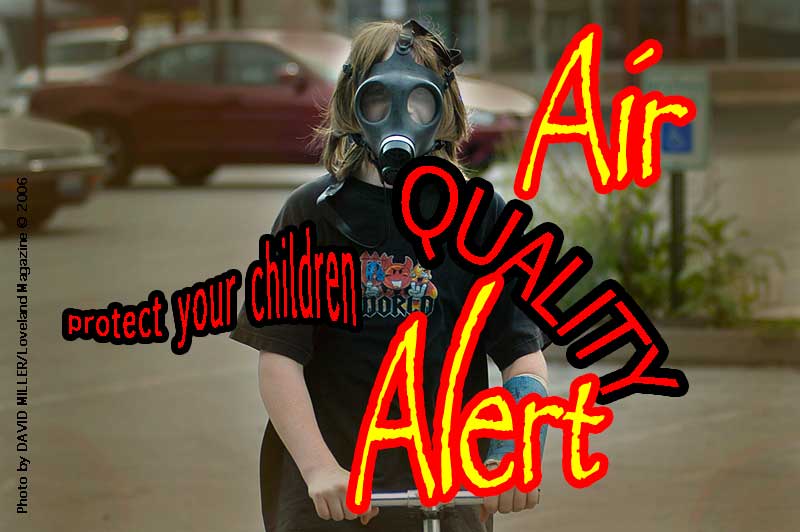
    It will take action by each of us to lower the risk to our children


    Loveland, Ohio – The Southwest Ohio Air Quality Agency has issued an Air Quality Advisory for Thursday, July 19 for Loveland. and the surrounding counties of Butler, Clermont, Hamilton and Warren in Ohio, and Boone, Campbell and Kenton counties in Kentucky. 


    The Agency expects to see levels of ozone in the “unhealthy for sensitive groups” range on the Air Quality Index (AQI). 


    Health Message: Active children and adults, and people with lung disease, such as asthma, should reduce prolonged or heavy exertion outdoors.


    On Air Quality Advisory days, everyone can help reduce ozone formation by taking the following actions:

    • Bike, or walk instead of drive.
    • Refuel your vehicle after 8 p.m.; do not top off when refueling and tighten the gas cap.
    • DON’T RIDE YOUR MOTORCYCLE
    • Do not idle your vehicle; exhaust contributes considerably to ozone formation.
    • Combine trips or eliminating unnecessary vehicle trips.
    • Avoid use of gasoline-powered lawn equipment on Air Quality Advisory days.
    • Avoid use of oil-based paints and stains on Air Quality Advisory days.
    • Never burn leaves or other yard trimmings.
    • Suspend use of fire pits, campfires and grills on Air Quality Advisory days.
    • Conserve electricity by turning out lights and unplugging unused appliances and electronics.


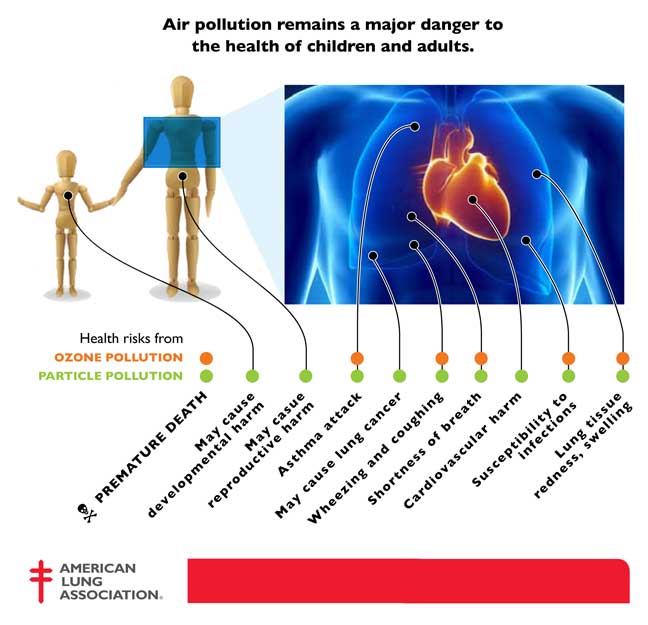
    Children face special risks from air pollution because their lungs are growing and because they are so active Air-pollution-health-dangers

    Just like the arms and legs, the largest portion of a child’s lungs will grow long after he or she is born. Eighty percent of their tiny air sacs develop after birth. Those sacs, called the alveoli, are where the life-sustaining transfer of oxygen to the blood takes place. The lungs and their alveoli aren’t fully grown until children become adults.1 In addition, the body’s defenses that help adults fight off infections are still developing in young bodies.2 Children have more respiratory infections than adults, which also seems to increase their susceptibility to air pollution.

    Furthermore, children don’t behave like adults, and their behavior also affects their vulnerability. They are outside for longer periods and are usually more active when outdoors. Consequently, they inhale more polluted outdoor air than adults typically do.

    Air Pollution Increases Risk of Underdeveloped Lungs

    A Southern California Children’s Health study looked at the long-term effects of particle pollution on teenagers. Tracking 1,759 children who were between ages 10 and 18 from 1993 to 2001, researchers found that those who grew up in more polluted areas face the increased risk of having underdeveloped lungs, which may never recover to their full capacity. The average drop in lung function was 20 percent below what was expected for the child’s age, similar to the impact of growing up in a home with parents who smoked.

    Community health studies are pointing to less obvious, but serious effects from year-round exposure to ozone, especially for children. Scientists followed 500 Yale University students and determined that living just four years in a region with high levels of ozone and related co-pollutants was associated with diminished lung function and frequent reports of respiratory symptoms. 6 A much larger study of 3,300 school children in Southern California found reduced lung function in girls with asthma and boys who spent more time outdoors in areas with high levels of ozone.


    Read more from the American Lung Association

    For 17 years, the American Lung Association has analyzed data from official air quality monitors to compile the State of the Air report. The more you learn about the air you breathe, the more you can protect your health and take steps to make our air cleaner and healthier.

    In American Lung Association’s, Report Card: Ohio, Clermont, Hamilton, and Warren counties all receive an “F”
    Cincinnati Air Quality a Mixed Bag, Finds 2016 ‘State of the Air’ Report


    Step up to Curb Pollution in Our Community.

    • Drive less. Combine trips, walk, bike, carpool or vanpool, and use buses, subways or other alternatives to driving. Vehicle emissions are a major source of air pollution. Support community plans that provide ways to get around that don’t require a car, such as more sidewalks, bike trails and transit systems.
    • Use less electricity.Turn out the lights and use energy-efficient appliances. Generating electricity is one of the biggest sources of pollution, particularly in the eastern United States.
    • Don’t burn wood or trash. Burning firewood and trash is among the largest sources of particle pollution in many parts of the country. If you must use a fireplace or stove for heat, convert your woodstove to natural gas, which has far fewer polluting emissions. Compost and recycle as much as possible and dispose of other waste properly; don’t burn it. Support efforts in your community to ban outdoor burning of construction and yard wastes. Avoid the use of outdoor hydronic heaters, also called outdoor wood boilers, which are frequently much more polluting than woodstoves.
    • Make sure your local school system requires clean school buses, which includes replacing or retrofitting old school buses with filters and other equipment to reduce emissions. Make sure your local schools don’t idle their buses, a step that can immediately reduce emissions.


    Now Enrolling at All About Kids at Wards Corner today!