COLUMBUS, Ohio – When Ohioans go to cast their vote on Nov. 5, they may see more than political contests on the ballot. Voters in various Ohio communities may also see items related to local option election laws. These issues can determine a number of alcohol-related items, including whether a particular business is able to sell a certain type of alcohol at a specific location, whether they can engage in regular (Monday – Saturday) sales, or whether they can sell alcohol on Sundays.
“We realize that alcohol-related issues on the ballot can sometimes catch individuals off guard,” said Paul Kulwinski, DOLC Director of Licensing. “We developed this guide to help inform and prepare voters in the event they see these particular issues on their ballot so they can make an informed decision on Nov. 5.”
For certain types of liquor permits, the location where alcohol sales will occur must be “wet” for the specific types of sales (i.e., beer, wine, spirits, etc.). Those permits dictate how those items can be sold, such as via carryout or on-premises consumption. When the precinct in that area is not wet (commonly known as “dry”), a business can put a question to the voters within that precinct that can ask to either make the entire precinct wet or just the specific location.
Following the repeal of Prohibition in 1933, a new regulatory system was enacted to ensure the safe consumption of alcoholic beverages and an orderly, competitive marketplace. Some parts of the regulatory system include permit quotas, objection rights by local governments, a three-tier system consisting of manufacturers, distributors, and retail outlets, and local option (wet/dry) laws. Local option elections give the voters within their precincts a voice as to what types of alcohol get sold, including where, when, and how.
Due to the complexity of local option elections, an experienced liquor attorney is always recommended for businesses or localities when navigating this process.
And so, it begins. In-person early voting and absentee voting by mail — from Tuesday, Oct. 8 through Sunday, Nov. 3 — is now officially underway in Ohio. Even before closing arguments are made in the 2024 election, registered Ohio voters (roughly 8 million) can start casting their ballots at their county board of elections before Election Day. Check location and times for your county board of elections.
If you haven’t voted since the last presidential election in 2020, you could be in for a rude awakening when you get to the polls. Many Ohioans (not obsessively preoccupied with politics, like yours truly) are unaware that Republican lawmakers in Columbus enacted one of the strictest voter ID laws in the country in 2023 — despite no evidence of significant voter fraud, by impersonation or otherwise.
Voting restrictions (in GOP-controlled legislatures) to address nonexistent problems of pervasive voting fraud were turbocharged in the wake of Donald Trump’s fraudulent efforts to overturn the results of the 2020 election. (This is usually when I have to breathe deeply). Since then, some 28 states, including Ohio, have passed new laws making it harder to vote in order to “combat concerns” generated by false Republican claims about widespread voting scams.
Ohio Republicans dove into more voter suppression at the front-end last year with legislated hurdles to ballot access that caught surprised voters off guard. Thousands who had voted uneventfully for years with previously acceptable IDs (i.e., utility bills, bank statements) were suddenly prevented from voting under new, stringent rules rolled out right before the May 2023 primary.
Those who showed up without the proper, government-issued photo ID could fill out a provisional ballot and double-back to their board of elections with the right credentials in a fast clip (four days, reduced from 10) to hopefully have their vote counted. Tough luck if voters lacked the resources or transportation to obtain the newly prescribed documentation in time.
The number of provisional ballots thrown out for failure to produce the right paperwork rose tenfold after the Republican law went into effect, according to one report that raised the specter of historic levels of rejected ballots in Ohio’s 2024 presidential election. The Madison Township Republican who sponsored the bill that erected the additional obstacles to voting, state Rep. Thomas Hall, told cleveland.com (ludicrously) that disenfranchising so many voters, particularly the Democratic-leaning kind, was never his intention.
He could have followed up with, “If you believe that, I have a bridge to sell you.” Don’t hold your breath waiting for any ubiquitous outreach by state Republicans to broadly educate the voting public on all the legal changes and requirements (impediments?) that could affect how and whether Ohioans have a voice in the upcoming election. So, do your homework. Share what you know with other would-be voters in your life.
Make a plan to vote. I know that sounds almost cliché, but when you plan to vote you actually have to think through the how, when and where of getting it done. That’s important. So is the choice you make between now and Nov. 5 to either engage in your most fundamental voting right (upon which all our civil liberties rest) or to live with the consequences of not voting.
But understand that real decisions are going to be made by the next president, by the next U.S. senator from Ohio, by the next justices who control the state supreme court, by the next state senator and state representative on your 2024 Ohio general election ballot. What do you want next and who do you believe, based on incontrovertible fact, will deliver on that? Are you willing to show up and be a part of making it happen?
The outcome of this particular election on the state and federal level will profoundly affect whether and to what degree we ultimately endure as a nation “conceived in liberty and dedicated to the proposition that all men are created equal.” It is a referendum on the value we place on freedoms once considered inalienable from the freedom of voting and representational equality to the freedom of women to determine their own destiny and the freedom of all Americans to not live in fear of another mass shooting.
This election in Ohio and nationwide is a referendum on our republic itself and whether, as Benjamin Franklin mused with prescience, we “can keep it.” What’s it worth to you to navigate the exhausting barriers to participate in self-governance, to exercise your birthright franchise defiantly despite massive voter purges and extreme voting laws?
Think about it. No one is coming to the rescue. It’s up to us. Always has been.
Marilou Johanek
Marilou Johanek is a veteran Ohio print and broadcast journalist who has covered state and national politics as a longtime newspaper editorial writer and columnist.
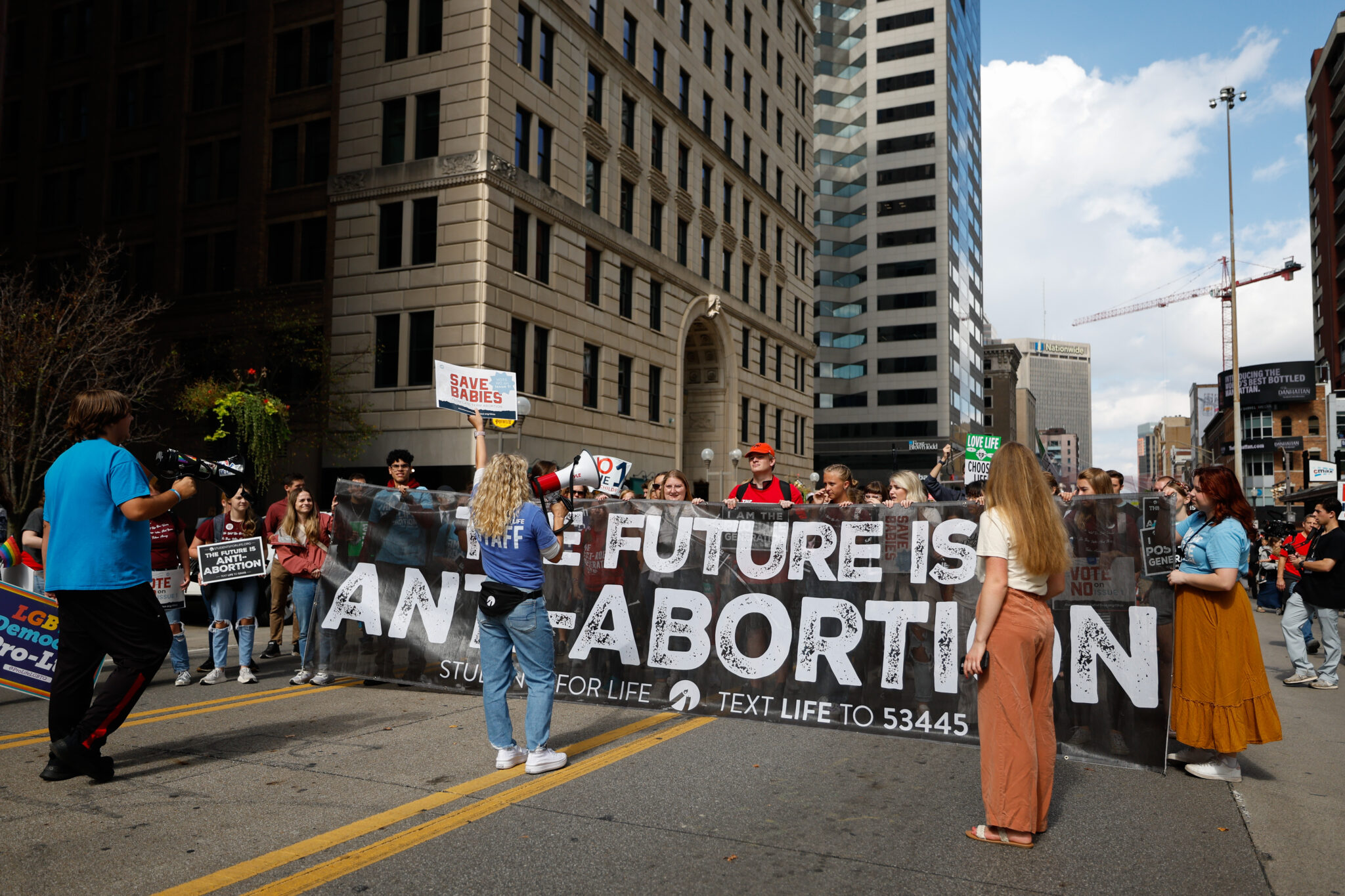
A poll released last week received attention because a response to one of its questions. It seemed to show a close contest for an abortion-rights amendment that’s on the ballot next Tuesday.
But a closer look at that and another recent poll indicate that opponents of the amendment still face an uphill fight.
Issue 1 would build abortion rights into the Ohio Constitution up to the point of fetal viability outside the pregnant person’s body. It comes after the U.S. Supreme Court last year overturned Roe v Wade, clearing the way for enforcement of harsh state abortion limits already on the books.
In Ohio’s case, that means banning the overwhelming majority of abortions after about six weeks of pregnancy — even when the pregnancy is the result of rape or incest.
As horror stories stemming from enforcement of such laws proliferated, state ballot measures protecting abortion rights have been on an unbroken winning streak, with a measure last year carrying conservative Kansas by a gobsmacking 19-point margin.
Those results leave abortion opponents desperate for a win and abortion-rights advocates eager to continue building momentum.
So, when Ohio Northern University last week released a poll, one of its findings drew keen interest. It asked whether respondents agreed with the summary language of Issue 1 that will appear on the ballot. While that might sound like a technicality, the exact wording that will be on the ballot is important.
In August, Secretary of State Frank LaRose, an abortion opponent, led a split Ohio Ballot Board in adopting a ballot “summary.” Not only is the “summary” roughly the same length as the amendment itself, it differs from the amendment in ways that critics say are intended to mislead.
For example, it substituted the term “unborn child” for “fetal viability.”
In an attempt to capture the effect that might have on the vote, pollsters at Ohio Northern asked some respondents whether they agreed with that amendment language and asked others whether they agreed with the language proposed by the League of Women Voters. The disparity was big.
An overwhelming 68% agreed with the amendment as described by the League of Women Voters. But that number shrank to just 52% for the respondents who were asked about the language that will actually be on the ballot, thanks to LaRose and two others on the Ballot Board.
But what does that mean practically?
“Change in Ballot language may have big effect on support for Issue 1,” reads the title of that section of the Ohio Northern poll report.
However, the same poll found that 65% of respondents think that abortion should be legal in most circumstances and 57% believed the Supreme Court shouldn’t have overturned Roe v Wade.
More to the point, 70% said they had heard “quite a lot about Issue 1” and another 24% said they had heard some about it. That means that almost all respondents know something about the matter and presumably many will have formed opinions before going into the voting booth and seeing the Ballot Board’s language.
“If this were a more obscure issue, the language would matter vastly more,” said University of Cincinnati political scientist David Niven. “But when this is the headline act of the entire election, almost no one is going to the polls to read the language on the ballot and make up their mind there.”
If, as their detractors claim, LaRose and two others on the ballot board intended to dampen support for Issue 1 by using the language they did, they picked the wrong topic, Niven said.
“There’s a boatload of good research that says language matters,” he said. “But it’s entirely based on the idea that you’re confronting this issue based on the language presented to you rather than confronting the issue based on deeply held beliefs.”
The idea that the controversial ballot language will crash up against already-formed opinions also seems bolstered by another of the poll’s findings: When asked how they planned to vote on Issue 1, 60% said yes.
That jibes with the results of the Baldwin Wallace University Ohio Pulse Poll released earlier in October. In it, 58% said they would vote in support of Issue 1.
However, these are just polls — imperfect predictors in the best of circumstances. The fates of Issue 1, marijuana-legalizing Issue 2 and other matters on the ballot depend heavily on what happens Tuesday. That’s because more than 52% of respondents to the Baldwin Wallace poll said they’d wait until Election Day to cast their ballots.
MARTY SCHLADEN
Marty Schladen has been a reporter for decades, working in Indiana, Texas and other places before returning to his native Ohio to work at The Columbus Dispatch in 2017. He’s won state and national journalism awards for investigations into utility regulation, public corruption, the environment, prescription drug spending and other matters.
Since the failure of the 2020 tax levy in support of Loveland City Schools, it’s no secret that there has been a divide in the Loveland community. Through that election and for weeks after, vote yes and vote no signs dotted homeowners’ front lawns and businesses as if a symbol of pride for people on both sides of the issue.
This divisive spirit was reinvigorated back in August of 2022 when the district once again announced that a school levy tax would be displayed on this year’s midterm ballot.
Make no mistake, there were problems with the levy when it was presented back in 2020 that led to its doomful demise led to its failure rate of over 60%.
Recognizing that voters were not ready to build a new campus at Grailville, the Board placed a 6.95 mill operating-only levy on the March 2020 ballot, however, it also failed by a wide margin.
The school district has faced the repercussions of budget constraints. This most noticeably led to the loss of staff members and revoking of bussing for high school students, among other consequences.
However, the past failures then need to pave a pathway to success for this year’s initiative: a 4.9 mill operating levy for Loveland City Schools.
This initiative is about the school’s current operational funding. It is about the individual students and teachers who would face the repercussions of further budget cuts including the looming potential of even more courses and staffing cuts within the district.
“The state of Ohio is the only state without any inflationary adjustment for education funding. In order to maintain local control, we must either ask our community for additional funding or make substantial cuts,” reads the school’s website. “Before making cuts, and eliminating programs, we feel it is important to give the voters an opportunity to approve additional funding.”
While the district has confirmed that if the levy does not pass, it will be “eliminating programs,” there is no confirmation as to what those programs will be. However, based on national trends, the possibility of the loss of music education within Loveland City Schools is a real, yet alarming prospect.
According to the Arts Education Data Project, only 83% percent of schools in their area of research, which includes Ohio, have music programs offered to students. Nationally, the project projects there are over 2 million students without access to arts education.
This number of students and schools without access to music education is expected to only go up, as The Trinity Voice reports that there has been a steady decline in music programs nationwide.
After the fall of the 2020 levy, the music department suffered, by losing staff members and the remaining educators being burdened with additional responsibilities. Classes were cut, and students lost out on opportunities that have previously been offered.
For example, guitar classes are one of the music electives that fell victim to budget cuts. Neither beginning or advanced guitar opportunities are available to students.
Voters should not and cannot let this happen again because the students of Loveland deserve the very best education that the community can offer. They deserve to participate in music classes if not for the experience, then to gain the proven benefits of social-emotional learning, improved mental health, and increased test scores.
According to the Journal of Research in Music Education, students ages who are involved with music are also better students. They generate higher standardized testing in studies conducted in both elementary school and secondary schools.
More importantly, student participation in music is proven to make students happy. Research conducted by California State University San Marcos with middle and high school choir students at a mid-sized suburban school district.
Students reported they liked the accepting class climate, the community and connections made between their classmates and teacher, and the subject matter’s activities that improve the student’s mood by making them happy and decreasing their stress, all aspects that increased their mood and success in school.
According to the research, the independent variable of whether students joined the choir positively affected the dependent variable of whether students experienced an impact in their success in school.
Whatever opinions the community holds about the levy, it is important to understand the ballot language and what the initiative requires of the community. The ballot language of Issue four for 2022 reads as follows:
“An additional tax for the benefit of the Loveland City School District for the purpose of current operating expenses at a rate not exceeding 4.9 mills for each one dollar of valuation, which amounts to $0.49 for each one hundred dollars of valuation, for a continuing period of time, commencing in 2022, first due in the calendar year 2023.”
The levy is asking 4.9 mills for each dollar of valuation from the community, which is the smallest school levy that voters in Hamilton County will decide on this season. The money goes primarily toward staff salaries and benefits, along with various operating costs, according to Loveland City Schools.
That cost varies depending on the household within the Loveland District, however, according to Redfin, the average home value within Loveland is around $300,000. Based on that average, the levy would cost the homeowner a little over $500 per year.
The opposition to the levy speaks of issues with transparency, trust, and timing. However, if this levy does not pass, the students will be facing real consequences of “substantial budget cuts” as soon as the upcoming school year.
For more information on what will be on your ballot this November or to find an in-person voting location nearest to you, please HERE for Hamilton County, HERE for Warren County, and HERE for Clermont County.
This Election Day, November 8, at the polls, vote with students in mind. Your vote is one more ballot to help support music education and supports the students of Loveland City Schools because, we as a community, cannot sit back and watch further repercussions of failed-levy budget cuts.
Common Cause Ohio reminds Ohioans that this Tuesday, Aug. 2 is the second primary for the 2022 elections.
Here are a few ways Ohioans can vote:
For returning ballots:
Voted ballots can be returned to your County Board of Elections up until 7:30 p.m. on Election Day. Ballots returned to local precinct polling places will not be counted. Only close relatives — including step-relatives — can return a voted ballot to the board of elections, according to Ohio law.
If you decide to mail your ballot it must be postmarked by today, Monday, Aug. 1.
For Election Day voting:
Election Day polling places open on Tues., Aug. 2 from 6:30 a.m. to 7:30 p.m. Ohioans can check their polling place before they vote.
Because Ohio accepts several forms of ID, voters can bring their Ohio driver’s license, utility bill, cell phone bill, bank statement, government check or paycheck with their name and current address. View the full list of acceptable IDs here.
In Ohio, voters don’t register with a political party. Ohioans ask for the ballot they want. If a voter is an Independent, they can ask for an issues-based ballot.
Statement of Catherine Turcer, Common Cause Ohio Executive Director
“The right to vote is the foundation of our government, and elections — both generals and primaries — are a key element of that foundation.
Tomorrow, Aug. 2, marks Ohio’s second primary election. While it is hard to go to the polls knowing that the Ohio House and Senate districts have been determined to be unconstitutional, Ohioans want to have their say. Voters will not opt out because of these rigged voting districts.
There may be some voter confusion because of this additional primary. On Election Day, polling places will be open from 6:30 a.m. and close at 7:30 p.m. You can check your polling place before you get in line, and you’re allowed to bring one of several acceptable IDs in order to vote. If you requested a mail-in ballot, it must be postmarked by TODAY, Monday, Aug. 1. Voted ballots can be returned to the County Board of Elections until 7:30pm on Election Day.
If you have questions or need assistance, you can call or text the Election Protection hotline at 866-OUR-VOTE. The nonpartisan Election Protection program has been helping voters for more than two decades. We encourage voters to take advantage of their expertise.
Washington – Democrat Joe Biden’s native state of Pennsylvania on Saturday secured his victory to become the next president of the United States when The Associated Press reported he had gained enough votes there to win the electoral college.
The AP called Pennsylvania for Biden at 11:25 a.m., which gave the former vice president 284 electoral college votes to 214 for President Donald Trump. That tally includes Arizona, which the AP and Fox News have called for Biden, but other news outlets have not due to the narrow margin and remaining ballots.
“JOE BIDEN DEFEATS PRESIDENT DONALD TRUMP,” the news organization tweeted.
“I am honored and humbled by the trust the American people have placed in me and in Vice President-elect Harris,” Biden said in a statement. “In the face of unprecedented obstacles, a record number of Americans voted. Proving once again, that democracy beats deep in the heart of America. With the campaign over, it’s time to put the anger and the harsh rhetoric behind us and come together as a nation. It’s time for America to unite. And to heal. We are the United States of America. And there’s nothing we can’t do, if we do it together.”
Trump, who was at his Virginia golf course Saturday morning, issued a statement vowing to keep contesting the results, accusing Biden of “rushing to falsely pose as the winner.”
“The simple fact is this election is far from over,” Trump said in the statement. “Joe Biden has not been certified as the winner of any states, let alone any of the highly contested states headed for mandatory recounts, or states where our campaign has valid and legitimate legal challenges that could determine the ultimate victor.”
The AP call for Biden came after several excruciating days of mail-ballot counting in a handful of battleground states, where early in-person votes had favored Trump. But an unprecedented number of mail ballots — which Trump had portrayed as fraudulent and urged his supporters not to use — favored Biden, allowing him to overcome deficits in Michigan, Wisconsin, Pennsylvania and Georgia.
Trump has challenged those results, through lawsuits in those critical states and in a statement from the White House Thursday evening, in which he cast aspersions on the vote-counting process without citing any specific evidence for his claims.
“This election is not over,” the Trump campaign legal counsel, Matt Morgan, said in a statement after Pennsylvania’s updated vote totals gave Biden a lead on Friday morning.
Responding to reports that Trump may not concede once the race is called, a Biden spokesman said in a statement Friday: “As we said on July 19th, the American people will decide this election. And the United States government is perfectly capable of escorting trespassers out of the White House.”
Biden made a short public statement late Friday in Delaware, urging patience with the vote-counting process and expressing confidence that he would ultimately be declared the winner.
“The numbers tell us a clear and convincing story: We’re going to win this race,” Biden said.
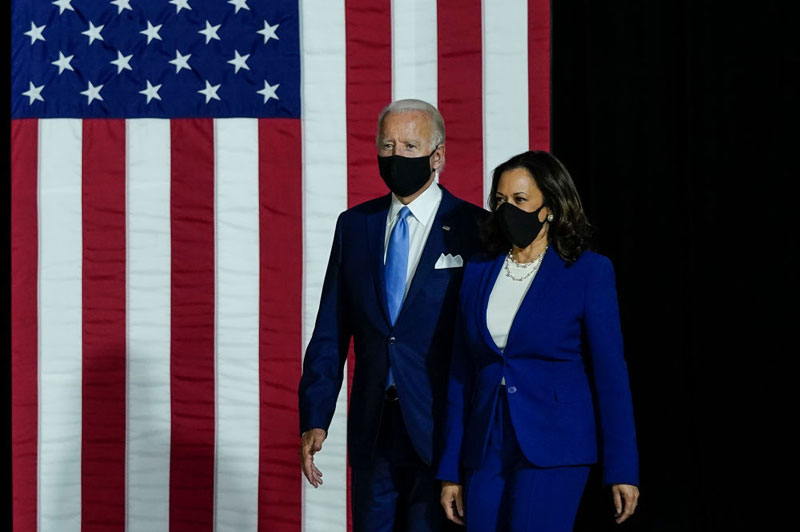
Ohio Democratic Party Chair David Pepper sent an email to supporters congratulating Biden and Vice President-elect Kamala Harris, and thanking supporters.
“Today we celebrate the end of the Trump presidency and thank every person in Ohio and across the country who played a role in making that happen,” he said. “You were there when your country needed you most.”
Even with the presidential result appearing to be clear, there remain ballots that were received by Election Day to be counted in a number of states. As in every election, states will still be receiving ballots from overseas and military voters, and will need to certify their initial vote totals.
And in Georgia, where Biden also pulled ahead overnight, a recount is expected due to the very narrow margin between the candidates.
Where do the vote totals stand in Pennsylvania?
As of 11:30 a.m. Saturday, Pennsylvania’s state election data showed Biden with a lead of 28,393 votes. That narrow lead had been growing since Friday morning, when Biden pulled ahead after trailing Trump in Pennsylvania’s early vote totals.
The tsunami of mail ballots from more than 2.6 million Pennsylvania voters favored Biden 3 to 1, allowing him a deficit of nearly 700,000 votes late on election night.
The volume of those ballots in a state that had massively expanded access to mail balloting just last fall, combined with rules preventing county officials from starting to open those ballots until Tuesday morning, resulted in a slow counting process.
Legal action from the Trump campaign also slowed down Philadelphia’s counting process. A judge ruled in favor of the campaign’s request for closer access to observe the city’s ballot counting, leading to a two-hour pause Thursday and a shift to only use the equipment where observers could watch, the Inquirer reported.
Philadelphia officials said Friday afternoon they still had 40,000 ballots to tally, estimating it could take several days to finish, according to the Philadelphia Inquirer. State data showed 76,000 mail ballots left to tally Saturday morning.
The Trump campaign did win a favorable ruling from the U.S. Supreme Court Friday evening, when Justice Samuel Alito approved a request from Republicans to require late-arriving mail ballots be segregated from the state’s tallying. But the Pennsylvania Capital-Star reported that state officials already had requested county election officials to do so.
Will Biden’s new lead in Georgia hold?
Pennsylvania wasn’t the only state where Biden came from behind on Friday: He also had notched a slim lead in Georgia, which had grown to 7,200 votes as of Saturday morning, according to the Georgia Recorder. Mail ballots there had been steadily reducing Trump’s lead in what has been a Republican stronghold, and updated tallies from suburban Clayton County pushed him into the lead.
But it may not be clear for weeks who has secured the state’s 16 electoral votes. Georgia’s secretary of state told reporters Friday there will be a recount.
What about Arizona?
Biden has a shrinking lead in Arizona, where he was ahead of Trump by 20,573 votes Saturday morning. That’s down from a lead of 68,000 votes as of Thursday morning, according to the Arizona Mirror.
Arizona also was still sifting through stacks of mail ballots at the end of the week. As of Friday morning, Maricopa County had about 140,000 early ballots left to count, plus nearly 6,000 early ballots that required signature verification, and another 16,000 provisional ballots.
When will Nevada wrap up its count?
Biden had a lead of 22,657 votes as of Friday, according to the Nevada Current, but the state was still far from finished counting.
Clark County, Nevada’s most populous county and also its bluest, still had approximately 63,000 mail ballots to process and count as of Friday morning, the Current reported. Additionally, there were 44,000 identification-required ballots and 60,000 provisional ballots to tally.
Laura Olson Laura covers the nation’s capital as a senior reporter for States Newsroom, a network of nonprofit outlets that includes Ohio Capital Journal. Her areas of coverage include politics and policy, lobbying, elections, and campaign finance.
Michael Hamper III is a partner at Lemire & Hamper LLC, a firm in Jefferson, Ohio that focuses on the areas of bankruptcy, oil and gas, probate, real estate, and municipal law. Michael has served as the Solicitor for the Village of Jefferson since 2016 and has a passion for helping his local community that inspired him to run for office in 2018.
Turn on the news or read a newspaper today and you will see political candidates and public officials making the rounds throughout the country trying to earn your vote. While the issues and formats are much different today, those candidates and public officials are participating in America’s time-honored tradition of democracy.
When it comes to elections, both the voter and precinct election officials have responsibilities to protect voting rights. It is important to be prepared when you vote and to know what your rights are at the polling place in order to ensure a smooth Election Day.
Voter Responsibilities
In Ohio, you are generally eligible to vote if you are a citizen of the United States, a resident of Ohio for at least 30 days prior to the election in which you desire to vote, at least 18 years old on or before the next general election, and if you are not currently incarcerated for a felony conviction.
In order to cast your ballot on Election Day, you must bring one of the following proofs of identification (note, though an option, it does not have to be a photo ID):
Current photo ID card with your name and address, such as a driver’s license or state ID;
Other government ID (but not a U.S. Passport or student ID as those do not prove current address);
S. Military ID card with your name and photo (address is not required); or
A form of identification that shows your name and address, such as a utility bill, bank statement, paycheck, government check or other government document, such as a benefits letter from the Social Security Administration or the Ohio Department of Job & Family Services.
On Election Day, it is also your responsibility to show up at the correct precinct to vote. If you do not know this information, you can look it up on the Ohio Secretary of State’s website.
Precinct Responsibilities: Protecting Your Rights
If you are at the proper precinct, have registered to vote at least 30 days before the election and brought a proper form of identification (see list above), then you should have no problems at the polling place. However, it is still helpful to know some more details about your rights and the duty of precinct election officials to enforce them.
If you are at the correct precinct and are eligible to vote, but you do not have the proper identification or are not on the poll list, then the precinct election official has the responsibility to allow you to vote by provisional ballot. You also have the right to vote by provisional ballot if you moved to a different precinct within Ohio in the 30 days before the election. A provisional ballot is like a regular ballot, except the board of elections will review the information for the voter and determine if the voter was eligible and should have their vote counted. Each provisional ballot voter must receive a provisional ballot notice that details how a voter can determine if their vote was counted and why or why not.
There are several other voting rights that you should also be aware of, such as:
It is the responsibility of the polling place to allow you to vote as long as you are in line before the polls are scheduled to close.
You are not required to provide proof of citizenship in order to vote.
If you need assistance to vote due to blindness, disability or illiteracy, you are permitted to receive assistance from a person of your choice, so long as that person is not your employer, representing your union or a candidate whose name is on the ballot. You can also receive assistance from two precinct election officials (one from each political party).
It is also important for you to know that polling places are neutral ground. This means there should be no election official wearing campaign materials, attire or paraphernalia. Election officials cannot advise, instruct or educate voters on candidates or the issues. They are there to ensure a fair, unbiased voting process, and it is not their goal to influence voters in any way. Voters should also follow these rules and should not wear campaign materials, attire or paraphernalia. Candidates and volunteers are also not permitted to campaign within 100 feet of the polling place, which is often marked by small American flags.
What Should You Do if You Believe Your Rights Are Being Violated?
If you believe you are being wrongfully denied the ability to vote, ask to speak to the voting location manager and they will work with you to fill out the form to report the issue (Form 10-U) and then have you vote by provisional ballot.
If you believe there are violations of voting laws occurring at a polling place, whether by candidates, advocates, precinct election officials or voters, you should report the violations to the local board of elections.
How an Attorney Can Help
Should you run into problems, an attorney can help you determine whether your voting rights have been violated and to decide on an appropriate course of action. An attorney can also help you make contact with the appropriate local and state officials to notify them of how your rights were violated and seek to resolve the matter and correct the issues before the next election so that no other voter experiences the same hardship. An attorney will also be able to advise you of the different methods of reporting election complaints to the local board of elections, Ohio Secretary of State and United States Department of Justice.
A Note on COVID-19 and Voting
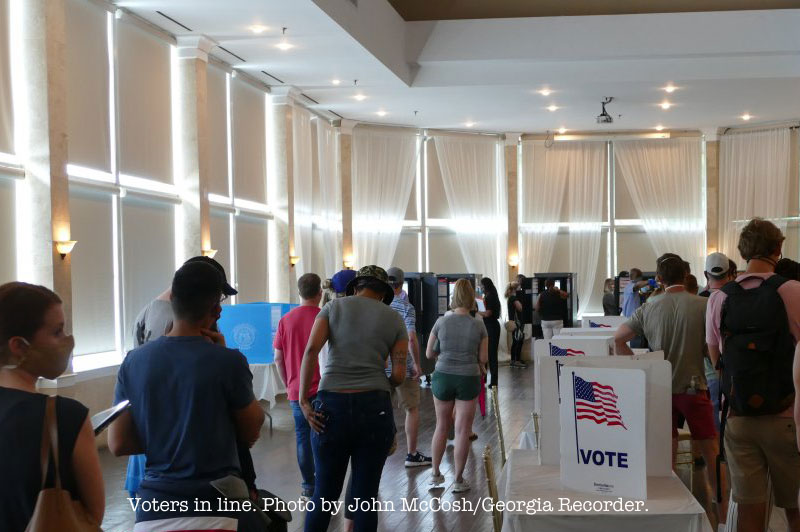
In-person voting may look different this year in response to COVID-19. Be sure to check your polling place in advance, as it may have changed. You may also be required to wear a face mask, and there will likely be markers to keep you distant from the other voters. If you have questions, be sure to check with your county’s Board of Elections. For more information about voting by an absentee ballot, read this article.
We are living in the age of fake news. No, not the “deep state is out to get the president” kind. The real “fake news” is all around us, spreading partially by word of mouth and at certain political rallies, and much more so on Facebook and Instagram, as people pass along rumors and myths that fit their world view.
So what?
Scott DiMauro, a high school social studies teacher from Worthington, was elected President of the Ohio Education Association in 2019 after having served as vice president for six years. Over his 29-year career as an educator, Scott has worked to provide students the critical thinking and decision-making skills they need to be successful citizens in our democratic society. He has likewise advocated for students, educators and strong public schools at all levels of his union.
Well, for one thing, it is frustrating. As educators, we teach facts — the laws of physics, the branches of government, grammar rules, math formulas — things that don’t change, no matter how you feel about them. More importantly, we teach critical thinking. It is a reflection of the era in which we live that the children in our classrooms can separate fact from fiction better than some adults.
The widespread misinformation circulating among adults is threatening the foundation of our democracy. There is a chance a considerable number of Americans will not vote in the coming election or will cry foul over the results because of lies they have read online.
To be clear, the long-standing method of absentee voting by mail is safe and secure, and any attempt to say otherwise is misinformation.
In one recent Facebook post I came across, a well-respected community leader falsely claimed that a) there was no way of ensuring that someone who votes by mail can’t also vote in person, b) ballots sent to wrong addresses based on voter records could be cast by the current resident, and c) someone who receives a ballot they shouldn’t have could cast a second vote for their candidate of choice if that candidate was behind in votes.
None of this is true.
Ohio keeps track of who requests absentee ballots and those voters are not allowed to vote on Election Day. If you requested an absentee ballot and still show up to vote in person — whether because you never received your
The widespread misinformation circulating among adults is threatening the foundation of our democracy.
ballot, never mailed your ballot or, as some would claim, you’re trying to vote a second time in the same election — you would need to cast a provisional paper ballot which goes through layers of verification before it is counted after Election Day. Any attempt to vote twice will be caught and that person would likely face prosecution.
Procedures in Ohio prevent ballots from being sent to the wrong addresses. Voters must submit an absentee ballot application by mail or in-person at their local board of elections. The absentee ballot application requires voters to provide their address, as well as their name, date of birth, and either their driver’s license number or the last four digits of their Social Security number. Each application is compared with voter registration records to ensure the person requesting the ballot is who they say they are and is eligible to vote.
The notion that someone would cast a second ballot based on the current vote tally is ludicrous. While absentee ballots can be scanned into the system before Election Day in Ohio, they are not tabulated until polls close at 7:30 p.m. on Nov. 3. Absentee ballots must be postmarked by Nov. 2.
Bottom line: For as long as there has been absentee voting, there have been safeguards in place to prevent fraud.
It is worth noting, though, that ballots sent by the correct deadline will be accepted and counted up to ten days after Election Day to allow for delivery time. Because of the high volume of absentee ballots expected to be cast this year, we probably will not receive the full election results until at least mid-November. This does not mean the final, certified tally is not legitimate; it simply means every legitimate vote counts.
Bottom line: For as long as there has been absentee voting, there have been safeguards in place to prevent fraud. Ohio has had no-fault absentee voting since the 2006 Gubernatorial Election, and members of both political parties have enjoyed using it since then. Incidents of voter fraud are exceedingly rare to the point of being essentially non-existent in Ohio, despite the calumny on the internet claiming otherwise.
What is true is that there will be more absentee ballot applications and returns going through the mail this fall than usual because of safety concerns amid the global pandemic. Couple that with operational changes handed down from a political appointee who has vowed to run the U.S. Postal Service like a business, rather than the public service it was always intended to be, and it’s not hard not to envision delivery delays this election season.
That makes it absolutely critical that you request and return your absentee ballot as early as possible, if you intend to vote by mail.
You can apply now to receive a ballot in the first batch of mailings, which will go out Oct. 6. Fill it out and return it right away, taking care to fully complete the information on the ID envelope, which will again be compared with voter registration records to ensure no nonsense has occurred. Ballots can be returned by mail or in secure drop boxes provided by every county board of elections the state.
I’m alarmed by the current misinformation epidemic that will dissuade some Americans from casting their ballots and the resulting impact that will have on our system of government.
Ohio will also offer four weeks of early in-person voting in every county, for those who do not want to contend with the process by mail but want to avoid long Election Day lines that could be COVID-19 hotbeds.
Ohio’s educators care deeply about ensuring free and fair elections. As a social studies teacher with three decades of experience, I’m alarmed by the current misinformation epidemic that will dissuade some Americans from casting their ballots and the resulting impact that will have on our system of government.
No matter how you choose to vote – absentee by mail, early in-person, or on Nov. 3 — the most important thing is that you cast your ballot. Our democracy depends on it.
Check out these two voter guides recently published by Loveland Magazine with information about requesting absentee ballots. Keep in mind that Ohio officials are recommending you stay ahead of these absolute dates to ensure your mail coming to and from the post office is delivered in time for your vote to count.
Just 21 days ahead of the November 6 General Election, Ohio Secretary of State Jon Husted said today that as of Friday, October 12, an estimated 910,982 absentee ballots had been requested and 42,470 had been cast statewide. This includes more than 7,900 ballot requests from military and overseas voters, whose absentee ballots started going out on Saturday, September 22, of which nearly 1,200 have been cast. Ballots for all other voters started going out on October 10 and more than 41,000 have been cast by mail and in person.
2018 General Election By-the-Numbers
8,025,232 Ohioans are registered to vote.
910,982 voters have requested an absentee ballot by mail as of Friday.
Of those, 42,470 have been cast.
34,252voters have requested and cast an absentee ballot in person as of Friday.
7,914military & overseas voters have requested an absentee ballot as of Friday.
Of those, 1,176 have been cast.
At this same point during absentee voting in 2014, nearly 741,000 absentee ballots had been requested and more than 49,000 ballots had already been cast.
Ohio voters have multiple options available to them to cast a ballot over a four week period that began October 10. A registered voter can cast an absentee ballot by mail or early in person, which gives them 24 hours a day to vote from home or nearly 200 hours to vote in person that includes weeknights and weekends, respectively. There is also Election Day, during which voters have 13 hours to cast a ballot at their neighborhood polling location. The voting schedule is accessible on the Secretary of State’s website.
Loveland Sweets is a purveyor of hand-crafted chocolates, caramels, marshmallows, and ice creams. Our house-made candies are prepared in small batches.
Tuesday is Election Day and the polls will be open from 6:30 AM to 7:30 PM
Over 300,000 ballots requested, over 260,000 Ohioans have voted.
Tomorrow is Election Day, still time to return absentee ballots.
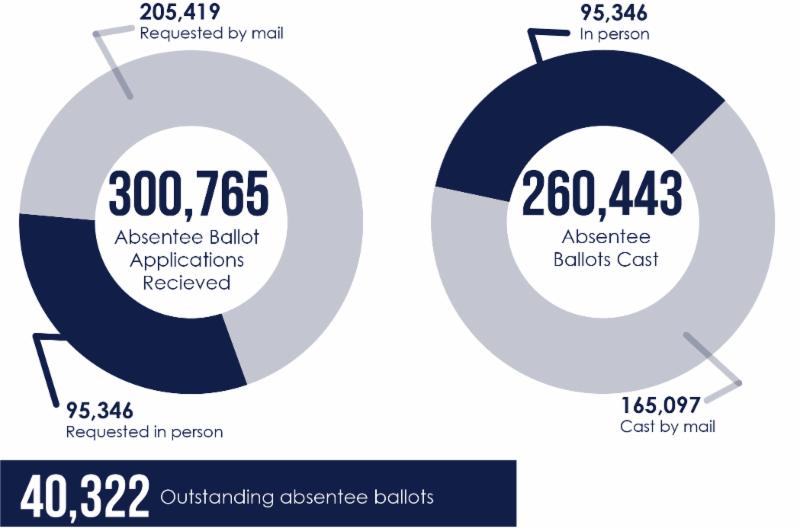
Columbus, Ohio – On the eve of Election Day for the May 8 Primary Election, Ohio Secretary of State Jon Husted today announced that 300,765 absentee ballots had been requested through 2 PM Monday. Thus far, 260,443 Ohio voters have cast their ballots.
Based on an informal survey of Ohio’s 88 county boards of elections, as of Monday, May 7:
At this same point during absentee voting in 2014, nearly 254,000 absentee ballots had been requested and nearly 202,000 ballots had been cast.
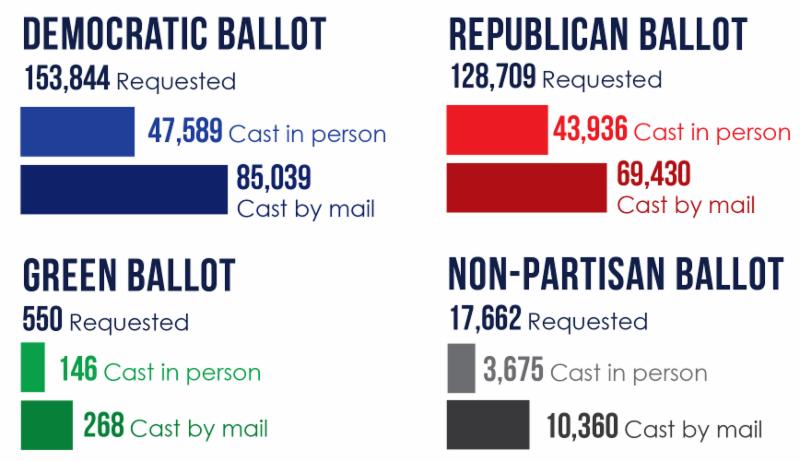
The unofficial data collected through the informal board of elections survey also shows the number of absentee ballots requested and cast by ballot type.
Tuesday is Election Day and the polls will be open from 6:30 AM to 7:30 PM. Voters need to bring the proper form of ID and know their polling place and precinct. Voters can check their polling place and precinct, and get other important voting information by visiting www.MyOhioVote.com.
Voters who received a mail-in absentee ballot must either get it postmarked and in the mail today, or drop it off at their county board of elections by 7:30 PM Tuesday. Completed mail-in absentee ballots cannot be returned at polling locations. To make sure their ballots are counted, voters need to complete, sign and seal their voted ballots, taking care to provide the required information, including proper identification.
To ensure voters in Ohio have a positive experience, Secretary Husted established the Voter Toolkit – an online, one-stop location for all necessary voting information. Ohio voters can visit MyOhioVote.com/VoterToolkitto check their voter registration status, find their polling location, view their sample ballot and track their absentee ballot.
PLEASE NOTE: Results for write-in candidates will notbe available on election night. Additionally, results for local elections, such as county races, school levies and tax levies, will notbe available through the Secretary of State’s Election Night Reporting website. You must contact county boards of elections for local election information.






 Commentary by