Tag: Election Fraud

  • Worries grow about disinformation, false claims and even violence as election nears

    Worries grow about disinformation, false claims and even violence as election nears

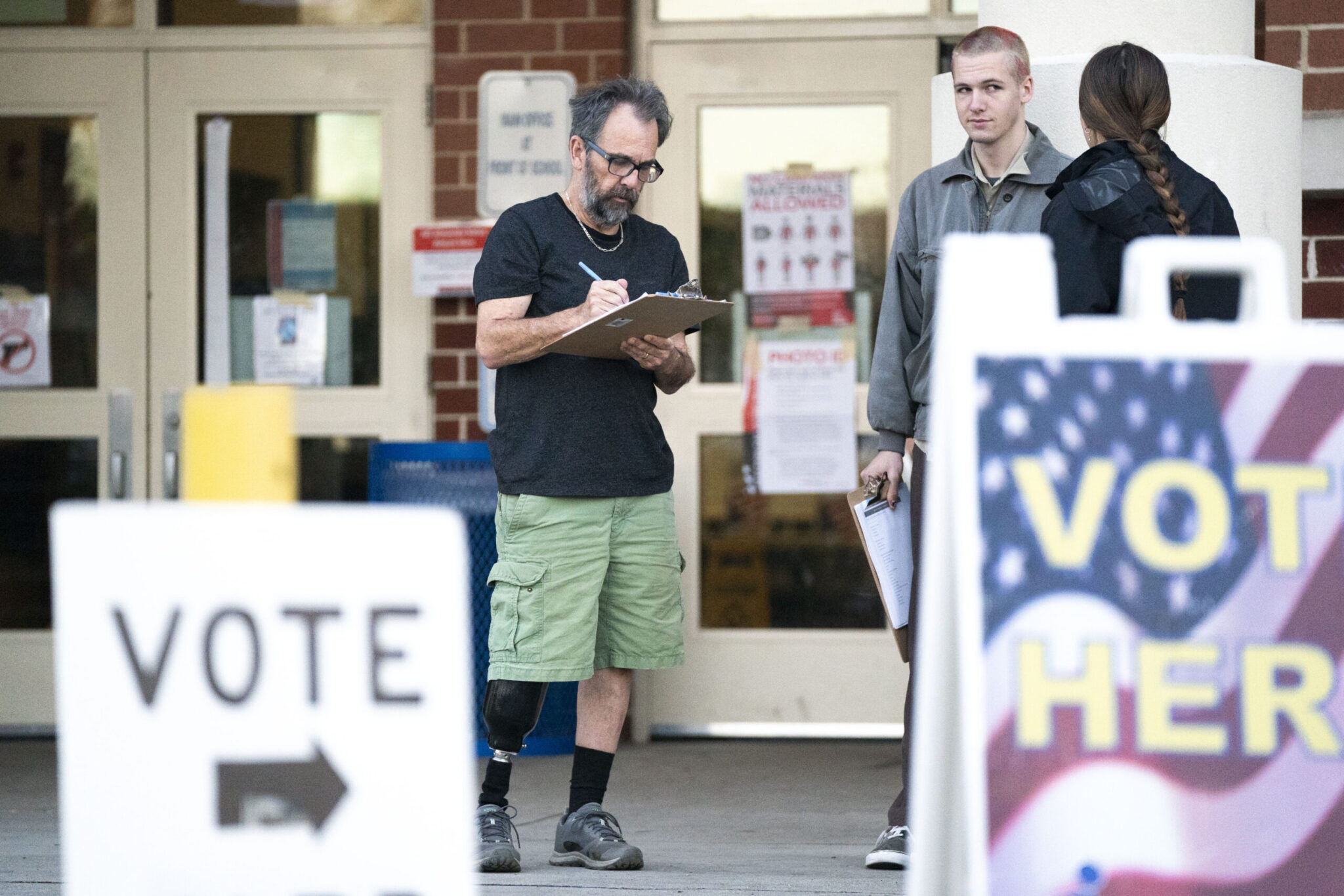
    A man participates in exit polling after voting in the South Carolina Republican presidential primary at Dreher High School on Feb. 24, 2024 in Columbia, South Carolina. (Photo by Sean Rayford/Getty Images)

    By:  OHIO CAPITAL JOURNAL

    WASHINGTON — A pro-democracy organization warned Monday that disinformation and violent rhetoric could make the weeks that follow Election Day especially fraught, pushing the country past the upheaval that arose four years ago during the last presidential transition.

    The comments from three members of the Defend Democracy Project came just days before voting ends on Nov. 5, though with several races extremely close, the country may not know for days who won the presidential contest as well as control of Congress.

    That could leave considerable space for speculation as state election workers count mail-in ballots and potentially undertake full recounts, similar to four years ago.

    “I think the biggest vulnerability will continue to be the mis- and disinformation that will happen in the aftermath of the election,” said Olivia Troye, who previously worked for Vice President Mike Pence as a special adviser on homeland security and counterterrorism.

    Troye raised concerns that Republican presidential nominee Donald Trump may make false claims about election fraud and encourage violence similar to what took place on Jan. 6, 2021, should he lose the Electoral College again.

    Troye referenced an election bulletin from the Federal Bureau of Investigation and the Department of Homeland Security she said cautioned that “candidates, elected officials, election workers, members of the media, judges involved in these cases” could all become targets of post-election violence.

    “And they’re also concerned about the visible attacks and violence on polling places or ballot drop boxes,” Troye said, referencing the burning of ballots inside drop boxes in Oregon and Washington states early Monday morning.

    Michael Podhorzer, chair of the Defend Democracy Project, said during the virtual briefing for reporters that one of the reasons many state officials didn’t go along with requests to “find votes” for Trump in the days following the 2020 election was because President Joe Biden had “two states to spare.”


    “And that created a prisoner’s dilemma for every Republican election official who might have done the wrong thing,” Podhorzer said. “So if you take the call to (Georgia Secretary of State) Brad Raffensperger, he understood that even if he could find those votes that Trump wanted, unless two Democratic secretaries of state overturned their results, Donald Trump was not going back to the White House.

    “And what that meant was that there wasn’t any single actor, in the way there was in 2000 in Florida, who could actually change the results of the election.”

    That could be different this time, should Democratic presidential nominee Kamala Harris win by a small margin, potentially just one state’s Electoral College votes, he said.

    Accepting the results

    The Associated Press-NORC Center for Public Affairs Research released a survey Monday showing 86% of registered voters believe whoever loses the presidential election should accept the results, though just 33% expect Trump will concede if he fails to secure the votes needed to win the Electoral College.

    About 77% of those surveyed expected Harris to accept the results should she lose the presidential race.

    Anxiety about post-election violence was rather high among the registered voters surveyed, with 76% saying they are extremely or somewhat concerned about violent attempts to overturn the election results.

    Eighty-two percent said they were at least somewhat concerned about “increased political violence directed at political figures or election officials.”

    Voters are also worried about foreign interference in the elections, with 78% of the registered voters surveyed saying they are extremely or somewhat concerned about it “influencing what Americans think about political candidates.”

    The co-chairs of Issue One’s National Council on Election Integrity —  former U.S. Reps. Barbara Comstock, R-Va., Donna Edwards, D-Md., Tim Roemer, D-Ind., and Zach Wamp, R-Tenn. — released a written statement Monday addressing a fake video produced by Russian actors about ballots in Pennsylvania. The statement also criticized a Maryland Republican congressman who said North Carolina should just give its Electoral College votes to Trump.

    “Foreign adversaries are seeking to influence U.S. elections by sowing division and spreading false information to undermine confidence in our system of self-government,” the co-chairs wrote. “In addition, people who want to win at all costs continue to spread false claims about election integrity and may create chaos, delay results, and challenge the outcome of our fair electoral process.”

    The four wrote the suggestions from Maryland Rep. Andy Harris, chairman of the far-right U.S. House Freedom Caucus, that North Carolina simply grant its 15 Electoral College votes to Trump “before votes are counted are dangerous and against the rule of law.”

    “By rejecting the so-called independent state legislature theory in Moore v. Harper, the Supreme Court affirmed that state legislatures do not have the power to replace the popular will with a slate of electors,” they wrote.

    Issue One describes itself as a “crosspartisan” organization that works to “unite Republicans, Democrats, and independents in the movement to fix our broken political system and build an inclusive democracy that works for everyone.”

    GOP blowback on Puerto Rico insults at Trump rally

    GET THE MORNING HEADLINES.


    Democrats and Republicans united somewhat Monday to express anger about comments a comedian made about Puerto Rico during a Trump rally on Sunday at Madison Square Garden.

    Tony Hinchcliffe, who spoke in the hours leading up to Trump’s comments, called Puerto Rico a “floating island of garbage in the middle of the ocean right now.”

    Hinchcliffe later said Latinos “love making babies” and made additional lewd comments.

    Congressional Hispanic Caucus Chair Nanette Diaz Barragán, D-Calif., released a statement Monday calling the comments shameful and dangerous.

    “This type of language emboldens prejudice, encourages violence, and undermines the values of unity and respect that our country is built on,” Barragán wrote. “It’s deeply troubling to see Republican leaders celebrate this rhetoric instead of promoting unity and truth.”

    Vice President Harris told reporters traveling with her that the comedian’s comments were part of the reason voters are “exhausted” and “ready to turn the page” on Trump.

    “It is absolutely something that is intended to, and is fanning the fuel of trying to divide our country,” Harris said.

    Florida Republican Sen. Rick Scott posted on social media that the comedian’s comments about Puerto Rico were “not funny and it’s not true.”

    “Puerto Ricans are amazing people and amazing Americans! I’ve been to the island many times. It’s a beautiful place. Everyone should visit!” Scott wrote. “I will always do whatever I can to help any Puerto Rican in Florida or on the island.”

    Florida Republican Rep. Carlos A. Giménez posted on social media that the comedian’s comments were “completely classless & in poor taste.”

    “Puerto Rico is the crown jewel of the Caribbean & home to many of the most patriotic Americans I know,” Giménez wrote. “@TonyHinchcliffe clearly isn’t funny & definitely doesn’t reflect my values or those of the Republican Party.”

    Puerto Rico’s delegate to the U.S. House, Jenniffer González-Colón, a Republican, called the comedian’s remarks “despicable, misguided, and revolting.”

    “What he said is not funny; just as his comments were rejected by the audience, they should be rejected by all!” González-Colón wrote. “There can be no room for such vile and racist expressions. They do not represent the values of the GOP.”

    Ariana Figueroa contributed to this report. 


    Jennifer Shutt
    Jennifer Shutt

    Jennifer covers the nation’s capital as a senior reporter for States Newsroom. Her coverage areas include congressional policy, politics and legal challenges with a focus on health care, unemployment, housing and aid to families.

    Ohio Capital Journal is part of States Newsroom, the nation’s largest state-focused nonprofit news organization.

    MORE FROM AUTHOR

  • “Special paper.” Ohio Auditor floats theory of election fraud

    “Special paper.” Ohio Auditor floats theory of election fraud

    BY: MARTY SCHLADEN – Ohio Capital Journal

    Ohio Auditor Keith Faber last Tuesday told members of the Westerville Tea Party that it was unlikely that widespread fraud occurs in Ohio elections.

    But that didn’t stop him from holding out a sinister possibility: that the Cuyahoga County Board of Elections might be diverting special voting-machine paper to other states where unscrupulous elements might use them to produce unsolicited, fraudulent ballots.

    For his part, the director of the board of elections there said his office was doing no such thing and that the state auditor’s office had never contacted his agency about the matter.

    With Republicans holding all statewide offices except the U.S. Senate seat occupied by Sherrod Brown, a Democrat, officials like Faber are in a tight spot when it comes to election fraud.

    Former President Donald Trump continues to falsely claim that he was cheated out of the presidency in 2020 by a rigged election. And now, other Republican candidates are mimicking his past behavior by refusing to say whether they’ll accept the results if they lose on Nov. 8.

    Experts say such talk is crippling our democracy by undermining faith in its most basic process. Indeed, about 70% of Republicans believe the 2020 presidential election was rigged despite Trump’s epic failure to produce any evidence of that.

    So Ohio’s elected Republicans have a base that’s deeply skeptical of elections at the same time that those officials are running them. 

    Secretary of State Frank LaRose, the official responsible for administering elections, has hyped the possibility of cheating while simultaneously touting how extremely rare it’s been in elections he’s run. In February, LaRose slammed the media for supposedly downplaying voter fraud just after he found just the possibility of one fraudulent vote for every 222,000 cast in Ohio in 2020.

    Faber, the state auditor, seemed to be trying to take a similar tack last week when a member of the Tea Party audience asked him if he audited elections.

    According to an audio recording of the session, Faber said that it was the job of the secretary of state to audit elections, but the state auditor could look at other things handled by county boards of election, such as their money. He added that his office investigated some of those matters in the wake of the 2020 election.

    Faber told the crowd that while he believes it’s hard to cheat in Ohio elections, that might not be the case elsewhere.

    “What I found out is the paper, the paper we use to vote in Ohio, OK, is special paper,” he said. “You need special paper to run the machines. But there really wasn’t ever any inventory done on the paper, OK? And so that supply if you audit that, we’re going to start doing a count. If you ordered 100 (thousand) sheets of paper and you only voted 20,000 people, you better have 80,000 sheets left.”

    He added, “And so we started asking those questions. And I wasn’t really worried because of the difficulty in Ohio of creating extra fake ballots because of the controls. But there was nothing to say the Cuyahoga County Board of Elections who ordered a million sheets of paper didn’t somehow quietly drop off 50,000 of them over here in (another state.) Because the paper is the same from machine to machine and state to state and so we started asking those questions. And I talked to a number of people at local boards of elections and said if you’re going to cheat, what would you do? And so we started looking at that. So the short answer is no. I don’t audit the election.” 

    Faber’s office was asked if it will audit voting-machine paper used in the Nov. 8 election, and if it did, whether it would do so in all 88 Ohio counties. 

    “The Auditor of State’s Office regularly audits all of Ohio’s counties for fiscal and operational controls,” the emailed reply said. “These engagements include boards of elections. These most recent audits included an examination, after consultation with the Secretary of State’s Office, of a number of board of elections’ required policies and procedures. While no significant findings were issued, a number of minor discrepancies were identified at boards of elections across Ohio. Those discrepancies and the Auditor’s recommendations to address them are included in counties’ publicly accessible audit reports.”

    Faber’s staff was also asked whether he had any reason to suspect that Cuyahoga County — the most racially and ethnically diverse in Ohio — had or was planning to sneak voting-machine paper out of state for use in fraudulent voting.

    The communications staff didn’t address that question. Nor did it address whether there was any evidence that the kind of voting fraud Faber described had ever been done anywhere in the United States.

    Anthony Perlatti, director of Cuyahoga County Board of Elections, said in a phone interview Tuesday that his office isn’t handing ballot paper in the way Faber described. He said his agency uses a third-party vendor to print ballots.

    “In terms of having piles and piles of blank ballot stock at our offices, we don’t have that,” he said, explaining that the vendor prints off of massive rolls of paper. “I’ve never heard of people sending blank ballot stock elsewhere for people to try to manufacture ballots. It doesn’t make any sense to me. We definitely don’t do it in Cuyahoga County.”

    Perlatti added that his agency keeps track of the ballots it handles.

    “We send (the already-printed ballots) out to the polling locations,” he said. “When they come back, we do an inventory of what have that is unused and what we haven that is used, so this doesn’t really make a whole lost of sense to me.”

    Asked if Faber’s office contacted the Cuyahoga County Board of Elections to learn how it uses ballot stock, Perlatti said, “No. We really, from an elections standpoint, we really don’t have much interaction at all with the auditor’s office. The auditor’s office comes in more so with county in general on things like payroll and county procurement.”

    Faber’s office did say that the state auditor believed the 2020 presidential election was on the up and up. Faber “has consistently stated that Ohio’s elections are some of the best run in the country and that Joe Biden is the President of the United States,” his office said.

    To the Ohio Democratic Party, Faber’s statements to the Westerville Tea Party amounted to pandering.

    “Add Keith Faber to the list of GOP politicians who are pandering to MAGA Republicans and dabbling in conspiracy theories in order to further their own political ambitions,” spokesman Matt Keyes said in an email. “Keith Faber knows better, but is more focused on shamefully clinging to power than being honest with the voters of Ohio.” 

    Trump-driven falsehoods about election integrity have led to widespread attacks on election workers, including “terroristic threats.” But Perlatti said that elections officials are “unique people.”

    “We have tremendous pride in our work,” he said. “We have tremendous integrity in what we do. We know that we’re doing the right thing and doing it with the product we produce, which is an accurate, correct, open, accessible, fair election which is one of the fundamental things that this country is based upon.”

    Follow Marty Schladen on Twitter.

  • Governor appoints former lawmaker to elections board who hyped up 2020 voter fraud claims

    Governor appoints former lawmaker to elections board who hyped up 2020 voter fraud claims

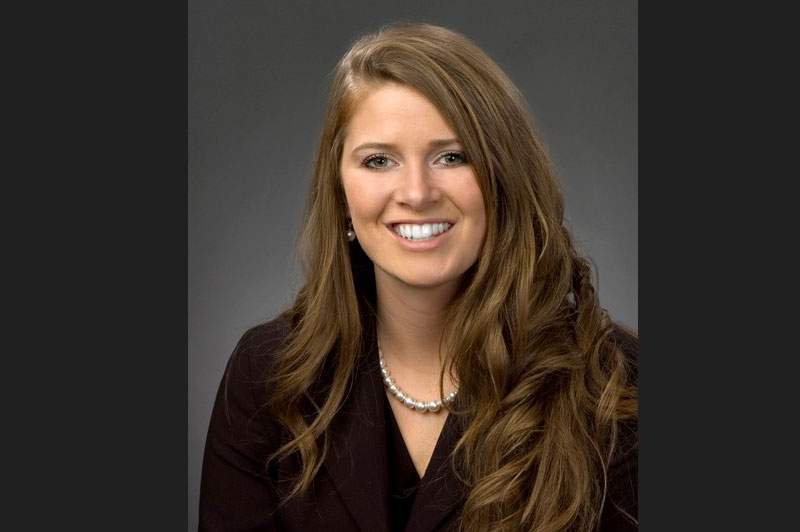
    Christina Hagan-Nemeth. Source: Ohio General Assembly.

    BY: JAKE ZUCKERMAN – Ohio Capital Journal

    Gov. Mike DeWine appointed a former lawmaker to a state board that oversees political campaigns who has publicly amplified debunked notions of election fraud in 2020.

    Christina Hagan-Nemeth, who served in the Ohio House before mounting two unsuccessful congressional bids, was appointed Tuesday to the Ohio Elections Commission. Her term runs through the end of 2026.

    A review of her public social media posts and talk radio appearances show she amplified the unsupported and repeatedly discredited claim that President Joe Biden somehow stole the election from Donald Trump. With the appointment, she now sits on a panel responsible for reviewing allegations of campaign finance violations and other offenses. The commission can levy fines, make criminal referrals, and intervene in campaigns at politically sensitive junctures.

    “The American people are entitled to an honest election,” Hagan wrote on social media Nov. 7, 2020, the day TV networks first projected Biden would win enough states to clinch the electoral college.

    “All legal votes should be counted. If you think these are controversial statements you must not agree w/safeguarding the sacred value of our individual votes as Americans.

    Ten days later, she made similar comments.

    “I’ve never prayed for fraud. But I have prayed that if it exists and especially to the degree to which its exposure can change the media’s projected outcome of the election…That it should be brought to light in a profound and irrefutable way,” she wrote. “I’m on team #EveryLegalVoteShouldCount.”

    Hagan, a Republican, did not respond to a phone call, text, or message to her personal Facebook account.

    DeWine has walked a tightrope since 2020 of denying the existence of widespread voting fraud but refraining from criticism of Trump — the leading proponent of the “stop the steal” movement. Speaking to CNN’s Jake Tapper on Jan. 3, 2021, DeWine refused to answer when asked why so many people believe that widespread election fraud occurred in 2020.

    He didn’t answer questions about Hagan’s statements, only noting through a spokesman that her appointment was recommended by Republican leaders in the state House and Senate.

    On Jan. 6, 2021, a crowd of hundreds of Trump supporters, swept up in his claims of a stolen election, violently stormed the U.S. Capitol seeking to halt certification of the 2020 election. Over the course of about seven hours, the attackers injured 114 police officers and caused about $1.5 million in damages, according to a U.S. Government Accountability Office report. Several officers died in the aftermath, including four by suicide. A Trump supporter was shot and killed after crawling through a transom window toward members of congress.

    Two weeks later, Hagan posted to her Facebook page an article written by Tony Perkins, leader of the Family Research Council, an anti-LGBTQ organization. The article depicts some Jan. 6 rallygoers as “peaceful protesters who desperately wanted to be counted.” Others, it states, weren’t peaceful but “were just as concerned about the future of elections after what happened in November.”

    Discussing the one-year anniversary of the riot on a conservative talk radio show, Hagan mocked a comment from Vice President Kamala Harris comparing Jan. 6 to other hallowed days in American history like 9/11 or the attack on Pearl Harbor.

    “I think the most dramatic word that we can accurately use [to describe Jan. 6] would be a riot, but not even, because there were really — nothing was defamed, nothing was attacked to any degree,” she said.

    In February 2021, Hagan shared an article from a conservative news outlet about the Supreme Court’s review of election fraud lawsuits.

    “SCOTUS now adds ELECTION FRAUD LAWSUITS to List of Cases To Be Considered… Not Loving the timing… But better late than never,” she said.

    She made similar comments a few days later, saying it “could get interesting” that the Supreme Court is scheduled to consider voter fraud cases in three states Biden won. The Supreme Court denied the request to consider the cases later that month.

    On a few occasions, she has accused Democrats of election fraud. In May 2020, the U.S. House passed legislation that would have prohibited states from requiring any form of identification to obtain an absentee ballot. Hagan said this shows that Democrats are trying to “rig the next election.” She made similar comments on talk radio about two bills that would overhaul election administration via prohibiting voter identification requirements, reinstating parts of the Voter Rights Act that were struck down by the Supreme Court, and more.

    “They are always, always aiming to undermine,” Hagan said. “And every single word that comes out of their mouth is orchestrated for that intentional destruction.”

    Elections commission

    The Ohio Elections Commission is a seven-member panel comprised of three Republicans, three Democrats, and one independent.

    On Tuesday, DeWine also appointed John Lyall, a Democrat, to serve on the commission.

    As recently as last week, Hagan circulated petitions to run for congress, according to the Cleveland Plain Dealer. But on March 4, she publicly announced she wouldn’t run for the seat.

    She first won office to the Ohio House in 2010 at the age of 21, where she served for eight years, the constitutional maximum. In 2018, she lost in a congressional primary to current Rep. Anthony Gonzalez — one of 10 Republicans who voted to impeach Trump in connection with Jan. 6 and has denounced the idea that the election was stolen.

    At the time, she used a campaign ad calling for a need to “secure our borders” and stop illegal immigration from Mexico. Snopes, the fact checking website, later reported the ad used footage from an Italian TV network showing Moroccan immigrants crossing into Spain.

    Trump endorsed Hagan in her 2020 run for the same seat, according to WKYC.

  • A presidential election like none other, and now an inauguration like none other

    A presidential election like none other, and now an inauguration like none other

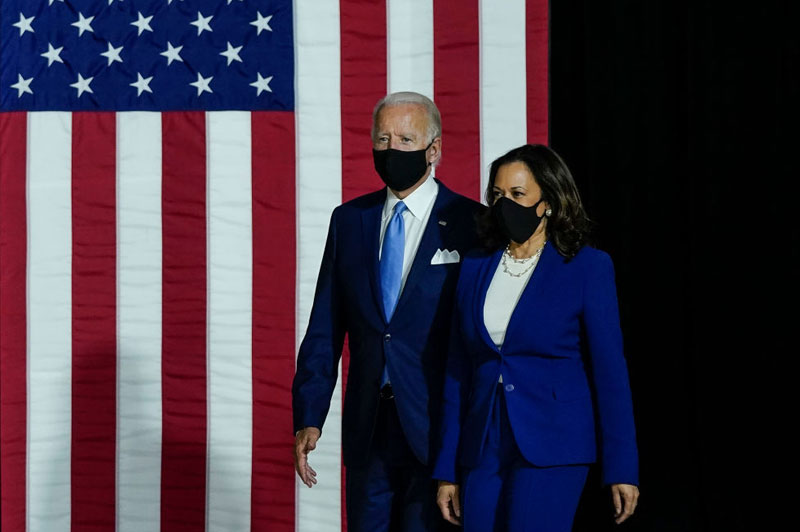
    President-elect Joe Biden and Vice President-elect Kamala Harris. Photo by Drew Angerer/Getty Images

    By Laura Olson and Ohio Capital Journal

    Washington D.C. – As with so many other events during the year preceding it, the inauguration of President-elect Joe Biden will be a ceremony unlike those of his predecessors.

    Tempering the celebratory tone is a directive from Biden’s inaugural team for supporters to refrain from traveling to D.C. for the Jan. 20 swearing-in. Instead, they’ve urged Americans to participate in the inaugural activities from home.

    It’s not yet clear what exactly those virtual festivities will include — or if President Donald Trump will attend Biden’s swearing-in. But the event will be scaled down in size, with an emphasis on safety precautions.

    “First and foremost, my objective is to keep America safe but still allow people to celebrate,” Biden said at a news conference this month.

    The crowd on the platform of the west front of the Capitol will be far less crowded than a typical inauguration. The Joint Congressional Committee on Inaugural Ceremonies typically would be distributing 200,000 tickets, but instead will hand out enough for each of the 535 members of Congress to attend with only one guest each.

    U.S. Sen. Roy Blunt (R-Mo.), who is chairman of the joint committee, said in a statement this month that the ongoing coronavirus pandemic and rising case counts “warranted a difficult decision to limit attendance.”

    Blunt added that the committee is “working on enhanced opportunities to watch the ceremonies online, in addition to the traditional televised national broadcast.”

    “The election of President-elect Biden and Vice President-elect Harris was historic and we know that many Americans would have wanted to attend the inauguration in-person,” said Sen. Amy Klobuchar (D-Minn.), who also serves on the inaugural committee. “At the same time, safety must be our top priority.”

    Biden’s inaugural committee has tapped medical experts to oversee safety precautions, including former Food and Drug Administration Commissioner David Kessler as its chief medical adviser.

    The details released so far have been vague beyond the limited number of tickets. A news release from Biden’s inaugural team described an “extremely limited” footprint for the swearing-in ceremony, and a parade that will be “reimagined.”

    That revamped parade could look similar to the Democratic National Convention’s virtual roll call, which featured video clips of delegates in their home states.

    “There probably will not be a gigantic inaugural parade down Pennsylvania Avenue,” Biden said. “But my guess is you’ll see a lot of virtual activity in states all across America, engaging even more people.”

    Crowded inaugural balls also are likely out of the question due to the pandemic.

    The Walter E. Washington Convention Center that typically would host soirees was once again prepped this month for use as a COVID-19 field hospital.

    Another question looming over the inauguration: What will Trump do?

    Traditionally, the outgoing president and first lady would meet with the incoming first family at the White House, and then ride together to the Capitol for the noontime ceremony.

    But Trump has refused to accept the election results, launching a failed series of legal challenges and posting unfounded claims of election fraud, even after the Electoral College certified his defeat. Asked in a Fox News interview this month if he’ll attend Biden’s inauguration, Trump replied: “I don’t want to talk about that.”

    The last time a president did not participate in their successor’s inauguration was in 1869, when President Andrew Johnson left office and Ulysses S. Grant was sworn in.

  • Has your Loveland Area mail service deteriorated?

    Has your Loveland Area mail service deteriorated?

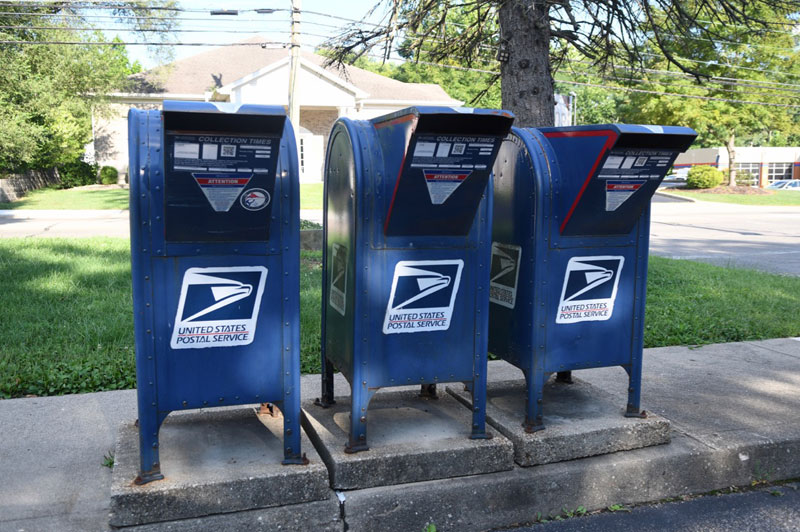
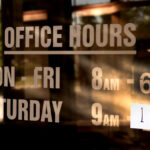
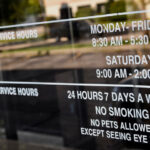
    Loveland, Ohio – To supplement the story below (4 Ohio Republicans join House Dems to pass bill to boost post office funding by $25B) from the Ohio Capital Journal, Loveland Magazine visited two of the closest local U.S. Post Offices to document the number of mailboxes placed outside the buildings. We also documented the days and hours of operation of each.

    While unlikely that the Trump Administration would attempt to interfere with the delivery of election-related mail in our heavily Republican voting area, nearly all Loveland mail does go to or from the Dalton Street processing center in Cincinnati. Interfering with mail delivery in the heavily Democratic voting urban areas of Cincinnati’s urban core is not beyond reasonable suspicion. And, the President may use mail problems in any part of the country to delegitimize and dispute the November election results.

    One day ago the President tweeted, “The greatest Election Fraud in our history is about to happen. This may top the Democrats illegally spying on my campaign!”

    On August 20 the President tweeted this, “They are sending out 51,000,000 Ballots to people who haven’t even requested a Ballot. Many of those people don’t even exist. They are trying to STEAL this election. This should not be allowed!”

    Trump said last week on Fox News that he opposes some funding because he doesn’t want it used for mail-in votes, repeating his claim that it would lead to “fraudulent” election results.

    WCPO has reported that processing machines from Cincinnati’s Dalton Street post office have been removed and remain offline and unusable.

    The Cincinnati Enquirer recently reported that according to Jim Sizemore, president of the American Postal Workers Union in Cincinnati that in May and June, the USPS “pulled the plug on eight mail processing machines in Cincinnati, accounting for 19% of the processing center’s capacity.” The eight machines could process collectively 243,000 pieces of mail an hour according to the Enquirer. Mail is piling up on the floor at the Queensgate facility according to Sizemore.

    WCPO’s John Matarese says the VA is now notifying veterans that they should order their medicine earlier than usual because at this time it cannot guarantee on-time delivery. And, by law, it cannot ship medication via private services.

    Sen. Rob Portman said on August 21 on his FaceBook page, “A number of veterans have reached out to my office recently expressing concern about delays in the USPS delivery of their critical prescription medications. This is not acceptable. This morning I pressed Postmaster General DeJoy for answers.” And on August 19 Portman said, “We must protect Ohioans right to vote during to the ongoing COVID-19 pandemic. That’s why I sent a letter to the Postmaster General with Congressman Bob Latta calling on the USPS to ensure the timely & accurate delivery of election-related materials in Ohio.”

    Rep. Brad Wenstrup told constituents in an email on Monday that the postal service has enough money on hand, “$14 billion cash” and that he voted to “open a $10 billion line of credit through the CARES Act” to help with any COVID-19 issues. Wenstrup said the USPS has enough money on hand to remain “fully function” until August of next year and that Speaker Pelosi has “manufactured a crisis and rushed the House back to vote on an irresponsible and unneeded amount of money on a problem that does not currently exist.”

    Paige Pfleger reported in a Cincinnati Public Radio story on August 20 that, “Since the pandemic, even more Ohioans have opted to receive their medications by mail, to avoid possible exposure or to save money.”

    Antonio Ciaccia of the Ohio Pharmacists Association is quoted in the story, “We have heard some extreme anecdotes over the last couple weeks where patients are waiting one, two, three weeks for their medications,” and adds that he’s never heard so many complaints about delivery delays.

    On August 18, Senator Sherrod Brown is quoted in a Cleveland.com article about mail sorting equipment being dismantled in Cleveland. Brown said, “As the U.S. Postal Service has warned Ohio and other states that it may not be able to meet mail-voting deadlines this November, the visibly idle equipment along with mail delays and post office budget shortfalls have fueled fears that the upcoming election will be undermined.”

    Reporter Sabrina Eaton writes in the Cleveland.com article:

    President Donald Trump’s assaults on mail-in balloting, even as he has requested an absentee ballot to vote from his new residence in Florida, have raised questions over whether he’s deliberately trying to sabotage an election that will likely have more mail-in ballots than ever because of reluctance to vote in person during the coronavirus pandemic.

    In a news conference over the weekend, Trump said universal mail-in voting would be “catastrophic. It’s going to make our country a laughingstock all over the world.”

    “The ballots are lost, there’s fraud, there’s theft, it’s happening all over the place,” said Trump. “Now we’re going to do it with this whole, vast, big section of the country? It’s crazy.

    Check out these two voter guides recently published by Loveland Magazine with information about requesting absentee ballots. Keep in mind that Ohio officials are recommending you stay ahead of these absolute dates to ensure your mail coming to and from the post office is delivered in time for your vote to count.

    Sidebar: What You Need to Know to Vote This Year

    Loveland Area November Voting Guide: What you need to know to…

    vvvvv
    nnnnn

    Loveland Magazine is interested in hearing from readers if they have experienced any delays in receiving mail (timely delivery of medicine, paychecks and other essentials) or about concerns they may have about receiving absent ballot requests or sending their ballot back to the local Boards of Elections. Please send us your thoughts to editor@lovelandmagazine.com.

    These photos were taken on the evening of August 16 at the Loveland and Symmes post offices. We do not know if any additional boxes were recently removed but is does not appear so. Although the quantity of mailboxes and hours of operation at these locations would not necessarily reflect current delays in mail delivery, we did want to document current conditions in advance of the November 3rd Presidential Election.


    4 Ohio Republicans join House Dems to pass bill to boost post office funding by $25B

    By Allison Stevens – Ohio Capital Journal
    House Speaker Nancy Pelosi said Saturday that mail delays are depriving Americans of timely delivery of medicine, paychecks and other essentials. Photo by Justin Sullivan | Getty Images

    WASHINGTON — The U.S. House convened a rare weekend session Saturday in an attempt to stop the U.S. Postal Service from allegedly disrupting mail service to sabotage the November elections.

    The Democratic-led chamber passed a bill  257-150 that would infuse $25 billion into the agency as it prepares for a surge in mail-in ballots and bar it from changing operations or service levels in place at the beginning of the year.

    The prohibition would remain in effect through January 2021 or for the duration of the coronavirus crisis — whichever is later.

    The bill passed largely along party lines, though more than two dozen Republicans joined Democrats in backing the legislation, including four Ohio Republicans: Reps. Troy Balderson (12th District), David Joyce (14th District), Steve Stivers (15th District) and Mike Turner (10th District). Rep. Bob Gibbs (R-7th District) did not vote. No Democrats voted against the bill.

    One Republican in favor was Rep. Brian Fitzpatrick of Pennsylvania, who said the post office needed to be funded so his constituents could get their mail delivered on time. “Republicans and Democrats must come together and address the serious challenges that USPS has been facing for some time now,” he said.

    Senate Majority Leader Mitch McConnell (R-Ky.) is not expected to take up the measure. He told his hometown paper Tuesday that he doesn’t think a stand-alone bill funding the postal service would pass the chamber.

    The White House threatened  Friday to veto the post office boost, calling it “an overreaction to sensationalized media reports that have made evidence-free accusations that USPS has undertaken reforms to achieve political rather than operational objectives.”

    But House Speaker Nancy Pelosi (D-Calif.) maintains that the administration is trying to suppress votes as the nation heads into a fraught election season in which the postal service will serve as “election central.”

    In addition to undermining the integrity of the elections, the delays are depriving Americans of timely delivery of medicine, paychecks and other essentials, Pelosi said at a press conference Saturday.

    Democratic lawmakers made similar allegations on the House floor.

    The administration has mounted a “sabotage campaign” to manipulate the vote, Rep. Debbie Dingell, a Michigan Democrat, said Saturday morning.

    Democratic Rep. Brenda Lawrence of Michigan and a member of the House Oversight and Reform Committee, said the bill would prohibit the postmaster general from making any changes that would undermine the post office. She said the postmaster general has “tried to rip it apart from the inside” and “our democracy is hinging” on delivery of the mail.

    “Don’t mess with the USPS,” said Rep. Debbie Wasserman Schultz (D-Fla.).

    Republicans charged Democrats with ginning up a manufactured crisis intended to deny the president a second term. House Minority Leader Kevin McCarthy (R-Calif.) said postal problems predate 2020 and the Trump administration.

    GOP Rep. Rob Woodall of Georgia called Saturday’s vote a “punctuation mark” at the close of last week’s Democratic National Convention. This “wasteful partisan exercise” will “go nowhere” in the GOP-controlled Senate and “help no one,” he added.

    Rep. Debbie Lesko, a Republican from Arizona, echoed the sentiment, calling the controversy “phony political theater.” Pelosi has gone “politically postal,” she said, quoting a recent Wall Street Journal editorial.

    The House approved $25 billion for the postal service in a $3 trillion coronavirus relief package approved in May. Pelosi pointed out Saturday that the USPS board of governors — a bipartisan group of members appointed by Trump — backs the funding.

    Trump said last week on Fox News that he opposes some funding because he doesn’t want it used for mail-in votes, repeating his claim that it would lead to “fraudulent” election results.

    Postmaster General Louis DeJoy, a top Trump donor and former logistics executive from North Carolina, has ushered in sweeping changes to the agency since taking the job in June. He acknowledged Friday at an oversight hearing in the U.S. Senatethat his overhaul has coincided with a drop in on-time deliveries but called allegations that they were intended to suppress votes “outrageous.”

    He said changes to overtime, retail hours and the location of mail processing machines and blue mailboxes were made to save costs and streamline operations but said earlier this week he would suspend some of his moves until after the elections to avoid the appearance of impropriety. He also said he wouldn’t close existing mail processing facilities and would use “standby” resources in October to meet mail surges.

    On Friday, he insisted that secure elections are his “sacred duty” and top priority this fall.

    But Pelosi on Saturday called DeJoy’s promise into question, pointing to his decision not to replace mail infrastructure that has already been removed. She also pointed to Trump’s comment earlier this week calling for law enforcement officers at polling places.

    “It is all designed to suppress the vote,” Pelosi said.

    DeJoy is slated to testify again on Monday in a hearing before the Democratic-led House Oversight and Reform Committee, where he is expected to face more withering questioning. Robert Duncan, chair of the U.S. Postal Service Board of Governors, will also appear before the committee.


    Allison Stevens

    Allison Stevens is a Washington D.C. reporter for States Newsroom, a network of state-based nonprofit news outlets that includes the Ohio Capital Journal.