

Tag: #elections

  • Young People in Georgia Fight for Climate Ahead of Runoff Elections/ Covering Climate Now

    Young People in Georgia Fight for Climate Ahead of Runoff Elections/ Covering Climate Now

    Loveland Magazine is one of the 400 news outlets worldwide, with a combined audience of over 2 billion people “Covering Climate Now”, a global journalism initiative committed to bringing more and better coverage to the defining story of our time.

    The initiative, was co-founded by The Nation and Columbia Journalism Review

    Mihaela Manova is “Covering Climate Now” in Loveland, Ohio as an editor for Loveland Magazine
    In this Covering Climate Now newsletter written by Mekdela Maskal, Maskal highlights Georgia’s young voters who are fighting for climate change in the upcoming runoff elections.

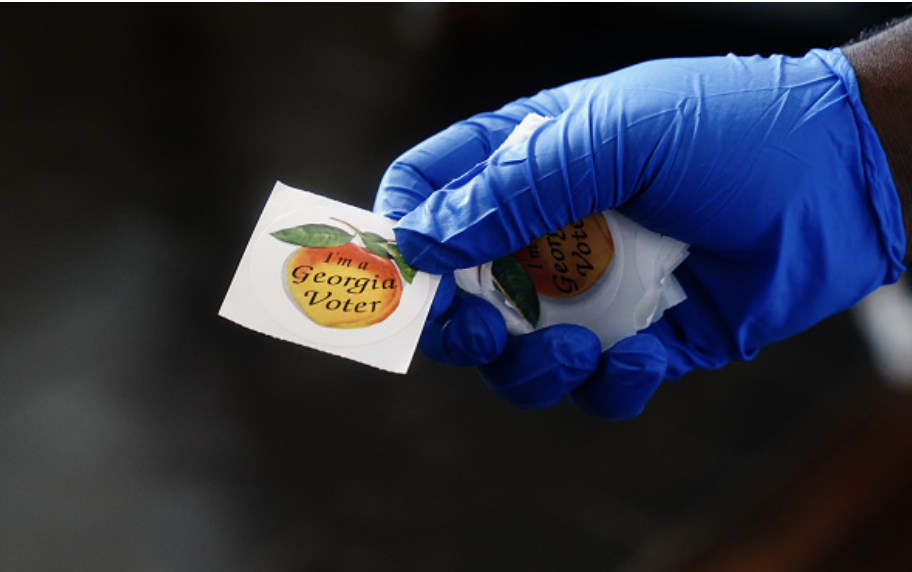
    On January 5, voters in Georgia will decide which political party controls the US Senate and, in turn, how far President-elect Joe Biden will be able to take his ambitious $2 trillion climate plan.

    For Democrats to take control of the Senate, Rev. Raphael Warnock and Jon Ossoff both need to win their runoffs against Republican incumbents Kelly Loeffler and David Perdue, respectively. Warnock and Ossoff have plans to address climate change, which poses multiple threats to Georgia, including intensifying hurricanes, sea level rise, higher temperatures, and spreading contamination at some of the nation’s most toxic waste dumps. Their GOP counterparts have all but ignored the climate issue.

    Throughout this election season, young voters and activists have forced climate change to center stage, and this final pivotal race is no exception. We spoke with five young people in Georgia to get their take on the issues that matter most and how those are covered (or not) in the media.

    Reach out to us for youth activists who are available for interviews.

    Edward Aguilar, 17 

    Untitled design (1).png

    Aguilar is a high school senior in Alpharetta, Ga. who has been encouraging college students to register to vote through Students for Tomorrow, an organization he co-founded that helps young people understand political issues and why their vote counts.

    We started Students for Tomorrow in September. A friend of mine had to leave college because of Covid and was going to move back in with his parents. He called me and one of the questions that he had was, “Where am I going to vote? I’ve been voting from school for the last couple of years. Now, I am going back home, can I even vote there?” 

    People tend to feel that students are really apathetic when it comes to the political process, but in reality, a lot of them are just disillusioned. They don’t feel like their votes have an impact, and they don’t see themselves represented in media coverage. I think that’s why you’ve historically seen young people also taking to the streets and doing things online, more than just trying to place their vote. By showing them that their vote matters, Students for Tomorrow has helped an estimated 65,000 students register to vote nationwide.

    I think students are going to be the key for a lot of progressive policies moving forward, because they are willing to vote based on policy rather than party. Over the last month, we’ve been organizing hundreds of teen volunteers to have conversations with students ahead of the runoffs to clarify how their values and interests align with policies. We’ve been making a lot of calls to Perdue voters and saying, “If you want to live in a place that’s not underwater 40 years from now, you should probably not vote for him.”


    Jordan Madden, 16

    Madden is a coordinator at Sunrise Movement Clayton County and an intern for State Rep. Becky Evans, a Democrat representing Georgia’s 83rd District. Madden became involved in local climate justice efforts to bring more attention to the state’s environment.

    Jmadden.png

    My cousin works at a disposal company, and I’ve gone with him to our local landfill, the Dekalb County Seminole landfill, to see the problems there first-hand. Seeing the neighborhoods that surround the landfill, where we pollute and store our trash, you’re constantly reminded that these issues impact low-income people and are not shared by everyone equally. Knowing that this landfill is just one of many locations like it across the world made me realize that this problem is way bigger than just us.

    I want to make the public aware that environmental issues and climate change are real issues that we can solve if we put enough time and effort into them. Older people had a chance, but now it’s definitely our time to try and fix this problem.

    One thing that hasn’t been brought up in enough detail throughout the elections is what a just recovery means and whether affected communities will be brought to the table. We hear a lot from politicians and people who have power and money, but we need to hear more from the people who live the realities of climate and environmental injustice every single day. We see news about the temperature and global warming but we need to hear more of, “What can we do to reduce plastic waste in our communities?” “How can we hold the companies releasing toxins here accountable?” I want to see the media shine a light on the corporations that pledge to be green while at the same time hindering climate agendas.


    Jakia Cox, 19

    Cox is a freshman at Hawai’i Pacific University, originally from Ellenwood, Georgia. She became familiar with the environmental and climate justice movements while navigating her own lived experience.

    Jakia.png

    When I returned to Ellenwood from school, because of Covid, I woke up to this horrible stench. My house is less than half a mile away from the Dekalb County Seminole landfill. My parents bought the house in 2001, when they were told that the landfill would be closing. That was a huge lie. We couldn’t really smell it at first back then. But as time went on, the smell got worse, and now the trash in the landfill is stacked as tall as some trees. Every other day, at least, I have to put my shirt over my nose just to walk around my house.

    I decided to email the Georgia Environmental Protection Division and ask why the site remains open next to a neighborhood and about the health effects. I realized most of the neighborhoods surrounding Ellenwood are Black. I also learned of a predominantly white neighborhood nearby where public officials were thinking about creating a landfill that didn’t go through. It then sunk in that I was living with environmental racism. Since then, I’ve been figuring out how to organize with my family and my neighbors. My brother started a petition to close the landfill, but I have to say it’s frustrating, because it feels like we’re not being heard.

    To be honest, I haven’t been following the elections that closely. It’s difficult to stay engaged when it feels like the focus isn’t right or isn’t on issues that affect you. The Senate candidates, for example, seem more worried about their image than their constituents and local climate issues. It’s hard to be hopeful. Our stories need to be heard.


    Natasha Dorr-Kapcynski, 19

    Dorr-Kapcynski is a freshman at the University of Georgia. She is also the co-founder and communications coordinator of Georgia For The Planet, which is dedicated to fighting climate change and injustice in the state.

    Natasha.png

    Climate change is definitely growing in importance to Georgians but it’s still not widely considered a major issue.

    The upcoming Senate races are important, but so is the lesser known race for Public Service Commissioner, which also did not have a clear winner on Election Day. The Public Service Commission has been controlled for years by Republicans who determine energy rates, regulate the storage of toxic coal ash, and decide investments in renewables, like solar energy. They don’t seem to have anything but profit in mind. And I don’t see anyone talking about that.

    I think if people realized that a lot of the social justice issues in Georgia are tied to environmental issues, they would be more interested in fighting for the environment. For example, I don’t think many people realize that Black people in Atlanta have disproportionately higher rates of asthma from exposure to air pollution, or that they tend to live near contaminated water sources, and how these issues tie together. If you’re worried about getting clean water for your family, and you only see climate news with stereotypical images of polar bears and melting ice caps then it’s hard to make that connection. But we are starting to see that shift happening in the media.


    Mark Putman, 19

    Putman is a second-year at Georgia Tech. Putnam leads the Georgia chapter of OneMillionOfUs and is also vice president of events with Georgia Tech Students Organizing for Sustainability, where he organizes get-out-the-vote efforts.

    Markput.png

    For the last couple of months I’ve been working at my school to create voter guides around climate policy, because we’ve found that navigating the voter process while trying to understand what’s on the ballot can get confusing, especially for young people who haven’t voted before. We’ve put guides up in dining halls and Covid testing centers, and we’ve also circulated them in our group chats and on social media. We’re thinking longer term, too, to 2022, when Georgia will have a governor’s race and a Senate seat [the one currently held by Loeffler] on the ballot. 

    In the media, I would like to see the candidates be more challenged to get specific on climate and the environment. Perdue and Loeffler often bring up supposed job losses and increased electricity costs from renewables. Ossoff and Warknock bring up the impacts of climate change that we’ll have to deal with, like pollution. But I don’t often see the media fact-checking them. You’re not having a dialogue between those two points, and they’re not measured against reality. On the ground in Georgia, for example, we’re actually seeing solar energy booming. That needs to be addressed when these things are reported locally.

    Because it’s all eyes on Georgia now, it seems like the national impacts of the election are taking over more than the needs of Georgians. There’s not as much political conversation about the issues we’re dealing with on a local and state level.

  • President Donald Trump’s Climate Change Record Has Been a Boon for Oil Companies, and a Threat to the Planet/ Covering Climate Now

    President Donald Trump’s Climate Change Record Has Been a Boon for Oil Companies, and a Threat to the Planet/ Covering Climate Now

    Loveland Magazine is one of the 400 news outlets worldwide, with a combined audience of over 2 billion people “Covering Climate Now”, a global journalism initiative committed to bringing more and better coverage to the defining story of our time.
    The initiative, was co-founded by The Nation and Columbia Journalism Review

    Mihaela Manova is “Covering Climate Now” in Loveland, Ohio as an editor for Loveland Magazine

    Pursuing an unrelenting fossil fuel agenda, Trump has scaled back or eliminated over 150 environment measures, expanded Arctic drilling, and denied climate science.

    In the middle of his 44th month in office, two weeks before the start of the Republican convention in late August, President Trump rolled back Barack Obama’s last major environmental regulation, restricting methane leaks.

    The move represented an environmental trifecta of sorts for the president, who had handed the oil and gas industry another gift in his quest for “American energy dominance,” thumbed his nose yet again at climate change and came close to fully dismantling his predecessor’s environment and climate legacy.

    It had been a busy four years, and a breakneck 2020, as Trump and the former industry executives and lobbyists he’d placed in control of the Environmental Protection Agency and the Department of the Interior raced to rollback auto emissions standards, weaken the nation’s most important environmental law, open the Arctic National Wildlife Refuge to drilling and reject stronger air pollution standards, even as research showed a link between those pollutants and an increased risk of death from Covid-19.

    “I applaud and strongly support President Trump’s continued support for the oil and gas industry,” Oklahoma Gov. Kevin Stitt said after the administration proposed its rollback of the Obama methane rules. “During these uncertain times, it makes no sense that we would be placing additional regulatory burdens on our vital industries which are not supported by sound science and do not consider economic impact.”

    Environmental lawyers and climate activists who’ve been battling Trump since day one are in agreement that Trump, beginning with his decision to lead the nation out of the Paris climate accord, has done more to roll back and weaken environmental laws and regulations than any president in history.

    Trump extolled the accomplishment and put a different spin on the superlative during a White House speech in July, saying, “We have removed nearly 25,000 pages of job destroying regulations, more than any other president by far in the history of our country.”

    A few days earlier, as his Democratic rival, Joe Biden, unveiled a $2 trillion plan to combat climate change, Trump promoted what he called a “very dramatic” series of revisions to the National Environmental Policy Act, the foundation of environmental protection in the United States that had been signed into law by President Richard M. Nixon 50 years ago.

    Environmentalists have used the law to block everything from pipelines to the destruction of natural habitats. Trump has now limited environmental reviews under the act to between one and two years and relieved federal agencies from having to consider a project’s impact on climate change during the review and permitting process.

    “While our world is burning, President Trump is adding fuel to the fire by taking away our right to be informed and to protect ourselves from irreparable harm,” Gina McCarthy, Obama’s EPA administrator who now serves as president and CEO of the Natural Resources Defense Council, said of weakening the act.

    By late summer, Columbia University’s Sabin Center for Climate Change Law had counted 159 actions since Trump took office “to scale back or wholly eliminate climate mitigation and adaptation measures.” Many have been slowed or blocked by the courts.

    Trump’s Long Focus on ‘American Energy Dominance’

    When Trump delivered his first major energy speech in the fracking fields of North Dakota as a candidate in May 2016, he called for American domination of global energy supplies.

    “We are going to turn everything around,” Trump declared. “And quickly, very quickly.”

    Once in office, Trump pursued a policy of unfettered support for fossil fuel development. He immediately signed memorandums to revive the Keystone XL and Dakota Access pipelines, projects blocked by Obama.

    In early March 2017, his administration ordered the Environmental Protection Agency to stop gathering data from oil and gas companies needed to rein in leaks of methane, a potent short-lived climate pollutant. Fossil fuel infrastructure adds to greenhouse gas emissions, in part by leaking methane into the atmosphere.

    He followed up, at the end of March, by issuing a sweeping executive order directing all federal agencies to target for elimination any rules that restrict U.S. production of energy. He set guidance to make it more difficult to put future regulations on fossil fuel industries and he moved to discard the use of a rigorous “social cost of carbon,” a regulatory measurement that puts a price on the future damage society will pay for every ton of carbon dioxide emitted.

    As his first year in office came to a close, Trump and Alaska’s Republican senators inserted a provision into his signature tax cut legislation that called for opening the coastal plain of the Arctic National Wildlife Refuge for drilling.

    In 2018, domestic oil production hit a record high. The result of this, among other things, was the reversal of three consecutive years of declining U.S. carbon emissions.

    Many of Trump’s regulations have also been tailored to favor the coal industry, often at the expense of cheaper, cleaner energy. Robert Murray, founder of the now-bankrupt coal company Murray Energy and one of Trump’s closest industry allies, gave the president a “wish list” early on that became a virtual template for the administration’s rollback of regulations.

    The administration swiftly lifted an Obama moratorium on new coal leases on federal lands, to no real benefit. The decline of coal continued unabated, but Trump remained an unapologetic champion of the dirtiest fossil fuel.

    Trump’s War on Science

    When U.S. government scientists released their latest volume of the National Climate Assessment in November 2018, it revealed much about the robust, sobering scientific consensus on climate change.

    It also revealed the striking disconnect between Trump and essentially every authoritative institution on the threat of global warming.

    The president rejected the assessment’s central findings—based on thousands of climate studies and involving 13 federal agencies—that emissions of carbon dioxide are caused by human activities, are already causing lasting economic damage and have to be brought rapidly to zero.

    “I don’t believe it. No, no, I don’t believe it,” Trump told a reporter after the assessment’s release.

    In almost every agency overseeing energy, the environment and health, people with little scientific background, or strong ties to industries they would be regulating, were appointed to scientific leadership positions.

    One of the administration’s first actions was to order scientists and other employees at EPA and other agencies to halt public communications. Several federal scientists working on climate change have said they were silenced, sidelined or demoted.  The words “climate change” have been purged from government reports and other reports have been buried.

    The administration’s mistrust of scientists and its tendency toward science denialism would also become a prominent feature of its response to the coronavirus pandemic, when the president muzzled scientists at the Centers for Disease Control and chafed at the dire predictions of many epidemiological models for Covid-19 deaths.

    With the nation in a state of emergency over the pandemic, Andrew Wheeler, a former coal industry lobbyist who serves as Trump’s administrator of the Environmental Protection Agency, moved in late March to fast-track the “Strengthening Transparency in Regulatory Science” rule. Wheeler replaced Scott Pruitt, an Oklahoma Republican who served as Trump’s first EPA administrator before resigning in 2018 amid an ethics scandal.

    Critics call Wheeler’s transparency proposal Orwellian and say it would actually limit the use of human health science in environmental decision-making, by eliminating studies that rely on patients’ anonymous medical data.

    While Trump and his conservative allies contend that the reliance on such studies amounts to “secret science,” scientists and leading medical authorities respond that it is standard practice to honor patient confidentiality in peer-reviewed studies.

    Numerous studies, including one based on health data from 60 million Medicare recipients, have shown that one of the signature pollutants from the burning of fossil fuels, microscopic particles less than 2.5 microns in width—known as PM 2.5—kill as many as 52,100 Americans prematurely each year.

    Less than a month later, as much of the nation remained locked down to halt the spread of Covid-19, a respiratory disease, the Trump administration rejected a recommendation from government scientists to strengthen the national air quality standard for particulate matter. Trump chose instead to maintain the current PM 2.5 standard, handing the fossil fuel industry a major victory.

    A ‘Concerted Attack’ on Alaska, Public Lands

    The Trump administration knew no bounds for its fossil fuel agenda, pursuing drilling from the outset on pristine public lands in Alaska and the lower 48 states, where oil companies have long sought access.

    Less than four months after taking office, Trump moved to lift Obama’s offshore Arctic drilling ban and, then, in July 2017, gave Italian oil company Eni a quick green light to drill exploratory wells.

    In March 2018, the Trump administration proposed a resumption of leasing in Alaska’s Beaufort Sea. President Obama, shortly before leaving office, had “permanently” withdrawn from drilling there.

    By then, Trump had also carved 2 million acres of land from the Grand Staircase-Escalante and Bears Ears national monuments in southern Utah in what amounted to the most sweeping reductions in protections for public land in U.S. history.

    In September 2018, the Interior Department finalized a rule that loosens methane requirements for oil and gas operations on federal lands. A month later, the administration proposed a regulation to streamline and expedite oil and gas permits on national forest lands.

    The following summer, the administration proposed weakening protections under the Endangered Species Act for threatened species and critical habitat. Shortly thereafter, the Interior Department commenced the public comment period on its plan for oil drilling in the Arctic National Wildlife Refuge that had been included in the 2017 tax bill.

    In early August 2020, the president signed the Great American Outdoors Act appropriating $900 million a year to the Land and Water Conservation Fund and $9.5 billion over five years to reduce maintenance backlogs in the national parks.

    The bipartisan legislation was sponsored by a House Democrat, but Trump extolled its passage as the most significant act in support of parklands since Teddy Roosevelt.

    Still, the administration was preparing, on the eve of the Republican convention, to start selling leases in the Arctic National Wildlife Refuge. The  sale was one of six pending projects in which Trump was pursuing more drilling, logging and mining in Alaska.

    One environmentalist called it the most “concerted attack” in 30 years on Alaska’s natural resources.

    All six of the Trump initiatives could still be blocked or rolled back in the courts, or undone by a new Biden administration working with a Democratic Congress. But for now, they are proceeding, with enormous consequences for Alaska’s environment, and global climate change.

    One by One, Obama’s Main Climate Accomplishments Fell

    The same could be said for President Obama’s environment and climate legacy: Trump’s relentless attacks could be wholly or partially undone by a new administration and Congress. But for now, Trump has accomplished his mission: a near total elimination of his predecessor’s most significant measures.

    After countless piecemeal rollbacks during Trump’s first two and a half years in office, the administration in June 2019 launched its long-awaited attack on Obama’s signature plan to tackle climate change. Designed to cut emissions from coal-fired power plants, Obama called it the Clean Power Plan.

    While the plan was challenged by industry and 27 states and blocked by the U.S. Supreme Court before Obama even left office, it encouraged many states to begin a process of planning for a transition away from coal-fired electricity at a time when cheaper natural gas and renewable energy already were forcing coal plants to shut down.

    Next came Trump’s rollback of Obama’s 2012 automobile fuel efficiency standards, the single largest step any nation had taken to address global warming by cutting carbon emissions from cars and trucks. The weakened Trump plan will allow automakers to deploy fleets that average just 40 miles per gallon by 2025, instead of 54 mpg.

    If Trump’s standard ultimately survives legal challenges, cars and trucks in the United States would emit nearly a billion tons more carbon dioxide during their lifetimes than they would have under the Obama standards.

    Finally, in mid-August, Trump proposed the rollback of the methane rules, the last major Obama environmental regulation still standing. Methane, a super-pollutant, is 86 times more potent in warming the planet than carbon dioxide over a 20-year period.

    The Obama rule required oil and gas companies to monitor methane leaks and fix them. The Trump replacement weakens those requirements, allowing companies to release 4.5 million metric tons more pollution each year. 

    In the climate realm, Obama is best known, of course, as the driving force behind the 2015 Paris climate accord.

    Trump first announced in a Rose Garden speech in June 2017 that the U.S. would withdraw from the accord in three years, as soon as the treaty allowed.

    So, right on cue, two years later, on Nov. 4, 2019, Secretary of State Mike Pompeo notified the United Nations of the formal exit of the United States, activating the final one-year waiting period.

    The actual U.S. withdrawal is set for Nov. 4, 2020, one day after the presidential election.