Tag: Emergency Use Authorization

  • FDA authorizes updated (bivalent) COVID-19 vaccines for children down to 6 months of age

    FDA authorizes updated (bivalent) COVID-19 vaccines for children down to 6 months of age

    News Release from the FDA

    Today, the U.S. Food and Drug Administration amended the emergency use authorizations (EUAs) of the updated (bivalent) Moderna and Pfizer-BioNTech COVID-19 vaccines to include use in children down to 6 months of age. 

    “More children now have the opportunity to update their protection against COVID-19 with a bivalent COVID-19 vaccine, and we encourage parents and caregivers of those eligible to consider doing so – especially as we head into the holidays and winter months where more time will be spent indoors,” said FDA Commissioner Robert M. Califf, M.D. “As this virus has changed, and immunity from previous COVID-19 vaccination wanes, the more people who keep up to date on COVID-19 vaccinations, the more benefit there will be for individuals, families and public health by helping prevent severe illnesses, hospitalizations, and deaths.”

    What parents and caregivers need to know:

    • Children 6 months through 5 years of age who received the original (monovalent) Moderna COVID-19 Vaccine are now eligible to receive a single booster of the updated (bivalent) Moderna COVID-19 Vaccine two months after completing a primary series with the monovalent Moderna COVID-19 Vaccine.
    • Children 6 months through 4 years of age who have not yet begun their three-dose primary series of the Pfizer-BioNTech COVID-19 Vaccine or have not yet received the third dose of their primary series will now receive the updated (bivalent) Pfizer-BioNTech COVID-19 vaccine as the third dose in their primary series following two doses of the original (monovalent) Pfizer-BioNTech COVID-19 Vaccine.
    • Children 6 months through 4 years of age who have already completed their three-dose primary series with the original (monovalent) Pfizer-BioNTech COVID-19 Vaccine will not be eligible for a booster dose of an updated bivalent vaccine at this time. Children in this age group who already completed their primary series would still be expected to have protection against the most serious outcomes from the currently circulating omicron variant. The data to support giving an updated bivalent booster dose for these children are expected in January. The agency is committed to evaluating those data as quickly as possible.
    • The Moderna and Pfizer-BioNTech bivalent COVID-19 vaccines include an mRNA component corresponding to the original strain to provide an immune response that is broadly protective against COVID-19 and an mRNA component corresponding to the omicron variant BA.4 and BA.5 lineages to provide better protection against COVID-19 caused by the omicron variant. 
    • Individuals who receive the updated (bivalent) vaccines may experience similar side effects reported by individuals who received previous doses of the original (monovalent) mRNA COVID-19 vaccines.
    • The fact sheets for both bivalent COVID-19 vaccines for recipients and caregivers and for healthcare providers include information about the potential side effects, as well as the risks of myocarditis and pericarditis. 

    “Vaccines remain the best defense against the most devastating consequences of disease caused by the currently circulating omicron variant, such as hospitalization and death. Based on available data, the updated, bivalent vaccines are expected to provide increased protection against COVID-19,” said Peter Marks, M.D., Ph.D., director of the FDA’s Center for Biologics Evaluation and Research. “Parents and caregivers can be assured that the FDA has taken a great deal of care in our review, and we encourage parents of children of any age who are eligible for primary vaccination or a bivalent COVID-19 vaccine booster dose to consider seeking vaccination now as it can potentially help protect them from COVID-19 during a time when cases are increasing.”

    Moderna COVID-19 Vaccine, Bivalent

    The monovalent Moderna COVID-19 Vaccine is authorized as a two-dose primary series in individuals six months of age and older and as a third primary series dose for individuals 6 months of age and older who have been determined to have certain kinds of immunocompromise. With today’s authorization, the Moderna COVID-19 Vaccine, Bivalent is now authorized for administration in individuals 6 months through 5 years of age as a single booster dose at least 2 months after completion of primary vaccination with the monovalent Moderna COVID-19 Vaccine.  The Moderna COVID-19 Vaccine, Bivalent is also authorized for use in individuals 6 years and older as a single booster dose at least two months after completion of either primary vaccination with any authorized or approved COVID-19 vaccine, or receipt of the most recent booster dose with any authorized or approved monovalent COVID-19 vaccine.

    For the authorization of a single booster dose of the Moderna COVID-19 Vaccine, Bivalent for children 6 months through 5 years of age, the FDA relied on immune response data that it had previously evaluated from a clinical study in adults of a booster dose of Moderna’s investigational bivalent COVID-19 vaccine that contained a component corresponding to the original strain of SARS-CoV-2 and a component corresponding to the omicron lineage BA.1. 

    In addition, the FDA conducted an analysis of data from a clinical study that compared the immune response among 56 study participants 17 months through 5 years of age who received a single booster dose of monovalent Moderna COVID-19 Vaccine at least six months after completion of a two-dose primary series of the vaccine to the immune response among approximately 300 study participants 18 through 25 years of age who had received a two-dose primary series of monovalent Moderna COVID-19 Vaccine in a previous study which determined the vaccine to be effective in preventing COVID-19. The immune response to the booster dose of monovalent Moderna COVID-19 Vaccine in the 17 months through 5 years age group was comparable to the immune response to the two-dose primary series in the adult participants. 

    The safety of a single booster dose of the Moderna COVID-19 Vaccine, Bivalent for children 6 months through 5 years of age is supported by safety data from a clinical study which evaluated a booster dose of Moderna’s investigational bivalent COVID-19 vaccine (original and omicron BA.1), safety data from clinical trials which evaluated primary and booster vaccination with the monovalent Moderna COVID-19 Vaccine, and postmarketing safety data with the monovalent Moderna COVID-19 Vaccine and Moderna COVID-19 Vaccine, Bivalent. 

    In one clinical study, the safety of a single booster dose of monovalent Moderna COVID-19 Vaccine was evaluated in 145 clinical study participants 6 months through 5 years of age who received a booster dose of monovalent Moderna COVID-19 Vaccine at least six months after completion of the monovalent Moderna COVID-19 Vaccine two-dose primary series.  The most commonly reported side effects after a booster dose of the monovalent Moderna COVID-19 Vaccine across this age group included pain, redness and swelling at the injection site, swelling/tenderness of the lymph nodes of the injected arm or thigh, and fever. In clinical study participants 17 months through 36 months of age, other commonly reported side effects included irritability/crying, sleepiness, and loss of appetite. In clinical trial participants 37 months through 5 years of age, other commonly reported side effects included fatigue, headache, muscle pain, joint pain, chills, and nausea/vomiting.

    The data accrued with the investigational Moderna bivalent COVID-19 vaccine (original and omicron BA.1) and with the monovalent Moderna COVID-19 Vaccine are relevant to the Moderna COVID-19 Vaccine, Bivalent because these vaccines are manufactured using the same process.

    Pfizer-BioNTech COVID-19 Vaccine, Bivalent

    With today’s authorization, children 6 months through 4 years of age who have not yet received the third dose of the three-dose primary series with the monovalent Pfizer-BioNTech COVID-19 Vaccine will now receive the Pfizer-BioNTech COVID-19 Vaccine, Bivalent as the third dose of the primary series. The Pfizer-BioNTech COVID-19 Vaccine, Bivalent is also authorized for administration in individuals 5 years of age and older as a single booster dose at least two months after completion of either primary vaccination with any authorized or approved COVID-19 vaccine, or receipt of the most recent booster dose with any authorized or approved monovalent COVID-19 vaccine. 

    With today’s action, the monovalent Pfizer-BioNTech COVID-19 Vaccine is no longer authorized for use as the third dose of the three-dose primary series in children 6 months through 4 years of age. The monovalent Pfizer-BioNTech COVID-19 Vaccine remains authorized for administration as the first two doses of the three-dose primary series in individuals 6 months through 4 years of age, as a two-dose primary series for individuals 5 years of age and older, and as a third primary series dose for individuals 5 years of age and older who have been determined to have certain kinds of immunocompromise. 

    The authorization of the Pfizer-BioNTech COVID-19 Vaccine, Bivalent for administration as the third dose of a three-dose primary series following two doses of the monovalent Pfizer-BioNTech COVID-19 Vaccine in children 6 months through 4 years of age is supported by the FDA’s previous analyses of the effectiveness of primary vaccination with the monovalent Pfizer-BioNTech COVID-19 Vaccine in individuals 16 years of age and older and individuals 6 months through 4 years of age, and previous analyses of immune response data in adults greater than 55 years of age who had received a two-dose primary series and one booster dose with the monovalent Pfizer-BioNTech COVID-19 Vaccine and a second booster dose with the investigational Pfizer-BioNTech bivalent COVID-19 vaccine (original and omicron BA.1).

    The safety of the Pfizer-BioNTech COVID-19 Vaccine, Bivalent for administration as the third dose of a three-dose primary series following two doses of the monovalent Pfizer-BioNTech COVID-19 Vaccine in children 6 months through 4 years of age is based on safety data from a clinical study which evaluated a booster dose of Pfizer-BioNTech’s investigational bivalent COVID-19 vaccine (original and omicron BA.1) in individuals greater than 55 years of age, safety data from clinical trials which evaluated primary vaccination in individuals 6 months of age and older with the monovalent Pfizer-BioNTech COVID-19 Vaccine, safety data from clinical trials which evaluated booster vaccination in individuals 5 years of age and older with the monovalent Pfizer-BioNTech COVID-19 Vaccine and postmarketing safety data with the monovalent Pfizer-BioNTech COVID-19 Vaccine and the Pfizer-BioNTech COVID-19 Vaccine, Bivalent. 

    The data accrued with the investigational Pfizer-BioNTech bivalent COVID-19 vaccine (original and omicron BA.1) and with the monovalent Pfizer-BioNTech COVID-19 Vaccine are relevant to the Pfizer-BioNTech COVID 19 Vaccine, Bivalent because these vaccines are manufactured using the same process.

    The amendments to the EUAs were issued to Moderna TX Inc. and Pfizer Inc.

    Related Information


    About COVID-19 Bivalent Vaccine Boosters

    The virus that causes COVID-19 changes over time. Keep your protection against COVID-19 up to date by getting a bivalent COVID-19 vaccine booster dose.

    The bivalent COVID-19 vaccines include a component of the original virus strain to provide broad protection against COVID-19 and a component of the omicron variant to provide better protection against COVID-19 caused by the omicron variant. These are called bivalent COVID-19 vaccines because they contain these two components. A bivalent COVID-19 vaccine may also be referred to as “updated” COVID-19 vaccine booster dose.

    COVID-19 vaccines can help protect against severe illness, hospitalization and death from COVID-19. As the virus changes and your immunity naturally decreases over time, you may lose some of that protection.

    Search in your zip code to find a location where a bivalent COVID-19 vaccine booster dose is available near you. 

    What bivalent COVID-19 vaccines has FDA authorized for use as a booster dose?

    Video: Why should I get the updated COVID-19 vaccine now? [1:35]

    The FDA authorized bivalent formulations of the Moderna and Pfizer-BioNTech COVID-19 vaccines for use as a single booster dose.

    The Moderna COVID-19 Vaccine, Bivalent is authorized for use as single booster dose in children 6 months through 5 years  of age at least two months after completion of a primary series with the monovalent Moderna COVID-19 Vaccine.  It is also authorized for use as a single booster dose in individuals 6 years of age and older at least two months after completion of either primary vaccination with any authorized or approved COVID-19 vaccine, or receipt of the most recent booster dose with any authorized or approved monovalent COVID-19 vaccine.

    The Pfizer-BioNTech COVID-19 Vaccine, Bivalent is authorized for use as a single booster dose in individuals 5 years of age and older at least two months after completion of either primary vaccination with any authorized or approved COVID-19 vaccine or receipt of the most recent booster dose with any authorized or approved monovalent COVID-19 vaccine.

    Am I eligible for an updated (bivalent) COVID-19 vaccine booster?

    Eligibility for a booster depends on:

    • Your age
    • When you completed your primary vaccination
      OR
    • When received your most recent booster dose of a monovalent COVID-19 vaccine

    If eligible, consider getting a bivalent COVID-19 vaccine booster dose.

    Video: Are the new bivalent COVID-19 vaccines safe? [1:57]

    A single booster dose with an updated bivalent COVID-19 vaccine provides broad protection against COVID-19 and is expected to provide better protection against COVID-19 caused by the currently circulating Omicron variant.

  • Federal OK sought for two-dose COVID vaccine for kids under 5

    Federal OK sought for two-dose COVID vaccine for kids under 5

    BY: JENNIFER SHUTT – Ohio Capital Journal

    WASHINGTON — Pfizer and BioNTech on Tuesday asked the federal government to begin the approval process for a two-dose COVID-19 vaccine for children under 5.

    The companies said in a joint statement they began the rolling submission process for an emergency use authorization at the request of the Food and Drug Administration “in response to the urgent public health need in this population.”

    While the approval process is underway for the two-dose regimen, the company will continue researching a third dose that would likely be given at least eight weeks after a child receives the second dose.

    Pfizer Chairman and Chief Executive Officer Albert Bourla said in the statement that increasing infections and hospitalizations of young children led the two companies to begin the approval process.

    “As hospitalizations of children under 5 due to COVID-19 have soared, our mutual goal with the FDA is to prepare for future variant surges and provide parents with an option to help protect their children from this virus,” Bourla said.

    “Ultimately, we believe that three doses of the vaccine will be needed for children 6 months through 4 years of age to achieve high levels of protection against current and potential future variants.”

    Bourla said that if the FDA authorizes the two doses, that would allow parents to begin vaccinating their young children while waiting on approval of a third dose.

    The submission announcement on Tuesday comes sooner than previously expected.

    In mid-December, Pfizer and BioNTech announced they were modifying their trial to include a third dose of the vaccine for children between 2 and 4 years old after the two-dose approach didn’t lead to the type of immune response researchers sought. The trial did, however, produce the levels desired in children between six months and 2 years old.

    The company said at the time that if the three-dose trial was successful, it would likely submit its emergency use request to the federal government in the first half of 2022.

    Dr. Anthony Fauci, director of the National Institute of Allergy and Infectious Diseases, then said last week that parents needed to be patient in waiting for approval of the vaccine for younger children.

    “I don’t think we can predict when we will see an [emergency use authorization] with that because the company is still putting the data before the FDA,” Fauci said during a White House briefing on the pandemic.

    poll released Tuesday by the Kaiser Family Foundation indicated about 31 percent of parents would get their small children vaccinated immediately.

    Another 29 percent said they would wait and see while 12 percent said only if required and 26 percent of respondents said they definitely would not give their young child the vaccine.

  • Pfizer vaccine could be available to ages 12-15 in Ohio on Wednesday

    Pfizer vaccine could be available to ages 12-15 in Ohio on Wednesday

    Columbus, Ohio – Ohio Governor Mike DeWine issued a statement Monday evening following the approval by the Food and Drug Administration’s to administer the Pfizer COVID-19 vaccine to those ages 12-15.

    DeWine said, “I am encouraged that the FDA has already updated Pfizer’s Emergency Use Authorization to include youth ages 12-15. Following a recommendation, as soon as Wednesday, from the Advisory Committee on Immunization Practices (ACIP) and the CDC, Ohio will immediately expand vaccine eligibility to youth ages 12-15 and provide appropriate guidance for parents, guardians, and vaccine providers across the state. Vaccinations are our way back to a more normal life.”

    Watch the virtual press conference with the FDA to discuss the authorization of the Pfizer-BioNTech COVID-19 vaccine for use in adolescents.

    Below is the Press Release issued today by the FDA

    Today, the U.S. Food and Drug Administration expanded the emergency use authorization (EUA) for the Pfizer-BioNTech COVID-19 Vaccine for the prevention of coronavirus disease 2019 (COVID-19) caused by severe acute respiratory syndrome coronavirus 2 (SARS-CoV-2) to include adolescents 12 through 15 years of age. The FDA amended the EUA originally issued on Dec. 11, 2020 for administration in individuals 16 years of age and older.

    “The FDA’s expansion of the emergency use authorization for the Pfizer-BioNTech COVID-19 Vaccine to include adolescents 12 through 15 years of age is a significant step in the fight against the COVID-19 pandemic,” said Acting FDA Commissioner Janet Woodcock, M.D. “Today’s action allows for a younger population to be protected from COVID-19, bringing us closer to returning to a sense of normalcy and to ending the pandemic. Parents and guardians can rest assured that the agency undertook a rigorous and thorough review of all available data, as we have with all of our COVID-19 vaccine emergency use authorizations.”

    From March 1, 2020 through April 30, 2021, approximately 1.5 million COVID-19 cases in individuals 11 to 17 years of age have been reported to the Centers for Disease Control and Prevention (CDC). Children and adolescents generally have a milder COVID-19 disease course as compared to adults. The Pfizer-BioNTech COVID-19 Vaccine is administered as a series of two doses, three weeks apart, the same dosage and dosing regimen for 16 years of age and older.

    The FDA has determined that Pfizer-BioNTech COVID-19 Vaccine has met the statutory criteria to amend the EUA, and that the known and potential benefits of this vaccine in individuals 12 years of age and older outweigh the known and potential risks, supporting the vaccine’s use in this population. 

    “Having a vaccine authorized for a younger population is a critical step in continuing to lessen the immense public health burden caused by the COVID-19 pandemic,” said Peter Marks, M.D., Ph.D., director of the FDA’s Center for Biologics Evaluation and Research. “With science guiding our evaluation and decision-making process, the FDA can assure the public and medical community that the available data meet our rigorous standards to support the emergency use of this vaccine in the adolescent population 12 years of age and older.”

    The FDA has updated the Fact Sheets for Healthcare Providers Administering the Vaccine (Vaccination Providers) and for Recipients and Caregivers with information to reflect the use of the vaccine in the adolescent population, including the benefits and risks of the Pfizer-BioNTech COVID-19 Vaccine.

    The EUA amendment for the Pfizer-BioNTech COVID-19 Vaccine was issued to Pfizer Inc. The issuance of an EUA is not an FDA approval (licensure) of a vaccine. The EUA will be effective until the declaration that circumstances exist justifying the authorization of the emergency use of drugs and biologics for prevention and treatment of COVID-19 is terminated, and may be revised or revoked if it is determined the EUA no longer meets the statutory criteria for issuance or to protect public health or safety.

    FDA Evaluation of Available Safety Data

    The available safety data to support the EUA in adolescents down to 12 years of age, include 2,260 participants ages 12 through 15 years old enrolled in an ongoing randomized, placebo-controlled clinical trial in the United States. Of these, 1,131 adolescent participants received the vaccine and 1,129 received a saline placebo. More than half of the participants were followed for safety for at least two months following the second dose.

    The most commonly reported side effects in the adolescent clinical trial participants, which typically lasted 1-3 days, were pain at the injection site, tiredness, headache, chills, muscle pain, fever and joint pain. With the exception of pain at the injection site, more adolescents reported these side effects after the second dose than after the first dose, so it is important for vaccination providers and recipients to expect that there may be some side effects after either dose, but even more so after the second dose. The side effects in adolescents were consistent with those reported in clinical trial participants 16 years of age and older. It is important to note that as a general matter, while some individuals experience side effects following any vaccination, not every individual’s experience will be the same and some people may not experience side effects.

    The Pfizer-BioNTech COVID-19 Vaccine should not be given to anyone with a known history of a severe allergic reaction, including anaphylaxis—to any component of the vaccine. Since its authorization for emergency use, rare severe allergic reactions, including anaphylaxis, have been reported following administration of the Pfizer-BioNTech COVID-19 Vaccine in some recipients.

    FDA Evaluation of Available Effectiveness Data

    The effectiveness data to support the EUA in adolescents down to 12 years of age is based on immunogenicity and an analysis of COVID-19 cases. The immune response to the vaccine in 190 participants, 12 through 15 years of age, was compared to the immune response of 170 participants, 16 through 25 years of age. In this analysis, the immune response of adolescents was non-inferior to (at least as good as) the immune response of the older participants. An analysis of cases of COVID-19 occurring among participants, 12 through 15 years of age, seven days after the second dose was also conducted. In this analysis, among participants without evidence of prior infection with SARS-CoV-2, no cases of COVID-19 occurred among 1,005 vaccine recipients and 16 cases of COVID-19 occurred among 978 placebo recipients; the vaccine was 100% effective in preventing COVID-19. At this time, there are limited data to address whether the vaccine can prevent transmission of the virus from person to person. In addition, at this time, data are not available to determine how long the vaccine will provide protection.

    Ongoing Safety Monitoring

    As part of the original EUA request, Pfizer Inc. submitted a plan to continue monitoring the safety of the vaccine as it is used under EUA. This plan has been updated to include the newly authorized adolescent population, and includes longer-term safety follow-up for participants enrolled in ongoing clinical trials, as well as other activities aimed at monitoring the safety of the Pfizer-BioNTech COVID-19 vaccine and ensuring that any safety concerns are identified and evaluated in a timely manner.

    It is mandatory for Pfizer Inc. and vaccination providers to report the following to the Vaccine Adverse Event Reporting System for Pfizer-BioNTech COVID-19 Vaccine: all vaccine administration errors, serious adverse events, cases of Multisystem Inflammatory Syndrome and cases of COVID-19 that result in hospitalization or death.


    Related Information

  • Hamilton County reports new developments in the battle against COVID-19

    Hamilton County reports new developments in the battle against COVID-19

    Loveland, Ohio – The U.S. Food and Drug Administration issued an emergency use authorization (EUA) for the third vaccine for the prevention of coronavirus disease 2019 (COVID-19), according to the Hamilton County Department of Health. The EUA allows the Janssen (Johnson & Johnson) COVID-19 Vaccine to be distributed in the U.S for use in individuals 18 years of age and older. The vaccine is administered as a single dose, which will allow vaccination for more people while also providing opportunities for vaccination for groups requiring special consideration, such as the homebound.

    Expanded Vaccine Eligibility
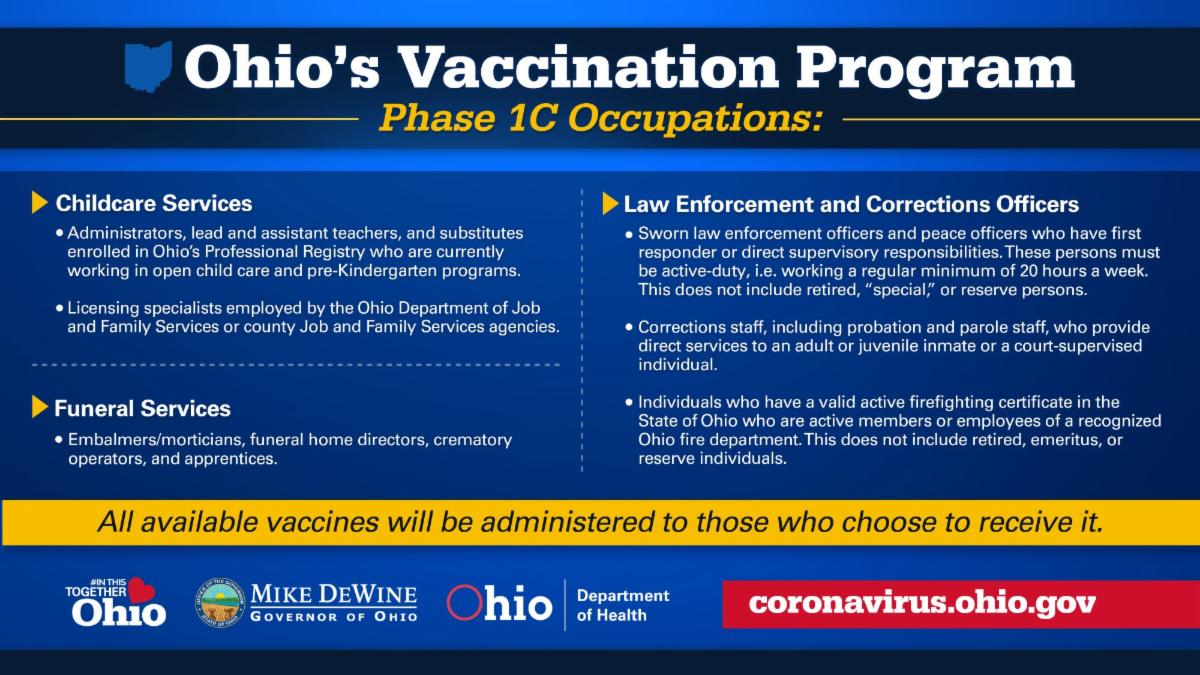
    In response to this significant increase in the amount of vaccine coming into Ohio, Governor DeWine outlined the individuals who are included in Phase 1C and Phase 2 of Ohio’s vaccination plan which will go into effect on March 4.

    Phase 1C:
    Ohioans with certain occupations and with certain medical conditions not addressed in previous phases.

    Medical Groups Eligible in 1C
    Type 1 diabetes, Pregnant women, Bone marrow transplant recipients, and ALS (Lou Gehrig’s Disease)

    Occupations Eligible in 1C (see full description in the graphic below)
    Childcare Services, Funeral Services, Law Enforcement, and Corrections Officers
    Follow the hyperlink to read the full press release from the Ohio Department of Health on the expanded vaccine eligibility criteria

    Phase 2:
    Because the risk of more severe reactions and outcomes of COVID-19 increase with age, Phase 2 will open vaccinations based on age, beginning with Ohioans ages 60 and older.

    IF YOU ARE NEWLY ELIGIBLE PER THE EXPANDED GUIDELINES ABOVE:
    The Health Department is asking that you register on their website. They have added these occupations and conditions to the registration that were not previously included.

    Click HERE to re-register*

    If you already registered and do not have a newly eligible occupation or condition per the above you DO NOT need to re-register.*

    Reduced Restrictions
    Last week, Governor Mike DeWine announced that sporting and entertainment events will be able to reopen with 25 percent maximum indoor capacity and 30 percent maximum outdoor capacity, provided they follow established precautions such as mandatory mask wearing for employees and customers, spectator pathways that allow for social distancing, and seating in groups in six-foot intervals of no more than six people from the same household.

    General admission (lawns, standing room, infields) will be permitted if masks are worn and if six-foot distancing can be marked and maintained.  New guidance for proms, banquets, wedding receptions, fairs, festivals, and parades is forthcoming.
    *If you are needing a vaccine appointment please do not unsubscribe. Unsubscribing will disable our ability to contact you for appointments.
    VISIT THE HCPH COVID-19 PAGE
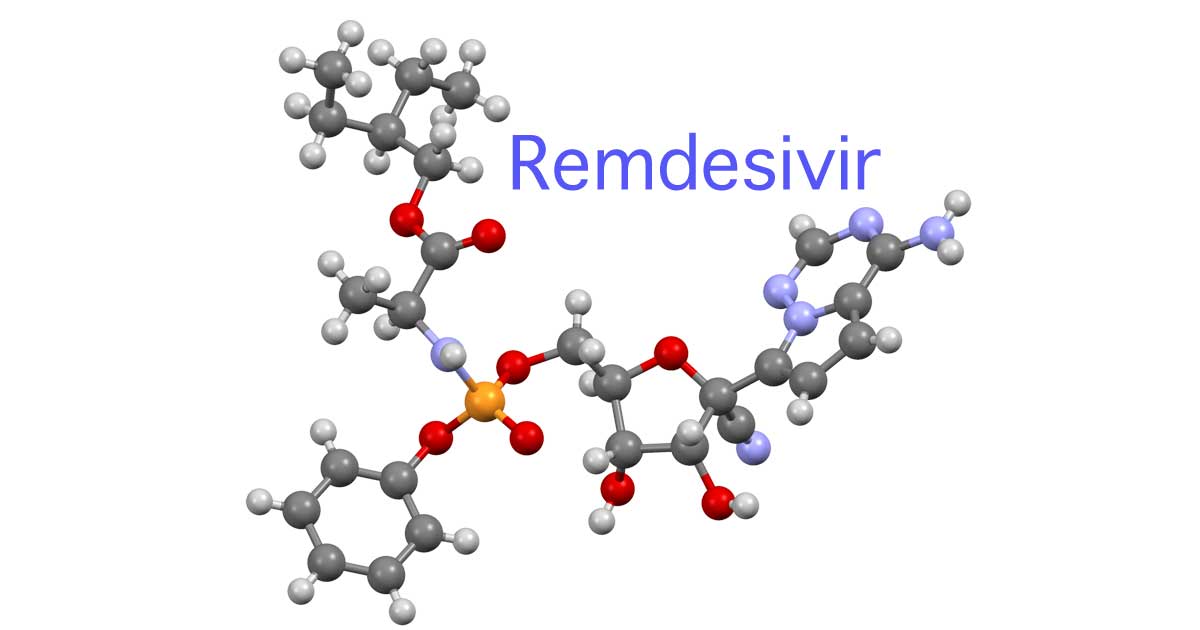
  • Ohio receives remdesivir to be distributed statewide

    Ohio receives remdesivir to be distributed statewide

    Remdesivir has not yet been approved by the FDA as a treatment for COVID-19

    Columbus, Ohio – The Ohio Department of Health (ODH), and the Ohio Hospital Association (OHA), will work together to distribute remdesivir across Ohio that was received from the federal government on Tuesday, May 12.

    Ohio’s allocation is not enough to treat all patients.

    The Food and Drug Administration (FDA), has issued an Emergency Use Authorization for remdesivir to allow it to be administered to patients. It is currently being studied in the treatment of COVID-19 in clinical trials and has been found to shorten the duration of disease from 15 to 11 days in patients being treated in-patient hospital settings.

    Ohio has received an allotment of 20 cases of remdesivir which is estimated for about 100 patients. How to distribute the drug was decided by the clinical leaders of the geographic zones that were created to help Ohio with this pandemic response. The decision-makers within each zone consisted of clinicians, pharmacists, public health officials, policymakers, ethicists, and other health disciplines that helped with the allocation amount to specific hospitals. The decision was based on the percentage of mechanically ventilated patients; which deems them to have the highest severity level.

    “This is not a cure, but early signs indicate that it can help in the treatment of COVID-19,” said ODH Director Amy Acton, M.D., MPH. “Ohio’s allocation is not enough to treat all patients, so we are working with medical experts to ensure distribution is based on clinical best practices.”

    “Ohio hospitals are committed to providing care and services to ensure the health and safety of our communities,” said Mike Abrams, President, and CEO, Ohio Hospital Association. “We appreciate the efforts of our policymakers and state leaders to secure resources and treatment to help in the delivery of care for patients impacted by COVID-19.”

    Individual hospitals will be responsible for using clinical justification on the distribution of the medication to specific patients.

    Remdesivir is administered intravenously and in two courses depending on the severity of the disease. Patients will receive either a 5-day (6-dose) course or a 10-day (11-dose) course, as clinically indicated.

    Individual hospitals will be responsible for using clinical justification on the distribution of the medication to specific patients. Whenever the number of patients in need of remdesivir exceeds the supply of the medication, hospitals will use internal processes appropriate for the allocation of scarce resources.

    Remdesivir is an investigational medication. While clinical trials indicate that the use of remdesivir has shortened the recovery time for some coronavirus patients, it has not yet been approved by the FDA as a treatment for COVID-19. The EUA and use of remdesivir for the treatment of COVID-19 is only due to the nature of the pandemic, the impact it has had on the population, and the fact that there is no adequate, approved, and available alternative to the emergency use of remdesivir for the treatment of COVID-19.