

Tag: Energy and Policy Institute

  • FirstEnergy gave heavily to Trump and Trump worked for a federal bailout, report says

    FirstEnergy gave heavily to Trump and Trump worked for a federal bailout, report says

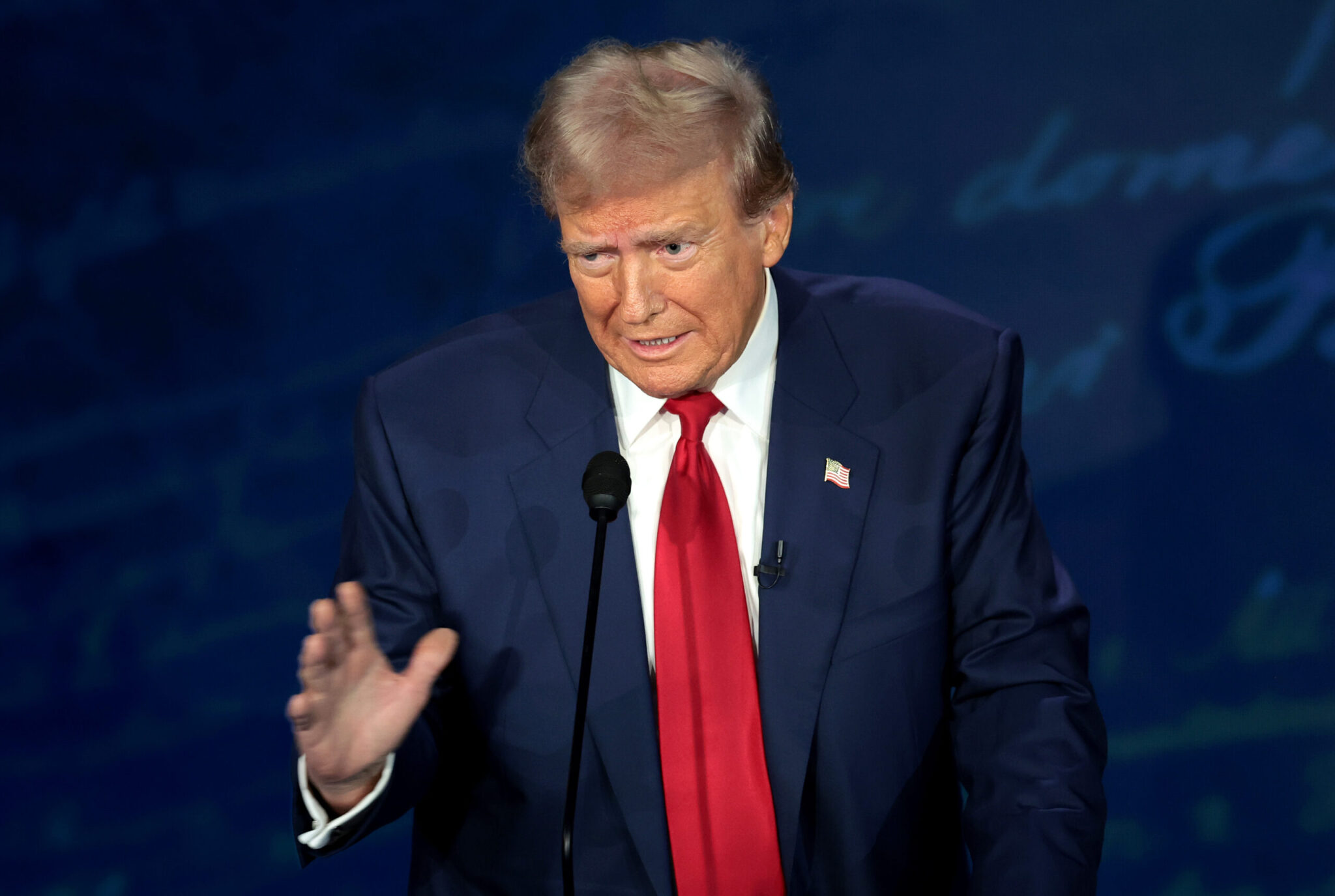
    The Republican presidential nominee, former President Donald Trump. (Photo by Win McNamee/Getty Images)

    By:  – Ohio Capital Journal

    As it sought a massive, corrupt bailout in Ohio, Akron-based FirstEnergy also spent lavishly on Trump-aligned dark money groups and at hotels and golf courses owned by the former president, a new report said this week.

    Trump and his aides wanted to provide a federal bailout for the company’s coal and nuclear plants, but they hit a brick wall — first in the form of a regulator, and then by public opposition to corporate bailouts, the report said.

    Done by the Energy and Policy Institute, the report is a deep dive into otherwise-secret records that have been pried out as a result of prosecutions and litigation around the Ohio bailout scandal. Called one of the biggest bribery scandals in Ohio history, FirstEnergy funneled $61 million through dark money groups to pass a $1.3 billion ratepayer bailout through the state’s gerrymandered legislature and then protect it from popular opposition.

    Former Ohio House Speaker Larry Householder is serving a 20-year federal prison sentence as a consequence of his involvement, former state Republican Party Chair Matt Borges is serving five years and two others have pleaded guilty and await sentencing. Two others were charged and then died by suicide.

    Former FirstEnergy CEO Chuck Jones and Vice President Michael Dowling face state felony charges related to their involvement in the scandal. Testimony during last year’s federal trial in Cincinnati showed that the pair were desperate for a bailout anywhere they could get one.

    FirstEnergy was heavily invested in coal and nuclear generation when the natural gas boom and the advent of cheap renewables made them uncompetitive. In other words, FirstEnergy’s millionaire leaders had made poor business decisions, and they wanted to escape the consequences.

    So by 2016, the executives were seeking bailouts to prop up the plants so they could spin them — and their environmental liabilities — off.

    Starting in 2015, FirstEnergy had already contributed $1.25 million to the Cleveland Host Committee to support the 2016 Republican National Convention in that city.

    Then, nine days after Trump became the party’s nominee, FirstEnergy CEO Jones met on July 28, 2016 with Trump at Trump Tower. The two discussed electricity generation and how Trump could deliver on his “promise to save coal jobs,” according to a letter the Energy and Policy Institute obtained.

    Some time after, Jones met Trump at a Canton fundraiser where Jones “did explain to Mr. Trump that while I was working behind the scenes to help his campaign, because of a (regulatory proceeding) in Ohio I could not be out front and he completely understood that,” Jones said in an email detailed in the report.

    Trump’s campaign didn’t respond to questions for this story.

    By late 2016, Jones and Dowling were courting Householder at World Series games in Cleveland. And after Trump’s election, they flew the now-imprisoned former speaker to Washington, D.C. aboard FirstEnergy’s corporate jet for Trump’s January 2017 inauguration.

    By April 2017, FirstEnergy had engaged Avenue Strategies — a lobbying firm founded by former Trump Campaign Manager Corey Lewandowski — to help it get “federal relief for nuclear and coal-fired plants,” the Energy and Policy Institute report said. The following month, Lewandowski stepped away from the firm amid accusations that he was violating federal lobbying laws by not registering, Politico reported.

    Lewandowski, who is again working for Trump, later denied that he lobbied on FirstEnergy’s behalf.

    On May 1, 2017, FirstEnergy started really putting money into its efforts, paying $5 million to America First Policies, a 501(c)(4) dark money group founded and run by supporters of Trump. The company financed its bribes in Ohio by pumping tens of millions through such groups, which don’t have to disclose their donors.

    As Jones undertook his charm offensive, he used FirstEnergy money to enrich Trump personally. His expense reports show that on a July 2017 trip to Washington, D.C., Jones spent $1,400 on drinks, another $5,400 for dinner and $900 for a room at the Trump International Hotel, as well as $400 on caddie fees at the Trump National Golf Club.

    And as he spread around the FirstEnergy largesse, Jones had broad interactions with Trump officials. They include Vice President Mike Pence, EPA Administrator Scott Pruitt, Chief of Staff Rick Dearborn, Chief Strategist Steven Bannon, White House Counsel Don McGahn, Energy and Environmental Policy Advisor Mike Catanzaro, and National Economic Council Director Gary Cohn and Deputy Director Jeremy Katz, according to documents assembled by the Energy and Policy Institute.

    To save FirstEnergy’s power-generating subsidiary from bankruptcy, then-Energy Secretary Rick Perry in September 2017 proposed to allow special subsidies for coal and nuclear plants.

    The Federal Energy Regulatory Commission rejected the proposal in early 2018, saying allowing it would upend wholesale markets for electricity generation. In other words, the regulator said it would give unfair special treatment to FirstEnergy and other companies that missed the boat on fracking and renewables.

    In June 2018, Trump ordered Perry to use a provision in the Defense Production Act to prop up coal and nuclear energy — a step that could cost as much as $11 billion a year. That effort also collapsed as the (correct) public perception grew that both measures proposed by the Trump administration were corporate bailouts, the Energy and Policy Institute report said.

    In 2018, Perry called on the states to bail out their own coal and nuclear plants.

    Ohio did just that with the corrupt House Bill 6. Householder shepherded it through Ohio’s gerrymandered legislature and Gov. Mike DeWine signed it immediately.

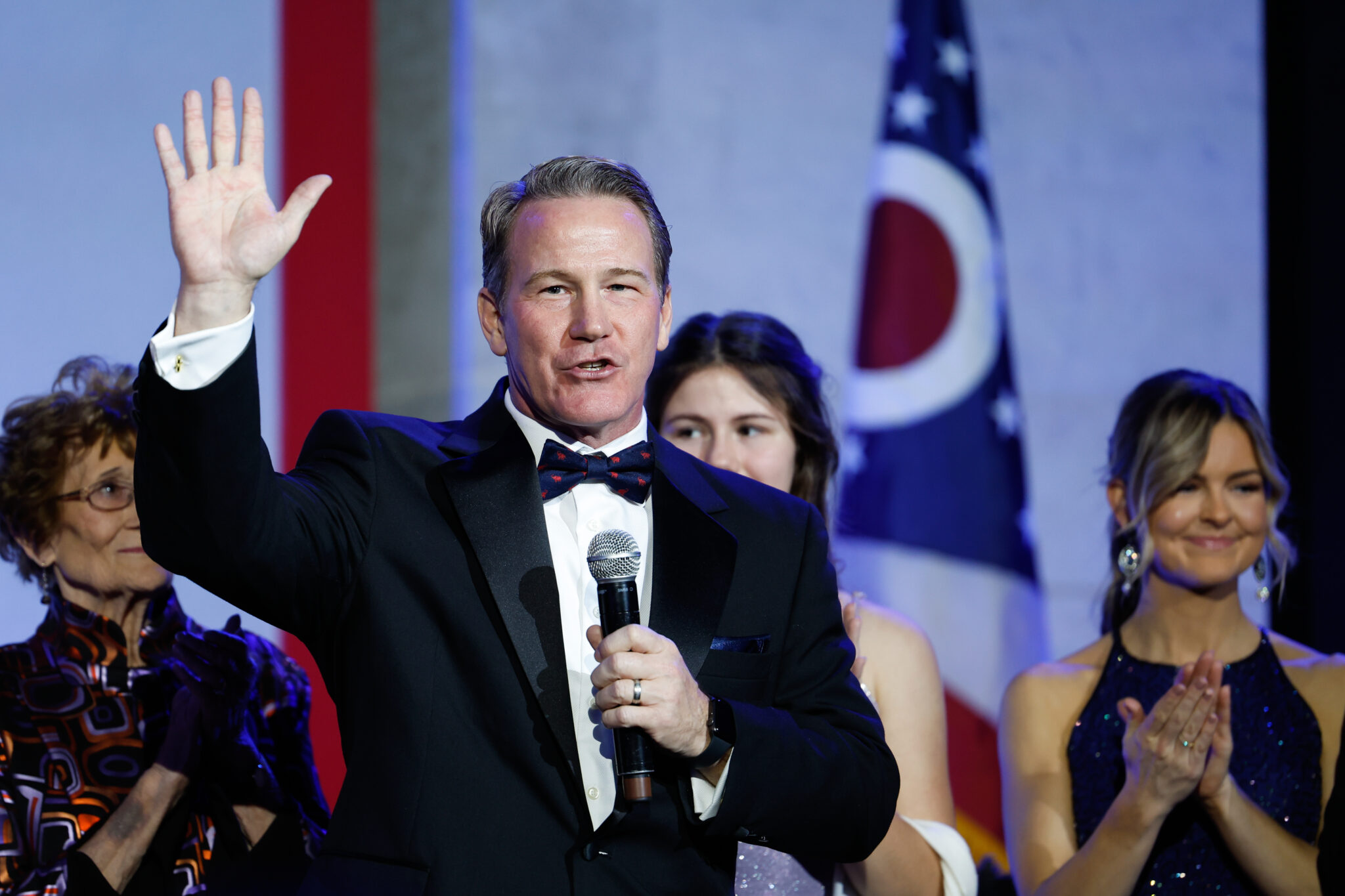
    Prosecutors haven’t accused them of wrongdoing, but DeWineLt. Gov. Jon HustedAttorney General Dave Yost and Secretary of State Frank LaRose all played roles in the passage and protection of the billion-dollar bailout that they haven’t fully explained.

    For its part, FirstEnergy entered into a deferred prosecution agreement with the Justice Department, admitted wrongdoing and paid a $230 million fine. It fired Jones and Dowling and now says it has new ethical standards.

    However, a group of institutional investors suing the utility accuse it of trying to limit accountability to the two former top executives, Jones and Dowling.

    FirstEnergy spokeswoman Jennifer Young was asked whether FirstEnergy thought it was proper to enrich Trump-aligned groups and Trump personally as it sought taxpayer bailouts from his administration. She was also asked whether it was proper for a regulated utility to — as Jones claimed — play political kingmaker for the ratepayers the utility serves.

    “While we’re unable to respond to your specific questions due to ongoing litigation, it’s important to note that in early 2022, FirstEnergy Corp. adopted a new Political & Public Engagement Policy and Practice grounded in integrity and transparency to ensure principled political and public policy engagement by its Board of Directors, officers, employees, and those acting on the company’s behalf,” Young said in an email. “Positions we take will align with the company’s core values and responsibilities to shareholders and other stakeholders.”

    She added, “Led by a reconstituted Board of Directors and executive team, FirstEnergy has taken significant steps to move the company forward and put past issues behind us. Today, FirstEnergy is a different, stronger company with a sound strategy, a highly effective compliance program and a companywide culture of ethics, integrity and accountability.”

    Marty Schladen
    Marty Schladen

    Marty Schladen has been a reporter for decades, working in Indiana, Texas and other places before returning to his native Ohio to work at The Columbus Dispatch in 2017. He’s won state and national journalism awards for investigations into utility regulation, public corruption, the environment, prescription drug spending and other matters.

    Ohio Capital Journal is part of States Newsroom, the nation’s largest state-focused nonprofit news organization.

    MORE FROM AUTHOR

  • FirstEnergy gave $1 million to boost Ohio Lt Gov Husted’s campaign before scandal, document shows

    FirstEnergy gave $1 million to boost Ohio Lt Gov Husted’s campaign before scandal, document shows

    Records show Jon Husted worked behind the scenes to bail out the company’s nuclear power plants. The million dollar donation was secret — until now.

    BY:  AND 

    Versions of this story were published by Floodlight, Energy News Network and the Ohio Capital Journal.

    A surge in FirstEnergy political spending ahead of the utility’s push to secure a legislative bailout for its nuclear power plants included a $1 million dark money contribution to support the campaign of Ohio Gov. Mike DeWine’s eventual running mate.

    The previously unreported gift linked to Lt. Gov. Jon Husted’s 2017 primary bid was revealed as part of a raft of documents obtained under Ohio’s public records law by a coalition of news organizations, including Floodlight, Energy News Network, and the Ohio Capital Journal.

    Among the documents are company emails describing behind-the-scenes efforts by Husted to persuade DeWine to support House Bill 6, the utility-backed legislation at the heart of the state’s ongoing $60 million public bribery scandal.

    Neither Husted nor DeWine, whose campaign also benefited from a previously reported $1 million in dark money from the utility, has been implicated in the scheme in which eight people, including the state’s former House Speaker Larry Householder, have been indicted.

    Two of those charged in the multi-million-dollar scandal surrounding the passage of HB 6 may have taken their own lives, including Sam Randazzo, the former chairman of the Public Utilities Commission of Ohio, who was found dead earlier this week of an apparent suicide.

    ‘Confidential’ email details campaign gift

    One of the documents from the Office of the Ohio Consumers’ Counsel Office is a spreadsheet attached to a January 2020 message labeled “confidential.” It shows $1 million went from FirstEnergy to the conservative group Freedom Frontier in 2017, with “Husted campaign” noted as the reason.

    That group backed Husted during his 2017 primary campaign for governor. The group then supported DeWine after Husted dropped out of the race to become his running mate.

    Husted is considered among possible front runners for the Republican nomination for governor in 2026. A January report by the Jon Husted for Ohio campaign committee shows it got roughly $1.7 million last year.

    Husted was also dubbed the “‘Golden Boy’ for FirstEnergy” by lobbyist Neil Clark, a co-defendant with Householder and others in the federal government’s criminal corruption case. Clark died by suicide in 2021.

    In several of the recently released records, Husted is mentioned in the same breath as Householder, the convicted House speaker, and Randazzo, the former PUCO commissioner, by FirstEnergy leadership as they sought to pass and then defend HB 6, the nuclear and coal bailout law at the heart of Ohio’s ongoing corruption scandal.

     FirstEnergy records released via public records request show how executives at the power company relied on Ohio Lt. Gov John Husted and convicted former House Speaker Larry Householder to help them pass a $1.3 billion nuclear bailout bill. 

    Husted has maintained that his support for the 2019 law stemmed from his belief that nuclear energy is an important part of Ohio’s energy portfolio. Parties in HB 6-related shareholder litigation have subpoenaed Husted to answer questions under oath, although a new date needs to be set.

     FirstEnergy records released via public records request show how executives at the power company relied on Ohio Lt. Gov John Husted and convicted former House Speaker Larry Householder to help them pass a $1.3 billion nuclear bailout bill. 

    “The Husted campaign never received this donation and is not affiliated with any of these groups,” said spokesperson Hayley Carducci. By law, candidate campaigns are not supposed to coordinate with groups like Freedom Frontier, which can spend unlimited amounts to support or attack them.

    The document and others reflect a major commitment by FirstEnergy to Husted’s political future. Before 2017, the company’s reported political spending to support Husted was less than $25,000 per campaign, according to data from OpenSecrets.

    Dark money spending rises sharply

    More broadly, the document also indicates a major increase in FirstEnergy’s political spending through nonprofit groups exempt from taxes under Section 501(c)(4) of the Internal Revenue Code. Those, along with privately held corporations, are common structures for dark money organizations — groups that aren’t required by law to disclose the ultimate source of their funding.

    The company’s giving to such groups jumped to more than $12 million in 2017, after much lower levels of $200,000 in 2016 and $100,000 in 2015, according to the spreadsheet.

    Starting in 2014, FirstEnergy had sought bailouts for noncompetitive coal and nuclear plants. And in late 2016, regulators approved a $456 million consumer surcharge that ultimately was held unlawful. Yet the company claimed it needed more.

    The document details once-secret contributions to groups supporting “everyone from the mayor of Akron to President Trump that FirstEnergy made to secure bailouts for its soon-to-be bankrupt coal and nuclear plants and to gain influence on other key issues,” said Dave Anderson, policy and communications manager for the Energy and Policy Institute.

     A spreadsheet details dark money expenditures by northeastern power company FirstEnergy as it sought to secure a $1.3 billion bailout for its struggling nuclear power plants. The sheet reveals a previously unreported $1 million donation to benefit the candidacy of Ohio Lt. Gov. Jon Husted. 

    Anderson added that the spreadsheet also “provides some key new evidence for utility regulators and consumer advocates to use to ensure that every dollar of ratepayer money that FirstEnergy misused to fund its secret political spending is publicly disclosed and refunded, with interest and ideally serious financial penalties.”

    At the time, the author of the document that details the donations, Kristina Housley, was executive assistant to FirstEnergy’s Mike Dowling, who is now a defendant in a state criminal case along with former CEO Chuck Jones.

    Finding out all the details about the dark money spending behind HB 6 is like peeling back the layers of an onion, said Catherine Turcer, executive director of Common Cause Ohio.

    “The reason that transparency matters so much is that money that is spent in the shadows influences elections, and it influences really important policy decisions that impact us every day,” Turcer said. “And we have the right to know what is going on in government and how decisions are being made and who’s attempting to influence those decisions.”

    The ‘Golden Boy’ for FirstEnergy

    A December 2017 email from former FirstEnergy lobbyist Joel Bailey said Husted was working to get DeWine on board with FirstEnergy’s “issues.” FirstEnergy also supported other pro-DeWine/Husted efforts during the election cycle.

     Former FirstEnergy CEO Chuck Jones (top left), former FirstEnergy VP Michael Dowling (top right), former PUCO Chair Sam Randazzo (bottom middle). Graphic by WEWS. 

    After the election, Husted and DeWine dined with Jones and Dowling on December 18, 2018. Later that night, FirstEnergy agreed to pay $4.3 million to energy lawyer Randazzo, who went on to become DeWine’s first pick for chair of the Public Utilities Commission of Ohio. FirstEnergy later identified Jones and Dowling as the two people responsible for paying alleged bribes.

    Husted’s office has been evasive about his recollections, despite Jones noting in texts to Randazzo that the PUCO chair position was discussed in at least general terms. Another text by Jones in 2019 said the DeWine/Husted team was forced “to perform battlefield triage” to secure Randazzo’s nomination after a 198-page dossier provided to DeWine’s staff threatened to derail it.

    Evidence from last year’s criminal trial of Householder, the former Ohio House speaker, and lobbyist Matt Borges also included messages between former FirstEnergy executives Jones and Dowling about Husted working behind the scenes to build support for the bill. Among the actions were efforts to extend the bailout period for the company’s former nuclear power plants in Ohio.

    Husted long a friend of utilities

    Husted had been Ohio’s secretary of state immediately before becoming lieutenant governor. Before that, he served as House speaker in the General Assembly. In that role, he played a pivotal part in securing passage of another major energy bill, Senate Bill 221.

    At the time, Husted supported the law’s clean energy standards that were ultimately gutted by HB 6. However, SB 221 set the stage for so-called electric security plans. Those have let FirstEnergy and other utilities avoid full rate cases for more than a decade, while allowing cross-subsidies and adding multiple additional charges to consumers’ bills.

    “That bill upset the balance” of energy regulation in Ohio, said Ashley Brown, a former PUCO commissioner. “It was a humongous gift for the utilities.”

    Lawmakers repealed HB 6’s $1 billion-plus in subsidies for FirstEnergy’s former nuclear power plants and its recession-proofing provisions in 2021, eight months after the arrests of Householder and others.

    Earlier this year, Husted told NBC4 in Columbus the rest of HB 6 “needs to be completely removed.” He did not respond to Energy News Network questions this week about whether that includes both the law’s subsidies for two 1950s-era coal plants and its gutting of Ohio’s renewable energy and energy efficiency standards.

    FirstEnergy spokesperson Jennifer Young declined to comment on the company’s 2017 donation to Freedom Frontier due to ongoing litigation. However, she added, “FirstEnergy will post information regarding its support of 501(c)(4) social welfare organizations on the company’s website on a quarterly basis.”

    Those disclosures are currently required under the company’s July 2021 deferred prosecution agreement. That agreement expires later this year.

    Meanwhile, FirstEnergy still has not disclosed its dark money spending for the years 2018 through 2020. And proposals for reforms that would require such disclosures from all electric utilities remain stalled in the General Assembly.

    “It’s incredibly frustrating that Ohioans can be aware that dark money impacted decision-making at the statehouse,” Turcer said, “and yet we still haven’t gotten the legislators to create greater transparency.”

    The Energy News Network is a nonprofit news site dedicated to keeping influencers, policymakers and citizens informed of the important changes taking place in the transition to a clean energy system. Floodlight is a nonprofit newsroom that investigates the powerful interests stalling climate action. 

    This article first appeared on Energy News Network and is republished here under a Creative Commons license.

    _____________

    Mario Alejandro Ariza, Floodlight
    MARIO ALEJANDRO ARIZA, FLOODLIGHT

    Mario Alejandro Ariza is an investigative reporter and a Dominican immigrant. His byline has appeared in publications like the South Florida Sun Sentinel, The New Republic, and The Atlantic. Mario wrote a book called “Disposable City: Miami’s Future on the Shores of Climate Catastrophe,” which was published by Bold Type Books. His essays have been featured in The Believer and selected for Best American Essays. He lives in South Florida with a cat, a dog, and a sturdy pair of waterproof boots.

    MORE FROM AUTHOR

    Kathiann M. Kowalski, Energy News Network
    KATHIANN M. KOWALSKI, ENERGY NEWS NETWORK

    Kathi is the author of 25 books and more than 600 articles, and writes often on science and policy issues. In addition to her journalism career, Kathi is an alumna of Harvard Law School and has spent 15 years practicing law. She is a member of the Society of Environmental Journalists and the National Association of Science Writers. Kathi covers the state of Ohio.

    MORE FROM AUTHOR