Tag: Energy News Network

  • FirstEnergy gave $1 million to boost Ohio Lt Gov Husted’s campaign before scandal, document shows

    FirstEnergy gave $1 million to boost Ohio Lt Gov Husted’s campaign before scandal, document shows

    Records show Jon Husted worked behind the scenes to bail out the company’s nuclear power plants. The million dollar donation was secret — until now.

    BY:  AND 

    Versions of this story were published by Floodlight, Energy News Network and the Ohio Capital Journal.

    A surge in FirstEnergy political spending ahead of the utility’s push to secure a legislative bailout for its nuclear power plants included a $1 million dark money contribution to support the campaign of Ohio Gov. Mike DeWine’s eventual running mate.

    The previously unreported gift linked to Lt. Gov. Jon Husted’s 2017 primary bid was revealed as part of a raft of documents obtained under Ohio’s public records law by a coalition of news organizations, including Floodlight, Energy News Network, and the Ohio Capital Journal.

    Among the documents are company emails describing behind-the-scenes efforts by Husted to persuade DeWine to support House Bill 6, the utility-backed legislation at the heart of the state’s ongoing $60 million public bribery scandal.

    Neither Husted nor DeWine, whose campaign also benefited from a previously reported $1 million in dark money from the utility, has been implicated in the scheme in which eight people, including the state’s former House Speaker Larry Householder, have been indicted.

    Two of those charged in the multi-million-dollar scandal surrounding the passage of HB 6 may have taken their own lives, including Sam Randazzo, the former chairman of the Public Utilities Commission of Ohio, who was found dead earlier this week of an apparent suicide.

    ‘Confidential’ email details campaign gift

    One of the documents from the Office of the Ohio Consumers’ Counsel Office is a spreadsheet attached to a January 2020 message labeled “confidential.” It shows $1 million went from FirstEnergy to the conservative group Freedom Frontier in 2017, with “Husted campaign” noted as the reason.

    That group backed Husted during his 2017 primary campaign for governor. The group then supported DeWine after Husted dropped out of the race to become his running mate.

    Husted is considered among possible front runners for the Republican nomination for governor in 2026. A January report by the Jon Husted for Ohio campaign committee shows it got roughly $1.7 million last year.

    Husted was also dubbed the “‘Golden Boy’ for FirstEnergy” by lobbyist Neil Clark, a co-defendant with Householder and others in the federal government’s criminal corruption case. Clark died by suicide in 2021.

    In several of the recently released records, Husted is mentioned in the same breath as Householder, the convicted House speaker, and Randazzo, the former PUCO commissioner, by FirstEnergy leadership as they sought to pass and then defend HB 6, the nuclear and coal bailout law at the heart of Ohio’s ongoing corruption scandal.

     FirstEnergy records released via public records request show how executives at the power company relied on Ohio Lt. Gov John Husted and convicted former House Speaker Larry Householder to help them pass a $1.3 billion nuclear bailout bill. 

    Husted has maintained that his support for the 2019 law stemmed from his belief that nuclear energy is an important part of Ohio’s energy portfolio. Parties in HB 6-related shareholder litigation have subpoenaed Husted to answer questions under oath, although a new date needs to be set.

     FirstEnergy records released via public records request show how executives at the power company relied on Ohio Lt. Gov John Husted and convicted former House Speaker Larry Householder to help them pass a $1.3 billion nuclear bailout bill. 

    “The Husted campaign never received this donation and is not affiliated with any of these groups,” said spokesperson Hayley Carducci. By law, candidate campaigns are not supposed to coordinate with groups like Freedom Frontier, which can spend unlimited amounts to support or attack them.

    The document and others reflect a major commitment by FirstEnergy to Husted’s political future. Before 2017, the company’s reported political spending to support Husted was less than $25,000 per campaign, according to data from OpenSecrets.

    Dark money spending rises sharply

    More broadly, the document also indicates a major increase in FirstEnergy’s political spending through nonprofit groups exempt from taxes under Section 501(c)(4) of the Internal Revenue Code. Those, along with privately held corporations, are common structures for dark money organizations — groups that aren’t required by law to disclose the ultimate source of their funding.

    The company’s giving to such groups jumped to more than $12 million in 2017, after much lower levels of $200,000 in 2016 and $100,000 in 2015, according to the spreadsheet.

    Starting in 2014, FirstEnergy had sought bailouts for noncompetitive coal and nuclear plants. And in late 2016, regulators approved a $456 million consumer surcharge that ultimately was held unlawful. Yet the company claimed it needed more.

    The document details once-secret contributions to groups supporting “everyone from the mayor of Akron to President Trump that FirstEnergy made to secure bailouts for its soon-to-be bankrupt coal and nuclear plants and to gain influence on other key issues,” said Dave Anderson, policy and communications manager for the Energy and Policy Institute.

     A spreadsheet details dark money expenditures by northeastern power company FirstEnergy as it sought to secure a $1.3 billion bailout for its struggling nuclear power plants. The sheet reveals a previously unreported $1 million donation to benefit the candidacy of Ohio Lt. Gov. Jon Husted. 

    Anderson added that the spreadsheet also “provides some key new evidence for utility regulators and consumer advocates to use to ensure that every dollar of ratepayer money that FirstEnergy misused to fund its secret political spending is publicly disclosed and refunded, with interest and ideally serious financial penalties.”

    At the time, the author of the document that details the donations, Kristina Housley, was executive assistant to FirstEnergy’s Mike Dowling, who is now a defendant in a state criminal case along with former CEO Chuck Jones.

    Finding out all the details about the dark money spending behind HB 6 is like peeling back the layers of an onion, said Catherine Turcer, executive director of Common Cause Ohio.

    “The reason that transparency matters so much is that money that is spent in the shadows influences elections, and it influences really important policy decisions that impact us every day,” Turcer said. “And we have the right to know what is going on in government and how decisions are being made and who’s attempting to influence those decisions.”

    The ‘Golden Boy’ for FirstEnergy

    A December 2017 email from former FirstEnergy lobbyist Joel Bailey said Husted was working to get DeWine on board with FirstEnergy’s “issues.” FirstEnergy also supported other pro-DeWine/Husted efforts during the election cycle.

     Former FirstEnergy CEO Chuck Jones (top left), former FirstEnergy VP Michael Dowling (top right), former PUCO Chair Sam Randazzo (bottom middle). Graphic by WEWS. 

    After the election, Husted and DeWine dined with Jones and Dowling on December 18, 2018. Later that night, FirstEnergy agreed to pay $4.3 million to energy lawyer Randazzo, who went on to become DeWine’s first pick for chair of the Public Utilities Commission of Ohio. FirstEnergy later identified Jones and Dowling as the two people responsible for paying alleged bribes.

    Husted’s office has been evasive about his recollections, despite Jones noting in texts to Randazzo that the PUCO chair position was discussed in at least general terms. Another text by Jones in 2019 said the DeWine/Husted team was forced “to perform battlefield triage” to secure Randazzo’s nomination after a 198-page dossier provided to DeWine’s staff threatened to derail it.

    Evidence from last year’s criminal trial of Householder, the former Ohio House speaker, and lobbyist Matt Borges also included messages between former FirstEnergy executives Jones and Dowling about Husted working behind the scenes to build support for the bill. Among the actions were efforts to extend the bailout period for the company’s former nuclear power plants in Ohio.

    Husted long a friend of utilities

    Husted had been Ohio’s secretary of state immediately before becoming lieutenant governor. Before that, he served as House speaker in the General Assembly. In that role, he played a pivotal part in securing passage of another major energy bill, Senate Bill 221.

    At the time, Husted supported the law’s clean energy standards that were ultimately gutted by HB 6. However, SB 221 set the stage for so-called electric security plans. Those have let FirstEnergy and other utilities avoid full rate cases for more than a decade, while allowing cross-subsidies and adding multiple additional charges to consumers’ bills.

    “That bill upset the balance” of energy regulation in Ohio, said Ashley Brown, a former PUCO commissioner. “It was a humongous gift for the utilities.”

    Lawmakers repealed HB 6’s $1 billion-plus in subsidies for FirstEnergy’s former nuclear power plants and its recession-proofing provisions in 2021, eight months after the arrests of Householder and others.

    Earlier this year, Husted told NBC4 in Columbus the rest of HB 6 “needs to be completely removed.” He did not respond to Energy News Network questions this week about whether that includes both the law’s subsidies for two 1950s-era coal plants and its gutting of Ohio’s renewable energy and energy efficiency standards.

    FirstEnergy spokesperson Jennifer Young declined to comment on the company’s 2017 donation to Freedom Frontier due to ongoing litigation. However, she added, “FirstEnergy will post information regarding its support of 501(c)(4) social welfare organizations on the company’s website on a quarterly basis.”

    Those disclosures are currently required under the company’s July 2021 deferred prosecution agreement. That agreement expires later this year.

    Meanwhile, FirstEnergy still has not disclosed its dark money spending for the years 2018 through 2020. And proposals for reforms that would require such disclosures from all electric utilities remain stalled in the General Assembly.

    “It’s incredibly frustrating that Ohioans can be aware that dark money impacted decision-making at the statehouse,” Turcer said, “and yet we still haven’t gotten the legislators to create greater transparency.”

    The Energy News Network is a nonprofit news site dedicated to keeping influencers, policymakers and citizens informed of the important changes taking place in the transition to a clean energy system. Floodlight is a nonprofit newsroom that investigates the powerful interests stalling climate action. 

    This article first appeared on Energy News Network and is republished here under a Creative Commons license.

    _____________

    Mario Alejandro Ariza, Floodlight
    MARIO ALEJANDRO ARIZA, FLOODLIGHT

    Mario Alejandro Ariza is an investigative reporter and a Dominican immigrant. His byline has appeared in publications like the South Florida Sun Sentinel, The New Republic, and The Atlantic. Mario wrote a book called “Disposable City: Miami’s Future on the Shores of Climate Catastrophe,” which was published by Bold Type Books. His essays have been featured in The Believer and selected for Best American Essays. He lives in South Florida with a cat, a dog, and a sturdy pair of waterproof boots.

    MORE FROM AUTHOR

    Kathiann M. Kowalski, Energy News Network
    KATHIANN M. KOWALSKI, ENERGY NEWS NETWORK

    Kathi is the author of 25 books and more than 600 articles, and writes often on science and policy issues. In addition to her journalism career, Kathi is an alumna of Harvard Law School and has spent 15 years practicing law. She is a member of the Society of Environmental Journalists and the National Association of Science Writers. Kathi covers the state of Ohio.

    MORE FROM AUTHOR

  • Coal company got big payback from HB 6

    Coal company got big payback from HB 6

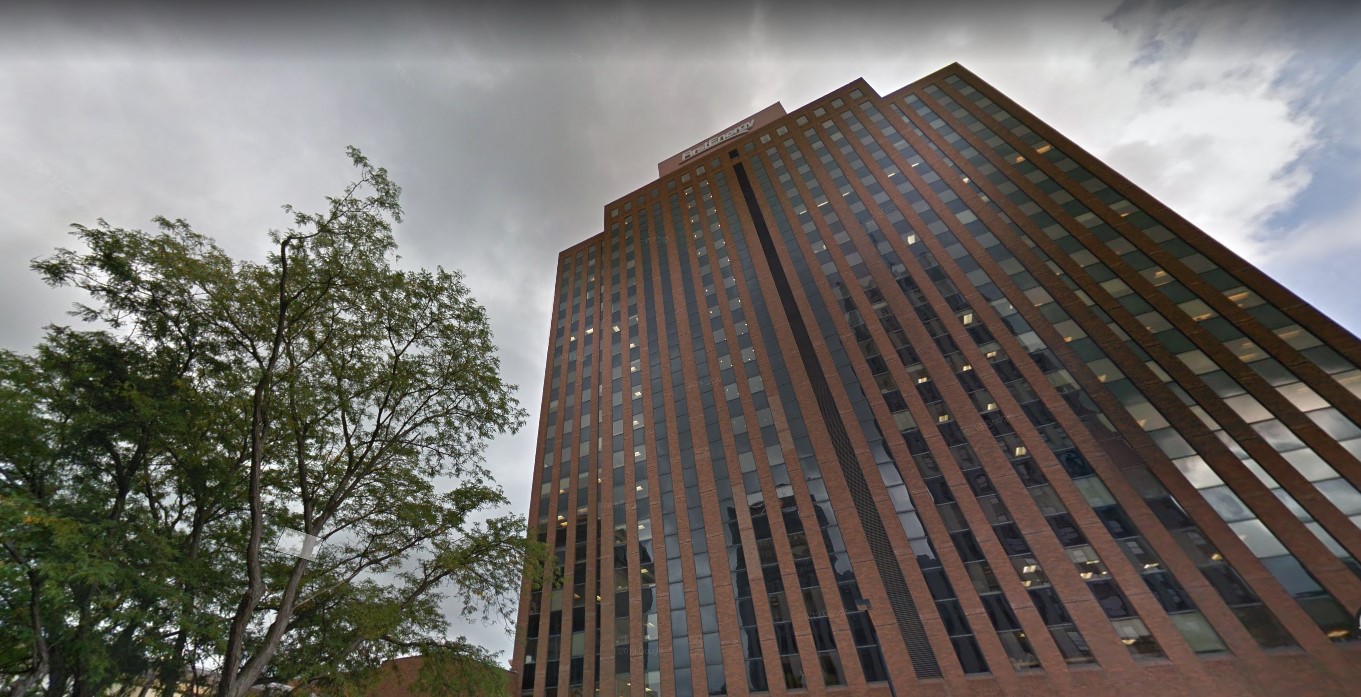
    FirstEnergy’s headquarters in Akron. Source: Google Maps.

    BY: Ohio Capital Journal

    A coal company got roughly $12.6 million above market prices to supply one of the 1950s-era plants subsidized by Ohio House Bill 6. That’s roughly 50 times the amount the company gave to the dark money group at the center of that coal and nuclear bailout law, according to a new analysis from the Checks and Balances Project.

    In other developments:

    • An evidentiary hearing about the reasonableness and prudence of the subsidized coal plants’ costs wrapped up last week. But it’s unclear when regulators might issue rulings.
    • In a separate FirstEnergy case, opponents want regulators to deny or limit more customer charges, saying the rider items should be considered in the company’s full rate case to be filed next May. The evidentiary hearing is expected to continue until Nov. 21.
    • Former Ohio House Speaker Larry Householder and lobbyist Matt Borges have appealed their criminal convictions but still haven’t filed their briefs. The Department of Justice has not yet filed additional criminal charges related to HB 6, either.

    Coal company overpayments

    A new report highlights how much Resource Fuels has collected for coal supplied to one of the two 1950s-era coal plants subsidized by HB 6 and run by the Ohio Valley Electric Company, or OVEC.

    OVEC paid roughly $12.6 million to Resource Fuels in above-market charges for coal, said Ray Locker, executive director of the Checks and Balances Project, which produced the report. And as a result of HB 6’s coal subsidies, Ohio ratepayers have been paying utilities for their share of OVEC’s costs that exceed their revenue.

    In 2018, Resources Fuels also sent $250,000 to Generation Now, the main dark money group in the HB 6 corruption scandal. The Energy and Policy Institute reported that wire transfer earlier this year and connected Resource Fuels to the Boich Companies, which the Columbus Dispatch had earlier identified as “Company C” in the 2020 criminal complaint against Householder and others.

    So, Resource Fuels “donated $250,000 to Generation Now to facilitate everything for Larry Householder. And the excess money they’ve been paid on this coal contract is 50 times more,” Locker said.

    To back up his calculations, Locker reviewed testimony statements filed with the Public Utilities Commission of Ohio by Elizabeth Stanton, an expert witness for the Office of the Ohio Consumers’ Counsel, and from John Seryak, an expert witness for the Ohio Manufacturers’ Association Energy Group. The case file also includes redacted audit reports from London Economics International.

    Stanton’s testimony showed that Clifty Creek, one of the two HB 6-subsidized coal plants, paid about one-fifth more per million BTUs (units of heat value) for coal bought from Resource Fuels, compared to another supplier of coal from the same mine. The price per million BTUs paid to Resource Fuels was also more than that paid to companies providing coal with a higher average heat value.

    The PUCO had let some utilities collect OVEC costs from ratepayers even before HB 6 passed. Seryak’s testimony said London Economics “repeatedly found that the cost under the Resource Fuels coal contracts is unusually high.” OVEC had a long-term deal with Resource Fuels, but it was neither prudent nor reasonable, he added. In his view, Ohio utilities have used the HB 6 coal subsidy riders “to recoup losses resulting from an unreasonable decision.”

    Seryak’s testimony also connected Resource Fuels to the Boich Companies and discussed the HB 6 corruption scandal.

    American Electric Power and Duke Energy both want the PUCO to strike parts of the testimony, arguing against Seryak’s point that the PUCO should not authorize recovery of the coal subsidies while the HB 6 investigations continue. They also want to keep out evidence about cost reviews of pre-HB 6 OVEC riders, which supports points made by Seryak and others.

    The PUCO’s hearing examiners struck those parts of Seryak’s testimony on Nov. 6 without a written opinion. The Ohio Manufacturers’ Association Energy Group appealed that decision to the full PUCO on Nov. 13.

    “That’s a total smokescreen to divert people from the details of these contracts,” Locker said. “The information is out there. And now they’re trying to stick the genie back in the bottle and say it doesn’t matter.”

    Representatives of the Boich Companies did not provide comments in response to Energy News Network’s questions.

    Read more: 

    Waiting

    The PUCO wrapped up its evidentiary hearing on the 2020 OVEC charges about which Seryak and Stanton provided testimony on Nov. 6. The hearing started on Halloween and took less than one week. Besides the above-market payments to Resource Fuels, challengers contended that other spending by the OVEC coal plants was not reasonable and prudent, including costs related to times when it was uneconomic to run them.

    Briefs and reply briefs are due Jan. 8 and Jan. 29, said Matt Schilling, spokesperson for the PUCO. After that, parties will wait for regulators to decide whether to disallow any costs that have already been passed through to ratepayers. Adjustments would presumably be reflected in future charges for the OVEC plants, which run through 2030.

    That wait could take a while. Regulators still have not ruled on challengers’ objections to pre-HB 6 OVEC plant costs. Nor have lawmakers advanced bills to repeal the subsidies.

    Costs for the coal subsidies continue to mount. The Office of the Ohio Consumers’ Counsel estimates those subsidies have cost ratepayers nearly $221 million since 2020 began.

    Read more:

    FirstEnergy riders

    The PUCO began another evidentiary hearing on Nov. 7 in a FirstEnergy rider case with roughly $1.4 billion at stake. The PUCO currently expects that hearing to continue through Nov. 21, Schilling said.

    Among other things, FirstEnergy wants to extend a “delivery capital recovery” charge. That DCR rider is involved in one of four cases the PUCO has put on hold since August 2022 while the Department of Justice considers more criminal charges related to HB 6. The new case also presents questions about possible side deals that may affect settlements. That issue was raised in another of the stayed cases.

    Despite the parallels, regulators declared on Oct. 18 that the rider case and two grid modernization cases “are completely unrelated” and refused to lift the stay. The PUCO also refused to put the rider case on hold, because it also deals with charges for customers who don’t choose a competitive electricity supplier. The current tariff for that is due to expire, and Ohio law requires a plan for those customers to be in place, the order said.

    The case “introduces various mechanisms aimed at ensuring the ongoing investment and maintenance of the distribution system,” FirstEnergy spokesperson Lauren Siburkis said, talking about the case’s charges for all customers. Those include the DCR rider and an advanced metering infrastructure rider, plus charges for vegetation management and storm mitigation.

    The increase for a residential customer using about 750 kilowatt-hours per month of electricity would initially be $3.11 per month. But witnesses for multiple challengers want regulators to deny various riders.

    For example, Justin Bieber, an expert for Kroger, said in a filed testimony statement that the DCR rider is improper “single-issue ratemaking.” Instead, he said, it should properly be considered in a full ratemaking case, which would look at all of a utilities’ revenues and expenses. He had a similar view about the vegetation management rider. FirstEnergy is due to file a full ratemaking case next May.

    Greg Meyer, an expert for the Office of the Ohio Consumers’ Counsel, similarly challenged the DCR rider, along with the advanced metering rider and storm recovery rider. Aside from the single-issue ratemaking problem, he noted that a process already exists for utilities to recoup major storm costs if they show the costs would impact their total operations.

    Colleen Shutrump, another expert for the Ohio Consumers’ Counsel, objected to a proposed energy efficiency rider, saying customers could get efficiency services in a competitive market.

    If approved, the riders would last eight years, with some possible adjustments in next year’s ratemaking case. A hearing on charges in a separate grid modernization case is set for January.

    Read more:

    Convictions on appeal

    Former Ohio House Speaker Larry Householder and lobbyist Matt Borges appealed their criminal convictions related to HB 6 this summer. Yet their lawyers have sought multiple extensions to file legal briefs on the trial court’s alleged errors.

    The filings are currently due next month, with the government’s responses due in January. For now, both remain in federal prisons.

    Meanwhile, Borges and Householder are still defendants in the state of Ohio’s HB 6 civil case, along with former PUCO Chair Sam Randazzo, FirstEnergy, Energy Harbor (formerly FirstEnergy Solutions), two former FirstEnergy executives and others.

    Borges’ amended answer filed on Oct. 25 denies liability for the state’s claims under the Ohio Corrupt Practices Act. The filing also says he wouldn’t be liable anyway because of the legal doctrines of in pari delicto or unclean hands. Those doctrines basically say plaintiffs can’t recover on a civil claim if they themselves engaged in wrongdoing.

    Borges’ lawyers did not respond to the Energy News Network’s request for comments about which state actors and what conduct they say supports those defenses.

    More charges?

    The Department of Justice has not yet filed charges against anyone other than Householder, Borges and others named in their July 2020 criminal complaint and indictment. (Three of the other defendants named have settled, and one has died.) As noted above, four FirstEnergy regulatory cases remain stayed, although various civil cases against the company continue to move ahead.

    A Nov. 6 order in one of the shareholder cases calls for Ebony Yeboah-Amankweh, a former lawyer and ethics officer for FirstEnergy, to answer plaintiffs’ lawyers’ questions under oath in a pretrial process called a deposition. The company ended her employment a few months after the 2020 complaint came out.

    A separate Nov. 6 order requires Randazzo to turn over documents and information which plaintiffs in that case have sought for months. Randazzo will also have to pay costs arising from the documents dispute.

    People from regulatory agencies or utilities “should not get to have their lawyers pick and choose what discovery and subpoena requests they will respond to, and what documents they will turn over,” said Dave Anderson, policy and communications manager for the Energy and Policy Institute.

    Read more:

    This article first appeared on Energy News Network and is republished here under a Creative Commons license.


    Kathiann M. Kowalski, Energy News Network
    KATHIANN M. KOWALSKI, ENERGY NEWS NETWORK

    Kathi is the author of 25 books and more than 600 articles, and writes often on science and policy issues. In addition to her journalism career, Kathi is an alumna of Harvard Law School and has spent 15 years practicing law. She is a member of the Society of Environmental Journalists and the National Association of Science Writers. Kathi covers the state of Ohio.

    MORE FROM AUTHOR

  • Utility refunds top priorities list for new Ohio consumers’ counsel

    Utility refunds top priorities list for new Ohio consumers’ counsel

    Getty Images

    BY: 

    Refunds for unlawful utility charges are a top priority for Maureen Willis, the veteran litigator who became Ohio’s new consumers’ counsel this month.

    The Office of the Ohio Consumers’ Counsel is a state-funded agency that represents ratepayer interests in gas and electric utility cases, including matters relating to House Bill 6, the 2019 law at the heart of Ohio’s nuclear and coal bailout scandal. The office also works for legislative reform to promote competition, eliminate subsidies and protect energy affordability for vulnerable groups.

    Ohio Consumers' Council Maureen Willis.
     Ohio Consumers’ Counsel Maureen Willis. 

    The Energy News Network spoke with Willis about her agenda as Ohio’s official advocate for residential ratepayers.

    Why are refunds from utilities a big issue?

    “If consumers are charged and there’s a decision by the court or even a federal agency that the charges were unlawful or unreasonable, we think they should get the refund all the way back to when they paid it,” Willis said.

    Instead, a majority on the Ohio Supreme Court has held that a 1957 case against “retroactive rulemaking” forbids refunds of charges, called riders. That’s the case even if the court holds the charges are otherwise unlawful or unreasonable and even if the riders were not part of a full ratemaking case.

    So, even though the Ohio consumers’ counsel has helped consumers avoid $433 million in charges since 2009, they’re still out $1.5 billion in refunds. That makes the wins something of a “hollow victory, because you’re not getting that money back,” Willis said. “But we will continue to fight.”

    What is OCC’s position on renewable energy in Ohio?

    “We want to advocate for consumers to get energy at the least cost,” Willis said, noting the agency generally considers itself agnostic on the source of electricity. Nonetheless, “renewables are becoming more and more economic, and that certainly is something that we take into account in the mix,” Willis said.

    A 2023 report by Energy Innovation Policy & Technology found that 99% of U.S. coal plants are more costly to keep running than replacing them with new solar, wind or energy storage.

    Yet HB 6 and regulatory rulings before it require Ohio ratepayers to subsidize costs for two 1950s-era coal plants. OCC continues to contest those charges.

    “To the extent that there are subsidies built into the rate and those subsidies are attached to monopoly rates, it creates a problem” by undermining the market, Willis said. “In Ohio, we do rely on the competitive market to bring consumers lower prices and greater innovation.”

    Ohio’s law and rules on utility energy efficiency programs have changed over the past decade. What is OCC’s current position on energy efficiency?

    “From our perspective, energy efficiency is a good thing,” Willis said, noting that it can help reduce people’s utility bills. Ten years ago, Ohio law required utilities to meet an energy efficiency standard. Back then, OCC was among parties pushing regulators to require FirstEnergy to bid that energy efficiency into a capacity market auction, which lowered costs to consumers. But in 2019, HB 6 gutted Ohio’s energy efficiency standard.

    Now, though, consumers can get energy efficiency products and services from competitive suppliers, Willis said. So, “we would say that the utility really has no business to be in the energy efficiency business anymore.” OCC also objects to “shared savings,” which it views as extra profits for utilities.

    A bipartisan bill to let utilities run voluntary energy efficiency programs is pending in the General Assembly. Supporters say utility-run programs can make savings simpler for consumers and can produce benefits for all ratepayers by reducing system-wide demand.

    What is OCC’s position on ratemaking reform?

    OCC has “always battled” electric security plans, or ESPs, Willis said. “We believe they are crony capitalism.”

    A traditional ratemaking case requires utilities to show all their projected costs and revenues, based upon actual data from a representative test year. ESP cases don’t require that detailed scrutiny. They allow utilities to raise rates for isolated issues, without presenting those charges in the context of all of a company’s financial activities. And utilities can reject any change regulators might try to make to a plan — effectively giving them unequal, outsized bargaining power, Willis said.

    Along those lines, OCC supports Senate Bill 143, which would get rid of ESPs and strengthen corporate separation between utilities and their affiliates.

    OCC opposes Senate Bill 102, which would require periodic rate cases but still allow multiple riders. And the bill would let utilities use projections instead of actual data from test years in full ratemaking cases. Challengers also would have fewer opportunities to conduct pre-hearing discovery from utilities and others.

    Discovery procedures are “truth-finding tools,” Willis explained. “To the extent you put limits on those, you’re saying, ‘We don’t really want you to get to the truth; you’re just going to have to accept what the utility has filed.’”

    Four HB 6-related cases remain frozen at the PUCO, while FirstEnergy seeks more rider money through another ESP. What’s OCC’s position on that?

    “It’s really an unfair situation where we’re stayed when it comes to protecting consumers,” Willis said. “But when it comes to charging consumers rate increases, there’s no stay on those.”

    Sept. 22 filing by OCC asked the PUCO to lift the stay in the four HB 6-linked cases. An Oct. 2 filing by FirstEnergy opposed ending the stay but did not address the argument that it’s unfair to continue the stay while the company has a separate case seeking more money from ratepayers.

    What is OCC working on at the federal level?

    OCC filed a complaint with federal regulators last month, asking them to review utilities’ “supplemental” transmission projects. As things stand, neither the Federal Energy Regulatory Commission nor the grid operator PJM reviews charges for those projects before utilities ask state regulators to let them pass along the costs to ratepayers. Nor does the PUCO scrutinize the charges, Willis said.

    Since 2017, Ohio utilities have added more than $6 billion for “supplemental” projects to their local transmission plans in Ohio, according to the complaint. By filing its complaint, OCC hopes “that someone starts looking at these projects for need, cost-effectiveness and prudence,” Willis said.

    OCC is also concerned about the pending transfer of the Energy Harbor (formerly FirstEnergy Services) nuclear plants to Vistra for one of that company’s subsidiaries to run. “We want to make sure that the competitive market is protected,” Willis said.

    Where does grid modernization fit in OCC’s agenda?

    While the grid needs to be updated, Willis doesn’t want it done through “gold-plating.” Generally speaking, that involves adding pricey equipment that’s not really necessary. The added spending increases the base on which a utility earns a return on investment.

    Instead, Willis wants regulators to scrutinize any grid modernization plan carefully: “Is it really needed? And who is benefitting? Is it really to the benefit of residential consumers?” she asks.

    What special concerns come into play for consumers with low incomes?

    “Payment assistance is something we’re always going to be looking at,” along with the prices charged to low-income customers, disconnection data and more, Willis said. “Part of our advocacy must certainly be to protect the at-risk consumers.”

    This article first appeared on Energy News Network and is republished here under a Creative Commons license.


    __________________

    Kathiann M. Kowalski, Energy News Network
    KATHIANN M. KOWALSKI, ENERGY NEWS NETWORK

    Kathi is the author of 25 books and more than 600 articles, and writes often on science and policy issues. In addition to her journalism career, Kathi is an alumna of Harvard Law School and has spent 15 years practicing law. She is a member of the Society of Environmental Journalists and the National Association of Science Writers. Kathi covers the state of Ohio.

    MORE FROM AUTHOR

  • Utility and fossil fuel influence in Ohio goes beyond passage of bailout

    Utility and fossil fuel influence in Ohio goes beyond passage of bailout

    Dark money loopholes remain, while people linked to utilities and fossil fuels hold public office or enjoy ongoing access to government officials.

    by Kathiann M. Kowalski

    Dark money loopholes remain in Ohio law, despite last month’s surgical repeal of part of the law at the heart of a $60 million corruption scandal. Meanwhile, more evidence has emerged in recent months, detailing the flow of money by groups engaged in the House Bill 6 scandal and showing close ties between current and former utility lobbyists and Gov. Mike DeWine, as well as various lawmakers.

    “We need to learn from our mistakes,” said Catherine Turcer, executive director of Common Cause Ohio, a group that advocates for more transparency and accountability in politics. She noted that the House Bill 6 case is just the latest in a line of corruption scandals that have rocked state politics in the past two decades.

    A federal complaint released last July alleged an unlawful conspiracy to elect lawmakers who would favor Rep. Larry Householder as House speaker, secure passage of House Bill 6 and defend it against a referendum. A court filing by FirstEnergy in March admits that millions of dollars went from one of its subsidiaries either directly or indirectly to Generation Now, the primary dark money group at the center of the alleged scheme, or to other entities alleged to have played roles. Some funds were paid at the direction of FirstEnergy Solutions, the document claims.

    In addition to promptly repealing the whole law, legislators should have pursued action to prevent such a situation from happening again, Turcer said. Instead, “there was not any indication in place during the summer of a path of how to make sure we don’t create a space for misdeeds.”

    Efforts by FirstEnergy and others to make political contributions through dark money organizations — 501(c)(4) nonprofits and some political for-profits that are not required to disclose their donors — have touched numerous entities with connections throughout the Ohio government, according to data from various sources.

    The Accountability Project is a national database that collects records of federal campaign contributions, grants from nonprofits, expenditures by political action committees and more. The database also identifies shared addresses and other links among individuals and organizations.

    Among other things, the database reveals that Generation Now’s address shown on a 2017 corporate filing was the same as that for co-defendant Jeff Longstreth and his business JPL & Associates. JPL & Associates was shown as the president and secretary on an October 2019 IRS filing by Generation Now.

    The Accountability Project information also indicates that in 2018 Generation Now and JPL & Associates did business at a Capitol Square office tower. The same suite address was used at various times that same year for Friends of Larry Householder, the Committee to Elect Bill Roemer, Harris for Ohio and  Barhorst for Ohio.

    In earlier years the same suite address had been used by the Coalition for Growth and Opportunity, which received money from an American Electric Power-funded group. The office suite is unoccupied now, but at some earlier point the suite also had been the office address for a bespoke tailoring business. (The company moved out of the space years ago, Eye on Ohio and the Energy News Network learned.)

    Nonetheless, utilities and fossil fuel interests seek to continue to tailor Ohio energy policies to their benefit. Among other things, most candidates elected in 2018 whose campaigns got money from the alleged HB 6 scheme were reelected in 2020. Their incumbent statuses would have given them a bump, according to David Anderson, policy and communications director for the Energy and Policy Institute. Federal filings indicate substantial additional spending for the last election cycle as well, he added.

    FirstEnergy and its political action committee reported more than $1.1 million in campaign donations for 2019 and 2020, primarily to Republicans, the National Institute on Money in Politics reports. Nearly half a million of that went to candidates in Ohio.

    Those reported amounts don’t include spending by any dark money groups the company or other energy companies with utilities in Ohio might have donated to. The Growth & Opportunity political action committee had spent money in early 2020 to influence several Ohio primaries, Anderson noted.

    Close ties

    DeWine signed HB 6 into law within hours of its passage in July 2019. Even after HB 6 passed, close ties have remained between utilities and fossil fuel interests, on the one hand, and leadership in Ohio’s legislative and executive branches.

    Since the federal complaint was released last July 21, DeWine has stood by Dan McCarthy, whom he appointed as his director of legislative affairs in early 2019. As a lobbyist at the Success Group in Columbus, McCarthy had long been active in state politics and has contributed to a variety of campaigns, as data from the Accountability Project shows.

    McCarthy was a registered lobbyist representing FirstEnergy in 2017 and 2018, when the events alleged in the HB 6 conspiracy began, according to data from the Ohio Lobbying Activity Center. He also was president of Partners for Progress, the FirstEnergy-funded “Energy Pass-Through” organization that allegedly funneled millions of dollars into efforts to pass and preserve HB 6.

    The bio released by DeWine’s office when he appointed McCarthy in 2019 shows that he had previously managed several political campaigns in addition to working for the Success Group. McCarthy resigned from Partners for Progress before assuming his current government position. 

    His former Success Group colleague McKenzie Davis was a director for Partners for Progress through at least 2019, according to a November 2020 IRS filing by the group. The report also shows R. Scott Davis as president and secretary, and lawyer Michael Van Buren at Calfee, Halter & Griswold in Cleveland as treasurer. 

    The IRS filing showed that $13 million went from Partners for Progress to Generation Now in 2019, plus additional amounts to other organizations for “political campaign intervention,” lobbying and “educating the public about utility options.” Funds from two of those dark money groups supported DeWine’s campaign, as well as an unsuccessful campaign by his daughter Alice DeWine, the Cincinnati Enquirer has reported.

    Other lawyers at Van Buren’s firm represented FirstEnergy in cases before the Public Utilities Commission of Ohio, including one begun after news of the HB 6 scandal broke, for the purpose of determining if funds from FirstEnergy’s utility ratepayers were spent on HB 6 activities. Attorneys from Jones Day are now counsel in some of those cases.

    “It looks a bit different when the lawyers who defend you work for the firm that was part of that political spending,” Anderson said. Van Buren and a colleague did not respond to an inquiry about the reason for the change.

    On call

    FirstEnergy was not the only utility with ongoing links to the governor’s office. An October 2019 email recently released by Common Cause Ohio last month shows that the DeWine-Husted campaign held a weekly finance call, even though they’re not up for reelection until next year. The call list included multiple people with ties to utilities and fossil fuels, including FirstEnergy lobbyist Josh Rubin of the CJR Group, Duke Energy Business Services lobbyist Chip Gerhardt of Government Strategies Group, and Ohio Coal Association lobbyist Richard Hillis of Governmental Policy Group. The Governmental Policy Group’s address has been used by several political action committees throughout the years, Accountability Project data show.

    Also on the DeWine-Husted finance call list was J.B. Hadden, who has been president of Empowering Ohio’s Economy, one of the dark money groups that had also paid money to Generation Now. As of last summer, American Electric Power had contributed a total of $8.7 million to Empowering Ohio’s Economy since 2015, including $700,000 in 2019, according to company spokesperson Scott Blake. “We will continue to legally and ethically advocate on behalf of our customers and our company,” Blake said.

    AEP’s vice president for external affairs, Tom Froehle, also has been a board member of Empowering Ohio’s Economy, dating back to 2016, Blake confirmed.

    Froehle and AEP Director of Government Affairs Maria Haberman met with Householder in February 2020, after HB 6 was law but before the scandal broke last summer, Anderson noted. Householder’s calendar didn’t indicate what the meeting was about.

    As for Empowering Ohio’s Economy, its 2019 tax filing showed more than half a million dollars going to Generation Now. Donations to several other organizations included a $25,000 contribution to the Ohio Governor’s Residence & Office Fund, which is yet another dark money group. It has spent nearly $200,000 on meetings at the residence “to promote better and more efficient government.”

    Another $2 million went from Empowering Ohio’s Economy to another dark money group, Open Road Path, in 2019 “to promote economic and business development within Ohio.” Hadden did not respond to a request for additional information for this article.

    Regulatory connections

    Anne Vogel, former managing director of AEP’s government affairs office, became DeWine’s assistant director for energy and natural resources starting in March 2019. By July, HB 6 was passed. 

    In December 2020, Vogel became a finalist to replace Sam Randazzo as chair of the Public Utilities Commission of Ohio. Randazzo resigned the day after a FirstEnergy government filing stated that the company had paid $4 million in early 2019 to an entity apparently linked to Randazzo. After criticisms surfaced about last December’s list of PUCO nominees, DeWine ultimately asked for additional names and appointed Jenifer French to the post.

    The PUCO nominating council likewise has connections to utilities and fossil fuel interests. Chair Michael Koren was a registered lobbyist for FirstEnergy through 2019. He chaired the committee that nominated Randazzo for the PUCO in 2019. Ohio Lobbying Activity Center data shows Koren also has been a lobbyist for Columbia Gas and Boich Companies, which made its fortune in the coal industry.

    Randazzo’s calendar for the time he was PUCO chair shows multiple meetings with people from utility companies or their parent corporations, as well as with coal fleet lobbyist Michelle Bloodworth

    “I am unaware of any meeting in which a commissioner held a discussion of pending proceedings,” said PUCO spokesperson Matt Schilling, noting that meetings otherwise “could have been regarding any number of general energy or commercial transportation matters relative [to] the delivery of adequate, safe and reliable utility service.”

    Nonetheless, the Energy and Policy Institute’s Anderson said, the absence of detailed notations in the calendar presents “definitely a lot of potential conflicts.”

    Accountability Project data also shows that AEP’s Froehle, Randazzo and Scott Elisar, the PUCO’s current legislative and policy director, all had worked at the same law firm, McNees, Wallace & Nurick. The firm has long represented Industrial Energy Users-Ohio, which has pushed for limiting clean energy standards, and whose members have long enjoyed favorable rates from utilities.

    Still ahead

    Dark money loopholes made the alleged HB 6 scheme possible. “Dark money is a breeding ground for corruption,” former U.S. attorney David DeVillers said when the indictment was filed last July. The federal investigation continues, although the pandemic delayed some grand jury proceedings, he told the Ohio Consumers’ Counsel Governing Board on March 16. In-person meetings of the grand jury have recently resumed, he noted.

    “[For] a lot of these cases that have been on the back burner, you can expect to see a lot more indictments coming,” DeVillers said.

    This year, House Bill 13 aims to address some dark money issues. A hearing will be held in the coming week, so there’s at least some potential for lawmakers to take action this session. But so far, Turcer said, “it’s just that they have completely dragged their feet.”

    __________________________________

    This story is part of a collaborative journalism project produced by the Energy News Network and Eye on Ohio, the Ohio Center for Investigative Journalism. Funding is provided by the Cleveland Foundation, the George Gund Foundation, and the Accountability Project at American University’s Investigative Reporting Workshop.

    This article first appeared on Eye on Ohio and is republished here under a Creative Commons license.


    This article provided by Eye on Ohio, the nonprofit, nonpartisan Ohio Center for Journalism in partnership with the nonprofit Energy News Network. Please join our free mailing list or the mailing list for the Energy New Network as this helps us provide more public service reporting.