Tag: #environment

  • The Fall of Trump Propels the Climate Story into a Decisive New Era/Covering Climate Now

    The Fall of Trump Propels the Climate Story into a Decisive New Era/Covering Climate Now

    Loveland Magazine is one of the 400 news outlets worldwide, with a combined audience of over 2 billion people “Covering Climate Now”, a global journalism initiative committed to bringing more and better coverage to the defining story of our time.

    The initiative, was co-founded by The Nation and Columbia Journalism Review

    Mihaela Manova is “Covering Climate Now” in Loveland, Ohio as an editor for Loveland Magazine
    In today’s Covering Climate Now newsletter, the source explains what the future could hold after Trump’s presidency and how the United States will return to battle climate change.

    Donald Trump’s defeat in the US presidential election is the biggest development in the climate story in years, if only because it means that the story might not have a hellish ending after all. News columns and Zoom meetings are already abuzz with to-do lists and speculation about what the administration of president-elect Joe Biden will or will not be able to accomplish on climate change. But that is another story for another day.

    Like the fall of the Berlin Wall or the Apollo 11 Moon landing, Trump’s impending departure from the most powerful office on earth is an event of epochal importance whose ramifications cannot be fully fathomed at this point, much less confidently forecast. Instead of trying to predict what will come next, this is a time to pause and reflect. Let’s recognize the magnitude of what America’s voters just did and ponder what lessons it holds for the challenges ahead.

    Penn State University scientist Michael Mann spoke for many climate experts when he warned before the election that “a second term for Trump would be ‘game over’ for climate.” That was not partisan hyperbole but unsentimental physics and math. To avoid an apocalyptic future—one shaped by intensifying heat waves, droughts, wildfires, and storms—humanity must slash greenhouse gas emissions in half by 2030, scientists with the United Nations Intergovernmental Panel on Climate Change declared in a landmark 2018 report. That remains an immensely difficult challenge, requiring shifts in economic behavior at a scale and speed the scientists called “unprecedented” in human history. But the task would have become outright impossible, Mann explained, if the world’s biggest economy spent a second four years galloping in the wrong direction under a re-elected president Trump, with his pro-fossil fuels policies and rejection of the Paris Agreement.

    That is the suicidal scenario humanity just avoided.

    But make no mistake: Many more mountains remain to be climbed in order to preserve a livable climate. For example, three of the world’s four biggest economies—the European Union, Japan, and China—have recently pledged to reach net zero carbon emissions by 2050 or, in China’s case, 2060; citizens, public officials, and business leaders will have to push those countries’ governments to make that scientifically correct target a political reality. The US must match these net-zero efforts, starting during the Biden administration and despite all-but-certain opposition from Republicans and other fossil fuel loyalists in Congress, and sustain that progress for decades. Meanwhile, business and financial interests the world over must shift investment and loans away from the climate de-stabilizing status quo and towards clean energy, regenerative agriculture, and other foundations of a post-carbon economy. And all this and more must be accomplished even as the diminished yet still-formidable wealth and power of the fossil-fuel industry continues obstructing progress.

    Removing Trump, then, is a necessary first step—but it is only a first step, a prerequisite to the difficult journey ahead. Where to turn next?

    Good journalism is vital to answering that question, because the overall US election results, including congressional races, yield decidedly mixed signals about how committed America’s voters are to climate action.

    Young activists—with their moral fervor; massive street protests; insistence on the intersectionality of racial, class, gender, and environmental justice; and pathbreaking policy reforms such as the Green New Deal—have upended climate politics in recent years. In the US, the Sunrise Movement and other groups mounted extensive campaigns to register and mobilize voters, especially other young people, to oppose Trump and vote champions of climate action into office. Post-election, activists have claimed considerable credit for the outcome. Observing that the candidate “with the strongest climate plan in history just won the White House with the most votes ever,” Varshini Prakash, the executive director of Sunrise, said that “a big part of the story is an unprecedented level of youth voter turnout, especially among young people of color.”

    On the other hand, more than 71 million Americans, very nearly half of the electorate, voted to re-elect a president whose climate policies promised certain death for the world they know and love. They did so even though pre-election polling consistently found that sizable, bipartisan majorities of the American public supported clean energy and other forms of climate action. And while Rep. Alexandria Ocasio-Cortez is correct that Rep. Michael Levin, a fellow co-sponsor of the Green New Deal, kept his seat, quite a few other Green New Deal backers—including Sunrise-backed candidates Mike Siegel in Texas, Beth Doglio in Washington, and Marquita Bradshaw in Tennessee—were handily defeated.

    Identifying the ways in which the climate crisis shaped political engagement this election cycle should be a top priority for newsrooms in the weeks ahead. There is no substitute for shoe-leather reporting that talks in-depth with as many voters as possible to understand how and why they voted as they did. Probing, open-minded interviews can drill down into individual races, comparing what political parties, candidates, activist groups and others claim they accomplished with what actual voters say as well as the final election tallies. Don’t put much stock in exit polls, which have increasingly been recognized as methodologically suspect. Better insights come from Pew Research Center analyses that match post-election voter surveys with official voting records. It takes months to produce such analyses, however; in the meantime, newsrooms should be cautious about drawing conclusions about what role climate change did or did not play in the 2020 US elections.

    What’s clear is that the fall of Trump propels the climate story into a decisive new era. The world is about to see whether the US government will help humanity grasp a final opportunity to turn down the heat. For journalists on the climate beat, it’s an exciting, important time. There are indeed mountains still to climb in humanity’s quest for a livable climate future. Strong and steadfast journalism is essential to lighting the way.

    Now, here’s your weekly sampling of the latest in climate news, from across the CCNow collaboration:

    • The Guardian examines the climate implications of Republicans possibly maintaining control of the Senate. Under the Biden administration “there will probably still be large-scale spending on green infrastructure, like renewable power, electric vehicles and transit. But any hopes for climate requirements for businesses, like a clean energy standard, would feel much farther off.”
    • Though a Republican Senate might prove intransigent on climate action, Biden could  still use the “bully pulpit” of his office to advance his climate agenda, 350.org co-founder Jamie Henn argues in The Nation. A large majority of Americans favor climate action already, and Biden can use the presidential bully pulpit, Henn says, to keep climate in the spotlight and make opposition politically costly for Republicans.
    • The U.S. exited the Paris Climate Accord last week. InsideClimate News looks at what Biden, as president, will need to do to rejoin the international agreement. The task  is trickier than it might seem—but critical. “If it’s backed up with ambitious domestic climate policies, a green recovery from the pandemic, support from Congress and a renewed push for international collaboration on various climate initiatives, the U.S. reentry could help reinvigorate worldwide efforts to transition to a net-zero carbon economy by 2050,” InsideClimate News explains.
    • From Bloomberg Greena review of corporate campaign contributions reveals that a great majority of cash—even from companies that publicly tout their  ambitious climate agendas—goes to lawmakers who vote against climate action. Of $68 million given to House and Senate members since 2018, nearly half went to candidates with a lifetime score of 10% or lower from the League of Conservation Voters (meaning the member has voted for environment-friendly legislation 10% or less of the time).
    • The YEARS Project has a series of strong, explainer-style videos with Rewiring America’s Saul Griffith, suggesting that Americans need not sacrifice their lifestyles to tackle the climate crisis. Powering the U.S. with renewable electricity could actually save families thousands of dollars every year, jump start a post-Covid economy, and create tens of millions of jobs. The key is to provide up-front financing that underwrites a shift of energy production from fossil fuels to electricity generated by solar, wind and other non-carbon sources, Griffith says. Videos herehere, and here.
  • Amy Coney Barrett refuses to tell Kamala Harris if she thinks climate change is happening/ Covering Climate Now

    Amy Coney Barrett refuses to tell Kamala Harris if she thinks climate change is happening/ Covering Climate Now

    Loveland Magazine is one of the 400 news outlets worldwide, with a combined audience of over 2 billion people “Covering Climate Now”, a global journalism initiative committed to bringing more and better coverage to the defining story of our time.
    The initiative, was co-founded by The Nation and Columbia Journalism Review

    Mihaela Manova is “Covering Climate Now” in Loveland, Ohio as an editor for Loveland Magazine

    In today’s Covering Climate Now article, Supreme court nominee Amy Coney Barrett chose not to answer questions about the topic of climate change. Article is written by Guardian staff and agency for The Guardian.

    Supreme court nominee accuses Democratic senator of soliciting an opinion ‘on a very contentious matter of public debate’

    Supreme court nominee Amy Coney Barrett refused to say whether she accepts the science of climate change, under questioning from Kamala Harris, saying she lacked the expertise to know for sure and calling it a topic too controversial to get into.

    On Wednesday, Barrett framed acknowledgment of a manmade climate crisis as a matter of policy, not science, when she was pressed at her confirmation hearing by Democratic senator from California.

    Barrett said Harris, the Democrats’ vice-presidential nominee as well as a member of the Senate judiciary committee, was trying to get her to state an opinion “on a very contentious matter of public debate, and I will not do that”.

    The federal appeals court judge responded that she did think coronavirus was infectious and smoking caused cancer. She rebuffed Harris on the climate change question, however, for seeking to “solicit an opinion” on a “matter of public policy, especially one that is politically controversial”.

    The exchange occurred during the committee’s hearing on Barrett’s nomination to replace the late Justice Ruth Bader Ginsburg on the supreme court.

    Scientists say climate change is a matter of established fact and that the damage is mostly caused by people burning oil, gas and coal. Climate experts, including federal scientists in the Trump administration, say increasingly fierce wildfires, hurricanes and other natural disasters point to the urgency of global warming.

    When Harris asked Barrett “is climate change happening?” Barrett responded: “I will not answer that because it is contentious.”

    Harris later tweeted: “Amy Coney Barrett will admit that Covid-19 is infectious. She’ll admit that smoking causes cancer. But whether climate change is real? Apparently that’s up for debate.”

    Donald Trump, an ardent booster of the coal, oil and and gas industries, routinely questions and mocks the science of climate change, while Democratic rival Joe Biden is proposing a $2tn plan to wean Americans off fossil fuels to tackle the climate crisis.

    The Trump administration has rolled back major Obama-era efforts to reduce fossil fuel emissions from cars and trucks and power plants. Many of the administration’s environmental and public health rollbacks are likely to wind up before the supreme court.

    On Tuesday, Senator John Kennedy, a Louisiana Republican and another member of the committee considering Barrett’s confirmation, also asked Barrett what she thought about a series of issues, including climate change.

    “I’ve read about climate change,” Barrett answered.

    “And you have some opinions on climate change that you’ve thought about?” Kennedy asked.

    “I’m certainly not a scientist,” Barrett replied, using a frequent refrain of more conservative Republicans on the matter. “I would not say that I have firm views on it.”

  • EPA Grants Oklahoma Control Over Tribal Lands / Covering Climate Now

    EPA Grants Oklahoma Control Over Tribal Lands / Covering Climate Now

    Loveland Magazine is one of the 400 news outlets worldwide, with a combined audience of over 2 billion people “Covering Climate Now”, a global journalism initiative committed to bringing more and better coverage to the defining story of our time.
    The initiative, was co-founded by The Nation and Columbia Journalism Review

    Mihaela Manova is “Covering Climate Now” in Loveland, Ohio as an editor for Loveland Magazine

    In today’s Covering Climate Now post, the Environmental Protection Agency has given Oklahoma authority over tribal lands on the basis of environmental issues. The article was written by Ti-Hua Chang for TYT.

    Agency Decision Reverses Tribal Sovereignty That Was Recognized in Landmark Supreme Court Ruling

    The Environmental Protection Agency (EPA) has granted the state of Oklahoma regulatory control over environmental issues on nearly all tribal lands there, TYT has learned. This strips from 38 tribes in Oklahoma their sovereignty over environmental issues. It also establishes a legal and administrative pathway to potential environmental abuses on tribal land, including dumping hazardous chemicals like carcinogenic PCBs and petroleum spills, with no legal recourse by the tribes, according to a former high-level official of the EPA.

    This also includes hazardous chemicals that are byproducts of petroleum procurement and refining. In 2019, Oklahoma had the fourth largest petroleum industry in the US.

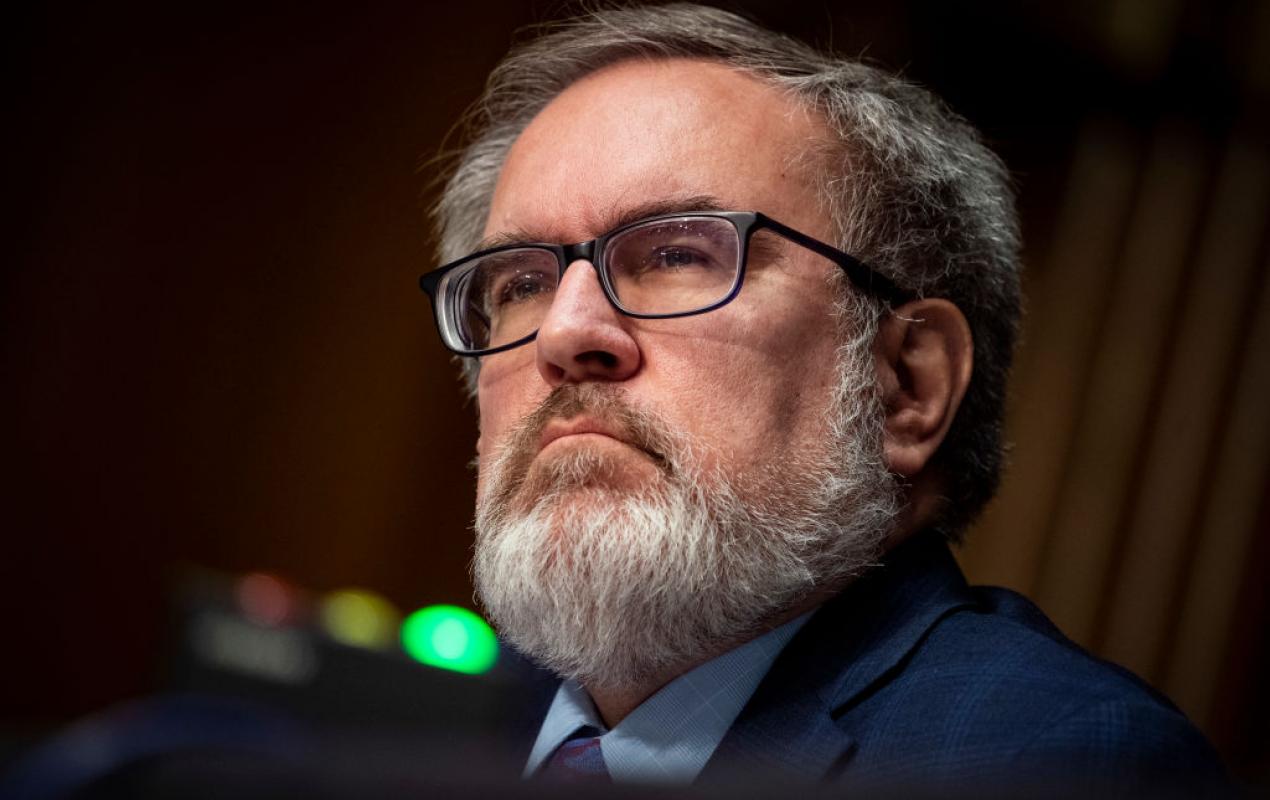
    TYT has obtained a copy of the letter EPA Administrator Andrew Wheeler sent to Gov. J. Kevin Stitt (R-OK) on October 1. The end of the opening paragraph states simply, “EPA hereby approves Oklahoma’s request.”

    DOCUMENT: EPA Administrator Wheeler’s letter on tribal sovereignty in Oklahoma

    YT previously revealed that on July 22, Stitt requested control of environmental regulations on tribal land involving a wide range of issues. All of Stitt’s requests in his letter were granted by the EPA. They include:

    • Hazardous waste dumping on tribal lands which could be any of the hundreds of hazardous chemicals listed by the EPA, including formaldehyde, mercury, lead, asbestos, toxic air pollutants, per- and polyfluoroalkyl substances (PFAS), pesticide chemicals, glyphosate, and polychlorinated biphenyls (PCBs).
    • Underground Injection Control, an EPA program used to permit fracking. Fracking uses large amounts of high-pressured water to remove oil and gas from shale rock. It is a contributor to climate change and is known to leave behind contaminated water and toxic pollution.
    • Protecting large agricultural polluters in industrial-sized livestock operations, most often dairy cows, hogs or chickens. These mega farms produce enormous amounts of waste, according to the Sierra Club, which estimates that “the quantity of urine and feces from even the smallest CAFO [Concentrated Animal Feeding Operation] is equivalent to the urine and feces produced by 16,000 humans.” In his letter, Wheeler acknowledges that the U.S. Supreme Court decision McGirt v. Oklahoma precipitated this EPA action. The McGirtruling found that, by treaty, much of eastern Oklahoma is still Native American territory, which could mean under five tribes’ jurisdiction including for taxation and regulation. In anticipation of the decision, the Seminole tribe in 2018 issued an eight percent tax on oil and gas wells on its reservation land.

    The EPA has now granted the State of Oklahoma the same authority it had before McGirt on environmental issues, especially on petroleum. It can do this because federal legislation can nullify Supreme Court rulings. In 2005, a midnight rider attached to a transportation bill took away environmental regulatory control by Oklahoma tribes if requested by the state as it has now done. The Oklahoma state government is pro-fossil fuel and pro-big agribusiness.

    This return to previous pro-fossil fuel regulations may be one factor in the multi-billion dollar merger of Oklahoma’s Devon Energy with WPX Energy.
    As previously reported by TYT, the Petroleum Alliance of Oklahoma knew about Governor Stitt’s letter to the EPA on July 22, the day it was sent. This was close to one month before the tribal governments were told.

    The EPA action infuriated Oklahoma’s Ponca Tribe. Casey Camp-Horinek, Environmental Ambassador & Elder & Hereditary Drumkeeper Ponca Tribe of Oklahoma, provided the following statement to TYT:

    “After over 500 years of oppression, lies, genocide, ecocide, and broken treaties, we should have expected the EPA ruling in favor of racist Governor Stitt of Oklahoma, yet it still stings. Under the Trump administration, destroying all environmental protection has been ramped up to give the fossil fuel industry life support as it takes its last dying breath. Who suffers the results? Everyone and everything! Who benefits? Trump and his cronies, climate change deniers like Governor Stitt, Senators Inhofe and Langford, who are financially supported by big oil and gas. I am convinced that we must fight back against this underhanded ruling. In the courts, on the frontlines and in the international courts, LIFE itself is at stake.”

    SUMMARY REPORT TO TRIBES

    TYT also obtained the EPA Summary Report sent Sept. 29 to Oklhaoma’s tribes. In it, the EPA writes that the agency will keep Oklahoma’s environmental actions within federal law. But this is the same EPA that has rolled back 100 of the agency’s previous regulations protecting the environment and has pushed for a rule which would bar the agency from relying on scientific studies that have granted confidentiality to the people tested.

    DOCUMENT: EPA Summary Report on Oklahoma Regulatory Control

    In a seminar Sept. 21 at the American Enterprise Institute, a conservative think-tank funded by fossil fuel companies, Wheeler concluded that he had fulfilled President Trump’s requests to him. Wheeler said, “[Trump] asked me to continue to clean up the air, continue to clean up the water and continue to deregulate and help create more jobs…”

    The EPA not only granted all of Oklahoma’s requests, it added additional ones such as regulatory control over underground storage (the state has one of the largest oil storage facilities in the country), air pollution, pesticides, lead-based paints, and asbestos in schools.

    The EPA Summary report says it consulted with 13 Oklahoma tribes in September. The report says that all the tribes questioned the limited consultation and short time of it, saying, “Comments submitted state that the length of the consultation period was too short, that the consultation should have been extended to tribes beyond Oklahoma…”

    The EPA report also acknowledged that the Oklahoma tribes said the agency’s decision was contrary to the principles contained within the EPA Policy for the Administration of Environmental Programs on Indian Reservations (1984 Indian Policy). That policy requires a government-to-government negotiation.

    The summary report concluded, “However, EPA is also bound to apply the clear and express mandate of Section 10211(a) of SAFETEA, a duly enacted Act of Congress, that specifically allows environmental regulation under EPA administered statutes by the State in areas of Indian country, and that requires EPA to approve a request of the State to so regulate notwithstanding any other provision of law…” Section 10211 (a), the federal law giving Oklahoma the legal right to take over environmental regulations on Tribal land, is a mere two-paragraph rider on page 795 of the 836-page SAFETEA transportation bill. In 2005, this midnight rider was maneuvered into this massive transportation bill by Sen. James Inhofe (R-OK). Inhofe is a staunch fossil fuel advocate and climate-change denier. EPA Administrator Andrew Wheeler worked for Inhofe for 14 years.

    FORMER HIGH-LEVEL EPA OFFICIAL NOTES EPA CHOSE NOT TO HAVE DISCRETION

    The former high-level official worked in the EPA’s office of general counsel. The former official told TYT, “EPA overstates when it claims ‘[t]he statute provides EPA no discretion to weigh additional factors in rendering its decision.’ The statute says that Oklahoma need not make any further demonstration of authority than it already did when it sought approval from EPA to administer the same programs elsewhere in the state. But the position EPA takes in the letter — that it lacks discretion entirely — departs from earlier statements made by EPA in Oklahoma Dept. of Environmental Quality v. EPA, where it interpreted SAETEA as still allowing it to attach conditions to its approval of Oklahoma programs implemented in Indian Country.”

    WHO BENEFITS FROM EPA DECISION?

    Who will benefit from the state of Oklahoma taking over environmental regulations on tribal lands there? Fossil fuel companies, big agriculture, and livestock companies. This is based on what a former high-level EPA official said after reviewing Governor Stitt’s letter to the EPA requesting jurisdiction.

    As for the future of Oklahoma’s environmental control, the EPA Summary Report includes one paragraph that suggests a pro-environment president and Congress could have impact, but only if new federal legislation is passed:

    “EPA has found no evidence, nor has any been provided by tribes, that indicates section 10211 has sunset and is therefore no longer valid. Should Congress elect to repeal this provision after EPA approves the State’s request, EPA would address any effect on its approval of the State’s request at that time.”

    THE NEXT MOVE?

    U.S. Attorney General William Barr has now joined other Republican officials trying to nullify the McGirt v. Oklahoma ruling that much of the eastern portion of the state is tribal land. The Associated Press and a local Cherokee Radio station report that during a Sept. 30 visit to the Cherokee Nation headquarters, Barr said that he is working with Oklahoma’s federal congressional delegation to devise a “legislative approach” to address the McGirt decision. Both Governor Stitt and Senator Inhofe have called for a federal “legislative solution.” 

    As TYT has reported, Stitt and Inhofe have pushed for federal legislation to take over not only environmental regulatory control of Tribal lands but all regulatory control, which would return Oklahoma back legally to pre-McGirt status.

    In six emails between the EPA’s public relations office and TYT, the agency has not denied the accuracy of TYT’s main points or the Wheeler letter and Summary Report.

    TYT Investigative Reporter Ti-Hua Chang is an award-winning journalist who has worked for CBS News and other outlets. You can find him on Twitter @TiHuaChang.

  • Kentucky’s climate is suffering. Can the state slip the industry ties that prevent change?/ Covering Climate Now

    Kentucky’s climate is suffering. Can the state slip the industry ties that prevent change?/ Covering Climate Now

    Loveland Magazine is one of the 400 news outlets worldwide, with a combined audience of over 2 billion people “Covering Climate Now”, a global journalism initiative committed to bringing more and better coverage to the defining story of our time.

    The initiative, was co-founded by The Nation and Columbia Journalism Review

    Mihaela Manova is “Covering Climate Now” in Loveland, Ohio as an editor for Loveland Magazine


    In today’s Covering Climate Now Post, climate change causes disruption in Kentucky’s agricultural sector as people are suffering its consequences. Article written by Andrew McCormick for The Guardian.

    Mitch McConnell has long resisted climate action even as the farm and coal sectors suffer, but a growing movement could bring change

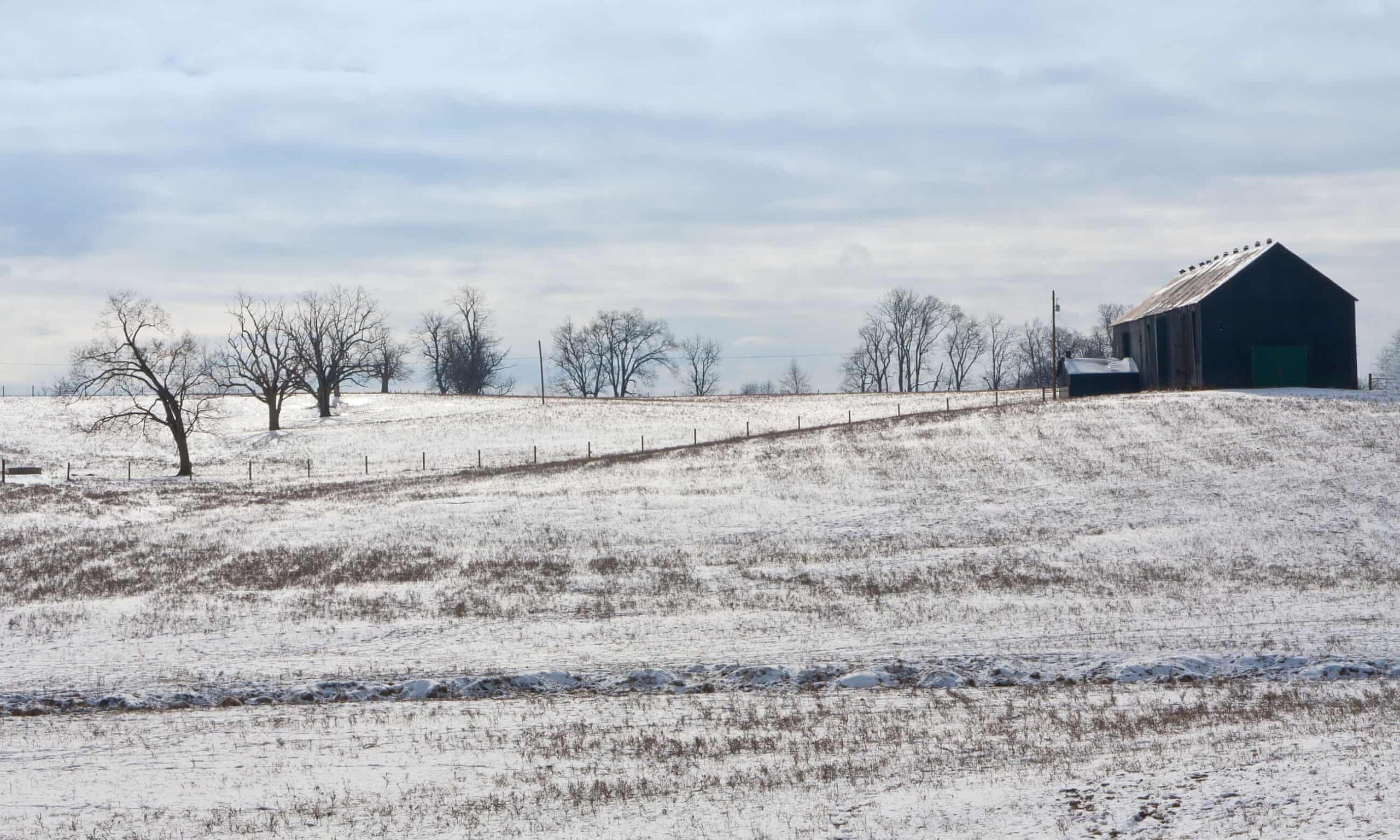
    April 15. That’s the traditional frost-free date in Schochoh, the small community in south-central Kentucky, where Sam Halcomb and his family own and operate Walnut Grove Farms. Before then, the soft red winter wheat that Halcomb grows, which finds its way into McDonald’s biscuits and grocery store pancake mixes, is flowering and especially vulnerable to cold. The frost-free date is an estimate, based on years of experience. If you make it past that date, you’re likely to have a healthy harvest.

    This year, a freeze came on exactly April 15, with early morning temperatures dropping into the mid-20s Fahrenheit. “We were all smacking our heads, saying, ‘Ah, we almost made it’,” Halcomb said. Then, on May 9, another freeze hit.

    Two late freezes in one season was “completely unheard of,” said Halcomb, a sixth generation farmer. “In my whole life, I don’t remember ever having a freeze that late.” A typical wheat yield at Walnut Grove is 85 bushels per acre; this year, it was closer to 60. Halcomb’s losses totaled about $200,000.

    Kentucky’s climate is changing quickly. The Bluegrass State is the ninth most threatened state in the country by long-term climate change impacts, according to a recent study by SafeHome.org, based on data from Climate Central. That puts it ahead of even California, where wildfires recently have wreaked havoc. Erratic weather, exceptional heat, drought, wildfires and flooding all threaten Kentucky.

    There’s a growing environmental movement in the state, and more leaders than ever are speaking the language of sustainability. Coal industry ties run deep, however, and, for many, talk of change is anathema. The state legislature has mostly avoided the climate issue. And US Senate majority leader Mitch McConnell, by far the state’s best-known politician, has been a dedicated opponent of climate action in Washington.

    Kentucky is a microcosm of the nation’s climate dilemma: the effects of the climate crisis are clear here, but legacy interests and the forces of change are at an impasse. “There’s a lag between where we need to be and where we’re at right now,” said Lane Boldman, who directs the Kentucky Conservation Committee, a nonprofit environmental policy group. “And there really isn’t a lot of time.”


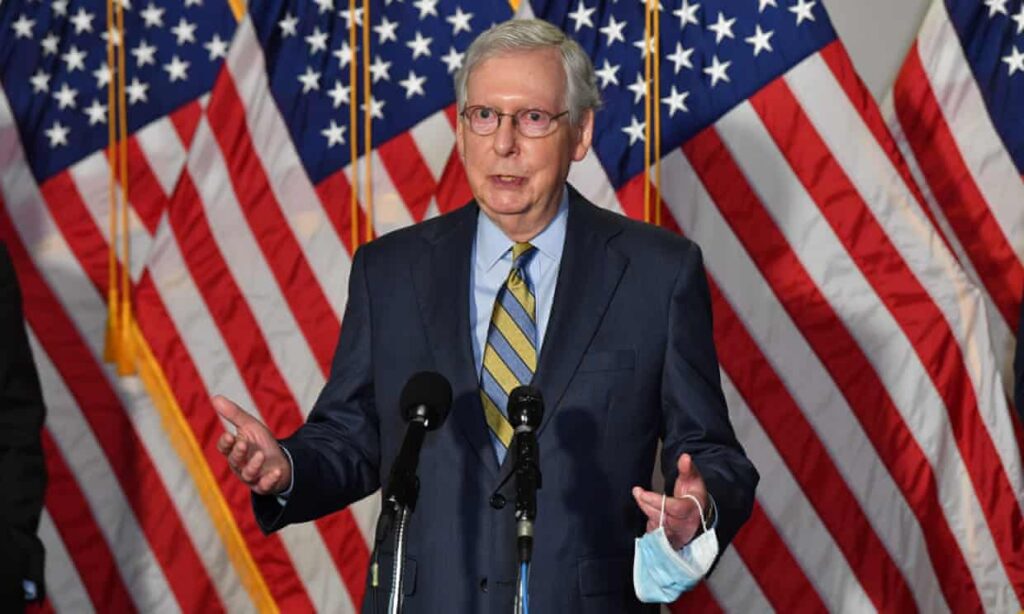
    Mitch McConnell, US Senate majority leader, has been a dedicated opponent of climate action. Photograph: Nicholas Kamm/AFP/Getty Images

    McConnell has accepted more than $3m from the coal, oil and gas industries over the course of his career. Critics say he’s returned the favor with handouts – tax breaks and regulatory cuts – to keep the dying industry aloft. In 2017, McConnell joined the Trump administration in urging America’s withdrawal from the Paris climate Agreement. In 2019, he engineered what he admitted was “a show vote” intended to kill the Green New Deal. As a campaigner, McConnell has framed efforts to reign in the coal industry as the meddling of a distant federal government out of touch with Kentuckians’ way of life.

    That’s not to say coal has been good to Kentuckians, of late. The coal industry employed some 38,000 Kentuckians when McConnell took office in 1985; it’s below 4,000 today. Workers in the mountainous eastern part of the state have found themselves laid off and uncompensated for their work by coal bosses. And deregulation has led to one of the worst black lungepidemics on record. Eastern Kentucky counties are among the poorest in the nation, with poverty rates around 40%. The water in some of those counties is either undrinkable or unaffordable.

    Meanwhile, McConnell sits on the Senate agriculture committee but has seemed indifferent to how climate change threatens Kentucky’s sizable agricultural sector.

    Three of the five wettest years on record in the state have been in the last decade, and this summer saw the most rain of any two-month period on record going back to 1895. More rain can boost crops, but in many parts of Kentucky rain now comes in unhelpful torrents. In both the eastern mountains and urban areas, excessive rain has contributed to severe and frequent flooding. In Louisville, this year, rain has turned neighborhoods into swamps and devastated businesses.

    The climate crisis is not the explicit nor the sole cause of all this rain. But the precipitation uptick is “very much consistent” with scientific projections for how climate change will play out in the state, Stuart Foster, Kentucky’s state climatologist, said.

    Many in the state remain unconvinced. According to a study this month by Yale and George Mason universities, Kentucky is one of only four states in the country where a majority of adults do not believe global warming is caused by humans.

    Similar apathy reigns in the state legislature, where Republicans hold a lock on both houses. The chair of the House Natural Resources and Energy committee, Jim Gooch, for example, told Louisville’s WFPL radio station recently that the science on climate change remains unsettled. Other legislators seem still beholden to the coal industry, reform advocates say, and to utility companies.

    Charles Booker’s campaign for the Senate gained national attention as he rejected divisions between urban and rural voters. Photograph: Bryan Woolston/Reuters

    Charles Booker, who narrowly lost the state’s Democratic primary for US Senate to Amy McGrath, championed environmental justice and the Green New Deal. Booker, who is Black and hails from impoverished West Louisville, rejected stereotypical divisions between urban and rural voters. Kentuckians everywhere, he said, had suffered badly from environmental neglect, and he promised a just economic transition for parts of the state historically reliant on coal. “From the hood to the holler,” went one Booker slogan.

    Booker’s campaign captured national attention; and the fact that an unabashed climate advocate came as close as he did to facing off against McConnell this November could signal that Kentucky is ready to get serious on climate.

    McGrath trails McConnell in the polls – but not by so much, state politicos say, that she should be counted out. A retired Marine fighter pilot, McGrath calls climate change “intricately tied to our national security”, a position that syncs with the US defense department. Another early line of attack by McGrath focused on the health crisis in eastern Kentucky; “Mitch McConnell left our coal miners behind years ago,” she accused in one ad. Booker, for his part, has thrown his support behind McGrath.

    Local races also suggest that environmental politics may be shifting in Kentucky. Sarah Lynn Cunningham, director of the Kentucky chapter of the Sierra Club, was struck this spring when a Republican running for state Senate in a competitive district near Louisville sought the group’s endorsement. The candidate was knowledgeable, she said, and expressed concern that many of his fellow Republicans lagged on the environment. “I’ve never had a Republican say they would like to compete for our endorsement,” Cunningham said. “That was a first.” (In the end, the Sierra Club endorsed the Democrat, who won, flipping a seat held by Republicans since 1995.)

    Western Kentucky University students participate in a climate strike in Bowling Green, Kentucky. Photograph: Bac Totrong/AP

    Stephen Voss, an expert in elections and voter behavior at the University of Kentucky, doubts climate will prove central in this fall’s outcome. Based on his assessment of how environmental issues resonate in Kentucky, however, he suggested that McGrath could profit by framing climate as a matter of community health, economic durability, and jobs. “We’ve had nibbles at this approach,” he said. “But no one has successfully done it yet.”

    In a statement to the Guardian, McGrath did raise jobs and public health as areas where McConnell’s climate record has damaged Kentucky. McConnell, she said, is “failing us on climate, because he is beholden to special interests. If you want to bring jobs, we could get ahead of the curve and be an innovation leader.”

    “Our government’s first job is to keep Americans safe,” McGrath added. “And to do that, we need to prepare for climate change.”

    The McConnell campaign did not respond to requests for comment.

    Perhaps the biggest harbinger of change in Kentucky is the youth vote, with even young conservatives in the state worried about the climate crisis. The question, Voss said, is whether young people will show up to vote this fall.

    Fernanda Scharfenberger, an 18-year-old climate activist at Centre College in Danville, Kentucky, is optimistic on that front. Two years ago, when Scharfenberger was a junior in high school in Louisville, a boy from a nearby school died after he was swept into a storm pipe during a heavy rain. The death hit her social group like a shock wave. Scharfenberger went home that day and Googled climate. “As you can imagine,” she said, “it got pretty overwhelming pretty quickly.” She felt called to action.

    Fernanda Scharfenberger, 18, is a climate activist. Photograph: Andrew McCormick

    That December, Scharfenberger traveled with young people from across the country to Washington to lobby for a Green New Deal. All 50 states were represented but, with 75 young activists present, Kentucky’s was the largest delegation.