Loveland Magazine is one of the 400 news outlets worldwide, with a combined audience of over 2 billion people “Covering Climate Now”, a global journalism initiative committed to bringing more and better coverage to the defining story of our time.
The initiative, was co-founded by The Nation and Columbia Journalism Review
Mihaela Manova is “Covering Climate Now” in Loveland, Ohio as an editor for Loveland Magazine
Today’s article is written by Piers Forster for The Conversation. Forster talks about climate from a scientific point of view, summarizing the key points of his findings during COVID-19. According to the website, “The Conversation is a nonprofit, independent news organization dedicated to unlocking the knowledge of experts for the public good.” Permission to repost: Covering Climate Now.
The planet had already warmed by around 1.2℃ since pre-industrial times when the World Health Organization officially declared a pandemic on March 11 2020. This began a sudden and unprecedented drop in human activity, as much of the world went into lockdown and factories stopped operating, cars kept their engines off and planes were grounded.
There have been many monumental changes since then, but for those of us who work as climate scientists this period has also brought some entirely new and sometimes unexpected insights.
Here are three things we have learned:
1. Climate science can operate in real time
The pandemic made us think on our feet about how to get around some of the difficulties of monitoring greenhouse gas emissions, and CO₂ in particular, in real time. When many lockdowns were beginning in March 2020, the next comprehensive Global Carbon Budget setting out the year’s emissions trends was not due until the end of the year. So climate scientists set about looking for other data that might indicate how CO₂ was changing.
We used information on lockdown as a mirror for global emissions. In other words, if we knew what the emissions were from various economic sectors or countries pre-pandemic, and we knew by how much activity had fallen, we could assume that their emissions had fallen by the same amount.
By May 2020, a landmark study combined government lockdown policies and activity data from around the world to predict a 7% fall in CO₂ emissions by the end of the year, a figure later confirmed by the Global Carbon Project. This was soon followed by research by my own team, which used Google and Apple mobility data to reflect changes in ten different pollutants, while a third study again tracked CO₂ emissions using data on fossil fuel combustion and cement production.
The latest Google mobility data shows that although daily activity hasn’t yet returned to pre-pandemic levels, it has recovered to some extent. This is reflected in our latest emissions estimate, which shows, following a limited bounce back after the first lockdown, a fairly steady growth in global emissions during the second half of 2020. This was followed by a second and smaller dip representing the second wave in late 2020/early 2021.
Meanwhile, as the pandemic progressed, the Carbon Monitorproject established methods for tracking CO₂ emissions in close to real time, giving us a valuable new way to do this kind of science.
2. No dramatic effect on climate change
In both the short and long term, the pandemic will have less effect on efforts to tackle climate change than many people had hoped.
Despite the clear and quiet skies, research I was involved in found that lockdown actually had a slight warming effect in spring 2020: as industry ground to a halt, air pollution dropped and so did the ability of aerosols, tiny particles produced by the burning of fossil fuels, to cool the planet by reflecting sunlight away from the Earth. The impact on global temperatures was short-lived and very small (just 0.03°C), but it was still bigger than anything caused by lockdown-related changes in ozone, CO₂ or aviation.
Looking further ahead to 2030, simple climate models have estimated that global temperatures will only be around 0.01°C lower as a result of COVID-19 than if countries followed the emissions pledges they already had in place at the height of the pandemic. These findings were later backed up by more complex model simulations.
3. This isn’t a plan for climate action
The temporary halt to normal life we have now seen with successive lockdowns is not only not enough to stop climate change, it is also not sustainable: like climate change, COVID-19 has hit the most vulnerable the hardest. We need to find ways to reduce emissions without the economic and social impacts of lockdowns, and find solutions that also promote health, welfare and equity. Widespread climate ambition and action by individuals, institutions and businesses is still vital, but it must be underpinned and supported by structural economic change.
Colleagues and I have estimated that investing just 1.2% of global GDP in economic recovery packages could mean the difference between keeping global temperature rise below 1.5°C, and a future where we are facing much more severe impacts – and higher costs.
Unfortunately, green investment is not being made at anything like the level needed. However, many more investments will be made over the next few months. It’s essential that strong climate action is integrated into future investments. The stakes may seem high, but the potential rewards are far higher.
Loveland Magazine is one of the 400 news outlets worldwide, with a combined audience of over 2 billion people “Covering Climate Now”, a global journalism initiative committed to bringing more and better coverage to the defining story of our time.
The initiative, was co-founded by The Nation and Columbia Journalism Review
Mihaela Manova is “Covering Climate Now” in Loveland, Ohio as an editor for Loveland Magazine
In today’s Covering Climate Now story, Ingrid Lobet for Capital & Main writes about the current fight in preservation of the air quality in Central Valley.
According to their website, “Capital & Main is an award-winning journalism nonprofit that reports from California on the most pressing economic, environmental and social issues of our time.” Permission for republishing from theCovering Climate Now newsletter.
Oil and gas producers could find themselves increasingly on the defensive in California now that two communities near the heart of the state’s largest concentration of oilfields have won inclusion under its community air protection law on Thursday.
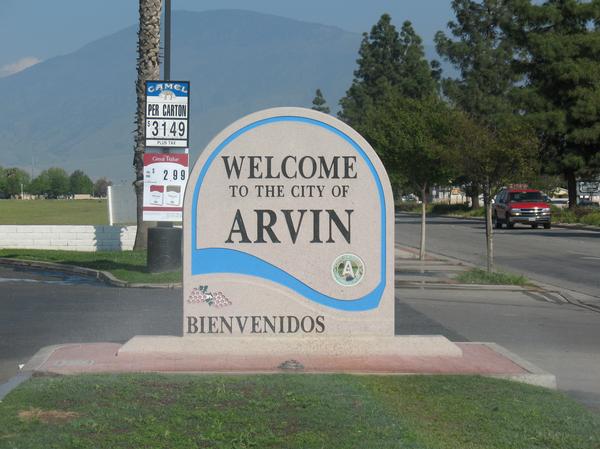
Residents of Arvin and unincorporated Lamont, both in rural Kern County, have been organizing for three years with the goal of gaining status under Assembly Bill 617, a law intended to force California’s regional air pollution districts and Air Resources Board to share power with communities and reckon with their priorities. All members of the Board save one voted for the inclusion of Arvin and Lamont after hours of public testimony Thursday night.
The prospect of having a voice in the environmental protection of her community is gratifying to Estela Escoto, president of the Committee for a Better Arvin. “We have a lot of respiratory illness,” she said in Spanish. “I’m really pleased, especially for all those who are sick with cancer.”
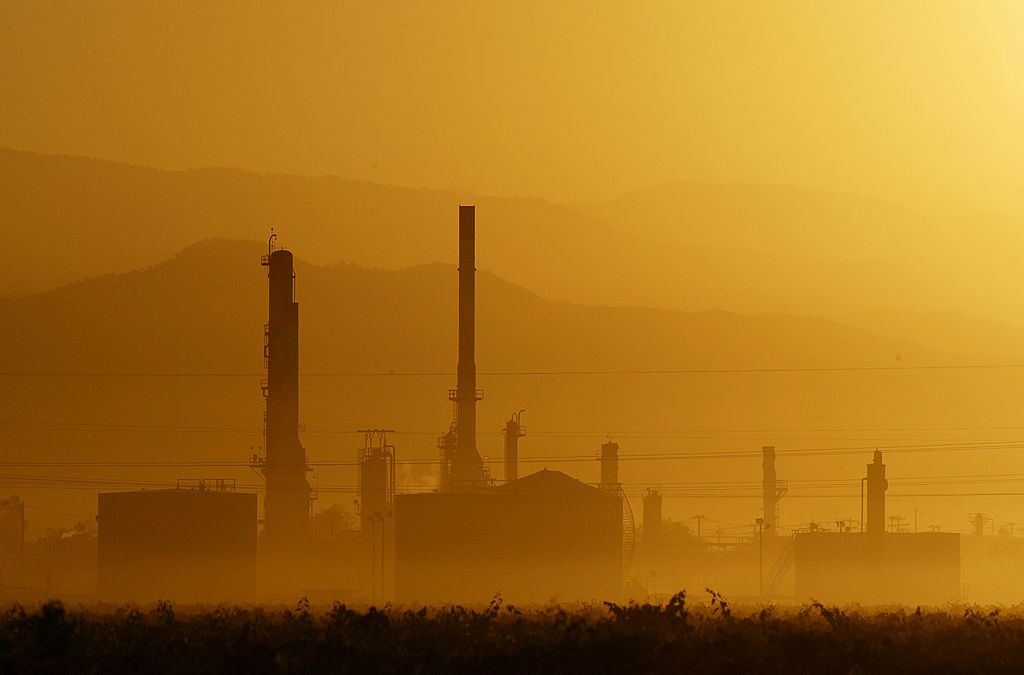
Arvin and Lamont suffer some of the worst air pollution in a state that routinely tops the list nationally for smog and soot, elevating their candidacy for the special designation above more than 200 other communities in the state. The pollution comes from oil and gas wells, refineries, agriculture, heavily trafficked highways and cities upwind.
“Oil will be a top priority,” said Byanka Santoyo, a community steering committee member, organizer with the Center on Race, Poverty & the Environment and resident of Arvin. She estimates she has attended more than 100 meetings held for neighboring communities who are two years ahead in the process. Santoyo recently took a meeting outside and panned her phone across the horizon to show officials the mountain landscape she loves, but often cannot see due to the smog.
“This is huge. If the Legislature and Air Resources Board are serious, then we are going to tackle the issue of oil and gas. But exactly how?”
— Juan Flores, Central Valley community organizer
The process for setting community priorities can be grueling, with long hours in night meetings after work. But leaders with the Committee for a Better Arvin and Comité Progreso de Lamont and other groups have been putting in those hours so they can learn how best to use the law when their own turn comes. “We have people ready to work in Arvin and Lamont,” Santoyo said.
The fact that a community in the heart of California’s oil country will have a say in how money is spent to address pollution is significant. “This is huge,” said Juan Flores, who has been organizing in the Central Valley for eight years on climate, oil and gas. “That is where the community gets excited. If the Legislature and Air Resources Board are serious, then we are going to tackle the issue of oil and gas. But exactly how? Are we going to get setbacks of no less than 2,500 feet, or does it mean we are going to shut them all down? What exactly is it going to look like?”
Flores is referring to an effort to put greater physical distance between residents and oil and gas wells. This setback issue is playing out statewide, and Arvin has already been at it for years. Oil wells can leak carcinogenic chemicals like benzene, and some wells are powered by internal combustion engines that give off exhaust.
The Committee for a Better Arvin was originally focused on clean water, pesticides and manure. But in 2014, it shifted to oil and gas after people were sickened by a leaking pipeline. The group has fought the oil industry several times since.
* * *
The California Independent Petroleum Association says it is not an adversary in these communities. Sabrina Lockhart, vice president for communications, said companies pay millions of dollars in fees each year that are reinvested in programs that advance California’s priorities for clean air and greenhouse gas emissions reductions. “Other AB 617 community monitoring programs in oil and natural gas bearing areas have shown no adverse impacts as a result of responsible production, proving that California’s strictest on the planet environmental protections are working,” she said in a statement.
Oil in Kern County goes back 150 years, if you count the kerosene and asphalt that preceded the gushers. It is the center of California production, accounting for 70% to 80%. But production has been falling for years, and money for local government with it. Declining assessed value of oil properties means that where oil companies contributed 33% of all property taxes in 2010, that fell to 16% in 2019.
Central Valley residents expect Kern County to push back against oil industry regulation. When Shafter residents proposed a 2,500 foot distance between people and wells, the county opposed it.
Despite the production declines, oil companies remain the largest contributors to Kern County discretionary spending, according to the assessor’s office. Chevron was its highest taxpayer in 2019, with $64 million paid on assessed value of $5.6 billion on oil land.
Now the county is lurching into the energy transition. A 2018 article in the Bakersfield Californian called Kern the Wind Turbine Capital of the World. The county website says it is “quickly becoming the renewable energy center for California.”
But Valley residents expect the county to push back against regulation of the oil industry. When residents of Shafter advocated for the 2,500 foot distance between people and wells, the county submitted a letter opposing it. The county is currently engaged in a fight over a blanket permit it granted to drill up to 70,000 more wells.
Arvin and Lamont will not be the first communities located near oil facilities to gain negotiating power under AB 617. Richmond in the Bay Area is a refinery community. And the Wilmington-Carson-West Long Beach area is close to four refineries plus still active oil wells. That community negotiated a 50% reduction in volatile organic compounds — a type of pollution — in 10 years. Residents of Shafter raised concerns about the issue of air pollution from oil production and related processing, but much of their time was spent in a lengthy fight at several levels of government over whether the law protected them from pesticides, which were also a community priority.
“The entire month of January all you see is smoke” from burning vineyard and orchard waste, says Jesus Alonso, who grieves that he often can’t take his son outside.
If the aim of AB 617 is to give residents a seat at the table, across from them at that table will be employees of the San Joaquin Valley Air Pollution Control District. They will spend many dozens of hours in meetings together. Jaime Holt, chief of communications for the district, said her agency backs the addition of Arvin and Lamont, “assuming there are resources to support the programs,” as there have been for the three other communities under its jurisdiction — Shafter, Stockton and South Central Fresno. The air agency has received $12 million per community to initially implement the law, plus $35 million to carry out the air pollution actions the community decides on.
Arvin and Lamont are beset by other kinds of air pollution as well, which might even surpass fossil fuel production and refining among the communities’ priorities. The towns are surrounded by agricultural fields, increasingly almonds. Growers use special machines that grab the trunks of the almond trees at harvest time and sharply vibrate them, sending up clouds of ash, soot and dust — whatever has fallen from the Valley’s blurred sky over the last year.
Then there is the burning. “The entire month of January all you see is smoke,” Jesus Alonso, a lifelong resident of Lamont said. It grieves him that he often can’t take his son outside, describing a persistent, nauseating stench from the refinery nearby. “What I am most excited about is that our children in the community will be able to spend more time outside without increasing their risk of lung or cardiovascular issues.”
This story has been updatedto reflect the results of Thursday’s Air Resources Board meeting.
Loveland Magazine is one of the 400 news outlets worldwide, with a combined audience of over 2 billion people “Covering Climate Now”, a global journalism initiative committed to bringing more and better coverage to the defining story of our time.
The initiative, was co-founded by The Nation and Columbia Journalism Review
Mihaela Manova is “Covering Climate Now” in Loveland, Ohio as an editor for Loveland Magazine
In today’s Covering Climate Now article written by Jerry Redfern for Capital & Main, Redfern tells the story of a New Mexico family stuck in a “waste zone.”
“Something just blew up!”
Cora Gonzales was in her room on Jan. 4 when she heard her father yell. In the evenings he watches TV while sitting by the living room window, and that’s where she found him, looking outside and not at the tube. The rest of the family quickly joined them and they stared through the picture window as flames shot into the night sky from a nearby well pad.
This particular fire was uncommon. That’s because it was quiet. “Usually whenever things blow up,” she says, “we can feel the house shake and also hear a boom.”
Gonzales and her family live on a 160-acre ranch outside Loving, New Mexico. Their land is dotted with drilling pads and tank batteries that hold and pump oil and natural gas. A couple of times a year, she says, the whole house shakes when one of those pumps or batteries catches fire and goes “boom.”
“It’s just the normal thing around here … just another day,” Gonzales says. “We look and watch and we get tired of watching it and then go back to our normal program.”
State regulations require operators to report accidents, what triggered them, and how much oil, gas and water were lost or spilled, but it’s not clear operators always file those reports.
It’s unclear how common these explosions are here in the Permian Basin in southeastern New Mexico. About 129,000 people live amid more than 20,000 wells actively churning out oil and gas in this panthecake-flat stretch of the Chihuahuan Desert. Despite state regulations that require operators to report accidents, what triggered them, and how much oil, gas and water were lost or spilled, it’s not clear operators always file those reports. Furthermore, the state of New Mexico still lacks comprehensive regulations covering leaks, spills and other accidents in the oil and gas production process. That leaves families like the Gonzaleses scratching their heads.
* * *
A security camera on the front of the Gonzales home caught the explosion and subsequent fire. In stark black and white it shows the darkness explode into a burning white light. Caza Petroleum of Texas operates the facility and filed an incident report with New Mexico’s Oil Conservation Division (OCD).
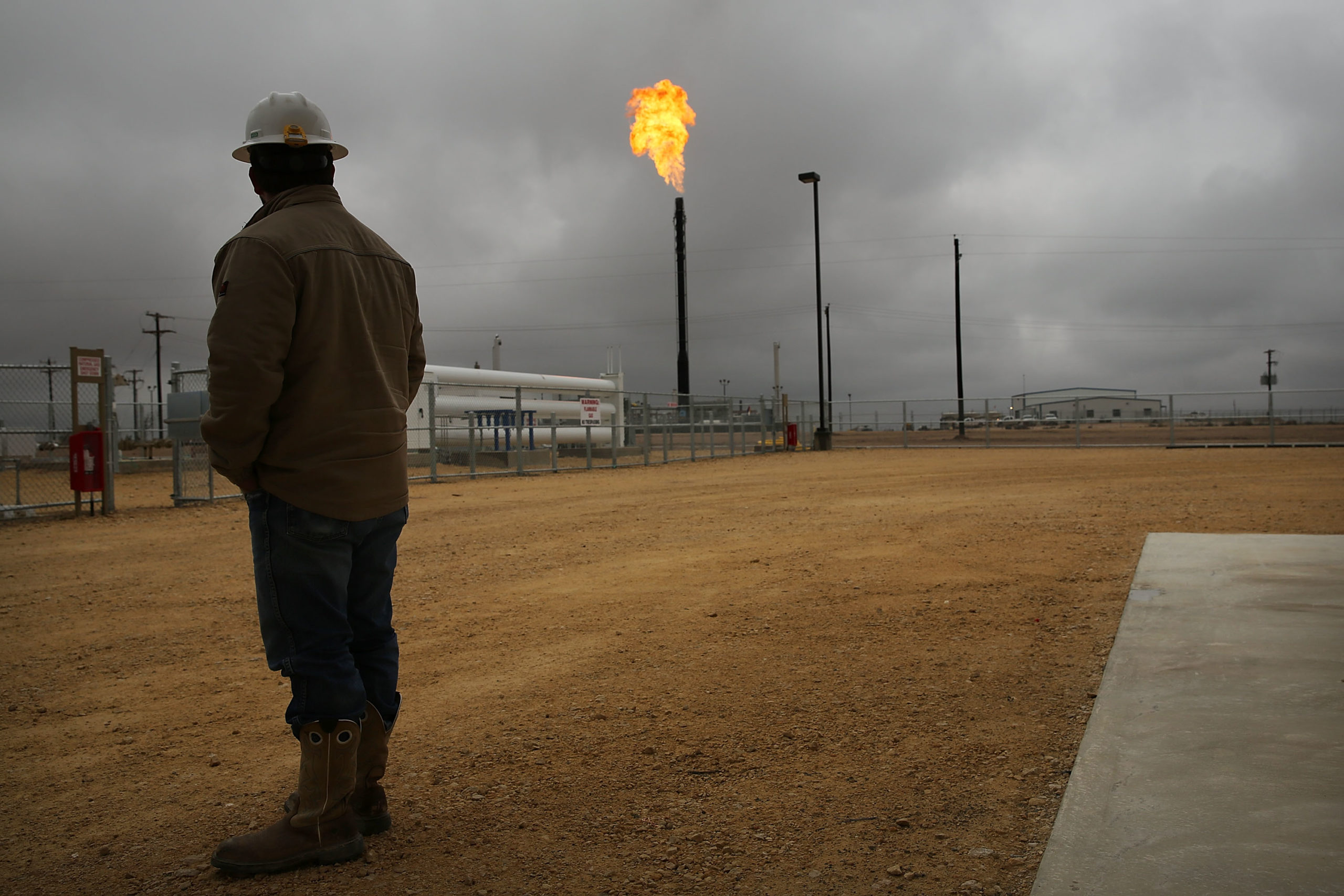
In a phone call, Tony Sam, vice president of operations at the company, says that he doesn’t know exactly what happened that night or why, but he thinks it was a stack fire – when a flare that burns off natural gas and impurities from a well malfunctions and burns out of control. According to the OCD report, the fire was considered a “major release” since it included a fire or explosion. It also spilled 47 Mcf of natural gas, two barrels of oil and two barrels of produced water. Sam did not respond to follow-up questions about the accident.
There are approximately 80 large-scale wells, as defined by OCD, within a two-mile radius of the Gonzales family ranch. In the past five years, operators have reported 20 facility fires in the surrounding OCD district, which covers thousands of wells across half of New Mexico’s portion of the Permian Basin. The Jan. 4 fire was the only one listed close to their home, even though Gonzales says they see fires at nearby drilling and tank sites a couple of times a year.
When a pipe burst one night in 2020, briny ‘produced water’ rained down on the home of Penny Aucoin and Carl Dee George. Their chickens, a dog and a goat were all drenched — and had to be euthanized.
When they see these fires, she says they call 911. “We usually see the emergency lights head (out) but then they always get lost and turn around” in the local maze of country roads winding across the desert. She tries to find out what happened from the local newspaper or by searching online “but we never hear anything of it.”
Not only that, but OCD’s regulators may not be hearing about explosions and leaks either.
It’s up to operators to file emergency reports. Susan Torres, public information officer at OCD, notes that major releases must be reported within 24 hours. If OCD finds out they didn’t, the operator risks daily penalties of several thousand dollars, up to a maximum possible fine of $200,000. Sometimes, she says, first responders notify OCD, but the obligation still rests with the operators.
* * *
Oilfield work is inherently dangerous. Extraction, heavy construction and transportation all play integral parts in the oil and gas industry, and all rank among the country’s most dangerous jobs according to the U.S. Bureau of Labor Statistics. In March 2020, two men were electrocuted and died while working with a forklift in the rain on a pad site south of Malaga. COG, a subsidiary of Concho Resources – which was recently purchased by ConocoPhillips for $13.3 billion – operates the site.
But the dangers don’t end at the edge of the drilling pad.
Throughout the Permian Basin, there are many families like the Gonzaleses, whose homes and ranches are surrounded by drilling operations. Sometimes the pipes carrying gas and oil and contaminated water run right through people’s yards.
“In the oilfield, it’s your property. But they do as they please.”
— Cora Gonzales
Gonzales says that her family no longer runs cattle on their ranch. Instead they charge producers to run pipes across the land. But that brings other problems, like broken water lines from the heavy trenching machinery. And in another instance, a contract company digging a trench was fired mid-job and left behind a “big, gaping hole.”
“In the oilfield, it’s your property,” she says, “but they do as they please.”
When oilfield workers enter a wellsite, drilling pad or tank farm, they know and expect the serious risks involved with bringing toxic and highly flammable oil and gas up from the bowels of the earth. But they often don’t live there. Families like the Gonzaleses live among the dangers year after year, and they are often closest when things go wrong.
In January 2020, for example, a pipe carrying so-called produced water ruptured near Carlsbad in the middle of the night. Produced water is the briny solution that comes up with oil and gas in a well. Heavy in salts, it also has varying amounts of oil and grease, chemicals from the fracking process and, often, naturally occurring radioactive minerals.
When the pipe burst, that water rained down on the home of Penny Aucoin and Carl Dee George. Their chickens, a dog and a goat were all drenched — and had to be euthanized. The family developed rashes and pustules from the water that soaked them as they tried to save their animals.
To a certain extent, the state government’s hands are tied by New Mexico’s lack of regulations and a lack of funding.
WPX, the company that operates the pipeline, eventually dug up and carted off 40 barrels of contaminated soil from the yard.
Aucoin says she called state officials repeatedly about the incident, but says their response was slow.
Ironically, the day that Aucoin and her husband announced a settlement with WPX was the same day that the well stack near Cora Gonzales caught fire. And the next day, WPX was bought by Devon Energy – another major producer in the Permian – in a deal worth about$2.6 billion. Aucoin and George wouldn’t say how much they received in their settlement, but they are using the money to move away from the area, to Clovis.
In a January press conference announcing the family’s settlement with WPX, Aucoin said, “We need our government to stand up to the big oil and gas … There should be someone standing up for the victims.”
But to a certain extent, the state government’s hands are tied by New Mexico’s lack of regulations and a lack of funding.
While the New Mexico Environment Department normally regulates and monitors water and air pollution across the state, produced water is different. Maddy Hayden, public information officer at NMED, explains that this type of water, while it is “under the control of owners and operators” like WPX, falls under the purview of the OCD, in accordance with the 2019 Produced Water Act, which clarified jurisdiction between the two agencies.
She continues, “We recognize the need for enforceable requirements and increased oversight of this industry.”
Torres at OCD points out that spills in and of themselves are not violations under current OCD rules. The violation occurs if the company doesn’t report the spill. So when the ruptured pipeline sprayed the Aucoin/George home with contaminated water, and WPX filed a report, there was no OCD violation. Torres adds that the authority to levy fines was only reinstated at the end of February 2020.
This lack of regulatory teeth for the OCD stems from a 2009 New Mexico Supreme Court ruling that sided in favor of oil and gas companies against the state, saying the division doesn’t have the authority to assess penalties and sanctions against companies without backing legislation.
In light of these gaps in spill regulation, state Sen. Antoinette Sedillo López (D-Albuquerque) has introduced Senate Bill 86, which adds new prohibitions and penalties for spills under the state Oil and Gas Act. It provides a penalty schedule for spills of all types, requires producers to track produced water and disclose the chemicals found in it, creates a data collection fund and controls the use of produced water outside the oil field, among many other proposals. Torres says the agency is analyzing the bill, but that “additional regulations could be difficult to enforce effectively without additional funding tied to the mandate.”
“We’re in a battle with our country fields and our nature. And the oilfields are winning.”
— Ervie Ornelas
When she heard of the accident at the Aucoin/George residence, Sedillo López said, “See? I told you. There is no regulation down there and this is the kind of thing that happens.”
According to Sedillo López, a fellow legislator who owns an oil and gas company told her the chemicals used in fracking were no different from the bottles of chemicals under her sink. “And I said, you know, ‘Would you drink that stuff?’”
When Sedillo López introduced a bill to pause fracking so the state could study its effects and possible legislation, “The oil and gas industry just went crazy,” she says. But she says she also received calls at her office from people across the Permian Basin telling her stories of explosions, smoke, spills and smells. They wanted her to know what they had seen, and “It was just stunning,” she says.
“In every single case I said, ‘Would you be willing to testify on behalf of my bills?’ and in every single case they said, ‘Absolutely not.’” Sedillo López says they were afraid of angering the oil and gas companies. “They’re so scared.”
Sedillo López, whose district in Albuquerque is many hours’ drive from the Permian, says legislators from the basin have asked why she cares. She says a fellow legislator told her the area is “already a waste. All we can do is make sure it just doesn’t spread.”
She says, “We should not have any corner of the planet that is a waste zone.”
* * *
Ervie Ornelas grew up on the outskirts of Loving and has lived in the Permian Basin for all his 49 years. When he was a kid, he would run around the sage fields in the wide-open vistas surrounding his home, hunting rabbits in the gullies, watching for burrowing owls and catching fish in a nearby pond.
Then in the 1990s, oil wells started popping up. The rabbits and owls slowly disappeared. The pond was fenced in and a “KEEP OUT” sign posted. All of the open vistas were rimmed with machinery.
“We’re in a battle with our country fields and our nature,” he says today. “And the oilfields are winning.”
Ornelas says he understands people need to make a living, and oilfield work pays good money. But “Loving just isn’t Loving anymore.”
These days he works at a children’s day care in Carlsbad and, until November, he would visit his mother at his childhood home on weekends.
From his mother’s place, he can see four tank farms. “And from the very beginning you can smell it from the front yard,” he says. “My mother used to get dizzy, dizzy with the smells.” A search of the online OCD Oil and Gas Map shows 15 wells within a mile of the house.
Ornelas’ mother lived in that house until she died of COVID-19 in November. Pervasive air pollution – the kind produced by the oil and gas industry and monitored in the Permian – is tied to increased risks of dying from COVID-19. A peer-reviewed study published in October estimates that “about 15% of deaths worldwide from COVID-19 could be attributed to long-term exposure to air pollution.” Hearing that “made my heart drop just thinking it could have added more to her problem,” he says.
Just before his mother died, Ornelas’ 24-year-old son Zach died from brain cancer. Zach was diagnosed just after graduating from high school, and he fought off the disease for six years before succumbing in October.
For the last three months of his life, Ervie and his wife wouldn’t let him outside.
“My wife is a registered nurse, and she was afraid that the (air pollution) would mess up his breathing.”
* * *
Pastor Nick King moved to Carlsbad eight years ago to preach at the Mennonite Church. In his spare time, he looks at his corner of the state from space, courtesy of Google Maps. “Miles and miles and miles,” he says, “all you see is oil wells all over the place.”
“That’s how we care for the Earth God’s given us.”
King sees the spread of oil and gas wells and the problems associated with them as the antithesis of the Christian beliefs trumpeted by people in the area. In fact, he calls the thinking “a kind of religious blasphemy.”
“We don’t worry about the environment,” he says. “We don’t worry about the future. If it’s money for me – now – then we do it.”
For his part, Ornelas still roams the country around his childhood home. Now, instead of hunting and fishing, he’s taking photos, trying to capture on silicon what remains of his memories made outdoors. But that isn’t going so well, either.
“When we were kids, we’d see maybe one or two oilfields,” he says. “Now, It’s like a blanket of them. And that’s what hurts.
Loveland Magazine is one of the 400 news outlets worldwide, with a combined audience of over 2 billion people “Covering Climate Now”, a global journalism initiative committed to bringing more and better coverage to the defining story of our time.
The initiative, was co-founded by The Nation and Columbia Journalism Review
Mihaela Manova is “Covering Climate Now” in Loveland, Ohio as an editor for Loveland Magazine
In today’s (reposted) article from Covering Climate Now/Rethinking Schools, Bill Bigelow writes about the scarcity of climate change education in current textbooks.
I was a member of the committee of parents, teachers, students, and activists that pushed for the resolution. In drafting it, we knew that there were a couple of especially egregious texts in Portland classrooms, but until we sat down to formally evaluate 13 middle and high school science and social studies textbooks, we had no idea that every single one of the texts adopted in famously green and liberal Portland misleads young people about the climate crisis.
Few teachers put their faith in multinational behemoths like Pearson and Houghton Mifflin Harcourt. But our Climate Justice Committee needed more than hunches about how these corporations’ profit-first orientation would distort their coverage of climate change — we needed evidence.
Before our committee collected district-adopted textbooks to evaluate, we developed a rubric to evaluate their adequacy, inspired by the work of K. C. Busch at Stanford’s Center for Assessment, Learning, and Equity. Here’s what we came up with:
The text provides stories and examples that help students grasp the immediacy, systemic nature, and gravity of the climate crisis.
The text includes actions that people are taking to address the climate crisis, locally and worldwide.
The text emphasizes that all people are being affected by the climate crisis, but also highlights the inequitable effects of the crisis on certain groups (e.g., Indigenous peoples, people in poverty, Pacific Islanders, people in sub-Saharan Africa, people dependent on glaciers for drinking water and irrigation, etc.)
The text does not use conditional language that expresses doubt about the climate crisis (e.g., “Some scientists believe . . .” or “Human activities may change climate . . .”)
There are discussion and/or writing questions that provoke critical thinking.
Given our climate emergency, meeting these criteria seemed to us to be a reasonable cut score.
Thirteen retired teachers and members of our Portland Public Schools Climate Justice Committee gathered to evaluate the school district’s texts. The first thing we noticed is how difficult it was to find anything about climate change in many of the books. A typical social studies text, History Alive! Pursuing American Ideals, includes no mention of climate change, but offers breathless paeans to fossil fuels: “Oklahoma’s oil reserves are among the largest in the nation. Fossil fuels helped the United States become an industrial giant.” As one committee reviewer wrote, in this and other texts, “there is an opportunity to look at early U.S. history as prologue to the climate crisis, but this book is utterly silent.”
Contemporary Economics: not a word. The iconic Magruder’s American Government: 844 pages with no reference to global warming, climate change, greenhouse gases. One committee reviewer wrote: “How can a book about the U.S. government say nothing about the climate crisis — or environmental policy more broadly? This is egregious, unacceptable.” Despite a focus on industrialization, neither volume of the Advanced Placement text Sources of the Western Tradition includes anything about climate change — as if we can cleave fossil fuel-powered industrialization from its contemporary climate consequences.
Other texts acknowledge the existence, or at least the possibility, of climate change, but the texts’ language is drenched in doubt. Issues and Life Sciences describes global climate change in just one sentence, as a “potential threat to Earth’s biomes.” However, other “threats” to the Earth’s biomes — eight of them — are listed as actual, and climate change a mere potential threat.
The books are littered with conditional language. The high school text Biology: As greenhouse gas concentrations increase, global temperatures “may be affected,” and there might be “potential” for serious environmental problems. And: “Explain how burning of fossil fuels might lead to climate change.” AP World History informs students that the global rise in temperatures “might have serious consequences.”
A key component of Portland’s climate justice resolution is its insistence on student agency: “All Portland Public Schools students should develop confidence and passion when it comes to making a positive difference in society, and come to see themselves as activists and leaders for social and environmental justice — especially through seeing the diversity of people around the world who are fighting the root causes of climate change.” But not a single text our committee reviewed suggests that students or ordinary people can play a role in addressing this growing crisis — or that “frontline communities” are themselves responding to climate destabilization. In its one sentence on climate change, Pursuing American Ideals says that “environmentalists fear” problems like global warming. Similarly, Modern World History acknowledges that “environmentalists are especially concerned . . .” and that “Scientists also are worried about global warming . . .” These are both true, of course, but the resolution’s intent is to emphasize our students’ own role in making the world a better place, rather than assigning concern and action only to scientists and environmentalists.
All 13 of the books earned an F. Our committee is in the midst of sending letters to each publisher informing them that their book is out of compliance with Portland school district policy on climate education. We are also sending letters to teachers who may be using these books, alerting them to our findings and urging them to use alternatives, and to engage students in critical reading activities to dissect the problems with these texts’ ho-hum approach to climate change.
Do we expect to influence these corporations’ treatment of the climate crisis in their textbooks? No. The corporate giants that publish school textbooks have no interest in raising critical questions about the frenzied system of extraction and consumption at the root of climate change — a system from which they benefit. Our aim is to build an argument that we cannot look to conventional sources of curriculum to educate our students about the causes of climate change and the kind of fundamental social transformation needed to address the crisis.
For this, we need a grassroots approach to curriculum development — a partnership among educators, parents, environmental organizations, frontline communities, and our students. We need to demand time for teachers to collaborate, to write new curriculum, to share stories — to learn from one another and from the communities being hit by climate change first and the hardest. The climate crisis threatens life on Earth. Our students have a right to learn about this and to know that they can make a difference.
Loveland Magazine is one of the 400 news outlets worldwide, with a combined audience of over 2 billion people “Covering Climate Now”, a global journalism initiative committed to bringing more and better coverage to the defining story of our time.
The initiative, was co-founded by The Nation and Columbia Journalism Review
Mihaela Manova is “Covering Climate Now” in Loveland, Ohio as an editor for Loveland Magazine
In today’s Covering Climate Now newsletter, the source explains what the future could hold after Trump’s presidency and how the United States will return to battle climate change.
Donald Trump’s defeat in the US presidential election is the biggest development in the climate story in years, if only because it means that the story might not have a hellish ending after all. News columns and Zoom meetings are already abuzz with to-do lists and speculation about what the administration of president-elect Joe Biden will or will not be able to accomplish on climate change. But that is another story for another day.
Like the fall of the Berlin Wall or the Apollo 11 Moon landing, Trump’s impending departure from the most powerful office on earth is an event of epochal importance whose ramifications cannot be fully fathomed at this point, much less confidently forecast. Instead of trying to predict what will come next, this is a time to pause and reflect. Let’s recognize the magnitude of what America’s voters just did and ponder what lessons it holds for the challenges ahead.
Penn State University scientist Michael Mann spoke for many climate experts when he warned before the election that “a second term for Trump would be ‘game over’ for climate.” That was not partisan hyperbole but unsentimental physics and math. To avoid an apocalyptic future—one shaped by intensifying heat waves, droughts, wildfires, and storms—humanity must slash greenhouse gas emissions in half by 2030, scientists with the United Nations Intergovernmental Panel on Climate Change declared in a landmark 2018 report. That remains an immensely difficult challenge, requiring shifts in economic behavior at a scale and speed the scientists called “unprecedented” in human history. But the task would have become outright impossible, Mann explained, if the world’s biggest economy spent a second four years galloping in the wrong direction under a re-elected president Trump, with his pro-fossil fuels policies and rejection of the Paris Agreement.
That is the suicidal scenario humanity just avoided.
But make no mistake: Many more mountains remain to be climbed in order to preserve a livable climate. For example, three of the world’s four biggest economies—the European Union, Japan, and China—have recently pledged to reach net zero carbon emissions by 2050 or, in China’s case, 2060; citizens, public officials, and business leaders will have to push those countries’ governments to make that scientifically correct target a political reality. The US must match these net-zero efforts, starting during the Biden administration and despite all-but-certain opposition from Republicans and other fossil fuel loyalists in Congress, and sustain that progress for decades. Meanwhile, business and financial interests the world over must shift investment and loans away from the climate de-stabilizing status quo and towards clean energy, regenerative agriculture, and other foundations of a post-carbon economy. And all this and more must be accomplished even as the diminished yet still-formidable wealth and power of the fossil-fuel industry continues obstructing progress.
Removing Trump, then, is a necessary first step—but it is only a first step, a prerequisite to the difficult journey ahead. Where to turn next?
Good journalism is vital to answering that question, because the overall US election results, including congressional races, yield decidedly mixed signals about how committed America’s voters are to climate action.
Young activists—with their moral fervor; massive street protests; insistence on the intersectionality of racial, class, gender, and environmental justice; and pathbreaking policy reforms such as the Green New Deal—have upended climate politics in recent years. In the US, the Sunrise Movement and other groups mounted extensive campaigns to register and mobilize voters, especially other young people, to oppose Trump and vote champions of climate action into office. Post-election, activists have claimed considerable credit for the outcome. Observing that the candidate “with the strongest climate plan in history just won the White House with the most votes ever,” Varshini Prakash, the executive director of Sunrise, said that “a big part of the story is an unprecedented level of youth voter turnout, especially among young people of color.”
On the other hand, more than 71 million Americans, very nearly half of the electorate, voted to re-elect a president whose climate policies promised certain death for the world they know and love. They did so even though pre-election polling consistently found that sizable, bipartisan majorities of the American public supported clean energy and other forms of climate action. And while Rep. Alexandria Ocasio-Cortez is correct that Rep. Michael Levin, a fellow co-sponsor of the Green New Deal, kept his seat, quite a few other Green New Deal backers—including Sunrise-backed candidates Mike Siegel in Texas, Beth Doglio in Washington, and Marquita Bradshaw in Tennessee—were handily defeated.
Identifying the ways in which the climate crisis shaped political engagement this election cycle should be a top priority for newsrooms in the weeks ahead. There is no substitute for shoe-leather reporting that talks in-depth with as many voters as possible to understand how and why they voted as they did. Probing, open-minded interviews can drill down into individual races, comparing what political parties, candidates, activist groups and others claim they accomplished with what actual voters say as well as the final election tallies. Don’t put much stock in exit polls, which have increasingly been recognized as methodologically suspect. Better insights come from Pew Research Center analyses that match post-election voter surveys with official voting records. It takes months to produce such analyses, however; in the meantime, newsrooms should be cautious about drawing conclusions about what role climate change did or did not play in the 2020 US elections.
What’s clear is that the fall of Trump propels the climate story into a decisive new era. The world is about to see whether the US government will help humanity grasp a final opportunity to turn down the heat. For journalists on the climate beat, it’s an exciting, important time. There are indeed mountains still to climb in humanity’s quest for a livable climate future. Strong and steadfast journalism is essential to lighting the way.
Now, here’s your weekly sampling of the latest in climate news, from across the CCNow collaboration:
The Guardian examines the climate implications of Republicans possibly maintaining control of the Senate. Under the Biden administration “there will probably still be large-scale spending on green infrastructure, like renewable power, electric vehicles and transit. But any hopes for climate requirements for businesses, like a clean energy standard, would feel much farther off.”
Though a Republican Senate might prove intransigent on climate action, Biden could still use the “bully pulpit” of his office to advance his climate agenda, 350.org co-founder Jamie Henn argues in The Nation. A large majority of Americans favor climate action already, and Biden can use the presidential bully pulpit, Henn says, to keep climate in the spotlight and make opposition politically costly for Republicans.
The U.S. exited the Paris Climate Accord last week. InsideClimate News looks at what Biden, as president, will need to do to rejoin the international agreement. The task is trickier than it might seem—but critical. “If it’s backed up with ambitious domestic climate policies, a green recovery from the pandemic, support from Congress and a renewed push for international collaboration on various climate initiatives, the U.S. reentry could help reinvigorate worldwide efforts to transition to a net-zero carbon economy by 2050,” InsideClimate News explains.
From Bloomberg Green, a review of corporate campaign contributions reveals that a great majority of cash—even from companies that publicly tout their ambitious climate agendas—goes to lawmakers who vote against climate action. Of $68 million given to House and Senate members since 2018, nearly half went to candidates with a lifetime score of 10% or lower from the League of Conservation Voters (meaning the member has voted for environment-friendly legislation 10% or less of the time).
The YEARS Project has a series of strong, explainer-style videos with Rewiring America’s Saul Griffith, suggesting that Americans need not sacrifice their lifestyles to tackle the climate crisis. Powering the U.S. with renewable electricity could actually save families thousands of dollars every year, jump start a post-Covid economy, and create tens of millions of jobs. The key is to provide up-front financing that underwrites a shift of energy production from fossil fuels to electricity generated by solar, wind and other non-carbon sources, Griffith says. Videos here, here, and here.
Loveland Magazine is one of the 400 news outlets worldwide, with a combined audience of over 2 billion people “Covering Climate Now”, a global journalism initiative committed to bringing more and better coverage to the defining story of our time.
The initiative, was co-founded by The Nation and Columbia Journalism Review
Mihaela Manova is “Covering Climate Now” in Loveland, Ohio as an editor for Loveland Magazine
In today’s Covering Climate Now post, the Environmental Protection Agency has given Oklahoma authority over tribal lands on the basis of environmental issues. The article was written by Ti-Hua Chang for TYT.
Agency Decision Reverses Tribal Sovereignty That Was Recognized in Landmark Supreme Court Ruling
The Environmental Protection Agency (EPA) has granted the state of Oklahoma regulatory control over environmental issues on nearly all tribal lands there, TYT has learned. This strips from 38 tribes in Oklahoma their sovereignty over environmental issues. It also establishes a legal and administrative pathway to potential environmental abuses on tribal land, including dumping hazardous chemicals like carcinogenic PCBs and petroleum spills, with no legal recourse by the tribes, according to a former high-level official of the EPA.
This also includes hazardous chemicals that are byproducts of petroleum procurement and refining. In 2019, Oklahoma had the fourth largest petroleum industry in the US.
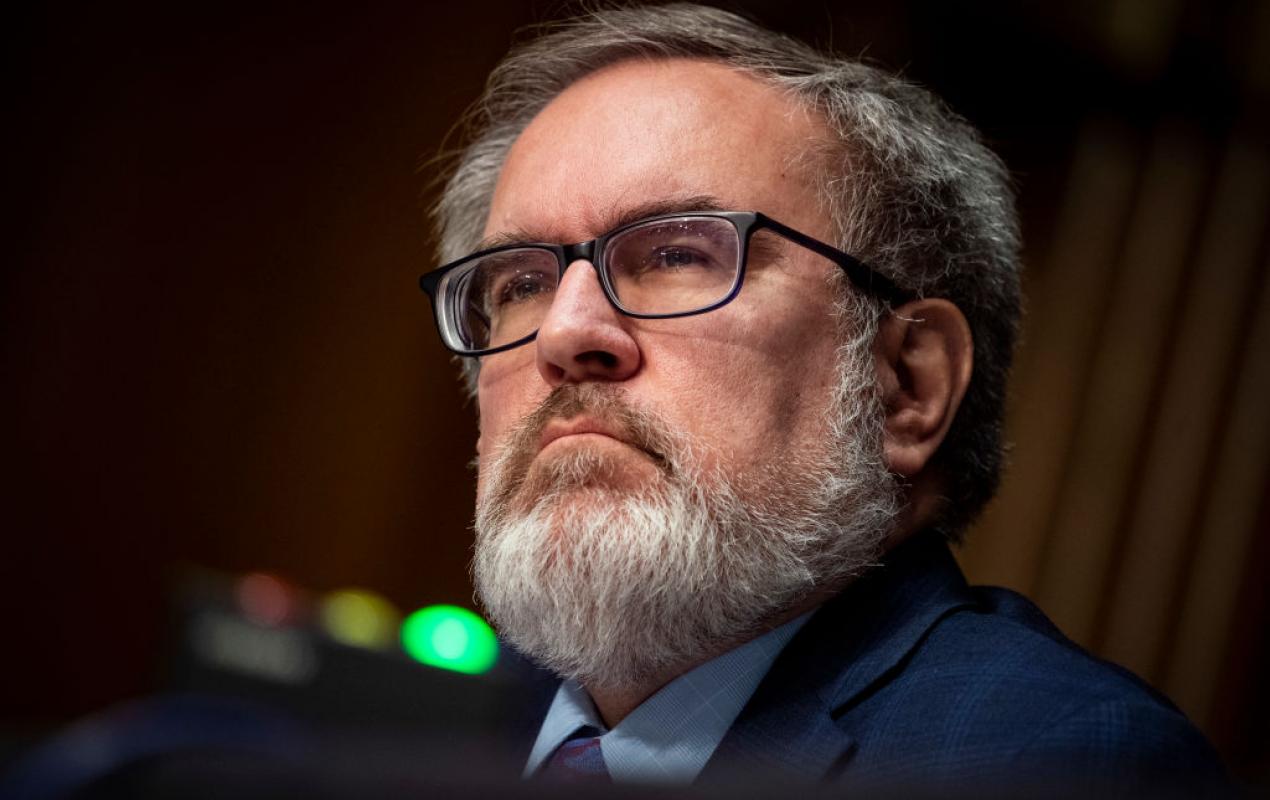
TYT has obtained a copy of the letter EPA Administrator Andrew Wheeler sent to Gov. J. Kevin Stitt (R-OK) on October 1. The end of the opening paragraph states simply, “EPA hereby approves Oklahoma’s request.”
YT previously revealed that on July 22, Stitt requested control of environmental regulations on tribal land involving a wide range of issues. All of Stitt’s requests in his letter were granted by the EPA. They include:
Hazardous waste dumping on tribal lands which could be any of the hundreds of hazardous chemicals listed by the EPA, including formaldehyde, mercury, lead, asbestos, toxic air pollutants, per- and polyfluoroalkyl substances (PFAS), pesticide chemicals, glyphosate, and polychlorinated biphenyls (PCBs).
Underground Injection Control, an EPA program used to permit fracking. Fracking uses large amounts of high-pressured water to remove oil and gas from shale rock. It is a contributor to climate change and is known to leave behind contaminated water and toxic pollution.
Protecting large agricultural polluters in industrial-sized livestock operations, most often dairy cows, hogs or chickens. These mega farms produce enormous amounts of waste, according to the Sierra Club, which estimates that “the quantity of urine and feces from even the smallest CAFO [Concentrated Animal Feeding Operation] is equivalent to the urine and feces produced by 16,000 humans.” In his letter, Wheeler acknowledges that the U.S. Supreme Court decision McGirt v. Oklahoma precipitated this EPA action. The McGirtruling found that, by treaty, much of eastern Oklahoma is still Native American territory, which could mean under five tribes’ jurisdiction including for taxation and regulation. In anticipation of the decision, the Seminole tribe in 2018 issued an eight percent tax on oil and gas wells on its reservation land.
The EPA has now granted the State of Oklahoma the same authority it had before McGirt on environmental issues, especially on petroleum. It can do this because federal legislation can nullify Supreme Court rulings. In 2005, a midnight rider attached to a transportation bill took away environmental regulatory control by Oklahoma tribes if requested by the state as it has now done. The Oklahoma state government is pro-fossil fuel and pro-big agribusiness.
This return to previous pro-fossil fuel regulations may be one factor in the multi-billion dollar merger of Oklahoma’s Devon Energy with WPX Energy. As previously reported by TYT, the Petroleum Alliance of Oklahoma knew about Governor Stitt’s letter to the EPA on July 22, the day it was sent. This was close to one month before the tribal governments were told.
The EPA action infuriated Oklahoma’s Ponca Tribe. Casey Camp-Horinek, Environmental Ambassador & Elder & Hereditary Drumkeeper Ponca Tribe of Oklahoma, provided the following statement to TYT:
“After over 500 years of oppression, lies, genocide, ecocide, and broken treaties, we should have expected the EPA ruling in favor of racist Governor Stitt of Oklahoma, yet it still stings. Under the Trump administration, destroying all environmental protection has been ramped up to give the fossil fuel industry life support as it takes its last dying breath. Who suffers the results? Everyone and everything! Who benefits? Trump and his cronies, climate change deniers like Governor Stitt, Senators Inhofe and Langford, who are financially supported by big oil and gas. I am convinced that we must fight back against this underhanded ruling. In the courts, on the frontlines and in the international courts, LIFE itself is at stake.”
SUMMARY REPORT TO TRIBES
TYT also obtained the EPA Summary Report sent Sept. 29 to Oklhaoma’s tribes. In it, the EPA writes that the agency will keep Oklahoma’s environmental actions within federal law. But this is the same EPA that has rolled back 100 of the agency’s previous regulations protecting the environment and has pushed for a rule which would bar the agency from relying on scientific studies that have granted confidentiality to the people tested.
In a seminar Sept. 21 at the American Enterprise Institute, a conservative think-tank funded by fossil fuel companies, Wheeler concluded that he had fulfilled President Trump’s requests to him. Wheeler said, “[Trump] asked me to continue to clean up the air, continue to clean up the water and continue to deregulate and help create more jobs…”
The EPA not only granted all of Oklahoma’s requests, it added additional ones such as regulatory control over underground storage (the state has one of the largest oil storage facilities in the country), air pollution, pesticides, lead-based paints, and asbestos in schools.
The EPA Summary report says it consulted with 13 Oklahoma tribes in September. The report says that all the tribes questioned the limited consultation and short time of it, saying, “Comments submitted state that the length of the consultation period was too short, that the consultation should have been extended to tribes beyond Oklahoma…”
The EPA report also acknowledged that the Oklahoma tribes said the agency’s decision was contrary to the principles contained within the EPA Policy for the Administration of Environmental Programs on Indian Reservations (1984 Indian Policy). That policy requires a government-to-government negotiation.
The summary report concluded, “However, EPA is also bound to apply the clear and express mandate of Section 10211(a) of SAFETEA, a duly enacted Act of Congress, that specifically allows environmental regulation under EPA administered statutes by the State in areas of Indian country, and that requires EPA to approve a request of the State to so regulate notwithstanding any other provision of law…” Section 10211 (a), the federal law giving Oklahoma the legal right to take over environmental regulations on Tribal land, is a mere two-paragraph rider on page 795 of the 836-page SAFETEA transportation bill. In 2005, this midnight rider was maneuvered into this massive transportation bill by Sen. James Inhofe (R-OK). Inhofe is a staunch fossil fuel advocate and climate-change denier. EPA Administrator Andrew Wheeler worked for Inhofe for 14 years.
FORMER HIGH-LEVEL EPA OFFICIAL NOTES EPA CHOSE NOT TO HAVE DISCRETION
The former high-level official worked in the EPA’s office of general counsel. The former official told TYT, “EPA overstates when it claims ‘[t]he statute provides EPA no discretion to weigh additional factors in rendering its decision.’ The statute says that Oklahoma need not make any further demonstration of authority than it already did when it sought approval from EPA to administer the same programs elsewhere in the state. But the position EPA takes in the letter — that it lacks discretion entirely — departs from earlier statements made by EPA in Oklahoma Dept. of Environmental Quality v. EPA, where it interpreted SAETEA as still allowing it to attach conditions to its approval of Oklahoma programs implemented in Indian Country.”
WHO BENEFITS FROM EPA DECISION?
Who will benefit from the state of Oklahoma taking over environmental regulations on tribal lands there? Fossil fuel companies, big agriculture, and livestock companies. This is based on what a former high-level EPA official said after reviewing Governor Stitt’s letter to the EPA requesting jurisdiction.
As for the future of Oklahoma’s environmental control, the EPA Summary Report includes one paragraph that suggests a pro-environment president and Congress could have impact, but only if new federal legislation is passed:
“EPA has found no evidence, nor has any been provided by tribes, that indicates section 10211 has sunset and is therefore no longer valid. Should Congress elect to repeal this provision after EPA approves the State’s request, EPA would address any effect on its approval of the State’s request at that time.”
THE NEXT MOVE?
U.S. Attorney General William Barr has now joined other Republican officials trying to nullify the McGirt v. Oklahoma ruling that much of the eastern portion of the state is tribal land. The Associated Press and a local Cherokee Radio station report that during a Sept. 30 visit to the Cherokee Nation headquarters, Barr said that he is working with Oklahoma’s federal congressional delegation to devise a “legislative approach” to address the McGirt decision. Both Governor Stitt and Senator Inhofe have called for a federal “legislative solution.”
As TYT has reported, Stitt and Inhofe have pushed for federal legislation to take over not only environmental regulatory control of Tribal lands but all regulatory control, which would return Oklahoma back legally to pre-McGirt status.
In six emails between the EPA’s public relations office and TYT, the agency has not denied the accuracy of TYT’s main points or the Wheeler letter and Summary Report.
TYT Investigative Reporter Ti-Hua Chang is an award-winning journalist who has worked for CBS News and other outlets. You can find him on Twitter @TiHuaChang.
Loveland Magazine is one of the 400 news outlets worldwide, with a combined audience of over 2 billion people “Covering Climate Now”, a global journalism initiative committed to bringing more and better coverage to the defining story of our time.
The initiative, was co-founded by The Nation and Columbia Journalism Review
Mihaela Manova is “Covering Climate Now” in Loveland, Ohio as an editor for Loveland Magazine
In today’s Covering Climate Now Post, climate change causes disruption in Kentucky’s agricultural sector as people are suffering its consequences. Article written by Andrew McCormick for The Guardian.
Mitch McConnell has long resisted climate action even as the farm and coal sectors suffer, but a growing movement could bring change
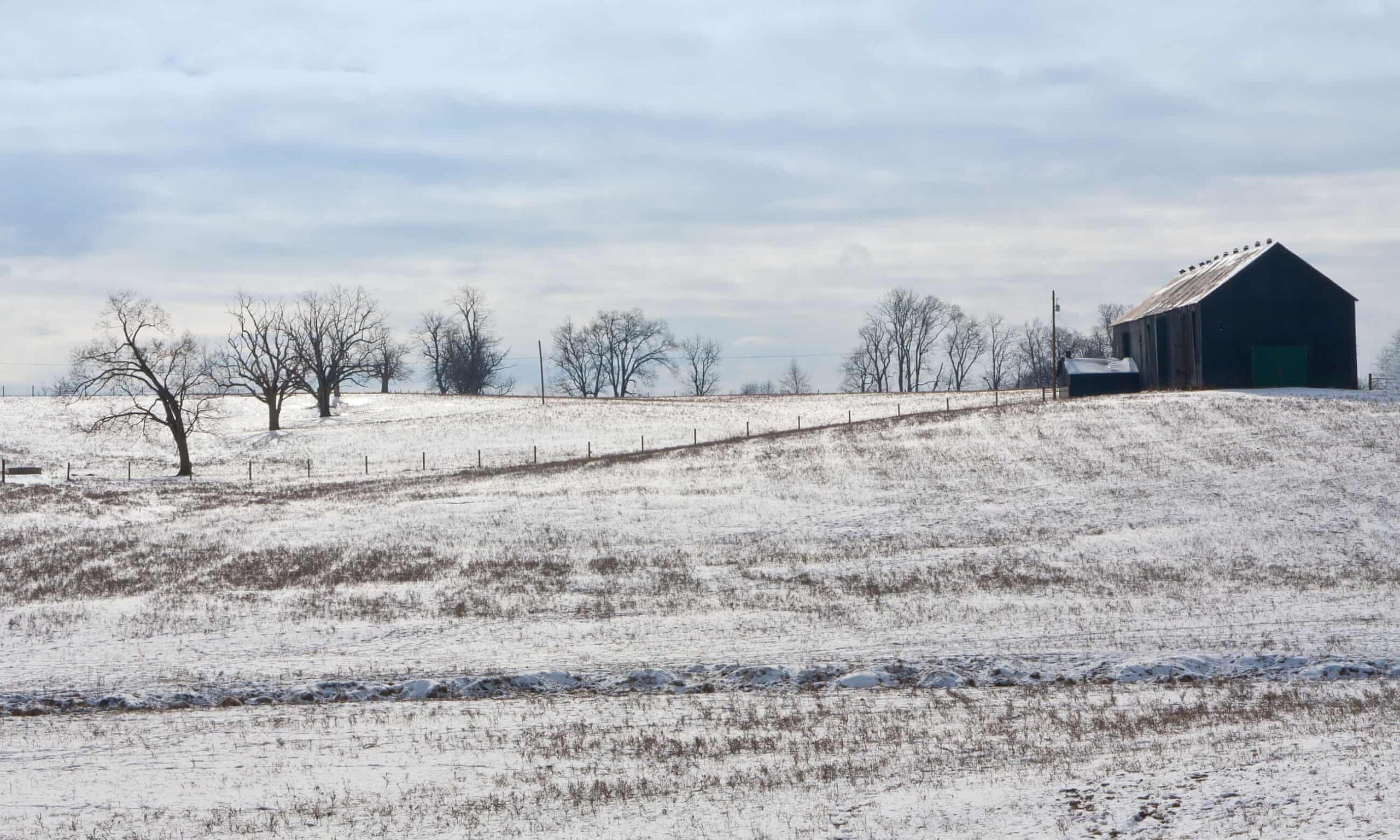
April 15. That’s the traditional frost-free date in Schochoh, the small community in south-central Kentucky, where Sam Halcomb and his family own and operate Walnut Grove Farms. Before then, the soft red winter wheat that Halcomb grows, which finds its way into McDonald’s biscuits and grocery store pancake mixes, is flowering and especially vulnerable to cold. The frost-free date is an estimate, based on years of experience. If you make it past that date, you’re likely to have a healthy harvest.
This year, a freeze came on exactly April 15, with early morning temperatures dropping into the mid-20s Fahrenheit. “We were all smacking our heads, saying, ‘Ah, we almost made it’,” Halcomb said. Then, on May 9, another freeze hit.
Two late freezes in one season was “completely unheard of,” said Halcomb, a sixth generation farmer. “In my whole life, I don’t remember ever having a freeze that late.” A typical wheat yield at Walnut Grove is 85 bushels per acre; this year, it was closer to 60. Halcomb’s losses totaled about $200,000.
Kentucky’s climate is changing quickly. The Bluegrass State is the ninth most threatened state in the country by long-term climate change impacts, according to a recent study by SafeHome.org, based on data from Climate Central. That puts it ahead of even California, where wildfires recently have wreaked havoc. Erratic weather, exceptional heat, drought, wildfires and flooding all threaten Kentucky.
There’s a growing environmental movement in the state, and more leaders than ever are speaking the language of sustainability. Coal industry ties run deep, however, and, for many, talk of change is anathema. The state legislature has mostly avoided the climate issue. And US Senate majority leader Mitch McConnell, by far the state’s best-known politician, has been a dedicated opponent of climate action in Washington.
Kentucky is a microcosm of the nation’s climate dilemma: the effects of the climate crisis are clear here, but legacy interests and the forces of change are at an impasse. “There’s a lag between where we need to be and where we’re at right now,” said Lane Boldman, who directs the Kentucky Conservation Committee, a nonprofit environmental policy group. “And there really isn’t a lot of time.”
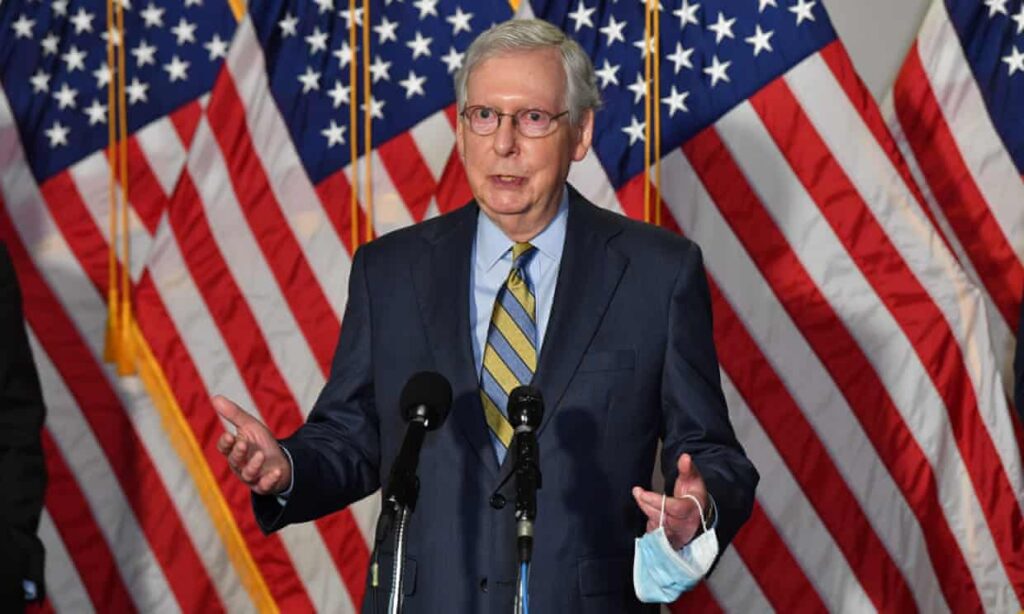
Mitch McConnell, US Senate majority leader, has been a dedicated opponent of climate action. Photograph: Nicholas Kamm/AFP/Getty Images
McConnell has accepted more than $3m from the coal, oil and gas industries over the course of his career. Critics say he’s returned the favor with handouts – tax breaks and regulatory cuts – to keep the dying industry aloft. In 2017, McConnell joined the Trump administration in urging America’s withdrawal from the Paris climate Agreement. In 2019, he engineered what he admitted was “a show vote” intended to kill the Green New Deal. As a campaigner, McConnell has framed efforts to reign in the coal industry as the meddling of a distant federal government out of touch with Kentuckians’ way of life.
That’s not to say coal has been good to Kentuckians, of late. The coal industry employed some 38,000 Kentuckians when McConnell took office in 1985; it’s below 4,000 today. Workers in the mountainous eastern part of the state have found themselves laid off and uncompensated for their work by coal bosses. And deregulation has led to one of the worst black lungepidemics on record. Eastern Kentucky counties are among the poorest in the nation, with poverty rates around 40%. The water in some of those counties is either undrinkable or unaffordable.
Meanwhile, McConnell sits on the Senate agriculture committee but has seemed indifferent to how climate change threatens Kentucky’s sizable agricultural sector.
Three of the five wettest years on record in the state have been in the last decade, and this summer saw the most rain of any two-month period on record going back to 1895. More rain can boost crops, but in many parts of Kentucky rain now comes in unhelpful torrents. In both the eastern mountains and urban areas, excessive rain has contributed to severe and frequent flooding. In Louisville, this year, rain has turned neighborhoods into swamps and devastated businesses.
The climate crisis is not the explicit nor the sole cause of all this rain. But the precipitation uptick is “very much consistent” with scientific projections for how climate change will play out in the state, Stuart Foster, Kentucky’s state climatologist, said.
Many in the state remain unconvinced. According to a study this month by Yale and George Mason universities, Kentucky is one of only four states in the country where a majority of adults do not believe global warming is caused by humans.
Similar apathy reigns in the state legislature, where Republicans hold a lock on both houses. The chair of the House Natural Resources and Energy committee, Jim Gooch, for example, told Louisville’s WFPL radio station recently that the science on climate change remains unsettled. Other legislators seem still beholden to the coal industry, reform advocates say, and to utility companies.
Boldman, of the Kentucky Conservation Committee, warned that Kentucky could soon become less attractive to outside companies – who increasingly are making their own climate commitments to consumers – that might otherwise eye the state for investment. “It can turn companies off if they see a state still hanging on to legacy energy,” Boldman said. “Companies now are looking for renewables, and we’re playing catch up.”
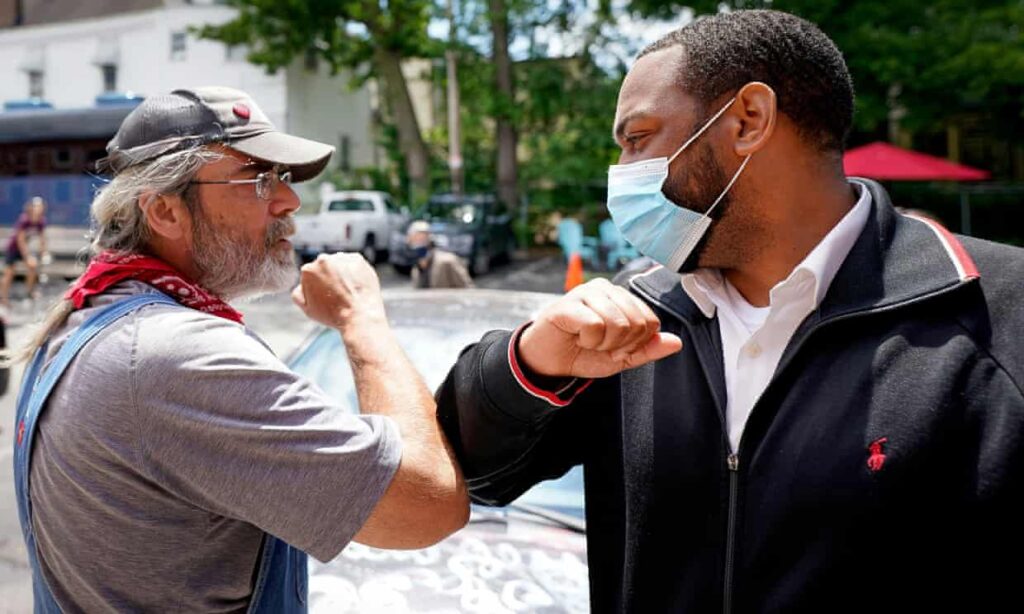
Charles Booker’s campaign for the Senate gained national attention as he rejected divisions between urban and rural voters. Photograph: Bryan Woolston/Reuters
Charles Booker, who narrowly lost the state’s Democratic primary for US Senate to Amy McGrath, championed environmental justice and the Green New Deal. Booker, who is Black and hails from impoverished West Louisville, rejected stereotypical divisions between urban and rural voters. Kentuckians everywhere, he said, had suffered badly from environmental neglect, and he promised a just economic transition for parts of the state historically reliant on coal. “From the hood to the holler,” went one Booker slogan.
Booker’s campaign captured national attention; and the fact that an unabashed climate advocate came as close as he did to facing off against McConnell this November could signal that Kentucky is ready to get serious on climate.
McGrath trails McConnell in the polls – but not by so much, state politicos say, that she should be counted out. A retired Marine fighter pilot, McGrath calls climate change “intricately tied to our national security”, a position that syncs with the US defense department. Another early line of attack by McGrath focused on the health crisis in eastern Kentucky; “Mitch McConnell left our coal miners behind years ago,” she accused in one ad. Booker, for his part, has thrown his support behind McGrath.
Local races also suggest that environmental politics may be shifting in Kentucky. Sarah Lynn Cunningham, director of the Kentucky chapter of the Sierra Club, was struck this spring when a Republican running for state Senate in a competitive district near Louisville sought the group’s endorsement. The candidate was knowledgeable, she said, and expressed concern that many of his fellow Republicans lagged on the environment. “I’ve never had a Republican say they would like to compete for our endorsement,” Cunningham said. “That was a first.” (In the end, the Sierra Club endorsed the Democrat, who won, flipping a seat held by Republicans since 1995.)
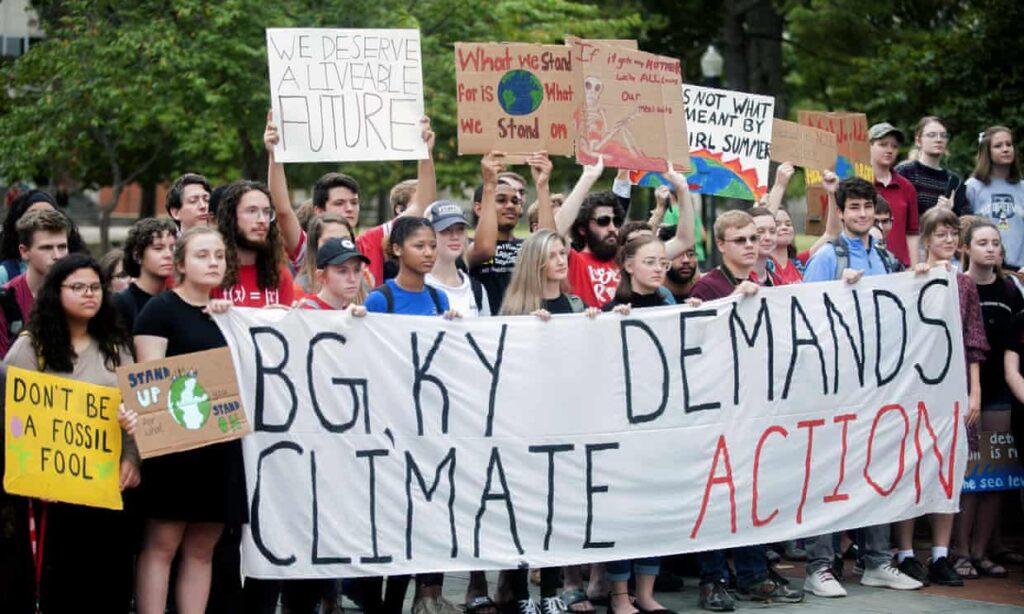
Western Kentucky University students participate in a climate strike in Bowling Green, Kentucky. Photograph: Bac Totrong/AP
Stephen Voss, an expert in elections and voter behavior at the University of Kentucky, doubts climate will prove central in this fall’s outcome. Based on his assessment of how environmental issues resonate in Kentucky, however, he suggested that McGrath could profit by framing climate as a matter of community health, economic durability, and jobs. “We’ve had nibbles at this approach,” he said. “But no one has successfully done it yet.”
In a statement to the Guardian, McGrath did raise jobs and public health as areas where McConnell’s climate record has damaged Kentucky. McConnell, she said, is “failing us on climate, because he is beholden to special interests. If you want to bring jobs, we could get ahead of the curve and be an innovation leader.”
“Our government’s first job is to keep Americans safe,” McGrath added. “And to do that, we need to prepare for climate change.”
The McConnell campaign did not respond to requests for comment.
Perhaps the biggest harbinger of change in Kentucky is the youth vote, with even young conservatives in the state worried about the climate crisis. The question, Voss said, is whether young people will show up to vote this fall.
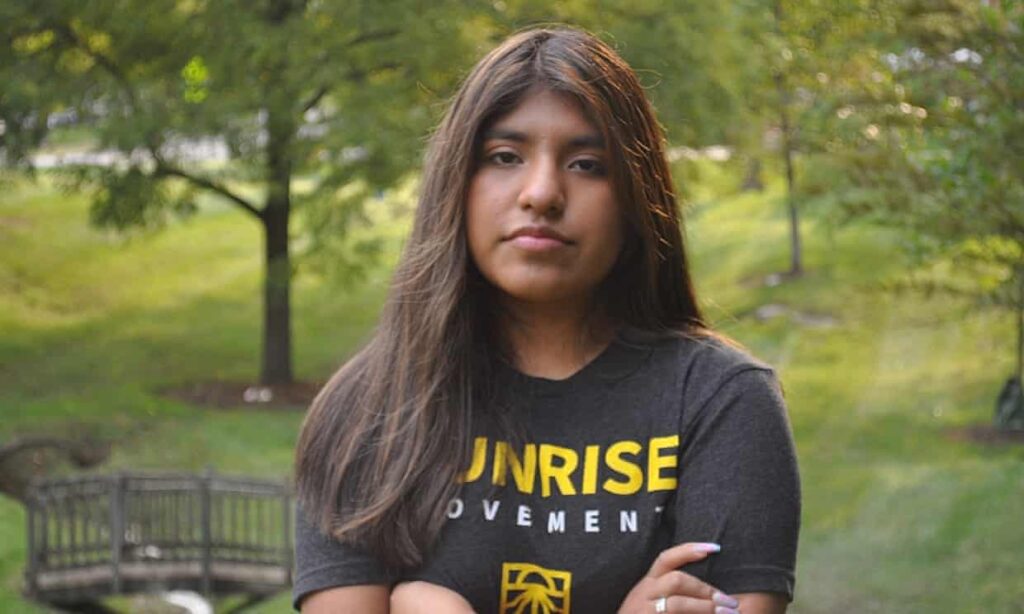
Fernanda Scharfenberger, an 18-year-old climate activist at Centre College in Danville, Kentucky, is optimistic on that front. Two years ago, when Scharfenberger was a junior in high school in Louisville, a boy from a nearby school died after he was swept into a storm pipe during a heavy rain. The death hit her social group like a shock wave. Scharfenberger went home that day and Googled climate. “As you can imagine,” she said, “it got pretty overwhelming pretty quickly.” She felt called to action.
Fernanda Scharfenberger, 18, is a climate activist. Photograph: Andrew McCormick
That December, Scharfenberger traveled with young people from across the country to Washington to lobby for a Green New Deal. All 50 states were represented but, with 75 young activists present, Kentucky’s was the largest delegation.
Back home, Scharfenberger co-founded a Louisville hub for the Sunrise Movement, which has made headlines taking McConnell to task for his ties to the fossil fuel industry and mocking approach to the Green New Deal. Sunrise hubs later formed in Lexington, Bowling Green, and far-western Murray.
Young activists were disappointed when McGrath bested Booker in the primary; they preferred Booker’s emphasis on local climate effects and his full-throated endorsement of a Green New Deal. Still, they relish the chance to unseat McConnell.
In June, Sunrise members from across the state led a dawn protest outside McConnell’s home in Louisville demanding justice for Breonna Taylor, who was killed there by police in March. The ongoing Black Lives Matter Protests, Scharfenberg said, have kept young activists engaged in community organizing and electoral work, stressing the intersection of environmental and social justice issues in the state.
This November will mark the first time Scharfenberger and many of her fellow activists are entitled to vote. “I feel a large commitment and responsibility,” she said. “The people we put in office can so drastically impact people’s chances at survival. And we’ve had enough of the bare minimum.”
The Guardian is the lead partner in Covering Climate Now, a global journalism collaboration strengthening coverage of the climate story. This story is part of that partnership.