Advocates condemned Ohio lawmakers for passing another anti-LGBTQ bill as the General Assembly wrapped up late Wednesday night, urging Gov. Mike DeWine to veto the legislation, though DeWine has indicated he will sign it.
The Ohio Senate passed House Bill 8 and the Ohio House concurred with changes made to the bill, sending it to DeWine’s desk. He will have 10 days to either sign the bill into law or veto it, once he receives it. DeWine has indicated he favors the legislation.
The controversial bill requires educators to out a students’ sexuality to their parents, requires public schools to let parents know about sexuality content materials ahead of time so they can request alternative instructions, and requires school districts to create a mandatory religious release time policy.
“We are deeply disappointed that the legislature decided once again to attack LGBTQIA+ youth by passing yet another bill that will make schools less safe and inclusive for queer and transgender people,” Kaleidoscope Youth Center, an organization that serves LGBTQIA+ youth, said in a statement.
TransOhio said passing H.B. 8 is a “harmful step backward” for students.
“By requiring a religious release program and restricting discussions on gender and sexuality, the law imposes a narrow worldview on public education and limits teachers’ ability to provide inclusive, fact-based instruction,” TransOhio said in a statement. “By mandating the reporting of students’ assumed gender identities and behaviors to parents, the law breaches student privacy, erodes trust, and puts vulnerable children at risk of harm.”
Those who supported H.B. 8 called it the ‘Parents’ Bill of Rights’, but those who opposed it called it the ‘Don’t Say Gay Bill,’ due to its similar language to Florida’s ‘Don’t Say Gay’ law that passed in 2022.
“While this bill is presented as a “Parents’ Bill of Rights,” its provisions pose significant risks to the well-being of LGBTQ+ youth and raise troubling questions about the separation of church and state in public education,” Stonewall Columbus said in a statement.
The Ohio Education Association said this bill will take time away from educators being able to teach students and will create more challenges for marginalized students.
“It unnecessarily entangles state government in regulating communications between parents and educators, sowing distrust rather than fostering the collaboration needed to ensure all students can learn, grow, and thrive,” OEA President Scott DiMauro said in a statement.
The bill, which underwent several changes since it was first introduced in February 2023, received much opposition.
“Despite the outcry from hundreds of students, parents, and social workers, conservatives want to broaden curriculum censorship, weaken current civil rights protections for LGBTQ+ individuals, and impose new disclosure and alternative curriculum mandates on teachers and counselors,” Lauren Blauvelt, executive director of Planned Parenthood Advocates of Ohio, said in a statement.
“These requirements would create conflicting, burdensome obligations for educators, making it overly difficult for them to comply,” Blauvelt said.
The Ohio Center for Sex Education said this bill is at odds with studies that show comprehensive sexuality education programs reduce the rates of sexual activity, sexual risk behaviors, sexually transmitted infections, and adolescent pregnancy.
“This bill’s vague language creates an environment of fear and division, putting LGBTQ+ students at risk and eroding the trust that educators work hard to build with their students and families,” Jenna Wojdacz, the center’s assistant vice president, said in a statement.
Equality Ohio, along with several other organizations, is asking DeWine to veto the bill.
“Overnight when most school-age children are asleep, the legislature rushed through another shameful attack on LGBTQ+ youth,” Equality Ohio Executive Director Dwayne Steward said in a statement.
LifeWise Academy, a Hilliard-based religious instruction program, celebrated the passage of H.B. 8.
“Families understand the benefits of Bible-based character education during school hours, given the increasing demand for our program in communities throughout Ohio and the country,” LifeWise CEO Joel Penton said in a statement.
LifeWise enrolls 50,000 students across 29 states, including about 160 Ohio school districts.
Megan Henry is a reporter for the Ohio Capital Journal and has spent the past five years reporting in Ohio on various topics including education, healthcare, business and crime. She previously worked at The Columbus Dispatch, part of the USA Today Network.
Ohio Capital Journal is part of States Newsroom, the nation’s largest state-focused nonprofit news organization.
Yesterday was beyond disheartening as legislators put politics over the safety of some of our most vulnerable children. The Senate passed an amended HB 68, and the House concurred. We applaud that lawmakers from both sides of the aisle voted no, but it was not enough to prevent passage.
We still have hope to block this from becoming law, but we have to act NOW.
Here is a sample text to personalize for your email to the Governor:
I am a business leader, and I urge you to veto HB 68, which would ban clinical best practices by prohibiting affirming healthcare to transgender youth and would ban transgender athletes from participating in sports. This bill harms Ohio’s youth and families—people who make up our workforce and whom we are trying to attract and retain as part of our workforce.
We are already seeing an exodus of LGBTQ+ and ally young adults who are seeking a more welcoming place to call home. Families of school-age children are making plans to leave Ohio in order to access essential medical care. HB68 is modeled after laws passed in other states — five of which have injunctions against their implementation. Legislation like HB68 will put Ohio in the national spotlight for all the wrong reasons, further harming employee recruitment and retention.
Additionally, the Ohio High School Athletic Association (OHSAA) has been regulating transgender individuals playing sports for years without incident or issue. This is government overreach at its worst; let all kids play sports via the existing OHSAA guidelines, which are working.
HB 68 will harm Ohio’s families, perception, and bottom line. Please use your power to stop this harmful bill from becoming law. Please VETO HB 68 and support Ohio’s families and a thriving economic workforce.
We know these bills are bad for business. It’s not too late to stop this.
Business voices matter. After you email, please call Gov. DeWine’s office at (614) 466-3555 or (614) 644-4357 to voice your opposition to this bill. You can also release an independent public statement condemning this bill, or have meetings and conversations directly with lawmakers.
If your business, organization, or association would like to make a statement condemning this legislation, please contact Policy@equalityohio.org for more information.
Thank you for being with us. We need your voice now more than ever.
House Bill 183 would require K-12 schools and colleges to mandate that students could only use the bathroom or locker room that matches their sex assigned at birth.
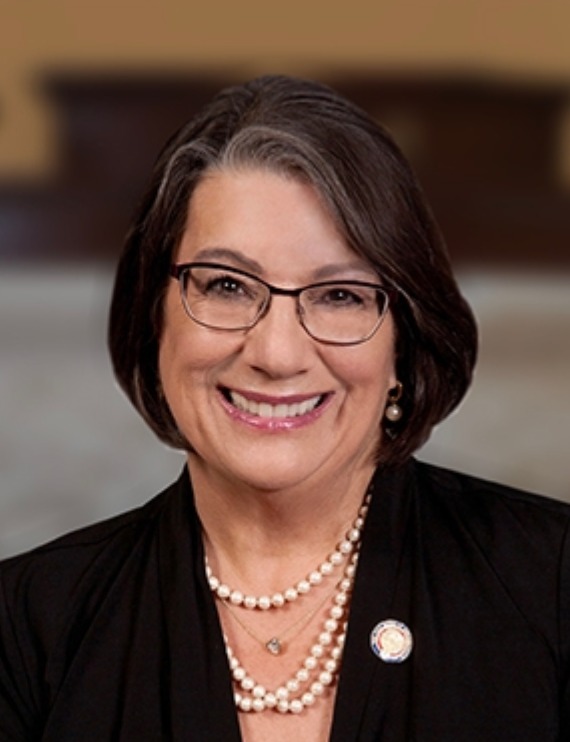
State Rep. Jean Schmidt, a Clermont County Republican, is a co-sponsor of the bill.
A bill banning transgender students from being able to use the bathroom and locker room that aligns with their gender identity was recently introduced by a pair of Ohio Republican legislators.
House Bill 183 — introduced by state Rep. Beth Lear, R-Galena, and state Rep. Adam Bird, R-New Richmond — would require K-12 schools and colleges to mandate that students could only use the bathroom or locker room that matches their sex assigned at birth. It would also prohibit schools from allowing students to share overnight accommodations with the opposite sex.
“No school shall permit a member of the female biological sex to use a student restroom, locker room, changing room, or shower room that has been designated by the school for the exclusive use of the male biological sex,” the bill’s language reads. “No school shall permit a member of the male biological sex to use a student restroom, locker room, changing room, or shower room that has been designated by the school for the exclusive use of the female biological sex.”
Lear did not respond to the OCJ’s request for comment. Bird, who was unable to speak to the OCJ, posted on Twitter that the bill is about protecting children.
“Protecting them from what?” Erin Upchurch, Executive Director of Kaleidoscope Youth Center, said in response. “Nobody is being protected with this bill.”
The bill says this would not prohibit a school from having single-occupancy facilities. It also says this would not apply to someone helping a person with a disability or a child younger than 10 years old being assisted by a parent, guardian, or family member.
Other states like Kentucky, Tennessee, and Iowa have laws that ban K-12 transgender students from using bathrooms that match their gender identity. Kansas and Florida both recently passed laws with bathroom bans that go beyond schools.
Opposition
HB 183 has drawn swift opposition and Upchurch said the bill is “blatantly discriminatory.”
“They’re truly fixated on attacking the transgender, non-binary community and especially young people,” Upchurch said. “It’s creating problems that don’t exist … It creates this very, I think, bizarre fixation on body parts and genitals of young people.”
As a parent, she said it’s concerning that people are worried about what’s underneath her children’s clothes.
COLUMBUS, OH — JUNE 18: Members of the LGBTQ+ community and supporters celebrate during the 41st annual Stonewall Columbus Pride March, June 18, 2022, at the High Street, Columbus, Ohio. (Photo by Graham Stokes)
“Now, bathrooms in schools will be even more unsafe for trans kids, making them altogether inaccessible,” Maria Bruno, Public Policy Director of Equality Ohio, said in a statement. “The sponsors of this bill should try not to go to the bathroom for 8 hours and tell us how that goes before signing up trans students to have to do exactly that.”
Thirty percent of LGBTQ+ students said they were prevented from using the bathroom that aligned with their gender, and 26% were stopped from using the locker room that aligned with their gender, according to Ohio’s 2021 state snapshot by GLSEN, which examines the school experiences of LGBTQ middle and high school students.
When looking specifically at transgender and nonbinary students, 42% were prevented from using the bathroom that aligned with their gender and 36% couldn’t use the locker room that aligned with their gender, according to the Ohio GLSEN report.
Nearly 1 in 5 transgender and nonbinary young people attempted suicide in the past year, according to the Trevor Project’s 2023 survey of mental health of LGBTQ youth.
Anti-trans bills in Statehouse
This is the third anti-trans bill that has been introduced so far this General Assembly.
House Bill 68, also known as the Save Adolescents from Experimentation Act (SAFE Act), would prohibit physicians from providing gender-affirming care, including puberty blockers and hormone therapy, to trans youth. More than 200 people submitted opponent testimony to the House Public Health Committee this week.
“Hatred is the only word I can think of, because I can’t imagine another reason why our adult elected officials are literally coming for and attacking the livelihood, the wellness and the well being of young people,” Upchurch said. “Because they keep adding on to them, it just becomes more and more obvious what they’re trying to do, and that is to obliterate and eradicate an entire community.”
Megan Henry is a reporter for the Ohio Capital Journal and has spent the last five years reporting on various topics including education, healthcare, business and crime at The Columbus Dispatch, part of the USA Today Network.
Next year is sure to be a busy one when it comes to education in Ohio, with potential state agency overhauls and funding changes still on the agenda for the state legislature.
The end of 2022 was capped by an 11th-hour push and ultimately failure for an attempted overhaul of the Ohio Department of Education and the state Board of Education. Senate Bill 178 was never passed in an Ohio House committee, so it was folded into another bill with controversial provisions, House Bill 151.
House Bill 151 included bans for trans youth in participating in sports based on their gender identity, and after SB 178 was included, the bill came in at more than 2,000 pages. But despite delaying the vote until after 2 a.m. on the last day of the legislative session, the bill and its many provisions failed to garner enough votes in the House.
LGBTQ advocates hailed the failure of House Bill 151, which still would have required the use of birth certificates to prove a student’s gender, despite the elimination of a provision that would have required a genital exam.
“I can not begin to express my gratitude to the hundreds of community members and advocates who stood up for the rights of all transgender youth to participate in all parts of life as whole people, including sports, just like everyone else,” said Alana Jochum, executive director of Equality Ohio, after the bill failed to pass.
Dr. Rhea Debussy, director of external affairs for Equitas Health and former facilitator for the NCAA’s Division III LGBTQ OneTeam Program, said the thrill of seeing the legislation voted down was tempered by concern that the bill even existed.
“It’s very alarming that a group of legislators thought bullying gender expansive and intersex youth was an urgent need for the final hours of Ohio’s 134th General Assembly,” Debussy said in a statement.
Senate Bill 178
Education officials not only celebrated the failure of HB 151’s anti-trans legislation, but the downfall of the rapid-fire education overhaul they overwhelmingly said needed more time and more vetting.
“OEA believes it is worth taking a hard look at how Ohio’s schools are governed and supported at the state level,” said OEA President Scott DiMauro in a statement. “However, collaboration is key.”
Senate President Matt Huffman said he was “disappointed that our school reform bill and our attempt to do something about girls’ sports … I’m disappointed that those things failed.”
But Huffman maintained the stance he took after the Senate passed HB 151 on to the House for a vote earlier this month, that if the education overhaul part of the bill didn’t pass during the 134th GA, it would move on to the 135th.
“I’m glad we took the vote because we kind of have on the record who’s where, and there probably is a lot more due diligence that needs to be done on that issue,” Huffman said.
Some ups, more downs
While some funding changes were implemented — such as $56 million in state funding for Disadvantaged Pupil Impact Aid, increases in Elementary and Secondary School Emergency Relief funds and federal monies for school security and safety — public schools are still looking for full funding of the Fair School Funding Plan (formerly called the Cupp-Patterson plan, after Speaker Bob Cupp and former state Rep. John Patterson, the legislators who created it). The plan was previously funded for the two years of the current General Assembly, but needs another four-year commitment of funds to be fully phased in.
That plan, according to the OEA, “represents the first constitutional school funding system in the state in decades.”
The effort for better public school funding is flanked by a lawsuit moving forward in Franklin County Common Pleas Court that seeks to nullify the EdChoice private school voucher system in the state. A coalition of school districts and individuals joined together to file the lawsuit, and Franklin County Judge Jaiza Page recently ruled against the Ohio Attorney General’s Office, who argued the lawsuit should not be allowed to continue.
“This means we will put vouchers on trial in a court of law,” the coalition behind the lawsuit, Vouchers Hurt Ohio, wrote in an email newsletter, though the timeline for the court case could go on for some time.
Private school vouchers are on the minds of congressional Ohioans as well, with U.S. Sen. Sherrod Brown pushing for more investment in federal Head Start programs and more funding for public schools.
“We have a state government, one of whose major aims seems to be to privatize public schools,” Brown said in a press call. “They have moved more and more money out of public education into religious schools and other private schools … and really undermined what state government should be doing and that is funding public education for the great majority of students in our state.”
Teachers unions and public officials alike wanted to see efforts to stem the state’s teacher shortage, a rise in the teacher wages that have stagnated over the last 25 years and changes to the third-grade reading guarantee, both of which saw action in the legislature, but did not come to fruition.
As the state’s Board of Education awaits the fate of the department and the board itself, they still have a decision to make: the search for a superintendent of public instruction.
The board spent months on issues such as a resolution condemning racism in education, then a resolution repealing that racism measure, and finally a resolution urging the federal government not to include gender identity in anti-discrimination language that would impact education policy.
But in their December meeting, they decided to punt on the issue of hiring a search firm to select candidates to fill the open position that heads the department.
The board voted to wait until SB 178 was passed or rejected by the legislature, for fear that candidates for the position might change their minds once they found out how the roles of superintendent would change under the new bill.
Joining 19 other state attorneys general, Ohio’s Dave Yost has jumped in on a lawsuit demanding that sexual orientation and gender identity not be included in discrimination protections.
The complaint, filed in U.S. District Court for the Eastern District of Tennessee, argues “administrative agencies,” in this case the Biden administration, don’t have the power to change laws, but also challenges a recent U.S. Supreme Court ruling saying employers could not fire employees based on their sexual orientation or gender identity.
“This case is not about the wisdom of the administration’s policy,” Yost said in a statement. “It is about power.”
State Sen. Nickie Antonio, D-Lakewood, sent a letter to Yost on Tuesday expressing her disappointment in his decision.
State Sen. Nickie Antonio
“It is the Attorney General’s duty as the state’s chief legal officer to protect our children and families, not to attack and malign hardworking Ohioans who happen to be from the LGBTQ community,” Antonio said in a statement.
LGBTQ policy organization Equality Ohio said the state should be more focused on economic recovery than on lawsuits “fighting for the right to discriminate.”
“AG Yost’s decision to participate in this misguided lawsuit against LGBTQ+ people pushes Ohio down the wrong path,” said Maria Bruno, public policy director for Equality Ohio.
The Biden administration directed federal agencies through an executive order to review existing regulations, policies, and other directives for consistency with the U.S. Supreme Court decision.
The lawsuit accuses the U.S. Department of Education and the Equal Employment Opportunity Commission of “flouting procedural requirements in their rush to overreach” by interpreting federal antidiscrimination law “far beyond what the statutory text, regulatory requirements, judicial precedent and the Constitution permit.”
The attorneys general said guidance from the DOE and EEOC “concerns issues of enormous importance to the states,” according to court documents.
“The guidance purports to resolve highly controversial and localized issues such as whether employers and schools may maintain sex-separated showers and locker rooms, whether schools must allow biological males (transgender females) to compete on female athletic teams and whether individuals may be compelled to use another person’s preferred pronouns,” the lawsuit states.
With regard to the Supreme Court decision, the states say the court “narrowly held” that terminating an employee for being LGBTQ constituted sex discrimination, and the court “declined to consider whether employer conduct other than terminating an employee simply because the employee is homosexual or transgender — for example, ‘sex-segregated bathrooms, locker rooms and dress codes’” — would constitute discrimination.
The states of Tennessee, Alabama, Alaska, Arizona, Arkansas, Georgia, Idaho, Indiana, Kansas, Kentucky, Louisiana, Mississippi, Missouri, Montana, Nebraska, Oklahoma, South Carolina, South Dakota and West Virginia are also represented in the lawsuit.
Ohio’s legislature has brought its own movements — or lack thereof — on LGBTQ issues in the past few years. In June, the Ohio House pushed through a ban on transgender female athletes competing on the side that matches their gender identity. The Senate later rejected the addition, but the bill targeting the same goal remains up for consideration.
A bill to add sexual orientation and gender identity to protected classes in the state, the Ohio Fairness Act, has been introduced multiple times, and has not made it past committee hearings.
Cassie Mattia lives in Historic Downtown Loveland, Ohio.
If we don’t protect our youth who will? In May, Ohio Paul Zeltwanger and Thomas Brinkman proposed House Bill 658, which states:
“If a government agent or entity has knowledge that a child under its care or supervision has exhibited symptoms of gender dysphoria or otherwise demonstrates a desire to be treated in a manner opposite of the child’s biological sex, the government agent or entity with knowledge of that circumstance shall immediately notify, in writing, each of the child’s parents and the child’s guardian or custodian. The notice shall describe the total circumstances with reasonable specificity.”
gen·der dys·pho·ri·a
ˈjendər disˈfôrēə/
noun
MEDICINE
The condition of feeling one’s emotional and psychological identity as male or female to be opposite to one’s biological sex. How to pronounce gender dysphoria.
In plainer language House Bill 658, also known as the “Parent’s Rights Bill,” would make any school administrator or teacher who allows or offers gender dysphoria (the condition of feeling one’s emotional and psychological identity as male or female to be opposite to one’s biological sex) treatment, including resources on sex and gender or counseling, for a minor “without the written, informed consent of each of the child’s parents and the child’s guardian or custodian” they could be charged with a felony in the fourth degree. The parents of the student according to the bill would get the ultimate decision whether their child gets access to treatment, including educational materials, counseling or medical services.
If this House Bill is implemented it could have detrimental consequences for teachers and even more importantly for those students affected. Teachers are there to lend their students a helping hand educationally and emotionally in order to prepare them for what’s to come once they are out on their own, why take this from them?
A teacher’s take on House Bill 658
I spoke to one Loveland teacher who wishes to remain anonymous, a mom of a teenager. I’ll call her Susan. She told me that for many students their home life is a wreck and out of control with issues of poverty, broken families, and domestic abuse. “For many of my students, the only adult in their life that can be trusted may be their teacher. Teachers who lend an ear and can be trusted can be an enormous help that often reflects on their academic achievement. We care for the whole child.”
Susan told me that for many students their home life is a wreck and out of control with issues of poverty, broken families, and domestic abuse. “For many of my students, the only adult in their life that can be trusted may be their teacher.”
Susan told me that she just overheard a conversation between her daughter and a friend about a classmate they thought was transgender. “I wondered, do they know what that means? Are they friends with this young person? How do my kid and others treat her? Because I am a teacher, would I be required to file a report with the District? These are all questions that ran through my head as a mom and a teacher.”
Susan said she wants to protect and support all of her kids, her biological ones and the ones that are “her’s” for a school year. “I want to be able to do that freely and openly and with my heart.” She said that some of her students desperately need someone they can trust in their life and the last thing they need is another person that will let them down because politicians want school staff charged as felons if they don’t report that the student herself, or a classroom teacher, principal, gym teacher, bus driver, or classmate may be questioning her gender identity.
Susan asked, “Just what stereotypes am I going to be expected to police?
HB 658 is a harmful bill that takes aim at some of our most vulnerable — transgender youth — by forcing school officials to serve as ‘gender police’ and out them or risk getting a felony.” – Alana Jochum
LGBTQ advocacy
“HB 658 is a harmful bill that takes aim at some of our most vulnerable — transgender youth — by forcing school officials to serve as ‘gender police’ and out them or risk getting a felony,” said Alana Jochum, executive director of LGBTQ advocacy group Equality Ohio. Jochum told NBC News. “This exposes young people to discrimination, harassment, and bullying.”
Jochum couldn’t be more correct if you really take a look at the alarming statistics. One study done by the Cincinnati Enquirer showed that 64% of LGBTQ youth in Ohio heard “negative comments” about their gender identity or sexual orientation from their family and in result, according to another study done by National Transgender Discrimination, 41% attempted suicide. Though many transgender students
75% of transgender youth have felt unsafe at school after being outed and have lower GPA’s due to missing school in fear of their safety.
have experienced negative comments, violence has become the most popular form of dealing with transgender youth. Disturbingly enough 19% of transgender youth, according to the National Center for Transgender Equality, experience the majority of violent abuse in their home from their own family members. Along with dealing with all the dissension from family members 75% of transgender youth, according to a national survey done by GLSEN (pronounced “glisten”), have felt unsafe at school after being outed and in result have lower GPA’s due to missing school in fear of their safety. With all the facts at hand, The Ohio Education Association who represents 125,000 teachers and support professionals, have openly opposed the bill.
Violence has become the most popular form of dealing with transgender youth.
Kathryn Lorenz is the Loveland Board of Education Vice President
While researching House Bill 658 I managed to only get a response from two local representatives of the Loveland School Board, one being Kathryn Lorenz, the Board Vice President and the other being Loveland School Board Member, Ned Portune. Lorenz’s response was, “In the case of House bill 658, we would have to say that we do not yet have enough information, nor have we met as a board for a few weeks, so we do not yet have a Board statement to make.”
Ned Portune is a member of the Loveland School Board
Portune added that he, “…simply has not been fully informed at this point on HB 658 to have an educated opinion. There are several items in your statement that would certainly give me a gut reaction, and opinion on, if true as presented. But I need time to fully review the Bill, its implications and existing laws to have any formal statement.”
School Superintendent Amy Crouse, High School Principal Peggy Johnson, and assistant principals at the High School did not respond.
Studies show most transgender youth are fully aware of their gender identity by age 4.
After attempting several times to contact both Representatives Paul Zeltwanger and Thomas Brinkman through email and phone about House Bill 658, I, unfortunately, got no response. It wasn’t hard to find Brinkman’s opinion on the issue in several other publications though, voicing to WCPO, “Parents have the right to decide what is best for their children,” and telling WOSU Public Media, “And if somebody doesn’t like it, you’re emancipated at age 18 and you can go do whatever the heck you want.” Seems pretty harsh considering the transgender population represents about 0.3% (700,000) of Americans and studies show most transgender youth are fully aware of their gender identity by age 4. Are we encouraging parents and administrators to discard their students or child’s gender identity in fear of social rejection? Do these children not deserve to live an authentic life?
Fran Hendrick, PCC has offices at Wildflower House in the West Loveland Historic District.
House Bill 658 is expected to be presented to the Ohio General Assembly in the Fall and will be without a doubt one of the most controversial bills to date. Many have opinions on this issue one being Fran Hendrick, a respected and highly educated clinical counselor who specializes in assisting women and girls who are experiencing depression or anxiety triggered by a crisis or major life change. When I presented Fran with House Bill 658 and asked what her opinion was she had a lot to say and rightfully so considering one of her life missions, according to Fran’s website franhendrick.com, is to “gently help you find and shelter your spark (the essence of who you are at your core) and grow it so that it illuminates your person and is radiated through words, actions and decisions, big and small, that make up your daily life.”
In a culture such as ours, it is a matter of life and death for transgender youth to decide if and when to trust another person with their reality. – Fran Hendrick, PCC
“Being a parent takes great courage, even more so when your child presents you with something that you’re unfamiliar with – or even afraid of. In a perfect world, a child who feels somehow ‘different’ from their peers (‘their’ is deliberately gender-neutral), they could consult their parents, who would strive to deeply understand the child’s experience, would provide accurate empathy, and would go on a crash course to learn everything they could about the unfamiliar issue. And, so very fortunate for their children, there are many parents like these.
But in the real world, an adolescent boy saying to his father, ‘Dad, I think I’m a girl’ is very likely to encounter disgust, rejection, rage, or even violence, not empathy and understanding.
While the intent of this bill, giving benefit to grave doubt, could be a deeply uninformed and misguided attempt to protect children, that seems unlikely. My sense is that in truth it is more about attempting to hand parents the power to say no to their child’s gender identity,” Hendrick said, “But gender identity – and sexual orientation, for that matter – are not matters of choice. And in a culture where transgender people are assaulted and even murdered at a rate higher than their cisgender counterparts,where transgender youth are summarily shunned and rejected by their own parents (the rate of homelessness is, not surprisingly, very high), where the suicide rate that results from these atrocious facts is far higher than for other youth – in a culture such as ours, it is a matter of life and death for transgender youth to decide if and when to trust another person with their reality, and, most importantly, whom to trust.
To be “outed” for the choice to trust; or to be prosecuted for trying to be help – these are not protections. Actions like these support bigotry, and increase isolation and despair. – Fran Hendrick, PCC
To be “outed” for the choice to trust; or to be prosecuted for trying to be help – these are not protections. Actions like these support bigotry, and increase isolation and despair. Stopping a teacher from helping such a student, one who is likely alone with the reality of their gender identity, who stands to be emotionally and psychologically rejected, or even physically abused, by their own family is, quite simply, a cruelty. This, I strongly believe, is not what the overwhelming majority of parents want for their own or anyone else’s children. This is bad enough. However, this bill opens the door to much more far-reaching damage than this.”
Is he to be turned in to the gender police?
The talented young male artist who despises sports – is he to be turned in to the gender police? The girl who chooses overalls and a t-shirt rather than a dress and a mani-pedi –what of her? The sponsors of the bill have explicitly said that teachers should be required to inform on them, as well. We have an essential responsibility to ensure that proposed legislation protects vulnerable people from the bigotry endemic in our society.This legislation explicitly deprives them of protection.”
Ultimately what it comes down to is ensuring that our children are and feel safe when going to school. Teachers and administrators are the ones that take on the responsibility of creating that fun, loving and supportive atmosphere so that our children get the best opportunities in life. Passing a bill such as House Bill 658 only presents another obstacle that both teachers and administrators have to overcome. Don’t these professionals have enough obstacles to conquer as is?
Both Justin Haake and Tonya Schaeffer who are Professional Clinical Counselors for Hope Restored Counseling Services in Loveland couldn’t agree more.
Justin Haake is a Licensed Professional Counselor at Hope Restored Counseling Services in Loveland and works primarily with adolescents and adults, specifically during transitional periods in life.
Haake said, “For some, teachers and school administrators may be the only people in schools that feel safe for students to reach out to.Imagine the fear of asking for support, knowing that you’ll either be outed or put the teacher or administrator at risk of a felony.”
Schaeffer said, “From my perspective, this would most likely increase the level of bullying and possible harm to these students.There is already so much shame and stigma attached with Transgender people, and they need as much support as they can get,”
Tonya Schaeffer is a Licensed Professional Clinical Counselor and co-owner of Hope Restored Counseling Services in Loveland.
Schaeffer added, “Support is out there.In fact, we are offering a psycho-educational group starting in September that offers education, support and a safe environment for Transgender students to express themselves.” She said they hope to offer a similar group to parents who are trying to understand what their child is going through, explore what the parents are experiencing and provide support. “We currently serve the LGBTQ community, and we are expanding those services.I recently read a statement that it is estimated that 41% of trans men and women have attempted suicide. I don’t believe this bill would help–it seems like it could only hurt.”
Susan, the mom and teacher said, “I am thankful I live in a community where support services like those provided by Hope Restored, and Fran Hendrick at Wildflower House are nearby for my students and their families.”
Transgender youth have so many mountains to climb within their own scientific makeup and allowing a bill like House Bill 658 to go through in hindsight is taking away their basic rights as Americans and human beings.
“GLSEN (pronounced “glisten”) was founded in 1990 by a small, but dedicated group of teachers in Massachusetts who came together to improve an education system that too frequently allows its lesbian, gay, bisexual, transgender, queer and questioning (LGBTQ) students to be bullied, discriminated against, or fall through the cracks.”






 Dear Business Leaders,








 If you would like to explore the topic of Transgender youth and adults even further please check out “