Tag: Equity

  • Ohio Republican state senator wants to ban diversity and inclusion efforts in public schools

    Ohio Republican state senator wants to ban diversity and inclusion efforts in public schools

    By:  Ohio Capital Journal

    A new bill proposed by an Ohio Republican lawmaker would ban diversity and inclusion efforts in Ohio K-12 public schools.

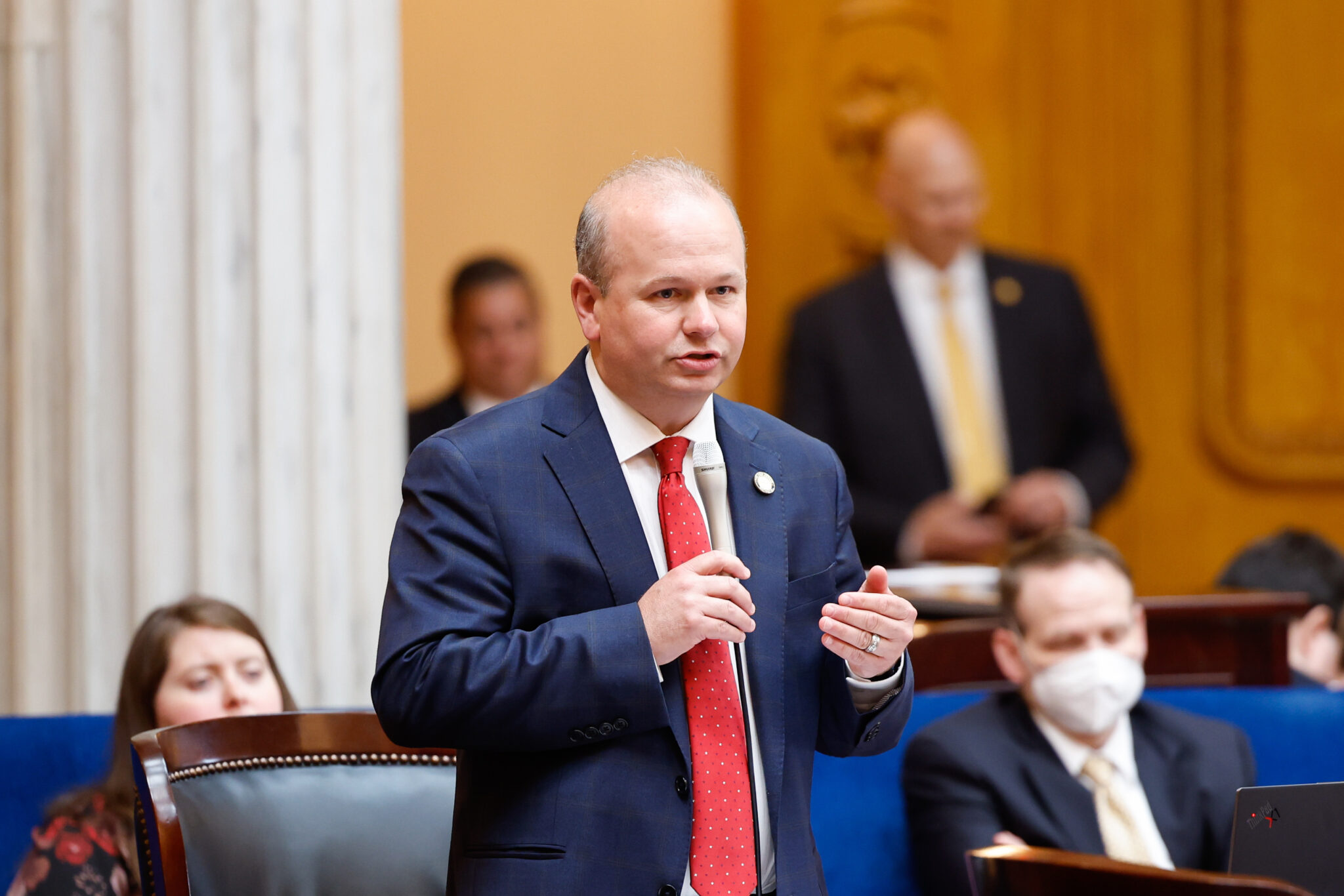
    State Sen. Andrew Brenner, R-Delaware, recently introduced Ohio Senate Bill 113 which would require every local board of education in the state to adopt a policy that would end any current diversity and inclusion offices or departments and ban any diversity, equity, and inclusion orientation or training. It would also prevent the creation of any new such offices or departments and using DEI in job descriptions.

    Under the bill, each board of education would be required to create a complaint process for an alleged violation of the policy and the board would investigate the complaint with a hearing.

    GET THE MORNING HEADLINES.

    Ohio teacher unions were quick to critique the bill.

    “This is another petty attempt from this legislature to sidestep local control and micromanage every aspect of how public schools operate,” Ohio Federation of Teachers President Melissa Cropper said in an email. “It is objectively a good thing for students of all races when school districts make an effort to hire a diverse teaching staff.”

    Ohio Education Association President Scott DiMauro said S.B. 113 is a distraction.

    “Ohio’s General Assembly should be focused on the real issues facing Ohioans and our schools — fully and adequately funding public schools and seeking solutions to help alleviate the economic challenges faced by families and communities,” he said in an email.

    Honesty for Ohio Education Executive Director Christina Collins said this is another example of Ohio lawmakers are going after school curriculum and programming.

    “This bill uses the vilified acronym ‘DEI’ without offering a definition to advance an agenda that harms our public education system,” she said in an email.

    S.B. 113 is not the only bill Ohio lawmakers have introduced that would ban diversity and inclusion efforts in education. Senate Bill 1 would, among other things, ban diversity, equity, and inclusion efforts at Ohio’s public universities. The Senate passed the bill earlier this month and is waiting to be heard in the House.

    S.B. 113 comes as President Donald Trump’s executive orders attempt to get rid of diversity and inclusion efforts across federal agencies.

    On Feb. 14, the U.S. Department of Education sent a Dear Colleague letter to schools nationwide threatening to rescind federal funds for schools that use race-conscious practices in admissions, programming, training, hiring, scholarships, and other aspects of student life.

    This would apply to all preschool, elementary, secondary, postsecondary educational institutions and state educational agencies that receive financial assistance. Institutions have until Friday to comply or else they face the “potential loss of federal funding.”

    Follow Capital Journal Reporter Megan Henry on Bluesky.

    YOU MAKE OUR WORK POSSIBLE.

    __________
    Megan Henry
    Megan Henry

    Megan Henry is a reporter for the Ohio Capital Journal and has spent the past five years reporting in Ohio on various topics including education, healthcare, business and crime. She previously worked at The Columbus Dispatch, part of the USA Today Network.

    Ohio Capital Journal is part of States Newsroom, the nation’s largest state-focused nonprofit news organization.

    MORE FROM AUTHOR


  • Teaching about race is good, actually. States need to stop banning it.

    Teaching about race is good, actually. States need to stop banning it.

    Getty Images

    by Ian Wright

    In this back to school season, millions of American students are returning to classrooms where the wrong course, lesson, or textbook can lead to deep trouble. Why? Because for the last several years, conservative activists and lawmakers have been waging a crusade against “critical race theory,” or CRT.

    Critical race theory is an academic concept acknowledging that racism isn’t simply the result of individual prejudice but is also embedded in our institutions through laws, regulations, and rules.

    As school districts have emphasized, it’s a higher education concept rarely taught in K-12 schools. But cynical activists have used CRT as a catch-all term to target a broad range of diversity, equity, and inclusion initiatives — and seemingly any discussion about race and racism in the classroom.

    Since January 2021, 44 states have “introduced bills or taken other steps that would restrict teaching critical race theory or limit how teachers can discuss racism and sexism,” according to Education Weekly. And as of this writing, UCLA has identified 807 anti-CRT “bills, resolutions, executive orders, opinion letters, statements, and other measures” since September 2020.

    ________________

    IN OHIO

    Bills that would have prohibited discussion of certain topics related to race and sex, forbid schools from awarding credit for student service learning with advocacy groups, and ban “any textbook, instructional material, or academic curriculum that promotes any divisive or inherently racist concept” all failed to pass during the 2021 and 2022 sessions.

    ________________

    Critics claim — falsely — that CRT teaches that all white people are oppressors, while Black people are simply oppressed victims. Many opponents claim it teaches white students to “hate their own race,” or to feel guilty about events that happened before they were born.

    In reality, CRT gives students of every race the tools to understand how our institutions treat people of different races unequally — and how we can make those systems fairer. That’s learning students of every race would be better off with.

    But instead, this barrage of draconian legislation is having a chilling effect on speech in the classroom.

    In 2022, Florida passed the “Stop W.O.K.E. Act,” which prohibits teaching that could lead to a student feeling “discomfort” because of their race, sex, or nationality. But the law’s vague language makes it difficult for educators to determine what they can or cannot teach, ultimately restricting classroom instruction. In my home state of Texas, SB3 similarly restricts these classroom discussions.

    Running afoul of these laws can get teachers and school administrators in trouble. As a result of this hostile environment, the RAND Corporation found that two-thirds of K-12 school teachers have decided “to limit instruction about political and social issues in the classroom.”

    Notably, this self-censorship extends beyond states with such policies: 55 percent of teachers without state or local restrictions on CRT have still decided to limit classroom discussions of race and history.

    As a student, I find this distressing.

    My high school history classes gave me a much richer understanding of race in our history, especially the discussions we had at the height of the Black Lives Matter protests. And in college, I’ve gotten to learn about racial inequalities in everything from housing and real estate to health care, politics, education, and immigration policy.

    As a person of color, I can’t imagine where I’d be without this understanding. Neither white students nor students of color will benefit from laws designed to censor their understanding of history, critical thinking, and open dialogue in the classroom.

    The fight against CRT is a fight against the principles of education that encourage us to question, learn, and grow. Rather than shielding students from uncomfortable truths, which they can certainly handle, we should seek to equip them with the knowledge to navigate the world, think critically about our history and institutions, and push for a more inclusive country.

    This column was originally published at OtherWords.org.


    Ian Wright
    Ian Wright

    Ian Wright is a Henry A. Wallace Fellow at the Institute for Policy Studies and a student at Rice University from Dallas, Texas.

    MORE FROM AUTHOR


  • Taking Lessons From Our Past: The Story of Everett and The Importance of DEI

    Taking Lessons From Our Past: The Story of Everett and The Importance of DEI

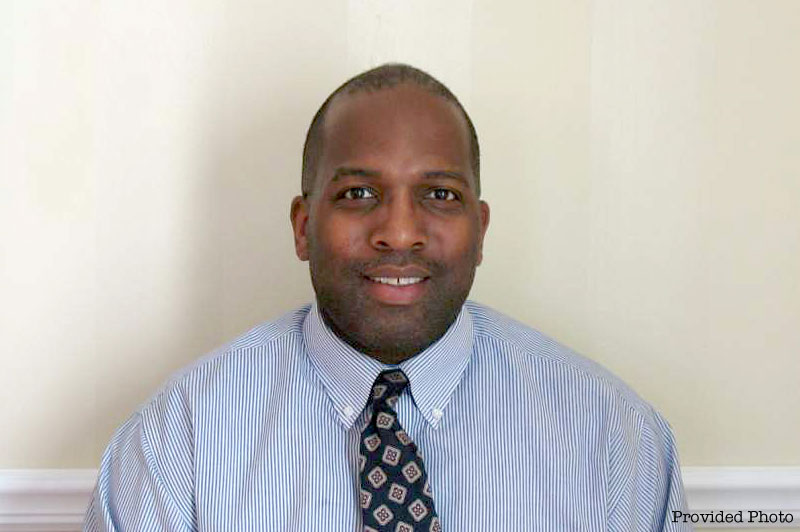
    John Coburn is a Loveland Resident, a lifelong educator, and a founding member of the Loveland Diversity Advisory Board.

    by John Coburn

     In 1954 my father-in-law Everett enlisted in the US. Army stationed in Alaska. The base was a rugged area far removed from big cities like Anchorage, Fairbanks, or his hometown of St. Louis. Everett quickly found himself the odd man out; it became clear the men in the company were not accepting of Black folks. Fortunately, he was blessed with the gift of gab, enabling him to hold his own without fear of repercussion. 

    Everett met a young man in his platoon named Ken. Ken, being Jewish and from New York, also struggled with the new environment and described Alaska as “living in a foreign land.” Friendly and outgoing, Everett became like a brother to Ken. Eventually the two forged a friendship with Ken dubbing his new pal “Duke.” While Ken and Duke were an unlikely duo–it seemed incredulous that a Jewish man and a Black man could become friends and work together– the truth was Everett knew no strangers, and he never left anyone behind.

    Everett’s strong sense of family instilled in him the importance of acceptance toward all people, regardless of their differences. As such, he helped Ken fit in with the rest of the company by reinforcing to Ken that he was special. By helping Ken to develop a sense of self-worth and demonstrating that he was a crucial member of the team, Duke enabled  Ken to develop a sense of belonging. That was a favor Ken never forgot and after the tour in Alaska ended, Everett and Ken remained lifelong friends. Over the next 60 years, they continued to stay in touch via yearly phone calls. When Everett died in 2020, Ken remembered his friend’s kindness, stating he would never have made it out of basic training without his friend Duke.

    By the 1970s, Everett was named the first Black employee at the St. Louis Corvette plant,  working in security for General Motors. (Technically, he was the second Black employee, but GM didn’t know this; Everett’s cousin Bob who got him the job was the first, but Bob passed as white.) 

    The interview process was brutal and Everett was openly mocked for having taken college courses at the local business school. While cruel and demeaning, unfortunately the interview was only a small glimpse of what was to come. 

    GM was a toxic workplace during those days and fellow workers desperately tried to get Everett fired or intimidate him into quitting by placing nooses and tools in his locker.  If you possessed company materials, you were subject to disciplinary action so those would be planted as well. Employees would drive to his home and sit in front of his house during the day, Everett recognizing the cars because of his position in security. He would come home after work crying tears of frustration. This pernicious behavior was against everything he believed and stood for. He’d initially believed his vivacious personality coupled with his gift of unconditional acceptance and love for others would help him navigate life’s challenges. He was starting to think it would not. Fortunately, his wife supported and encouraged him to continue to push forward. Eventually, Everett was the first black foreman at GM, receiving Quality awards for the work.

    In the years since, I’ve taken Everett’s experiences to heart and they’ve shaped the way I live and the way I approach my career as an educator. At one point, I accepted a job in the city next to my hometown as an assistant principal. The principal was indifferent to the idea of Diversity, Equity, and Inclusion and its impact on the school environment. It was obvious: both the school environment and the surrounding community were incredibly toxic. Students that were deemed different were overly disciplined and behind academically. It was clear no one felt a sense of belonging or importance, not the students in the school or the members of the community surrounding it. And with no leader to inspire these feelings, things would only continue to get worse. 

    With the help of another teacher, I instituted plans to help students academically. I continued my work with students and parents providing social-emotional support while addressing underlying social-emotional needs. I started an ACT Prep program to help improve the students’ college acceptance.

    In the spring, the community experienced a mass shooting that killed local government officials and police officers because of a community conflict. Those students that felt a sense of belonging began to seek social and emotional support. Despite the community upheaval, many students followed the academic plan and graduated with their classmates. The community has started to heal, and many community members have made it their mission to speak up and be more inclusive of others in their community.

    I share these stories about my father-in-law’s and my experiences to illustrate that everyone wants to belong. The need for belonging is an innate sense of the human condition. If we cannot develop relationships and feel a sense of acceptance, we become isolated, withdrawn, and want to quit. A feeling of belonging, and having people around you who foster that feeling, is an essential component to success. 

    That said, because of Covid-19 and social injustice, many students don’t have that sense of belonging. They may feel excluded at school or in society in general. This, as we’ve seen, is neither conducive to a healthy self-esteem or academic success. The question is, how can we help our students feel like they belong? 

    Taking inspiration from Everett, as I have done, has been instrumental. We can ask ourselves: 

    As teachers, are we accepting of students and not hypercritical? Everett welcomed all people. He did not put people down, and he was not overly judgmental. No matter what others said, he never judged anyone. 

    As educators, do we allow students the opportunity to restart?  Everett always gave everyone a fresh start. Once his nephew forged his signature on a document, and he received free service on his car. Everett forgave him. 

    Are we empathetic toward students? Everett displayed grace toward people even when people were unkind to him. 

     Finally, is our climate and culture inclusive, accepting, and inviting? It was not until the final years of working at GM that Everett felt a sense of belonging. Toward the end of life, Everett developed dementia. He recalled the names of most of his family and not much else. However, he remembered in detail his experiences at GM.

    Though it has only recently been given a formal title, Diversity, Equity, and Inclusion is a concept that has always been important. And while there will always be outliers like Everett who persevere despite the odds, there are far more Kens, who need the camaraderie and encouragement of others to succeed. As educators, caregivers, and members of the community, we are uniquely poised to provide this encouragement and well-crafted DEI programming is the most impactful way to do it. It need not be a political or divisive issue–the fact is that when everyone feels they belong, everyone wins.

    Regardless, I’ll continue to advocate for DEI not only because I’ve seen that it works, but also because I know that Everett wouldn’t have wanted it any other way. 

    This Guest Column by John Coburn is presented by Loveland Magazine in collaboration with the Loveland Diversity Advisory Board. Contact them if you’ve a story to share.

  • Loveland City Schools adopt Statement on Diversity

    Loveland City Schools adopt Statement on Diversity

    “This resolution is the first step toward ensuring a safe and inclusive learning environment for all students while fostering cultural awareness and understanding.” – Loveland Diversity Advisory Board

    by David Miller

    Loveland, Ohio – At their meeting on April 20, the Loveland City Board of Education voted unanimously to adopt a statement on diversity, equity, and inclusion. The statement will be placed into the Board Manual and distributed to school administrators and all staff. After staff discussions, it will be “pushed out into classrooms” according to Superintendent, Bradley Neavin.

    Board member Eileen Washburn  said before the vote, “I very much appreciate the work that was done. I hope it will be embraced and people really read it and act on it.” (read resolution below)

    Speaking of the student experience Neavin said, “This goes well beyond the walls of the schools. This prepares students to go out into a broader world and to have a broader world view.”

    The writing of the resolution was a collaboration between district leadership and the Loveland Diversity Advisory Board (DAB). “This resolution is the first step toward ensuring a safe and inclusive learning environment for all students while fostering cultural awareness and understanding,” said a statement issued by DAB after the approval.

    Below is the discussion of the Board while adopting the diversity, equity, and inclusion policy:


    Loveland City Schools Statement on Diversity, Equity, and Inclusion

    A comprehensive education in a free society develops persons who can think critically, engage in self-reflection, understand all cultures, live compassionately with others, and use their reflection and experiences to make sound judgments. As the great equalizer, education in a pluralistic society must strive to present varied events, activities and perceptions reflected in history, literature and other sources of humanity’s thought and expression. Therefore, the Loveland City School District commits unwavering support to diversity, equity, and inclusion of culture, thought, ideas and experiences.

    LCSD seeks to ensure the growth of every individual in our sphere of influence by:

    • Creating a safe & inclusive learning environment that provides equitable access for all members of the school community regardless of race, religion, ethnicity, gender identification or expression, sexual orientation, ability, language, family structure or economic status.
    • Providing access to materials and experiences which express diversity of perspective, broaden students’ worldviews, and better equip them to live, thrive, and contribute positively to a diverse world.
    • Engaging in culturally competent practices that target core areas: value of diversity, cultural awareness, understanding the dynamics of cultural interactions, and taking cultural knowledge and adapting it to diversity and learning.

    The Loveland City Schools commit to the development of critical thinkers by offering the opportunity to understand, study, and embrace difference as the fabric of our Democracy, a Democracy free from hatred, alienation, or division.


  • Residents urge BOE to form a Diversity Advisory Board

    Residents urge BOE to form a Diversity Advisory Board

    This statement was delivered by Leah Marcus at the Loveland Board of Education Meeting on 9/22/2020 on behalf of John Coburn, Julie Gebhart, Leah Marcus, Jennifer Shaftel, and Molly Simons, representing the Loveland Diversity Advisory Board (DAB) and the voices of their supporters in the Loveland Community.

    by Leah Marcus

    At the Loveland Board of Education Meeting on 9/22/2020 a group of community members, identifying as the Loveland Diversity Advisory Board made initial requests regarding the need to implement a Diversity, Equity, and Inclusion initiative within the School District. The statements delivered by community members are below:

    “As a part of the Diversity Advisory Board, I want to thank the Loveland Board of Education for hearing me today. This is a new group that started in the Loveland Area recently and our request is that there be an Advisory Board that looks at Diversity, Equity, and Inclusion concerns in our community, and more so, in our Loveland City School District. This effort would consist of school administrators working with the Advisory Board to talk and try to resolve some of these issues.

    I want to take a little bit of time to talk about my experiences in Loveland. I have lived here for six years and I want to talk about some things that have happened to me.

    One thing, when my wife and I first moved in, a neighbor asked my wife if we were the new neighbors.

    “Yes, we are the new neighbors.”

    “Oh, I will come by and ​see​ you.”

    I can’t tell you who that neighbor is.

    I have another neighbor. We just don’t talk. He doesn’t talk to me. I have said “Hi” to him, but we just don’t talk. He talks to the other neighbors-just not, to me.

    I have been at a stoplight here recently and I was called a “Nigger” when someone rolled their window down and felt like that was appropriate to do.

    There was another time that I was at a meeting, here in a Loveland school building, and I walked out with a couple of parents. We got lost in the building and we ended up going down a dark hallway. A community person walked up and said, “Oh, you’re used to being in dark places.”

    I think about that, and I think about the community where I grew up.

    I grew up in a community called Webster Groves, Missouri. I don’t know if anyone is familiar with that place, but it has similar demographics to what we have here, but we had a sense of belonging. Which I don’t necessarily feel here.

    This was in the 1970s, so Whites and Blacks got along. We talked to each other. We went to each other’s homes. We ate dinner together. We got to know each other, our parents got to know each other, and I don’t feel that sense of community here.

    Now don’t get me wrong, there are some wonderful things here in Loveland. There are wonderful things to do. I have met some wonderful people, but I am just saying that I don’t feel that.

    So when I think about my experiences I realize that I live in Loveland, but I work outside of Loveland. My church is outside of Loveland and my friends are outside of Loveland. I think about the kids that are in this environment every single day and I am wondering what data we are using to talk to the kids about their experiences that are here in the schools every single day.

    And again, I am just starting to become engaged in this environment. So let’s think about the long term ramifications of not having a Diversity, Equity, and Inclusion initiative.

    I am big on just reading my bible, and I pulled out a verse that says, “Whoever does not love their brother and sister, whom they have seen, cannot love G-d, whom they have not seen” (1 John 4:20). So what are those long-term ramifications and what are we teaching our kids? What kind of legacy are we leaving them? What if we don’t teach them that it is okay to engage with people who don’t look like them, whether it be someone who has special needs, or someone who identifies as LGBTQ, or someone who is Black or Brown?

    What kind of legacy are we leaving our children if we don’t say it is okay to engage with others that don’t look like you?​

    We are here tonight representing a diverse group of LCSD parents and community stakeholders to respectfully request the district’s action on two proposed initiatives:

    First

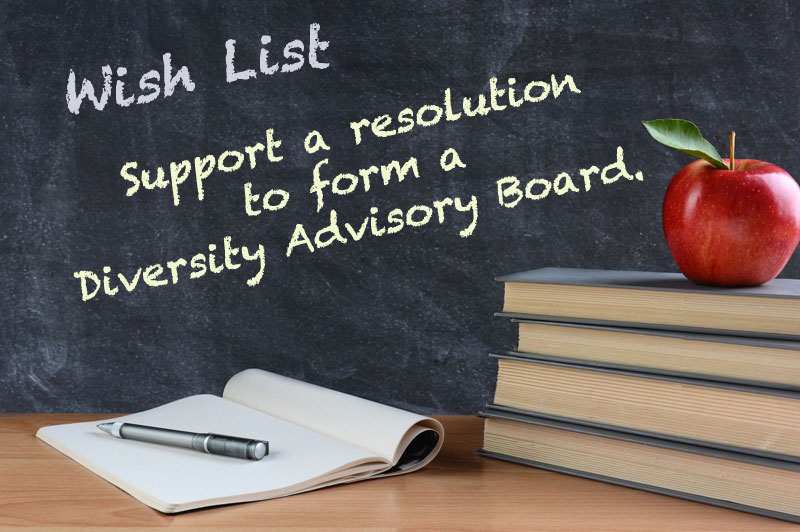
    We respectfully request that the District support a resolution to form a Diversity Advisory Board.

    Second

    We ask that the Board of Education facilitate a relationship between this group and school building administrators, so that a formal plan to address issues related to diversity, equity, and inclusion, that is, DEI, can be established, with parent input, and implemented, in the schools.

    We acknowledge that conversations regarding inclusion and diversity are already happening in the community with great frequency, whether that be on social media, our local written media, in our private homes, or  public forums such as this summer’s organized Peace Walk.

    Beyond these events, parents in our district, including many here tonight, have been meeting informally to educate ourselves and to understand how we can better leverage community resources to support our schools when it comes to creating an inclusive learning environment that prepares all students to succeed in an increasingly diverse workforce and world.

    Although our district’s values indirectly point to a shared commitment for inclusive education, informal and indirect commitment is not enough to make inclusion a reality in our schools. Achieving inclusion requires intention, including formal structures for engaging parents, students, and staff in conversations about what is needed to achieve this reality.

    Educational institutions have long acknowledged DEI initiatives as essential components of Social-Emotional Curriculum. Loveland, however, has yet to implement a permanent and intentional diversity statement or initiative. In fact, Loveland is one of only a handful of local districts with absolutely no DEI initiatives to speak of. The following districts have long-established comprehensive DEI plans: Sycamore, Indian Hill, Lebanon, Wyoming, Mason, Madeira, Kings, Cincinnati Public, Mariemont, Northwest, Fairfield, Forest Hills, Princeton, and Lakota.

    Compared to our neighboring districts, Loveland seems to be falling behind in this regard. It is time for Loveland to formally commit to addressing these issues.

    Institutional support for Inclusion and Diversity efforts have been shown to have positive outcomes for all students, including benefiting students’ critical thinking, decision making and cognitive skills, student success and engagement, as well as fostering a sense of belonging. On the flip-side, lack of DEI plans has been shown to result in hostile school and community environments, a lack of cohesion and consistency in dealing with district DEI issues, and, in some cases, costly lawsuits.

    Our Loveland Tigers do not want to be defined by a negative community incident, when we could be defined by the innovative, diverse leaders we educate in our district.

    Here, we present to you our proposal, along with letters from parents and community stakeholders who would like to see these initiatives come to fruition.”

    John Coburn, Julie Gebhart, Leah Marcus, Jennifer Shaftel, and Molly Simons, representing the Loveland Diversity Advisory Board (DAB) and the voices of our supporters in the Loveland Community.