

Tag: Fair School Funding

  • Ohio House budget would cut all elected members of the State Board of Education, limit board to five

    Ohio House budget would cut all elected members of the State Board of Education, limit board to five

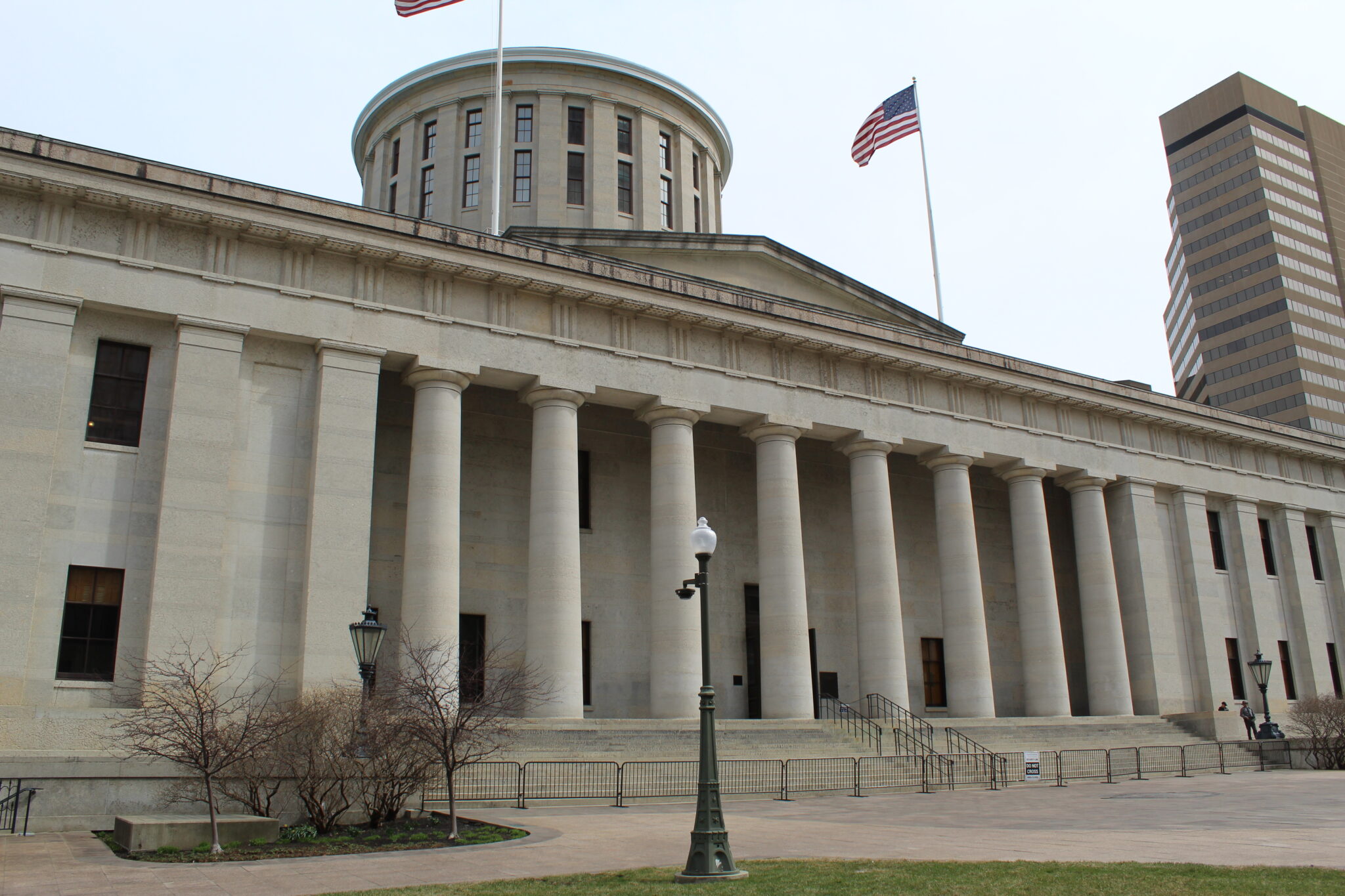
    The Ohio Statehouse. (Photo by David DeWitt, Ohio Capital Journal.)

    By:  Ohio Capital Journal

    A provision in the version of the two-year state budget passed by Ohio House Republicans would eliminate elected members from the State Board of Education. This comes after the last budget stripped the board of most of its power.

    The budget passed by the House last week would reduce the board membership from 11 elected members and eight governor-appointed members to five, all appointed by the governor.

    When the terms of the current elected board members expire or the positions become vacant in another way, the seats would be eliminated. Three of the governor-appointed spots would also.

    The House budget also changes the requirements for appointed board members to require “at least one member to represent each of a rural, suburban, and urban school district, a community school and a chartered nonpublic school.”

    According to budget documents, the reduction would save Ohio about $50,000. Board members received an average of $3,500 in compensation in 2024, according to state data.

    The budget is now in the hands of the Senate.

    The House changes come along with a proposal that public education advocates say would cut public school funding and eliminate the Fair School Funding model that has been in place for the last four years. The existing model calls for $666 million, but the House budget would cut that by roughly two-thirds, to $226 million.

    The board’s budget could be coming from a separate fund, rather than its own licensure fund on which it’s been relying since the last budget cycle limited their power within the state education system.

    With the establishment of the Ohio Department of Education and Workforce two years ago, the board’s powers were largely stripped away and what powers remained were centered on teacher licensure and territorial disputes. It was strongly opposed by board members and members of  the public.

    The last two years have been a financial struggle after the change to the teacher licensure fund as well. Superintendent of Public Instruction Paul Craft came to legislators with funding requests, telling lawmakers and the board that the uncertainty of the teacher licensure fund could harm the board’s bottom line, when staffing and expense cuts had been exhausted.

    GET THE MORNING HEADLINES.


    The fund’s revenue surges at certain points of the year, when teachers get or renew their licenses. The rest of the year, the board has to live on the funds provided by the state.

    With the start of a new budget cycle, Craft asked for additional state support to help with the costs of annual background checks for school staff. He also asked to eliminate the video assessment portion of the Ohio Teacher Residency Program to save more than $1 million.

    The House’s budget eliminates the teacher licensure fund, with the board’s operating expenses paid from the Occupational Licensing and Regulatory Fund. The fund already exists to pay into assistance funds for nursing education, certified public accountant education and veterinary student debt.

    A Legislative Service Commission analysis of the budget changes noted that the moving to the occupational licensing fund “may provide greater financial stability” for the board, because that fund “serves as a shared operating fund for many occupational licensing and regulatory boards and commissions.” They are supported by license fees, fines, penalties and “other assessments” put in the fund by those boards and commissions.

    The House also added $2 million from the General Revenue Fund in each fiscal year for the educator background check service, called the Retained Applicant Fingerprint Database (or Rapback).

    While a spokesperson for the board of education said it was “premature” to comment on the reduction in board members at this point, he said the House changes to the funding, along with the elimination of the video teacher assessment, could mean good things for the board.

    “We were actually very happy with the financial side of things,” said board spokesman Alex Goodman.

    Appropriations based on the House draft would give the board $16.3 million in fiscal year 2026, and $16.8 million in fiscal year 2027.

    A spokesperson for the House majority caucus did not comment specifically on the elimination of elected officials in the budget, but said the funding changes “reflect the recent restructuring of the board’s responsibility for licensing and conduct of educators.”

    “Aligning with the funding of nearly all other licensing boards, this shift addresses the long-standing status of the state board as somewhat of an outlier,” said Olivia Wile, caucus press secretary. “It promotes consistency across the system and is expected to be advantageous over time, potentially reducing the pressure for increased licensing fees in the future.”

    Goodman said board leaders are already preparing to testify to the Senate the budget process moves to that chamber over the next month.


    Susan Tebben
    Susan Tebben

    Susan Tebben is an award-winning journalist with a decade of experience covering Ohio news, including courts and crime, Appalachian social issues, government, education, diversity and culture. She has worked for The Newark Advocate, The Glasgow (KY) Daily Times, The Athens Messenger, and WOUB Public Media. She has also had work featured on National Public Radio.

    Ohio Capital Journal is part of States Newsroom, the nation’s largest state-focused nonprofit news organization.

    MORE FROM AUTHOR

  • ‘Backpack Bill’ sponsors seek new school voucher funding formula

    ‘Backpack Bill’ sponsors seek new school voucher funding formula

    BY: SUSAN TEBBEN AND OHIO CAPITAL JOURNAL

    The sponsors of a bill that would promote the use of private school vouchers and “school choice” came together on Wednesday with a religious lobby group to bring the bill back up.

    House Bill 290 was originally introduced in May as a “legislative intent” bill aiming to allow students to have the funding they need “follow them” to private schools of their choice, should parents decide the public school system is not working for them.

    “We want to fund students, not systems, and empower parents to make the best decision for their children,” said bill cosponsor state Rep. Riordan McClain, R-Upper Sandusky.

    The bill came before passage of the new budget bill, which included the Fair School Funding plan, an overhaul of the public school funding model.

    Under the new budget, EdChoice private school vouchers, along with the EdChoice expansion, the Cleveland Scholarship Program, the Jon Peterson Special Needs Scholarship Program and the Autism Scholarship Program, are all directly funded by the state, rather than being deducted from monies distributed to public school districts.

    “Ohio parents and students overwhelmingly want quality local public schools. They don’t want the radical defunding of public schools that this bill would likely cause.”

    Melissa Cropper, president of the Ohio Federation of Teachers

    In the new language being added to the bill, if a family applies to be a part of the private school voucher program, sponsors say the taxpayer money the state would use to fund EdChoice or Cleveland scholarships would be put in individual educational savings accounts for the students use.

    The bill’s other cosponsor, state Rep. Marilyn John, R-Richland County, said the bill isn’t meant to discredit public education, but to allow student who learn differently to be able to have different options.

    “One size fits all doesn’t work,” John said. “It certainly doesn’t work for education.”

    McClain said they don’t have an estimate of how many students would be impacted by the so-called backpack bill, though they don’t expect to see a mass exodus of students headed to private schools, more of a gradual upward trend.

    “It’s something that, once we set the agenda for where we want the future of the state to be, the hope is that that network gets built up and those opportunities are created,” McClain said.

    Included in the press conference was religious advocacy and lobbying group Center for Christian Virtue, which backs the bill because of its focus on school choice and to make public school districts perhaps think twice about instituting what they see as controversial policies.

    Aaron Baer, president of the Center for Christian Virtue, said amidst debate in the General Assembly on critical race theory — which CCV has called “a racist ideological grandchild of Marxism that’s being taught in schools across the state” in a fundraising email in support of anti-CRT legislation — parents should be able to take the lead in their student’s education.

    Baer also brought up the Upper Arlington school district, which tried to implement some bathrooms at their schools that were gender neutral, before the city of Columbus said that was against city code. The school district had said students who used the gender-neutral bathrooms had been doing so without incident.

    “A bill like this would be able to say: Look, Upper Arlington, if this is what you want to do, if this is the policy you want to have, okay,” Baer said. “But now…those families are allowed to go elsewhere and maybe you’re going to think twice about doing something that parents don’t like.”

    The bill was already spurned by education associations and public school advocates when it was introduced, but the new language has done nothing to change minds.

    “Ohio parents and students overwhelmingly want quality local public schools,” said Melissa Cropper, president of the Ohio Federation of Teachers. “They don’t want the radical defunding of public schools that this bill would likely cause.”

    The backpack bill current sits in the House Finance Committee, but has not been scheduled for a hearing.