

Tag: Fairfield

  • Meet Adam Reed the next leader for Loveland High School

    Meet Adam Reed the next leader for Loveland High School

    David Miller is the Editor and Publisher of Loveland Magazine

    by David Miller

    Loveland, Ohio – Peggy Johnson announced her retirement at the end of January after 39 years in education and 6 years as Principal of Loveland High School (LHS).

    Thirty-nine-year-old Wyoming High School Principal, Adam Reed, who is entering his 17th year in education was recently announced as Johnson’s successor for the 2021-2022 school year.

    Reed grew up in Fairfield and currently lives in Loveland with his family. “I enjoy spending time with my family, golfing, and traveling,” Reed told Loveland Magazine in an email exchange. Education has been his only career path.

    “My wife Kate and I have three sons. Nolan is 7 and attends the Loveland Primary School, Hunter is 5 and will attend the Loveland Early Childhood Center next year, and Carson just turned 2. 
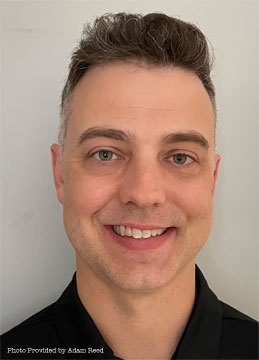
    Adam Reed will be the next Principal at Loveland High School

    Reed earned both his B.A. and Masters in Education at the University of Cincinnati before earning his Administrative and Superintendent Licensure from Xavier University.

    He is a graduate of Fairfield High School, was a varsity baseball coach, and was an assistant coach on a final four basketball team while at Fairfield. 

    I asked Reed what were his proudest accomplishments with the Wyoming schools and mentioned that the school certainly has bragging rights in regards to academics. “Leading the high school through the pandemic. Supporting students and teachers academically and socially and emotionally while creating the safest learning environment possible,” was his answer. Reed added, “Being an instructional leader with my staff as we integrated technology into their teaching practices and making the high school a Google school.” Reed is also proud that he created a culture where students “felt heard and valued”. 
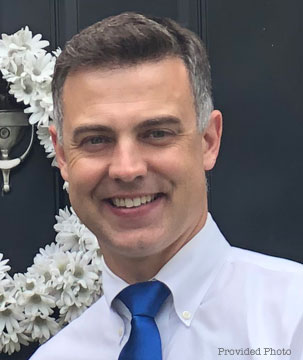
    Adam Reed will be the next Principal at Loveland High School

    I also asked Reed what does he feel are his best skills that he will bring to LHS. He said, “I am a student-focused administrator and educator. I believe in meeting our students where they are in order to support their learning and goals after high school. I look forward to creating a positive culture and environment to support our teachers and students.”

    “While at Wyoming, I participated in our district-wide One Degree Shift work surrounding diversity,” was Reed’s response to a question about the goals of the Loveland District’s Diversity Advisory Board. He further emphasized, “For the 2021-2022 school year, Wyoming High School has created two new courses, African American Studies, and Women’s Studies. As I transition to Loveland, I will continue to focus on our students and meet them where they are. The work of the Loveland Diversity Advisory Board will be instrumental in creating a safe, equitable, educational environment that celebrates diverse perspectives, identities, cultures, and worldviews for all our students.”

    In speaking about her retirement, Peggy Johnson said in a statement issued by the District, “Working with teenagers is an unbelievable honor and seeing how they pursue their interests, overcome challenges, and succeed is a most rewarding experience.”

    Johnson has spent 39 years in education, beginning her career as a student-teacher in the Fall of 1980 at Loveland High School. She went on to teach students with hearing and language impairments for 17 years and served as a Special Education Supervisor in Hamilton City Schools. She served as principal of Turpin High School for 13 years and spent the last 6 years leading Loveland High School.
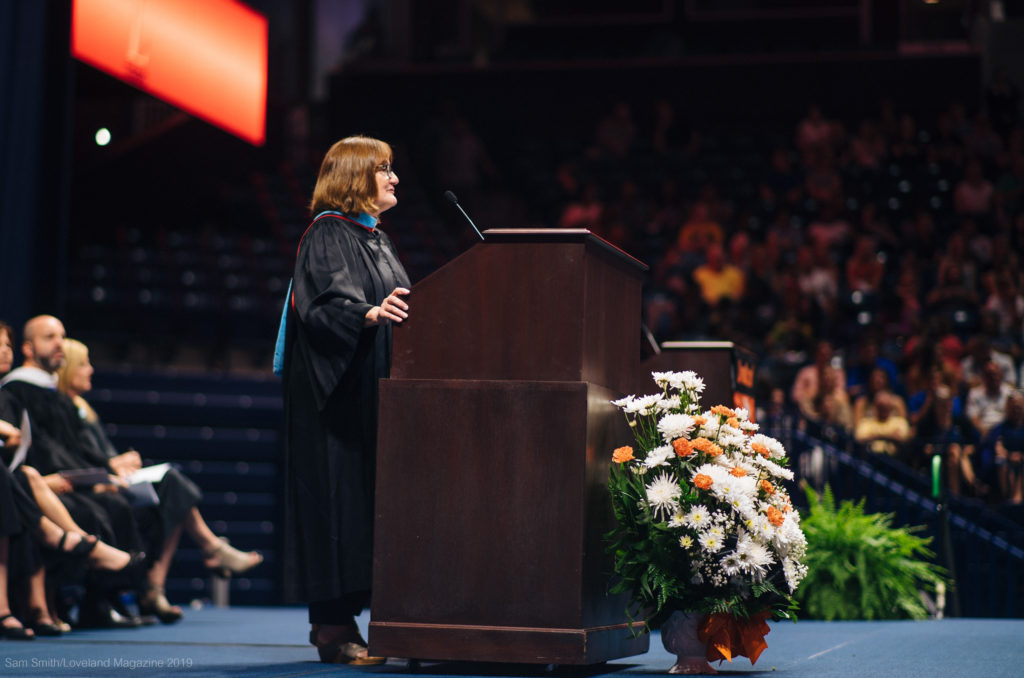
    Principal Peggy Johnson at the 2018 Commencement (Loveland Magazine file photo)

    A release by the District announcing her retirement said, “While at LHS, Johnson expanded the Advanced Placement program, business program, increased performance on state assessments, and “was dedicated to her students” according to Loveland Director of Human Resources Charles Ogdan. “There isn’t an event that happens where Ms. Johnson isn’t there mingling with students, taking pictures, and posting on Twitter in support of student success and growth,” Ogdan said. 

    “I wish to thank the LHS school community for the opportunity to work with talented, passionate, and dedicated educators and students and enthusiastic supportive parents and community,” Johnson said in the statement.
  • Residents urge BOE to form a Diversity Advisory Board

    Residents urge BOE to form a Diversity Advisory Board

    This statement was delivered by Leah Marcus at the Loveland Board of Education Meeting on 9/22/2020 on behalf of John Coburn, Julie Gebhart, Leah Marcus, Jennifer Shaftel, and Molly Simons, representing the Loveland Diversity Advisory Board (DAB) and the voices of their supporters in the Loveland Community.

    by Leah Marcus

    At the Loveland Board of Education Meeting on 9/22/2020 a group of community members, identifying as the Loveland Diversity Advisory Board made initial requests regarding the need to implement a Diversity, Equity, and Inclusion initiative within the School District. The statements delivered by community members are below:

    “As a part of the Diversity Advisory Board, I want to thank the Loveland Board of Education for hearing me today. This is a new group that started in the Loveland Area recently and our request is that there be an Advisory Board that looks at Diversity, Equity, and Inclusion concerns in our community, and more so, in our Loveland City School District. This effort would consist of school administrators working with the Advisory Board to talk and try to resolve some of these issues.

    I want to take a little bit of time to talk about my experiences in Loveland. I have lived here for six years and I want to talk about some things that have happened to me.

    One thing, when my wife and I first moved in, a neighbor asked my wife if we were the new neighbors.

    “Yes, we are the new neighbors.”

    “Oh, I will come by and ​see​ you.”

    I can’t tell you who that neighbor is.

    I have another neighbor. We just don’t talk. He doesn’t talk to me. I have said “Hi” to him, but we just don’t talk. He talks to the other neighbors-just not, to me.

    I have been at a stoplight here recently and I was called a “Nigger” when someone rolled their window down and felt like that was appropriate to do.

    There was another time that I was at a meeting, here in a Loveland school building, and I walked out with a couple of parents. We got lost in the building and we ended up going down a dark hallway. A community person walked up and said, “Oh, you’re used to being in dark places.”

    I think about that, and I think about the community where I grew up.

    I grew up in a community called Webster Groves, Missouri. I don’t know if anyone is familiar with that place, but it has similar demographics to what we have here, but we had a sense of belonging. Which I don’t necessarily feel here.

    This was in the 1970s, so Whites and Blacks got along. We talked to each other. We went to each other’s homes. We ate dinner together. We got to know each other, our parents got to know each other, and I don’t feel that sense of community here.

    Now don’t get me wrong, there are some wonderful things here in Loveland. There are wonderful things to do. I have met some wonderful people, but I am just saying that I don’t feel that.

    So when I think about my experiences I realize that I live in Loveland, but I work outside of Loveland. My church is outside of Loveland and my friends are outside of Loveland. I think about the kids that are in this environment every single day and I am wondering what data we are using to talk to the kids about their experiences that are here in the schools every single day.

    And again, I am just starting to become engaged in this environment. So let’s think about the long term ramifications of not having a Diversity, Equity, and Inclusion initiative.

    I am big on just reading my bible, and I pulled out a verse that says, “Whoever does not love their brother and sister, whom they have seen, cannot love G-d, whom they have not seen” (1 John 4:20). So what are those long-term ramifications and what are we teaching our kids? What kind of legacy are we leaving them? What if we don’t teach them that it is okay to engage with people who don’t look like them, whether it be someone who has special needs, or someone who identifies as LGBTQ, or someone who is Black or Brown?

    What kind of legacy are we leaving our children if we don’t say it is okay to engage with others that don’t look like you?​

    We are here tonight representing a diverse group of LCSD parents and community stakeholders to respectfully request the district’s action on two proposed initiatives:

    First

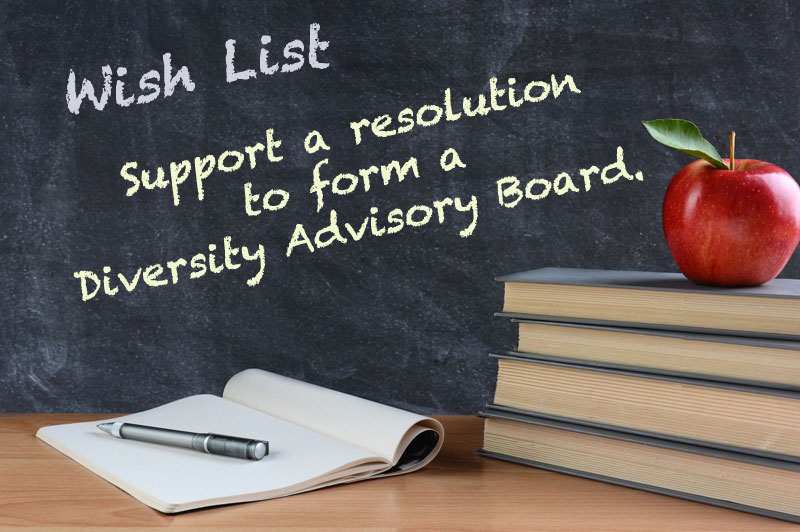
    We respectfully request that the District support a resolution to form a Diversity Advisory Board.

    Second

    We ask that the Board of Education facilitate a relationship between this group and school building administrators, so that a formal plan to address issues related to diversity, equity, and inclusion, that is, DEI, can be established, with parent input, and implemented, in the schools.

    We acknowledge that conversations regarding inclusion and diversity are already happening in the community with great frequency, whether that be on social media, our local written media, in our private homes, or  public forums such as this summer’s organized Peace Walk.

    Beyond these events, parents in our district, including many here tonight, have been meeting informally to educate ourselves and to understand how we can better leverage community resources to support our schools when it comes to creating an inclusive learning environment that prepares all students to succeed in an increasingly diverse workforce and world.

    Although our district’s values indirectly point to a shared commitment for inclusive education, informal and indirect commitment is not enough to make inclusion a reality in our schools. Achieving inclusion requires intention, including formal structures for engaging parents, students, and staff in conversations about what is needed to achieve this reality.

    Educational institutions have long acknowledged DEI initiatives as essential components of Social-Emotional Curriculum. Loveland, however, has yet to implement a permanent and intentional diversity statement or initiative. In fact, Loveland is one of only a handful of local districts with absolutely no DEI initiatives to speak of. The following districts have long-established comprehensive DEI plans: Sycamore, Indian Hill, Lebanon, Wyoming, Mason, Madeira, Kings, Cincinnati Public, Mariemont, Northwest, Fairfield, Forest Hills, Princeton, and Lakota.

    Compared to our neighboring districts, Loveland seems to be falling behind in this regard. It is time for Loveland to formally commit to addressing these issues.

    Institutional support for Inclusion and Diversity efforts have been shown to have positive outcomes for all students, including benefiting students’ critical thinking, decision making and cognitive skills, student success and engagement, as well as fostering a sense of belonging. On the flip-side, lack of DEI plans has been shown to result in hostile school and community environments, a lack of cohesion and consistency in dealing with district DEI issues, and, in some cases, costly lawsuits.

    Our Loveland Tigers do not want to be defined by a negative community incident, when we could be defined by the innovative, diverse leaders we educate in our district.

    Here, we present to you our proposal, along with letters from parents and community stakeholders who would like to see these initiatives come to fruition.”

    John Coburn, Julie Gebhart, Leah Marcus, Jennifer Shaftel, and Molly Simons, representing the Loveland Diversity Advisory Board (DAB) and the voices of our supporters in the Loveland Community.